Nevirapine Aurobindo
Italy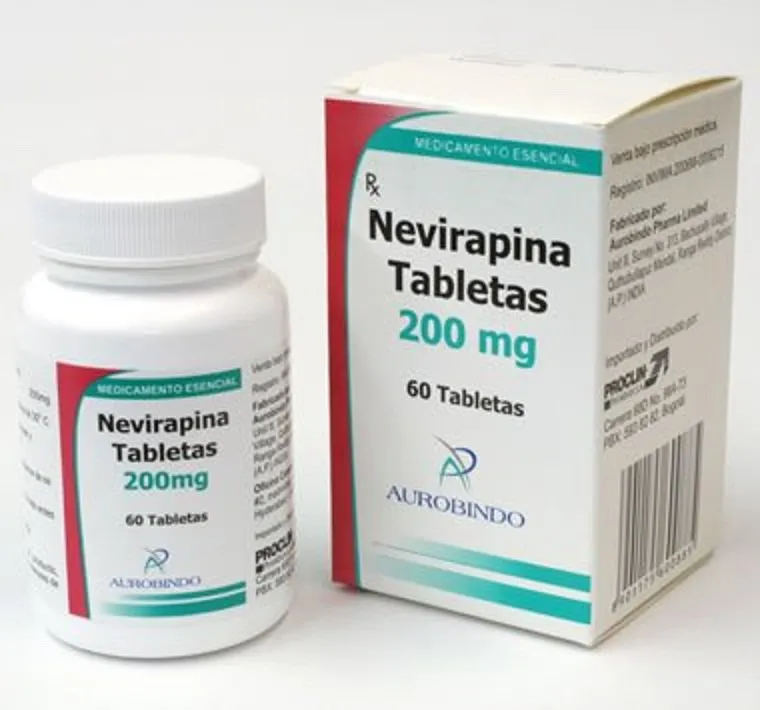
Table of Contents
- Package leaflet: Information for the user
- Nevirapine Aurobindo 200 mg tablets
- 1. What Nevirapina Aurobindo is and what it is used for
- 2. What you should know before taking Nevirapine Aurobindo
- 3. How to take Nevirapine Aurobindo
- 4. Possible side effects
- 5. How to store Nevirapine Aurobindo
- 6. Package contents and other information
Package leaflet: Information for the user
Nevirapine Aurobindo 200 mg tablets
Generic medicine
Please read all of this leaflet carefully before you start taking this medicine because it contains important information for you.
- Keep this leaflet. You may need to read it again.
- If you have any questions, ask your doctor, pharmacist or nurse.
- This medicine has been prescribed for you only. Do not pass it on to other people, even if their symptoms are the same as yours, because it may be harmful.
- If you experience any side effects, including those not listed in this leaflet, tell your doctor, pharmacist or nurse. See section 4.
Contents of this leaflet:
- What Nevirapine Aurobindo is and what it is used for
- What you need to know before taking Nevirapine Aurobindo
- How to take Nevirapine Aurobindo
- Possible side effects
- How to store Nevirapine Aurobindo
- Contents of the pack and other information
1. What Nevirapina Aurobindo is and what it is used for
Nevirapina Aurobindo belongs to a group of medicines called antiretrovirals, used in the treatment of human immunodeficiency virus (HIV-1) infection.
The active substance of the medicine is called nevirapine.
Nevirapine belongs to a class of anti-HIV medicines known as non-nucleoside reverse transcriptase inhibitors (NNRTIs). Reverse transcriptase is an enzyme that HIV needs in order to multiply.
Nevirapine blocks the activity of reverse transcriptase. By inhibiting reverse transcriptase activity, Nevirapina Aurobindo helps control HIV-1 infection.
Nevirapina Aurobindo is indicated for the treatment of HIV-1 infected adults, adolescents, and children of all ages. Nevirapina Aurobindo must be taken in combination with other antiretroviral medicines. Your doctor will recommend the most appropriate medicines for you.
If Nevirapina Aurobindo has been prescribed for a child, all the information in this leaflet applies to the child (in this case, read “the child” wherever the leaflet refers to you).
2. What you should know before taking Nevirapine Aurobindo
Do not take Nevirapine Aurobindo:
- If you are allergic to nevirapine or to any of the other ingredients of this medicine (listed in section 6, “Contents of the pack and other information”).
- If you have previously taken Nevirapine Aurobindo and had to stop treatment because you experienced:
- severe skin rash;
- skin rash accompanied by other symptoms, for example:
- fever;
- blisters;
- mouth sores;
- eye inflammation;
- facial swelling;
- general swelling;
- shortness of breath;
- muscle or joint pain;
- general feeling of malaise;
- abdominal pain;
- hypersensitivity reactions (allergic reactions);
- liver inflammation (hepatitis).
- If you have severe liver disease.
- If you previously had to discontinue treatment with Nevirapine Aurobindo due to liver function abnormalities.
- If you are taking medicines containing St. John’s wort (Hypericum perforatum). This substance may prevent Nevirapine Aurobindo from working properly.
Warnings and precautions
Talk to your doctor or pharmacist before using Nevirapine Aurobindo.
During the first 18 weeks of treatment with Nevirapine Aurobindo, it is very important that
you and your doctor remain alert for any signs of liver or skin reactions. These reactions can
become serious and even life-threatening. Your risk of such reactions is highest during the
first 6 weeks of treatment.
If a severe skin rash or hypersensitivity (i.e., allergic reactions that may appear as skin rash)
occurs, accompanied by any of the following side effects:
- fever,
- blisters,
- mouth sores,
- eye inflammation,
- facial swelling,
- general swelling,
- shortness of breath,
- muscle or joint pain,
- general feeling of malaise,
- abdominal pain,
YOU MUST STOP TAKING NEVIRAPINE AUROBINDO AND CONTACT YOUR DOCTOR
IMMEDIATELY, as these reactions can potentially be life-threatening or fatal.
If you develop only a mild skin rash without any other reaction, you should still inform your
doctor immediately, who will advise you whether you need to stop taking Nevirapine Aurobindo.
If symptoms indicating liver damage occur, such as:
- loss of appetite,
- feeling unwell (nausea),
- vomiting,
- yellowing of the skin or eyes (jaundice),
- abdominal pain,
you must stop taking Nevirapine Aurobindo and contact your doctor immediately.
If you develop severe liver, skin, or hypersensitivity reactions while taking Nevirapine
Aurobindo, DO NOT TAKE IT AGAIN without first consulting your doctor.
You must take only the dose of Nevirapine Aurobindo prescribed by your doctor.
This is particularly important during the first 14 days of treatment (see more information in
“How to take Nevirapine Aurobindo”).
The following patients are at higher risk of developing liver problems:
- women;
- patients co-infected with hepatitis B or C;
- patients with abnormal liver function tests;
- treatment-naive patients with higher CD4 cell counts at the start of therapy with Nevirapine Aurobindo (women >250 cells/mm³, men >400 cells/mm³);
- previously treated patients with detectable HIV-1 viral load in the blood and higher CD4 cell counts at the start of therapy with Nevirapine Aurobindo (women >250 cells/mm³, men >400 cells/mm³).
In some patients with advanced HIV infection (AIDS) and a history of opportunistic infections (AIDS-defining illnesses), inflammatory signs and symptoms of previous infections may occur shortly after starting anti-HIV treatment. These symptoms are believed to result from improved immune response, allowing the body to fight infections that may have been present without noticeable symptoms. If you notice any symptoms of infection, inform your doctor immediately.
In addition to opportunistic infections, autoimmune disorders (a condition in which the immune system attacks healthy body tissues) may also occur after starting medications for HIV infection. Autoimmune disorders may occur several months after starting treatment. If you notice any symptoms of infection or other symptoms such as muscle weakness, initial weakness in hands and feet spreading toward the trunk, palpitations, tremors, or hyperactivity, contact your doctor immediately to receive necessary treatment.
Changes in body fat distribution may occur in patients treated with combination antiretroviral therapy. Contact your doctor if you notice changes in body fat (see section 4, “Possible side effects”).
Some patients taking combination antiretroviral therapy may develop a bone disease called osteonecrosis (death of bone tissue due to reduced blood supply to the bones). Duration of combination antiretroviral therapy, use of corticosteroids, alcohol consumption, severe immune deficiency, and higher body mass index may be among the many risk factors for developing this condition. Signs of osteonecrosis include joint stiffness, discomfort, and pain (especially in hips, knees, and shoulders), and difficulty moving. Contact your doctor if you notice any of these symptoms.
If you are taking nevirapine and zidovudine together, inform your doctor, as you may need to monitor your white blood cell count.
Do not take Nevirapine Aurobindo after exposure to HIV unless you have been diagnosed with the disease and prescribed this medicine by your doctor. Nevirapine Aurobindo does not cure HIV infection. Therefore, you may continue to develop infections and other HIV-related illnesses. You must continue regular check-ups with your doctor during treatment. You may still transmit HIV while taking this medicine, although the risk is reduced by antiretroviral therapy. Discuss with your doctor the necessary precautions to avoid transmitting the infection to others.
Prednisone should not be used to treat a skin rash related to taking Nevirapine Aurobindo.
If you are taking oral contraceptives (e.g., “the pill”) or other hormonal birth control methods during treatment with Nevirapine Aurobindo, you should also use a barrier method of contraception (e.g., a condom) to prevent pregnancy and further transmission of HIV.
If you are on post-menopausal hormone replacement therapy, consult your doctor before taking this medicine.
If you are taking or have been prescribed rifampicin for tuberculosis treatment, inform your doctor before taking this medicine with Nevirapine Aurobindo.
Children and adolescents
Nevirapine Aurobindo tablets can be taken by:
- Children over 16 years of age.
- Children under 16 years of age who:
- weigh at least 50 kg,
- or have a body surface area greater than 1.25 square meters.
For younger children, nevirapine oral suspension liquid formulation is available.
Other medicines and Nevirapine Aurobindo
Inform your doctor or pharmacist if you are taking, have recently taken, or might take any other medicines. Inform your doctor about all medications you are taking before starting treatment with Nevirapine Aurobindo. Your doctor may need to check whether other medicines remain effective and may adjust their doses. Read carefully the package leaflet of all other HIV medicines you are taking in combination with Nevirapine Aurobindo.
It is particularly important that you inform your doctor if you are taking or have recently taken:
- St. John’s wort (Hypericum perforatum, a herbal remedy for depression);
- rifampicin (a medicine for treating tuberculosis);
- rifabutin (a medicine for treating tuberculosis);
- macrolides, e.g., clarithromycin (a medicine for treating bacterial infections);
- fluconazole (a medicine for treating fungal infections);
- ketoconazole (a medicine for treating fungal infections);
- itraconazole (a medicine for treating fungal infections);
- methadone (a medicine for treating opioid dependence);
- warfarin (a medicine to reduce blood clotting);
- hormonal contraceptives (e.g., “the pill”);
- atazanavir (another medicine for treating HIV);
- lopinavir/ritonavir (another medicine for treating HIV);
- fosamprenavir (another medicine for treating HIV);
- efavirenz (another medicine for treating HIV);
- etravirine (another medicine for treating HIV);
- rilpivirine (another medicine for treating HIV);
- delavirdine (another medicine for treating HIV);
- zidovudine (another medicine for treating HIV);
- boceprevir (a medicine for treating hepatitis C);
- telaprevir (a medicine for treating hepatitis C);
- elvitegravir/cobicistat (other medicines for treating HIV infection).
Your doctor will carefully monitor the effects of Nevirapine Aurobindo and each of these medicines if you are taking them together.
If you are undergoing renal dialysis, your doctor will consider adjusting the dose of Nevirapine Aurobindo, as dialysis may partially remove Nevirapine Aurobindo from the blood.
Nevirapine Aurobindo with food, drinks and alcohol
There are no restrictions regarding taking Nevirapine Aurobindo with food or drinks.
Pregnancy, breastfeeding and fertility
If you are pregnant, think you may be pregnant, are planning to become pregnant, or are breastfeeding, consult your doctor or pharmacist before taking this medicine.
You must stop breastfeeding if you are taking Nevirapine Aurobindo. In general, breastfeeding is not recommended in case of HIV infection because the baby may acquire HIV infection through breast milk.
Driving and using machines
Fatigue may occur while taking nevirapine. Caution is advised when performing activities such as driving or operating tools or machinery. If you experience fatigue, you should avoid potentially dangerous activities such as driving or using any tools or machinery.
Nevirapine Aurobindo contains lactose monohydrate
If your doctor has informed you that you have an intolerance to certain sugars, contact them before taking this medicine.
3. How to take Nevirapine Aurobindo
Do not take Nevirapine Aurobindo on your own initiative. It must be taken in combination with at least two other antiretroviral medicines. Your doctor will prescribe the most appropriate medicines for you.
Take this medicine exactly as directed by your doctor. If you have any doubts, consult your doctor or pharmacist.
Dosage:
The dose is one 200 mg tablet daily for the first 14 days of treatment (“initial phase”). After 14 days, the usual dose is one 200 mg tablet twice daily.
It is very important that you take only one tablet of Nevirapine Aurobindo daily for the first 14 days (“initial phase”). If you develop any skin rash during this period, do not increase the dose, but contact your doctor immediately.
The 14-day “initial phase” has been shown to reduce the incidence of skin reactions.
Since Nevirapine Aurobindo must always be taken with other antiretroviral medicines, you must also carefully follow the instructions for the other medicines you are taking. These are available in their respective package leaflets.
Nevirapine is also available in liquid form as an oral suspension. This formulation is particularly suitable if:
- you have difficulty swallowing tablets,
- or you are a child weighing less than 50 kg,
- or you are a child with a body surface area less than 1.25 square meters (your doctor will calculate your body surface area).
You must continue taking Nevirapine Aurobindo for the duration prescribed by your doctor.
As explained in section “Warnings and precautions” above, your doctor will carry out periodic checks, including liver function tests, and monitor for the occurrence of adverse effects such as skin rash. Depending on the results, your doctor may decide to temporarily interrupt or discontinue treatment with Nevirapine Aurobindo. Your doctor may consider restarting the medicine at a lower dose.
Take Nevirapine Aurobindo tablets by mouth only. Do not chew the tablets. You may take Nevirapine Aurobindo with or without food.
If you take more Nevirapine Aurobindo than you should
Do not take more Nevirapine Aurobindo than prescribed by your doctor and stated in this leaflet. Currently, there is limited information on the effects of overdose with Nevirapine Aurobindo. If you have taken more than the prescribed dose, contact your doctor immediately.
If you forget to take Nevirapine Aurobindo
Try not to miss any doses. If you realize you have missed a dose within 8 hours, take the missed dose as soon as possible. If more than 8 hours have passed, take only the next dose at the scheduled time.
Do not take a double dose to make up for a forgotten dose.
If you stop taking Nevirapine Aurobindo
By taking all doses at the correct times:
- you greatly increase the effectiveness of your combination antiretroviral therapy;
- you reduce the risk that HIV infection will become resistant to the medicines you are taking.
It is important to continue taking Nevirapine Aurobindo correctly as described above, unless your doctor tells you to stop treatment.
If you stop taking Nevirapine Aurobindo for more than 7 days, your doctor will instruct you to restart the 14-day “initial phase” (described above) before returning to the dose of two tablets daily.
If you have any questions about the use of this product, consult your doctor, pharmacist, or nurse.
4. Possible side effects
During HIV therapy, increases in weight, blood lipid levels, and blood glucose may occur. This is partly related to the recovery of health status and lifestyle, and in the case of blood lipids, sometimes also to the antiretroviral medications themselves. Your doctor will monitor these changes.
Like all medicines, this medicine can cause side effects, although not everybody gets them.
As described above in "Warnings and precautions", the most important side effects of nevirapine are skin reactions and severe liver damage, which can be serious and life-threatening. These reactions occur mainly during the first 18 weeks of treatment with nevirapine. This is therefore a critical period requiring close medical monitoring.
If you notice any sign of skin rash, inform your doctor immediately.
When it occurs, skin rash is usually mild or moderate. However, in some patients, a rash appearing as a blistering skin eruption can be severe or life-threatening (Stevens-Johnson syndrome and toxic epidermal necrolysis), and fatal cases have been reported. Most cases, both severe and mild/moderate skin reactions, occurred within the first six weeks of treatment.
If a skin rash develops and you also feel unwell, you must stop treatment and contact your doctor immediately.
Hypersensitivity (allergic) reactions may occur. These reactions may present as anaphylaxis (a severe form of allergic reaction) with symptoms such as:
- skin rash;
- facial swelling;
- difficulty breathing (bronchospasm);
- anaphylactic shock.
Hypersensitivity reactions may also present as skin rash together with other side effects such as:
- fever;
- skin blisters;
- mouth ulcers;
- eye inflammation;
- facial swelling;
- generalised swelling;
- shortness of breath;
- muscle or joint pain;
- reduction in white blood cell count (granulocytopenia);
- general feeling of being unwell;
- severe liver or kidney problems (liver or kidney failure).
Inform your doctor immediately if you develop a skin rash and any of the other side effects associated with hypersensitivity (allergic) reactions. These reactions can be life-threatening.
Liver function abnormalities have been reported with the use of nevirapine. This includes some cases of liver inflammation (hepatitis), which may be sudden and severe (fulminant hepatitis), and liver failure, both of which can be fatal.
Inform your doctor if you experience any of the following clinical signs of liver damage:
- loss of appetite;
- feeling unwell (nausea);
- vomiting;
- yellowing of the skin (jaundice);
- abdominal pain.
The side effects listed below have been reported in patients treated with nevirapine:
Very common (may affect up to 1 in 10 people):
- skin rash.
Common (may affect up to 1 in 10 people):
- decreased white blood cell count (granulocytopenia);
- allergic reactions (hypersensitivity);
- headache;
- feeling unwell (nausea);
- vomiting;
- abdominal pain;
- loss of faeces (diarrhoea);
- liver inflammation (hepatitis);
- feeling of tiredness (fatigue);
- fever;
- abnormal liver function tests.
Uncommon (may affect up to 1 in 100 people):
- allergic reaction characterised by skin rash, facial swelling, difficulty breathing (bronchospasm), or anaphylactic shock;
- decreased red blood cell count (anaemia);
- yellowing of the skin (jaundice);
- severe, life-threatening skin rashes (Stevens-Johnson syndrome/toxic epidermal necrolysis);
- urticaria;
- fluid accumulation under the skin (angioedema);
- joint pain (arthralgia);
- muscle pain (myalgia);
- decreased phosphate levels in the blood;
- increased blood pressure.
Rare (may affect up to 1 in 1,000 people):
- sudden and severe liver inflammation (fulminant hepatitis);
- drug reaction with eosinophilia and systemic symptoms (DRESS syndrome).
The following side effects have also been reported when nevirapine is used in combination with other antiretroviral agents:
- decreased red blood cell or platelet counts;
- pancreatitis;
- reduced or abnormal skin sensitivity.
These cases are commonly associated with other antiretroviral agents and may occur when nevirapine is used in combination with them; however, it is unlikely that these effects are caused by nevirapine treatment alone.
Additional side effects in children and adolescents
In children, a decrease in white blood cell count (granulocytopenia) occurs more commonly. A reduction in red blood cells (anaemia), which may be associated with nevirapine therapy, is also more commonly observed in children. As with skin rashes, inform your doctor of any side effects.
Reporting of side effects
If you experience any side effects, including those not listed in this leaflet, talk to your doctor or pharmacist. You can also report side effects directly via the website www.aifa.gov.it/content/segnalazioni-reazioni-avverse.
Reporting side effects helps provide more information on the safety of this medicine.
5. How to store Nevirapine Aurobindo
Keep this medicine out of the sight and reach of children.
Do not use this medicine after the expiry date stated on the carton, label or
blister after EXP. The expiry date refers to the last day of that month.
This medicine does not require any special storage conditions.
Do not dispose of any medicine via wastewater or household waste. Ask your pharmacist how
to dispose of medicines you no longer use. This will help protect the environment.
6. Package contents and other information
What Nevirapine Aurobindo contains
- The active substance is nevirapine. Each tablet contains 200 mg of nevirapine (anhydrous).
- The other components are: lactose monohydrate, microcrystalline cellulose, sodium starch glycolate (Type A), povidone (K-30), anhydrous colloidal silica and magnesium stearate.
Description of the appearance of Nevirapine Aurobindo and pack sizes
Tablet.
White to off-white, oval, biconvex tablets, with "J" and "80" engraved on both sides of the breakline, and a breakline on the other side. The breakline is intended to facilitate breaking the tablet for easier swallowing and does not serve to divide the tablet into equal doses.
Nevirapine Aurobindo tablets are available in transparent PVC/PVdC – aluminium foil blisters and in HDPE bottles with polypropylene caps.
Pack sizes:
Blisters: 1, 7, 10, 14, 60 and 120 tablets.
Bottles: 60 and 500 tablets.
Not all pack sizes may be marketed.
Marketing Authorization Holder
Aurobindo Pharma (Italia) S.r.l.
Via San Giuseppe 102
21047 - Saronno (VA)
Italy
Manufacturers
APL Swift Services (Malta) Limited
HF26, Hal Far Industrial Estate, Hal Far,
Birzebbugia, BBG 3000
Malta
This medicinal product is authorized in the European Economic Area countries under the following names:
France: NEVIRAPINE ARROW LAB 200 mg comprimé sécable
Germany: Nevirapin Aurobindo 200 mg Tabletten
Italy: Nevirapina Aurobindo
Malta: Nevirapine Aurobindo 200 mg tablets
Netherlands: Nevirapine Aurobindo 200 mg tabletten
Spain: Nevirapina Aurobindo 200 mg comprimidos EFG
United Kingdom: Nevirapine 200 mg tablets