Neofordex
Italy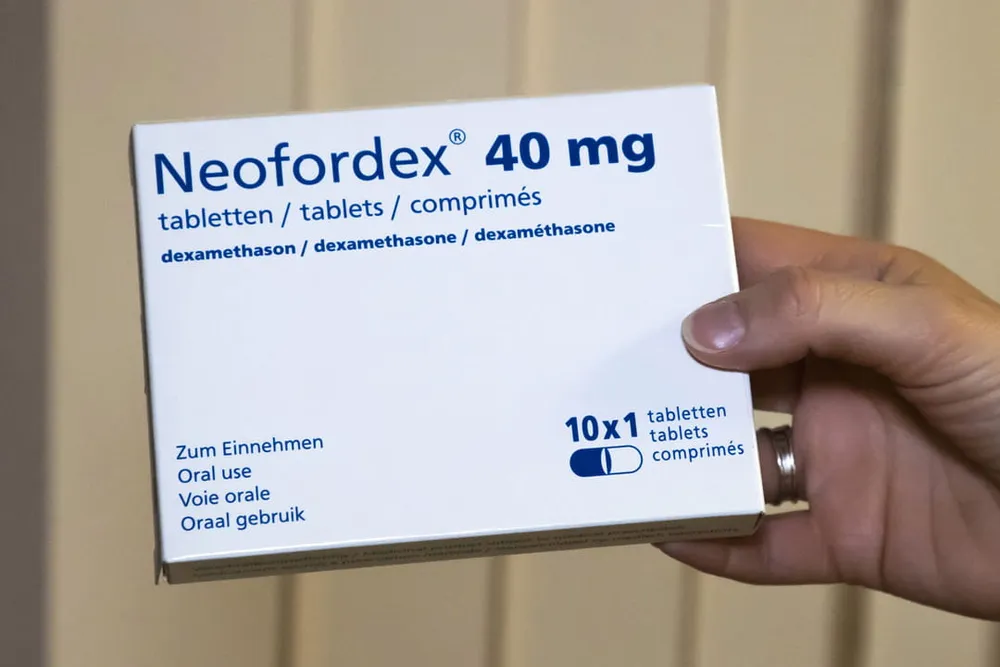
Table of Contents
Package leaflet: Information for the patient
Neofordex 40 mg tablet
dexamethasone
Please read all of this leaflet carefully before taking this medicine because it contains important information for you.
- Keep this leaflet. You may need to read it again.
- If you have any questions, ask your doctor or pharmacist.
- This medicine has been prescribed for you only. Do not give it to other people, even if their symptoms are the same as yours, as it could be harmful.
- If you experience any side effects, including those not listed in this leaflet, tell your doctor or pharmacist. See section 4.
Contents of this leaflet:
- What Neofordex is and what it is used for
- What you need to know before taking Neofordex
- How to take Neofordex
- Possible side effects
- How to store Neofordex
- Contents of the pack and other information
1. What Neofordex is and what it is used for
Neofordex is a medicine containing the active substance dexamethasone. Dexamethasone is a type of hormone known as a glucocorticoid, sometimes referred to as a corticoid or corticosteroid, with various actions including effects on white blood cells, which are part of the immune system (the body's natural defenses). Dexamethasone is similar to the glucocorticoids naturally produced in the body.
Neofordex is used to treat adult patients with multiple myeloma, a blood cancer affecting the white blood cells that produce antibodies. Neofordex will be administered in combination with other medicines for multiple myeloma; these act together to destroy cancerous white blood cells.
2. What you should know before taking Neofordex
Do not take Neofordex
- if you are allergic to dexamethasone or to any of the other ingredients of this medicine (listed in section 6);
- if you have a viral infection, particularly hepatitis, herpes, chickenpox or shingles;
- if you suffer from untreated psychiatric illness.
Warnings and precautions
Talk to your doctor, pharmacist or nurse before taking Neofordex, especially if it is being administered together with other medicines.
Risk of infection
Treatment with Neofordex (a high-dose corticosteroid) may reduce your body’s ability to fight infections (particularly those caused by bacteria, yeasts and/or parasites). This may lead to infections caused by organisms that rarely cause disease under normal circumstances (so-called opportunistic infections). If you develop any type of infection during treatment with this medicine, contact your doctor immediately. This is especially important if you notice signs of pneumonia: cough, fever, shortness of breath and chest pain. You may also feel confused, particularly if you are elderly. Inform your doctor if you have previously had tuberculosis or if you have stayed in areas where parasitic worm infections are common.
Note: During treatment with Neofordex, it is important to avoid contact with anyone who has chickenpox, measles or shingles. If you think you have been exposed to any of these conditions, inform your doctor immediately.
Psychiatric disorders
High-dose corticosteroids, including dexamethasone, can cause psychological problems, sometimes severe. Consult your doctor before taking Neofordex if you or a close family member have ever suffered or are currently suffering from severe depression or manic episodes. This is particularly important if you feel depressed or have suicidal thoughts. Insomnia can be minimized by taking Neofordex in the morning.
Tumour lysis syndrome
Contact your doctor if you experience symptoms of tumour lysis syndrome such as muscle cramps, muscle weakness, confusion, vision loss or disturbances, and shortness of breath.
Long-term treatment
During treatment with this medicine, it is important to follow a balanced diet (low in sugar and sodium, rich in protein). Fluid and sodium retention are common and may lead to hypertension. Your doctor will advise you on an appropriate diet and may prescribe potassium, calcium or vitamin D supplements.
Treatment with glucocorticoids such as dexamethasone may reduce the effectiveness of medicines used to treat diabetes or hypertension. Your doctor may need to increase the dose of these medicines.
Haematology
If you have previously had blood clots, inform your doctor before taking Neofordex.
The combination of dexamethasone with thalidomide, lenalidomide or pomalidomide (medicines used to treat multiple myeloma) increases the risk of blood clots in veins and arteries. Inform your doctor immediately if you experience shortness of breath, chest pain or swelling in your arms or legs.
The combination of dexamethasone with lenalidomide or pomalidomide may cause a reduction in the number of white blood cells (blood cells that help fight infections) and/or platelets (which help prevent bleeding). Your doctor will arrange appropriate blood tests before and during treatment.
Phaeochromocytoma crisis
Treatment with this medicine may cause a phaeochromocytoma crisis, which can be fatal. Phaeochromocytoma is a rare tumour of the adrenal glands. A crisis may occur with the following symptoms: headache, sweating, palpitations and hypertension. Contact your doctor immediately if you experience any of these symptoms.
Eye disorders
Treatment with this medicine may cause central serous chorioretinopathy, an eye disease leading to blurred or distorted vision. This usually affects only one eye. If you notice blurred or distorted vision lasting several days, contact your doctor.
Tendinitis
Treatment with this medicine may cause inflammation of the tendons. In extremely rare cases, tendon rupture may occur. This risk increases when taking certain antibiotics or if you have kidney problems. Contact your doctor if you notice pain, stiffness or swelling in your joints or tendons.
Inform any doctor, dentist or healthcare provider who may prescribe treatment that you are taking or have recently taken dexamethasone (see section “Other medicines and Neofordex”).
If you become ill or are involved in an accident, or if you need surgery (including dental surgery) or vaccination (high doses of glucocorticoids may reduce the effectiveness of vaccines containing “live viruses”), inform your doctor that you are taking or have recently taken high-dose corticosteroids.
If you undergo tests (particularly for infections), inform the person performing the test, as dexamethasone may interfere with test results.
Before taking Neofordex, inform your doctor
- if you have liver or kidney disease,
- if you have heart disease or have recently had a heart attack,
- if you have high blood pressure, high cholesterol or smoke,
- if you have diabetes or a family history of diabetes,
- if you have osteoporosis, especially if you are a postmenopausal woman,
- if you have glaucoma (increased eye pressure) or a family history of glaucoma,
- if you have myasthenia gravis (a disease affecting muscles), or tendon inflammation (tendinitis),
- if you have peptic ulcer (ulcer in the stomach or duodenum) or a history of peptic ulcers, bleeding or stomach perforation,
- if you have inflammation of the colon, diverticulitis, or have recently undergone intestinal surgery,
- if you have or are suspected of having phaeochromocytoma (a tumour of the adrenal glands).
Your doctor will monitor you more closely if you have any of the conditions listed above.
Elderly
If you are elderly, some of the side effects of Neofordex may be more severe, particularly thinning of the bones (osteoporosis), high blood pressure, low potassium levels, diabetes, increased susceptibility to infections and thinning of the skin. Your doctor will monitor you closely.
Children and adolescents
Multiple myeloma does not occur in children. Do not give this medicine to children (i.e. anyone under 18 years of age).
Other medicines and Neofordex
Inform your doctor or pharmacist if you are taking, have recently taken or might take any other medicines.
Before starting treatment with Neofordex, read the package leaflet of all medicines you will be taking in combination with Neofordex to obtain all necessary information. When taking thalidomide, lenalidomide or pomalidomide, special attention must be paid to requirements regarding testing and pregnancy prevention.
If you are taking any of the following medicines, consult your doctor before taking Neofordex:
The following co-administrations must be avoided
- acetylsalicylic acid, a substance present in many medicines used for relief of pain and mild fever (may increase the risk of bleeding);
Inform your doctor also if you have recently received or plan to receive a vaccination (see section “Warnings and precautions”).
The following co-administrations require precautions
- medicines that reduce potassium levels in the blood: e.g. certain diuretics or laxatives, amphotericin B injection, tetracosactide, due to the risk of lowering potassium levels. Your doctor may need to monitor your potassium levels;
- medicines that may increase the risk of heart rhythm abnormalities (e.g. certain medicines for heart conditions such as digoxin), since low potassium levels increase the risk of irregular heartbeat;
- medicines for the treatment of hypertension, as their effect may be reduced. Your doctor may need to adjust the dose of antihypertensive treatment;
- medicines for the treatment of anaemia such as erythropoietin (EPO) or other medicines such as hormone replacement therapy (HRT), which may increase the risk of blood clots (see sections “Warnings and precautions” and “Possible side effects”);
- medicines for the treatment of pain, inflammation and fever (non-steroidal anti-inflammatory drugs, NSAIDs) e.g. ibuprofen, naproxen, diclofenac, meloxicam and others, which may increase the risk of bleeding or stomach ulcers;
- medicines for the treatment of diabetes, as Neofordex may alter glucose levels. It is important to self-monitor blood glucose levels, especially at the beginning of treatment. Your doctor may need to adjust the dose of your antidiabetic medicines;
- certain antibiotics (such as fluoroquinolones) which may increase the risk of tendinitis and, in rare cases, rupture of the affected tendon, particularly after long-term treatment;
- certain anticancer medicines (such as methotrexate) which may increase the risk of infection, bleeding or anaemia.
The following medicines may affect the effect of Neofordex
These medicines may reduce the effect of Neofordex:
- aminoglutethimide (used to treat Cushing's syndrome or breast cancer);
- anticonvulsants (for epilepsy) such as carbamazepine, fosphenytoin, phenobarbital, phenytoin, primidone;
- rifampicin (used to treat tuberculosis);
- medicines for stomach problems (e.g. antacids) and colestyramine (to lower cholesterol); these should be taken at least two hours apart from Neofordex;
- ephedrine (used to treat asthma attacks or nasal congestion).
These medicines may increase the effect of Neofordex:
- aprepitant or fosaprepitant (used to treat nausea and vomiting after surgery or caused by chemotherapy [cancer treatment]);
- antibiotics with active ingredients ending in -mycin, antifungal medicines with active ingredients ending in -conazole, and anti-HIV medicines with active ingredients ending in -navir.
Neofordex may affect the effect of these medicines
- the effect of oral contraceptives and hormone replacement therapy (HRT) may be reduced. Effective measures must be taken to avoid pregnancy (see section “Pregnancy, breastfeeding and fertility”);
- the effect of oral anticoagulants may be increased, leading to an increased risk of bleeding. Your doctor may need to monitor your coagulation parameters closely;
- the effect of certain anticancer medicines (such as docetaxel and cyclophosphamide) may be reduced;
- the liver effects of lapatinib (used to treat cancer) may be increased;
- the effect of ciclosporin (a medicine used to suppress immune responses) may be reduced. In addition, seizures have been reported with concomitant use of dexamethasone and ciclosporin. Concomitant use of Neofordex and ciclosporin should be avoided;
- the effect of midazolam (used as a sedative and for epilepsy treatment) may be reduced;
- the effect of ivermectin (for certain worm infections) may be reduced; therefore, treatment with ivermectin should be successfully completed before starting Neofordex (see section “Warnings and precautions”);
- the effect of rifabutin and isoniazid (used to treat tuberculosis) may be reduced;
- the effect of indinavir (used to treat HIV) may be reduced;
- the effect of erythromycin may be reduced;
- the effect of praziquantel (for certain worm infections) may be reduced, risking treatment failure; therefore, treatment with praziquantel and Neofordex should be separated by at least one week.
Pregnancy, breastfeeding and fertility
If you are pregnant, think you may be pregnant, are planning to become pregnant, or are breastfeeding, consult your doctor before taking this medicine.
You should avoid becoming pregnant during treatment with Neofordex, as it may cause congenital malformations. You and your partner should use adequate contraception.
Do not take Neofordex during pregnancy unless your clinical condition requires treatment with dexamethasone. Inform your doctor immediately if you become pregnant or suspect pregnancy during treatment.
Glucocorticoids are excreted in breast milk; therefore, a risk to newborns/infants cannot be excluded. Inform your doctor if you are breastfeeding or intend to breastfeed. Your doctor will help you decide whether to discontinue breastfeeding or discontinue treatment with Neofordex, taking into account the benefit of breastfeeding for the child and the benefit of Neofordex for the mother.
Driving and using machines
Neofordex may have a moderate effect on the ability to drive and use machines. Do not drive, operate tools or machinery, or perform hazardous activities if you experience side effects such as confusion, hallucinations, dizziness, fatigue, drowsiness, fainting or blurred vision.
Neofordex contains lactose
Neofordex contains lactose, a sugar. If your doctor has told you that you have an intolerance to certain sugars, consult him or her before taking this medicine.
3. How to take Neofordex
Take this medicine exactly as directed by your doctor. If you have any doubts, consult your
doctor.
Your doctor will decide the dose and how often you should take Neofordex. This may vary depending on your
condition and any other treatments you are receiving. The recommended dose is one tablet at a time. If you
are over 65 years of age and/or in poor health, your doctor may decide to prescribe a different product
containing a lower dose of dexamethasone. Do not take a higher or lower dose than prescribed. You must
take this medicine on the prescribed days, exactly as directed by your doctor.
Your doctor may adjust the dose and frequency of administration based on certain parameters, including blood
tests, your general condition, other prescribed medicines, and your response to treatment.
Take the prescribed dose of one tablet (40 mg) in the morning with a glass of water.
If you have difficulty removing the tablet from the blister pack, ask someone for help.
Insomnia can be minimized by taking Neofordex in the morning.
If you take more Neofordex than you should
If you take an excessive dose of Neofordex, contact your doctor or a hospital immediately.
If you forget to take Neofordex
If you forget to take Neofordex at the usual time and
- it is less than 12 hours late: take the tablet immediately;
- it is more than 12 hours late: do not take the tablet, but take the next tablet at the usual time.
Do not take a double dose to make up for a forgotten tablet.
If you stop taking Neofordex
Serious side effects may occur if you stop taking this medicine suddenly. If you stop treatment with this
medicine too quickly, you may experience a drop in blood pressure. You may also experience a "withdrawal
symptom" which may include headache, vision problems (including eye pain or swelling), nausea or vomiting,
fever, muscle and joint pain, nasal swelling, weight loss, itching, and conjunctivitis. If treatment needs to
be stopped, follow your doctor's advice.
If you have any questions about how to use this medicine, consult your doctor or pharmacist.
4. Possible side effects
Like all medicines, this medicine can cause side effects, although not everyone experiences them.
Your doctor will discuss these with you and explain the potential risks and benefits of treatment.
The side effects listed below have been observed when dexamethasone has been used for the treatment of multiple myeloma and for the treatment of other diseases. In some cases, co-administration of different medicines may increase the side effects of one or both medicines when taken separately.
Neofordex can cause serious mental health problems. These are common (may affect up to 1 in 10 people) and may include:
- feelings of depression (including suicidal thoughts),
- feelings of euphoria (mania), intense happiness (euphoria), or mood swings,
- anxiety, difficulty concentrating, and memory loss,
- perceiving, seeing, or hearing things that are not there, believing in things that are not real, dark thoughts, or changes in behaviour. If you notice any of these symptoms, contact your doctor immediately.
Other possible side effects are:
Very common: may affect more than 1 in 10 people
- increased blood sugar levels (hyperglycaemia);
- constipation;
- difficulty sleeping (insomnia);
- muscle cramps, muscle weakness;
- fatigue, weakness, swelling of the body and face.
Common: may affect up to 1 in 10 people
- bacterial, viral, or fungal infections, including pneumonia, herpes zoster, infections of the nose, mouth, tonsils, or throat, bronchitis, herpes, bladder infection, candidiasis;
- reduced number of red blood cells, white blood cells, and/or platelets, or increased number of white blood cells, reduced levels of potassium or albumin (a protein) in the blood, increased levels of uric acid in the blood, changes in liver function tests;
- Cushing's syndrome, i.e. weight gain in the trunk and face, excessive sweating, stretch marks, visible swollen capillaries (small blood vessels) and dry skin, growth of extra facial hair (especially in women), and hair thinning;
- onset of diabetes, loss or increase in appetite, weight gain or loss, fluid retention;
- aggression, confusion, irritability, nervousness, restlessness, mood changes;
- tingling, numbness, pins and needles, or burning sensations on the skin, or pain in the hands or feet due to nerve damage, dizziness, tremor, headache, loss or change in taste;
- cataract, blurred vision;
- rapid or irregular heartbeat, blood pressure too high or too low, formation of blood clots that can block blood vessels (e.g. in the legs or lungs), swelling of the arms or legs, redness of the face or body;
- cough, difficulty breathing, difficulty speaking, sore throat or mouth inflammation, hoarseness, dry mouth, hiccups, inflammation of the mucous membranes;
- vomiting, nausea, diarrhoea, indigestion, flatulence, bloating and/or stomach pain;
- skin rash, itching, skin redness, excessive sweating (hyperhidrosis), dry skin, hair loss (alopecia);
- muscle deterioration, muscle, joint, bone, or limb pain;
- frequent need to urinate;
- pain, fever, chills, fainting, dizziness, exhaustion, drowsiness, impaired sense of balance.
Uncommon: may affect up to 1 in 100 people
- fever due to deficiency of certain white blood cells, failure of all types of blood cells, reduced blood clotting ability;
- inability of the thyroid gland to produce normal amounts of hormones (hypothyroidism);
- insufficient body water (dehydration), with thirst or headache, reduced levels of magnesium or calcium in the blood;
- mood changes, hallucinations;
- stroke, difficulty with coordination or movement, fainting;
- inflammation of the eye and/or eyelids, increased tear production;
- heart attack, abnormally slow heartbeat;
- hives;
- kidney failure.
Not known: frequency cannot be estimated from the available data
- infection, systemic inflammation due to infection (sepsis);
- inability of the body to respond normally to severe stress, such as accidents, surgery, or illness due to insufficient adrenal function, unusually severe headache with visual disturbances related to treatment discontinuation, menstrual cycle irregularities in women, excessive hair growth (hirsutism);
- increased need for antidiabetic medications, electrolyte imbalance, loss of potassium due to low levels of carbon dioxide (a condition called metabolic alkalosis);
- seizures;
- increased pressure in the eye, including glaucoma, choroid and retinal disorders (chorioretinopathy);
- inability of the heart to pump sufficient blood through the body (heart failure);
- ulcers, perforations, and/or bleeding in the oesophagus (gullet), stomach, or intestine, inflammation of the pancreas (which may present as back and abdominal pain);
- delayed wound healing, acne, thinning of the skin, bruising, red or purple spots on the skin (purpura);
- thinning of the bones with increased risk of fracture, bone disease, tendon rupture.
Reporting of side effects
If you experience any side effect, including those not listed in this leaflet, talk to your doctor or pharmacist. You can also report side effects directly via the national reporting system listed in Annex V. By reporting side effects, you can help provide more information on the safety of this medicine.
5. How to store Neofordex
Keep this medicine out of the sight and reach of children.
Do not use this medicine after the expiry date stated on the carton and blister after Exp/EXP.
The expiry date refers to the last day of that month.
Do not use this medicine if you notice any defects or signs of deterioration in the tablets or the packaging.
This medicine does not require any special storage temperature. Keep the tablets in the blister pack until
it is time to take them. If you are using a pill organizer, use the perforation to separate individual tablets
from the blister without opening the packaging.
Do not dispose of medicines via wastewater or household waste. Ask your pharmacist how to dispose of
medicines you no longer use. This will help protect the environment.
6. Package contents and other information
What Neofordex contains
- The active substance is dexamethasone. Each tablet contains dexamethasone acetate, equivalent to 40 mg of dexamethasone.
- The other ingredients are monohydrate lactose, microcrystalline cellulose, magnesium stearate and anhydrous colloidal silica (see section 2).
Description of the appearance of Neofordex and package contents
The tablets are white, oval-shaped, with the marking “40 mg” imprinted on one side.
Each cardboard package contains 10 x 1 tablets in perforated blisters for single-dose administration in
OPA/Aluminium /PVC-Aluminium.
Marketing Authorisation Holder and Manufacturer
THERAVIA
16 Rue Montrosier
92200 Neuilly-sur-Seine
France
For further information about this medicinal product, please contact the local representative of the Marketing Authorisation Holder:
België/Belgique/Belgien Lietuva
THERAVIA Immedica Pharma AB
Tél/Tel: +32 (0)2 40 11 442 Tel/Puh: +46 (0)8 533 39 500
[email protected] [email protected]
България Luxembourg/Luxemburg
THERAVIA THERAVIA
Tel.: +33 (0)1 72 69 01 86 Tél/Tel: +352 278 62 329
[email protected] [email protected]
Česká republika Magyarország
THERAVIA THERAVIA
Tel.: +33 (0)1 72 69 01 86 Tel.: +33 (0)1 72 69 01 86
[email protected] [email protected]
Danmark Malta
Immedica Pharma AB THERAVIA
Tlf: +46 (0)8 533 39 500 Tel: +356 2776 1358
[email protected] [email protected]
Deutschland Nederland
THERAVIA THERAVIA
Tel: +49 (0)3022153008 Tel: +31 (0)2 070 38 155
[email protected] [email protected]
Eesti Norge
Immedica Pharma AB Immedica Pharma AB
Tel/Puh: +46 (0)8 533 39 500 Tel/Puh: +46 (0)8 533 39 500
[email protected] [email protected]
Ελλάδα Österreich
RAFARM AEBE THERAVIA
Τηλ: + 302 106776550 Tel: +43 (0) 800 909 699
[email protected]
España Polska
THERAVIA THERAVIA
Tel: + 34 914 146 613 Tel.: +33 (0)1 72 69 01 86
[email protected] [email protected]
France Portugal
THERAVIA THERAVIA
Tél: +33 (0)1 72 69 01 86 Tel: +33 (0)1 72 69 01 86
[email protected] [email protected]
Hrvatska România
THERAVIA THERAVIA
Tel: +33 (0)1 72 69 01 86 Tel: +33 (0)1 72 69 01 86
[email protected] [email protected]
Ireland Slovenija
THERAVIA THERAVIA
Tel : 016950063 Tel: +33 (0)1 72 69 01 86
[email protected] [email protected]
Ísland Slovenská republika
Immedica Pharma AB THERAVIA
Sími: + 46 (0)8 533 39 500 Tel.: +33 (0)1 72 69 01 86
[email protected] [email protected]
Italia Suomi/Finland
THERAVIA Immedica Pharma AB
Tel: +39 (0) 800 959 161 Tel/Puh: +46 (0)8 533 39 500
[email protected] [email protected]
Κύπρος Sverige
RAFARM AEBE Immedica Pharma AB
Τηλ: + 302 106776550 Tel: +46 (0)8 533 39 500
[email protected]
Latvija
Immedica Pharma AB
Tel: +46 (0)8 533 39 500
[email protected]
Other sources of information
More detailed information on this medicinal product is available on the website of the European Medicines Agency: http://www.ema.europa.eu.