Neo Optalidon
Italy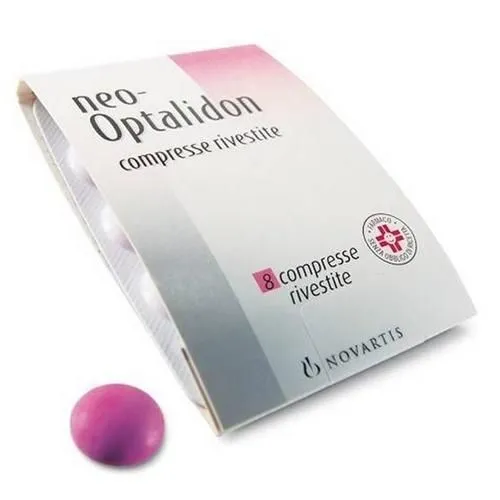
Table of Contents
Package leaflet: Information for the patient
NEO-OPTALIDON 200 mg+125 mg+25 mg film-coated tablets
Paracetamol + Propyphenazone + Caffeine
Read this leaflet carefully before taking this medicine because it contains important information for you.
Always take this medicine exactly as described in this leaflet or as your doctor or pharmacist has instructed you.
- Keep this leaflet. You may need to read it again.
- If you need more information or advice, consult your pharmacist.
- If you experience any side effects, including those not listed in this leaflet, contact your doctor or pharmacist. See section 4.
- Contact your doctor if you do not notice improvement or if you experience worsening of symptoms after 3 days of treatment.
Contents of this leaflet:
- What Neo-Optalidon is and what it is used for
- What you need to know before taking Neo-Optalidon
- How to take Neo-Optalidon
- Possible side effects
- How to store Neo-Optalidon
- Contents of the pack and other information
1. What Neo-Optalidon is and what it is used for
Neo-Optalidon is a medicine containing three active substances: paracetamol and propyphenazone, which reduce fever and pain, and caffeine, a common component in this type of combination.
This medicine is used for the symptomatic treatment of pain (e.g. headache, toothache, nerve pain, menstrual pain) and fever.
Contact your doctor if you do not feel better or if you feel worse after 3 days of treatment.
2. What you should know before taking Neo-Optalidon
Do not take Neo-Optalidon if:
- you are allergic to paracetamol, propyphenazone, caffeine, or any of the other ingredients of this medicine (listed in section 6);
- you are allergic to other substances chemically similar, for example, other anti-inflammatory drugs belonging to the same class (e.g. para-aminophenols, pyrazolones);
- you are allergic to peanuts or soy;
- you suffer from certain blood disorders such as:
- granulocytopenia (reduction in the number of certain blood cells);
- intermittent porphyrias (diseases involving abnormalities in certain enzymes);
- deficiency of an enzyme called glucose-6-phosphate dehydrogenase (known as favism or "fava bean disease", which causes a reduction in red blood cells);
- severe haemolytic anaemia (a disease that destroys red blood cells);
- you have hepatic insufficiency (inadequate function of liver cells) or renal insufficiency;
- you are pregnant or breastfeeding (see "Pregnancy and breastfeeding").
Neo-Optalidon must not be administered to children under 12 years of age, as it contains caffeine.
Warnings and precautions
BE CAREFUL not to use Neo-Optalidon at high doses or for prolonged periods, or
concurrently with other medicines containing paracetamol, as adverse reactions may occur,
including serious ones, particularly affecting the liver, kidneys, and blood (see "Other medicines and Neo-Optalidon"
and section 4. Possible side effects).
Consult your doctor or pharmacist before taking Neo-Optalidon, especially if:
- you have blood disorders or problems with your liver or kidneys;
- you have asthma or chronic rhinitis (nasal inflammation lasting more than 12 weeks);
- you have chronic urticaria (a skin rash characterized by itchy swellings (wheals) lasting 6–12 weeks);
- you are taking other anti-inflammatory medicines (see "Other medicines and Neo-Optalidon"); in these cases, the use of Neo-Optalidon is not recommended.
Discontinue treatment with Neo-Optalidon and consult your doctor:
- if you develop fever, as treatment with Neo-Optalidon may not be suitable for your condition;
- if you experience chest pain (angina), or notice skin or mucous membrane changes, or any other signs of an allergic reaction (see section 4. Possible side effects).
During treatment with Neo-Optalidon, inform your doctor immediately if:
You suffer from serious illnesses, including severe renal impairment or sepsis (when bacteria and their toxins
circulate in the blood causing organ damage), malnutrition, chronic alcoholism, or if you are also taking
flucloxacillin (an antibiotic). In patients with these conditions, a serious condition called metabolic acidosis (an abnormality in blood and body fluids) has been reported when paracetamol is used regularly for prolonged periods or when paracetamol is taken concomitantly with flucloxacillin. Symptoms of metabolic acidosis may include: severe breathing difficulties with deep, rapid breathing, drowsiness, nausea, and vomiting.
This medicine may affect the results of certain laboratory tests, such as blood tests measuring uric acid levels (uricemia) and blood glucose levels (glycemia).
Children
Neo-Optalidon must not be administered to children under 12 years of age, as it contains caffeine.
Other medicines and Neo-Optalidon
Inform your doctor or pharmacist if you are taking, have recently taken, or might take any
other medicines, as the simultaneous administration of multiple medicines may affect their
absorption and thus their effectiveness; this may also increase the risk of serious adverse reactions.
Inform your doctor or pharmacist if you are taking:
-
hypoglycaemic agents (which reduce blood sugar levels) such as acetohexamide, chlorpropamide, tolbutamide;
-
anticoagulants such as warfarin (which thin the blood);
-
chloramphenicol (for infections) and zidovudine (for viruses);
-
rifampicin (for the treatment of tuberculosis);
-
cimetidine (for peptic ulcer);
-
phenytoin, lamotrigine, glutethimide, phenobarbital, carbamazepine (for epilepsy);
-
NSAIDs and opioids (pain-relieving medicines);
-
ethinylestradiol (contained in many oral contraceptives);
-
medicines affecting gastric emptying (e.g. propantheline, metoclopramide, domperidone);
-
other medicines containing paracetamol;
-
flucloxacillin (antibiotic), due to a serious risk of blood and fluid disturbances (called
high anion gap metabolic acidosis), which requires urgent treatment. If you are taking any of the above-listed medicines, your doctor will advise you accordingly.
Neo-Optalidon with food, drinks, and alcohol
Do not take Neo-Optalidon with alcohol, as this may interfere with your treatment and/or increase the risk of adverse effects on the liver.
Neo-Optalidon contains caffeine. In high doses, caffeine may cause: excitation, difficulty falling asleep (insomnia), muscle tremors, vomiting, increased diuresis, heart rhythm disturbances or increased heart rate (extrasystoles or tachycardia), dark spots in the visual field (scotomata). Be careful not to consume too many beverages containing caffeine and/or theine during treatment with Neo-Optalidon.
Pregnancy and breastfeeding
If you are pregnant, suspect you may be pregnant, planning to become pregnant, or are breastfeeding,
consult your doctor or pharmacist before taking this medicine.
Do not take Neo-Optalidon if you are pregnant or breastfeeding (see "Do not take Neo-Optalidon if").
Do not take Neo-Optalidon if you are pregnant, as it may harm the fetus or cause complications during childbirth.
NSAIDs can cause kidney and heart problems in the fetus. They may affect the bleeding tendency in both mother and child and may cause delayed or prolonged labour. From the 20th week of pregnancy, NSAIDs may cause kidney problems in the fetus, thereby reducing the levels of amniotic fluid surrounding the baby (oligohydramnios), or cause narrowing of a blood vessel (ductus arteriosus) in the baby's heart.
Driving and using machines
Neo-Optalidon may cause dizziness. Exercise particular caution before driving or operating machinery.
Neo-Optalidon contains: -
sucrose: if your doctor has diagnosed you with an intolerance to certain sugars, contact him/her before taking this medicine;
-
hydrogenated peanut oil: if you are allergic to peanuts or soy, do not use this medicine.
3. How to take Neo-Optalidon
Take this medicine exactly as stated in this leaflet or as instructed by your doctor or pharmacist. If you have any doubts, consult your doctor or pharmacist.
The recommended dose is 1–2 tablets per day, taken with plenty of water or other liquids and with food.
The maximum dose is 4 tablets per day. Do not exceed the recommended doses.
Do not take this medicine for more than 3 consecutive days. After 3 days of treatment without improvement, if symptoms recur or if you notice any change in their characteristics, consult your doctor.
Elderly
It is advisable to follow the lowest doses indicated above: 1 tablet once daily, unless otherwise directed by your doctor.
Children
Neo-Optalidon must not be administered to children under 12 years of age because it contains caffeine.
If you forget to take Neo-Optalidon
Do not take a double dose to make up for the missed tablet.
If you take more Neo-Optalidon than you should
Seizures or liver problems may occur.
Additionally, due to the presence of caffeine, high doses of this medicine may cause excitement, insomnia, muscle tremor, nausea, vomiting, increased urination, heart rhythm disturbances or increased heartbeat (extrasystoles or tachycardia), dark spots in the visual field (scotomata).
If you take more Neo-Optalidon than you should, contact your doctor immediately or go to the nearest hospital.
4. Possible side effects
Like all medicines, this medicine can cause side effects, although not everybody gets them.
Stop taking Neo-Optalidon and contact your doctor if you experience any of the following conditions:
- skin rashes, redness, itching with skin spots (urticaria), swelling of the face, eyes, lips, difficulty breathing (laryngeal edema or asthma), severe allergic reaction (anaphylactic shock);
- severe skin reactions with redness and/or blistering (e.g. erythema multiforme, Stevens-Johnson syndrome, toxic epidermal necrolysis);
- frequency not known (cannot be estimated from the available data): severe condition causing the blood to become more acidic (called metabolic acidosis), in patients with serious illness using paracetamol (see section 2).
Inform your doctor if you experience the following side effects:
- blood cell disorders: thrombocytopenia (decreased platelets), leucopenia (decreased white blood cells), agranulocytosis (marked decrease in granulocytes), anaemia (decreased red blood cells);
- liver inflammation (hepatitis) and changes in liver function;
- kidney inflammation (interstitial nephritis) and changes in kidney function (renal failure), blood in urine (haematuria), absence of urine production (anuria);
- stomach or intestinal problems;
- dizziness.
Reporting of side effects
If you experience any side effect, including those not listed in this leaflet, talk to your doctor or pharmacist.
You can also report side effects directly via the national reporting system at https://www.aifa.gov.it/content/segnalazioni-reazioni-avverse.
By reporting side effects, you can help provide more information on the safety of this medicine.
5. How to store Neo-Optalidon
Keep this medicine out of the sight and reach of children.
Do not use this medicine after the expiry date stated on the packaging. The expiry date refers to the last day of that month.
This medicine does not require any special storage conditions.
Do not dispose of medicines via wastewater or household waste. Ask your pharmacist how to dispose of medicines you no longer use. This will help protect the environment.
6. Package contents and other information
What Neo-Optalidon contains
The active substances are: paracetamol, propyphenazone and caffeine.
Each tablet contains: 200 mg of paracetamol, 125 mg of propyphenazone and 25 mg of caffeine.
The other components are: hydroxypropylcellulose; dimethylsilicone oil; crospovidone; hydrogenated vegetable oil; magnesium stearate; titanium dioxide; hydrogenated peanut oil; anhydrous colloidal silica; macrogol 6000; povidone; sucrose; stearic acid; talc; microcrystalline cellulose; cetyl alcohol; erythrosine (E 127); arabic gum.
Description of the appearance of Neo-Optalidon and package contents
Neo-Optalidon is available in packages containing 8 or 16 coated tablets, packed in opaque PVC/aluminum blisters.
Not all pack sizes may be marketed.
Marketing Authorization Holder
Perrigo Italia S.r.l., Viale Dell’Arte, 25, 00144 Rome, Italy
Manufacturer
Mipharm S.p.A., Via Quaranta 12, Milan, Italy