Neo Nisidina
Italy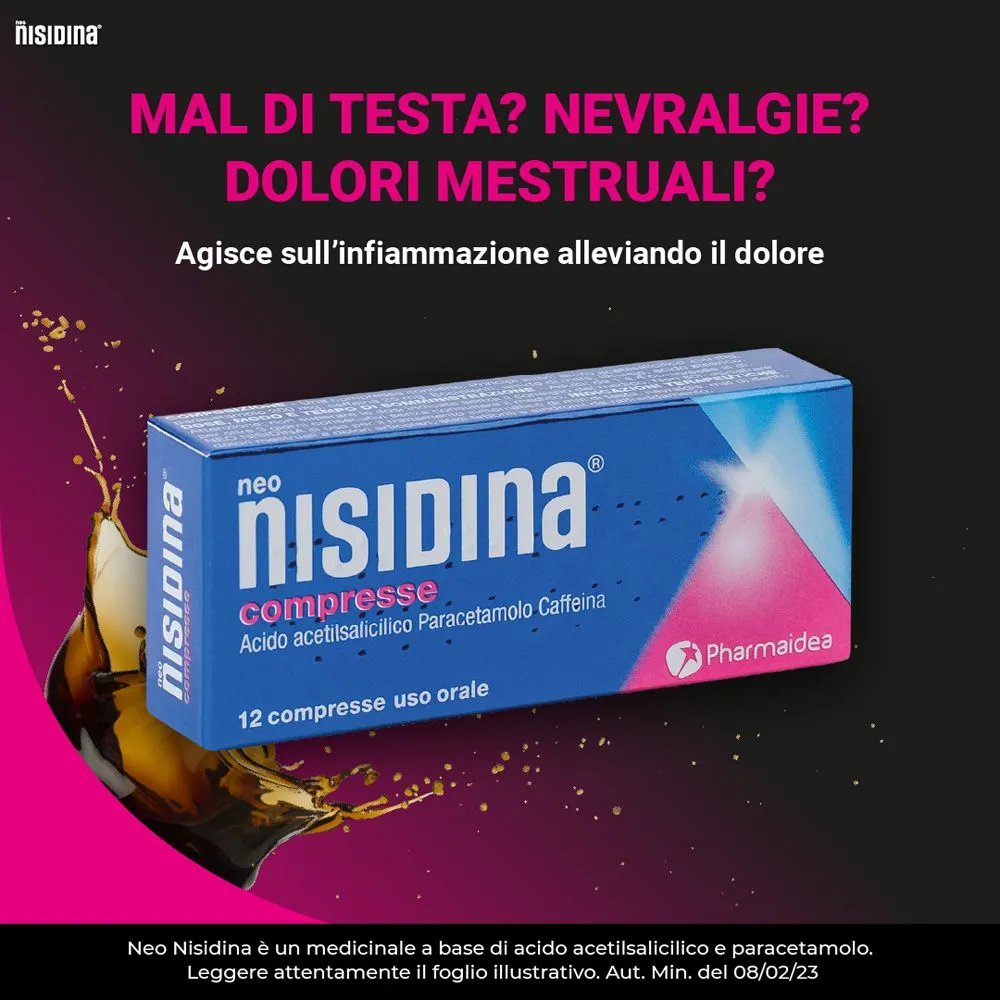
Table of Contents
- Package leaflet: Information for the patient
- NEO NISIDINA tablets
- 1. What NEO NISIDINA is and what it is used for
- 2. What you should know before taking NEO NISIDINA
- 3. How to take NEO NISIDINA
- 4. Possible side effects
- 5. How to store NEO NISIDINA
- 6. Package contents and other information
- Patient Information Leaflet: Information for the patient
- NEO NISIDINA effervescent tablets with vitamin C
- 2. What NEO NISIDINA is and what it is used for
- 2. What you should know before taking NEO NISIDINA
- 3. How to take NEO NISIDINA
- 4. Possible side effects
- 5. How to store NEO NISIDINA
- 6. Package contents and other information
Package leaflet: Information for the patient
NEO NISIDINA tablets
Acetylsalicylic acid + paracetamol + caffeine
Please read this leaflet carefully before taking this medicine because it contains
important information for you.
- Always take this medicine exactly as described in this leaflet or as your doctor or pharmacist has told you to do.
- Keep this leaflet. You may need to read it again.
- If you need more information or advice, consult your pharmacist.
- If you experience any side effects, including those not listed in this leaflet, consult your doctor or pharmacist. See section 4.
- Consult your doctor if you do not notice improvement or if you notice worsening of symptoms after 3 days of treatment.
Contents of this leaflet:
- What NEO NISIDINA is and what it is used for
- What you need to know before taking NEO NISIDINA
- How to take NEO NISIDINA
- Possible side effects
- How to store NEO NISIDINA
- Contents of the pack and other information
1. What NEO NISIDINA is and what it is used for
NEO NISIDINA is an oral medicine that relieves pain (analgesic) and reduces fever (antipyretic), containing three active substances: acetylsalicylic acid, paracetamol and caffeine.
NEO NISIDINA is used to treat headache, nerve inflammation (neuralgia), toothache, menstrual pain, joint pain, feverish conditions and colds.
Consult your doctor if you do not feel better or feel worse after 3 days of treatment.
2. What you should know before taking NEO NISIDINA
Do not take NEO NISIDINA
- if you are allergic to acetylsalicylic acid, paracetamol, caffeine, or any of the other ingredients of this medicine (listed in section 6);
- if you are allergic to medicines belonging to the group of salicylates or non-steroidal anti-inflammatory drugs (NSAIDs);
- if you have previously developed symptoms such as asthma, swelling of the face, tongue, and throat (angioedema), or hives after taking non-steroidal anti-inflammatory drugs (NSAIDs);
- if you have lesions in the stomach or the first part of the intestine (gastric or duodenal ulcer);
- if you are prone to bleeding (haemorrhage), for example, if you suffer from blood clotting disorders (haemophilia);
- if you are in the third trimester of pregnancy;
- if you are under 16 years of age;
- if you are between 16 and 18 years of age and are affected by the chickenpox or influenza virus, as it may cause serious complications (see section “Children and adolescents”);
- if you suffer from asthma;
- if you have severe problems with kidney, liver, or heart function;
- if you are taking methotrexate (at doses of 15 mg/week or more) (see section “Other medicines and NEO NISIDINA”);
- if you suffer from a disease caused by deficiency of the enzyme glucose-6-phosphate dehydrogenase;
- if you suffer from a blood disorder characterized by a low number of red blood cells (severe haemolytic anaemia).
Warnings and precautions
Talk to your doctor or pharmacist before taking NEO NISIDINA.
Avoid using this medicine for more than 3 days without first consulting your doctor and without their direct supervision. If pain or fever persist or worsen, if new symptoms appear, or if redness or swelling occur, consult your doctor immediately, as these could be signs of worsening of the underlying condition.
- During treatment with NEO NISIDINA, inform your doctor immediately if:
- you suffer from allergic rhinitis and nasal polyps;
- you have chronic or recurring stomach or intestinal problems, or if you have previously suffered from ulcers, bleeding, or perforation in the stomach or intestine;
- you suspect you are allergic to other similar medicines (analgesic antipyretics or non-steroidal anti-inflammatory drugs (NSAIDs));
- you regularly consume alcoholic beverages;
- you suffer from liver problems (mild or moderate hepatic insufficiency, altered liver function, for example due to chronic alcohol abuse, hepatitis, Gilbert's syndrome);
- you have kidney problems (impaired renal function and mild or moderate renal insufficiency);
- you are taking medicines to thin the blood (oral anticoagulants, antiplatelet agents, systemic heparin, thrombolytics, or other drugs) (see section “Other medicines and NEO NISIDINA”);
- you are scheduled for surgery or an invasive diagnostic procedure, as problems with blood clotting may occur;
- you are in the first or second trimester of pregnancy;
- you are elderly and over 70 years of age, especially if you are taking other medicines simultaneously.
- if you suffer from serious diseases, including severe renal impairment or sepsis (when bacteria and their toxins circulate in the blood causing organ damage), malnutrition, chronic alcoholism, or if you are also taking flucloxacillin (an antibiotic). In patients with these conditions, a serious condition called metabolic acidosis (an abnormality in blood and body fluids) has been reported when paracetamol is used regularly for prolonged periods or when paracetamol is taken in combination with flucloxacillin. Symptoms of metabolic acidosis may include: severe breathing difficulties with deep, rapid breathing, drowsiness, nausea, and vomiting.
Avoid prolonged or frequent use of the medicine without first consulting your doctor, and do not take other products containing paracetamol simultaneously, as serious adverse effects may occur if paracetamol is taken in high doses. The risk of serious adverse effects is also increased when NEO NISIDINA is taken together with other medicines used to relieve pain (analgesics) or reduce fever (antipyretics); therefore, avoid taking these medicines at the same time.
Sudden discontinuation of analgesics after prolonged incorrect use at high doses may cause headache, fatigue, nervousness, and withdrawal symptoms that resolve within a few days. Until then, avoid taking other painkillers and do not restart them without consulting your doctor.
Incorrect use of the medicine (at doses or for durations exceeding those indicated) may cause serious harm, particularly to the liver, kidneys (analgesic nephropathy), or blood, which could endanger the patient's life.
Acetylsalicylic acid may reduce the elimination of uric acid and cause a gout attack in susceptible individuals; it may also mask the symptoms of an infection.
Taking this medicine may alter the results of certain laboratory tests, such as measurements of uric acid (uricemia) or blood sugar (glycemia) levels.
Children and adolescents
This medicine is contraindicated in children and adolescents under 16 years of age. However, if a viral infection such as influenza or chickenpox is suspected, NEO NISIDINA should not be taken even in adolescents aged between 16 and 18 years (see section “Do not take NEO NISIDINA”). In such cases, there is a risk of a rare and life-threatening condition characterized by vomiting, headache, loss of consciousness, liver failure, and problems affecting the central nervous system (Reye's syndrome), which requires immediate medical intervention.
Other medicines and NEO NISIDINA
Inform your doctor or pharmacist if you are taking, have recently taken, or might take any other medicines.
For each component of NEO NISIDINA, the medicines that may alter its effect are indicated.
Pay special attention if you are taking the following medicines, because acetylsalicylic acid may increase their effects and the risk of toxicity:
- other medicines used to relieve pain and inflammation (non-steroidal anti-inflammatory drugs (NSAIDs), corticosteroids), and alcohol, as they increase the risk of gastrointestinal side effects (e.g., gastrointestinal bleeding);
- medicines used for certain heart conditions (cardiac glycosides such as digoxin, digitoxin);
- lithium, a medicine used for mental disorders;
- medicines to thin the blood (antiplatelet agents, thrombolytics, anticoagulants), antidepressant medicines (selective serotonin reuptake inhibitors (SSRIs)), and medicines for gout (uricosurics), as they may increase the risk of bleeding;
- methotrexate, a medicine used for rheumatoid arthritis and to treat certain tumours;
- medicines that lower blood sugar levels (hypoglycaemic agents);
- valproic acid, a medicine used for epilepsy. Acetylsalicylic acid may also reduce the effect of the following medicines:
- medicines used to lower blood pressure (antihypertensives) and diuretics, including spironolactone;
- medicines that promote the elimination of uric acid (e.g., probenecid, sulfinpyrazone).
Metamizole (a substance used to reduce pain and fever) may reduce the effect of acetylsalicylic acid on platelet aggregation (blood cells that clump together to form a blood clot) when taken simultaneously. Therefore, this combination should be used with caution in patients taking low-dose aspirin for cardioprotection.
Be cautious if you are taking the following medicines, as they may alter the activity of paracetamol:
- probenecid, used for gout, and salicylamide, an analgesic, which delay the elimination of paracetamol and increase its toxicity;
- medicines used to thin the blood (oral anticoagulants), as they increase the risk of bleeding when paracetamol is administered simultaneously for 7 days or more;
- colestyramine, used to reduce cholesterol levels in the blood, propantheline, used for stomach cramps, or other medicines that slow gastric emptying, as they may reduce the absorption of paracetamol;
- medicines that instead accelerate gastric emptying, such as metoclopramide, used to inhibit the vomiting reflex, as they lead to an increased rate of absorption;
- medicines that cause enzyme induction, for example, certain hypnotic and antiepileptic drugs (glutethimide, phenobarbital, phenytoin, carbamazepine), cimetidine, a medicine for stomach acidity, and rifampicin, an antibiotic, as they may cause severe liver damage. The same may occur in case of alcohol abuse;
- chloramphenicol, an antibiotic, as paracetamol may increase its toxicity;
- zidovudine (AZT), used in the treatment of AIDS, as concomitant use with paracetamol increases the risk of reduced white blood cells (neutropenia) induced by the latter. Therefore, NEO NISIDINA should be taken together with AZT only under medical supervision.
- -flucloxacillin (antibiotic), due to a serious risk of blood and fluid abnormalities (called metabolic acidosis with elevated anion gap) that must be treated urgently (see section 2).
Additionally, be cautious if you are taking the following medicines:
- medicines for epilepsy (barbiturates) and allergies (antihistamines), as caffeine may reduce their sedative activity;
- medicines that cause an increased heart rate (tachycardia) (e.g., sympathomimetics, thyroxine), as caffeine increases their activity;
- oral contraceptives, cimetidine (used for stomach acidity), and disulfiram (used to treat alcoholism), as they slow down the metabolism of caffeine in the liver;
- medicines for epilepsy (barbiturates) and cigarette smoking, as they increase the metabolism of caffeine in the liver;
- theophylline, used for asthma, as caffeine reduces its elimination from the body;
- quinolone antibiotics, as they may delay the elimination of caffeine.
NEO NISIDINA and alcohol
Avoid consuming alcohol together with this medicine, as it may increase the risk of stomach and intestinal bleeding and liver damage.
Pregnancy, breastfeeding, and fertility
If you are pregnant, think you may be pregnant, are planning a pregnancy, or are breastfeeding, consult your doctor or pharmacist before taking this medicine.
During pregnancy, this medicine is considered safe only for limited obstetric use up to a maximum of 100 mg of acetylsalicylic acid per day. Use of higher doses may negatively affect the pregnancy or the child's development.
If necessary, during the first two months of pregnancy, NEO NISIDINA may be used only after consulting your doctor and at the lowest possible dose. Use the lowest effective dose that relieves pain and/or fever, and take it for the shortest possible duration. Contact your doctor if pain and/or fever do not decrease or if you need to take the medicine more frequently.
During the first and second trimesters of pregnancy, the medicine should not be administered unless strictly necessary.
Do not take this medicine during the third trimester of pregnancy, as acetylsalicylic acid may cause serious problems for the baby and the mother, including during childbirth and after birth (see section “Do not take NEO NISIDINA”).
Avoid prolonged intake of caffeine, as it may lead to spontaneous abortion or premature birth.
Avoid taking this medicine if you are breastfeeding, as its components pass into breast milk and may cause problems for the baby.
Discontinue use of this medicine if you have fertility problems or are undergoing fertility investigations.
Driving and using machines
There are no available data regarding the effects of the medicine on the ability to drive vehicles or operate machinery.
NEO NISIDINA contains lactose
This medicine contains lactose, a type of sugar. If your doctor has diagnosed you with an intolerance to certain sugars, contact them before taking this medicine.
3. How to take NEO NISIDINA
Use this medicine exactly as stated in this leaflet or as directed by your doctor or pharmacist. If you have any doubts, consult your doctor or pharmacist.
Take the tablets with food.
Do not take this medicine for more than 3 consecutive days without consulting your doctor.
Adults:
The recommended dose is from 1 to 4 tablets per day. Do not exceed the stated doses.
Contact your doctor if symptoms recur or if you notice any change in their characteristics.
Use in elderly patients
If you are elderly, you should take this medicine at the lowest possible dosage.
If you take more NEO NISIDINA than you should
In case of accidental ingestion/overdose of NEO NISIDINA, contact your doctor immediately or go to the nearest hospital.
Overdose may have very serious consequences and can even lead to death. Inform your doctor immediately if you experience any symptoms of overdose.
Ingestion of excessive doses of paracetamol may cause liver toxicity (hepatic dysfunction) appearing 24–48 hours later, which may worsen to coma (hepatic coma), potentially fatal, and kidney damage.
Symptoms of paracetamol poisoning occur in several phases. In the first phase (first day), symptoms include nausea, vomiting, sweating, drowsiness, and general malaise. After a temporary subjective improvement, in the second phase (third or fourth day), a marked increase in transaminase levels, yellowing of the skin and whites of the eyes (jaundice), blood coagulation disorders, low blood sugar levels (hypoglycemia), and severe liver damage may occur, potentially leading to coma (hepatic coma).
Symptoms of acetylsalicylic acid poisoning, from moderate to severe, include hyperventilation, ringing in the ears (tinnitus), nausea, vomiting, visual and hearing disturbances, dizziness, and confusion. In cases of severe poisoning, delirium, tremors, seizures, breathing difficulties (dyspnea), sweating, bleeding, dehydration, changes in blood pH and electrolyte levels, increased body temperature (hyperthermia), and coma may occur.
The first symptoms of caffeine overdose are usually tremor and restlessness. These may be followed by nausea, vomiting, increased heart rate (tachycardia), and confusion. Symptoms caused by severe intoxication may include delirium, seizures, heart rhythm disturbances (supraventricular and ventricular tachycardia), low calcium levels (hypocalcemia), and high blood sugar levels (hyperglycemia).
If you forget to take NEO NISIDINA
Do not take a double dose to make up for the missed dose.
If you have any doubts about how to use this medicine, consult your doctor or pharmacist.
4. Possible side effects
Like all medicines, this medicine can cause side effects, although not everybody gets them.
The following may occur:
- stomach disturbances, nausea, vomiting, stomach and intestinal lesions (gastroduodenal ulcers), and inflammation of the stomach (erosive gastritis), which may lead to even severe bleeding. These effects are mainly associated with the use of high doses, but may also occur at low doses;
- severe allergic reactions with symptoms such as low blood pressure (hypotension), breathing difficulties (dyspnea, bronchoconstriction), anaphylactic shock, swelling of the face, lips, and pharynx (angioedema), skin reactions.
Additionally, following the use of NEO NISIDINA, you may experience the following side effects:
Common (may affect up to 1 in 10 people):
- nervousness;
- dizziness;
- abdominal pain, difficulty digesting (dyspepsia), nausea.
Uncommon (may affect up to 1 in 100 people):
- sensation of rapid heartbeat (palpitations);
- vomiting, diarrhea.
Rare (may affect up to 1 in 1,000 people):
- agitation, tremor;
- dizziness due to ear problems;
- changes in heart rhythm (tachycardia);
- inflammation of the esophagus (esophagitis);
- hyperhidrosis (increased sweating);
- feeling of tiredness and fatigue;
- altered liver function and increased levels of certain enzymes (transaminases);
- stomach or intestinal lesions (gastrointestinal ulcer) and bleeding.
Very rare (may affect up to 1 in 10,000 people):
- reduction in blood glucose levels (hypoglycemia);
- severe lesions of the stomach or intestinal mucosa (gastrointestinal perforation);
- severe skin diseases (including erythema multiforme);
- kidney function disorders;
- reduction in the number of platelets, white blood cells, or all blood components including red blood cells (alterations in haematocrit, thrombocytopenia, leucopenia, agranulocytosis, pancytopenia);
- allergic reactions such as erythema, urticaria, nausea, Quincke's edema, swelling, breathing difficulties (dyspnea), and anaphylactic shock;
- breathing difficulties caused by bronchial constriction (bronchospasm) in people allergic to non-steroidal anti-inflammatory drugs (NSAIDs).
Not known (frequency cannot be estimated from available data):
- increased risk of bleeding such as nosebleeds (epistaxis) and bleeding gums (gingivorragia), due to the antiplatelet effect of acetylsalicylic acid, which may last for several days after stopping treatment;
- headache, drowsiness, confusion;
- visual disturbances;
- hearing problems, ringing or noise perceived by the patient but not generated by the external environment (tinnitus);
- prolongation of pregnancy and labour;
- kidney problems (acute renal failure, interstitial nephritis, haematuria, anuria);
- skin reactions, even severe (erythema multiforme, Stevens-Johnson syndrome, and epidermal necrolysis);
- iron deficiency anemia due to gastrointestinal bleeding, especially following prolonged use of acetylsalicylic acid;
- severe condition that may make the blood more acidic (called metabolic acidosis), in patients with serious illness using paracetamol (see section 2).
In cases of overdose, due to the presence of paracetamol, hepatic cytolysis may occur, which may progress to massive and irreversible necrosis.
The presence of caffeine, a central nervous system stimulant, may cause agitation, insomnia, tremor, dyspeptic symptoms, and tachycardia.
Reporting of side effects
If you experience any side effect, including those not listed in this leaflet, talk to your doctor or pharmacist.
You can also report side effects directly via the national reporting system at https://www.aifa.gov.it/content/segnalazioni-reazioni-avverse .
By reporting side effects, you can help provide more information on the safety of this medicine.
5. How to store NEO NISIDINA
Keep this medicine out of the sight and reach of children.
Do not use this medicine after the expiry date stated on the pack after "Exp.".
The expiry date refers to the last day of that month and applies to the product in its original,
intact packaging, properly stored.
Store below 30°C.
Do not dispose of any medicine via wastewater or household waste. Ask your pharmacist how to
dispose of medicines no longer in use. This will help protect the environment.
6. Package contents and other information
What NEO NISIDINA contains
- The active substances are acetylsalicylic acid, paracetamol and caffeine. Each tablet contains 250 mg of acetylsalicylic acid, 200 mg of paracetamol and 25 mg of caffeine.
- The other components are: maize starch, lactose, stearic acid.
Description of the appearance of NEO NISIDINA and contents of the pack
Neo Nisidina is available in the form of tablets.
Pack sizes: 1, 2, 4, 8, 10 or 12 tablets
Marketing Authorization Holder
Pharm@idea S.r.l – Via del Commercio, 5 – 25039 Travagliato (Brescia)
Manufacturer
Istituto De Angeli S.r.l. – Loc. Prulli n. 103/c – 50066 Reggello (FI)
Patient Information Leaflet: Information for the patient
NEO NISIDINA effervescent tablets with vitamin C
Acetylsalicylic acid + paracetamol + ascorbic acid (vitamin C)
Please read this leaflet carefully before taking this medicine because it contains
important information for you.
- Always take this medicine exactly as described in this leaflet or as your doctor or pharmacist has told you to.
- Keep this leaflet. You may need to read it again.
- If you need more information or advice, consult your pharmacist.
- If you experience any of the side effects, including those not listed in this leaflet, consult your doctor or pharmacist. See section 4.
- Consult your doctor if you do not notice any improvement or if you experience worsening of symptoms after 3 days of treatment.
Contents of this leaflet:
- What NEO NISIDINA is and what it is used for
- What you need to know before taking NEO NISIDINA
- How to take NEO NISIDINA
- Possible side effects
- How to store NEO NISIDINA
- Contents of the pack and other information
2. What NEO NISIDINA is and what it is used for
NEO NISIDINA is an oral medicine that relieves pain (analgesic) and reduces fever (antipyretic), containing three active substances: acetylsalicylic acid, paracetamol, and vitamin C (ascorbic acid).
NEO NISIDINA is used to treat symptoms of influenza and colds, headache, nerve inflammation (neuralgia), toothache, menstrual pain, and joint pain.
Consult your doctor if you do not feel better or if you feel worse after 3 days of treatment.
2. What you should know before taking NEO NISIDINA
Do not take NEO NISIDINA
- if you are allergic to acetylsalicylic acid, paracetamol, ascorbic acid, or any of the other ingredients of this medicine (listed in section 6);
- if you are allergic to medicines belonging to the group of salicylates or non-steroidal anti-inflammatory drugs (NSAIDs);
- if you have previously developed symptoms such as asthma, swelling of the face, tongue, and pharynx (angioedema), or urticaria after taking non-steroidal anti-inflammatory drugs (NSAIDs);
- if you have stomach or upper intestinal lesions (gastric or duodenal ulcer);
- if you are prone to bleeding (haemorrhage), for example, if you suffer from blood clotting disorders (haemophilia);
- if you are in the third trimester of pregnancy;
- if you are under 16 years of age;
- if you are between 16 and 18 years of age and have varicella or influenza virus infection, as it may cause serious complications (see section “Children and adolescents”);
- if you suffer from asthma;
- if you have severe impairment of kidney, liver, or heart function;
- if you are taking methotrexate (at doses of 15 mg/week or more) (see section “Other medicines and NEO NISIDINA”);
- if you suffer from a disease caused by deficiency of the enzyme glucose-6-phosphate dehydrogenase;
- if you have a blood disorder characterized by a low number of red blood cells (severe haemolytic anaemia).
Warnings and precautions
Talk to your doctor or pharmacist before taking NEO NISIDINA.
Avoid using this medicine for more than 3 days without first consulting your doctor and under his/her direct supervision. If pain or fever persist or worsen, if new symptoms appear, or if redness or swelling occur, consult your doctor immediately, as these could be signs of worsening of the underlying condition.
During treatment with NEO NISIDINA, inform your doctor immediately if:
- you suffer from allergic rhinitis and nasal polyps;
- you have chronic or recurrent stomach or intestinal problems, or if you have previously had stomach or intestinal ulcers, bleeding, or perforation;
- you suspect you are allergic to other similar medicines (analgesic antipyretics or non-steroidal anti-inflammatory drugs (NSAIDs));
- you regularly consume alcoholic beverages;
- you suffer from liver problems (mild or moderate hepatic insufficiency, altered liver function, for example due to chronic alcohol abuse, hepatitis, Gilbert's syndrome);
- you have kidney problems (altered renal function or mild to moderate renal insufficiency);
- you are taking medicines to thin the blood (oral anticoagulants, antiplatelet agents, systemic heparin, thrombolytics, or other drugs) (see section “Other medicines and NEO NISIDINA”);
- you are scheduled for surgery or an invasive diagnostic procedure, as blood clotting problems may occur;
- you are in the first or second trimester of pregnancy; if you are elderly and over 70 years of age, especially if you are simultaneously taking other medicines.
- If you suffer from serious illnesses, including severe renal impairment or sepsis (when bacteria and their toxins circulate in the blood causing organ damage), malnutrition, chronic alcoholism, or if you are also taking flucloxacillin (an antibiotic). In patients with these conditions, a serious condition called metabolic acidosis (an abnormality in blood and body fluids) has been reported when paracetamol is used regularly for prolonged periods or when paracetamol is taken concomitantly with flucloxacillin. Symptoms of metabolic acidosis may include: severe breathing difficulties with deep, rapid breathing, drowsiness, nausea, and vomiting. Avoid prolonged or frequent use of the medicine without first consulting your doctor, and do not take other products containing paracetamol simultaneously, as serious adverse effects may occur if paracetamol is taken in high doses. The risk of serious adverse effects is also increased when NEO NISIDINA is taken together with other medicines used to relieve pain (analgesics) or reduce fever (antipyretics); therefore, avoid taking these medicines simultaneously. The use of analgesics (painkillers), especially at high doses, may cause headaches that should not be treated with higher doses of the medicine.
Sudden discontinuation of analgesics after prolonged inappropriate use at high doses may cause headache, fatigue, nervousness, and withdrawal symptoms that resolve within a few days. Until then, avoid taking other painkillers and do not restart them without consulting your doctor.
Incorrect use of the medicine (in doses or duration exceeding those indicated) may cause serious harm, particularly to the liver, kidneys (analgesic nephropathy), or blood, which could endanger the patient's life.
Acetylsalicylic acid may reduce the excretion of uric acid and trigger gout attacks in susceptible individuals; moreover, it may mask symptoms of infection.
Taking this medicine may alter the results of certain laboratory tests, such as measurements of uric acid (uricemia) or blood sugar (glycemia) levels.
Children and adolescents
This medicine is contraindicated in children and adolescents under 16 years of age. However, if a viral infection such as influenza or varicella is suspected, NEO NISIDINA must not be taken even by adolescents aged between 16 and 18 years (see section “Do not take NEO NISIDINA”). In such cases, there is a risk of a rare and life-threatening condition characterized by vomiting, headache, loss of consciousness, liver failure, and central nervous system problems (Reye's syndrome), which requires immediate medical intervention.
Other medicines and NEO NISIDINA
Inform your doctor or pharmacist if you are taking, have recently taken, or might take any other medicines.
For each component of NEO NISIDINA, medicines that may alter its effect are indicated.
Pay particular attention if you are taking the following medicines, because acetylsalicylic acid may increase their effects and the risk of toxicity:
- other medicines used to relieve pain and inflammation (non-steroidal anti-inflammatory drugs (NSAIDs), corticosteroids), and alcohol, as they increase the risk of gastrointestinal adverse effects (e.g., gastrointestinal bleeding);
- medicines used for certain heart conditions (cardiac glycosides, such as digoxin, digitoxin);
- lithium, a medicine used for mental health disorders;
- medicines to thin the blood (antiplatelet agents, thrombolytics, anticoagulants), antidepressants (selective serotonin reuptake inhibitors (SSRIs)), and medicines for gout (uricosurics), as they may increase the risk of bleeding;
- methotrexate, a medicine used for rheumatoid arthritis and to treat certain tumours;
- medicines that lower blood sugar levels (hypoglycaemic agents);
- valproic acid, a medicine used for epilepsy.
Acetylsalicylic acid may also reduce the effect of the following medicines:
- medicines used to lower blood pressure (antihypertensives) and diuretics, including spironolactone;
- medicines that promote the excretion of uric acid (e.g., probenecid, sulfinpyrazone).
Metamizole (a substance used to reduce pain and fever) may reduce the effect of acetylsalicylic acid on platelet aggregation (blood cells that clump together to form a clot) when taken simultaneously. Therefore, this combination should be used with caution in patients taking low-dose aspirin for cardioprotection.
Be cautious if you are taking the following medicines, as they may alter the activity of paracetamol:
- probenecid, used for gout, and salicylamide, an analgesic, which delay paracetamol elimination and increase its toxicity;
- medicines used to thin the blood (oral anticoagulants), as they increase the risk of bleeding when paracetamol is administered concomitantly for 7 days or more;
- cholestyramine, used to reduce blood cholesterol levels, propantheline, used for stomach cramps, or other medicines that slow gastric emptying, as they may reduce paracetamol absorption;
- medicines that instead accelerate gastric emptying, such as metoclopramide, used to inhibit vomiting reflex, as they lead to increased absorption rate;
- medicines causing enzyme induction, for example, certain hypnotics and antiepileptics (glutethimide, phenobarbital, phenytoin, carbamazepine), cimetidine, a medicine for stomach acidity, and rifampicin, an antibiotic, as they may cause severe liver damage. The same may occur with alcohol abuse;
- chloramphenicol, an antibiotic, as paracetamol may increase its toxicity;
- zidovudine (AZT), used in the treatment of AIDS, as concomitant use with paracetamol increases the risk of reduced white blood cells (neutropenia) induced by the latter. Therefore, NEO NISIDINA should be taken with AZT only under medical supervision.
- flucloxacillin (antibiotic), due to a serious risk of blood and fluid abnormalities (called metabolic acidosis with high anion gap) that must be treated urgently (see section 2).
NEO NISIDINA and alcohol
Avoid consuming alcohol with this medicine, as it may increase the risk of stomach and intestinal bleeding and liver damage.
Pregnancy, breastfeeding, and fertility
If you are pregnant, suspect you may be pregnant, plan to become pregnant, or are breastfeeding, consult your doctor or pharmacist before taking this medicine.
During pregnancy, this medicine is considered safe only for obstetric use at doses up to 100 mg of acetylsalicylic acid per day. Use of higher doses may adversely affect pregnancy or fetal development.
If necessary, during the first two months of pregnancy, NEO NISIDINA may be used only after consulting your doctor and at the lowest possible dose. It is advisable to use the lowest effective dose that reduces pain and/or fever, and to take it for the shortest possible duration. Contact your doctor if pain and/or fever do not subside or if you need to take the medicine more frequently.
During the first and second trimesters of pregnancy, the medicine should not be administered unless strictly necessary.
Do not take this medicine during the third trimester of pregnancy, as acetylsalicylic acid may cause serious problems for the baby and mother, including during childbirth and after birth (see section “Do not take NEO NISIDINA”).
Avoid taking this medicine if you are breastfeeding, as its components pass into breast milk and may cause problems for the baby.
Discontinue use of this medicine if you have fertility problems or are undergoing fertility investigations.
Driving and using machines
There are no data available regarding the effects of this medicine on the ability to drive vehicles or operate machinery.
NEO NISIDINA contains lactose and sodium
This medicine contains lactose, a type of sugar. If your doctor has diagnosed you with an intolerance to certain sugars, contact him/her before taking this medicine.
This medicine contains approximately 440 mg of sodium per tablet. This should be taken into account in individuals with reduced kidney function or those on a low-sodium diet.
3. How to take NEO NISIDINA
Take this medicine exactly as stated in this leaflet or as directed by your doctor or pharmacist. If you have any doubts, consult your doctor or pharmacist.
Dissolve the effervescent tablet in half a glass of water before taking it. Take the medicine with food.
Do not take this medicine for more than 3 consecutive days without consulting your doctor.
Adults:
The recommended dose is from 1 to 4 effervescent tablets per day. Do not exceed the stated doses.
Consult your doctor if symptoms recur or if you notice any change in their characteristics.
Use in elderly patients
If you are elderly, you should take this medicine at the lowest possible dosage.
If you take more NEO NISIDINA than you should
In case of accidental ingestion or overdose of NEO NISIDINA, contact your doctor immediately or go to the nearest hospital.
Overdose may have very serious consequences and can even lead to death. Inform your doctor immediately if you experience any symptoms of overdose.
Ingestion of excessive doses of paracetamol may cause signs of liver toxicity (hepatic dysfunction) within 24–48 hours, which may worsen to coma (hepatic coma), possibly resulting in death, as well as kidney damage.
Symptoms of paracetamol poisoning occur in several stages. In the first stage (first day), symptoms include nausea, vomiting, sweating, drowsiness, and a general feeling of malaise. After a temporary subjective improvement, in the second stage (third or fourth day), a marked increase in transaminase levels, yellowing of the skin and whites of the eyes (jaundice), blood coagulation disorders, reduction in blood sugar levels (hypoglycaemia), and severe liver damage may occur, potentially leading to coma (hepatic coma).
Symptoms of acetylsalicylic acid poisoning, from moderate to severe, include hyperventilation, ringing in the ears (tinnitus), nausea, vomiting, visual and hearing disturbances, dizziness, and confusion. In cases of severe poisoning, delirium, tremors, seizures, breathing difficulties (dyspnoea), sweating, bleeding, dehydration, disturbances in blood pH and electrolyte levels, increased body temperature (hyperthermia), and coma may occur.
If you forget to take NEO NISIDINA
Do not take a double dose to make up for the forgotten dose.
If you have any doubts about how to use this medicine, consult your doctor or pharmacist.
4. Possible side effects
Like all medicines, this medicine can cause side effects, although not everybody gets them.
The following may occur:
- stomach disturbances, nausea, vomiting, lesions in the stomach and intestine (gastroduodenal ulcers), and inflammation of the stomach (erosive gastritis), which may lead to bleeding, sometimes severe. These effects are particularly associated with high-dose use, but may also occur at low doses;
- severe allergic reactions with symptoms such as low blood pressure (hypotension), breathing difficulties (dyspnea, bronchoconstriction), anaphylactic shock, swelling of the face, lips, and pharynx (angioedema), and skin reactions.
Additionally, when using NEO NISIDINA, you may experience the following side effects:
Common (may affect up to 1 in 10 people):
- anxiety;
- abdominal pain, nausea.
Uncommon (may affect up to 1 in 100 people):
- vomiting;
- diarrhoea.
Rare (may affect up to 1 in 1,000 people):
- psychotic disorders;
- dizziness due to ear-related problems;
- flatulence;
- hyperhidrosis (increased sweating);
- feeling of tiredness and fatigue;
- altered liver function and increased levels of certain enzymes (transaminases);
- stomach or intestinal lesions (gastrointestinal ulcer) and bleeding.
Very rare (may affect up to 1 in 10,000 people):
- reduction in blood glucose levels (hypoglycaemia);
- severe lesions of the stomach or intestinal mucosa (gastrointestinal perforation);
- severe skin diseases (including erythema multiforme);
- kidney function disorders;
- decreased platelet count, white blood cells, or all blood components including red blood cells (alterations in haematocrit, thrombocytopenia, leucopenia, agranulocytosis, pancytopenia);
- allergic reactions such as erythema, urticaria, nausea, Quincke's edema, swelling, breathing difficulties (dyspnea), and anaphylactic shock;
- breathing difficulties caused by bronchial constriction (bronchospasm) in people allergic to non-steroidal anti-inflammatory drugs (NSAIDs).
Not known (frequency cannot be estimated from available data):
- increased risk of bleeding such as nosebleeds (epistaxis) and bleeding from the gums (gingivorragia), due to the antiplatelet effect of acetylsalicylic acid, which may last for several days after discontinuation of treatment;
- headache, drowsiness, confusion;
- visual disturbances;
- hearing problems, ringing or noise perceived by the patient but not generated by the external environment (tinnitus);
- prolongation of pregnancy and labour;
- kidney problems (acute renal failure, interstitial nephritis, haematuria, anuria);
- skin reactions, even severe ones (erythema multiforme, Stevens-Johnson syndrome, and epidermal necrolysis);
- iron-deficiency anaemia due to gastrointestinal bleeding, particularly following prolonged use of acetylsalicylic acid;
- in cases of overdose, due to the presence of paracetamol, hepatic cytolysis may occur, potentially progressing to massive and irreversible necrosis;
- severe condition that may make the blood more acidic (called metabolic acidosis) in patients with serious underlying diseases who use paracetamol (see section 2).
Reporting of side effects
If you experience any side effect, including those not listed in this leaflet, talk to your doctor or pharmacist.
You can also report side effects directly via the national reporting system at https://www.aifa.gov.it/content/segnalazioni-reazioni-avverse.
By reporting side effects, you can help provide more information on the safety of this medicine.
5. How to store NEO NISIDINA
Keep this medicine out of the sight and reach of children.
Do not use this medicine after the expiry date stated on the packaging after "Exp.".
The expiry date refers to the last day of that month and to the product in its original intact packaging, stored correctly.
The preparation is sensitive to moisture. The tube cap contains a desiccant to protect the tablets from external moisture; therefore, the container must be carefully closed after each use.
Store below 30°C, in the original container.
Do not dispose of any medicine via wastewater or household waste. Ask your pharmacist how to dispose of medicines no longer required. This will help protect the environment.
6. Package contents and other information
What NEO NISIDINA contains
- The active substances are acetylsalicylic acid, paracetamol and ascorbic acid (Vitamin C). Each effervescent tablet contains 300 mg of acetylsalicylic acid, 200 mg of paracetamol and 300 mg of ascorbic acid (vitamin C).
- The other components are: sodium bicarbonate, citric acid, lactose, lemon flavour, sodium saccharin, polyvinylpyrrolidone, fumaric acid.
Description of the appearance of NEO NISIDINA and contents of the pack
NEO NISIDINA is available as effervescent tablets.
Pack size: 10 or 20 effervescent tablets.
Marketing Authorization Holder
Pharm@idea S.r.l – Via del Commercio, 5 – 25039 Travagliato (Brescia).
Manufacturer
E-Pharma Trento S.p.A. – Frazione Ravina Via Provina, 2 – 38123 Trento (TN).