Neo Furadantin
Italy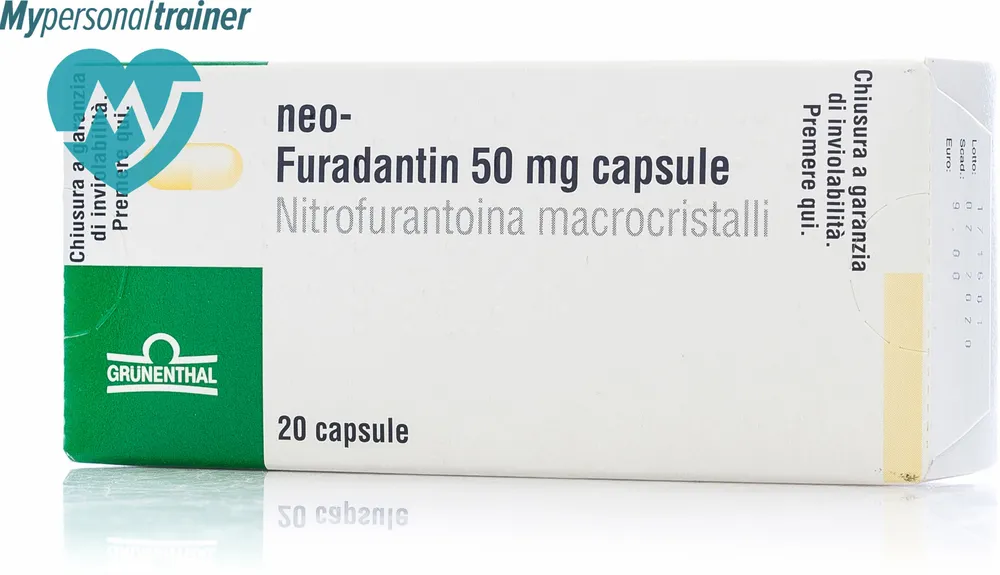
Table of Contents
- Package leaflet: Information for the patient
- NEO FURADANTIN 50 mg hard capsules, 100 mg hard capsules
- 1. What NEO FURADANTIN is and what it is used for
- 2. What you need to know before taking NEO FURADANTIN
- 3. How to take NEO FURADANTIN
- 4. Possible side effects
- 5. HOW TO STORE NEO FURADANTIN
- 6. CONTENTS OF THE PACKAGE AND OTHER INFORMATION
Package leaflet: Information for the patient
NEO FURADANTIN 50 mg hard capsules, 100 mg hard capsules
Nitrofurantoin macrocrystals
Please read this leaflet carefully before taking this medicine because it contains
important information for you.
- Keep this leaflet. You may need to read it again.
- If you have any questions, ask your doctor or pharmacist.
- This medicine has been prescribed for you only. Do not give it to others, even if their symptoms are the same as yours, as it could be harmful.
- If you experience any side effects, including those not listed in this leaflet, contact your doctor or pharmacist. See section 4.
Contents of this leaflet:
- What Neo Furadantin is and what it is used for
- What you need to know before taking Neo Furadantin
- How to take Neo Furadantin
- Possible side effects
- How to store Neo Furadantin
- Contents of the pack and other information
1. What NEO FURADANTIN is and what it is used for
Neo Furadantin contains the active substance nitrofurantoin, which is an antibacterial agent used to treat
urinary tract infections such as:
- cystitis (inflammation and infection of the bladder)
- infections following surgery of the genital and urinary tract, particularly after surgical removal of the prostate and following diagnostic procedures
- urinary tract infections during pregnancy
Neo Furadantin may be used to prevent urinary tract infections
- in individuals who have recurrent infections
- due to catheter insertion
- during diagnostic procedures
2. What you need to know before taking NEO FURADANTIN
Do not take Neo Furadantin if
- you are allergic to nitrofurantoin, to any of the other ingredients of this medicine (listed in section 6) or to other medicines containing nitrofurans
- you have severe kidney problems (anuria, oliguria, significant reduction in creatinine clearance)
- you are under 18 years of age
- you are in the final stages of pregnancy, as there is a risk it may affect the baby
- you have a deficiency of an enzyme called G6PD (glucose-6-phosphate dehydrogenase).
Warnings and precautions
Talk to your doctor or pharmacist before taking Neo Furadantin if you:
- are anaemic (have low red blood cell count causing fatigue or weakness) or have a vitamin B deficiency
- have an electrolyte imbalance (abnormal levels of salts in the body)
- are diabetic
- have reduced kidney function; have a debilitating illness
These conditions may increase the risk of developing nerve damage, even severe, in the arms and legs (peripheral neuropathy), including inflammation of the optic nerve.
Your doctor will periodically monitor your liver function while you are taking Neo Furadantin. If during treatment with Neo Furadantin you develop signs of abnormal liver function, treatment with Neo Furadantin should be stopped. Contact your doctor if you notice fatigue, yellowing of the skin or eyes, itching, skin rashes, joint pain, abdominal discomfort, nausea, vomiting, loss of appetite, dark urine, or pale or grey stools. These may be symptoms of liver disorders.
Treatment with Neo Furadantin may cause a reduction in an enzyme called glucose-6-phosphate dehydrogenase, making your red blood cells more susceptible to damage. In such cases, your doctor will discontinue treatment with Neo Furadantin.
During long-term treatment, your doctor will periodically monitor your kidney function.
If numbness or altered sensation occurs in any part of the body, treatment must be discontinued.
With prolonged use of Neo Furadantin, conditions affecting the lungs (pneumonitis, pulmonary fibrosis) may occur. If this happens, consult your doctor immediately.
While taking Neo Furadantin, your urine may turn brownish. This is normal and should not cause concern.
As with other antibacterial agents, superinfections (new infections occurring on top of an existing infection) limited to the genitourinary tract may occur during use of Neo Furadantin.
Children and adolescents
Neo Furadantin must not be used in children and adolescents under 18 years of age.
Elderly patients
An increased incidence of pulmonary and severe hepatic reactions, both potentially fatal, has been reported in elderly patients. Therefore, before prescribing Neo Furadantin, your doctor will evaluate possible reduced liver, kidney, and heart function, as well as the presence of concomitant diseases or other therapies.
Other medicines and Neo Furadantin
Inform your doctor or pharmacist if you are taking, have recently taken, or might take any other medicines, including those not requiring a prescription.
Some medicines may affect the intensity and duration of the effect of Neo Furadantin when taken together:
- antacids containing magnesium trisilicate
- medicines for gout (such as probenecid and sulfinpyrazone)
- antibiotic medicines called quinolones.
Neo Furadantin with food and drink
Take Neo Furadantin with food or milk. This will reduce the risk of nausea and vomiting.
Pregnancy, breast-feeding and fertility
If you are pregnant, breast-feeding, think you may be pregnant or are planning to have a baby, ask your doctor or pharmacist for advice before taking this medicine.
Neo Furadantin does not increase the incidence of congenital malformations in the fetus. However, Neo Furadantin should be used with caution during pregnancy and only if your doctor considers it absolutely necessary.
Neo Furadantin must NOT be taken during the final stages of pregnancy because there is a risk it may affect the baby.
Neo Furadantin may pass into breast milk; since this medicine is contraindicated in children, your doctor will evaluate whether to discontinue breast-feeding or to stop treatment with Neo Furadantin.
Driving and using machines
Neo Furadantin may cause dizziness and drowsiness. If you notice that your ability to react is impaired, do not drive or operate machinery.
Neo Furadantin contains lactose
If your doctor has diagnosed you with an intolerance to certain sugars, contact him before taking this medicine.
3. How to take NEO FURADANTIN
Take this medicine exactly as directed by your doctor or pharmacist. If
you have any doubts, consult your doctor or pharmacist.
The recommended dose for adults is:
Treatment of infection: 1 capsule of 50 mg or 100 mg four times a day, according to the doctor's
prescription.
Prevention of infection: 1 or 2 capsules per day, according to the doctor's prescription.
Take Neo Furadantin for at least one week and for at least 3 days after urine tests show no further
infection; your doctor will inform you about this. If the infection persists, contact your doctor
immediately.
Use in children and adolescents
Neo Furadantin must not be used in children and adolescents under 18 years of age.
If you take more Neo Furadantin than you should
Inform your doctor or go to the nearest hospital as soon as possible, bringing the pack with you if
possible.
If you forget to take Neo Furadantin
Take a capsule as soon as you remember. If it is almost time for your next dose, wait until then and
continue your regular schedule. Do not take a double dose to make up for the forgotten capsule.
If you stop taking Neo Furadantin
Neo Furadantin should be taken for at least one week and for at least 3 days after the urine is free of
infection. You must complete the full course of treatment, even if you feel better. If you have any
questions about the use of this medicine, consult your doctor or pharmacist.
4. Possible side effects
Like all medicines, this medicine can cause side effects, although not everybody gets them.
If you experience any of the side effects listed below, stop taking Neo Furadantin and consult your doctor:
- numbness or paraesthesia in any part of the body (altered sensation such as tingling and numbness) (see section “Warnings and precautions”)
- burning or numbness in the limbs (peripheral neuropathy) and other neurological disorders
- headache.
The most common side effects are nausea, headache and flatulence.
Other possible side effects include:
- diarrhoea, indigestion (dyspepsia), stomach pain, constipation, vomiting, infection of the salivary glands (sialoadenitis), inflammation of the pancreas (pancreatitis)
- dizziness, vertigo, somnolence, involuntary eye movements (nystagmus), headache and persistent headache with or without visual disturbances (benign intracranial hypertension), nerve-related disorders (including the optic nerve)
- confusion, depression, excitement, disturbances in understanding and reaction ability (psychotic reactions)
- vision loss (amblyopia)
- allergic reactions (e.g. difficulty breathing, shortness of breath, skin swelling), inflammation of the walls of small blood vessels leading to skin lesions (frequency not known), muscle pain (myalgia), joint pain (arthralgia), lupus-like syndrome (a disease that may affect multiple organs including the lungs)
- skin reactions (such as rash, blisters, eczema, itching, urticaria), patchy hair loss (alopecia), scaly skin (exfoliative dermatitis), erythema multiforme, including Stevens-Johnson syndrome (severe skin and mucous membrane lesions), severe drug reaction affecting the skin and other body organs (DRESS syndrome)
- acute or chronic hypersensitivity reactions in the lungs, bluish discoloration of the skin (cyanosis)
- liver damage, inflammation of the liver due to immune system activation against liver cells (frequency not known), feeling of fatigue (asthenia), fever, chills, malaise, changes in certain blood tests (transaminases, haemoglobin, phosphatemia), changes in white blood cell count, reduced platelets, reduced red blood cells, including due to deficiency of the enzyme glucose-6-phosphate dehydrogenase, increased number of certain types of white blood cells (eosinophilia)
- inflammation of the renal tissue surrounding the tubules, leading to kidney impairment (frequency not known), urinary tract infections caused by Pseudomonas or Candida.
Reporting of side effects
If you experience any side effect, including those not listed in this leaflet, please inform your doctor or pharmacist. You can also report side effects directly via the national reporting system at the website
https://www.aifa.gov.it/content/segnalazioni-reazioni-avverse
By reporting side effects, you can help provide more information on the safety of this medicine.
5. HOW TO STORE NEO FURADANTIN
Keep this medicine out of the sight and reach of children.
Do not use this medicine after the expiry date stated on the carton after EXP. The expiry date refers to the last day of that month.
Do not dispose of any medicine via wastewater or household waste. Ask your pharmacist how to dispose of medicines you no longer use. This will help protect the environment.
6. CONTENTS OF THE PACKAGE AND OTHER INFORMATION
What Neo Furadantin contains
The active substance is nitrofurantoin macrocrystals. Each hard capsule contains 50 mg or 100 mg of
nitrofurantoin.
The other ingredients are: anhydrous lactose, maize starch, talc, yellow iron oxide (E172), titanium
dioxide, gelatin.
Description of the appearance of Neo Furadantin and contents of the pack
Neo Furadantin capsules are packaged in aluminium blisters. Both the 50 mg and 100 mg hard capsules are available in boxes containing 20 capsules.
Marketing Authorisation Holder and Manufacturer
Marketing Authorisation Holder
GRÜNENTHAL ITALIA S.r.l.
Via Vittor Pisani, 16 – 20124 Milan, Italy
Manufacturer
FARMACEUTICI FORMENTI S.p.A.
Origgio (VA)
Via Di Vittorio 2
Italy