Naproxene EG
Italy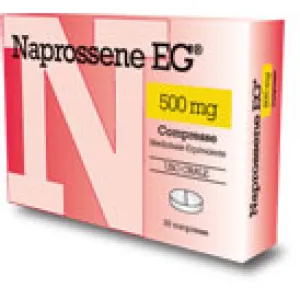
Table of Contents
Package leaflet: Information for the patient
NAPROXENE EG 500 mg tablets
Generic medicine
Please read this leaflet carefully before taking this medicine because it contains important information for you.
- Keep this leaflet. You may need to read it again.
- If you have any questions, ask your doctor or pharmacist.
- This medicine has been prescribed for you only. Do not give it to others, even if their symptoms are the same as yours, because it may be harmful.
- If you experience any side effects, including those not listed in this leaflet, contact your doctor or pharmacist. See section 4.
Contents of this leaflet:
- What NAPROXENE EG is and what it is used for
- What you need to know before taking NAPROXENE EG
- How to take NAPROXENE EG
- Possible side effects
- How to store NAPROXENE EG
- Contents of the pack and other information
1. What NAPROSSENE EG is and what it is used for
NAPROSSENE EG contains the active substance naproxen, which belongs to a group of medicines called non-steroidal anti-inflammatory drugs ("NSAIDs").
NAPROSSENE EG is indicated to reduce mild to moderate pain caused by inflammation of bones and muscles (musculoskeletal origin), particularly for the treatment of:
- an autoimmune disease affecting the joints, called rheumatoid arthritis, including juvenile forms;
- inflammatory joint diseases (degenerative osteoarthritis, ankylosing spondylitis, gout);
- acute muscle and bone pain (strains, sprains, injuries, lumbosacral pain, cervical pain, tenosynovitis and fibrositis);
- menstrual pain (dysmenorrhea);
- inflammations occurring after trauma or surgical procedures (post-traumatic and post-operative).
2. What you should know before taking NAPROSSENE EG
Do not take NAPROSSENE EG
- if you are allergic to naproxen, substances similar to it, or to any of the other ingredients of this medicine (listed in section 6);
- if you are allergic to acetylsalicylic acid, to other medicines used to relieve pain (analgesics), medicines used to reduce fever (antipyretics), or non-steroidal anti-inflammatory drugs (NSAIDs); or if you have experienced allergic reactions after taking these medicines, such as asthma, skin irritation (urticaria), or nasal inflammation (rhinitis);
- if you have a stomach or intestinal problem (active peptic ulcer, gastrointestinal inflammations);
- if you have previously experienced bleeding or perforation of the stomach or intestine after taking this medicine;
- if you have previously had two or more separate episodes of bleeding or injury to the stomach or intestine (recurrent hemorrhage/peptic ulcer);
- if you have a severe heart condition (severe heart failure);
- if you are in the last 3 months of pregnancy.
Warnings and precautions
Talk to your doctor or pharmacist before taking NAPROSSENE EG.
Take this medicine at the lowest effective dose and for the shortest possible duration to reduce the risk of side effects.
Inform your doctor before taking this medicine in the following cases:
- if you are taking other non-steroidal anti-inflammatory drugs (NSAIDs), including the specific type of NSAIDs known as COX-2 inhibitors. In this case, taking NAPROSSENE EG should be avoided;
- if you currently have or have previously had bronchial inflammation called bronchial asthma or allergic diseases, as respiratory attacks (bronchospasm) may occur;
- if you currently have or have previously had stomach or intestinal disorders (ulcers, gastrointestinal bleeding or perforations, ulcerative colitis, Crohn's disease);
- if you are elderly, as this increases the risk of stomach or intestinal injury or bleeding. In this case, your doctor may decide to reduce the daily dose;
- if you are taking medicines that may cause stomach or intestinal problems or medicines used to prevent blood clots in blood vessels (anticoagulants) (see section "Other medicines and NAPROSSENE EG");
- if you have heart problems (heart failure), high blood pressure (hypertension), impaired blood flow to the legs (peripheral arterial disease), or to the brain (cerebrovascular disease, stroke), or if you think you may be at risk of these conditions (e.g., if you have high blood pressure, high cholesterol levels, diabetes, or if you smoke). Inform your doctor before using NAPROSSENE EG, as it may increase the risk of heart attack or stroke;
- if you have blood clotting disorders, as this medicine may increase the risk of bleeding;
- if you have kidney problems;
- if you have liver problems: liver failure, jaundice, liver necrosis, or fulminant hepatitis (potentially fatal) may occur;
- if you experience any visual disturbances; in such cases, your doctor will prescribe an eye examination.
Stop treatment with this medicine and contact your doctor immediately if:
- you experience allergic reactions (hypersensitivity, anaphylaxis). This risk increases if you have previously experienced allergic reactions after taking pain relievers (analgesics), fever-reducing medicines (antipyretics), or non-steroidal anti-inflammatory drugs;
- you experience any unusual symptoms affecting the stomach or intestine, especially bleeding (hemorrhage) or injury (ulcers) to the stomach or intestine;
- you develop a skin disorder characterized by irritation, lesions, or blistering.
While using this medicine, pay attention to the following conditions:
- this medicine may interfere with certain urine tests (determination of 17-ketosteroids and 5-hydroxyindoleacetic acid). Your doctor will inform you if you need to stop taking this medicine 48 hours before undergoing tests for adrenal gland function.
Children
This medicine is not recommended for children under 5 years of age.
Other medicines and NAPROSSENE EG
Inform your doctor or pharmacist if you are taking, have recently taken, or might take any other medicines.
If you are taking any of the following medicines, inform your doctor, as they may interact with NAPROSSENE EG:
- acetylsalicylic acid or other NSAIDs (including selective cyclooxygenase-2 inhibitors: COX-2);
- aspirin/acetylsalicylic acid used to prevent blood clots;
- hydantoin medicines, used to treat epilepsy, barbiturates, used as sedatives, or sulfonamides, used to treat bacterial infections;
- propranolol and other beta-blockers, medicines used to treat certain heart conditions, as their effect may be reduced;
- lithium, used to treat depression and similar disorders;
- probenecid, a medicine used to promote the urinary excretion of uric acid;
- methotrexate, a chemotherapeutic agent, as its toxicity may increase;
- corticosteroids, medicines used to treat inflammatory conditions, as they increase the risk of toxic effects of NAPROSSENE EG on the stomach and intestine;
- anticoagulants (e.g., warfarin) or antiplatelet agents, medicines used to prevent blood clots in blood vessels, or selective serotonin reuptake inhibitors (SSRIs), medicines used to treat depression, as they may increase the risk of gastrointestinal bleeding;
- ACE inhibitors, angiotensin II antagonists, or diuretics, medicines used to control blood pressure or heart conditions, as NAPROSSENE EG may reduce their effectiveness. In this case, the risk of developing kidney problems (acute renal failure) may increase if kidney function is already impaired (e.g., if you are elderly or dehydrated). In such cases, consult your doctor, as you may need to drink more fluids and have your kidney function monitored;
- other medicines containing sodium naproxen;
- immunosuppressants (e.g., cyclosporine and tacrolimus), medicines used to prevent organ transplant rejection: NSAIDs increase the risk of kidney toxicity with these medicines.
Pregnancy, breastfeeding, and fertility
If you are pregnant, think you may be pregnant, planning to become pregnant, or breastfeeding, consult your doctor or pharmacist before taking this medicine.
Pregnancy
Do not take NAPROSSENE EG during the last 3 months of pregnancy, as it may harm the fetus or cause complications during delivery. It may cause kidney and heart problems in the fetus. It may affect your or your baby's tendency to bleed and may delay or prolong labor more than expected.
You should not take NAPROSSENE EG during the first 6 months of pregnancy unless absolutely necessary and under medical advice. If treatment is required during this period or while trying to conceive, the lowest effective dose for the shortest possible time should be used. From the 20th week of pregnancy onwards, NAPROSSENE EG may cause kidney problems in the fetus if taken for more than a few days, thereby reducing the levels of amniotic fluid surrounding the baby (oligohydramnios), or causing constriction of a blood vessel (ductus arteriosus) in the baby's heart. If treatment is needed for more than a few days, your doctor may recommend additional monitoring.
Breastfeeding
Do not take this medicine if you are breastfeeding, as it passes into breast milk.
Fertility
NAPROSSENE EG may cause fertility problems in women. Therefore, if you are planning to become pregnant, you should inform your doctor, as this medicine may reduce fertility.
Driving and using machines
There are no data available to assess the effects on the ability to drive or operate machinery.
NAPROSSENE EG contains lactose
If your doctor has diagnosed you with an intolerance to certain sugars, contact them before taking this medicine.
3. How to take NAPROXENE EG
Take this medicine exactly as directed by your doctor or pharmacist. If you have
any doubts, consult your doctor or pharmacist.
Swallow the tablets whole, with some liquid and preferably after meals.
Adults
The recommended dose is between 500 and 1000 mg (1-2 tablets) daily, taken in one or two
divided doses.
The recommended dose in patients of normal weight for the treatment of rheumatoid arthritis or moderate joint pain is 1000 mg (2 tablets) daily, taken in one or two divided doses.
Use in children under 5 years of age
This medicine is not recommended for children below 5 years of age.
Use in children from 5 to 12 years of age
The recommended initial dose is 20 mg of naproxen per kg of body weight per day, taken in one or two divided doses.
Use in the elderly
Your doctor will determine the appropriate dose and will assess whether dose reduction is necessary.
If you take more NAPROXENE EG than you should
Following an overdose of this medicine, drowsiness, stomach burning, indigestion (dyspepsia), nausea or vomiting may occur.
In case of accidental ingestion of an excessive dose of this medicine, contact your doctor immediately or go to the nearest hospital emergency department.
If you forget to take NAPROXENE EG
Do not take a double dose to make up for the missed tablet.
If you have any doubts about the use of this medicine, consult your doctor or pharmacist.
4. Possible side effects
Like all medicines, this medicine can cause side effects, although not everybody gets them.
The following side effects may occur:
Common (may affect up to 1 in 10 people):
- sensation of thirst;
- increased awareness of heartbeat (palpitations).
Rare (may affect up to 1 in 1,000 people):
- severe allergic reactions (anaphylactic reactions) which may present as: sudden drop in blood pressure (severe hypotension), accelerated or slowed heart rate, unusual fatigue or weakness, feeling of fear or worry (anxiety), restlessness, dizziness, loss of consciousness, breathing difficulties (due to laryngeal obstruction or bronchospasm) or difficulty swallowing, generalized itching especially on the soles of the feet or palms of the hands, skin irritation (urticaria) with or without swollen, itchy areas of skin, more frequently located on the extremities, external genitalia, and face, especially around the eyes and lips (angioedema), skin redness particularly around the ears, bluish-purple discoloration of the skin (cyanosis), profuse sweating, nausea, vomiting, abdominal cramps, diarrhoea;
- fever;
- hair loss (alopecia), inflammation of skin exposed to light (photosensitivity dermatitis), skin lesions (Lyell’s syndrome or toxic epidermal necrolysis, erythema multiforme, Stevens-Johnson syndrome), appearance of red and swollen nodules under the skin (erythema nodosum);
- changes in liver function tests, yellowing of the skin (jaundice);
- mood disturbances (depression), difficulty concentrating, feeling of malaise, muscle pain (myalgia), muscle weakness, nervous system infections (aseptic meningitis), cognitive disorders;
- changes in white blood cell count (agranulocytosis, leucopenia, granulocytopenia), increased number of eosinophils (eosinophilia), reduced platelet count (thrombocytopenia), reduced number of all blood cells (aplastic anaemia), destruction of red blood cells (haemolytic anaemia);
- serious heart problems (congestive heart failure), inflammation of blood vessels (vasculitis), increased heart rate (tachycardia);
- lung inflammation with accumulation of eosinophils (eosinophilic pneumonia), contraction of bronchial muscles (bronchospasm), inflammation of lung alveoli (alveolitis), swelling of the throat (laryngeal oedema), asthma;
- increased blood glucose (hyperglycaemia), decreased blood glucose (hypoglycaemia).
Very rare (may affect up to 1 in 10,000 people):
- liver inflammation (severe hepatitis) (potentially fatal).
Frequency not known (frequency cannot be estimated from the available data):
- increased blood pressure (hypertension);
- vision disorders (visual disturbances, papillitis, papilledema), impaired vision, corneal opacity.
Other side effects:
- vomiting, diarrhoea, excessive intestinal gas (flatulence), digestive disturbances (dyspepsia), burning sensation from stomach to throat (pyrosis), inflammation of the oesophagus (oesophagitis), constipation (stipsis, constipation), heartburn (gastric pyrosis), abdominal pain, nausea;
- inflammation of the mouth (stomatitis), upper abdominal pain (epigastric pain);
- headache (cephalalgia), dizziness, drowsiness, itching, ringing in the ears (tinnitus), hearing loss, swelling in various parts of the body due to fluid accumulation (oedema), difficulty breathing (dyspnoea);
- inflammation and lesions of the mouth (ulcerative stomatitis), inflammation of the pancreas (pancreatitis);
- vomiting blood (haematemesis), passage of dark stools (melena), ulcers, perforations or bleeding in the stomach or intestine, kidney and liver toxicity (nephrotoxicity, hepatotoxicity), allergic reactions (hypersensitivity reactions) such as skin irritations (skin rashes);
- worsening of intestinal inflammation (colitis and Crohn’s disease);
- stomach inflammation (gastritis);
- heart problems (heart failure);
- appearance of blisters on the skin (bullous reactions);
- heart attack, stroke;
- bleeding in the stomach or intestine (gastrointestinal bleeding), colitis. Stomach problems may be reduced by taking the medicine with food;
- skin irritations (cutaneous rash, urticaria), bruising (ecchymosis), sweating, rupture of capillaries under the skin (purpura);
- dark skin discoloration (cutaneous necrosis), increased skin sensitivity to light following exposure to a substance (photosensitisation, including pseudoporphyria or epidermolysis bullosa);
- kidney inflammation (glomerular nephritis, interstitial nephritis), loss of protein in urine (nephrotic syndrome), presence of blood in urine (haematuria), kidney damage (papillary necrosis), fluid accumulation in various parts of the body (fluid retention), excess potassium in the blood (hyperkalaemia), kidney problems (renal failure);
- sensation of emptiness in the head, sleep disturbances (insomnia), seizures, difficulty concentrating, confusion and dizziness.
Reporting of side effects
If you experience any side effects, including those not listed in this leaflet, please inform your doctor or pharmacist.
You may also report side effects directly via the national reporting system at https://www.aifa.gov.it/content/segnalazioni-reazioni-avverse. By reporting side effects, you can help provide more information on the safety of this medicine.
5. How to store NAPROXENE EG
Keep this medicine out of the sight and reach of children.
Do not use this medicine after the expiry date stated on the packaging. The expiry date refers to the last day of that month.
Store the medicine at a temperature not exceeding 25°C.
Do not dispose of medicines via wastewater or household waste. Ask your pharmacist how to dispose of medicines you no longer use. This will help protect the environment.
6. Package contents and other information
What NAPROSSENE EG contains
- The active substance is naproxene: 1 tablet contains 500 mg of naproxene.
- The other components are: lactose, maize starch, polyethylene glycol, sodium croscarmellose, magnesium stearate.
Description of the appearance of NAPROSSENE EG and contents of the pack
Box containing 30 tablets
Marketing Authorization Holder
EG S.p.A. - Via Pavia, 6 - 20136 Milan, Italy
Manufacturer
Industria Farmaceutica Nova Argentia S.r.l. - Via G. Pascoli 1 - 20064 Gorgonzola (MI)