Naprius
Italy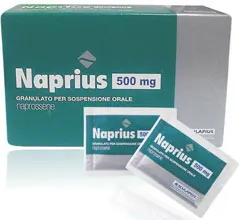
Table of Contents
- Package leaflet: Information for the user
- Naprius 100 mg/g gel
- 1. What Naprius gel is and what it is used for
- 2. What you need to know before using Naprius gel
- 3. How to use Naprius gel
- 4. Possible side effects
- 5. How to store Naprius gel
- 6. Package contents and other information
- Package leaflet: Information for the user
- Naprius
- 1. What Naprius is and what it is used for
- 2. What you need to know before taking Naprius
- 3. How to take Naprius
- 4. Possible side effects
- 5. How to store Naprius
- 6. Package contents and other information
Package leaflet: Information for the user
Naprius 100 mg/g gel
naproxen
Please read all of this leaflet carefully before using this medicine because it contains important information for you.
Use this medicine exactly as described in this leaflet or as your doctor or pharmacist has told you to.
- Keep this leaflet. You may need to read it again.
- If you need more information or advice, consult your pharmacist.
- If you experience any side effects, including those not listed in this leaflet, talk to your doctor or pharmacist. See section 4.
- Talk to your doctor if you do not notice any improvement or if you notice a worsening of symptoms.
Contents of this leaflet:
- What Naprius gel is and what it is used for
- What you need to know before using Naprius gel
- How to use Naprius gel
- Possible side effects
- How to store Naprius gel
- Contents of the pack and other information
1. What Naprius gel is and what it is used for
Naprius gel contains the active substance naproxen, a non-steroidal anti-inflammatory drug (NSAID).
Naprius gel is a topical medicine used to treat: muscle pain, bruises, sprains and muscle strains, dislocations, haematomas, swelling (oedema), and infiltrates due to trauma, muscle inflammation (fibromyositis), and inflammation of tissues associated with tendons and joints (bursitis, tendinitis, tenosynovitis, periarthritis), as well as vein inflammation (phlebitis).
Naprius gel is also used in association with orthopaedic and rehabilitative therapies.
2. What you need to know before using Naprius gel
Do not use Naprius gel
- if you are allergic to naproxen or to any of the other ingredients of this medicine (listed in section 6);
- during the last 3 months of pregnancy;
- in pediatric age, except under medical advice in cases of absolute necessity (see "Children and adolescents");
- on wounds (see "Warnings and precautions" and "How to use Naprius gel");
- if you suffer or have suffered from allergies caused by acetylsalicylic acid (aspirin) and/or other non-steroidal anti-inflammatory drugs (NSAIDs).
Warnings and precautions
Talk to your doctor or pharmacist before using Naprius gel.
Stop using Naprius gel and consult your doctor if a skin rash (cutaneous rash), mucosal lesions, or any other sign of hypersensitivity occur.
Allergic reactions or photosensitivity reactions may occur during treatment with Naprius gel and within two weeks after treatment. Avoid exposure to direct sunlight, including sunbeds, during treatment and for two weeks afterwards (see "Possible side effects").
The amount of active ingredient absorbed through the skin does not reach systemic circulation levels high enough to expose you to the risks of adverse effects, nor does it warrant the same warnings applicable to systemic administration of the medicine (oral or by injection). However, use of Naprius 10% gel is not recommended in patients in whom acetylsalicylic acid (aspirin) and/or other non-steroidal anti-inflammatory drugs (NSAIDs) cause allergic reactions. Its use is also not recommended in patients who suffer or have suffered from allergies.
Consult your doctor before using Naprius gel if you are allergic to acetylsalicylic acid (aspirin) or to other NSAIDs (medicines of the same type as Naprius gel), and in any case if you suffer or have suffered from allergies.
Severe skin reactions, some of which have been fatal, such as exfoliative dermatitis (severe skin inflammation), Stevens-Johnson syndrome, and toxic epidermal necrolysis (or Lyell's syndrome), have very rarely been reported in association with the use of non-steroidal anti-inflammatory drugs (NSAIDs) (see "Possible side effects"). Discontinue use of Naprius gel immediately if skin rash, mucosal lesions, or any other sign of hypersensitivity occur.
Avoid using this medicine on wounds.
Children and adolescents
Do not use this medicine in children and adolescents.
Other medicines and Naprius gel
Inform your doctor or pharmacist if you are currently using, have recently used, or might use any other medicines.
Inform your doctor if you are taking non-steroidal anti-inflammatory medicines for systemic use (by mouth or by injection).
Pregnancy and breastfeeding
Oral forms (e.g. tablets) of Naprius may cause adverse effects in the fetus. It is not known whether the same risk applies to Naprius gel when used on the skin.
If you are pregnant, think you may be pregnant, planning to become pregnant, or breastfeeding, ask your doctor or pharmacist for advice before using this medicine.
Do not use Naprius gel during the last 3 months of pregnancy. You must not use Naprius gel during the first 6 months of pregnancy unless clearly necessary and advised by your doctor. If treatment is needed during this period, use the lowest effective dose for the shortest possible duration.
Do not use Naprius gel while breastfeeding unless specifically prescribed by your doctor in cases of absolute necessity.
Driving and using machines
Naprius gel does not affect the ability to drive or operate machinery.
3. How to use Naprius gel
Use this medicinal product exactly as described in this leaflet or as directed by your doctor or pharmacist. If you have any doubts, consult your doctor or pharmacist.
Apply Naprius gel to the painful area twice daily, gently massaging until completely absorbed.
Do not apply the medicinal product to wounds.
If you forget to use Naprius gel
Do not apply a double dose to make up for the missed application.
If you stop using Naprius gel
If you have any doubts about how to use this medicinal product, consult your doctor or pharmacist.
4. Possible side effects
Like all medicines, this medicine can cause side effects, although not everybody gets them.
The following side effects have been reported:
- skin rashes with blisters (bullous reactions), including two serious skin diseases: Stevens-Johnson syndrome and toxic epidermal necrolysis.
- red, swollen skin (erythema), itching, irritation, sensation of warmth or burning, and skin rash at the application site (contact dermatitis);
- light sensitivity reactions (photosensitivity). Following the instructions provided in this leaflet reduces the risk of side effects.
Reporting of side effects
If you experience any side effect, including those not listed in this leaflet, talk to your doctor or pharmacist. You can also report side effects directly through the national reporting system at the following website:
http://www.aifa.gov.it/content/segnalazioni-reazioni-avverse.
By reporting side effects, you can help provide more information on the safety of this medicine.
5. How to store Naprius gel
Keep this medicine out of the sight and reach of children.
Do not use this medicine after the expiry date stated on the pack after "Exp.".
The expiry date refers to the last day of that month.
No special storage precautions are required for this medicine.
Do not dispose of any medicine via wastewater or household waste. Ask your pharmacist how to dispose of medicines you no longer use. This will help protect the environment.
6. Package contents and other information
What Naprius gel contains
- The active substance is naproxen. 100 g of gel contain 10 g of naproxen.
- The other ingredients are: carbomer, ethyl alcohol, triethanolamine, sodium metabisulfite, rose fragrance, deionized water.
Description of the appearance of Naprius gel and contents of the package
Naprius gel is a topical gel.
The packaging contains an aluminium tube with 30 g of gel at a concentration of
naproxen of 100 mg/g.
Marketing Authorization Holder
S.F. GROUP S.r.l. – Via Tiburtina, 1143 – 00156 Roma
Manufacturer
Mitim S.r.l. - Via Cacciamali, 34-36-38 - 25125 Brescia
Package leaflet: Information for the user
Naprius
500 mg tablets
500 mg granules for oral suspension
naproxen
Please read this leaflet carefully before taking this medicine because it contains
important information for you.
- Keep this leaflet. You may need to read it again.
- If you have any questions, ask your doctor or pharmacist.
- This medicine has been prescribed for you only. Do not give it to other people, even if their symptoms are the same as yours, because it could be harmful.
- If you experience any side effects, including those not listed in this leaflet, contact your doctor or pharmacist. See section 4.
Contents of this leaflet:
- What Naprius is and what it is used for
- What you need to know before taking Naprius
- How to take Naprius
- Possible side effects
- How to store Naprius
- Contents of the pack and other information
1. What Naprius is and what it is used for
Naprius contains the active substance naproxen, which belongs to a group of medicines called non-steroidal anti-inflammatory/anti-rheumatic drugs, commonly known as NSAIDs. This medicine acts against pain, fever, and inflammation (analgesic, antipyretic, and anti-inflammatory) with prolonged action.
Naprius is used to treat the following conditions:
- inflammatory diseases affecting the joints (osteoarthritis and polyarthritis, rheumatoid arthritis, gouty arthropathy, ankylosing spondylitis);
- pain caused by irritation of one or more nerves (neuralgia);
- muscular pain (myalgia).
2. What you need to know before taking Naprius
Do not take Naprius
- if you are allergic to naproxen or to any of the other ingredients of this medicine (listed in section 6);
- if you have or have had repeated stomach or intestinal ulcers or bleeding;
- if you suffer from inflammation of the colon (ulcerative colitis);
- if you have severe heart problems;
- if you are allergic to acetylsalicylic acid (aspirin) and/or other NSAIDs (medicines of the same type as Naprius). Signs of an allergy include: asthma, itching (urticaria), inflammation of the nasal mucosa (rhinitis), or severe, rapidly occurring general allergic reactions (anaphylactic or anaphylactoid reactions);
- if you are pregnant or breastfeeding (see "Pregnancy and breastfeeding").
Do not use Naprius in children and adolescents. Your doctor may prescribe Naprius only in cases of absolute necessity (see "Children and adolescents").
Warnings and precautions
Talk to your doctor or pharmacist before taking Naprius.
It is important to use the lowest effective dose for the shortest duration necessary to control symptoms.
Exercise particular caution and consult your doctor before taking Naprius:
if you suffer from high blood pressure and/or heart disease, as fluid accumulation in tissues (fluid retention) and swelling (edema) have been reported during treatment with NSAIDs.
- If you have severe problems with your heart, kidneys, or liver. Medicines such as Naprius may be associated with an increased risk of heart attack (myocardial infarction) or stroke. The risk increases when higher doses are used and the medicine is taken for a long time. Do not exceed the recommended prescribed dose. If you have heart problems, have had a stroke, or think you may be at risk (for example, if you have high blood pressure, diabetes, high cholesterol, or smoke), discuss this with your doctor or pharmacist before taking this medicine.
Inform your doctor before taking Naprius if you have previously experienced gastrointestinal disorders while using other medicines for rheumatic conditions.
Gastrointestinal ulcers or bleeding (hemorrhages), which may be fatal, can occur at any time during treatment with NSAIDs, even without prior gastrointestinal symptoms.
If you develop a gastrointestinal ulcer or bleeding, stop using this medicine immediately and consult your doctor. The risk increases with higher doses, previous gastrointestinal symptoms, concomitant use of blood-thinning medicines such as aspirin (antiplatelet agents), medicines that help prevent blood clots such as warfarin (anticoagulants), orally administered anti-inflammatory corticosteroids, and antidepressants (selective serotonin reuptake inhibitors), and in elderly patients. See also "Other medicines and Naprius".
If you suffer from gastrointestinal diseases such as Crohn's disease or ulcerative colitis, particularly if you are elderly, NSAIDs may worsen these conditions. If you experience unusual abdominal symptoms, consult your doctor.
If you currently have allergic manifestations or a history of allergies, Naprius may cause bronchial constriction with breathing difficulties (bronchospasm), asthma, or other allergic reactions.
Naprius may affect blood clotting and thus may reduce blood coagulation and prolong bleeding time.
Exercise caution if you perform activities requiring alertness, as during treatment with Naprius you may experience dizziness, drowsiness, vertigo, or depression.
Severe skin reactions, some of which have been fatal, have very rarely been reported with the use of NSAIDs. These reactions include: exfoliative dermatitis, Stevens-Johnson syndrome, toxic epidermal necrolysis, and drug reaction with eosinophilia and systemic symptoms (DRESS), and usually occur early in treatment. Immediately discontinue use of Naprius and consult your doctor if you experience symptoms such as: skin irritation (cutaneous rash), mucosal lesions, or any other signs of hypersensitivity (see "Possible side effects").
Concomitant use of Naprius with other NSAIDs, including selective cyclooxygenase-2 (COX-2) inhibitors, should be avoided.
If you take this medicine for prolonged periods, periodic eye examinations are recommended.
Consult your doctor if any of the above warnings apply to you or have applied to you in the past.
You should consult your doctor or pharmacist:
- if you develop gastrointestinal symptoms (such as stomach pain, heartburn, or bleeding) after using Naprius;
- if you experience fluid retention (such as swollen ankles or feet) after using Naprius;
- if you are using an intrauterine device, as this medicine may reduce the effectiveness of intrauterine devices (see "Other medicines and Naprius").
- if you are planning a pregnancy, as the use of Naprius is not recommended (see "Pregnancy and breastfeeding").
- administration of NAPRIUS should be discontinued in women who have fertility problems or who are undergoing fertility investigations.
Elderly
If you are elderly, you have a higher risk of experiencing some of the adverse effects caused by Naprius, such as bleeding/perforation of the stomach and intestines, which may be fatal.
Children and adolescents
The use of Naprius is not indicated in pediatric populations. Your doctor may prescribe Naprius only in cases of absolute necessity (see "Do not take Naprius").
Other medicines and Naprius
Inform your doctor or pharmacist if you are taking, have recently taken, or might take any other medicines.
In particular, talk to your doctor if you are taking:
- Other painkillers and anti-inflammatory medicines (NSAIDs) (non-steroidal anti-inflammatory drugs of the same type as Naprius): do not take Naprius simultaneously with its salt (naproxen sodium).
- Quinolone antibiotics (used to treat infections), as concomitant use with Naprius is not recommended.
- Corticosteroids (used to treat inflammatory conditions): if you take corticosteroids together with Naprius, the risk of gastrointestinal ulcer or bleeding may increase (see "Warnings and precautions").
- Anticoagulants (medicines that thin the blood) such as warfarin: medicines of the same type as Naprius (NSAIDs) may enhance the effect of these medicines (see section "Warnings and precautions").
- Antiplatelet agents (medicines that slow blood clotting) and selective serotonin reuptake inhibitors (SSRIs) (medicines for depression): taking these medicines together with Naprius increases the risk of gastrointestinal bleeding (see "Warnings and precautions").
- Furosemide (used to increase urine production): concomitant administration with certain non-steroidal anti-inflammatory medicines such as Naprius may reduce the effect of this medicine.
- Lithium (used to treat manic-depressive illness): NSAIDs increase blood levels of this medicine.
- Propranolol and other beta-blockers (medicines used for high blood pressure): Naprius, like other non-steroidal anti-inflammatory drugs, may reduce the effectiveness of these medicines.
- Probenecid (used to treat gout): because it may increase the risk of Naprius side effects.
- Methotrexate (used to treat rheumatoid arthritis, psoriasis, and certain cancers): because Naprius may increase the toxicity of this medicine.
- Hydantoins (used to treat epilepsy), sulfonamides (used to treat bacterial infections), barbiturates (used as sedatives): if you receive Naprius together with these medicines, you should be monitored for the risk of overdose.
In patients treated with other non-steroidal anti-inflammatory drugs and with coumarin-type anticoagulants, reduced or delayed blood coagulation (increased prothrombin time and decreased platelet aggregation) has been observed.
Exercise caution if you are using an intrauterine device, as this medicine may reduce the effectiveness of intrauterine devices.
Interactions with laboratory tests
Temporarily discontinue Naprius therapy 48 hours before undergoing adrenal gland function tests, as Naprius may interfere with certain tests (steroid 17-ketogenic tests and urinary 5-hydroxyindoleacetic acid).
Consult your doctor or pharmacist if you are taking aspirin (acetylsalicylic acid) to prevent blood clot formation.
Naprius and alcohol
Avoid alcohol consumption during treatment with Naprius.
Pregnancy, breastfeeding, and fertility
Pregnancy
Do not take Naprius if you are pregnant, as it may harm the fetus or cause problems during delivery. NSAIDs may cause kidney and heart problems in the fetus. They may affect bleeding tendencies in both mother and child and may delay or prolong labor beyond the expected duration. From the 20th week of pregnancy, NSAIDs may cause kidney problems in the fetus, thereby reducing the levels of amniotic fluid surrounding the baby (oligohydramnios), or cause constriction of a blood vessel (ductus arteriosus) in the baby's heart. If treatment is required for more than a few days, your doctor may recommend additional monitoring.
Breastfeeding
Do not use this medicine during breastfeeding.
Fertility
If you have fertility problems or are undergoing fertility investigations, discontinue treatment with Naprius.
Driving and using machines
Exercise caution if you perform activities requiring alertness while being treated with Naprius, as this medicine may cause dizziness, drowsiness, vertigo, or depression.
Naprius tablets contain lactose
The medicine contains 4.68 g of lactose. When taken according to the recommended dosage, each dose provides up to 156 mg of lactose. If your doctor has diagnosed you with an intolerance to certain sugars, contact him/her before taking this medicine.
Naprius oral suspension granules contain sucrose
The package contains 65 g of sucrose. When taken according to the recommended dosage, each dose provides up to 3.250 g of sucrose. If your doctor has diagnosed you with an intolerance to certain sugars, contact him/her before taking this medicine.
3. How to take Naprius
Take this medicine exactly as directed by your doctor or pharmacist.
If you have any doubts, consult your doctor or pharmacist.
Recommended dose in adults:
The initial dose of Naprius is 500–1000 mg (1–2 tablets or sachets) daily, divided into two doses 12 hours apart.
Therefore, depending on the severity of symptoms, take either 250 mg (half a tablet or half a sachet) or 500 mg (1 tablet or sachet) in the morning at breakfast and the other in the evening at dinner.
The maximum dose of 1000 mg daily (2 tablets or sachets) is recommended especially if you have severe night pain and/or morning stiffness, during acute attacks of rheumatoid arthritis, if you have previously been treated without success with high-dose anti-rheumatic medicines, and in osteoarthritis when pain is the predominant symptom.
Subsequently, the dose may be reduced to 750–500 mg (1 and a half tablets or sachets – 1 tablet or sachet) or even less, always divided into two doses administered 12 hours apart.
When doses differ (e.g., 500 + 250 mg), take the higher dose in the morning or in the evening, depending on whether your pain is worse during the day or at night.
In acute gout attacks, it is recommended to start with a dose of 500 mg (1 tablet or sachet), followed by 250 mg (half a tablet or half a sachet) every 8 hours on the first day, then switch to 250 mg (half a tablet or half a sachet) twice daily for 6–7 days.
Naprius oral suspension granules, when properly dissolved in water, allow faster absorption of the active ingredient and provide faster pain relief. Moreover, the granules are more suitable for patients with difficulty swallowing and/or digestive disorders.
If you take more Naprius than you should
If you have taken an excessive dose of Naprius, inform your doctor immediately or go to the nearest hospital.
The following overdose symptoms may occur: drowsiness, stomach burning (gastric pyrosis), indigestion (dyspepsia), nausea, or vomiting.
In case of ingestion of a large amount of this medicine, medical personnel will perform gastric emptying and take the usual measures required in such cases. Prompt administration of an adequate amount of activated charcoal may significantly reduce the absorption of the medicine.
If you forget to take Naprius
Do not take a double dose to make up for the forgotten dose.
If you stop taking Naprius
If you have any doubts about using this medicine, consult your doctor or pharmacist.
4. Possible side effects
Like all medicines, this medicine can cause side effects, although not everybody gets them.
Stop taking Naprius and contact your doctor immediately if you notice any of the following side effects:
Not known: frequency cannot be determined from the available data
Widespread rash, high body temperature, increased liver enzymes, blood abnormalities (eosinophilia), swollen lymph nodes and involvement of other organs (drug reaction with eosinophilia and systemic symptoms, also known as DRESS). See also section 2.
A distinctive allergic skin reaction known as fixed drug eruption, which usually recurs in the same location or locations upon re-exposure to the medicine and may appear as round or oval patches with redness and swelling of the skin, skin rash with blisters (urticaria), itching sensation.
Gastrointestinal side effects such as lesions (ulcers), perforations or bleeding (haemorrhage), sometimes fatal, particularly in the elderly, may occur.
In addition, the following have been reported: nausea, vomiting, diarrhoea, intestinal gas (flatulence), constipation, indigestion (dyspepsia), abdominal pain, black stools (melena), vomiting blood (haematemesis), mouth mucosa lesions (ulcerative stomatitis), worsening of colon inflammation (exacerbation of colitis) and Crohn's disease.
Less frequently, gastritis may occur.
Swelling (oedema), increased blood pressure (hypertension) and heart failure have been reported with the use of NSAIDs (medicines of the same type as Naprius).
The use of NSAIDs may increase the risk of arterial thrombotic events (e.g. myocardial infarction or stroke).
Very rarely, blister formation (bullous reactions) may occur, including severe forms such as Stevens-Johnson Syndrome and Toxic Epidermal Necrolysis.
Among gastrointestinal side effects, the most common are: nausea, vomiting, abdominal pain, heartburn, indigestion, constipation, diarrhoea, stomatitis. Gastrointestinal bleeding, peptic ulcer and colitis may occasionally occur.
Headache (cephalalgia), drowsiness, insomnia and difficulty concentrating; skin rashes, itching, bruising (ecchymoses), urticaria, swelling of the skin and mucous membranes (angioedema) may occur.
Rarely, allergic reactions (hypersensitivity) to naproxen and sodium naproxen, lung inflammation (eosinophilic pneumonia), appearance of red blisters or lesions on the skin (erythema multiforme), light sensitivity (photosensitivity), bronchospasm with breathing difficulty, swelling (oedema) of the larynx may occur.
Increased heart rate (tachycardia), difficulty breathing (dyspnoea), swelling of limbs (mild peripheral oedema), heart failure.
Occasionally, reduction in platelet count (thrombocytopenia), reduction in white blood cells (granulocytopenia), aplastic or haemolytic anaemia may occur.
Hearing and vision disturbances, ringing in the ears (tinnitus), dizziness, yellowish discoloration of skin and mucous membranes (jaundice), severe liver inflammation (hepatitis), reduced kidney function, blood in urine (haematuria), mouth lesions (ulcerative stomatitis), inflammation of the meninges (aseptic meningitis), inflammation of blood vessels (vasculitis), sensation of thirst, abnormalities in liver function tests may also occur.
Rarely reported: hair or hair loss (alopecia), convulsions, increased levels of potassium in the blood (hyperkalaemia).
Allergic reactions, even severe ones, may occur, with or without prior use of this class of medicines.
Following the instructions provided in this leaflet reduces the risk of side effects.
Reporting of side effects
If you experience any side effect, including those not listed in this leaflet, talk to your doctor or pharmacist. You can also report side effects directly via the national reporting system at: www.aifa.gov.it/content/segnalazioni-reazioni-avverse. By reporting side effects, you can help provide more information on the safety of this medicine.
5. How to store Naprius
Keep this medicine out of the sight and reach of children.
Do not use this medicine after the expiry date stated on the packaging after "Exp.".
The expiry date refers to the last day of that month.
Do not dispose of any medicine via wastewater or household waste. Ask your pharmacist how to
dispose of medicines you no longer use. This will help protect the environment.
6. Package contents and other information
What Naprius contains
Naprius 500 mg tablets
- The active substance is naproxen. Each tablet contains 500 mg of naproxen.
- The other components are: lactose, maize starch, polyvinylpyrrolidone, magnesium stearate.
Naprius 500 mg granules for oral suspension
- The active substance is naproxen. Each sachet contains 500 mg of naproxen.
- The other components are: mannitol, sodium chloride, ammonium glycyrrhizinate, mint flavour, aniseed-mint flavour, sodium dioctyl sulfosuccinate, sucrose, polyvinylpyrrolidone.
Description of the appearance of Naprius and contents of the pack
Naprius is available as tablets or granules for oral suspension.
500 mg tablets – 30 tablets
500 mg granules for oral suspension – 20 sachets
Marketing Authorization Holder
S.F. GROUP S.r.l. – Via Tiburtina, 1143 – 00156 Rome, Italy
Manufacturer
Naprius 500 mg tablets
L A.FA.RE. S.r.l. - Via Sacerdote Benedetto Cozzolino 77, 80056 Ercolano (NA)
Naprius 500 mg granules for oral suspension
MITIM S.r.l. - Via Cacciamali, 34-36-38 - 25125 Brescia