Muscoridol
Italy
Table of Contents
Package leaflet: Information for the user
MUSCORIDOL 180 mg medicated patch
Diclofenac epolamine
Please read all of this leaflet carefully before using this medicine because it contains important information for you.
- Use this medicine exactly as described in this leaflet or as your doctor or pharmacist has instructed you.
- Keep this leaflet. You may need to read it again.
- If you need more information or advice, consult your pharmacist.
- If you experience any side effects, including those not listed in this leaflet, contact your doctor or pharmacist. See section 4.
- Consult your doctor if you do not notice improvement or if you experience worsening of symptoms after a short period of treatment.
Contents of this leaflet:
- What MUSCORIDOL is and what it is used for
- What you need to know before using MUSCORIDOL
- How to use MUSCORIDOL
- Possible side effects
- How to store MUSCORIDOL
- Contents of the pack and other information
1. What MUSCORIDOL is and what it is used for
MUSCORIDOL belongs to a group of medicines called non-steroidal anti-inflammatory drugs (NSAIDs).
NSAIDs reduce pain and inflammation.
MUSCORIDOL is used to relieve pain and inflammation of rheumatic or traumatic origin in joints, muscles, tendons, and ligaments.
Consult your doctor if you do not notice any improvement or if your symptoms worsen after a short period of treatment with MUSCORIDOL.
2. What you need to know before using MUSCORIDOL
Do not use MUSCORIDOL:
- if you are allergic to diclofenac, acetylsalicylic acid (aspirin), other painkillers, any other NSAIDs (non-steroidal anti-inflammatory drugs), or to any of the other ingredients of this medicine (listed in section 6);
- if you have experienced asthma, breathing difficulties, skin rash, or runny nose after taking acetylsalicylic acid (aspirin) or other NSAIDs;
- if you are in the last three months of pregnancy (see section “Pregnancy, breastfeeding and fertility”);
- if you currently have a stomach ulcer (peptic ulcer);
- if the skin is damaged, including areas with exudation or infection, eczema, burns, or wounds;
- if the person to be treated is a child or adolescent under 16 years of age.
Inform your doctor or pharmacist if any of the above conditions apply to you.
Warnings and precautions
Talk to your doctor or pharmacist before using MUSCORIDOL if:
- you have heart disease;
- you have kidney disease;
- you have liver disease;
- you have had gastric ulcers in the past;
- you have inflammatory bowel disease such as Crohn's disease or ulcerative colitis, or are prone to episodes of intestinal bleeding;
- you have asthma;
- you have experienced breathing difficulties, skin rashes, or runny nose after taking acetylsalicylic acid (aspirin) or other NSAIDs;
- you are currently taking diclofenac or other NSAIDs, either orally or topically;
- you regularly use sunbeds or expose yourself to direct sunlight (see also section “Other important information”);
- you are elderly, as you may be more susceptible to adverse effects.
Other important information
Always use the lowest effective dose of MUSCORIDOL for the shortest possible time needed to control symptoms.
MUSCORIDOL should be used with caution in elderly patients, who may be more prone to experiencing adverse effects.
Adverse effects can be minimized by using the lowest effective dose for the shortest duration necessary. Do not exceed the recommended dose of MUSCORIDOL, do not apply it to large areas of skin, and do not use it for prolonged periods.
Avoid exposure to direct sunlight or sunbeds (tanning lamps) for at least one day after removing the patch; this will reduce the risk of a light-induced adverse reaction (photosensitivity).
Like other topical medicines, especially with prolonged treatment, MUSCORIDOL may cause redness and itching (signs of sensitization). Stop treatment and consult your doctor or pharmacist if skin reactions occur at the application site while using this patch.
Children and adolescents
Do not apply the patch to children or adolescents under 16 years of age.
Other medicines and MUSCORIDOL
When MUSCORIDOL is used correctly, the risk of interactions with other medicines is very low.
However, inform your doctor or pharmacist if you are using, have recently used, or might use any other medicines. In particular, inform your doctor if you are taking other medicines containing diclofenac or other NSAIDs.
Pregnancy, breastfeeding and fertility
If you are pregnant, suspect you may be pregnant, planning a pregnancy, or breastfeeding, consult your doctor or pharmacist before using this medicine.
Pregnancy
Do not use MUSCORIDOL during the last three months of pregnancy. Do not use MUSCORIDOL during the first six months of pregnancy unless strictly necessary and under medical advice. If treatment is required during this period, the lowest dose for the shortest possible time should be used.
Oral forms (e.g. tablets) of diclofenac may cause adverse effects in the unborn child. It is not known whether the same risk applies with MUSCORIDOL when used on the skin.
Breastfeeding
MUSCORIDOL should be used under medical advice during breastfeeding, as diclofenac passes into breast milk in small amounts. However, MUSCORIDOL must not be applied to the breast of a breastfeeding mother, nor to other large areas of skin or for prolonged periods.
Consult your doctor or pharmacist for further advice if you are pregnant or breastfeeding.
Fertility
If you have fertility problems and are using MUSCORIDOL, inform your doctor, as it may be advisable to discontinue treatment.
Driving and using machines
The diclofenac medicated patch does not impair the ability to drive or operate machinery.
MUSCORIDOL contains:
- preservatives such as parahydroxybenzoates (methyl parahydroxybenzoate and propyl parahydroxybenzoate) which may cause allergic reactions (including delayed reactions);
- 420 mg of propylene glycol per patch;
- polysorbate 80, which may cause allergic reactions.
3. How to use MUSCORIDOL
Use MUSCORIDOL exactly as directed by your doctor or pharmacist. If you have any doubts, consult your doctor or pharmacist.
Adults and adolescents aged 16 years and older
How many patches to use
The recommended dose of MUSCORIDOL is one (1) patch applied to the most painful area once or twice daily (one application every 12 or 24 hours) for up to 14 consecutive days. If during the recommended treatment period you do not notice any improvement or if your symptoms worsen, consult your doctor.
Contact your doctor if you do not feel better or if you feel worse after 14 days of treatment.
Use in children and adolescents under 16 years of age
Do not use MUSCORIDOL in children or adolescents under 16 years of age. There are no data available on efficacy and safety in children and adolescents under 16 years of age (see section "Do not use MUSCORIDOL").
In adolescents aged 16 years and older, if symptoms worsen, patients/parents of adolescents are advised to consult a doctor. Contact your doctor if you do not feel better or if you feel worse after 7 days of treatment.
How to apply MUSCORIDOL
Cut the seal at the top of the resealable pouch and remove one patch.
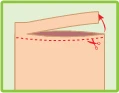
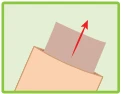
Carefully reseal the pouch.
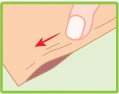
Remove the plastic protective layer from the adhesive side of the patch.
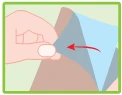
Apply the patch to the swollen area or where pain is felt.
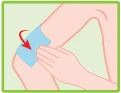
- If necessary, the patch may be held in place with a gauze bandage with an open mesh weave or with thin strips of adhesive tape. These may be provided by your pharmacist.
- Do not cover the patch with other types of dressings.
- Do not cover the treated area with plastic material or bandages that do not allow air passage (occlusive dressings).
- The medicated patch must be applied only to intact, undamaged skin, avoiding application on lesions or open wounds. The patch must not be used during bathing or showering.
- Take care to keep the patch away from eyes, nose, mouth, genital and anal areas. If the patch comes into contact with these areas, rinse thoroughly with water.
- The patch must not be cut.
Replacing the patch
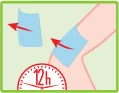
- Remove the patch every 12 or 24 hours and apply a new one.
If you forget to use MUSCORIDOL
Do not apply an additional patch to make up for the missed dose. Simply apply the next patch as scheduled.
If you have any doubts about how to use this medicine, consult your doctor or pharmacist.
4. Possible side effects
Like all medicines, this medicine can cause side effects, although not everyone experiences them.
Common side effects (may affect up to 1 in 10 people)
- Skin rash and redness (rash, eczema, erythema), skin inflammation (dermatitis, including allergic and contact dermatitis), itching or other reactions at the patch application site.
Uncommon side effects (may affect up to 1 in 100 people)
- Small red or purple spots under the skin (petechiae);
- sensation of warmth.
Rare side effects (may affect up to 1 in 1,000 people)
- Skin inflammation with blister formation (bullous dermatitis);
- dry, scaly skin.
Very rare side effects (may affect up to 1 in 10,000 people)
- Skin inflammation with pus-filled rash (pustular rash);
- symptoms of allergic reaction (hypersensitivity and anaphylactic reaction), including hives, swelling of the face (angioedema), lips, eyes or tongue, and breathing difficulties;
- asthma;
- skin rashes worsened by sunlight (photosensitivity reaction).
Side effects with unknown frequency (frequency cannot be estimated from the available data)
- Burning sensation at the application site.
Since MUSCORIDOL is applied to the skin over the affected area, there is a lower risk of experiencing side effects such as stomach problems including pain, indigestion, or any signs of bleeding in the stomach or intestines, which may occur when diclofenac is taken orally. However, if MUSCORIDOL is not used correctly, these side effects may occur.
The use of this medicine in combination with other medicines containing diclofenac should be avoided, because if medicated patches are used together with other diclofenac-containing medicines, the likelihood of skin reactions increases, including reactions after sun exposure such as blistering, erythema and eczema. In rare cases, even severe reactions may occur, such as skin eruptions with redness, blistering and skin peeling (e.g. Stevens-Johnson syndrome, Lyell syndrome).
Reporting of side effects
If you experience any side effect, including those not listed in this leaflet, talk to your doctor or pharmacist. You can also report side effects directly via the national reporting system at https://www.aifa.gov.it/content/segnalazioni-reazioni-avverse
Reporting side effects can help provide more information on the safety of this medicine.
5. How to store MUSCORIDOL
Keep this medicine out of the sight and reach of children.
Do not use this medicine after the expiry date stated on the pouch and packaging. The expiry date refers to the last day of that month.
This medicine does not require any special storage temperature.
Do not use more than 4 months after first opening the pouch. After removing each patch, make sure the pouch is properly resealed.
Do not dispose of medicines via wastewater or household waste. Ask your pharmacist how to dispose of medicines you no longer use. This will help protect the environment.
6. Package contents and other information
What MUSCORIDOL contains
- The active substance is diclofenac epolamine. Each medicated patch contains a total of 180 mg of diclofenac epolamine, equivalent to 140 mg of diclofenac sodium.
- The other components are gelatin, povidone (K90), liquid sorbitol (non-crystallizable), heavy kaolin, titanium dioxide (E171), propylene glycol (E1520), methyl parahydroxybenzoate (E218), propyl parahydroxybenzoate (E216), disodium edetate (E385), tartaric acid, aluminium glycinate, sodium carmellose, sodium polyacrylate, 1,3-butylene glycol, polysorbate 80 (E433), purified water. The non-woven fabric support layer is made of polyester. The removable protective layer is made of polypropylene.
Description of the appearance of MUSCORIDOL and package contents
Each medicated patch consists of a bandage impregnated with a paste ranging in colour from white to pale yellow, with the adhesive layer protected by a transparent, removable plastic backing. The resealable pouches contain 5 patches.
MUSCORIDOL is available in pack sizes of 5 or 10 patches per box.
Not all pack sizes may be marketed.
Marketing Authorization Holder and Manufacturer
Marketing Authorization Holder
Miat S.p.A.
Via Luigi Federico Menabrea, 20
20159 Milan (Italy)
Manufacturer
Miat S.p.A.
Piazza Pasolini, 2
20159 Milan (Italy)