Multihance
Italy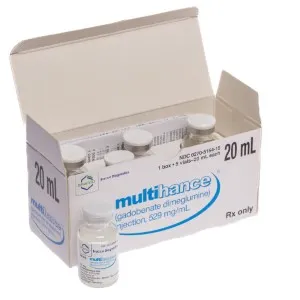
Table of Contents
- PACKAGE LEAFLET: INFORMATION FOR THE USER
- MultiHance 0.5 M injectable solution
- 1. WHAT MULTIHANCE IS AND WHAT IT IS USED FOR
- 2. WHAT YOU NEED TO KNOW BEFORE MULTIHANCE IS GIVEN TO YOU
- 3. HOW TO USE MULTIHANCE
- 4. POSSIBLE ADVERSE REACTIONS
- 5. HOW TO STORE MULTIHANCE
- 6. PACK CONTENTS AND OTHER INFORMATION
- PATIENT INFORMATION LEAFLET: INFORMATION FOR THE USER
- MultiHance 529 mg/ml injectable solution in pre-filled syringes
- 1. WHAT MULTIHANCE IS AND WHAT IT IS USED FOR
- 2. WHAT YOU SHOULD KNOW BEFORE YOU ARE GIVEN MULTIHANCE
- 3. HOW TO USE MULTIHANCE
- 4. POSSIBLE ADVERSE REACTIONS
- 5. HOW TO STORE MULTIHANCE
- 6. PACK CONTENTS AND OTHER INFORMATION
PACKAGE LEAFLET: INFORMATION FOR THE USER
MultiHance 0.5 M injectable solution
Gadobenate dimeglumine
Please read this leaflet carefully before using this medicine because it contains important information for you.
- Keep this leaflet. You may need to read it again.
- If you have any questions, consult your doctor.
- This medicine has been prescribed for you personally. Do not give it to others, even if their symptoms are the same as yours, as it could be harmful.
- If you experience any side effects, including those not listed in this leaflet, consult your doctor. See section 4.
Contents of this leaflet:
- What MultiHance is and what it is used for
- What you need to know before being given MultiHance
- How to use MultiHance
- Possible side effects
- How to store MultiHance
- Contents of the pack and other information
1. WHAT MULTIHANCE IS AND WHAT IT IS USED FOR
MultiHance is a contrast agent containing gadolinium, a metal belonging to the family of rare earth elements, which enhances the accuracy of liver images during magnetic resonance (MR diagnostic procedures, helping the physician to identify abnormalities in the liver.
This medicinal product is for diagnostic use only.
The use of MultiHance is approved in children above 2 years of age.
2. WHAT YOU NEED TO KNOW BEFORE MULTIHANCE IS GIVEN TO YOU
MultiHance must only be used within hospital facilities or clinical settings equipped with appropriate equipment and medical personnel capable of managing possible allergic reactions.
Accumulation in the body
The action of MultiHance is due to a metal called gadolinium. Studies have shown that small amounts of gadolinium may remain in the body, including the brain. No adverse effects have been observed due to the retention of gadolinium in the brain.
Do not use MultiHance
- if you are allergic to the active substance gadobenate dimeglumine or to any of the other ingredients of this medicine (listed in section 6).
- if you have previously experienced allergic reactions (hypersensitivity reactions) such as rash, itching, hives, or breathing difficulties following administration of contrast agents for Magnetic Resonance Imaging. Inform your doctor if you think any of the above conditions may apply to you.
Children
MultiHance should not be used in children under 2 years of age.
Warnings and precautions
Talk to your doctor before using MultiHance if:
- you have heart problems or high blood pressure
- you have had episodes of epilepsy or have a history of brain injury
- you have a cardiac pacemaker or metallic objects such as clips, screws, or plates, since these may interfere with magnetic resonance imaging equipment
- your kidneys are not functioning properly
- you have recently undergone or are scheduled to undergo liver transplantation shortly. Your doctor may decide to perform a blood test to assess whether your kidneys are functioning properly before deciding to use MultiHance, especially if you are 65 years of age or older.
Other medicines and MultiHance
No cases of interaction between MultiHance and other medicines have been reported.
Inform your doctor if you are taking or have recently taken any other medicines.
Pregnancy and breastfeeding
Ask your doctor for advice before taking this medicine.
Pregnancy
Inform your doctor if you think you are pregnant or if you are planning a pregnancy. MultiHance should not be used during pregnancy unless strictly necessary.
Breastfeeding
Inform your doctor if you are breastfeeding or intend to breastfeed. Your doctor will decide whether you can continue breastfeeding or whether you should interrupt breastfeeding for a period of 24 hours after administration of MultiHance.
Driving and using machines
There is no information available regarding the influence of MultiHance treatment on the ability to drive or operate machinery.
Ask your doctor for advice on whether you can drive or whether it is safe to operate machinery.
Important information about some excipients of MultiHance
During storage, small amounts of benzyl alcohol (an alcohol derivative) may be released from the MultiHance solution.
Inform your doctor if you are allergic to benzyl alcohol.
3. HOW TO USE MULTIHANCE
MultiHance is administered intravenously, usually into the arm, shortly before the magnetic resonance imaging (MRI) examination. The volume in milliliters to be administered is based on body weight expressed in kg.
The recommended dose is:
magnetic resonance imaging of the liver: 0.1 ml/kg body weight
MultiHance will be administered by medical personnel performing the examination.
It is important to ensure that the intravenous needle is correctly placed in the vein.
Inform your healthcare provider immediately if you experience pain or burning at the injection site during administration.
It is advisable to remain in the hospital for at least one hour after receiving MultiHance.
Dosage in special patient populations
Patients with impaired renal function
The use of MultiHance is not recommended in patients with severe kidney problems and in patients who have recently undergone or are about to undergo liver transplantation. However, if use is strictly necessary, you should receive only a single dose of MultiHance during the examination and should not receive a second dose within at least 7 days of the first.
Elderly patients
No dose adjustment is required if you are 65 years of age or older, but you may undergo a blood test to assess whether your kidneys are functioning properly.
For any further information regarding the use of this medicinal product, please consult your doctor.
4. POSSIBLE ADVERSE REACTIONS
Like all medicines, MultiHance can cause adverse reactions, although not everyone experiences them.
Most of the adverse reactions reported have been non-serious, transient events that spontaneously resolved completely. However, serious and life-threatening reactions can occur, which in some cases have resulted in patient death.
| Possible adverse effects | |
| Common (more than 1 in 100 and less than 1 in 10) |
|
| Uncommon (more than 1 in |
|
| 1,000 and less than 1 in 100) |
|
| Rare (more than 1 in 10,000 and less than 1 in 1,000) |
|
| Not known (frequency cannot be estimated from available data) |
|
Cases of systemic nephrogenic fibrosis (which causes skin thickening and may also affect soft tissues and internal organs) have been reported in patients who received MultiHance together with other gadolinium-containing contrast agents.
If you notice any adverse reaction after administration of MultiHance, inform immediately the medical staff who supervised your examination.
If you have further questions not answered in this leaflet, please ask the medical staff who supervised your examination.
Reporting of adverse reactions
If you experience any adverse reaction, including those not listed in this leaflet, talk to your doctor. You may also report adverse reactions directly via the national reporting system at the following website: http://www.aifa.gov.it/content/segnalazioni-reazioni-avverse.
By reporting adverse reactions, you can help provide more information on the safety of this medicine.
5. HOW TO STORE MULTIHANCE
- Keep the medicine out of the sight and reach of children.
- Do not use this medicine after the expiry date stated on the label. The expiry date refers to the last day of that month.
- Do not freeze.
- MultiHance must be drawn into the syringe immediately before use.
- Do not use MultiHance if you notice that the container or closure has been damaged, or if the solution shows changes in colour or contains particles in suspension.
- Do not dispose of any medicine via wastewater or household waste. The hospital pharmacist will handle unused or waste products. This will help protect the environment.
6. PACK CONTENTS AND OTHER INFORMATION
What MultiHance contains
- The active substance is Gadobenic acid as Gadobenate dimeglumine. 1 mL of injectable solution contains: gadobenic acid 334 mg (0.5 mmol) as dimeglumine gadobenate (529 mg).
- The other component (excipient) is water for injections.
Description of the appearance of MultiHance and pack contents
MultiHance is a sterile aqueous solution (clear, colourless or slightly yellow) for intravenous administration.
MultiHance is supplied to hospitals in single-dose glass vials containing 5 mL, 10 mL, 15 mL or 20 mL of solution.
MultiHance is also supplied as a Kit with administration device: (vial of 15 and 20 mL, automatic MRI injector syringe (65 mL syringe (polyethylene terephthalate/polycarbonate), 115 mL syringe (polyethylene terephthalate/polycarbonate), connector (PVC/polycarbonate/polypropylene/silicone), 2 spikes (ABS)), 20 G safety catheter).
Not all pack sizes may be marketed.
Marketing Authorisation Holder and Manufacturer
Marketing Authorisation Holder
Bracco Imaging S.p.A. - Via Egidio Folli, 50 – 20134 Milan (Italy)
Manufacturers
Patheon Italia S.p.A., 2° Trav. SX Via Morolense 5 – 03013 Ferentino (FR) (Italy)
BIPSO GmbH - Robert-Gerwig-Strasse 4 - 78224 Singen (Germany)
Bracco Imaging S.p.A. - Bioindustry Park - Via Ribes, 5 - 10010 Colleretto Giacosa (TO) (Italy)
The following information is intended for medical and healthcare professionals only.
Instructions for administration
MultiHance must be drawn into the syringe immediately before use, without dilution.
Any unused portion of the product must be discarded and cannot be reused for subsequent MRI examinations.
To minimize the potential risk of extravasation of MultiHance into soft tissues, it is important to ensure that the intravenous needle or cannula is correctly placed within a vein.
The product should be administered intravenously as a bolus or by slow injection (10 mL/min); refer to the post-contrast imaging acquisition table.
It is recommended to follow the injection with a flush of physiological saline solution [Sodium Chloride 9 mg/mL (0.9%)].
Post-contrast imaging acquisition:
| Liver | Dynamic imaging: | Immediately after the bolus. |
| Delayed imaging: | Between 40 and 120 minutes after injection, depending on the diagnostic question. |
Prior to administration of MultiHance, it is recommended that all patients be screened for renal dysfunction using laboratory tests.
Cases of nephrogenic systemic fibrosis (NSF) have been reported following the use of certain gadolinium-containing contrast agents in patients with acute or chronic severe renal impairment (GFR < 30 ml/min/1.73 m²). Patients undergoing liver transplantation are at particularly high risk, as the incidence of acute renal failure is high in this patient group. Since NSF may occur after administration of MultiHance, use of the product should be avoided in patients with severe renal impairment and in patients during the perioperative period of liver transplantation, unless the diagnostic information is essential and cannot be obtained with non-contrast MRI.
If the use of MultiHance cannot be avoided, the dose should not exceed 0.05 mmol/kg body weight.
Due to lack of data on repeated administrations, injections of MultiHance should not be repeated without an interval of at least 7 days between doses.
Since renal clearance of gadobenate dimeglumine may be reduced in elderly patients, it is considered important to perform renal function screening in patients aged 65 years and older.
Hemodialysis shortly after administration of MultiHance may be useful in removing the product from the body. However, there is no evidence to support the use of hemodialysis in the prevention or treatment of NSF in patients not already undergoing hemodialysis.
MultiHance should not be used during pregnancy unless the clinical condition of the woman requires the use of gadobenate dimeglumine.
The physician and the breastfeeding mother should decide whether to discontinue breastfeeding or to discontinue the drug, taking into account the benefit of breastfeeding for the child and the benefit of the examination for the mother, for at least 24 hours after the procedure.
The adhesive traceability label on the vial should be removed and affixed to the patient's medical record to ensure accurate documentation of the gadolinium-containing contrast agent used. The administered dose must be recorded.
If electronic records are used, the product name, batch number, and dose must be entered into the patient's electronic medical record.
PATIENT INFORMATION LEAFLET: INFORMATION FOR THE USER
MultiHance 529 mg/ml injectable solution in pre-filled syringes
Gadobenate dimeglumine
Please read this leaflet carefully before using this medicine as it contains important information for you.
- Keep this leaflet. You may need to read it again.
- If you have any questions, ask your doctor.
- This medicine has been prescribed for you personally. Do not give it to others, even if their symptoms are the same as yours, as it could be harmful.
- If you experience any side effects, including those not listed in this leaflet, tell your doctor. See section 4.
Contents of this leaflet:
- What MultiHance is and what it is used for
- What you need to know before being given MultiHance
- How to use MultiHance
- Possible side effects
- How to store MultiHance
- Package contents and other information
1. WHAT MULTIHANCE IS AND WHAT IT IS USED FOR
MultiHance is a contrast agent containing gadolinium, a metal belonging to the family of rare earth elements, which enhances the accuracy of liver images during magnetic resonance (MR) diagnostic procedures and helps the physician identify abnormalities in the liver.
This medicinal product is for diagnostic use only.
The use of MultiHance is approved in children above 2 years of age.
2. WHAT YOU SHOULD KNOW BEFORE YOU ARE GIVEN MULTIHANCE
MultiHance must only be used within hospital or clinical facilities equipped with appropriate equipment and medical personnel capable of managing potential allergic reactions.
Accumulation in the body
The action of MultiHance is due to a metal called gadolinium. Studies have shown that small amounts of gadolinium may remain in the body, including the brain. No adverse effects have been observed related to the retention of gadolinium in the brain.
Do not use MultiHance
- if you are allergic to the active substance gadobenate dimeglumine or to any of the other ingredients of this medicine (listed in section 6)
- if you have previously experienced allergic reactions (hypersensitivity reactions) such as rash, itching, hives, or breathing difficulties following administration of contrast agents for Magnetic Resonance Imaging. Inform your doctor if you think any of the above points may apply to you.
Children
MultiHance should not be used in children under 2 years of age.
Warnings and precautions
Consult your doctor before using MultiHance if:
- you have heart problems or high blood pressure
- you have had episodes of epilepsy or have a history of brain injuries
- you have a cardiac pacemaker or metallic objects such as clips, screws, or plates, as these could interfere with magnetic resonance imaging equipment
- you are allergic (hypersensitive) to benzyl alcohol, since small amounts of benzyl alcohol (an alcohol derivative) may be released during storage of the MultiHance solution
- your kidneys are not functioning properly
- you have recently had or are about to undergo a liver transplant. Your doctor may decide to perform a blood test to assess whether your kidneys are functioning properly before deciding to use MultiHance, especially if you are 65 years of age or older.
Other medicines and MultiHance
No cases of interaction between MultiHance and other medicines have been reported.
Inform your doctor if you are taking or have recently taken any other medicines.
Pregnancy and breastfeeding
Ask your doctor for advice before taking this medicine.
Pregnancy
Inform your doctor if you think you may be pregnant or are planning a pregnancy. MultiHance should not be used during pregnancy unless strictly necessary.
Breastfeeding
Inform your doctor if you are breastfeeding or intend to breastfeed. Your doctor will decide whether you can continue breastfeeding or whether you should interrupt breastfeeding for a period of 24 hours after administration of MultiHance.
Driving and using machines
There is no information available regarding the influence of MultiHance treatment on the ability to drive or operate machinery.
Ask your doctor for advice on whether you can drive or if it is safe to operate machinery.
3. HOW TO USE MULTIHANCE
MultiHance is administered intravenously, usually into the arm, just before the magnetic resonance imaging (MRI) examination. The volume in milliliters to be administered is based on body weight expressed in kg.
The recommended dose is:
magnetic resonance imaging of the liver: 0.1 ml/kg body weight
Administration of MultiHance will be performed by medical personnel conducting the examination.
It is important to ensure that the intravenous needle is correctly positioned.
Inform your doctor immediately if you feel pain or a burning sensation at the injection site during administration.
It is advisable to remain in the hospital for at least one hour after receiving MultiHance.
Dosing in special patient populations
Patients with impaired renal function
The use of MultiHance is not recommended in patients with severe kidney problems or in patients who have recently undergone or are about to undergo liver transplantation. However, if use is strictly necessary, you should receive only a single dose of MultiHance during the examination and should not receive a second dose within at least 7 days of the first.
Elderly patients
No dose adjustment is required if you are 65 years of age or older, but you may undergo a blood test to assess whether your kidneys are functioning properly.
For any further information on the use of this medicinal product, please consult your doctor.
4. POSSIBLE ADVERSE REACTIONS
Like all medicines, MultiHance can cause adverse reactions, although not everyone experiences them.
Most of the adverse reactions reported were non-serious, transient, and resolved spontaneously. However, serious reactions may occur, which could require emergency interventions and, in some cases, have led to patient death.
| Possible adverse effects | |
| Common (more than 1 in 100 and less than 1 in 10) |
|
| Uncommon (more than 1 in 1,000 |
|
| and less than 1 in 100) | |
| Rare (more than 1 in 10,000 and less than 1 in 1,000) |
|
| Not known (cannot be estimated based on available data) |
|
Cases of nephrogenic systemic fibrosis (causing skin thickening and potentially affecting soft tissues and internal organs) have been reported in patients who received MultiHance together with other gadolinium-containing contrast agents.
If you notice any adverse effects after administration of MultiHance, inform immediately the medical staff who supervised your examination.
If you have further questions not answered in this leaflet, please ask the medical staff who supervised your examination.
Reporting of adverse reactions
If you experience any adverse reaction, including those not listed in this leaflet, consult your doctor. You may also report adverse reactions directly via the national reporting system at the following address: http://www.aifa.gov.it/content/segnalazioni-reazioni-avverse
By reporting adverse reactions, you can help provide more information on the safety of this medicine.
5. HOW TO STORE MULTIHANCE
- Keep this medicine out of the sight and reach of children.
- Do not use this medicine after the expiry date stated on the label. The expiry date refers to the last day of that month.
- Do not freeze.
- MultiHance must be administered immediately after opening.
- Do not use MultiHance if you notice that the container or closure has been damaged or if the solution shows changes in colour or contains particles in suspension.
- Do not dispose of any medicine via wastewater or household waste. Unused or waste medicine will be handled by the hospital pharmacist. This will help protect the environment.
6. PACK CONTENTS AND OTHER INFORMATION
What MultiHance contains
- The active substance is Gadobenic acid as gadobenate dimeglumine. 1 mL of injectable solution contains: gadobenic acid 334 mg (0.5 mmol) as gadobenate dimeglumine (529 mg).
- The other component (excipient) is water for injections.
Description of the appearance of MultiHance and pack contents
MultiHance is a clear, aqueous, injectable solution (colourless or slightly yellow) contained in pre-filled syringes.
MultiHance is supplied in single-dose pre-filled syringes containing 10 mL, 15 mL or 20 mL of injectable solution.
MultiHance is also supplied in kits with administration devices:
- Pre-filled syringe of 15 and 20 mL, 20 mL syringe (polypropylene), three-way connector (polycarbonate), spike (ABS/polypropylene), 20 G safety catheter.
- Pre-filled syringe of 15 and 20 mL, MRI power injector syringe (115 mL syringe (polyethylene terephthalate/polycarbonate), connector (PVC/polycarbonate/polypropylene/silicone), spike (ABS)), 20 G safety catheter.
Not all pack sizes may be commercially available.
Marketing Authorization Holder and Manufacturer
Marketing Authorization Holder
Bracco Imaging S.p.A. - Via Egidio Folli, 50 – 20134 Milan (Italy)
Manufacturer
Bracco Imaging S.p.A. - Via Ribes 5, Colleretto Giacosa (Ivrea) (TO) (Italy)
The following information is intended for physicians and healthcare professionals only.
Instructions for administration
MultiHance should be used immediately after opening and must not be diluted.
Any unused product remaining after administration must be discarded and cannot be reused for subsequent MRI examinations.
To prepare the syringe for use, rotate the plunger rod clockwise to screw its threaded end into the piston, then push forward a few millimeters to eliminate any friction between the piston and the syringe barrel.
Holding the syringe vertically (with the cap pointing upwards), aseptically remove the cap from the syringe tip and attach a sterile, single-use needle or infusion set with a compatible connector by applying simultaneous pressure and rotation.
While keeping the syringe in a vertical position, expel air by pushing the plunger until solution appears at the needle tip or until the infusion set is completely filled.
Perform the injection following standard aspiration procedures.
To minimize the potential risk of extravasation of MultiHance into soft tissues, it is important to ensure that the needle or intravenous cannula is properly inserted into a vein.
The product should be administered intravenously as a bolus or by slow injection (10 mL/min); refer to the post-contrast imaging acquisition table.
The injection should be followed by a flush with 9 mg/mL (0.9%) Sodium Chloride injectable solution.
| Post-contrast image acquisition | ||
| Liver | Dynamic imaging | Immediately after bolus injection |
| Late imaging | 40-120 minutes after injection, depending on the diagnostic question. | |
Before administering MultiHance, it is recommended that all patients be screened for renal dysfunction using laboratory tests.
Cases of nephrogenic systemic fibrosis (NSF) have been reported following the use of certain gadolinium-containing contrast agents in patients with acute or chronic severe renal impairment (GFR < 30 ml/min/1.73 m²). Patients undergoing liver transplantation are at particular risk, as the incidence of acute renal failure is high in this patient group. Since NSF may occur after administration of MultiHance, its use in patients with severe renal impairment and in patients during the perioperative period of liver transplantation should be avoided unless the diagnostic information is essential and cannot be obtained by non-contrast MRI.
If the use of MultiHance cannot be avoided, the dose should not exceed 0.05 mmol/kg body weight.
Due to lack of data on repeated administrations, repeated injections of MultiHance should not be given without an interval of at least 7 days between doses.
Since renal clearance of gadobenate dimeglumine may be reduced in elderly patients, it is considered important to perform renal function screening in patients aged 65 years and older.
Hemodialysis shortly after administration of MultiHance may be helpful in removing the agent from the body. However, there is no evidence to support the use of hemodialysis in the prevention or treatment of NSF in patients not already undergoing dialysis.
MultiHance should not be used during pregnancy unless the woman's clinical condition necessitates the use of gadobenate dimeglumine.
The physician and the breastfeeding mother should decide whether to discontinue breastfeeding or to stop nursing for at least 24 hours after the examination.
The traceability label on the syringe should be removed and affixed to the patient's medical record to ensure accurate documentation of the gadolinium-containing contrast agent used. The administered dose must be recorded.
If electronic records are used, the product name, batch number, and dose must be entered into the patient’s electronic documentation.