Mounjaro
Italy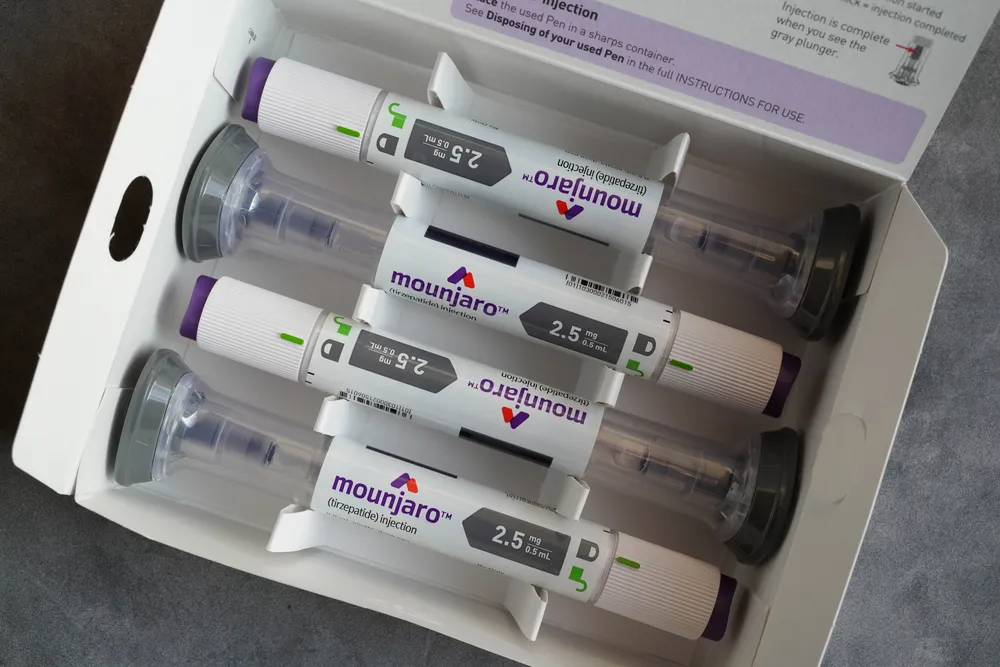
Table of Contents
- Package leaflet: Information for the patient
- Mounjaro 2.5 mg solution for injection in pre-filled pen, 5 mg solution for injection in pre-filled pen, 7.5 mg solution for injection in pre-filled pen, 10 mg solution for injection in pre-filled pen, 12.5 mg solution for injection in pre-filled pen, 15 mg solution for injection in pre-filled pen
- 1. What Mounjaro is and what it is used for
- 2. What you need to know before using Mounjaro
- 3. How to use Mounjaro
- 4. Possible side effects
- 5. How to store Mounjaro
- 6. Package contents and other information
- Instructions for use
- Mounjaro 2.5 mg solution for injection in pre-filled pen, 5 mg solution for injection in pre-filled pen, 7.5 mg solution for injection in pre-filled pen, 10 mg solution for injection in pre-filled pen, 12.5 mg solution for injection in pre-filled pen, 15 mg solution for injection in pre-filled pen
- Patient information leaflet
- Mounjaro 2.5 mg solution for injection in vial, 5 mg solution for injection in vial, 7.5 mg solution for injection in vial, 10 mg solution for injection in vial, 12.5 mg solution for injection in vial, 15 mg solution for injection in vial
- 1. What Mounjaro is and what it is used for
- 2. What you need to know before using Mounjaro
- 3. How to use Mounjaro
- 4. Possible side effects
- 5. How to store Mounjaro
- 6. Package contents and other information
- Patient information leaflet
- Mounjaro 2.5 mg/dose KwikPen injectable solution in a prefilled pen, 5 mg/dose KwikPen injectable solution in a prefilled pen, 7.5 mg/dose KwikPen injectable solution in a prefilled pen, 10 mg/dose KwikPen injectable solution in a prefilled pen, 12.5 mg/dose KwikPen injectable solution in a prefilled pen, 15 mg/dose KwikPen injectable solution in a prefilled pen
- 1. What Mounjaro KwikPen is and what it is used for
- 2. What you need to know before using Mounjaro KwikPen
- 3. How to use Mounjaro KwikPen
- 4. Possible side effects
- 5. How to store Mounjaro KwikPen
- 6. Package contents and other information
- Instructions for use
Package leaflet: Information for the patient
Mounjaro 2.5 mg solution for injection in pre-filled pen, 5 mg solution for injection in pre-filled pen, 7.5 mg solution for injection in pre-filled pen, 10 mg solution for injection in pre-filled pen, 12.5 mg solution for injection in pre-filled pen, 15 mg solution for injection in pre-filled pen
tirzepatide
This medicinal product is subject to additional monitoring. This will allow for the rapid identification of new safety information. You can help by reporting any side effects you experience while taking this medicine. See the end of section 4 for information on how to report side effects.
Please read all of this leaflet carefully before using this medicine because it contains important information for you.
- Keep this leaflet. You may need to read it again.
- If you have any questions, ask your doctor, nurse, or pharmacist.
- This medicine has been prescribed for you only. Do not give it to other people, even if their symptoms are the same as yours, as it may be harmful.
- If you experience any side effect, including those not listed in this leaflet, tell your doctor, nurse, or pharmacist. See section 4.
Contents of this leaflet
- What Mounjaro is and what it is used for
- What you need to know before using Mounjaro
- How to use Mounjaro
- Possible side effects
- How to store Mounjaro
- Contents of the pack and other information
1. What Mounjaro is and what it is used for
Mounjaro contains the active substance called tirzepatide and is used to treat adults, adolescents, and children aged 10 years and older with type 2 diabetes mellitus. Mounjaro reduces the level of sugar in the body only when sugar levels are high.
Mounjaro is also used for the treatment of adults with obesity or overweight (with a BMI of at least 27 kg/m²). Mounjaro affects appetite regulation, which may help you eat less food and reduce body weight.
In type 2 diabetes, Mounjaro is used:
- on its own when metformin (another diabetes medicine) cannot be taken.
- in combination with other diabetes medicines when these are not sufficient to control blood sugar levels. These other medicines may be oral medicines and/or insulin administered by injection.
Mounjaro is used together with diet and exercise also to lose weight and help maintain weight control in adults with:
- a BMI equal to or greater than 30 kg/m² (obesity), or
- a BMI of at least 27 kg/m² and less than 30 kg/m² (overweight) and weight-related health problems (such as prediabetes, type 2 diabetes, hypertension, abnormal blood fat levels, sleep-related breathing disorders called "obstructive sleep apnoea", or a history of heart attack, stroke, or blood vessel problems).
BMI (Body Mass Index) is a measure of weight relative to height.
In patients with obstructive sleep apnoea (OSA) and obesity, Mounjaro may be used with or without positive airway pressure (PAP) therapy.
It is important to continue following the advice on diet and exercise provided to you by your doctor, nurse, or pharmacist.
2. What you need to know before using Mounjaro
Do not use Mounjaro
- if you are allergic to tirzepatide or to any of the other ingredients of this medicine (listed in section 6).
Warnings and precautions
Talk to your doctor, nurse, or pharmacist before using Mounjaro if:
- you have severe digestive problems or food stays in your stomach longer than normal (including severe gastroparesis).
- you have ever had pancreatitis (inflammation of the pancreas, which can cause severe and persistent stomach and back pain).
- you have an eye problem (diabetic retinopathy or macular edema).
- you are taking a sulfonylurea (another diabetes medicine) or insulin for diabetes, as your blood sugar level may drop (hypoglycaemia). Your doctor may consider adjusting the dose of these other medicines to reduce this risk.
When starting treatment with Mounjaro, you may in some cases experience fluid loss/dehydration, for example due to vomiting, nausea and/or diarrhoea, which could lead to reduced kidney function. It is important to avoid dehydration by drinking plenty of fluids. Contact your doctor if you have any questions or concerns.
If you are scheduled for surgery under anaesthesia, inform your doctor that you are taking Mounjaro.
Children and adolescents
This medicine can be used in children aged 10 years and older for the treatment of type 2 diabetes. It has only been studied in children with type 2 diabetes who had overweight or obesity at the start of treatment.
This medicine must not be given to children under 10 years of age for the treatment of type 2 diabetes, or to children and adolescents under 18 years of age for weight management, as it has not been studied in these age groups.
Other medicines and Mounjaro
Tell your doctor, nurse, or pharmacist if you are taking, have recently taken, or might take any other medicines.
Pregnancy
If you are pregnant, think you might be pregnant, or are planning to become pregnant, ask your doctor for advice before using this medicine. This medicine must not be used during pregnancy because the effects of this medicine on the unborn baby are unknown. Therefore, the use of contraceptive measures during treatment with this medicine is recommended.
Breast-feeding
It is not known whether tirzepatide passes into breast milk. A risk to newborns or infants cannot be ruled out. If you are breast-feeding or planning to breast-feed, talk to your doctor before using this medicine. You and your doctor will need to decide whether to stop breast-feeding or to delay the use of Mounjaro.
Driving and using machines
It is unlikely that this medicine will affect your ability to drive or use machines.
However, if you use Mounjaro in combination with a sulfonylurea or insulin, low blood sugar (hypoglycaemia) may occur, which could impair your concentration. Avoid driving or operating machinery if you experience symptoms of hypoglycaemia, such as headache, drowsiness, weakness, dizziness, hunger, confusion, irritability, rapid heartbeat, and sweating (see section 4). See section 2 “Warnings and precautions” for information on the increased risk of hypoglycaemia. Talk to your doctor for further information.
Mounjaro contains sodium
This medicine contains less than 1 mmol (23 mg) of sodium per dose, i.e. essentially “sodium-free”.
3. How to use Mounjaro
Use this medicine exactly as instructed by your doctor or pharmacist. If you
have any doubts about how to use this medicine, consult your doctor or pharmacist.
Dosage
Adults
- The starting dose is 2.5 mg once a week for four weeks. After four weeks, your doctor will increase the dose to 5 mg once a week.
- Your doctor may increase the dose to 7.5 mg, 10 mg, 12.5 mg or 15 mg once a week in increments of 2.5 mg, if necessary. However, your doctor will instruct you to maintain a specific dose for at least 4 weeks before moving to a higher dose.
Adolescents and children aged 10 to less than 18 years being treated for type 2 diabetes
- The starting dose is 2.5 mg once a week for four weeks. After four weeks, your doctor will increase the dose to 5 mg once a week.
- Your doctor may increase the dose to 7.5 mg or 10 mg once a week in increments of 2.5 mg, if necessary. However, your doctor will instruct you to maintain a specific dose for at least 4 weeks before moving to a higher dose.
Do not change your dose unless your doctor has told you to do so.
Each pen contains a single dose of Mounjaro of 2.5 mg, 5 mg, 7.5 mg, 10 mg, 12.5 mg or 15 mg.
Choosing when to use Mounjaro
You may use the pen at any time of day, regardless of meals. Ideally, take the medicine on the same day each week. To help you remember when to use
Mounjaro, you can mark the day of the week on which you administer the first dose on the packaging provided with the pen, or record it on a calendar.
If necessary, you may change the day of your weekly Mounjaro injection, provided that at least 3 days have passed since your last injection. Once you have chosen a new administration day, continue administering the medicine once a week on that new day.
How to administer a Mounjaro injection
Mounjaro is injected under the skin (subcutaneous injection) in the abdominal area (abdomen), at least 5 cm from the navel, or in the thigh or the upper back of the arm. If you choose to inject into the upper back of the arm, someone else must assist you.
If you wish, you may use the same body area each week, but make sure to select a different injection site within that area. If you are also injecting insulin, choose a different injection site for the insulin.
Carefully read the “Instructions for Use” leaflet provided with the pen before using Mounjaro. If you are under
18 years of age, your Mounjaro injection may be administered by a caregiver, or you may self-inject if your doctor considers this appropriate.
Monitoring blood glucose levels
If you are using Mounjaro together with a sulfonylurea or insulin, it is important that you monitor your blood glucose levels as instructed by your doctor, nurse or pharmacist (see section 2 “Warnings and precautions”).
If you use more Mounjaro than you should
If you use more Mounjaro than prescribed, contact your doctor immediately. An excessive amount of this medicine may cause low blood sugar levels (hypoglycaemia) and make you feel unwell or cause illness.
If you forget to use Mounjaro
If you forget to inject a dose and
- 4 days or fewer have passed since you were supposed to use Mounjaro, take it as soon as you remember. Then administer the next dose as usual on the scheduled day.
- more than 4 days have passed since you were supposed to use Mounjaro, skip the missed dose. Administer the next dose as usual on the scheduled day.
Do not use a double dose to make up for a missed dose. The minimum interval between two doses must be at least 3 days.
If you stop using Mounjaro
Do not stop treatment with Mounjaro without consulting your doctor. If you stop treatment with Mounjaro and have type 2 diabetes, your blood sugar levels may increase.
If you have any questions about the use of this medicine, consult your doctor, nurse or pharmacist.
4. Possible side effects
Like all medicines, this medicine can cause side effects, although not everybody gets them.
Serious side effects
Uncommon (may affect up to 1 in 100 people)
- Inflammation of the pancreas (acute pancreatitis), which may cause severe and persistent stomach and back pain. You must contact your doctor immediately if you experience these symptoms.
Rare (may affect up to 1 in 1,000 people)
- Severe allergic reactions (e.g. anaphylactic reaction, angioedema). You must seek immediate medical help and inform your doctor if you experience symptoms such as breathing difficulties, rapid swelling of the lips, tongue and/or throat with difficulty swallowing, and rapid heartbeat.
Other side effects
Very common (may affect more than 1 in 10 people)
- Nausea
- Diarrhoea
- Stomach pain reported in patients treated for weight management and in adolescents and children treated for type 2 diabetes
- Vomiting reported in patients treated for weight management and in adolescents and children treated for type 2 diabetes
- Constipation reported in patients treated for weight management
These side effects are usually not serious. Nausea, diarrhoea and vomiting are more common at the beginning of treatment with tirzepatide, but decrease over time in most patients.
- Low blood sugar level (hypoglycaemia) is very common when tirzepatide is used with medicines containing a sulphonylurea and/or insulin. If you are using a sulphonylurea or insulin for type 2 diabetes, your dose of these medicines may need to be reduced while you are using tirzepatide (see section 2 “Warnings and precautions”). Symptoms of low blood sugar may include headache, drowsiness, weakness, dizziness, feeling of hunger, confusion, irritability, rapid heartbeat, and sweating. Your doctor will tell you what to do if hypoglycaemia occurs.
Common (may affect up to 1 in 10 people)
- Low blood sugar level (hypoglycaemia) when tirzepatide is used for type 2 diabetes with metformin and a sodium-glucose cotransporter 2 inhibitor (another medicine for diabetes)
- Low blood sugar level (hypoglycaemia) when tirzepatide is used with metformin alone in children and adolescents for type 2 diabetes
- Allergic reaction (hypersensitivity) (e.g. rash, itching, and eczema)
- Dizziness reported in patients treated for weight management
- Low blood pressure reported in patients treated for weight management
- Reduced appetite reported in patients treated for type 2 diabetes
- Stomach pain reported in adult patients treated for type 2 diabetes
- Vomiting reported in adult patients treated for type 2 diabetes – this side effect usually decreases over time
- Indigestion (dyspepsia)
- Constipation reported in patients treated for type 2 diabetes
- Stomach bloating
- Belching
- Flatulence (intestinal gas)
- Reflux or heartburn (also known as gastroesophageal reflux disease) caused by acid passing from the stomach into the mouth
- Hair loss reported in patients treated for weight management
- Feeling of tiredness
- Injection site reactions (e.g. itching or redness)
- Rapid pulse
- Increased levels of pancreatic enzymes (such as lipase and amylase) in the blood
- Increased levels of calcitonin in the blood in patients treated for weight management
Uncommon (may affect up to 1 in 100 people)
- Low blood sugar level (hypoglycaemia) when tirzepatide is used with metformin in adults for type 2 diabetes
- Gallstones
- Inflammation of the gallbladder
- Weight loss reported in patients treated for type 2 diabetes
- Injection site pain
- Increased levels of calcitonin in the blood in adult patients treated for type 2 diabetes or for obstructive sleep apnoea with obesity
- Altered sense of taste
- Altered skin sensation
- Delayed stomach emptying
Reporting of side effects
If you experience any side effect, including those not listed in this leaflet, talk to your doctor, nurse, or pharmacist. You can also report side effects directly through the national reporting system listed in Annex V. By reporting side effects, you can help provide more information on the safety of this medicine.
5. How to store Mounjaro
Keep this medicine out of the sight and reach of children.
Do not use this medicine after the expiry date stated on the pack and on the pen label after "Exp.". The expiry date refers to the last day of that month.
Store in a refrigerator (2 °C – 8 °C). Do not freeze. If the pen has been frozen, DO NOT USE IT.
Keep in the original packaging to protect the medicine from light.
Mounjaro may be kept outside the refrigerator at a temperature below 30 °C for up to a maximum of 21 cumulative days, after which the pen must be discarded.
Do not use this medicine if you notice that the pen is damaged, or if the solution appears cloudy, has changed colour, or contains particles.
Do not dispose of any medicine via wastewater or household waste. Ask your pharmacist how to dispose of medicines no longer required. This will help protect the environment.
6. Package contents and other information
What Mounjaro contains
The active substance is tirzapatide.
- Mounjaro 2.5 mg: each pre-filled pen contains 2.5 mg of tirzepatide in 0.5 mL of solution (5 mg/mL).
- Mounjaro 5 mg: each pre-filled pen contains 5 mg of tirzepatide in 0.5 mL of solution (10 mg/mL).
- Mounjaro 7.5 mg: each pre-filled pen contains 7.5 mg of tirzepatide in 0.5 mL of solution (15 mg/mL).
- Mounjaro 10 mg: each pre-filled pen contains 10 mg of tirzepatide in 0.5 mL of solution (20 mg/mL).
- Mounjaro 12.5 mg: each pre-filled pen contains 12.5 mg of tirzepatide in 0.5 mL of solution (25 mg/mL).
- Mounjaro 15 mg: each pre-filled pen contains 15 mg of tirzepatide in 0.5 mL of solution (30 mg/mL).
The other components are disodium hydrogen phosphate heptahydrate (E339), sodium chloride, sodium hydroxide (for further information see “Mounjaro contains sodium” in section 2); hydrochloric acid concentrated and water for injections.
Description of the appearance of Mounjaro and contents of the pack
Mounjaro is a clear, colourless to slightly yellow injectable solution in a pre-filled pen.
The pre-filled pen has a hidden needle that automatically inserts into the skin when the injection button is pressed. The pre-filled pen automatically retracts the needle after the injection is complete.
Each pre-filled pen contains 0.5 mL of solution.
The pre-filled pen is for single use only.
Pack sizes of 2 pre-filled pens, 4 pre-filled pens or a multiple pack of 12 (3 packs of 4) pre-filled pens. Not all pack sizes may be marketed in your country.
Marketing Authorisation Holder
Eli Lilly Nederland B.V., Papendorpseweg 83, 3528 BJ Utrecht, The Netherlands.
Manufacturer
Eli Lilly Italia S.p.A., Via Gramsci 731/733, 50019, Sesto Fiorentino, Florence (FI), Italy
Lilly France, 2, rue du Colonel Lilly, 67640 Fegersheim, France
For further information about this medicinal product, please contact the local representative of the Marketing Authorisation Holder:
Belgique/België/Belgien Lietuva
Eli Lilly Benelux S.A./N.V. Eli Lilly Lietuva
Tél/Tel: + 32-(0)2 548 84 84 Tel. +370 (5) 2649600
България Luxembourg/Luxemburg
ТП "Ели Лили Недерланд" Б.В. - България Eli Lilly Benelux S.A./N.V.
тел. + 359 2 491 41 40 Tél/Tel: + 32-(0)2 548 84 84
Česká republika Magyarország
ELI LILLY ČR, s.r.o. Lilly Hungária Kft.
Tel: + 420 234 664 111 Tel: + 36 1 328 5100
Danmark Malta
Eli Lilly Danmark A/S Charles de Giorgio Ltd.
Tlf: +45 45 26 60 00 Tel: + 356 25600 500
Deutschland Nederland
Lilly Deutschland GmbH Eli Lilly Nederland B.V.
Tel. + 49-(0) 6172 273 2222 Tel: + 31-(0) 30 60 25 800
Eesti Norge
Eli Lilly Nederland B.V. Eli Lilly Norge A.S.
Tel: +372 6 817 280 Tlf: + 47 22 88 18 00
Ελλάδα Österreich
ΦΑΡΜΑΣΕΡΒ-ΛΙΛΛΥ Α.Ε.Β.Ε. Eli Lilly Ges.m.b.H.
Τηλ: +30 210 629 4600 Tel: + 43-(0) 1 20609 1270
España Polska
Lilly S.A. Eli Lilly Polska Sp. z o.o.
Tel: + 34-91 663 50 00 Tel: +48 22 440 33 00
France Portugal
Lilly France Lilly Portugal Produtos Farmacêuticos, Lda
Tél: +33-(0) 1 55 49 34 34 Tel: + 351-21-4126600
Hrvatska România
Eli Lilly Hrvatska d.o.o. Eli Lilly România S.R.L.
Tel: +385 1 2350 999 Tel: + 40 21 4023000
Ireland Slovenija
Eli Lilly and Company (Ireland) Limited Eli Lilly farmacevtska družba, d.o.o.
Tel: + 353-(0) 1 661 4377 Tel: +386 (0)1 580 00 10
Ísland Slovenská republika
Icepharma hf. Eli Lilly Slovakia s.r.o.
Sími + 354 540 8000 Tel: + 421 220 663 111
Italia Suomi/Finland
Eli Lilly Italia S.p.A. Oy Eli Lilly Finland Ab
Tel: + 39- 055 42571 Puh/Tel: + 358-(0) 9 85 45 250
Κύπρος Sverige
Phadisco Ltd Eli Lilly Sweden AB
Τηλ: +357 22 715000 Tel: + 46-(0) 8 7378800
Latvija
Eli Lilly (Suisse) S.A Pārstāvniecība Latvijā
Tel: + 371 67364000
Other sources of information
More detailed information on this medicinal product is available on the website of the European Medicines Agency: https://www.ema.europa.eu.
Instructions for use
Mounjaro 2.5 mg solution for injection in pre-filled pen, 5 mg solution for injection in pre-filled pen, 7.5 mg solution for injection in pre-filled pen, 10 mg solution for injection in pre-filled pen, 12.5 mg solution for injection in pre-filled pen, 15 mg solution for injection in pre-filled pen
tirzepatide
Important information you must know before injecting Mounjaro.
Read these instructions for use and the package leaflet before starting to use the Mounjaro
pre-filled pen (pen) and each time you use a new pen. There may be
new information. This information does not replace talking with your doctor, nurse, or
pharmacist about your medical condition or treatment.
Talk to your doctor, nurse, or pharmacist about how to inject Mounjaro correctly.
- Mounjaro is a single-use pre-filled pen.
- The pen has a hidden needle that automatically inserts into the skin when you press the injection button. The pen will retract the needle after the injection is complete.
- Mounjaro is used once weekly.
- Administer the injection only subcutaneously (under the skin).
- You or another person may inject the medicine into the abdominal area (abdomen), the upper leg (thigh), or the upper arm.
- Assistance from another person may be needed if you wish to inject into the upper arm.
Guide to pen parts
Injection button
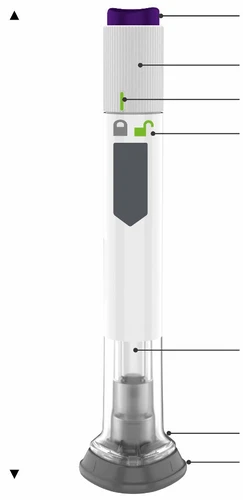

Purple injection top
Lock ring
Indicator

Lock or unlock
Medicine
Lower part
and tip Base transparent

with needle
Grey cap
at base
Preparing the Mounjaro injection
Remove the pen from the refrigerator.
Leave the grey cap at the base on until you are ready to inject.
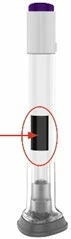
Check the label on the
pen to make sure you have
the correct medicine and dose,
and that it is not past the Expiry
date.
Inspect the pen to ensure
it is not damaged.
Ensure the medicine:
- has not been frozen • is colourless to slightly yellow
- is not cloudy • has no particles
Wash your hands.
Choose the injection site
Your doctor, nurse, or pharmacist can help you select the most suitable injection site.
You or another person may inject the medicine into the abdominal area
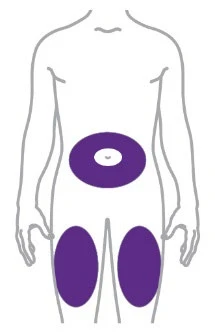
(abdomen), at least 5 cm from the navel, or into the thigh.
Another person may inject into the back of the upper arm.
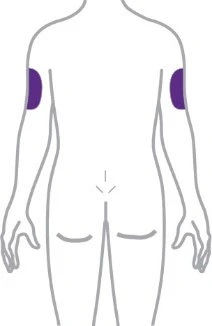
Rotate (change) the injection site each week.
You may use the same body area, but you must select a different injection site within that area.
Step 1 Remove the grey cap at the base
Ensure the pen is locked.
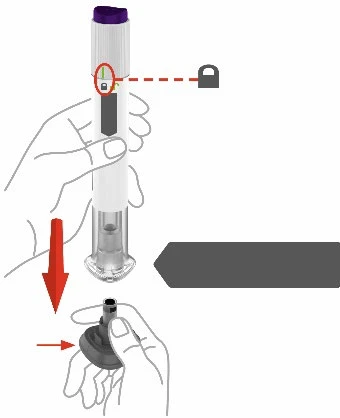
Do not unlock the pen until you place the
transparent base against the skin and are ready to inject.
Remove the grey cap at the base and dispose of it.
Transparent base
Grey cap
Do not reattach the grey cap at the base – this
at base
could damage the needle.
Do not touch the needle.
Step 2 Place transparent base on skin, then unlock
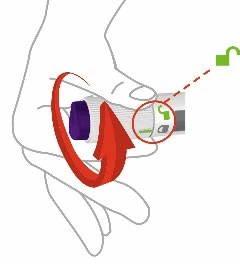
Place the transparent base flat against the skin at the injection site.
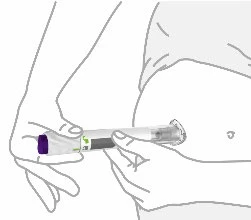
Unlock by rotating the lock ring.
Step 3 Press and hold for up to 10 seconds
Press and hold the purple injection button.
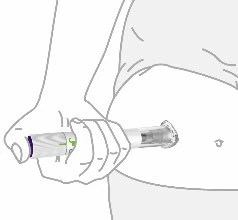
You will hear:
- First click = injection has started
- Second click = injection is complete
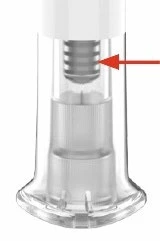
Grey plunger You will know the injection is complete when the grey plunger becomes visible.
After injection, place the used pen in a sharps disposal container.
Disposal of the used pen
-
Dispose of the pen in a sharps disposal container or as instructed by your doctor,
nurse, or pharmacist. Do not
dispose of pens in household waste. -
Do not recycle the sharps disposal container you have used.
-
Ask your doctor, nurse, or pharmacist how to dispose of medicines you no longer use.
Storage and handling
- For storage instructions, refer to section 5 of the patient information.
- The pen contains glass parts. Handle with care. If the pen falls on a hard surface, do not use it. Use a new pen for the injection.
Frequently asked questions
What if I see an air bubble in my pen?
Air bubbles are normal.
What if the pen is not at room temperature?
It is not necessary to warm the pen to room temperature.
What if I unlock the pen and press the purple injection button before removing the
grey cap at the base?
Do not remove the grey cap at the base. Discard the pen and use a new one.
What if there is a drop of liquid at the tip of the needle when I remove the
grey cap at the base?
A drop of liquid at the needle tip is normal. Do not touch the needle.
Do I need to hold the injection button down until the injection is complete?
It is not required, but holding the button down may help keep the pen steady against the skin.
I heard more than 2 clicks during my injection – 2 loud clicks and 1 soft click. Did I
receive the full dose?
Some people may hear a soft click immediately before the second loud click.
This is normal pen function. Do not remove the pen from the skin until you hear
the second loud click.
I am not sure whether my pen worked correctly.
Check whether you received the dose. The dose has been delivered
correctly if the grey plunger is visible. See also Step 3
grey plunger of the instructions.
If you do not see the grey plunger, contact the manufacturer Lilly for
further instructions. Until then, store the pen safely to
avoid accidental needle injury.
What if there is a drop of liquid or blood on my skin after the injection?
This is normal. Press a cotton ball or gauze pad over the injection site. Do not rub the injection site.
Additional information
- If you have vision problems, do not use the pen without help from someone trained to use the Mounjaro pen.
Where to find more information
- If you have questions or problems with your Mounjaro pen, contact the manufacturer Lilly or your doctor, nurse, or pharmacist.
Patient information leaflet
Mounjaro 2.5 mg solution for injection in vial, 5 mg solution for injection in vial, 7.5 mg solution for injection in vial, 10 mg solution for injection in vial, 12.5 mg solution for injection in vial, 15 mg solution for injection in vial
tirzepatide
This medicinal product is under additional monitoring. This will allow any new safety information to be identified quickly. You can help by reporting any side effects you experience while taking this medicine. See the end of section 4 for information on how to report side effects.
Please read this leaflet carefully before using this medicine because it contains important information for you.
- Keep this leaflet. You may need to read it again.
- If you have any questions, ask your doctor, nurse or pharmacist.
- This medicine has been prescribed for you only. Do not give it to other people, even if they have the same symptoms as you, because it may be harmful.
- If you experience any side effect, including those not listed in this leaflet, talk to your doctor, nurse or pharmacist. See section 4.
Contents of this leaflet
- What Mounjaro is and what it is used for
- What you need to know before using Mounjaro
- How to use Mounjaro
- Possible side effects
- How to store Mounjaro
- Contents of the pack and other information
1. What Mounjaro is and what it is used for
Mounjaro contains the active substance called tirzepatide and is used to treat adults, adolescents, and children aged 10 years and older with type 2 diabetes mellitus. Mounjaro reduces the level of sugar in the body only when sugar levels are high.
Mounjaro is also used for the treatment of adults with obesity or overweight (with a BMI of at least 27 kg/m²). Mounjaro influences appetite regulation, which may help you eat less food and reduce body weight.
In type 2 diabetes, Mounjaro is used:
- on its own when metformin (another diabetes medicine) cannot be taken.
- in combination with other diabetes medicines when these are not sufficient to control blood sugar levels. These other medicines may include oral medications and/or insulin administered by injection.
Mounjaro is used together with diet and exercise also for weight loss and to help maintain weight control in adults with:
- a BMI equal to or greater than 30 kg/m² (obesity), or
- a BMI of at least 27 kg/m² and less than 30 kg/m² (overweight) and weight-related health problems (such as prediabetes, type 2 diabetes, hypertension, abnormal blood lipid levels,
breathing problems during sleep called "obstructive sleep apnoea", or a history of heart attack,
stroke, or blood vessel problems).
BMI (Body Mass Index) is a measure of weight relative to height.
In patients with obstructive sleep apnoea (OSA) and obesity, Mounjaro may be used with or without positive airway pressure (PAP) therapy.
It is important to continue following the advice on diet and exercise provided by your doctor, nurse, or pharmacist.
2. What you need to know before using Mounjaro
Do not use Mounjaro
- if you are allergic to tirzepatide or to any of the other ingredients of this medicine (listed in section 6).
Warnings and precautions
Talk to your doctor, nurse, or pharmacist before using Mounjaro if:
- you have severe digestive problems or food remains in your stomach longer than normal (including severe gastroparesis).
- you have ever had pancreatitis (inflammation of the pancreas that may cause severe and persistent stomach and back pain).
- you have an eye problem (diabetic retinopathy or macular edema).
- you are taking a sulfonylurea (another diabetes medicine) or insulin for diabetes, as your blood sugar level may drop (hypoglycaemia). Your doctor may consider adjusting the dose of these other medicines to reduce this risk.
When starting treatment with Mounjaro, you may in some cases experience fluid loss/dehydration, for example due to vomiting, nausea and/or diarrhoea, which could lead to reduced kidney function. It is important to avoid dehydration by drinking plenty of fluids. Contact your doctor if you have any questions or concerns.
If you are scheduled for surgery under anaesthesia, inform your doctor that you are taking Mounjaro.
Children and adolescents
This medicine can be used in children aged 10 years and older for the treatment of type 2 diabetes. It has only been studied in children with type 2 diabetes who were overweight or obese at the start of treatment.
This medicine must not be given to children under 10 years of age for the treatment of type 2 diabetes, or to children and adolescents under 18 years of age for weight management, as it has not been studied in these age groups.
Other medicines and Mounjaro
Tell your doctor, nurse, or pharmacist if you are taking, have recently taken, or might take any other medicines.
Pregnancy
If you are pregnant, think you might be pregnant, or are planning to become pregnant, consult your doctor before using this medicine. This medicine should not be used during pregnancy, as the effects of this medicine on the unborn child are unknown. Therefore, the use of contraceptive measures during treatment with this medicine is recommended.
Breast-feeding
It is not known whether tirzepatide passes into human breast milk. A risk to newborns or infants cannot be ruled out. If you are breast-feeding or planning to breast-feed, talk to your doctor before using this medicine. You and your doctor will need to decide whether to discontinue breast-feeding or delay the use of Mounjaro.
Driving and using machines
It is unlikely that this medicine will affect your ability to drive or use machines.
However, if you use Mounjaro in combination with a sulfonylurea or insulin, low blood sugar (hypoglycaemia) may occur, which could impair your concentration. Avoid driving or operating machinery if you experience symptoms of hypoglycaemia, such as headache, drowsiness, weakness, dizziness, hunger, confusion, irritability, rapid heartbeat, or sweating (see section 4). See section 2 “Warnings and precautions” for information on the increased risk of hypoglycaemia. Talk to your doctor for further information.
Mounjaro contains sodium
This medicine contains less than 1 mmol (23 mg) of sodium per dose, i.e. essentially “sodium-free”.
3. How to use Mounjaro
Use this medicine exactly as instructed by your doctor or pharmacist. If you
have any doubts about how to use this medicine, consult your doctor or pharmacist.
How much to use
Adults
- The starting dose is 2.5 mg once weekly for four weeks. After four weeks, your doctor will increase the dose to 5 mg once weekly.
- Your doctor may increase the dose to 7.5 mg, 10 mg, 12.5 mg, or 15 mg once weekly in increments of 2.5 mg, if necessary. However, your doctor will instruct you to maintain a specific dose for at least 4 weeks before moving to a higher dose.
Adolescents and children aged 10 to less than 18 years being treated for type 2 diabetes
- The starting dose is 2.5 mg once weekly for four weeks. After four weeks, your doctor will increase the dose to 5 mg once weekly.
- Your doctor may increase the dose to 7.5 mg or 10 mg once weekly in increments of 2.5 mg, if necessary. However, your doctor will instruct you to maintain a specific dose for at least 4 weeks before moving to a higher dose.
Do not change your dose unless your doctor has told you to do so.
Each vial contains one dose of Mounjaro at 2.5 mg, 5 mg, 7.5 mg, 10 mg, 12.5 mg, or 15 mg.
Choosing when to use Mounjaro
You may use Mounjaro at any time of day, regardless of meals. Ideally, take the medicine on the same day each week. To help you remember when to use
Mounjaro, you may mark on a calendar the day of the week you receive your first dose.
If necessary, you may change the day of your weekly Mounjaro injection, provided at least
3 days have passed since your last injection. Once you have chosen a new administration day, continue administering the medicine once weekly on that new day.
How to inject Mounjaro
Always use Mounjaro exactly as directed by your doctor. Before starting to use Mounjaro,
always read carefully the “Instructions for use” provided below and speak with your doctor,
nurse, or pharmacist if you are unsure about how to correctly inject Mounjaro. If you are under
18 years of age, your Mounjaro injection may be administered by a caregiver or you may self-inject if your doctor considers this appropriate.
Mounjaro is injected under the skin (subcutaneous injection) in the abdominal area (abdomen), thigh, or upper back of the arm. Someone else must assist you if you wish to inject into the upper back of the arm. Do not inject Mounjaro directly into a vein, as this would alter its action.
If desired, you may use the same body area each week, but ensure you select a different injection site within that area. If you also inject insulin, choose a different injection site for insulin. If you are blind or have low vision, you will need someone’s help to administer the injection.
Instructions for use
- First, wash your hands thoroughly with soap and water.
- Check that the Mounjaro solution in the vial is clear and colourless to slightly yellow. Do not use if it has been frozen, is cloudy, or contains particles.
- Remove the protective plastic cap from the vial, but do not remove the stopper. Clean the vial stopper with an alcohol swab and prepare a new syringe. Do not share or reuse the needle or syringe.
- Draw a small amount of air into the syringe. Insert the needle through the rubber stopper at the top of the Mounjaro vial and inject the air into the vial.
- Invert the Mounjaro vial and syringe and slowly pull the plunger down to draw the entire Mounjaro solution from the vial. The vial is filled to allow administration of a single 0.5 mL dose of Mounjaro.
- If air bubbles are present in the syringe, gently tap the syringe several times to bring the air bubbles to the surface. Slowly push the plunger until no air remains in the syringe.
- Remove the syringe from the vial stopper.
- Before injecting, disinfect the skin.
- Gently pinch the skin to form a skin fold at the injection site.
- Administer the subcutaneous injection as instructed. Inject all the solution from the syringe to receive the full dose. After injection, keep the needle under the skin for 5 seconds to ensure you receive the complete dose.
- Remove the needle from the skin.
- Immediately after each injection, dispose of the used vial, needle, and syringe in a puncture-resistant container or as directed by your doctor, nurse, or pharmacist.
Monitoring blood glucose levels
If you are using Mounjaro with a sulphonylurea or insulin, it is important that you monitor your blood glucose
levels as instructed by your doctor, nurse, or pharmacist (see section 2 “Warnings and precautions”).
If you use more Mounjaro than you should
If you use more Mounjaro than prescribed, speak to your doctor immediately. An excessive amount
of this medicine may cause low blood sugar levels (hypoglycaemia) and make you feel unwell or sick.
If you forget to use Mounjaro
If you forget to inject a dose and
- 4 days or fewer have passed since you were supposed to use Mounjaro, take it as soon as you remember. Then take your next dose as usual on the scheduled day.
- more than 4 days have passed since you were supposed to use Mounjaro, skip the missed dose. Take your next dose as usual on the scheduled day.
Do not use a double dose to make up for a missed dose. The minimum interval between two doses must
be at least 3 days.
If you stop using Mounjaro
Do not stop using Mounjaro without consulting your doctor. If you stop using Mounjaro and have type 2 diabetes, your blood sugar levels may increase.
If you have any questions about using this medicine, consult your doctor, nurse, or
pharmacist.
4. Possible side effects
Like all medicines, this medicine can cause side effects, although not everyone will experience them.
Serious side effects
Uncommon (may affect up to 1 in 100 people)
- Inflammation of the pancreas (acute pancreatitis), which may cause severe and persistent stomach and back pain. You must contact your doctor immediately if you experience these symptoms.
Rare (may affect up to 1 in 1,000 people)
- Severe allergic reactions (e.g. anaphylactic reaction, angioedema). You must seek immediate medical help and inform your doctor if you experience symptoms such as breathing difficulties, rapid swelling of the lips, tongue and/or throat with difficulty swallowing, and rapid heartbeat.
Other side effects
Very common (may affect more than 1 in 10 people)
- Nausea
- Diarrhoea
- Stomach pain reported in patients treated for weight management and in adolescents and children treated for type 2 diabetes
- Vomiting reported in patients treated for weight management and in adolescents and children treated for type 2 diabetes
- Constipation reported in patients treated for weight management. These side effects are usually not serious. Nausea, diarrhoea and vomiting are more common at the beginning of treatment with tirzepatide but decrease over time in most patients.
- Low blood sugar level (hypoglycaemia) is very common when tirzepatide is used with medicines containing a sulphonylurea and/or insulin for type 2 diabetes. If you are taking a sulphonylurea or insulin, your dose of these medicines may need to be reduced while using tirzepatide (see section 2 “Warnings and precautions”). Symptoms of low blood sugar may include headache, drowsiness, weakness, dizziness, feeling hungry, confusion, irritability, rapid heartbeat, and sweating. Your doctor should advise you on what to do if you experience hypoglycaemia.
Common (may affect up to 1 in 10 people)
- Low blood sugar level (hypoglycaemia) when tirzepatide is used for type 2 diabetes with metformin and a sodium-glucose cotransporter-2 inhibitor (another medicine for diabetes).
- Low blood sugar level (hypoglycaemia) when tirzepatide is used with metformin alone in adolescents and children for type 2 diabetes
- Allergic reaction (hypersensitivity) (e.g. rash, itching, and eczema)
- Dizziness reported in patients treated for weight management
- Low blood pressure reported in patients treated for weight management
- Reduced appetite reported in patients treated for type 2 diabetes
- Stomach pain reported in adult patients treated for type 2 diabetes
- Vomiting reported in adult patients treated for type 2 diabetes – this side effect usually decreases over time
- Indigestion (dyspepsia)
- Constipation reported in patients treated for type 2 diabetes
- Bloating
- Belching
- Flatulence (intestinal gas)
- Reflux or heartburn (also known as gastroesophageal reflux disease) caused by acid passing from the stomach to the mouth
- Hair loss reported in patients treated for weight management
- Feeling tired
- Injection site reactions (e.g. itching or redness)
- Rapid heartbeat
- Increased levels of pancreatic enzymes (such as lipase and amylase) in the blood
- Increased levels of calcitonin in the blood in patients treated for weight management
Uncommon (may affect up to 1 in 100 people)
- Low blood sugar level (hypoglycaemia) when tirzepatide is used with metformin in adults for type 2 diabetes.
- Gallstones
- Inflammation of the gallbladder
- Weight loss reported in patients treated for type 2 diabetes
- Injection site pain
- Increased levels of calcitonin in the blood in adult patients treated for type 2 diabetes or for obstructive sleep apnoea with obesity
- Altered sense of taste
- Altered skin sensitivity
- Delayed stomach emptying
Reporting of side effects
If you experience any side effect, including those not listed in this leaflet, talk to your doctor, nurse, or pharmacist. You can also report side effects directly through the national reporting system listed in Annex V. By reporting side effects, you can help provide more information on the safety of this medicine.
5. How to store Mounjaro
Keep this medicine out of the sight and reach of children.
Do not use this medicine after the expiry date stated on the pack and on the label of the vial after “Exp.”. The expiry date refers to the last day of that month.
Store in a refrigerator (2 °C – 8 °C). Do not freeze. If the vial has been frozen, DO NOT USE IT.
Keep the pack in the original packaging to protect the medicine from light.
Mounjaro may be kept outside the refrigerator at a temperature below 30 °C for up to a total of 21 cumulative days; after this period, the vial must be discarded.
Do not use this medicine if you notice that the vial, seal, or cap is damaged, or if the medicine appears cloudy, has changed colour, or contains particles.
Do not dispose of any medicine via wastewater or household waste. Ask your pharmacist how to dispose of medicines no longer required. This will help protect the environment.
6. Package contents and other information
What Mounjaro contains
The active substance is tirzepatide.
- Mounjaro 2.5 mg: each vial contains 2.5 mg of tirzepatide in 0.5 mL of solution (5 mg/mL).
- Mounjaro 5 mg: each vial contains 5 mg of tirzepatide in 0.5 mL of solution (10 mg/mL).
- Mounjaro 7.5 mg: each vial contains 7.5 mg of tirzepatide in 0.5 mL of solution (15 mg/mL).
- Mounjaro 10 mg: each vial contains 10 mg of tirzepatide in 0.5 mL of solution (20 mg/mL).
- Mounjaro 12.5 mg: each vial contains 12.5 mg of tirzepatide in 0.5 mL of solution (25 mg/mL).
- Mounjaro 15 mg: each vial contains 15 mg of tirzepatide in 0.5 mL of solution (30 mg/mL).
The other components are disodium hydrogen phosphate heptahydrate (E339), sodium chloride, sodium hydroxide
( for further information see “Mounjaro contains sodium” in paragraph 2 ); concentrated hydrochloric acid, and water for injections.
Description of the appearance of Mounjaro and contents of the pack
Mounjaro is a clear, colourless to slightly yellow injectable solution in a vial.
Each vial contains 0.5 mL of solution.
The vial is for single use only.
Pack sizes: 1 vial, 4 vials, 12 vials, multiple pack containing 4 (4 packs of 1 vial), or multiple pack containing 12 (12 packs of 1 vial). Not all pack sizes may be marketed in your country.
Needles and syringes are not provided in this package.
Marketing Authorization Holder
Eli Lilly Nederland B.V., Papendorpseweg 83, 3528 BJ Utrecht, The Netherlands.
Manufacturer
Eli Lilly Italia S.p.A., Via Gramsci 731/733, 50019, Sesto Fiorentino, Florence (FI), Italy
Lilly S.A., Avda. de la Industria, 30, 28108 Alcobendas, Madrid, Spain
For further information about this medicinal product, please contact the local representative of the Marketing Authorization Holder:
Belgique/België/Belgien Lietuva
Eli Lilly Benelux S.A./N.V. Eli Lilly Lietuva
Tél/Tel: + 32-(0)2 548 84 84 Tel. +370 (5) 2649600
България Luxembourg/Luxemburg
TP "Eli Lilly Nederland" B.V. - Bulgaria Eli Lilly Benelux S.A./N.V.
tel. + 359 2 491 41 40 Tél/Tel: + 32-(0)2 548 84 84
Česká republika Magyarország
ELI LILLY ČR, s.r.o. Lilly Hungária Kft.
Tel: + 420 234 664 111 Tel: + 36 1 328 5100
Danmark Malta
Eli Lilly Danmark A/S Charles de Giorgio Ltd.
Tlf: +45 45 26 60 00 Tel: + 356 25600 500
Deutschland Nederland
Lilly Deutschland GmbH Eli Lilly Nederland B.V.
Tel. + 49-(0) 6172 273 2222 Tel: + 31-(0) 30 60 25 800
Eesti Norge
Eli Lilly Nederland B.V. Eli Lilly Norge A.S.
Tel: +372 6 817 280 Tlf: + 47 22 88 18 00
Ελλάδα Österreich
FARMASERB-LILLY A.E.B.E. Eli Lilly Ges.m.b.H.
Tel: +30 210 629 4600 Tel: + 43-(0) 1 20609 1270
España Polska
Lilly S.A. Eli Lilly Polska Sp. z o.o.
Tel: + 34-91 663 50 00 Tel: +48 22 440 33 00
France Portugal
Lilly France Lilly Portugal Produtos Farmacêuticos, Lda
Tél: +33-(0) 1 55 49 34 34 Tel: + 351-21-4126600
Hrvatska România
Eli Lilly Hrvatska d.o.o. Eli Lilly România S.R.L.
Tel: +385 1 2350 999 Tel: + 40 21 4023000
Ireland Slovenija
Eli Lilly and Company (Ireland) Limited Eli Lilly farmacevtska družba, d.o.o.
Tel: + 353-(0) 1 661 4377 Tel: +386 (0)1 580 00 10
Ísland Slovenská republika
Icepharma hf. Eli Lilly Slovakia s.r.o.
Sími + 354 540 8000 Tel: + 421 220 663 111
Italia Suomi/Finland
Eli Lilly Italia S.p.A. Oy Eli Lilly Finland Ab
Tel: + 39- 055 42571 Puh/Tel: + 358-(0) 9 85 45 250
Κύπρος Sverige
Phadisco Ltd Eli Lilly Sweden AB
Tel: +357 22 715000 Tel: + 46-(0) 8 7378800
Latvija
Eli Lilly (Suisse) S.A. Representative Office in Latvia
Tel: + 371 67364000
Other sources of information
More detailed information on this medicinal product is available on the website of the European Medicines Agency: https://www.ema.europa.eu.
Patient information leaflet
Mounjaro 2.5 mg/dose KwikPen injectable solution in a prefilled pen, 5 mg/dose KwikPen injectable solution in a prefilled pen, 7.5 mg/dose KwikPen injectable solution in a prefilled pen, 10 mg/dose KwikPen injectable solution in a prefilled pen, 12.5 mg/dose KwikPen injectable solution in a prefilled pen, 15 mg/dose KwikPen injectable solution in a prefilled pen
tirzepatide
This medicinal product is subject to additional monitoring. This will allow rapid identification of new safety information. You can help by reporting any side effects you experience while taking this medicine. See the end of section 4 for information on how to report side effects.
Please read this leaflet carefully before using this medicine, as it contains important information for you.
- Keep this leaflet. You may need to read it again.
- If you have any questions, ask your doctor, nurse, or pharmacist.
- This medicine has been prescribed for you only. Do not give it to others, even if their symptoms are the same as yours, as it may be harmful.
- If you experience any side effect, including those not listed in this leaflet, contact your doctor, nurse, or pharmacist. See section 4.
Contents of this leaflet
- What Mounjaro KwikPen is and what it is used for
- What you need to know before using Mounjaro KwikPen
- How to use Mounjaro KwikPen
- Possible side effects
- How to store Mounjaro KwikPen
- Contents of the pack and other information
1. What Mounjaro KwikPen is and what it is used for
Mounjaro contains the active substance called tirzepatide and is used to treat adults, adolescents, and children aged 10 years and older with type 2 diabetes mellitus. Mounjaro reduces the level of sugar in the body only when sugar levels are high.
Mounjaro is also used for the treatment of adults with obesity or overweight (with a BMI of at least 27 kg/m²). Mounjaro affects appetite regulation, which may help you eat less food and reduce body weight.
In type 2 diabetes, Mounjaro is used:
- alone when metformin (another diabetes medicine) cannot be taken.
- with other diabetes medicines when these are not sufficient to control blood sugar levels. These other medicines may be oral medicines and/or insulin administered by injection.
Mounjaro is used together with diet and exercise also to lose weight and help maintain weight control in adults with:
- a BMI of 30 kg/m² or higher (obesity), or
- a BMI of at least 27 kg/m² and less than 30 kg/m² (overweight) and weight-related health problems (such as prediabetes, type 2 diabetes, high blood pressure, abnormal blood fat levels, breathing problems during sleep called "obstructive sleep apnoea", or a history of heart attack, stroke, or blood vessel problems).
BMI (Body Mass Index) is a measure of weight relative to height.
In patients with obstructive sleep apnoea (OSA) and obesity, Mounjaro may be used with or without positive airway pressure (PAP) therapy.
It is important to continue following the advice on diet and exercise provided by your doctor, nurse, or pharmacist.
2. What you need to know before using Mounjaro KwikPen
Do not use Mounjaro KwikPen
- if you are allergic to tirzepatide or to any of the other ingredients of this medicine (listed in section 6).
Warnings and precautions
Talk to your doctor, nurse, or pharmacist before using Mounjaro if:
- you have severe digestive problems or food remains in your stomach longer than normal (including severe gastroparesis).
- you have ever had pancreatitis (inflammation of the pancreas, which may cause severe and persistent stomach and back pain).
- you have an eye problem (diabetic retinopathy or macular oedema).
- you are taking a sulfonylurea (another diabetes medicine) or insulin for diabetes, as your blood sugar level may drop (hypoglycaemia). Your doctor may consider adjusting the dose of these other medicines to reduce this risk.
When starting treatment with Mounjaro, you may in some cases experience fluid loss/dehydration, for example due to vomiting, nausea and/or diarrhoea, which could lead to reduced kidney function. It is important to avoid dehydration by drinking plenty of fluids.
Contact your doctor if you have any questions or concerns.
If you are scheduled for surgery under anaesthesia, inform your doctor that you are taking Mounjaro.
Children and adolescents
This medicine can be used in children aged 10 years and older for the treatment of type 2 diabetes. It has only been studied in children with type 2 diabetes who had overweight or obesity at the start of treatment.
This medicine must not be given to children under 10 years of age for the treatment of type 2 diabetes, or to children and adolescents under 18 years of age for weight management, as it has not been studied in these age groups.
Other medicines and Mounjaro
Tell your doctor, nurse, or pharmacist if you are taking, have recently taken, or might take any other medicines.
Pregnancy
If you are pregnant, think you might be pregnant, or are planning to become pregnant, consult your doctor before using this medicine. This medicine must not be used during pregnancy because the effects of this medicine on the unborn child are unknown. Therefore, the use of contraceptive measures is recommended during treatment with this medicine.
Breast-feeding
It is not known whether tirzepatide passes into breast milk. A risk to newborns/infants cannot be ruled out. If you are breast-feeding or planning to breast-feed, talk to your doctor before using this medicine. You and your doctor will need to decide whether to stop breast-feeding or to delay the use of Mounjaro.
Driving and using machines
It is unlikely that this medicine will affect your ability to drive or use machines.
However, if you use Mounjaro in combination with a sulfonylurea or insulin, low blood sugar (hypoglycaemia) may occur, which could impair your concentration. Avoid driving or operating machinery if you experience symptoms of hypoglycaemia, such as headache, drowsiness, weakness, dizziness, hunger, confusion, irritability, rapid heartbeat, and sweating (see section 4). See section 2 “Warnings and precautions” for information on increased risk of hypoglycaemia. Talk to your doctor for further information.
Mounjaro KwikPen contains sodium
This medicine contains less than 1 mmol (23 mg) of sodium per dose, i.e. essentially “sodium-free”.
Mounjaro KwikPen contains benzyl alcohol
This medicine contains 5.4 mg of benzyl alcohol per 0.6 mL dose. Benzyl alcohol may cause allergic reactions.
Ask your doctor, nurse, or pharmacist for advice if you are pregnant or breast-feeding, or if you have liver or kidney disease. This is because large amounts of benzyl alcohol may accumulate in the body and cause unwanted effects (such as metabolic acidosis).
3. How to use Mounjaro KwikPen
Use this medicine exactly as instructed by your doctor or pharmacist. If you
have any doubts about how to use this medicine, consult your doctor or pharmacist.
A small amount of medicine may remain in the pen after all doses have been
administered correctly. Do not attempt to use the remaining medicine. After
administering four doses, the pen must be disposed of properly.
How much to use
Adults
- The starting dose is 2.5 mg once a week for four weeks. After four weeks, your doctor will increase the dose to 5 mg once a week.
- Your doctor may increase the dose to 7.5 mg, 10 mg, 12.5 mg or 15 mg once a week in 2.5 mg increments, if necessary. However, your doctor will instruct you to maintain a specific dose for at least 4 weeks before moving to a higher dose.
Adolescents and children aged 10 to less than 18 years being treated for type 2 diabetes
- The starting dose is 2.5 mg once a week for four weeks. After four weeks, your doctor will increase the dose to 5 mg once a week.
- Your doctor may increase the dose to 7.5 mg or 10 mg once a week in 2.5 mg increments, if necessary. However, your doctor will instruct you to maintain a specific dose for at least 4 weeks before moving to a higher dose.
Do not change your dose unless your doctor has told you to do so.
Choosing when to use Mounjaro
You may use the pen at any time of day, regardless of meals. Ideally, take the
medicine on the same day each week. To help you remember when to use
Mounjaro, you may mark it on a calendar.
If necessary, you may change the day of your weekly Mounjaro injection, provided at least 3 days have passed since your last injection. Once you have chosen a new administration day, continue administering the medicine once a week on that new day.
How to administer the Mounjaro KwikPen injection
Mounjaro is injected under the skin (subcutaneous injection) in the abdominal area (abdomen), at least 5 cm away from the navel, or in the thigh or upper back area of the arm. If you wish to inject into the upper back area of the arm, someone else must assist you.
If desired, you may use the same body area each week, but ensure you select a different injection site within that area. If you also inject insulin, choose a different injection site for insulin.
Read the “Instructions for Use” leaflet provided with the pen carefully before using Mounjaro KwikPen. If you are under 18 years of age, your Mounjaro injection may be administered by a caregiver, or you may self-inject if your doctor considers this appropriate.
Monitoring blood glucose levels
If you are using Mounjaro with a sulfonylurea or insulin, it is important to monitor your blood glucose
levels as instructed by your doctor, nurse, or pharmacist (see section 2 “Warnings and precautions”).
If you use more Mounjaro than you should
If you use more Mounjaro than prescribed, contact your doctor immediately. An excessive amount
of this medicine may cause low blood sugar levels (hypoglycaemia), making you feel unwell or causing illness.
If you forget to use Mounjaro
If you forget to inject a dose and
- 4 days or fewer have passed since you were supposed to use Mounjaro, take it as soon as you remember. Then administer the next dose as usual on the scheduled day.
- more than 4 days have passed since you were supposed to use Mounjaro, skip the missed dose. Administer the next dose as usual on the scheduled day.
Do not use a double dose to make up for a missed dose. The minimum interval between two doses must
be at least 3 days.
If you stop using Mounjaro
Do not stop using Mounjaro without consulting your doctor. If you stop treatment
with Mounjaro and have type 2 diabetes, your blood sugar levels may increase.
If you have any questions about using this medicine, consult your doctor, nurse, or
pharmacist.
4. Possible side effects
Like all medicines, this medicine can cause side effects, although not everybody gets them.
Serious side effects
Uncommon (may affect up to 1 in 100 people)
- Inflammation of the pancreas (acute pancreatitis), which may cause severe and persistent stomach and back pain. You must contact your doctor immediately if you experience these symptoms.
Rare (may affect up to 1 in 1,000 people)
- Severe allergic reactions (e.g. anaphylactic reaction, angioedema). You must seek immediate medical help and inform your doctor if you experience symptoms such as breathing difficulties, rapid swelling of the lips, tongue and/or throat with trouble swallowing, and rapid heartbeat.
Other side effects
Very common (may affect more than 1 in 10 people)
- Nausea
- Diarrhoea
- Stomach pain reported in patients treated for weight management and in adolescents and children treated for type 2 diabetes
- Vomiting reported in patients treated for weight management and in adolescents and children treated for type 2 diabetes
- Constipation reported in patients treated for weight management
These side effects are usually not serious. Nausea, diarrhoea, and vomiting are more common at the beginning of treatment with tirzepatide, but decrease over time in most patients.
- Low blood sugar levels (hypoglycaemia) are very common when tirzepatide is used with medicines containing a sulphonylurea and/or insulin. If you are using a sulphonylurea or insulin for type 2 diabetes, your dose of these medicines may need to be reduced while using tirzepatide (see section 2 “Warnings and precautions”). Symptoms of low blood sugar may include headache, drowsiness, weakness, dizziness, feeling hungry, confusion, irritability, rapid heartbeat, and sweating. Your doctor will tell you what to do if you experience hypoglycaemia.
Common (may affect up to 1 in 10 people)
- Low blood sugar levels (hypoglycaemia) when tirzepatide is used for type 2 diabetes with metformin and a sodium-glucose cotransporter-2 (SGLT2) inhibitor (another medicine for diabetes)
- Low blood sugar levels (hypoglycaemia) when tirzepatide is used with metformin alone in adolescents and children for type 2 diabetes
- Allergic reaction (hypersensitivity) (e.g. rash, itching, and eczema)
- Dizziness reported in patients treated for weight management
- Low blood pressure reported in patients treated for weight management
- Reduced appetite reported in patients treated for type 2 diabetes
- Stomach pain reported in patients treated for type 2 diabetes
- Vomiting reported in adult patients treated for type 2 diabetes – this side effect usually decreases over time
- Indigestion (dyspepsia)
- Constipation reported in adult patients treated for type 2 diabetes
- Stomach bloating
- Belching
- Flatulence (intestinal gas)
- Reflux or heartburn (also known as gastroesophageal reflux disease) caused by stomach acid passing into the mouth
- Hair loss reported in patients treated for weight management
- Feeling tired
- Injection site reactions (e.g. itching or redness)
- Rapid pulse
- Increased levels of pancreatic enzymes (such as lipase and amylase) in the blood
- Increased levels of calcitonin in the blood in patients treated for weight management
Uncommon (may affect up to 1 in 100 people)
- Low blood sugar levels (hypoglycaemia) when tirzepatide is used with metformin in adults for type 2 diabetes
- Gallstones
- Inflammation of the gallbladder
- Weight loss reported in patients treated for type 2 diabetes
- Injection site pain
- Increased levels of calcitonin in the blood in adult patients treated for type 2 diabetes or for obstructive sleep apnoea with obesity
- Taste disturbance
- Skin sensation changes
- Delayed stomach emptying
Reporting of side effects
If you get any side effects, including ones not listed in this leaflet, talk to your doctor, nurse, or pharmacist. You can also report side effects directly via the national reporting system listed in Annex V. By reporting side effects, you can help provide more information on the safety of this medicine.
5. How to store Mounjaro KwikPen
Keep this medicine out of the sight and reach of children.
Do not use this medicine after the expiry date stated on the pack and on the pen label after "Exp.". The expiry date refers to the last day of that month.
Store in the refrigerator (2 °C – 8 °C). Do not freeze. If the pen has been frozen, DO NOT USE IT.
Mounjaro KwikPen may be kept out of the refrigerator at a temperature below 30 °C for up to a maximum of 30 days after first use; after this time, the pen must be discarded.
Do not use this medicine if you notice that the pen is damaged, or if the solution appears cloudy, has changed colour, or contains particles.
Do not dispose of any medicine via wastewater or household waste. Ask your pharmacist how to dispose of medicines you no longer use. This will help protect the environment.
6. Package contents and other information
What Mounjaro KwikPen contains
The active substance is tirzepatide.
Mounjaro 2.5 mg/dose KwikPen: Each dose contains 2.5 mg of tirzepatide in 0.6 mL of solution.
Each multidose pre-filled pen contains 10 mg of tirzepatide in 2.4 mL (4.17 mg/mL). Each pen
delivers 4 doses of 2.5 mg.
Mounjaro 5 mg/dose KwikPen: Each dose contains 5 mg of tirzepatide in 0.6 mL of solution. Each
multidose pre-filled pen contains 20 mg of tirzepatide in 2.4 mL (8.33 mg/mL). Each pen
delivers 4 doses of 5 mg.
Mounjaro 7.5 mg/dose KwikPen: Each dose contains 7.5 mg of tirzepatide in 0.6 mL of solution.
Each multidose pre-filled pen contains 30 mg of tirzepatide in 2.4 mL (12.5 mg/mL). Each pen
delivers 4 doses of 7.5 mg.
Mounjaro 10 mg/dose KwikPen: Each dose contains 10 mg of tirzepatide in 0.6 mL of solution. Each
multidose pre-filled pen contains 40 mg of tirzepatide in 2.4 mL (16.7 mg/mL). Each pen
delivers 4 doses of 10 mg.
Mounjaro 12.5 mg/dose KwikPen: Each dose contains 12.5 mg of tirzepatide in 0.6 mL of solution.
Each multidose pre-filled pen contains 50 mg of tirzepatide in 2.4 mL (20.8 mg/mL). Each pen
delivers 4 doses of 12.5 mg.
Mounjaro 15 mg/dose KwikPen: Each dose contains 15 mg of tirzepatide in 0.6 mL of solution. Each
multidose pre-filled pen contains 60 mg of tirzepatide in 2.4 mL (25 mg/mL). Each pen delivers
4 doses of 15 mg.
The other components are disodium hydrogen phosphate heptahydrate (E339), benzyl alcohol (E1519) (for
further information see “Mounjaro KwikPen contains benzyl alcohol” in paragraph 2),
glycerol, phenol, sodium chloride, sodium hydroxide (for further information see “Mounjaro contains
sodium” in paragraph 2), concentrated hydrochloric acid, water for injections.
Description of the appearance of Mounjaro and contents of the pack
Mounjaro is a clear, colourless to slightly yellow injectable solution in a pre-filled pen (KwikPen).
Each KwikPen contains 2.4 mL of injectable solution (4 doses of 0.6 mL) with an overfill for priming. Needles are not included.
Packs of 1 and 3 KwikPens are available.
Not all pack sizes may be marketed in your country.
Marketing Authorisation Holder
Eli Lilly Nederland B.V., Papendorpseweg 83, 3528 BJ Utrecht, The Netherlands.
Manufacturer
Eli Lilly Italia S.p.A., Via Gramsci 731/733, 50019, Sesto Fiorentino, Florence (FI), Italy
Lilly S.A., Avda. de la Industria, 30, 28108 Alcobendas, Madrid, Spain
Lilly France, 2, rue du Colonel Lilly, 67640 Fegersheim, France
Millmount Healthcare Limited, Block 7 City North Business Campus, Stamullen, K32 YD60, Ireland
Millmount Healthcare Limited, IDA Science And Technology Park, Mullagharlin, Dundalk, Co. Louth, A91 DET0, Ireland
For further information on this medicinal product, please contact the local representative of the Marketing Authorisation Holder:
Belgique/België/Belgien Lietuva
Eli Lilly Benelux S.A./N.V. Eli Lilly Lietuva
Tél/Tel: + 32-(0)2 548 84 84 Tel. +370 (5) 2649600
България Luxembourg/Luxemburg
ТП "Ели Лили Недерланд" Б.В. - България Eli Lilly Benelux S.A./N.V.
тел. + 359 2 491 41 40 Tél/Tel: + 32-(0)2 548 84 84
Česká republika Magyarország
ELI LILLY ČR, s.r.o. Lilly Hungária Kft.
Tel: + 420 234 664 111 Tel: + 36 1 328 5100
Danmark Malta
Eli Lilly Danmark A/S Charles de Giorgio Ltd.
Tlf: +45 45 26 60 00 Tel: + 356 25600 500
Deutschland Nederland
Lilly Deutschland GmbH Eli Lilly Nederland B.V.
Tel. + 49-(0) 6172 273 2222 Tel: + 31-(0) 30 60 25 800
Eesti Norge
Eli Lilly Nederland B.V. Eli Lilly Norge A.S.
Tel: +372 6 817 280 Tlf: + 47 22 88 18 00
Ελλάδα Österreich
ΦΑΡΜΑΣΕΡΒ-ΛΙΛΛΥ Α.Ε.Β.Ε. Eli Lilly Ges.m.b.H.
Τηλ: +30 210 629 4600 Tel: + 43-(0) 1 20609 1270
España Polska
Lilly S.A. Eli Lilly Polska Sp. z o.o.
Tel: + 34-91 663 50 00 Tel: +48 22 440 33 00
France Portugal
Lilly France Lilly Portugal Produtos Farmacêuticos, Lda
Tél: +33-(0) 1 55 49 34 34 Tel: + 351-21-4126600
Hrvatska România
Eli Lilly Hrvatska d.o.o. Eli Lilly România S.R.L.
Tel: +385 1 2350 999 Tel: + 40 21 4023000
Ireland Slovenija
Eli Lilly and Company (Ireland) Limited Eli Lilly farmacevtska družba, d.o.o.
Tel: + 353-(0) 1 661 4377 Tel: +386 (0)1 580 00 10
Ísland Slovenská republika
Icepharma hf. Eli Lilly Slovakia s.r.o.
Sími + 354 540 8000 Tel: + 421 220 663 111
Italia Suomi/Finland
Eli Lilly Italia S.p.A. Oy Eli Lilly Finland Ab
Tel: + 39- 055 42571 Puh/Tel: + 358-(0) 9 85 45 250
Κύπρος Sverige
Phadisco Ltd Eli Lilly Sweden AB
Τηλ: +357 22 715000 Tel: + 46-(0) 8 7378800
Latvija
Eli Lilly (Suisse) S.A Pārstāvniecība Latvijā
Tel: + 371 67364000
Other sources of information
More detailed information on this medicinal product is available on the website of the European Medicines Agency, https://www.ema.europa.eu.
Instructions for use
Prefilled multidose pen
Each pen contains 4 fixed doses; one dose must be taken weekly
Mounjaro 2.5 mg/dose KwikPen injectable solution in prefilled pen
Mounjaro 5 mg/dose KwikPen injectable solution in prefilled pen
Mounjaro 7.5 mg/dose KwikPen injectable solution in prefilled pen
Mounjaro 10 mg/dose KwikPen injectable solution in prefilled pen
Mounjaro 12.5 mg/dose KwikPen injectable solution in prefilled pen
Mounjaro 15 mg/dose KwikPen injectable solution in prefilled pen
tirzepatide
These instructions for use contain information on how to inject Mounjaro KwikPen.

Important information you should know before injecting Mounjaro KwikPen.
Read these instructions for use and the package leaflet before starting injection with Mounjaro KwikPen and each time you use a new pen. There may be new information. These instructions do not replace discussions with your doctor, pharmacist, or nurse regarding your medical condition or treatment.
Mounjaro KwikPen is a disposable prefilled multidose pen. The pen contains 4 fixed doses; one dose must be taken weekly. Inject one single injection weekly by subcutaneous route (under the skin).
After 4 doses, discard (dispose of) the pen, including any unused medicine. The pen will prevent you from selecting a full dose after you have administered 4 weekly doses. Do not inject any remaining medicine. Do not transfer medicine from the pen into a syringe.
Do not share your Mounjaro KwikPen with other people, even if the pen needle has been changed. It could cause a serious infection in others or lead you to acquire a serious infection from them.
People who are blind or have visual impairments must not use the pen without the assistance of someone trained to use the pen.
Guide to components
Components of Mounjaro KwikPen
| Cartridge Holder | ||||||
| Needle | Pen Body | Cap | Dose Indicator | |||
| Cartridge | ||||||
Pen cap
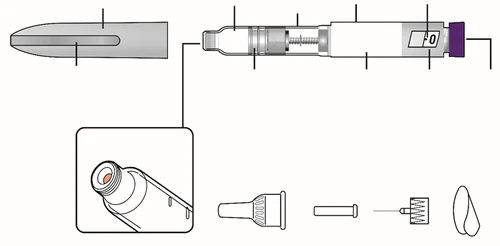
| Dose Knob (moves forward with each injection) | Dose Window Label | o | |
| Compone | |||
| Label |
Cap clip Dose selector button
Red inner seal (needles are not included)
| Protective cap | ||||||
| Outer needle cap | Cap | |||||
| Needle | ||||||
Compatible needle for use with the KwikPen (if you are unsure which pen needle to use, consult your healthcare provider)
Components of the Mounjaro KwikPen
Cartridge container
Cartridge cap
Pen body
Dose indicator
Cartridge of the pen
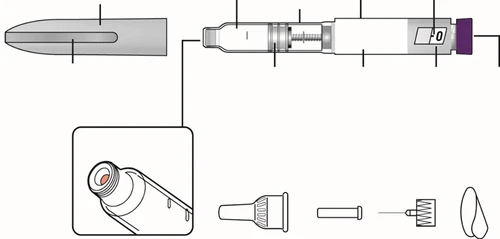
Plunger Label Dose window Dose
selection button
Cap clip (moves forward with each injection)
Components of the pen needle
(needles are not included)
Red inner seal
Outer needle cap
Inner needle cap
Needle
Paper shield
Compatible needle for use with the KwikPen (if you are unsure which pen needle to use, consult your healthcare provider)
Supplies needed to administer the injection
- Mounjaro KwikPen
- Pen needle compatible with the KwikPen (if you are unsure which pen needle to use, consult your healthcare provider)
- Alcohol swab, gauze, or cotton ball
- Sharps disposal container or household container
Preparing the Mounjaro KwikPen injection
Step 1:
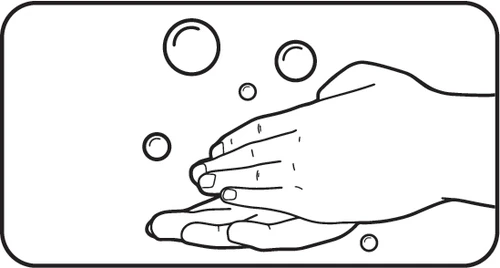
- Wash your hands with soap and water.
Step 2:
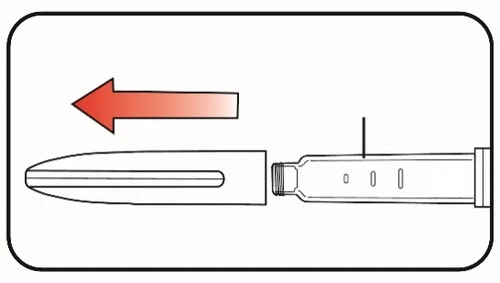
Do not use these
- Remove the pen cap.
Check the pen and label. Do not use the pen if:- the medicine name or dose does not match what was prescribed to you.
- the pen is past the expiration date (Exp.) or appears damaged.
- the medicine has been frozen, contains particles, is cloudy, or has changed
color. Mounjaro should be
colorless to slightly yellow.
Step 3:
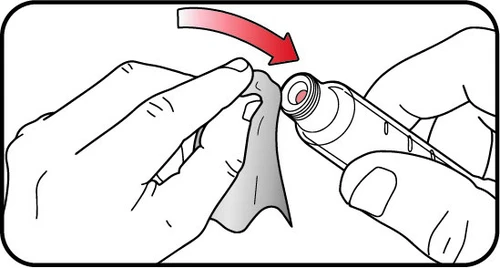
- Clean the red inner seal with an alcohol swab.
Step 4:
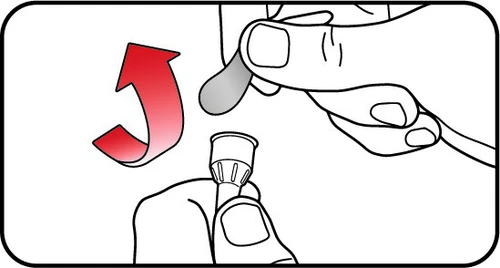
- Use a new pen needle. Always use a new needle for each injection to help prevent infections and needle blockages.
- Remove the paper shield from the outer needle cap.
Step 5:
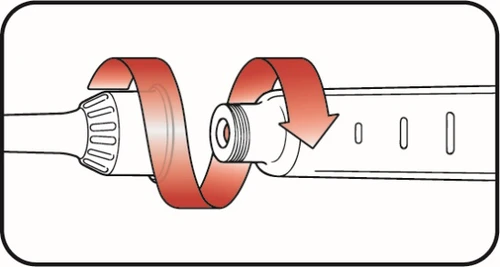
- Attach the needle with the cap straight onto the end of the pen and rotate the needle until it is securely tightened.
Step 6:
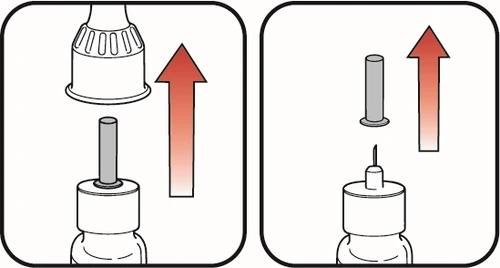
a. Remove the outer needle cap and keep it. It will be reused.
b. Remove the inner needle cap and discard it.
a. Outer needle cap b. Inner needle cap
Step 7:
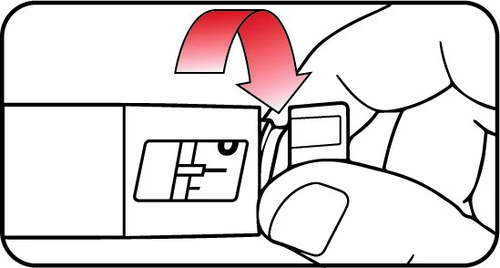
- Slowly turn the dose selector button until you hear 2 clicks and see the longest line

in the dose window.
This is the priming position. You can correct it by turning the dose selector button in either direction until the priming position aligns with the dose indicator.
Step 8:
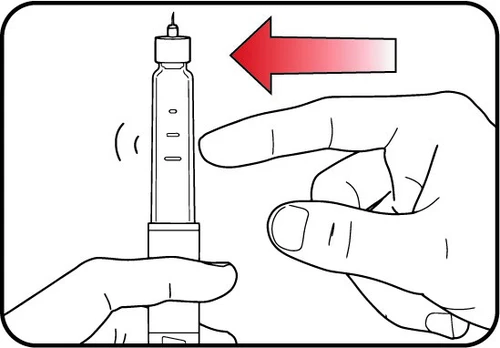
- Hold the pen with the needle pointing upward.
- Gently tap the cartridge holder to collect air bubbles at the top.
Step 9:
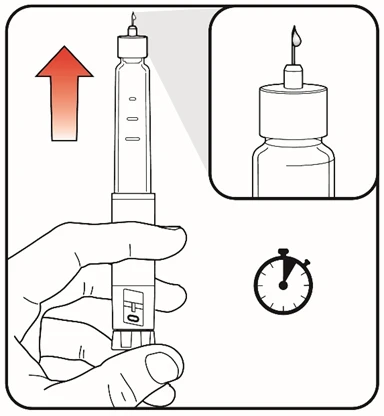
-
Expel a small amount of medicine by pressing the dose selector button until it stops, then count slowly to 5 while keeping the dose selector button pressed. The dose window should display the symbol
Do not administer the injection.
Priming removes air from the cartridge and ensures the pen works properly. The pen is primed if a small amount of medicine appears at the needle tip.
5 sec. - If you do not see medicine, repeat steps 7 to 9 no more than 2 additional times. -
If you still do not see medicine, replace the pen needle and repeat steps 7 to 9 one additional time.
-
If you still do not see medicine, contact your local Lilly company office listed in the patient information leaflet.
Administering the Mounjaro KwikPen injection
Step 10:
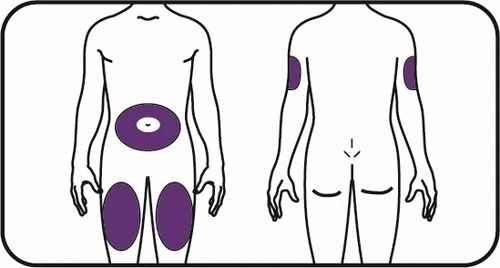
- Choose the injection site a. You or another person may inject the medicine into the thigh or abdominal area (stomach), at least 5 cm from the navel. b. Another person may inject into the back of the upper arm. a. Front b. Back • Change your injection site each week. You may use the same body area, but be sure to select a different injection site within that area.
Step 11:
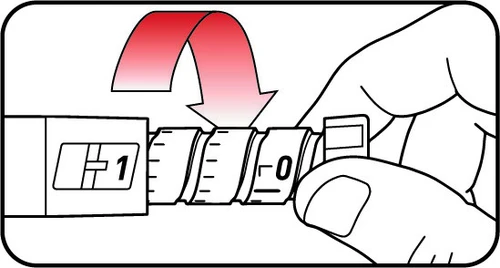
- Turn the dose selector button until it stops and the symbol appears in the dose window. The symbol indicates a full dose.


Dose selection
Step 12:
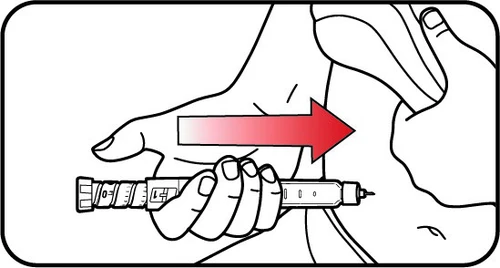
a. Insert the needle into the skin.
b. Inject the medicine by pressing the dose selector button until it stops, then count slowly to 5 while keeping the dose selector button pressed.
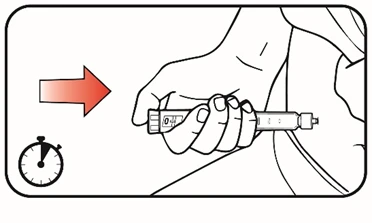
PRESS
Before removing the needle, the symbol must appear in the dose window.

5 sec.
Step 13:
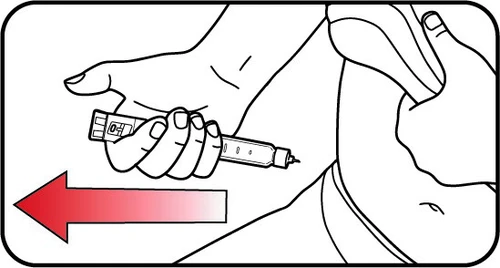
- Remove the needle from the skin. A small drop of medicine at the needle tip is normal and will not affect your dose.
- Check that the symbol appears in the dose window.

If the symbol appears in the dose window, you have received the full dose.
If the symbol does not appear in the dose window, reinsert the needle into the skin and complete the injection. Do not reselect the dose.
If you still think you did not receive the full dose, do not restart or repeat the injection. See the sections “Storing Mounjaro KwikPen” or “Frequently Asked Questions” for further information.
After administering the Mounjaro KwikPen injection
Step 14:
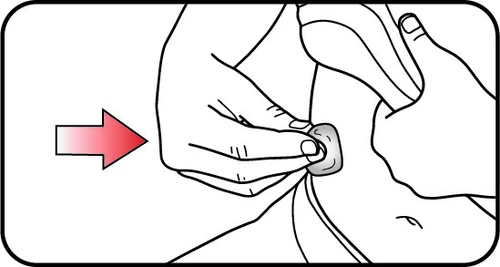
- If you see blood after removing the needle from the skin, gently press a gauze pad or cotton ball over the injection site. Do not rub the injection site.
Step 15:
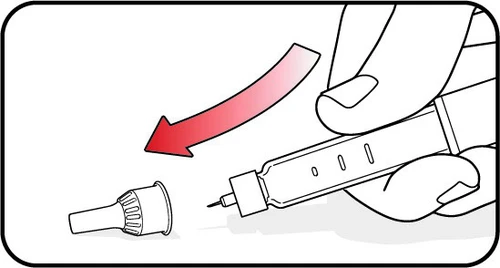
- Carefully replace the outer needle cap onto the needle.
Step 16:
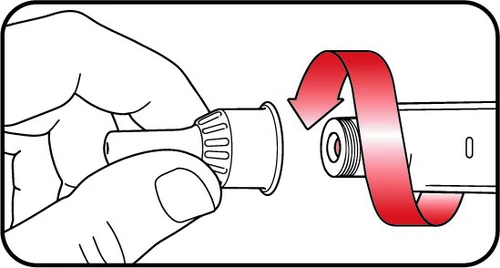
- Unscrew the needle with the cap and place it in a sharps disposal container (see “Disposal of Mounjaro KwikPen and pen needles”). Do not store the pen with the needle attached to prevent leakage, needle blockage, and air entering the pen.
Step 17:
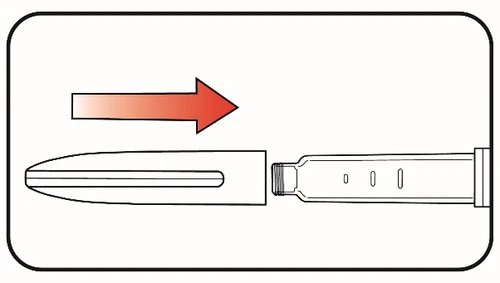
- Replace the pen cap. Do not store the pen without the cap in place.
Storing Mounjaro KwikPen
Unused pens:
- Store unused pens in the refrigerator at 2°C to 8°C.
- Unused pens may be used until the expiration date printed on the label if stored in the refrigerator.
- Do not freeze the pen. Discard (dispose of) the pen if it has been frozen.
Used pens: - You may store the used pen at room temperature below 30°C after injection.
- Keep the pen and needles out of sight and reach of children.
- Dispose of the pen 30 days after first use, even if medicine remains in the pen.
- Dispose of the pen after receiving 4 weekly doses. Attempting to inject remaining medicine may result in an incomplete dose, even if medicine is still present in the pen.
Leftover medicine:
- After completing the fourth injection, you will see that some medicine remains
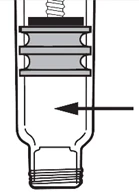
in the pen, which is normal. This leftover medicine ensures proper pen function.
Leftover medicine
- Dispose of the pen.
- Even if medicine remains in the pen, do not attempt to inject the leftover medicine. Doing so may result in an incomplete dose.
(not a dose)
Disposal of Mounjaro KwikPen and pen needles
- Place used pen needles into a sharps disposal container or a hard plastic container with a secure lid.
- Do not dispose of pen needles loose in household waste.
- Dispose of the used pen as instructed by your healthcare provider.
- Ask your healthcare provider about available options for proper disposal of the sharps disposal container.
- Do not recycle a used sharps disposal container.
Frequently Asked Questions
- If you cannot remove the pen cap, gently twist it back and forth, then pull it off.
- If you cannot turn the dose selector button until the symbol appears in the

dose window:
- dispose of the pen, including unused medicine. There may not be enough medicine left in the pen to deliver a full dose. Do not attempt to inject the remaining medicine.
- If you have difficulty pressing the dose selector button:
- Pressing the dose selector button more slowly may make the injection easier.
- The needle may be blocked. Attach a new needle and prime the pen.
- There may be dust, food, or liquid inside the pen. Discard the pen and use a new one.
- If you have any further questions or problems with Mounjaro KwikPen, contact Lilly or your doctor, nurse, or pharmacist.
Medication calendar
Use Mounjaro KwikPen once per week. Administer your weekly dose on the following dates:
Write down the day of the week you
choose for your injection. Administer
(day/month) (day/month) (day/month) (day/month)
the injection on this day every week (e.g., Monday).