Moduretic
Italy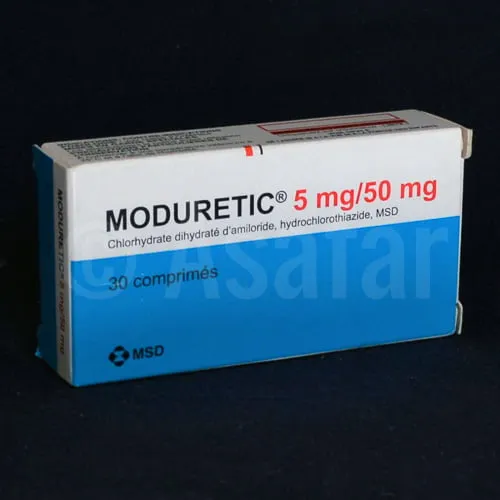
Table of Contents
Patient Information Leaflet
MODURETIC 5 mg + 50 mg tablets
amiloride hydrochloride dihydrate + hydrochlorothiazide
Please read this leaflet carefully before taking this medicine because it contains important information for you.
- Keep this leaflet. You may need to read it again.
- If you have any questions, ask your doctor or pharmacist.
- This medicine has been prescribed for you only. Do not give it to others, even if they have the same symptoms as you, because it could be harmful.
- If you experience any side effects, including those not listed in this leaflet, tell your doctor or pharmacist. See section 4.
Contents of this leaflet:
- What Moduretic is and what it is used for
- What you need to know before taking Moduretic
- How to take Moduretic
- Possible side effects
- How to store Moduretic
- Contents of the pack and other information
1. What Moduretic is and what it is used for
Moduretic contains two active substances: hydrochlorothiazide and amiloride.
Hydrochlorothiazide is a diuretic belonging to a group of medicines called thiazides. It works by stimulating the kidneys to produce a greater amount of urine (diuretic effect), thereby reducing blood pressure (antihypertensive effect).
Amiloride prevents excessive loss of potassium that may occur in patients taking a thiazide diuretic, and is therefore defined as a potassium-sparing agent.
Moduretic combines the diuretic and antihypertensive action of hydrochlorothiazide with the potassium-sparing effect of amiloride.
Moduretic is indicated for the treatment of:
- patients with excessive accumulation of fluid in body tissues due to cardiovascular diseases (cardiac edema);
- patients affected by chronic degenerative liver disease with fluid accumulation in the abdomen (hepatic cirrhosis with ascites);
- patients with high blood pressure (hypertension).
2. What you need to know before taking Moduretic
Do not take Moduretic if:
- you are allergic to the active substances (hydrochlorothiazide and amiloride) or to other sulfonamide-derived medicines (chemically related to hydrochlorothiazide), or to any of the other ingredients of this medicine (listed in section 6);
- you have high levels of potassium in your blood (hyperkalaemia), are receiving treatment with other potassium-sparing medicines, or are taking potassium supplements;
- you have kidney disease;
- you have diabetic kidney disease (diabetic nephropathy), with or without impaired kidney function (renal failure).
Moduretic must not be used in children (see section “Children and adolescents”).
Warnings and precautions
Talk to your doctor or pharmacist before taking Moduretic if:
- you experience a decrease in vision or eye pain. These may be symptoms of fluid accumulation in the vascular layer of the eye (choroidal effusion) or increased intraocular pressure, which may occur from a few hours to several weeks after taking Moduretic. If left untreated, this may lead to permanent vision loss. If you have previously had an allergy to penicillin or sulfonamides, you may be at higher risk of developing these symptoms.
- you have had, or currently have, hypersensitivity reactions (allergic reactions) or asthma. Signs of an allergic reaction may include skin rash, difficulty swallowing or breathing, swelling of the lips, face, throat, or tongue;
- you normally have high potassium levels in your blood, especially if associated with heart, lung, liver, or kidney diseases, or if you are taking other diuretics. In such cases, your doctor may consider it necessary to monitor your body's fluid and electrolyte balance more frequently and/or adjust the dose of your medications;
- you have diabetes, as frequent monitoring of blood electrolytes and kidney function is required during treatment with Moduretic, and your diabetes medication (including insulin) may need dose adjustments. Your doctor will discontinue your treatment at least three days before a glucose tolerance test;
- you have a specific metabolic disorder causing inflammation, redness, and pain in the joints (gout);
- you have an inflammatory autoimmune disease affecting multiple organs and tissues (systemic lupus erythematosus);
- you are about to undergo anesthesia for surgery or dental procedures, as a sudden drop in blood pressure may occur;
- you need to undergo tests to assess the function of glands regulating calcium levels in the blood (parathyroid glands). Consult your doctor, who may advise you to stop taking Moduretic before undergoing this test;
- you have previously had skin cancer or develop unexpected skin lesions during treatment. Treatment with hydrochlorothiazide, particularly long-term use at high doses, may increase the risk of certain types of non-melanoma skin and lip cancers. Protect your skin from exposure to sunlight and UV radiation while taking Moduretic.
During treatment with Moduretic, an electrolyte imbalance may occur,
manifesting with signs and symptoms such as: dry mouth, thirst, weakness, pathological deep sleep (lethargy), drowsiness, restlessness, involuntary muscle contractions (seizures), confusion, muscle cramps and pain, muscle fatigue, low blood pressure, reduced urine output, increased heart rate, and gastrointestinal disturbances such as nausea and vomiting. In such cases, contact your doctor promptly.
If you experience excessive vomiting during treatment with Moduretic, contact your doctor immediately, as this may lead to an electrolyte imbalance.
Children and adolescents
The use of Moduretic is not recommended in children due to lack of data on safety and efficacy.
Other medicines and Moduretic
Inform your doctor or pharmacist if you are taking, have recently taken, or might take any other medicines.
In particular, consult your doctor or pharmacist if you are taking:
- medicines used to treat high blood pressure belonging to the classes of ACE inhibitors (angiotensin-converting enzyme inhibitors) and angiotensin II receptor antagonists;
- medicines used to suppress the immune system response (immunosuppressants), such as cyclosporine and tacrolimus;
- potassium-sparing medicines or potassium supplements;
- medicines that increase urine elimination (diuretics);
- insulin or other oral antidiabetic medicines;
- medicines used for muscle relaxation, such as tubocurarine;
- adrenaline or noradrenaline, known as pressor amines;
- corticosteroids (which modulate anti-inflammatory responses) and adrenocorticotropic hormone (ACTH), used to assess adrenal gland function;
- non-steroidal anti-inflammatory drugs (NSAIDs), used to treat joint inflammation (arthritis) or muscle pain;
- lithium, used to treat certain depressive disorders;
- medicines used to reduce blood fat levels, such as cholestyramine and colestipol resins;
- barbiturates, which have a sedative effect on the central nervous system and are used, for example, to treat epilepsy;
- medicines with anaesthetic and sleep-inducing effects (narcotics);
- medicines that help relieve pain (analgesics).
Moduretic with food, drinks, and alcohol
Moduretic should not be taken with alcohol, as this may cause excessive lowering of blood pressure.
Pregnancy and breastfeeding
If you are pregnant, suspect you may be pregnant, planning pregnancy, or breastfeeding, consult your doctor or pharmacist before using this medicine.
Pregnancy
Moduretic is not recommended during pregnancy. If you require antihypertensive therapy, your doctor will assess whether an alternative treatment is appropriate.
If you take Moduretic during confirmed or suspected pregnancy, inform your doctor, who will evaluate whether the potential benefits of treatment outweigh the potential risks to the baby.
Breastfeeding
Moduretic is not recommended during breastfeeding.
Hydrochlorothiazide, contained in Moduretic, is excreted in breast milk. If taking Moduretic is considered essential, your doctor will advise you to discontinue breastfeeding.
Driving and using machines
There are no data suggesting effects of Moduretic on the ability to drive or operate machinery.
However, rarely, Moduretic may cause side effects that could affect your ability to drive or use machinery, such as drowsiness, dizziness, and temporary vision disturbances (see section 4 "Possible side effects"). Therefore, exercise caution when driving or operating machinery.
Moduretic contains lactose
If your doctor has diagnosed you with an intolerance to certain sugars, consult them before taking this medicine.
For those engaged in sports
Using this medicine without a therapeutic need constitutes doping and may result in a positive anti-doping test.
3. How to take Moduretic
Take this medicine exactly as directed by your doctor or pharmacist. If you have any doubts, consult your doctor or pharmacist.
The optimal dose and duration of treatment with Moduretic will be determined by your doctor based on your clinical condition and taking into account any other medicines you are currently taking.
Cardiac edema
The recommended initial dose is 1 tablet daily. If necessary, your doctor may increase the dose up to a maximum of 2 tablets daily. Once diuresis has been achieved, your doctor may reduce the dose for maintenance therapy. Maintenance therapy may be administered intermittently.
Hepatic cirrhosis with ascites
The recommended minimum initial dose is 1 tablet daily. If necessary, your doctor may gradually increase the dose until effective diuresis is achieved, up to a maximum of 2 tablets daily. Maintenance therapy may be continued at a lower dose than that required to initiate diuresis.
Hypertension
The usual recommended dose is 1 tablet daily, taken as a single dose or in divided doses (half a tablet twice daily). It may be sufficient to take only half a tablet of Moduretic daily.
If you take more Moduretic than you should
If you accidentally take too much Moduretic, contact your doctor immediately or go to the nearest hospital.
Symptoms of overdose may include: feeling faint or dizzy due to excessive lowering of blood pressure, excessive thirst, mental confusion, reduced urine output, and increased heart rate.
Management in case of overdose with Moduretic
There are no specific instructions for the treatment of an overdose of Moduretic, and there is no known specific antidote to counteract the effects of an overdose.
It is not known whether Moduretic can be removed by dialysis.
In case of overdose, treatment should be discontinued, symptoms should be appropriately managed, and the patient should be closely monitored. Recommended measures in case of overdose include induction of vomiting and/or gastric lavage, together with appropriate supportive therapy.
If you forget to take Moduretic
Do not take a double dose to make up for the missed tablet. If in doubt, contact your doctor.
If you stop taking Moduretic
For Moduretic to be effective, it must be taken regularly every day and for the full duration of treatment as prescribed by your doctor.
If you have any questions about how to use this medicine, consult your doctor or pharmacist.
4. Possible side effects
Like all medicines, this medicine can cause side effects, although not everyone will experience them.
The side effects observed with Moduretic are generally those commonly associated with thiazide therapy, or are related to the underlying disease being treated, or to diuresis. Clinical studies have shown that the combination of amiloride and hydrochlorothiazide does not increase the risk of side effects compared to separate administration of the two active substances.
Stop taking Moduretic and contact your doctor immediately if you notice any serious side effect, such as:
- severe allergic reaction (anaphylactic reaction);
- severe skin reactions including more or less itchy rash (urticaria), skin disease causing skin peeling (toxic epidermal necrolysis).
The side effects most frequently reported with Moduretic during clinical studies were:
- reduced or loss of appetite (anorexia);
- dizziness, headache (cephalalgia);
- nausea;
- appearance of spots or bumps on the skin (rash);
- asthenia.
Other side effects include:
- altered appetite, dehydration, electrolyte imbalance, gout, reduced blood sodium levels (hyponatremia – see section "Warnings and precautions"); hyponatremia with worsening of symptoms;
- depression, insomnia, mental confusion, nervousness, drowsiness;
- altered taste, tingling sensations (paresthesia), decreased attention, disorientation, altered mental status (stupor), temporary loss of consciousness (syncope);
- visual disturbances;
- vertigo;
- chest pain due to reduced oxygen and blood supply to the heart (angina pectoris), changes in heart rhythm (arrhythmias), increased heart rate (tachycardia);
- flushing, decrease in blood pressure upon sudden change from sitting or lying position to standing (orthostatic hypotension);
- cough and breathing difficulty (dyspnea), nasal congestion;
- sensation of abdominal fullness, abdominal pain, difficulty passing stools (constipation), diarrhea, increased intestinal gas production (flatulence), gastrointestinal bleeding, hiccups, vomiting;
- increased sweating (diaphoresis), itching;
- back pain (lumbago), joint pain, leg pain, involuntary muscle contractions (muscle cramps);
- difficulty urinating (dysuria), incontinence, need to get up multiple times during the night to urinate (nocturia), kidney dysfunction including renal failure;
- difficulty in achieving or maintaining an erection in men (impotence);
- chest pain, reduced tolerance to physical exertion (fatigability), malaise, thirst;
- elevated blood potassium levels (> 5.5 mEq per litre);
- toxicity due to medicines used in the treatment of heart failure (digitalis drugs).
Side effects related to amiloride
- inadequate production of blood cells by the bone marrow (aplastic anaemia), decreased number of specific white blood cells called neutrophils (neutropenia);
- decreased sexual desire (decreased libido);
- brain dysfunction (encephalopathy), drowsiness, tremors;
- unpleasant sensation of ringing or buzzing in the ears (tinnitus);
- partial cardiac arrest that progressed to complete cardiac arrest (in 1 patient), irregular or forceful heartbeat (palpitations);
- cough;
- activation of lesions in the digestive tract mucosa (peptic ulcer), likely pre-existing, dry mouth, pain in the upper abdomen (dyspepsia);
- yellowing of the skin and whites of the eyes (jaundice), changes in liver function;
- hair loss (alopecia);
- neck/shoulder pain, pain in extremities;
- involuntary contractions of the bladder (bladder spasm), increased urine output (polyuria), increased frequency of passing small amounts of urine (pollakiuria);
- changes in kidney function, increased pressure inside the eye (intraocular pressure).
Side effects related to hydrochlorothiazide
- inflammation of the salivary glands (sialoadenitis);
- frequency “not known”: cancer of the skin and lips (non-melanoma skin cancer);
- severe reduction in the number of granulocytes (a type of white blood cells) in the blood (agranulocytosis), inadequate production of blood cells by the bone marrow (aplastic anaemia), excessive destruction of red blood cells (haemolytic anaemia), abnormally low white blood cell count (leucopenia), rupture of capillaries under the skin surface (purpura), reduced number of platelets in the blood (thrombocytopenia);
- increased blood sugar levels (hyperglycaemia), elevated blood uric acid concentration (hyperuricaemia), low blood potassium levels (hypokalaemia);
- restlessness;
- temporary blurred vision, disturbance in colour vision perception (xanthopsia);
- necrotizing inflammation of the walls of skin blood vessels (necrotizing vasculitis, vasculitis);
- difficulty breathing due to lung inflammation (pneumonitis) or presence of fluid in the lungs (pulmonary oedema);
- involuntary muscle contractions (cramps), gastric irritation, inflammation of the pancreas (pancreatitis);
- yellowing of the skin and whites of the eyes (jaundice), mainly due to liver disease (intrahepatic cholestatic jaundice);
- skin sensitivity to light (photosensitivity);
- presence of sugar in the urine (glucosuria), inflammatory disease of one of the kidney tissues (interstitial nephritis);
- fever;
- decreased vision or eye pain due to elevated pressure (possible signs of fluid accumulation in the vascular layer of the eye (choroidal effusion)).
Reporting of side effects
If you experience any side effect, including those not listed in this leaflet, please contact your doctor or pharmacist. You can also report side effects directly via the national reporting system at https://www.aifa.gov.it/content/segnalazioni-reazioni-avverse .
Reporting side effects helps provide more information on the safety of this medicine.
5. How to store Moduretic
Keep this medicine out of the sight and reach of children.
Store in the original packaging to protect the medicine from light.
Do not use this medicine after the expiry date stated on the carton and blister after "Exp". The expiry date refers to the last day of that month.
Do not dispose of medicines via wastewater or household waste. Ask your pharmacist how to dispose of medicines you no longer use. This will help protect the environment.
6. Package contents and other information
What Moduretic contains
- The active substances are amiloride hydrochloride dihydrate and hydrochlorothiazide. Each tablet contains 5.7 mg of amiloride hydrochloride dihydrate (equivalent to 5.0 mg of anhydrous amiloride hydrochloride) and 50 mg of hydrochlorothiazide.
- The other components are calcium hydrogen phosphate dihydrate, lactose monohydrate, maize starch, pregelatinized starch, guar gum, magnesium stearate.
Description of the appearance of Moduretic and contents of the pack
Moduretic is available as tablets contained in PVC/aluminum blisters.
Each pack contains 20 tablets.
Marketing Authorisation Holder and Manufacturer
Marketing Authorisation Holder
NEOPHARMED GENTILI S.p.A.
Via San Giuseppe Cottolengo, 15 – 20143 Milan, Italy
Manufacturer
Merck Sharp & Dohme B.V.
Waarderweg, 39
2031 BN Haarlem, The Netherlands