Modigraf
Italy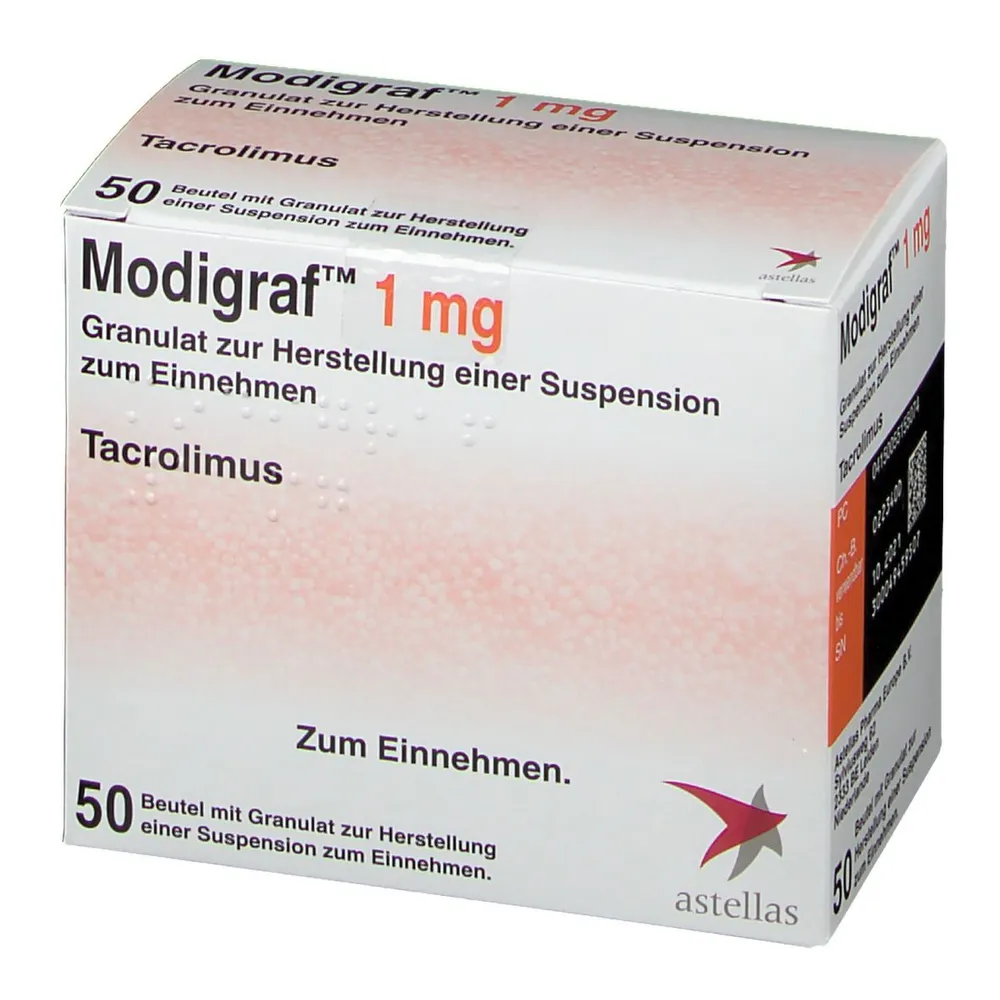
Table of Contents
- Patient Information Leaflet: Information for the User
- Modigraf 0.2 mg, granules for oral suspension, 1 mg, granules for oral suspension
- 1. What Modigraf is and what it is used for
- 2. What you should know before taking Modigraf
- 3. How to take Modigraf
- 4. Possible side effects
- 5. How to store Modigraf
- 6. Package contents and other information
Patient Information Leaflet: Information for the User
Modigraf 0.2 mg, granules for oral suspension, 1 mg, granules for oral suspension
Tacrolimus
Please read this leaflet carefully before taking this medicine because it contains
important information for you.
- Keep this leaflet. You may need to read it again.
- If you have any questions, ask your doctor or pharmacist.
- This medicine has been prescribed for you only. Do not give it to other people, even if their symptoms are the same as yours, as it may be harmful.
- If you experience any side effects, including those not listed in this leaflet, contact your doctor or pharmacist. See section 4. Contents of this leaflet:
- What Modigraf is and what it is used for
- What you need to know before taking Modigraf
- How to take Modigraf
- Possible side effects
- How to store Modigraf
- Contents of the pack and other information
1. What Modigraf is and what it is used for
Modigraf contains the active substance tacrolimus. It is an immunosuppressant. After an organ transplant (e.g. of the liver, kidney or heart), the body's immune system will attempt to reject the transplanted organ. Modigraf is used to control this immune response, enabling the body to accept the transplanted organ.
You may also be given Modigraf to treat ongoing rejection of a transplanted liver, kidney, heart or other organ, or if one of your previous treatments has proven ineffective in controlling the immune response after transplantation.
Modigraf is used in adults and children.
2. What you should know before taking Modigraf
Do not take Modigraf
- if you are allergic to tacrolimus or to any of the other ingredients of this medicine (listed in section 6).
- if you are allergic to sirolimus (another substance used to prevent organ transplant rejection) or to any macrolide antibiotic (e.g. erythromycin, clarithromycin, josamycin).
Warnings and precautions
Talk to your doctor or pharmacist before taking Modigraf:
- if you have or have had liver problems
- if you have diarrhoea lasting more than one day
- if you have severe abdominal pain, with or without other symptoms such as chills, fever, nausea or vomiting
- if you have a disturbance in the electrical activity of the heart known as “QT prolongation”
- if you have or have had damage to the small blood vessels, known as thrombotic microangiopathy/thrombotic thrombocytopenic purpura/hemolytic uremic syndrome. Inform your doctor if you develop fever, bruising under the skin (which may appear as red spots), unexplained tiredness, confusion, yellowing of the skin or eyes, reduced urine output, loss of vision, or seizures (see section 4). When tacrolimus is taken together with sirolimus or everolimus, the risk of developing these symptoms may increase.
Please avoid taking any herbal remedy, such as St John’s wort (Hypericum perforatum) or any other herbal product, as it may alter the effectiveness and required dose of Modigraf. If in doubt, please consult your doctor before taking any herbal product or remedy.
Your doctor may need to adjust your dose of Modigraf. You should maintain regular contact with your doctor. From time to time, your doctor may consider it necessary to perform blood and urine tests, or heart and eye examinations, to determine the correct dose of Modigraf.
You must limit exposure to sunlight and ultraviolet (UV) radiation while taking Modigraf. This is because immunosuppressive therapies such as Modigraf can increase the risk of skin cancer. When exposed to sunlight, wear protective clothing and use a sunscreen with a high sun protection factor.
Precautions for handling
During preparation, avoid direct contact with any part of the body such as the skin or eyes, or inhalation of injectable solutions, powder, or granules contained in tacrolimus-based products. In case of contact, wash the skin and eyes thoroughly.
Other medicines and Modigraf
Inform your doctor or pharmacist if you are taking, have recently taken, or might take any other medicines.
The use of Modigraf together with ciclosporin (another medicine used to prevent organ transplant rejection) is not recommended.
If you visit a doctor other than your transplant specialist, inform them that you are taking tacrolimus. Your doctor may need to consult with the transplant specialist if you need to take another medicine that could increase or decrease blood levels of tacrolimus.
Blood levels of Modigraf may be affected by other medicines you are taking, and conversely, blood levels of other medicines may be altered by taking Modigraf, which may require interruption, increase, or decrease in the dose of Modigraf.
Some patients have experienced increased blood levels of tacrolimus while taking other medicines. This may cause serious side effects such as kidney problems, nervous system disorders, and heart rhythm disturbances (see section 4).
An effect on Modigraf blood levels may occur very soon after starting another medicine; therefore, frequent and ongoing monitoring of Modigraf blood levels may be necessary in the first days after starting the other medicine and throughout treatment with it.
Some other medicines may cause a decrease in tacrolimus blood levels, which may increase the risk of organ transplant rejection. In particular, inform your doctor if you are taking or have recently taken:
- antifungal and antibiotic medicines, particularly so-called macrolide antibiotics used to treat infections, e.g. ketoconazole, fluconazole, itraconazole, posaconazole, voriconazole, clotrimazole, isavuconazole, miconazole, caspofungin, telithromycin, erythromycin, clarithromycin, josamycin, azithromycin, rifampicin, rifabutin, isoniazid, and flucloxacillin
- letermovir, used to prevent a disease caused by CMV (human cytomegalovirus)
- HIV protease inhibitors (e.g. ritonavir, nelfinavir, saquinavir), the booster medicine cobicistat, and fixed-dose combinations or non-nucleoside reverse transcriptase inhibitors of HIV (efavirenz, etravirine, nevirapine), used to treat HIV infections
- HCV protease inhibitors (e.g. telaprevir, boceprevir, the combination ombitasvir/paritaprevir/ritonavir with or without dasabuvir, elbasvir/grazoprevir, and glecaprevir/pibrentasvir), used to treat hepatitis C
- nilotinib and imatinib, idelalisib, ceritinib, crizotinib, apalutamide, enzalutamide, or mitotane (used to treat certain types of cancer)
- mycophenolic acid, used to suppress the immune system and prevent transplant rejection
- medicines for stomach ulcer or acid reflux (e.g. omeprazole, lansoprazole, or cimetidine)
- antiemetics used to treat nausea and vomiting (e.g. metoclopramide)
- cisapride or the antacid magnesium-aluminium hydroxide, used to treat heartburn
- oral contraceptive pills or other hormonal treatments containing ethinylestradiol, or hormonal treatments with danazol
- medicines used to treat high blood pressure or heart problems (e.g. nifedipine, nicardipine, diltiazem, and verapamil)
- antiarrhythmic drugs (amiodarone) used to control arrhythmias (irregular heartbeat)
- medicines known as “statins” used to treat high cholesterol and triglycerides
- carbamazepine, phenytoin, or phenobarbital, used to treat epilepsy
- metamizole, used to treat pain and fever
- corticosteroids prednisolone or methylprednisolone, belonging to the class of corticosteroids used to treat inflammation or to suppress the immune system (e.g. in organ rejection)
- nefazodone, used to treat depression
- herbal preparations containing St John’s wort (Hypericum perforatum) or extracts of Schisandra sphenanthera
- cannabidiol (uses include, among others, treatment of seizures)
Inform your doctor if you are receiving treatment for hepatitis C. Pharmacological treatment for hepatitis C may alter liver function and affect blood levels of tacrolimus. Tacrolimus blood levels may decrease or increase depending on the medicines prescribed for hepatitis C. Your doctor may need to closely monitor tacrolimus blood levels and make necessary dose adjustments of Modigraf after starting hepatitis C treatment.
Inform your doctor if you are taking or need to take ibuprofen (used to treat fever, inflammation, and pain), antibiotics (cotrimoxazole, vancomycin, or aminoglycoside antibiotics such as gentamicin), amphotericin B (used to treat fungal infections), or antiviral drugs (used to treat viral infections, e.g. aciclovir, ganciclovir, cidofovir, foscarnet). These may worsen kidney or nervous system problems when taken together with Modigraf.
Inform your doctor if you are taking sirolimus or everolimus. When tacrolimus is taken together with sirolimus or everolimus, the risk of developing thrombotic microangiopathy, thrombotic thrombocytopenic purpura, and hemolytic uremic syndrome may increase (see section 4).
Your doctor also needs to know if, while taking Modigraf, you are taking potassium supplements or diuretics used for heart failure, high blood pressure, and kidney conditions (e.g. amiloride, triamterene, or spironolactone), or the antibiotics trimethoprim or cotrimoxazole, which may increase potassium levels in the blood, non-steroidal anti-inflammatory drugs (NSAIDs, e.g. ibuprofen) used for fever, inflammatory conditions, and pain, anticoagulants (blood thinners), or oral medicines for diabetes.
If you need to be vaccinated, discuss it with your doctor first.
Modigraf with food and drinks
Take Modigraf generally on an empty stomach, or at least 1 hour before or 2 to 3 hours after meals. Avoid grapefruit and grapefruit juice during treatment with Modigraf, as they may alter its blood concentration.
Pregnancy and breastfeeding
If you take Modigraf during pregnancy, it may reach the baby through the placenta. It could potentially affect the baby's health or, conversely, affect the course of pregnancy.
If you are pregnant, suspect you may be pregnant, plan to become pregnant, or are breastfeeding, consult your doctor before taking this medicine.
In a study evaluating pregnancy outcomes in women treated with tacrolimus and those treated with other immunosuppressants, although the evidence from this study is not sufficient to draw definitive conclusions, higher rates of spontaneous abortion were reported among liver and kidney transplant recipients treated with tacrolimus; and higher rates of persistent hypertension associated with protein loss in the urine developing during pregnancy or the postpartum period (a condition called pre-eclampsia) were observed among kidney transplant recipients. No increased risk of major birth defects has been observed with the use of Modigraf.
Modigraf passes into breast milk. Therefore, you must not breastfeed during treatment with Modigraf.
Driving and using machines
Do not drive or operate tools or machinery if you feel unsteady or drowsy, or have problems with clear vision after taking Modigraf. These effects may be more pronounced if you also consume alcohol.
Modigraf contains lactose and sodium
Modigraf contains lactose (milk sugar). If your doctor has diagnosed you with an intolerance to certain sugars, contact him or her before taking this medicine.
This medicine contains less than 1 mmol (23 mg) of sodium per sachet, i.e., it is essentially ‘sodium-free’.
3. How to take Modigraf
Take this medicine exactly as your doctor has told you. If you are unsure, consult your doctor or pharmacist.
Modigraf must be prescribed by a specialist doctor experienced in managing transplant patients and in the use of medicines that suppress the immune system (immunosuppressants).
Make sure you always receive the same formulation of tacrolimus when collecting your prescription, unless your transplant specialist has specifically agreed to change the tacrolimus formulation.
This medicine must be taken twice daily. If this medicine does not look like normal white granules, or if the dosing instructions have changed, contact your doctor or pharmacist as soon as possible to ensure you have received the correct medicine.
The initial dose to prevent rejection of your transplanted organ will be determined by your doctor and calculated according to your body weight. The daily dose immediately after transplantation will generally be in the range of 0.075–0.30 mg per kg of body weight per day, depending on the transplanted organ. The same dosage ranges should be used when treating rejection episodes.
Your dose will depend on your general condition and on any other immunosuppressive medicines you are taking.
Children and adolescents
Children and adolescents will receive Modigraf doses calculated in the same way as for adults. In general, children require higher doses per kg of body weight to achieve the same effective blood levels as adults.
Shortly after starting treatment with Modigraf, your doctor will ask you to have frequent blood tests to determine the correct dose and to adjust it as needed. Your doctor will generally reduce the dose of Modigraf once your condition has stabilised. Your doctor will tell you exactly how many sachets to take.
It is essential that you take Modigraf every day for as long as you need immunosuppression to prevent rejection of your transplanted organ. You must remain in close contact with your doctor.
Modigraf must be taken orally twice daily, usually in the morning and evening.
Take Modigraf on an empty stomach or 2 or 3 hours after a meal. Wait at least 1 hour before eating your next meal.
How to prepare Modigraf sachets for use?
Your doctor will inform you of the number of sachets to open and the amount of water required to prepare the suspension. For accurate measurement of the water volume, you may use a syringe or a graduated cylinder.
Pour the prescribed volume of water (at room temperature), up to a maximum of 50 ml, into a glass or cup. Place the cup with water on a stable surface. Do not use cups or spoons made of PVC (polyvinyl chloride) to take Modigraf, as the active substance in Modigraf may adhere to PVC. Carefully open the prescribed number of sachets, for example using scissors at the point indicated by an arrow. Hold the open sachet between your thumb and index finger above the cup, with the open end of the sachet facing downwards. Gently tap the bottom of the sachet and pour the contents of each sachet into the glass or cup containing water. Do not use any utensils or liquids to empty the sachet. By following these instructions, you will obtain the correct amount of granules from the sachet. It is normal for some granules to remain in the sachet; the sachet has been specifically designed this way.
Gently mix or swirl until the granules are completely suspended. The suspension can be drawn into a syringe or swallowed directly by the patient. The liquid has a sweet taste.
Rinse the glass or cup with the same amount of water and drink it. The liquid should be taken immediately after preparation.
If you take more Modigraf than you should
If you have accidentally taken too much Modigraf, contact your doctor or the nearest hospital emergency department immediately.
If you forget to take Modigraf
Do not take a double dose to make up for a missed dose.
If you forget to take Modigraf, wait until your next scheduled dose and then continue as before.
If you stop taking Modigraf
Stopping treatment with Modigraf may increase the risk of rejection of your transplanted organ. Do not stop treatment unless your doctor tells you to do so.
If you have any doubts about how to use this medicine, consult your doctor or pharmacist.
4. Possible side effects
Like all medicines, this medicine can cause side effects, although not everyone gets them.
Modigraf reduces the body's defence mechanisms (immune system), making it less effective in fighting infections. Therefore, you may be more susceptible to infections while taking Modigraf.
Some infections may be serious or fatal and may include those caused by bacteria, viruses, fungi, parasites, or other infections.
Inform your doctor immediately if you experience signs of an infection, including:
- Fever, cough, sore throat, feeling weak or generally unwell
- Memory loss, difficulty thinking, difficulty walking, or loss of vision – these may be due to a very rare and serious brain infection, which can be fatal (Progressive Multifocal Leukoencephalopathy or PML)
Serious side effects may occur, including allergic and anaphylactic reactions (a very serious type of allergic reaction with loss of consciousness and breathing difficulties requiring immediate medical attention). The occurrence of benign and malignant tumours has been reported following treatment with Modigraf.
Inform your doctor immediately if you have or suspect you may have any of the following serious side effects:
Serious common side effects (may affect up to 1 in 10 people):
- Gastrointestinal perforation: severe abdominal pain with or without other symptoms such as chills, fever, nausea, or vomiting.
- Inadequate function of the transplanted organ.
- Blurred vision.
Serious uncommon side effects (may affect up to 1 in 100 people):
- Thrombotic microangiopathy (damage to the smallest blood vessels), including haemolytic uraemic syndrome, a condition with the following symptoms: reduced or no urine output (acute kidney failure), extreme fatigue, yellowing of the skin or eyes (jaundice), appearance of bruises (ecchymoses) or abnormal bleeding, and signs of infection.
Serious rare side effects (may affect up to 1 in 1000 people):
- Thrombotic thrombocytopenic purpura: a condition involving damage to the smallest blood vessels, characterised by fever and subcutaneous bruising that may appear as red spots, with or without unexplained extreme fatigue, confusion, yellowing of the skin or eyes (jaundice), symptoms of acute kidney failure (reduced or absent urine output), loss of vision, and seizures.
- Toxic epidermal necrolysis: erosion and blistering of the skin or mucous membranes, red and swollen skin that may peel off large areas of the body.
- Blindness.
Serious very rare side effects (may affect up to 1 in 10,000 people):
- Stevens-Johnson syndrome: unexplained widespread skin pain, facial swelling, severe illness with blistering of the skin, mouth, eyes, and genitals, hives, swelling of the tongue, red or purplish skin rash that spreads, skin peeling.
- Torsade de pointes: change in heart rate, which may or may not be accompanied by symptoms such as chest pain (angina), fainting, dizziness or nausea, palpitations (strong awareness of heartbeat), and shortness of breath.
Serious side effects – frequency not known (frequency cannot be determined from available data):
- Opportunistic infections (bacterial, fungal, viral, and protozoal): prolonged diarrhoea, fever, sore throat.
- The occurrence of benign and malignant tumours has been reported following treatment, due to immunosuppression, including malignant skin cancers and a rare type of cancer that may include skin lesions, called Kaposi's sarcoma. Symptoms include skin changes such as new or changing discoloration, lesions, or nodules.
- Cases of pure red cell aplasia (a very severe reduction in red blood cell count), haemolytic anaemia (reduced number of red blood cells due to abnormal destruction, accompanied by fatigue), and febrile neutropenia (a decrease in the type of white blood cells that fight infections, accompanied by fever) have been reported. It is not exactly known how often these side effects occur. You may have no symptoms, or depending on the severity of the condition, you may experience: fatigue, apathy, unusual paleness of the skin, shortness of breath, dizziness, headache, chest pain, and cold hands and feet.
- Cases of agranulocytosis (a severely reduced number of white blood cells accompanied by mouth ulcers, fever, and infection(s)) have been reported. You may have no symptoms or may experience sudden fevers, fever-related chills, and sore throat.
- Allergic and anaphylactic reactions with the following symptoms: sudden skin rash with itching (urticaria), swelling of the hands, feet, ankles, face, lips, mouth, or throat (which may cause difficulty swallowing or breathing), and feeling weak.
- Posterior reversible encephalopathy syndrome (PRES): headache, confusion, mood swings, seizures, and visual disturbances. These may be signs of a disorder called posterior reversible encephalopathy syndrome, which has been reported in some patients treated with tacrolimus.
- Optic neuropathy (abnormality of the optic nerve): vision problems, such as blurred vision, changes in colour vision, difficulty seeing details, or restricted visual field.
The following side effects may also occur after taking Modigraf and could be serious:
Very common side effects (may affect more than 1 in 10 people):
Increased blood glucose, diabetes mellitus, increased potassium in the blood.
Difficulty sleeping.
Tremor, headache.
Increased blood pressure.
Abnormal liver function test results.
Diarrhoea, nausea.
Kidney problems.
Common side effects (may affect up to 1 in 10 people):
Reduction in blood cell count (platelets, red blood cells, or white blood cells), increased white blood cell count, abnormalities in red blood cell count (detected in blood tests).
Decreased magnesium, phosphate, potassium, calcium, or sodium in the blood, fluid retention, increased uric acid or lipids in the blood, decreased appetite, increased blood acidity, other changes in blood electrolyte balance (detected in blood tests).
Anxiety symptoms, confusion and disorientation, depression, mood swings, nightmares, hallucinations, mental disorders.
Seizures, altered consciousness, tingling and numbness in hands and feet (sometimes painful), sensation of loss of balance, impaired writing ability, nervous system disorders.
Increased light sensitivity, eye disorders.
Ringing in the ears.
Reduced blood flow in heart vessels, increased heart rate.
Bleeding, complete or partial blockage of blood vessels, low blood pressure.
Shortness of breath, changes in lung tissue, fluid accumulation around the lung, throat inflammation, cough, flu-like symptoms.
Inflammations or ulcers causing abdominal pain or diarrhoea, stomach bleeding, mouth ulcers or inflammation, fluid accumulation in the stomach, vomiting, abdominal pain, indigestion, constipation, flatulence, bloating, loose stools, stomach problems.
Biliary tract disorders, yellowing of the skin due to liver problems, liver damage and inflammation.
Itching, skin rash, hair loss, acne, increased sweating.
Joint, limb, back, and foot pain, muscle cramps.
Reduced kidney function, reduced urine production, reduced or painful urination.
General weakness, fever, swelling (oedema), pain and discomfort, increased alkaline phosphatase enzyme in the blood, weight gain, altered perception of temperature.
Uncommon side effects (may affect up to 1 in 100 people):
Changes in blood clotting processes, reduction in all types of blood cells (detected in blood tests).
Dehydration.
Reduced protein or sugar in the blood, increased phosphate in the blood.
Coma, brain haemorrhages, stroke, paralysis, brain disorders, language and expression problems, memory problems.
Lens opacity.
Hearing impairment.
Irregular heartbeat, stopped heartbeat, reduced heart performance, heart muscle disorders, thickening of the heart muscle, increased heartbeat, abnormal electrocardiogram (ECG), altered heart rhythm and rate.
Blood clot in a limb vein, shock.
Breathing difficulties, respiratory disorders, asthma.
Intestinal obstruction, increased blood levels of amylase enzyme, stomach content reflux into the throat, delayed gastric emptying.
Skin inflammation, burning sensation during sun exposure.
Joint pain.
Inability to urinate, painful menstruation, abnormal menstrual bleeding.
Failure of multiple organs, flu-like illness, increased sensitivity to heat and cold, chest tightness, restlessness and discomfort, increased blood lactate dehydrogenase enzyme, weight loss.
Rare side effects (may affect up to 1 in 1000 people):
Small skin bleedings caused by blood clots.
Increased muscle stiffness.
Deafness.
Fluid accumulation around the heart.
Acute respiratory distress syndrome.
Cyst formation in the pancreas.
Blood circulation problems in the liver.
Increased hair growth.
Thirst, fainting, chest tightness, reduced mobility, ulcer.
Very rare side effects (may affect up to 1 in 10,000 people):
Muscle weakness.
Abnormal echocardiogram.
Liver failure.
Painful urination with blood in the urine.
Increased fatty tissue.
Children and adolescents
Children and adolescents may experience the same side effects as adults.
Reporting of side effects
If you experience any side effect, including those not listed in this leaflet, talk to your doctor or pharmacist. You can also report side effects directly via the national reporting system listed in Annex V.
Reporting side effects can help provide more information on the safety of this medicine.
5. How to store Modigraf
Keep Modigraf out of the sight and reach of children.
Do not use this medicine after the expiry date stated on the carton and sachet after "Exp.". The expiry date refers to the last day of the month.
This medicine does not require any special storage temperature.
After preparation, the suspension should be taken immediately.
Do not dispose of any medicine via wastewater or household waste. Ask your pharmacist how to dispose of medicines you no longer use. This will help protect the environment.
6. Package contents and other information
What Modigraf contains
- The active substance is tacrolimus. Each 0.2 mg sachet of Modigraf granules contains 0.2 mg of tacrolimus (as monohydrate). Each 1 mg sachet of Modigraf granules contains 1 mg of tacrolimus (as monohydrate).
- The other components are: monohydrate lactose, hypromellose (E464) and croscarmellose sodium (E468). Description of the appearance of Modigraf and contents of the pack Modigraf granules for oral suspension consist of white granules contained in a sachet. Packs containing 50 sachets are available. Marketing Authorisation Holder Astellas Pharma Europe B.V. Sylviusweg 62 2333 BE Leiden The Netherlands
Manufacturer
Astellas Ireland Co., Ltd.
Killorglin, County Kerry, V93FC86
Ireland
For further information about this medicinal product, please contact the local representative of the
Marketing Authorisation Holder:
België/Belgique/Belgien Lietuva
Astellas Pharma B.V. Branch Astellas Pharma d.o.o.
Tél/Tel: + 32 (0)2 5580710 Tel: +370 37 408 681
България Luxembourg/Luxemburg
Астелас Фарма ЕООД Astellas Pharma B.V. Branch
Teл.: + 359 2 862 53 72 Belgique/Belgien
Tél/Tel: + 32 (0)2 5580710
Česká republika Magyarország
Astellas Pharma s.r.o. Astellas Pharma Kft.
Tel: +420 221 401 500 Tel.: + 36 1 577 8200
Danmark Malta
Astellas Pharma a/s Astellas Pharmaceuticals AEBE
Tlf: + 45 43 430355 Τ el: +30 210 8189900
Deutschland Nederland
Astellas Pharma GmbH Astellas Pharma B.V.
Tel: + 49 (0)89 454401 Tel: + 31 (0)71 5455745
Eesti Norge
Astellas Pharma d.o.o. Astellas Pharma
Tel: +372 6 056 014 Tlf: + 47 66 76 46 00
Ελλάδα Österreich
Astellas Pharmaceuticals AEBE Astellas Pharma Ges.m.b.H.
Τηλ : +30 210 8189900 Tel: + 43 (0)1 8772668
España Polska
Astellas Pharma S.A. Astellas Pharma Sp.z.o.o.
Tel: + 34 91 4952700 Tel.: + 48 225451 111
France Portugal
Astellas Pharma S.A.S. Astellas Farma, Lda.
Tél: + 33 (0)1 55917500 Tel: + 351 21 4401320
Hrvatska România
Astellas d.o.o. S.C. Astellas Pharma SRL
Tel: +38516700102 Tel: +40 (0)21 361 04 95
Ireland Slovenija
Astellas Pharma Co. Ltd. Astellas Pharma d.o.o.
Tel: + 353 (0)1 4671555 Tel: +386 (0) 14011 400
Ísland Slovenská republika
Vistor hf Astellas Pharma s.r.o.
Sími: + 354 535 7000 Tel: +421 2 4444 2157
Italia Suomi/Finland
Astellas Pharma S.p.A. Astellas Pharma
Tel: + 39 02 921381 Puh/Tel: + 358 (0)9 85606000
Κύπρος Sverige
Astellas Pharmaceuticals AEBE Astellas Pharma AB
Ελλάδα Tel: + 46 (0)40-650 15 00
Τηλ : +30 210 8189900
Latvija
Astellas Pharma d.o.o.
Tel: +371 67 619365
More detailed information on this medicinal product is available on the website of the European Medicines Agency, https://www.ema.europa.eu/.
Annex IV
Scientific conclusions and grounds for the variation to the terms of the marketing authorisation
Scientific conclusions
Taking into account the assessment by the Pharmacovigilance Risk Assessment Committee (PRAC) of the Periodic Safety Update Reports (PSURs) for tacrolimus (systemic formulations), the PRAC's scientific conclusions are as follows:
In view of the available data on cases of Kaposi's sarcoma from clinical studies, the literature and spontaneous reports, including cases with a close temporal relationship and a number of fatal outcomes, and in view of a plausible mechanism of action, the PRAC considers that a causal relationship between systemic tacrolimus and Kaposi's sarcoma is at least a reasonable possibility. The PRAC concluded that the product information for medicinal products containing systemic tacrolimus should therefore be amended accordingly.
Having reviewed the PRAC's recommendation, the Committee for Human Medicinal Products (CHMP) agrees with the general conclusions and the rationale of the recommendation.
Grounds for the variation to the terms of the marketing authorisation
Based on the scientific conclusions for tacrolimus (systemic formulations), the CHMP considers that the benefit-risk balance of medicinal products containing tacrolimus (systemic formulations) remains unchanged, subject to the proposed amendments to the product information.
The CHMP recommends the variation of the terms of the marketing authorisation.