Mivacron
Italy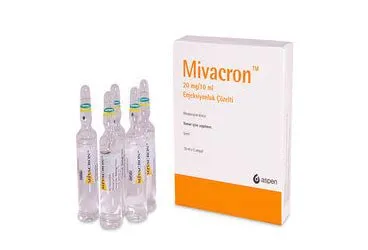
Table of Contents
- PACKAGE LEAFLET: INFORMATION FOR THE PATIENT
- Mivacron 2 mg/ml solution for injection for intravenous use
- 1. What Mivacron is and what it is used for
- 2. What you should know before being given Mivacron
- 3. How Mivacron is administered
- 4. Possible side effects
- 5. How to store Mivacron
- 6. Package contents and other information
- The following information is intended exclusively for healthcare professionals:
PACKAGE LEAFLET: INFORMATION FOR THE PATIENT
Mivacron 2 mg/ml solution for injection for intravenous use
mivacurium
Please read this leaflet carefully before this medicine is administered to you
because it contains
important information for you.
- Keep this leaflet. You may need to read it again.
- If you have any questions, ask your doctor, pharmacist or nurse.
- If you experience any side effects, including those not listed in this leaflet, tell your doctor, pharmacist or nurse. See section 4.
Contents of this leaflet:
- What Mivacron is and what it is used for
- What you need to know before you are given Mivacron
- How Mivacron is administered
- Possible side effects
- How to store Mivacron
- Contents of the pack and other information
1. What Mivacron is and what it is used for
Mivacron contains a substance called mivacurium. This substance belongs to a group of medicines called muscle relaxants.
Mivacron is used for:
- Relaxing muscles during surgical procedures in adults and children over 2 months of age, including cardiac surgery.
- Facilitating the insertion of a tube into the trachea (endotracheal intubation) when a patient requires respiratory support.
Ask your doctor if you would like further information about this medicine.
2. What you should know before being given Mivacron
Do not use Mivacron:
- if you are allergic to mivacurium, or to other muscle relaxants, or to any of the excipients in Mivacron (listed in section 6)
- if you or any of your family members have previously experienced an adverse reaction to an anesthetic. If you think any of these conditions apply to you, do not take Mivacron. If you are unsure, discuss this with your doctor, nurse, or pharmacist before receiving this medicine.
Warnings and precautions
Before being given Mivacron, speak to your doctor, nurse, or pharmacist if:
- you have muscle weakness, fatigue, or difficulty coordinating movements (myasthenia gravis)
- you have a neuromuscular disease, such as muscular dystrophy, paralysis, motor neuron disease, or cerebral palsy
- you have a burn requiring medical treatment
- you have ever had an allergic reaction to any muscle relaxant administered during surgery.
Talk to your doctor before receiving this medicine if you have or have ever had any of the following conditions:
- Tetanus
- A severe, long-term infection such as tuberculosis (TB)
- Any long-term illness that has weakened you
- Tumor
- Anemia
- Malnutrition
- Heart disease
- Stomach ulcers
- Burns
- Liver or kidney disease
Inform your doctor if:
- You are pregnant, have recently been pregnant, or have given birth within the last 6 months
- You have been diagnosed as a carrier of genetically abnormal cholinesterase
If you are unsure whether any of the above conditions apply to you, ask your doctor, nurse, or pharmacist before being given Mivacron.
Other medicines and Mivacron
Inform your doctor, nurse, or pharmacist if you are taking, have recently taken, or might need to take any other medicines, including those without a prescription, and herbal medicines. These medicines may affect how Mivacron works or may cause unwanted side effects.
In particular, consult your doctor, nurse, or pharmacist if you are taking any of the following medicines:
- anesthetics (used to reduce sensation and pain during surgery)
- antibiotics (used to treat infections)
- medicines for abnormal heart rhythms (antiarrhythmics)
- medicines for high blood pressure
- diuretics, such as furosemide
- medicines for joint inflammation, such as chloroquine or d-penicillamine
- steroids
- medicines for seizures (epilepsy), such as phenytoin or carbamazepine
- medicines for mental illnesses, such as lithium, monoamine oxidase inhibitors (MAOIs), or chlorpromazine (which may also be used for nausea)
- medicines containing magnesium
- medicines used to treat depression and/or anxiety, SSRIs (selective serotonin reuptake inhibitors), including fluoxetine, paroxetine, sertraline, fluvoxamine, citalopram, escitalopram.
Pregnancy and breastfeeding
If you are pregnant, think you may be pregnant, planning a pregnancy, or are breastfeeding, consult your doctor or pharmacist before being given this medicine.
Driving and using machines
It may be dangerous to drive or operate machinery too soon after undergoing surgery. Your doctor will advise you how long you should wait before driving or using machinery.
3. How Mivacron is administered
How the injection will be given to you
You will never be expected to administer this medicine to yourself. It will always be given to you by a qualified healthcare professional.
Mivacron can be administered:
- as a single intravenous injection (intravenous bolus injection)
- as a continuous intravenous infusion. In this way, the medicine is slowly released over a prolonged period of time.
The doctor will decide the appropriate route of administration and the required dose. This will depend on the following factors:
- body weight
- the amount and duration of muscle relaxation required
- the expected response to the medicine. This medicine must not be given to children under 2 months of age.
If you receive more Mivacron than you should
Mivacron must always be administered under close medical supervision. However, if you think you have been given more than you should have, immediately speak to your doctor or nurse.
4. Possible side effects
Like all medicines, Mivacron may cause side effects, although not everybody gets them.
Very rare side effects (may affect up to 1 in 10,000 people)
Allergic reactions
If you experience an allergic reaction, inform your doctor or nurse immediately. Signs of allergy may include:
- sudden shortness of breath, chest pain or tightness in the chest
- swelling of the eyelids, face, lips, mouth or tongue
- rash or "hives" anywhere on the body
- collapse
Very common side effects (may affect up to 1 in 10 people)
- skin flushing
Uncommon side effects (may affect up to 1 in 100 people)
- increased heart rate
- decrease in blood pressure
- breathlessness or cough
- skin rash
Reporting of side effects
If you experience any side effect, including those not listed in this leaflet, talk to your doctor, nurse or pharmacist. You can also report side effects directly via the national reporting system at http://www.aifa.gov.it/content/segnalazioni-reazioni-avverse. Reporting side effects can help provide more information on the safety of this medicine.
5. How to store Mivacron
- Keep Mivacron out of the sight and reach of children.
- Do not use Mivacron after the expiry date stated on the carton after EXP. The expiry date refers to the last day of that month.
- Store below 25°C. Do not freeze.
- Keep in the original container to protect from light.
- When Mivacron is reconstituted, it must be used immediately. Any unused solution must be discarded. Do not dispose of any medicine via wastewater. Ask your pharmacist or nurse how to dispose of medicines you no longer use. This will help protect the environment.
6. Package contents and other information
What Mivacron contains
- The active substance is mivacurium chloride.
- The other components are hydrochloric acid and water for injections.
Description of the appearance of Mivacron and contents of the pack
- Mivacron injectable solution is available in vials containing 5 ml or 10 ml of product.
Marketing Authorisation Holder and Manufacturer
Marketing Authorisation Holder:
Aspen Pharma Trading Limited, 3016 Lake Drive, Citywest Business Campus, Dublin 24,
Ireland
Tel: +39 0687 502 429
Manufacturer:
- GlaxoSmithKline Manufacturing S.p.A. - Strada Provinciale Asolana, n. 90 - S. Polo di Torrile, Parma (Italy)
- Aspen Pharma Ireland Limited - One George’s Quay Plaza, Dublin 2, Ireland
- Aspen Bad Oldesloe GmbH, 32-36 Industriestrasse, 23843 Bad Oldesloe, Germany
The following information is intended exclusively for healthcare professionals:
For detailed information on Mivacron, refer to the Summary of Product Characteristics.
Dosage and method of administration
Use in adults
Intravenous injection administration
MIVACRON must be administered by intravenous (i.v.) injection. In patients receiving narcotic anesthesia, the mean dose required to reduce by 95% the single twitch response of the adductor pollicis muscle following ulnar nerve stimulation (ED95) is 0.07 mg/kg body weight (range 0.06–0.09 mg/kg).
The following doses are recommended for tracheal intubation:
- A dose of MIVACRON 0.2 mg/kg administered over more than 30 seconds generally produces good to excellent conditions for endotracheal intubation within 2–2.5 minutes after administration;
- A dose regimen of MIVACRON 0.25 mg/kg administered in two divided doses (0.15 mg/kg followed 30 seconds later by 0.1 mg/kg) produces good to excellent conditions for endotracheal intubation within 1.5–2 minutes after administration of the first dose portion.
In adults, the initial bolus dose ranges from 0.07 to 0.25 mg/kg. The duration of neuromuscular blockade is dose-dependent; doses of 0.07, 0.15, 0.20, and 0.25 mg/kg generally produce clinically effective relaxation in approximately 13, 16, 20, and 23 minutes, respectively. Doses up to 0.15 mg/kg may be administered over 5–15 seconds. Higher doses should be administered over more than 30 seconds to minimize the possibility of cardiovascular effects.
Complete neuromuscular blockade may be prolonged, as needed, with supplemental doses of MIVACRON. Maintenance doses of 0.1 mg/kg administered during narcotic anesthesia generally prolong clinically effective neuromuscular blockade by approximately 15 minutes per dose. Within the recommended dose range, the depth and duration of neuromuscular blockade do not increase with consecutive supplemental doses of MIVACRON.
The neuromuscular blockade produced by MIVACRON is potentiated by anesthesia with isoflurane and enflurane. If stable anesthesia has been established with isoflurane or enflurane, the recommended initial dose of MIVACRON should be reduced by up to 25%. Halothane appears to have only a minimal potentiating effect on mivacurium, and dosage reduction of MIVACRON may not be necessary.
Full spontaneous recovery of neuromuscular function occurs in approximately 15 minutes and is independent of the dose of MIVACRON administered. The neuromuscular blockade produced by mivacurium can be antagonized with standard doses of anticholinesterase agents. However, since spontaneous recovery after mivacurium administration is rapid, administration of these agents may not always be necessary, as they would reduce the recovery period by only 5–6 minutes.
Continuous infusion administration
MIVACRON can be used as a continuous infusion to maintain neuromuscular blockade. After the first signs of spontaneous recovery from the initial dose of MIVACRON appear, an infusion rate of 8 to 10 micrograms/kg/min (0.5 to 0.6 mg/kg/hour) is recommended. The initial infusion rate should be adjusted according to the patient's response to peripheral nerve stimulation and clinical criteria. Adjustments to the infusion rate should be made by increasing the drug administration by approximately 1 microgram/kg/min (0.06 mg/kg/hour). Generally, a given dose should be maintained for at least 3 minutes before adjustment.
On average, in adults receiving narcotic anesthesia, an infusion rate of 6–7 micrograms/kg/min maintains neuromuscular blockade between 89% and 99% for prolonged periods.
During stable anesthesia with isoflurane or enflurane, a reduction in infusion rate of up to 40% should be considered. One study has shown that the mivacurium infusion rate must be reduced by up to 50% with sevoflurane. With halothane, smaller reductions in infusion rate may be required.
Spontaneous recovery after MIVACRON infusion is independent of the duration of infusion and is comparable to recovery following single-dose administration.
Continuous infusion of MIVACRON has not been associated with the development of tachyphylaxis or accumulation of the neuromuscular blocking agent.
MIVACRON, as a 2 mg/ml solution, may be used undiluted for infusion.
MIVACRON is compatible with the following infusion fluids:
- Sodium Chloride solution (0.9% w/v)
- Glucose solution (5% w/v)
- Sodium Chloride (0.18% w/v) and Glucose (4% w/v) solution
- Lactated Ringer's solution, United States Pharmacopeia (USP)
When diluted with the above-mentioned solutions at a 1:3 ratio (resulting in 0.5 mg/ml), MIVACRON has been shown to be chemically and physically stable for at least 48 hours at 30°C. However, since the product contains no antibacterial preservatives, dilution should be performed immediately before use, administration should begin as soon as possible thereafter, and any residual solution should be discarded.
Use in children aged 2 to 12 years
In children aged 2 to 12 years, compared to adults, MIVACRON has a higher ED95 (0.1 mg/kg), a faster onset of neuromuscular blockade, a shorter clinical effect, and more rapid spontaneous recovery.
The recommended initial bolus dose ranges from 0.1 mg/kg to 0.2 mg/kg administered over 5–15 seconds. When a dose of 0.2 mg/kg is administered during stable narcotic anesthesia or with halothane, it produces a clinically effective block lasting an average of 9 minutes. For tracheal intubation, a dose of 0.20 mg/kg is recommended. Maximum blockade is achieved approximately 2 minutes after administration of this dose, and good to excellent intubation conditions are achieved within this timeframe.
Maintenance doses are generally required more frequently in children than in adults. Available data suggest that a subsequent dose of 0.1 mg/kg provides an additional 6–9 minutes of clinically effective blockade during narcotic or halothane anesthesia.
Children usually require a higher infusion rate than adults. For children aged 2 to 12 years, the average infusion rate during narcotic or halothane anesthesia is 13–14 micrograms/kg/min (approximately 0.8 mg/kg/hour) [range 5–31 micrograms/kg/min (approximately 0.3–1.9 mg/kg/hour)].
The neuromuscular blockade of mivacurium is potentiated by inhaled anesthetic agents. One study has shown that the mivacurium infusion rate must be reduced by 70% with sevoflurane in children aged 2 to 12 years.
Once spontaneous recovery has begun, it is completed within approximately 10 minutes.
Use in children under 2 years of age
Until further data are available, no dosage recommendations can be made for children under 2 years of age.
Neonates and infants under 2 months of age
The safety and efficacy of mivacurium chloride in neonates and infants under 2 months of age has not been established. No dosage recommendations can be made.
Elderly patients
In elderly patients receiving single bolus doses of MIVACRON, the onset time, duration of action, and recovery phase are prolonged by 20–30% compared to younger individuals.
These patients may require a reduced infusion rate or smaller and less frequent maintenance boluses.
Use in patients with cardiovascular disease
In patients with significant cardiovascular pathology, the initial dose of MIVACRON should be administered over more than 60 seconds.
MIVACRON has been administered in this manner with minimal hemodynamic effects in patients undergoing aortocoronary bypass or valve replacement surgery.
Use in patients with impaired renal function
In patients with severe renal impairment, the clinically effective duration of blockade after administration of 0.15 mg/kg of MIVACRON is approximately 1.5 times longer than in subjects with normal renal function. Therefore, dosage should be adjusted according to the individual patient's clinical response.
In patients with acute or chronic renal failure, prolonged and more intense neuromuscular blockade may also occur due to reduced plasma cholinesterase levels (see section 4.4 Special warnings and precautions for use).
Use in patients with impaired hepatic function
In patients with severe hepatic impairment, the clinically effective duration of blockade after administration of 0.15 mg/kg of MIVACRON is approximately tripled compared to subjects with normal hepatic function. This increased duration is related to the markedly reduced plasma cholinesterase activity observed in these patients.
Therefore, dosage should be adjusted according to the individual patient's clinical response.
Use in patients with reduced plasma cholinesterase activity
MIVACRON is metabolized by plasma cholinesterases. Plasma enzyme activity may be reduced due to genetic abnormalities (e.g., heterozygous or homozygous patients for atypical plasma cholinesterase gene), various pathological conditions (see section 4.4 Special warnings and precautions for use), and administration of certain drugs (see section 4.5 Interactions with other medicinal products and other forms of interaction). Prolonged neuromuscular blockade after administration of MIVACRON should be anticipated in patients with reduced plasma cholinesterase activity.
Minor reductions in plasma cholinesterase levels (i.e., within 20% of the lower limit of normal values) are not associated with clinically significant effects on blockade duration. (See sections 4.3 and 4.4 for information on homozygous and heterozygous patients.)
Use in obese patients
In obese patients (body weight more than 30% above ideal body weight), the initial dose of MIVACRON should be calculated based on ideal body weight rather than actual body weight.
Use in burn patients
Burn patients may develop resistance to non-depolarizing neuromuscular blocking agents and thus require higher doses of drug. However, these patients may also have reduced plasma cholinesterase activity, which would require a lower dose.
Therefore, a test dose of 0.015–0.020 mg/kg of MIVACRON should be administered to burn patients, followed by an appropriate dose determined by monitoring neuromuscular blockade using a peripheral nerve stimulator.
Monitoring
As with other neuromuscular blocking agents, monitoring of neuromuscular function during the use of MIVACRON is recommended to determine the dose required for adequate neuromuscular blockade in each individual patient.
With MIVACRON, there is no significant fade in the "train-of-four" response during the onset of clinical effect. Tracheal intubation is often possible before complete abolition of the "train-of-four" response of the adductor pollicis muscle.
Overdose
Signs and symptoms
The main effect of overdose with neuromuscular blocking agents is prolonged muscular paralysis and its consequences.
However, the risk of hemodynamic adverse effects, particularly a reduction in systemic arterial pressure, may increase.
Treatment
In such cases, maintaining airway patency and providing positive pressure assisted ventilation until adequate spontaneous respiration is restored is essential.
Complete sedation may be necessary since consciousness is not impaired.
Recovery may be accelerated by administration of anticholinesterase agents, accompanied by atropine or glycopyrrolate, administered as soon as signs of spontaneous recovery become evident.
Cardiovascular support may be helpful, including proper patient positioning and administration of fluids or vasopressor agents.
Special precautions for disposal and handling
Compatibility has been demonstrated with certain drugs commonly used in the perioperative setting, supplied as acidic solutions.
If these drugs are administered via the same needle or cannula used for MIVACRON, and compatibility has not been established, it is recommended to flush the line with saline solution after administration of each drug.
Since MIVACRON vials contain no antibacterial preservatives, the product should be handled under strictly aseptic conditions. Dilution should be performed immediately before use. Any unused solution in opened vials must be discarded.
MIVACRON is compatible with the following infusion fluids:
- Glucose solution (5% w/v)
- Sodium Chloride solution (0.9% w/v)
- Sodium Chloride (0.18% w/v) and Glucose (4% w/v) solution
- Lactated Ringer's solution (USP)
When diluted with the above-mentioned solutions at a 1:3 ratio (resulting in 0.5 mg/ml), MIVACRON has been shown to be chemically and physically stable for at least 48 hours at 30°C. However, since the product contains no antibacterial preservatives, dilution should be performed immediately before use, administration should begin as soon as possible thereafter, and any residual solution should be discarded.