Miflonide
Italy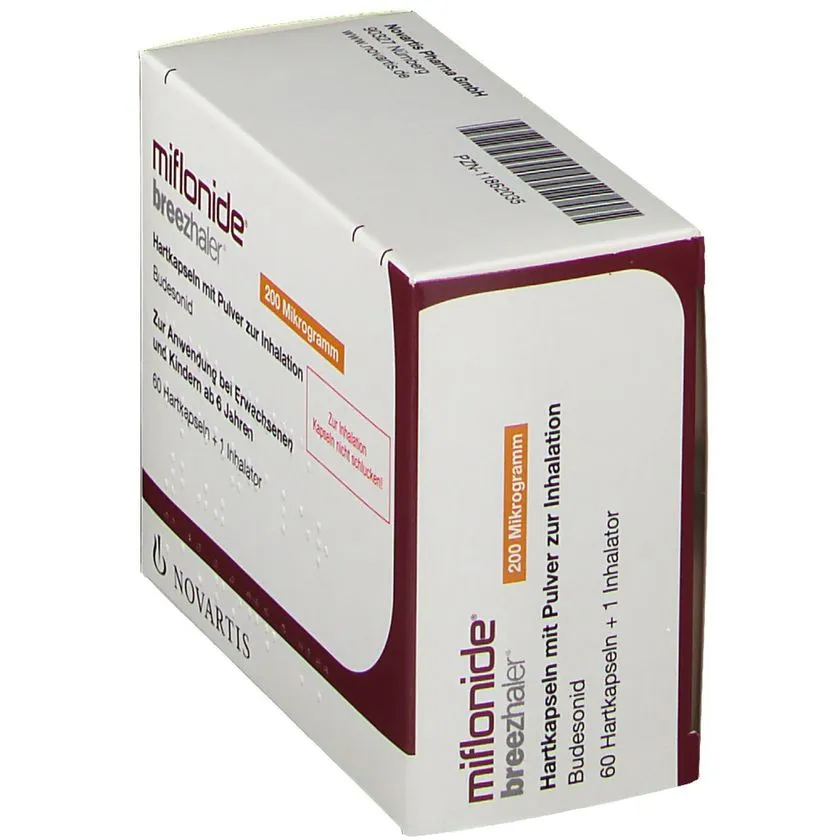
Table of Contents
- Package leaflet: Information for the user
- Miflonide Breezhaler 200 micrograms inhalation powder, hard capsule
- 1. What Miflonide Breezhaler is and what it is used for
- 2. What you need to know before using Miflonide Breezhaler
- 3. How to use Miflonide Breezhaler
- 4. Possible side effects
- 5. How to store Miflonide Breezhaler
- 6. Package contents and other information
- Package leaflet: information for the user
- Miflonide Breezhaler 400 micrograms inhalation powder, hard capsule
- 1. What Miflonide Breezhaler is and what it is used for
- 2. What you need to know before using Miflonide Breezhaler
- 3. How to use Miflonide Breezhaler
- 4. Possible side effects
- 5. How to store Miflonide Breezhaler
- 6. Contents of the pack and other information
Package leaflet: Information for the user
Miflonide Breezhaler 200 micrograms inhalation powder, hard capsule
Budesonide
Please read this leaflet carefully before you start using this medicine because it contains important information for you.
- Keep this leaflet. You may need to read it again.
- If you have any questions, ask your doctor or pharmacist.
- This medicine has been prescribed for you only. Do not give it to others, even if they have the same symptoms as yours, because it could be harmful.
- If you experience any side effects, including those not listed in this leaflet, talk to your doctor or pharmacist. See section 4.
Contents of this leaflet:
- What Miflonide Breezhaler is and what it is used for
- What you need to know before using Miflonide Breezhaler
- How to use Miflonide Breezhaler
- Possible side effects
- How to store Miflonide Breezhaler
- Contents of the pack and other information
- How to use Miflonide Breezhaler with the Miflonide Breezhaler inhaler
1. What Miflonide Breezhaler is and what it is used for
What Miflonide Breezhaler is
Miflonide Breezhaler consists of a capsule to be inserted into an inhaler device called the Miflonide Breezhaler.
The inhaler opens the capsule and releases a dry powder, which is delivered to the lungs through
inhalation.
Miflonide Breezhaler contains a substance called budesonide, which belongs to a group of
substances known as "corticosteroids". Some people refer to them as "steroids" or "preventer medicines".
What Miflonide Breezhaler is used for
Miflonide Breezhaler is used to prevent asthma attacks and to relieve breathing difficulties
in adults and children aged 6 years and older. This medicine must be used regularly every day, even if you feel better, because it helps prevent future breathing problems.
It must not be used to treat sudden asthma attacks. For such attacks, you must use a different inhaled medicine ("reliever medicine"), such as albuterol or salbutamol.
How Miflonide Breezhaler works
Asthma is caused by inflammation of the small airways in your lungs, which swell and make breathing difficult.
Miflonide Breezhaler reduces and prevents inflammation and helps keep the airways open, thereby reducing asthma symptoms and allowing you to breathe more easily.
2. What you need to know before using Miflonide Breezhaler
Do not use Miflonide Breezhaler
- if you are allergic to budesonide or to any of the excipients in this medicine (listed in section 6);
- if you have or have had a respiratory disease called pulmonary tuberculosis (TB);
- in children under 6 years of age.
If any of the above applies to you, do not use Miflonide Breezhaler. If you have any
doubts, consult your doctor or pharmacist before using Miflonide Breezhaler.
Warnings and precautions
Talk to your doctor before taking Miflonide Breezhaler:
- if you have had tuberculosis;
- if you have fungal or viral infections of the airways;
- if you have any other lung or respiratory problems that may increase the risk of a fungal infection;
- if you have liver disease or suffer from jaundice. Your doctor will prescribe the most appropriate dose.
If any of the above applies to you (or if you have any doubts), inform your doctor before taking
Miflonide Breezhaler.
Inform your doctor immediately
- if you experience difficulty breathing, with wheezing or coughing, after taking the medicine. If this happens, stop taking this medicine immediately. Your doctor will prescribe another medicine to use instead;
- if you develop skin rashes, itching, hives, swelling of the face or throat, have difficulty breathing or swallowing, or feel dizzy when using Miflonide Breezhaler. You may be experiencing a severe allergic reaction to the medicine;
- if you feel extremely weak, lose weight, feel unwell (nausea), and frequently have diarrhoea while using Miflonide Breezhaler. These may be symptoms of an underactive adrenal gland;
- if you experience weight gain, a rounded "moon face", weakness and/or abdominal obesity while using Miflonide Breezhaler. These may be symptoms of a hormonal disorder called Cushing's syndrome;
- if you experience blurred vision or changes in vision while using Miflonide Breezhaler;
- if you experience sleep disturbances, depression, or feel restless, agitated, nervous, overexcited, or irritable during treatment with Miflonide Breezhaler;
- if you develop fungal infections in the mouth during use of Miflonide Breezhaler.
If any of the above applies to you, inform your doctor immediately.
Your doctor may occasionally request tests related to kidney function (adrenal gland function tests).
If this medicine is used long-term in a child, the doctor will regularly monitor the child's height.
Do not swallow the capsules – they must only be used with the Miflonide Breezhaler inhaler.
Other medicines and Miflonide Breezhaler
Inform your doctor or pharmacist if you are taking, have recently taken, or might take any other medicines.
In particular, inform your doctor if you are taking:
- medicines used to treat infections, such as itraconazole, ketoconazole, clarithromycin, telithromycin, erythromycin, or rifampicin;
- medicines used to treat HIV infection, such as ritonavir, saquinavir, or nelfinavir;
- medicines used to treat heart rhythm problems (cardiac arrhythmias), such as amiodarone.
If any of the above applies to you, or if you have any doubts, inform your doctor
immediately.
If you are taking steroid tablets
If you have been taking steroid tablets for a long time to control your asthma, your doctor may gradually reduce the dose approximately 10 days after you start taking Miflonide Breezhaler. Do not stop taking steroid tablets suddenly.
Sometimes, when the dose of tablets is reduced, you may experience symptoms such as:
- stuffy or runny nose, muscle or joint pain;
- skin rash (eczema);
- tiredness, feeling unwell (nausea), or illness (vomiting).
If you experience any of these symptoms, inform your doctor immediately.
Pregnancy
If you are pregnant, think you may be pregnant, or are planning to become pregnant, ask your doctor or pharmacist for advice before taking this medicine. During pregnancy, you should not use this medicine unless clearly necessary, and only then under the guidance of your doctor.
Breast-feeding
If you are breast-feeding, ask your doctor or pharmacist for advice before taking this medicine. Your doctor will discuss with you the potential risks of using Miflonide Breezhaler while breast-feeding. Ask your doctor for advice before taking any medicine.
Driving and using machines
It is unlikely that Miflonide Breezhaler will affect your ability to drive or operate machinery.
Miflonide Breezhaler contains lactose monohydrate
This medicine contains lactose (24.77 mg per capsule). If your doctor has diagnosed you with an intolerance to certain sugars, contact your doctor before taking this medicine.
3. How to use Miflonide Breezhaler
Use this medicine exactly as your doctor has told you. If you are unsure, consult your doctor or pharmacist.
How much Miflonide Breezhaler to take
- Your doctor will adjust the dose so that you use the lowest amount of medicine that is effective for you.
- It is important to use the inhaler every day, even if you feel better, because this medicine helps prevent future breathing problems.
- If you notice that wheezing or shortness of breath worsens, inform your doctor immediately. You may notice if your medicine is not working as well as it should.
- If you or your child need to take less than 200 micrograms per day, you must not use this medicine.
Children under 6 years of age
Miflonide Breezhaler must not be used in children under 6 years of age.
Children aged 6 years and older
- The usual dose is between 200 and 400 micrograms of medicine per day. This dose is normally inhaled twice daily, with half the dose taken at a time. This means inhaling one capsule twice a day.
- Your doctor may instruct you to take a different number of capsules or to use the inhaler only once a day.
- If your child has severe asthma, your doctor may ask you to use up to 800 micrograms per day. This means inhaling two capsules twice a day.
Adults
- The usual dose is between 200 and 1600 micrograms of medicine per day. This dose is normally inhaled twice daily, with half the dose taken at a time. This means inhaling one to four capsules twice a day.
- Your doctor may instruct you to take a different number of capsules or to use the inhaler only once a day.
If you are unsure about how many capsules to use, ask your doctor or pharmacist before taking Miflonide Breezhaler.
How to use Miflonide Breezhaler with the Breezhaler inhaler
- Use Miflonide Breezhaler capsules only with the inhaler provided in the package. The capsules must remain in the blister until the moment you use them.
- Do not swallow the capsules. The powder inside the capsules must only be used for inhalation.
- To avoid developing a mouth infection called "thrush", rinse your mouth thoroughly with water after using the inhaler.
- Read section 7 carefully for further instructions on how to use Miflonide Breezhaler capsules with the Miflonide Breezhaler inhaler.
If you use more Miflonide Breezhaler than you should
It is important that you take the dose prescribed by your doctor. Do not increase or decrease the dose without consulting your doctor.
If you use more medicine than you should, or if someone else uses your capsules, contact your doctor immediately or go to the nearest emergency room. Take the medicine package with you.
If you forget to take Miflonide Breezhaler
If you forget to inhale a dose, inhale the next dose at your usual time.
Do not inhale a double dose to make up for a forgotten dose.
If you stop using Miflonide Breezhaler
Stopping treatment with Miflonide Breezhaler may increase the risk of worsening asthma. Do not stop using Miflonide Breezhaler suddenly unless your doctor tells you to do so.
If you have any doubts about how to use this medicine, consult your doctor or pharmacist.
4. Possible side effects
Like all medicines, this medicine can cause side effects, although not everybody gets them.
Some rare side effects can be serious.
Contact your doctor immediately
- If you experience breathing difficulties, wheezing or coughing after using the medicine. If this occurs, stop taking this medicine immediately. Your doctor may prescribe another medicine to replace it.
- If you develop skin rashes, itching, hives, swelling of the face and throat, have difficulty breathing or swallowing, or experience dizziness while using Miflonide Breezhaler. You may be having a severe allergic reaction to this medicine.
- If you become extremely weak, lose weight, feel unwell (nausea), and have frequent diarrhoea while using Miflonide Breezhaler. These may be symptoms of underactive adrenal glands.
- If you gain weight, develop a "moon face", and become weak and/or develop abdominal obesity while using Miflonide Breezhaler. These may be symptoms of a hormonal disorder called Cushing's syndrome or hyperadrenocorticism.
- If you experience blurred vision or changes in vision while using Miflonide Breezhaler.
If any of the above situations occur, contact your doctor immediately.
Other side effects may include:
Common (may affect up to 1 in 10 people)
- Fungal infections of the mouth or throat. To avoid a fungal infection known as "thrush", rinse your mouth thoroughly with water after using the inhaler.
- Hoarseness and irritated throat. These effects may disappear when you stop using the inhaler, use fewer capsules, or rest your voice.
Rare (may affect up to 1 in 1,000 people)
- Slowed growth in children and adolescents
- Thinning of the bones
- Feeling overactive or restless
- Behavioural problems, including depression, especially in children
- Cough
- Itchy skin rashes
- Bruising
Not known (frequency cannot be estimated from the available data)
- Sleep disturbances
- Feeling frightened, nervous, overexcited or irritable. These effects are more likely to occur in children.
Reporting of side effects
If you experience any side effects, including those not listed in this leaflet, consult your doctor or pharmacist. You can also report side effects directly via the Italian Medicines Agency (Agenzia Italiana del Farmaco) website: http://www.agenziafarmaco.gov.it/it/responsabili. By reporting side effects, you can help provide more information on the safety of this medicine.
5. How to store Miflonide Breezhaler
Keep this medicine out of the sight and reach of children.
Do not use this medicine after the expiry date stated on the carton after EXP. The expiry date refers to the last day of that month.
Do not store above 25°C.
Do not use this medicine if you notice that the packaging is damaged or shows signs of tampering.
Do not dispose of any medicine via wastewater or household waste. Ask your pharmacist how to dispose of medicines no longer required. This will help protect the environment.
6. Package contents and other information
What Miflonide Breezhaler contains
- The active substance is budesonide. Each capsule contains 230 micrograms of budesonide and delivers 200 micrograms of budesonide when used with the Miflonide Breezhaler inhaler.
- The excipient is lactose monohydrate. The capsules are made of edible gelatin.
Description of the appearance of Miflonide Breezhaler and package contents
Miflonide Breezhaler is a powder to be inhaled using the Miflonide Breezhaler inhaler. The
powder is contained in a capsule.
- The 200 microgram capsule is half light pink and half transparent, colourless, marked with “BUDE 200”.
- The following pack sizes are available: Single pack containing 2x10 or 6x10 hard capsules and 1 inhaler. Multiple pack (consisting of 2 single packs of 6x10) containing 120 hard capsules and 2 inhalers. Multiple pack (consisting of 3 single packs of 6x10) containing 180 hard capsules and 3 inhalers.
Not all pack sizes may be marketed.
Marketing Authorization Holder
Novartis Farma S.p.A.
Largo Umberto Boccioni 1
21040 Origgio VA
Italy
Manufacturer
Novartis Farma S.p.A.
Via Provinciale Schito 131
80058 Torre Annunziata NA
Italy
This medicinal product is authorized in the European Economic Area countries under the
following names:
Austria: MIFLONIDE
Belgium: MIFLONIDE
Bulgaria: MIFLONIDE
Croatia: MIFLONIDE
Cyprus: MIFLONIDE
Czech Republic: MIFLONID
Denmark: MIFLONIDE
Estonia: MIFLONIDE
Finland: MIFLONIDE
France: MIFLONIL
Germany: MIFLONIDE
Greece: MIFLONIDE
Hungary: MIFLONIDE
Ireland: MIFLONIDE
Italy: MIFLONIDE BREEZHALER
Latvia: MIFLONIDE
Lithuania: MIFLONIDE
Luxembourg: MIFLONIDE
Malta: MIFLONIDE
Netherlands: MIFLONIDE
Poland: MIFLONIDE
Portugal: MIFLONIDE
United Kingdom: MIFLONIDE
Romania: MIFLONIDE
Slovakia: MIFLONID
Slovenia: MIFLONIDE
Spain: MIFLONIDE
Sweden: MIFLONIDE
Instructions for use of Miflonide Breezhaler
To understand how to use Miflonide Breezhaler capsules with the Miflonide Breezhaler inhaler, please read
the following instructions carefully.
Use Miflonide Breezhaler capsules only with the Miflonide Breezhaler inhaler provided in the
pack.
- Do not use a different type of inhaler.
- Do not swallow the capsules. The powder inside the capsules must be inhaled. Remember that Miflonide Breezhaler should only be used to prevent asthma attacks. For treatment of an asthma attack, you will use your “rescue” inhaler.
Your Miflonide Breezhaler pack:
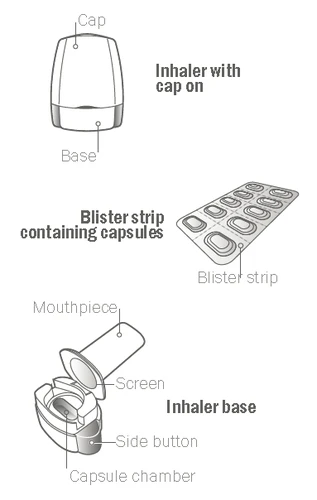
Cap
Inhaler with
cap
Base
Blister containing
the capsules
Blister
Mouthpiece
Filter
Base of the
inhaler
Side buttons
Capsule chamber
Each Miflonide Breezhaler pack contains:
- one Miflonide Breezhaler inhaler;
- one or more blisters containing Miflonide Breezhaler capsules for use with the inhaler. The Miflonide Breezhaler inhaler allows you to inhale the medicine contained in the Miflonide Breezhaler capsule. How to use the Miflonide Breezhaler inhaler
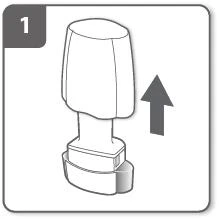
Remove the cap
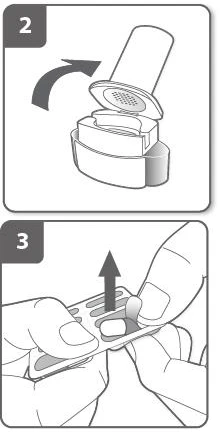
Open the inhaler
Firmly hold the base of the inhaler and lift the mouthpiece. This opens the inhaler.
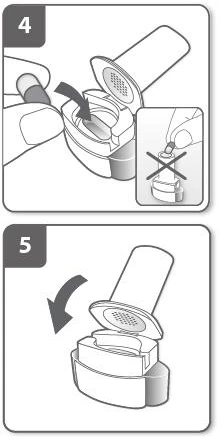
Prepare the capsule
Immediately before use, with dry hands, remove one capsule from the
blister.
Do not swallow the capsule.
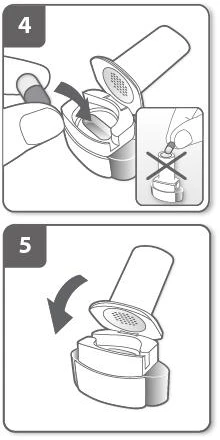
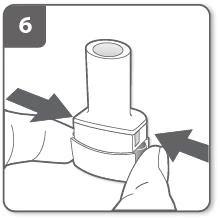
Insert the capsule
Place the capsule into the capsule chamber.
Never insert the capsule directly into the mouthpiece.
Close the inhaler
Close the inhaler until you hear a “click”.
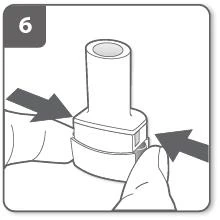
Pierce the capsule
- Hold the inhaler upright, with the mouthpiece pointing upwards.
- Pierce the capsule by firmly pressing both side buttons together simultaneously. Perform this step only once.
- When the capsule is pierced, you should hear a “click”.
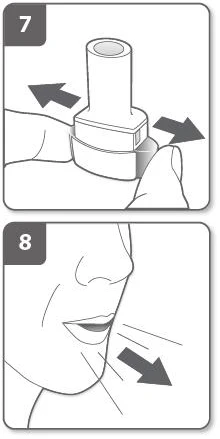
Release the side buttons completely
Exhale
Before bringing the mouthpiece to your mouth, breathe out fully.
Do not blow into the mouthpiece.
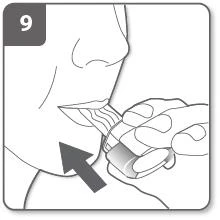
Inhale the medicine
To inhale the medicine deeply into your airways:
- hold the inhaler as shown in the figure. The side buttons should be on the right and left sides. Do not press the side buttons;
- place the mouthpiece in your mouth and close your lips firmly around it;
- breathe in quickly but steadily and as deeply as possible.
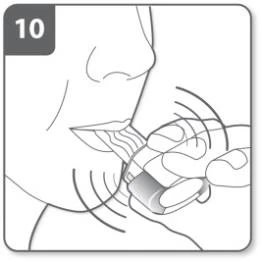
Note
When you inhale through the inhaler, the capsule should spin inside its chamber and you should hear a humming sound. While the medicine reaches your lungs, you may notice a sweet taste.
Additional information
Small fragments of the capsule may occasionally pass through the filter and enter your mouth. If this occurs, you may feel these fragments on your tongue. It is not harmful to swallow or inhale these fragments. The likelihood of the capsule breaking increases if it is accidentally pierced more than once (step 6).
If you do not hear the humming sound of the capsule
The capsule may be stuck in the chamber. If this happens:
- open the inhaler and gently dislodge the capsule by tapping the base of the inhaler. Do not press the side buttons.
- close the inhaler and inhale the medicine again by repeating steps 8 and 9.
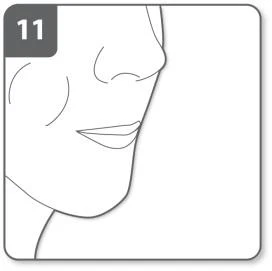
Hold your breath
After inhaling the medicine:
- hold your breath for at least 5–10 seconds, or as long as is comfortable without difficulty, removing the inhaler from your mouth;
- then breathe freely;
- open the inhaler to check whether any powder remains in the capsule.
If powder remains in the capsule:
- close the inhaler;
- repeat steps 8, 9, 10 and 11. Most people are able to empty the capsule with one or two inhalations.
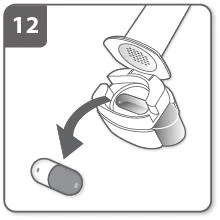
Remove the empty capsule
Once the capsule is empty, you have received an adequate dose of medicine.
-
Open the mouthpiece again and remove the empty capsule by turning it out of the chamber.
Dispose of the used capsule in household waste.
If your prescription requires more than one capsule, repeat steps 3–12 as needed.
After completing your dose -
Close the inhaler and replace the cap. Rinse your mouth thoroughly with water after taking the medicine. Spit out the rinsing water. This reduces the risk of developing fungal infections (thrush) in the mouth. Do not store capsules inside the Miflonide Breezhaler inhaler.
How to clean the inhaler
Never wash the inhaler with water. If you wish to clean the inhaler, wipe the inside and outside of the mouthpiece with a clean, dry, lint-free cloth to remove any powder residue. Keep the inhaler dry.
Remember:
- Do not swallow Miflonide Breezhaler capsules.
- Use only the Miflonide Breezhaler inhaler provided in this pack.
- Capsules must always be stored in the blister and removed only immediately before use.
- Never place Miflonide Breezhaler capsules directly into the mouthpiece of the Miflonide Breezhaler inhaler.
- Do not press the side buttons more than once.
- Never blow into the mouthpiece of the Miflonide Breezhaler inhaler.
- Always release the side buttons before inhaling.
- Never wash the Miflonide Breezhaler inhaler with water. Keep it dry. See “How to clean the inhaler”.
- Never disassemble the Miflonide Breezhaler inhaler.
- Always use the new Miflonide Breezhaler inhaler provided in each new pack of Miflonide Breezhaler. When the pack is finished, dispose of the inhaler.
- Do not store capsules in the Miflonide Breezhaler inhaler.
- Always store the Miflonide Breezhaler inhaler and Miflonide Breezhaler capsules in a dry place.
Package leaflet: information for the user
Miflonide Breezhaler 400 micrograms inhalation powder, hard capsule
Budesonide
Please read this leaflet carefully before using this medicine because it contains important information for you.
- Keep this leaflet. You may need to read it again.
- If you have any questions, ask your doctor or pharmacist.
- This medicine has been prescribed for you only. Do not give it to other people, even if their symptoms are the same as yours, because it could be harmful.
- If you experience any side effects, including those not listed in this leaflet, talk to your doctor or pharmacist. See section 4.
Contents of this leaflet:
- What Miflonide Breezhaler is and what it is used for
- What you need to know before using Miflonide Breezhaler
- How to use Miflonide Breezhaler
- Possible side effects
- How to store Miflonide Breezhaler
- Contents of the pack and other information
- How to use Miflonide Breezhaler with the Miflonide Breezhaler inhaler
1. What Miflonide Breezhaler is and what it is used for
What Miflonide Breezhaler is
Miflonide Breezhaler consists of a capsule to be inserted into an inhaler called the Miflonide Breezhaler.
The inhaler opens the capsule and releases a dry powder which is delivered to the lungs through
inhalation.
Miflonide Breezhaler contains a substance called budesonide, which belongs to a group of
substances known as "corticosteroids". Some people refer to them as "steroids" or "preventer medicines".
What Miflonide Breezhaler is used for
Miflonide Breezhaler is used to prevent asthma attacks and relieve breathing difficulties in adults and children aged 6 years and older. This medicine must be used regularly every day, even if you feel better, because it helps prevent future breathing problems.
It must not be used to treat a sudden asthma attack. To treat such attacks, you must use a different inhaled medicine ("reliever medicine"), such as albuterol or salbutamol.
How Miflonide Breezhaler works
Asthma is caused by inflammation of the small airways in your lungs, which swell and make breathing difficult.
Miflonide Breezhaler reduces and prevents inflammation and helps keep the airways open to reduce asthma symptoms, allowing you to breathe more easily.
2. What you need to know before using Miflonide Breezhaler
Do not use Miflonide Breezhaler
- if you are allergic to budesonide or to any of the excipients of this medicine (listed in section 6);
- if you have or have had a respiratory disease called pulmonary tuberculosis (TB);
- in children under 6 years of age.
If any of the above apply to you, do not use Miflonide Breezhaler. If you have any
doubts, consult your doctor or pharmacist before using Miflonide Breezhaler.
Warnings and precautions
Talk to your doctor before taking Miflonide Breezhaler:
- if you have had tuberculosis;
- if you have fungal or viral infections of the airways;
- if you have any other lung or respiratory problems that may increase the risk of a fungal infection;
- if you have liver disease or suffer from jaundice. Your doctor will prescribe the most appropriate dose.
If any of the above apply to you (or if you have any doubts), inform your doctor before taking
Miflonide Breezhaler.
Inform your doctor immediately
- if you experience difficulty breathing, with wheezing or coughing, after taking the medicine. If this happens, stop taking this medicine immediately. Your doctor will prescribe another medicine to use instead;
- if you develop skin rashes, itching, hives, swelling of the face or throat, have difficulty breathing or swallowing, or feel dizzy when using Miflonide Breezhaler. You may be experiencing a severe allergic reaction to the medicine;
- if you feel extremely weak, lose weight, feel unwell (nausea), and have frequent diarrhoea while using Miflonide Breezhaler. These may be symptoms of underactive adrenal glands;
- if you experience weight gain, a "moon face", weakness and/or abdominal obesity while using Miflonide Breezhaler. These may be symptoms of a hormonal disorder called Cushing's syndrome;
- if you experience blurred vision or changes in vision while using Miflonide Breezhaler;
- if you experience sleep disturbances, depression, or feel restless, agitated, nervous, overexcited, or irritable during treatment with Miflonide Breezhaler;
- if you develop fungal infections in the mouth during use of Miflonide Breezhaler.
If any of the above apply to you, inform your doctor immediately.
Your doctor may occasionally request tests related to kidney function (adrenal gland function tests).
If this medicine is used long-term in a child, the doctor will regularly monitor the child's height.
Do not swallow the capsules – they must only be used with the Miflonide Breezhaler inhaler.
Other medicines and Miflonide Breezhaler
Inform your doctor or pharmacist if you are taking, have recently taken, or might take
any other medicines.
In particular, inform your doctor if you are taking:
- medicines used to treat infections, such as itraconazole, ketoconazole, clarithromycin, telithromycin, erythromycin, or rifampicin;
- medicines used to treat HIV infection, such as ritonavir, saquinavir, or nelfinavir;
- medicines used to treat heart rhythm problems (cardiac arrhythmias), such as amiodarone.
If any of the above apply to you, or if you have any doubts, inform your doctor
immediately.
If you are taking steroid tablets
If you have been taking steroid tablets for a long time to control asthma, your doctor may
gradually reduce the dose after you have been using Miflonide Breezhaler for about
10 days. Do not stop taking steroid tablets suddenly.
Sometimes, when the dose of tablets is reduced, you may experience symptoms such as:
stuffy or runny nose, muscle or joint pain;
skin rash (eczema);
tiredness, feeling unwell (nausea), or feeling unwell (vomiting).
If you experience any of these symptoms, inform your doctor immediately.
Pregnancy
If you are pregnant, think you may be pregnant, or are planning to become pregnant, consult your doctor
or pharmacist before taking this medicine. During pregnancy, you should not use this
medicine unless clearly necessary, and only under the guidance of your doctor.
Breast-feeding
If you are breast-feeding, consult your doctor or pharmacist before taking this
medicine. Your doctor will discuss with you the potential risks of using Miflonide Breezhaler during
breast-feeding. Ask your doctor for advice before taking any medicine.
Driving and using machines
It is unlikely that Miflonide Breezhaler will affect your ability to drive or operate machinery.
Miflonide Breezhaler contains lactose monohydrate
This medicine contains lactose (24.54 mg per capsule). If your doctor has diagnosed you with an
intolerance to certain sugars, contact your doctor before taking this medicine.
3. How to use Miflonide Breezhaler
Use this medicine exactly as your doctor has told you. If you have any doubts, consult your doctor or pharmacist.
How much Miflonide Breezhaler to take
- Your doctor will adjust the dose so that you use the lowest amount of medicine that is effective for you.
- It is important to use the inhaler every day, even if you feel better, because this medicine helps prevent future breathing problems.
- If you notice that wheezing or shortness of breath worsens, inform your doctor immediately. You may notice if your medicine is not working as well as it should.
- If you or your child need to take less than 400 micrograms per day, you cannot use this medicine.
Children under 6 years of age
Miflonide Breezhaler must not be used in children under 6 years of age.
Children aged 6 years and older
- The usual dose is between 200 and 400 micrograms of medicine per day. This dose is normally inhaled twice daily, half the dose at a time.
- Your doctor may ask you to use the inhaler only once a day.
- If your child has severe asthma, your doctor may ask you to use up to 800 micrograms per day. This means inhaling one capsule twice a day.
Adults
- The usual dose is between 200 and 1600 micrograms of medicine per day. This dose is normally inhaled twice daily, half the dose at a time. This means inhaling one to two capsules twice a day.
- Your doctor may ask you to take a different number of capsules or to use the inhaler only once a day.
If you have any doubts about how many capsules to use, ask your doctor or pharmacist before taking Miflonide Breezhaler.
How to use Miflonide Breezhaler with the Breezhaler inhaler
- Use Miflonide Breezhaler capsules only with the inhaler provided in the pack. The capsules must remain in the blister until the moment you use them.
- Do not swallow the capsules. The powder inside the capsules must be used only for inhalation.
- To avoid developing a mouth infection called "thrush", rinse your mouth thoroughly with water after using the inhaler.
- Read section 7 carefully for further instructions on how to use Miflonide Breezhaler capsules with the Miflonide Breezhaler inhaler.
If you use more Miflonide Breezhaler than you should
It is important that you take the dose recommended by your doctor. Do not increase or decrease the dose without consulting your doctor.
If you use more medicine than you should, or if someone else uses your capsules, contact your doctor immediately or go to the nearest emergency department. Take the medicine pack with you.
If you forget to take Miflonide Breezhaler
If you forget to inhale a dose, inhale the next dose at your usual time.
Do not inhale a double dose to make up for a forgotten dose.
If you stop treatment with Miflonide Breezhaler
Stopping treatment with Miflonide Breezhaler may increase the risk of worsening asthma. Do not stop using Miflonide Breezhaler suddenly unless your doctor tells you to do so.
If you have any questions about using this medicine, consult your doctor or pharmacist.
4. Possible side effects
Like all medicines, this medicine can cause side effects, although not everybody gets them.
Some rare side effects can be serious.
Contact your doctor immediately
- If you experience breathing difficulties, wheezing or coughing after using the medicine. If this occurs, stop taking this medicine immediately. Your doctor may prescribe you another medicine to use instead.
- If you develop skin rashes, itching, hives, swelling of the face and throat, have breathing or swallowing difficulties, or feel dizzy while using Miflonide Breezhaler. You may be experiencing a severe allergic reaction to this medicine.
- If you become extremely weak, lose weight, feel unwell (nausea), and have frequent diarrhoea while using Miflonide Breezhaler. These may be symptoms of underactive adrenal glands.
- If you gain weight, develop a "moon face", become weak and/or develop abdominal obesity while using Miflonide Breezhaler. These may be symptoms of a hormonal disorder called Cushing's syndrome or hyperadrenocorticism.
- If you experience blurred vision or changes in vision while using Miflonide Breezhaler.
If any of the above situations occur, contact your doctor immediately.
Other possible side effects include:
Common (may affect up to 1 in 10 people)
- Fungal infection of the mouth or throat. To avoid developing a fungal infection called "thrush", rinse your mouth thoroughly with water after using the inhaler.
- Hoarseness and irritated throat. These effects may disappear when you stop using the inhaler, use fewer capsules, or rest your voice.
Rare (may affect up to 1 in 1,000 people)
- Slow growth in children and adolescents
- Thinning of the bones
- Feeling overactive or restless
- Behavioural problems, including depression, especially in children
- Cough
- Itchy skin rashes
- Bruising
Not known (frequency cannot be estimated from the available data)
- Sleep disturbances
- Feeling frightened, nervous, overexcited or irritable. These effects are more likely to occur in children.
Reporting of side effects
If you experience any side effects, including those not listed in this leaflet, consult your doctor or pharmacist. You can also report side effects directly via the Italian Medicines Agency (Agenzia Italiana del Farmaco) website: http://www.agenziafarmaco.gov.it/it/responsabili. By reporting side effects, you can help provide more information on the safety of this medicine.
5. How to store Miflonide Breezhaler
Keep this medicine out of the sight and reach of children.
Do not use this medicine after the expiry date stated on the carton after EXP. The expiry date refers to the last day of that month.
Do not store above 25°C.
Do not use this medicine if you notice that the packaging is damaged or shows signs of tampering.
Do not dispose of any medicine via wastewater or household waste. Ask your pharmacist how to dispose of medicines you no longer use. This will help protect the environment.
6. Contents of the pack and other information
What Miflonide Breezhaler contains
- The active substance is budesonide. Each capsule contains 460 micrograms of budesonide and releases 400 micrograms of budesonide when used with the Miflonide Breezhaler inhaler.
- The excipient is lactose monohydrate. The capsules are made of edible gelatin.
Description of the appearance of Miflonide Breezhaler and contents of the pack
Miflonide Breezhaler is a powder for inhalation using the Miflonide Breezhaler inhaler. The powder is contained in a capsule.
- The 400 microgram capsule is half opaque pink and half transparent, colourless, marked with “BUDE 400”.
- The following pack sizes are available: Single pack containing 2x10 or 6x10 hard capsules and 1 inhaler. Multiple pack (consisting of 2 single packs of 6x10) containing 120 hard capsules and 2 inhalers. Multiple pack (consisting of 3 single packs of 6x10) containing 180 hard capsules and 3 inhalers.
Not all pack sizes may be marketed.
Marketing Authorisation Holder
Novartis Farma S.p.A.
Largo Umberto Boccioni 1
21040 Origgio VA
Italy
Manufacturer
Novartis Farma S.p.A.
Via Provinciale Schito 131
80058 Torre Annunziata NA
Italy
This medicinal product is authorised in the European Economic Area Member States under the following names:
Austria: MIFLONIDE
Belgium: MIFLONIDE
Bulgaria: MIFLONIDE
Croatia: MIFLONIDE
Cyprus: MIFLONIDE
Czech Republic: MIFLONID
Denmark: MIFLONIDE
Estonia: MIFLONIDE
Finland: MIFLONIDE
France: MIFLONIL
Germany: MIFLONIDE
Greece: MIFLONIDE
Hungary: MIFLONIDE
Ireland: MIFLONIDE
Italy: MIFLONIDE BREEZHALER
Latvia: MIFLONIDE
Lithuania: MIFLONIDE
Luxembourg: MIFLONIDE
Malta: MIFLONIDE
Netherlands: MIFLONIDE
Poland: MIFLONIDE
Portugal: MIFLONIDE
United Kingdom: MIFLONIDE
Romania: MIFLONIDE
Slovakia: MIFLONID
Slovenia: MIFLONIDE
Spain: MIFLONIDE
Sweden: MIFLONIDE
Instructions for use of Miflonide Breezhaler
To understand how to use Miflonide Breezhaler capsules with the Miflonide Breezhaler inhaler, please read the following instructions carefully.
Use Miflonide Breezhaler capsules only with the Miflonide Breezhaler inhaler provided in the pack.
- Do not use a different type of inhaler.
- Do not swallow the capsules. The powder inside the capsules must be inhaled.
- Remember that Miflonide Breezhaler must be used only to prevent asthma attacks. For treatment of an asthma attack, use your "rescue" inhaler.
Your Miflonide Breezhaler pack:
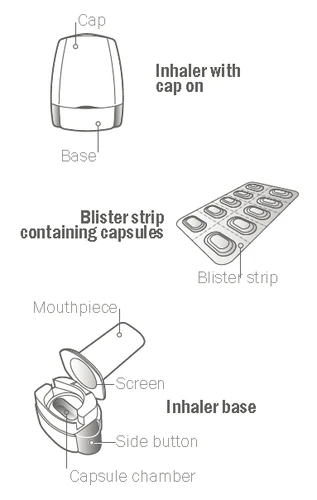
Cap
Inhaler with cap
Base
Blister containing capsules
Blister
Mouthpiece
Filter Base of the inhaler
Side button
Capsule chamber
Each Miflonide Breezhaler pack contains:
- one Miflonide Breezhaler inhaler;
- one or more blisters containing Miflonide Breezhaler capsules for use with the inhaler.
The Miflonide Breezhaler inhaler allows you to inhale the medicine contained in the Miflonide Breezhaler capsule.
How to use the Miflonide Breezhaler inhaler
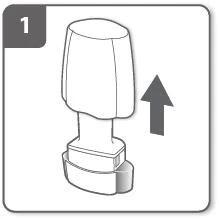
Remove the cap
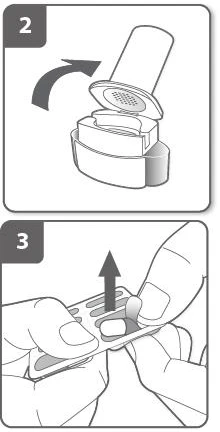
Open the inhaler
Firmly hold the base of the inhaler and tilt the mouthpiece upwards. This opens the inhaler.
Prepare the capsule
Immediately before use, with dry hands, remove one capsule from the blister.
Do not swallow the capsule.
Insert the capsule
Place the capsule into the capsule chamber.
Never place the capsule directly into the mouthpiece.
Close the inhaler
Close the inhaler until you hear a “click”.
Pierce the capsule
- Hold the inhaler in an upright position with the mouthpiece pointing upwards.
- Pierce the capsule by firmly pressing both side buttons together simultaneously. Perform this action only once.
- When the capsule is pierced, you should hear a “click”.
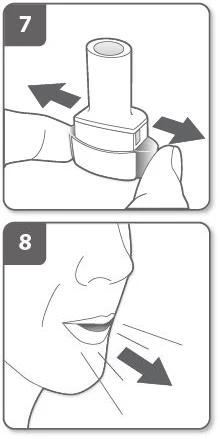
Release the side buttons completely
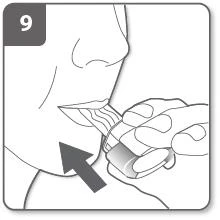
Exhale
Before bringing the mouthpiece to your mouth, breathe out fully.
Do not blow into the mouthpiece.
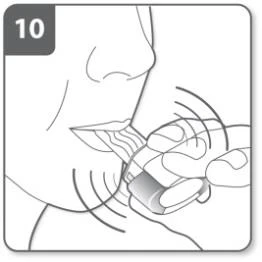
Inhale the medicine
To inhale the medicine deeply into your airways:
- Hold the inhaler as shown in the figure. The side buttons should be on the right and left sides. Do not press the side buttons;
- Place the mouthpiece in your mouth and close your lips tightly around it;
- Breathe in quickly but steadily and as deeply as possible.
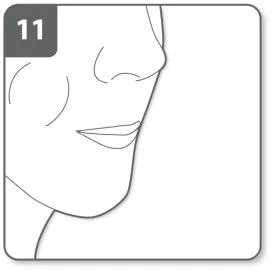
Note
As you inhale through the inhaler, the capsule should spin inside its chamber, and you should hear a buzzing sound. While the medicine reaches your lungs, you may notice a sweet taste.
Additional information
Small fragments of the capsule may occasionally pass through the filter and enter your mouth. If this occurs, you may feel these fragments on your tongue. It is not harmful to inhale or swallow these fragments. The likelihood of the capsule breaking increases if it is accidentally pierced more than once (see step 6).
If you do not hear the buzzing sound of the capsule
The capsule may be stuck in the chamber. If this happens:
- Open the inhaler and gently dislodge the capsule by tapping the base of the inhaler. Do not press the side buttons.
- Close the inhaler and inhale the medicine again by repeating steps 8 and 9.
Hold your breath
After inhaling the medicine:
- Hold your breath for at least 5–10 seconds, or as long as is comfortable without strain, removing the inhaler from your mouth;
- Then breathe normally;
- Open the inhaler to check whether any powder remains in the capsule.
If powder remains in the capsule:
- Close the inhaler;
- Repeat steps 8, 9, 10 and 11. Most people are able to empty the capsule within one or two inhalations.
Additional information
If the capsule is empty, you have received sufficient medicine.
- Open the mouthpiece again and remove the empty capsule by turning the inhaler upside down
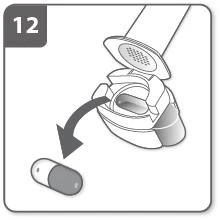
to release it from the chamber. Dispose of the empty capsule in household waste.
If your prescription requires more than one capsule, repeat steps 3–12 as needed.
After completing your dose
- Close the inhaler and replace the cap. Rinse your mouth thoroughly with water after taking the medicine. Spit out the rinse water. This reduces the risk of developing fungal infections (thrush) in the mouth. Do not store capsules inside the Miflonide Breezhaler inhaler.
How to clean the inhaler
Never wash the inhaler with water. If you wish to clean the inhaler, wipe the inside and outside of the mouthpiece with a clean, dry, lint-free cloth to remove any powder residue. Keep the inhaler dry.
Remember
- Do not swallow Miflonide Breezhaler capsules.
- Use only the Miflonide Breezhaler inhaler provided in this pack.
- Always keep the capsules in their blister and remove them only immediately before use.
- Never place Miflonide Breezhaler capsules directly into the mouthpiece of the Miflonide Breezhaler inhaler.
- Do not press the side buttons more than once.
- Never blow into the mouthpiece of the Miflonide Breezhaler inhaler.
- Always release the side buttons before inhaling.
- Never wash the Miflonide Breezhaler inhaler with water. Keep it dry. See “How to clean the inhaler”.
- Never disassemble the Miflonide Breezhaler inhaler.
- Always use the new Miflonide Breezhaler inhaler provided in each new pack of Miflonide Breezhaler. When the pack is finished, dispose of the inhaler.
- Do not store capsules in the Miflonide Breezhaler inhaler.
- Always store the Miflonide Breezhaler inhaler and Miflonide Breezhaler capsules in a dry place.