Midazolam Aguettant
Italy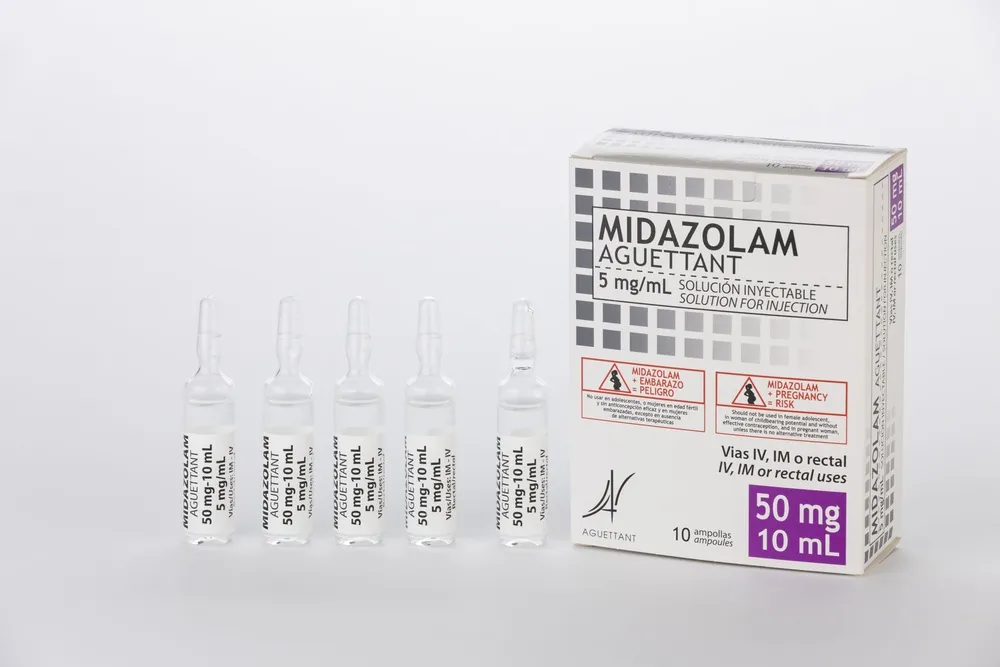
Table of Contents
- Package leaflet: Information for the patient
- Midazolam Aguettant 1 mg/mL, solution for injection/infusion, 5 mg/mL, solution for injection/infusion
- 1. What Midazolam Aguettant is and what it is used for
- 2. What you need to know before you are given Midazolam Aguettant
- 3. How Midazolam Aguettant is administered
- 4. Possible side effects
- 5. How to store Midazolam Aguettant
- 6. Package contents and other information
Package leaflet: Information for the patient
Midazolam Aguettant 1 mg/mL, solution for injection/infusion, 5 mg/mL, solution for injection/infusion
midazolam
equivalent medicine
Please read this leaflet carefully before you are given this medicinal product because
it contains important information for you.
- Keep this leaflet. You may need to read it again.
- If you have any questions, ask your doctor, pharmacist, or nurse.
- If you experience any side effects, including those not listed in this leaflet, inform your doctor, pharmacist, or nurse. See section 4.
Contents of this leaflet:
- What Midazolam Aguettant is and what it is used for
- What you must know before being administered Midazolam Aguettant
- How Midazolam Aguettant is administered
- Possible side effects
- How to store Midazolam Aguettant
- Contents of the pack and other information
1. What Midazolam Aguettant is and what it is used for
Midazolam Aguettant contains midazolam. This belongs to a group of medicines called
"benzodiazepines".
It acts quickly to cause drowsiness or to make you fall asleep. It also has a calming effect and
relaxes muscles.
Midazolam Aguettant is used in adults:
- As a general anaesthetic to make you fall asleep or to maintain sleep.
It is also used in adults and children:
- To induce calmness and drowsiness if you are in intensive care. This is called "sedation".
- Before and during a medical examination or procedure where you need to remain awake. This induces calmness and drowsiness. This is called "conscious sedation".
- To induce calmness and drowsiness before you are given an anaesthetic.
2. What you need to know before you are given Midazolam Aguettant
Do not be given Midazolam Aguettant
- if you are allergic to midazolam or to any of the other ingredients of this medicine (listed in section 6).
- if you are allergic to other benzodiazepines, such as diazepam or nitrazepam.
- if you have severe respiratory problems and Midazolam Aguettant is to be administered for "conscious sedation".
If any of the conditions listed above apply to you, Midazolam Aguettant must not be administered to you. If you have any doubts, consult your doctor or nurse before receiving this medicine.
Warnings and precautions
Your medical history may affect how Midazolam Aguettant is administered to you.
Before you are given Midazolam Aguettant, inform your doctor or nurse:
- if you are over 60 years of age
- if you have a long-term illness, such as respiratory, renal, liver or heart problems
- if you have a condition that makes you feel weak, fatigued and lacking energy
- if you suffer from "severe myasthenia gravis" characterized by muscle weakness
- if you suffer from sleep apnoea (your breathing stops and starts again while you sleep)
- if you have had problems with alcohol
- if you have had drug-related problems.
If any of the above conditions apply to you (or if you are unsure), speak with your doctor or nurse before you are given Midazolam Aguettant.
Children
Midazolam Aguettant may be used in children.
If your child is to be given this medicine:
- inform the doctor or nurse if any of the conditions listed above apply to your child
- in particular, inform the doctor or nurse if your child has respiratory or heart problems.
Other medicines and Midazolam Aguettant
Inform your doctor or pharmacist if you are taking, have recently taken or might take any other medicines. This will help your doctor determine the correct dose of Midazolam Aguettant for you.
The following medicines may affect the action of Midazolam Aguettant:
- Medicines for depression.
- Hypnotic medicines (to help you sleep).
- Sedatives (to calm or make you drowsy).
- Tranquillisers (for anxiety or to help you sleep).
- Carbamazepine or phenytoin (these may be used for epileptic seizures or convulsions).
- Rifampicin (for tuberculosis).
- HIV medicines called "protease inhibitors" (such as saquinavir).
- Macrolide antibiotics (such as erythromycin and clarithromycin).
- Medicines for fungal infections (such as ketoconazole, voriconazole, fluconazole, itraconazole, posaconazole).
- Strong painkillers.
- Atorvastatin (for high cholesterol).
- Antihistamines (for allergic reactions).
- St John's Wort (a herbal remedy for depression).
- Medicines for high blood pressure called "calcium channel blockers" (such as diltiazem).
If any of the conditions listed above apply to you (or if you are unsure), speak with your doctor or nurse before you are given Midazolam Aguettant.
Midazolam Aguettant with drinks and alcohol
Do not drink alcohol after receiving Midazolam Aguettant. This is because alcohol may make you extremely drowsy and may cause breathing problems.
Pregnancy and breastfeeding
If you are pregnant, think you may be pregnant, are planning to become pregnant, or are breastfeeding, ask your doctor or pharmacist for advice before this medicine is administered.
Your doctor will decide whether this medicine is suitable for you.
After receiving Midazolam Aguettant, do not breastfeed for 24 hours. This is because Midazolam Aguettant may pass into breast milk.
Driving and using machines
After receiving Midazolam Aguettant, do not drive or operate machinery until your doctor tells you that you can. This is because this medicine may cause drowsiness or impair memory. It may also affect your concentration and coordination, which could impair your ability to drive or use machinery.
After your treatment, you must always be accompanied home by an adult who can take care of you.
Midazolam Aguettant contains sodium
Midazolam Aguettant 1 mg/mL, injectable/infusion solution
This medicine contains less than 1 mmol (23 mg) of sodium per vial, i.e. essentially 'sodium-free'.
Midazolam Aguettant 5 mg/mL, injectable/infusion solution
1 mL, 2 mL, 3 mL vials:
This medicine contains less than 1 mmol (23 mg) of sodium per vial, i.e. essentially 'sodium-free'.
10 mL vials:
This medicine contains 28.3 mg of sodium (a main component of table salt) per 10 mL vial. This corresponds to 1.4% of the maximum daily dietary intake recommended for an adult.
3. How Midazolam Aguettant is administered
Midazolam Aguettant will be administered to you by a doctor or nurse. It will be given in a fully equipped setting for monitoring and treatment of any adverse effects. This may be a hospital, clinic, or doctor's office. In particular, your breathing, heart, and circulation will be monitored.
Midazolam Aguettant is not recommended for neonates and infants under 6 months of age.
However, if your doctor considers it necessary, it may be administered to young children or infants under 6 months of age in intensive care units.
How Midazolam Aguettant will be administered to you
Midazolam Aguettant may be administered to you in one of the following ways:
- By slow injection into a vein (intravenous injection).
- Through a tube inserted into a vein (intravenous infusion).
- By injection into a muscle (intramuscular injection).
- Into the rectal canal (rectal administration).
How much Midazolam Aguettant will be administered to you
The dose of this medicine varies from patient to patient. Your doctor will decide the appropriate dose for you. This depends on your age, body weight, and general health. It also depends on the reason you require the medicine, your response to treatment, and whether other medicines are being given at the same time.
After receiving Midazolam Aguettant
After treatment, you must be accompanied home by a responsible adult who can take care of you.
This is because Midazolam Aguettant may cause drowsiness or impair memory. It may also affect your concentration and coordination. When Midazolam Aguettant is administered over a prolonged period, such as in intensive care units, your body may become accustomed to the medicine. This could mean that the medicine becomes less effective over time (see "Long-term use of Midazolam Aguettant for sedation in intensive care").
If you are given more Midazolam Aguettant than you should
Since this medicine will be administered by a trained healthcare professional, it is unlikely that you will receive too much. However, if an overdose occurs by mistake, you may experience the following:
- Drowsiness and loss of coordination and reflexes.
- Difficulty speaking and unusual eye movements.
- Low blood pressure. This may cause dizziness or lightheadedness.
- Slowed or stopped breathing or heartbeat, and loss of consciousness (coma).
Long-term use of Midazolam Aguettant for sedation in intensive care
If you are given Midazolam Aguettant for a prolonged period, the following may occur:
- The medicine may begin to become less effective.
- You may develop dependence on the medicine and experience withdrawal symptoms when treatment is stopped (see "If you stop receiving Midazolam Aguettant" below).
If you stop receiving Midazolam Aguettant
If Midazolam Aguettant has been administered to you for a prolonged period, such as in intensive care, you may experience withdrawal symptoms when treatment is stopped.
These may include:
- Mood changes
- Seizures (convulsions)
- Headache
- Muscle pain
- Difficulty sleeping (insomnia)
- Feelings of intense worry (anxiety), tension, restlessness, confusion, or irritability.
- Seeing or possibly hearing things that are not really there (hallucinations).
Your doctor may gradually reduce your dose. This will help to minimize or prevent withdrawal symptoms.
4. Possible side effects
Like all medicines, this medicine can cause side effects, although not everybody gets them. The following side effects may occur with this medicine.
The following adverse reactions have been reported (frequency not known, cannot be estimated from the available data).
Stop receiving Midazolam Aguettant and contact a doctor immediately if you experience
any of the following side effects. These could be life-threatening and you may need
urgent medical treatment:
- A severe allergic reaction (anaphylactic shock). Signs may include sudden rash, itching or lumpy rash (urticaria), and swelling of the face, lips, tongue or other parts of the body (angioedema).
- You may also experience shortness of breath, wheezing or breathing difficulties, or pale skin, weak and rapid pulse, or feel like fainting. Additionally, you may have chest pain, which could be a sign of a potentially serious allergic reaction called Kounis syndrome.
- Heart attack (cardiac arrest). Signs may include chest pain.
- Breathing problems, which sometimes lead to respiratory arrest.
- Choking and sudden blockage of the airways (laryngospasm). Potentially fatal side effects are more likely in adults over 60 years of age and in people who already have respiratory or cardiac problems. These side effects are also more likely if the medicine is injected too quickly or at a high dose. Other possible side effects:
Psychiatric and nervous system disorders
- Reduced attention
- Feeling confused
- Feeling of extreme happiness or excitement (euphoria)
- Changes in sexual desire
- Feeling tired, drowsy, or sedated for a prolonged period
- Seeing and possibly hearing things that are not really there (hallucinations)
- Headache
- Dizziness
- Difficulty in muscle coordination
- Seizures (convulsions) in premature neonates and infants
- Temporary memory loss. The duration of this effect depends on how much Midazolam Aguettant you were given. Occasionally, this has lasted for a long time.
- Feeling agitated, restless, angry, or aggressive. You may also experience muscle spasms or uncontrollable shaking of muscles (tremors). These effects are more likely if you have been given a high dose of Midazolam Aguettant or if it was administered too quickly. They are also more likely in children and elderly patients. Contact your doctor if you notice that you are becoming dependent on this medicine or if you find that you are becoming less sensitive to its effects and therefore need to increase the dose.
Cardiac and vascular disorders
- Fainting
- Slowing of heart rate
- Flushing of the face and neck (hot flushes)
- Low blood pressure. This may cause dizziness or lightheadedness.
Respiratory disorders
- Hiccups
- Shortness of breath
Gastrointestinal disorders (stomach and intestines)
- Dry mouth
- Constipation
- Feeling unwell (nausea) or being unwell (vomiting)
Skin and subcutaneous tissue disorders
- Itching sensation
- Rash, including a lumpy rash (urticaria)
- Redness, pain, blood clots, or swelling at the injection site
General
- Allergic reactions including rash and wheezing
- Withdrawal symptoms (see “Stopping Midazolam Aguettant” in section 3 above)
- Falls and bone fractures. The risk increases if you are taking other medicines that cause drowsiness (e.g., sedatives or sleeping pills) or alcohol at the same time.
Elderly
- Elderly patients taking benzodiazepines such as Midazolam Aguettant have an increased risk of falling and fracturing bones.
- Potentially life-threatening side effects are also more likely in adults over 60 years of age.
Reporting of side effects
If you experience any side effects, including those not listed in this leaflet, tell your doctor, pharmacist, or nurse. You can also report side effects directly via the national reporting system at
https://www.aifa.gov.it/content/segnalazioni-reazioni-avverse .
By reporting side effects, you can help provide more information on the safety of this medicine.
5. How to store Midazolam Aguettant
Keep this medicine out of the sight and reach of children.
Do not use this medicine after the expiry date stated on the carton and vial following
Exp. The expiry date refers to the last day of that month.
This medicine does not require any special storage temperature conditions.
Store the vial in the outer carton to protect the medicine from light.
Chemical and physical in-use stability has been demonstrated for 24 hours at 25 °C or for 3 days at 2-8 °C with
sodium chloride 9 mg/mL (0.9%), glucose 50 mg/mL (5%), or 100 mg/mL (10%), fructose 50 mg/mL (5%), Ringer's solution, or Hartmann's solution.
From a microbiological standpoint, the medicine should be used immediately. If not used immediately, the duration and conditions of in-use storage are the responsibility of the user and normally should not exceed 24 hours at 2-8 °C, unless the dilution was carried out under controlled and validated aseptic conditions.
Do not use this medicine if there are any visible signs of deterioration.
Do not dispose of any medicine via wastewater or household waste. Ask your pharmacist how to dispose of medicines no longer required. This will help protect the environment.
6. Package contents and other information
What Midazolam Aguettant contains
- The active substance is midazolam.
Midazolam Aguettant 1 mg/mL, solution for injection/infusion
Each mL of injection/infusion solution contains 1 mg of midazolam.
Each 5 mL vial contains 5 mg of midazolam.
Midazolam Aguettant 1 mg/mL, solution for injection/infusion
Each mL of solution for injection/infusion contains 5 mg of midazolam.
Each 1 mL vial contains 5 mg of midazolam.
Each 2 mL vial contains 10 mg of midazolam.
Each 3 mL vial contains 15 mg of midazolam.
Each 10 mL vial contains 50 mg of midazolam.
- The other components are sodium chloride, sodium hydroxide (for pH adjustment), concentrated hydrochloric acid, and water for injections.
Description of the appearance of Midazolam Aguettant and contents of the pack
Midazolam Aguettant 1 mg/mL, solution for injection/infusion
Midazolam Aguettant is a clear, colourless solution for injection/infusion in 5 mL glass vials.
Each pack contains 10 or 50 vials.
Midazolam Aguettant 5 mg/mL, solution for injection/infusion
Midazolam Aguettant is a clear, colourless solution for injection/infusion in 1 mL, 2 mL, 3 mL or 10 mL glass vials.
Each pack contains 10 or 50 vials.
Not all pack sizes may be marketed.
Marketing Authorisation Holder and Manufacturer
Marketing Authorisation Holder
Laboratoire Aguettant
1 rue Alexander Fleming, 69007 Lyon
France
This medicinal product is authorised in the European Economic Area countries under the following names:
Austria, Belgium, Germany, Denmark, Spain, Finland, Italy, Luxembourg, Netherlands, Norway, Portugal, Sweden: Midazolam Aguettant
Ireland: Midazolam