Midazolam Accord Healthcare
Italy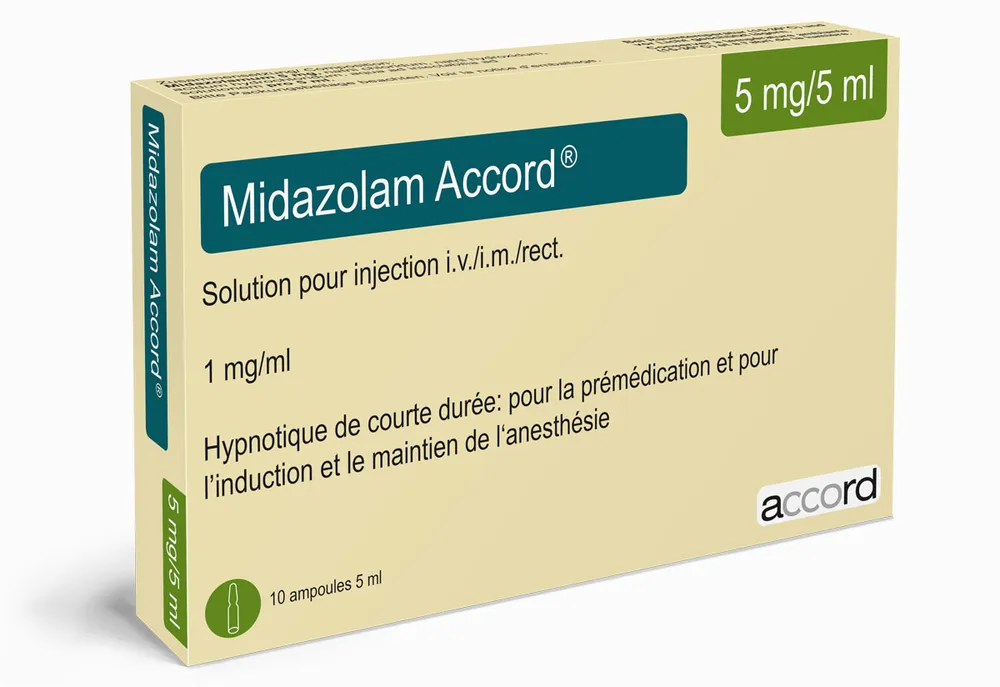
Table of Contents
- PACKAGE LEAFLET: INFORMATION FOR THE USER
- Midazolam Accord Healthcare 1 mg/ml, Injection Solution or Infusion Solution, 5 mg/ml, Injection Solution or Infusion Solution
- 1. What Midazolam Accord Healthcare is and what it is used for
- 2. What you need to know before taking Midazolam Accord Healthcare
- 3. How to use Midazolam Accord Healthcare
- 4. Possible side effects
- 5. How to store Midazolam Accord Healthcare
- 6. Contents of the pack and other information
PACKAGE LEAFLET: INFORMATION FOR THE USER
Midazolam Accord Healthcare 1 mg/ml, Injection Solution or Infusion Solution, 5 mg/ml, Injection Solution or Infusion Solution
Equivalent medicine
Please read this leaflet carefully before taking this medicine because it contains important information for you.
- Keep this leaflet. You may need to read it again.
- If you have any questions, ask your doctor, pharmacist, or nurse.
- This medicine has been prescribed for you only. Do not give it to others, even if their symptoms are the same as yours, as it could be harmful.
- If you experience any side effect, including those not listed in this leaflet, talk to your doctor, pharmacist, or nurse. See section 4.
Contents of this leaflet:
- What Midazolam Accord Healthcare is and what it is used for
- What you need to know before taking Midazolam Accord Healthcare
- How to use Midazolam Accord Healthcare
- Possible side effects
- How to store Midazolam Accord Healthcare
- Contents of the pack and other information
1. What Midazolam Accord Healthcare is and what it is used for
Midazolam Accord Healthcare contains midazolam. Midazolam belongs to a group of medicines known as benzodiazepines (sedatives).
It is a short-acting medicine used to induce sedation (a very relaxed state, numbness, or sleep) and to relieve anxiety and muscle tension.
- Conscious sedation (a relaxed or numb state, very calming but awake, during a medical examination or procedure) in adults and children.
- Sedation in adults and children in intensive care units.
- Anaesthesia in adults, used alone or with other medicines.
- Premedication used to induce relaxation, calmness, and sedation before anaesthesia in adults and children.
2. What you need to know before taking Midazolam Accord Healthcare
Do not take Midazolam Accord Healthcare
- if you are allergic to midazolam or to any of the other ingredients of this medicine (listed in section 6).
- if you have severe breathing difficulties and are about to undergo conscious sedation. If any of the conditions listed above apply to you, midazolam must not be administered. If you have any doubts, consult your doctor or nurse before this medicine is given to you.
Warnings and precautions
Midazolam should only be used when appropriately equipped facilities for resuscitation, suitable for the patient's age and size, are available. Administration of midazolam may cause depression of myocardial contractility (the muscle's ability to contract) and may lead to apnea (temporary cessation of breathing). Rarely, serious cardiorespiratory adverse events have been reported. These include respiratory depression, apnea, respiratory arrest, and/or cardiac arrest. To avoid such incidents, the injection should be administered slowly and the dose should be as low as possible.
Particular caution should be exercised when midazolam is administered to infants or children. Inform your doctor if your child has cardiovascular disease. Your child will be closely monitored and the dosage adjusted accordingly.
Patients under 6 months of age receiving sedation in intensive care units are at increased risk of developing respiratory problems; therefore, administration should be performed very gradually, and their respiratory and oxygen levels should be monitored.
When midazolam is administered as premedication, you will be carefully monitored for your response to treatment and to ensure appropriate dosing, as sensitivity varies from patient to patient.
The use of midazolam should be avoided in neonates and children up to 6 months of age.
Paradoxical reactions and anterograde amnesia (loss of memory for recent events) have been reported with midazolam (see section 4. Possible side effects).
Before receiving midazolam, inform your doctor or nurse if:
- you are over 60 years old
- you have a chronic illness or are debilitated (e.g., chronic respiratory problems, kidney, liver, or heart disorders)
- you have myasthenia gravis (a neuromuscular disease characterized by muscle weakness)
- you have a history of alcohol or drug abuse
- you are taking other medicines, including those not prescribed by your doctor (for further information, see section “Use of Midazolam Accord Healthcare with other medicines”)
- you are pregnant or think you may be pregnant
If any of the conditions listed above apply to you or if you have any doubts, consult your doctor or nurse before midazolam is administered.
Long-term treatment
If midazolam is used for long-term sedation, tolerance (reduced effectiveness of midazolam) or dependence may develop.
After prolonged treatment (e.g., in intensive care units), withdrawal symptoms may occur, such as headache, muscle pain, anxiety, tension, restlessness, confusion, irritability, difficulty sleeping, mood changes, hallucinations, and seizures. Your doctor will gradually reduce the dosage to prevent these effects.
Other medicines and Midazolam Accord Healthcare
Inform your doctor or pharmacist if you are taking or have recently taken any other medicines.
This is extremely important because using multiple medicines simultaneously may increase or reduce the effectiveness of the medicines involved.
In particular, inform your doctor or nurse if you are taking any of the following medicines:
- Tranquilizers (for anxiety or to help you sleep)
- Hypnotics (to help you sleep)
- Sedatives (to calm or sedate you)
- Antidepressants (medicines for depression)
- Narcotic analgesics (strong painkillers)
- Antihistamines (for allergic reactions)
- Medicines for fungal infections (such as ketoconazole, voriconazole, fluconazole, itraconazole, posaconazole)
- Macrolide antibiotics (such as erythromycin, clarithromycin, or roxithromycin)
- Diltiazem, verapamil (for high blood pressure)
- Medicines for HIV called 'protease inhibitors' (such as saquinavir)
- Atorvastatin (for high cholesterol)
- Rifampicin (for microbial infections such as tuberculosis)
- Aprepitant (a medicine to prevent nausea and vomiting caused by chemotherapy)
- Carbamazepine or phenytoin (used to treat epileptic seizures or nerve pain)
- Efavirenz (for treatment of viral immunodeficiency)
- St. John’s wort (a herbal remedy for depression)
If any of the above apply to you (or if you are unsure), speak with your doctor or nurse before midazolam is administered.
Concomitant use of Midazolam Accord Healthcare and opioids (strong painkillers, medicines for addiction therapy, and some cough medicines) increases the risk of drowsiness, breathing difficulties (respiratory depression), coma, and may be life-threatening. Therefore, concomitant use should only be considered when no other treatment options are available.
However, if your doctor prescribes Midazolam Accord Healthcare together with opioids, the dose and duration of concomitant treatment must be limited by your doctor.
Inform your doctor about all opioid medicines you are taking and follow your doctor’s dosage recommendations carefully. It may be helpful to inform friends or family members to watch for the signs and symptoms listed above. Contact your doctor if you experience any of these symptoms.
Procedures
If you are about to receive an inhaled anesthetic (or are unsure) for a surgical or dental procedure, it is important to inform your doctor or dentist that you have been given midazolam.
Midazolam Accord Healthcare with food and drink
During treatment with midazolam, you must not consume alcohol, as alcohol can significantly increase the sedative effect of midazolam.
Pregnancy, breastfeeding, and fertility:
- If you are pregnant, suspect you may be pregnant, planning to become pregnant, or breastfeeding, consult your doctor or pharmacist before taking this medicine.
- Your doctor will decide whether or not to administer this medicine to you. During the last stage of pregnancy, childbirth, or cesarean section, you may be at risk of aspiration, and your baby may experience irregular heartbeat, hypotonia (reduced muscle resistance to movement), feeding difficulties, low body temperature, and respiratory depression (difficulty breathing).
- If you have received prolonged treatment with this medicine during late pregnancy, your baby may develop physical dependence and be at risk of withdrawal symptoms after birth.
- Midazolam passes into breast milk; therefore, if you are breastfeeding, you must not breastfeed for 24 hours after administration of this medicine.
Driving and using machines:
This medicine may cause drowsiness, forgetfulness, or affect your concentration and coordination. This may impair your ability to perform specific tasks, such as driving or operating machinery. After receiving midazolam, you must not drive or operate machinery until you have fully recovered. Your doctor will advise you when you may resume these activities. After your treatment, you must always be accompanied home by a responsible adult.
Midazolam Accord Healthcare contains sodium
This medicine contains less than 1 mmol of sodium (23 mg) per dose and can therefore be considered essentially “sodium-free”.
3. How to use Midazolam Accord Healthcare
Midazolam Accord Healthcare must be administered only by specialists in a fully equipped setting for monitoring and supporting respiratory and cardiovascular functions, and by personnel specifically trained in recognizing and managing expected adverse events.
Dosage and route of administration
Your doctor will decide the appropriate dosage for you. Dosages vary considerably and depend on the intended treatment and the level of sedation required. The dosage you will receive will also be influenced by your weight, age, general health status, concomitant therapies, response to the medicine, and whether other medicines are needed at the same time.
If you are taking strong analgesics, these will be administered first, followed by a midazolam dosage adjusted to your needs.
Midazolam Accord Healthcare is administered slowly by injection into a vein (intravenously), by infusion, by injection into a muscle (intramuscularly), or rectally.
After treatment, you must be taken home by a responsible adult.
Children and newborns
- In newborns and children under 6 months of age, midazolam is recommended only for sedation in intensive care. The dose will be given gradually into a vein.
- In children under 12 years of age, midazolam is usually administered intravenously. When midazolam is used as premedication (to induce relaxation, calmness, and drowsiness before an anaesthetic), it may be given rectally.
If you are given more Midazolam Accord Healthcare than you should
The medicine will be administered to you by a doctor or nurse.
If you have accidentally received an overdose, this could cause drowsiness, ataxia (lack of muscle coordination), dysarthria (speech impairment), and nystagmus (involuntary eye movements), loss of reflexes, apnoea (cessation of breathing), hypotension (low blood pressure), cardiorespiratory depression, and in rare cases coma. Overdose may require monitoring of vital signs, symptomatic treatment of cardiorespiratory effects, and use of a benzodiazepine antagonist.
If you stop treatment with Midazolam Accord Healthcare
Sudden discontinuation of treatment may be accompanied by withdrawal symptoms such as headache, muscle pain, anxiety, tension, restlessness, confusion, mood changes, hallucinations and seizures, rebound insomnia, irritability, and seizures. Since the risk of withdrawal symptoms is higher after abrupt discontinuation of treatment, the dose should be gradually reduced when treatment is discontinued.
If you have any doubts about the use of this medicine, consult your doctor, pharmacist, or nurse.
4. Possible side effects
Like all medicines, this medicine can cause side effects, although not everyone gets them.
The following side effects have been reported (frequency not known).
Stop taking midazolam and see a doctor immediately if you experience any of the following side effects.
They may be life-threatening and you may require urgent medical treatment:
- Anaphylactic shock (a life-threatening allergic reaction). Signs may include sudden redness of the skin, itchy rash or swelling (urticaria), and swelling of the face, lips, tongue or other parts of the body. You may also have shortness of breath, difficulty breathing or wheezing, or pale skin, weak and rapid pulse, or feel like you are losing consciousness. In addition, you may experience chest pain, which could be a sign of a potentially severe allergic reaction called Kounis syndrome.
- Heart attack (cardiac arrest). Signs may include chest pain radiating to the neck and shoulders and spreading down the left arm.
- Breathing problems or complications (sometimes leading to respiratory arrest).
- Choking and sudden blockage of the airways (laryngospasm).
Potentially fatal side effects are more likely to occur in adults over 60 years of age and in people who already have respiratory or cardiac problems, especially if the medicine is injected too quickly or at a high dose.
Other possible side effects
Immune system disorders:
- General allergic reactions (skin reactions, cardiac and systemic reactions, dyspnea)
Psychiatric disorders:
- Confusion
- Euphoria (feeling of extreme happiness or excitement)
- Hallucinations (seeing or possibly hearing things that are not really there)
- Agitation
- Restlessness
- Hostility, anger or aggression
- Excitement
- Drug dependence, abuse
Nervous system disorders:
- Drowsiness and prolonged sedation
- Reduced alertness
- Headache
- Dizziness
- Difficulty with muscle coordination
- Seizures in premature infants and infants
- Temporary memory loss. The duration depends on how much midazolam you were given. Occasionally, this has lasted for a long period.
Cardiac and vascular disorders:
- Low blood pressure
- Slow heart rate
- Flushing of the face and neck, fainting or headache
Gastrointestinal disorders:
- Nausea
- Vomiting
- Constipation
- Dry mouth
Skin and subcutaneous tissue disorders:
- Skin rash
- Urticaria (irregular skin rash)
- Itching
Musculoskeletal and connective tissue disorders:
- Muscle spasms and tremors (uncontrollable muscle twitching)
Systemic disorders and injection site conditions:
- Tiredness (fatigue)
- Redness
- Swelling of the skin
- Blood clots or pain at the injection site
Injury, poisoning and procedural complications:
- Patients taking benzodiazepines are at risk of falling and fracturing bones. This risk is higher in elderly patients and in patients taking other sedatives (including alcohol).
Reporting of side effects
If you experience any side effect, including those not listed in this leaflet, please inform your doctor, pharmacist or nurse. You can also report side effects directly via the national reporting system at the following address:
https://www.aifa.gov.it/content/segnalazioni-reazioni-avverse
By reporting side effects, you can help provide more information on the safety of this medicine.
5. How to store Midazolam Accord Healthcare
- Keep this medicine out of the reach and sight of children.
- Do not use this medicine after the expiry date stated on the carton and on the vial after “Exp”. The expiry date refers to the last day of the month.
- Store in the original packaging to protect the medicine from light.
- The product is intended for single use only and any remaining solution must be discarded.
- Do not use Midazolam Accord Healthcare solution for injection or infusion if the container is leaking, if the solution is not clear with visible particles, or if there is any discoloration of the solution.
- Do not dispose of any medicine via wastewater or household waste. Ask your pharmacist how to dispose of medicines you no longer use. This will help protect the environment.
6. Contents of the pack and other information
What Midazolam Accord Healthcare contains:
The active substance is midazolam (as midazolam hydrochloride).
For 1 mg/ml
Each ml of injectable or infusion solution contains 1 mg of midazolam (as midazolam hydrochloride).
Presentation: 5 ml
Amount of midazolam: 5 mg
For 5 mg/ml
Each ml of injectable or infusion solution contains 5 mg of midazolam (as midazolam hydrochloride).
Presentations: 1 ml, 3 ml, 10 ml
Amount of midazolam: 5 mg, 15 mg, 50 mg
The other ingredients include water for injections, sodium chloride, sodium hydroxide (for pH adjustment), and concentrated hydrochloric acid (for pH adjustment).
Description of the appearance of Midazolam Accord Healthcare and contents of the pack:
Midazolam Accord Healthcare injectable solution is a clear, colourless to pale yellow solution contained in transparent glass vials.
Midazolam Accord Healthcare injectable solution is available in packs of 10 X 5 vials for the 1 mg/ml formulation.
Midazolam Accord Healthcare injectable solution is available in packs of 10 X 1 ml, 10 X 3 ml, 1 X 10 ml, and 10 X 10 ml vials for the 5 mg/ml formulation.
The vials are supplied in blisters/cartons.
Not all pack sizes may be marketed.
Marketing Authorisation Holder:
Accord Healthcare S.L.U.
World Trade Center, Moll de Barcelona,
s/n, Edifici Est 6ª planta
08039-Barcelona,
Spain
Manufacturer:
Accord Healthcare single member S.A.
64th Km National Road Athens, Lamia, Schimatari,
32009, Greece
The following information is intended exclusively for physicians or healthcare professionals.
Preparation of infusion solution:
Midazolam Accord Healthcare may be diluted with 0.9% sodium chloride solution, 5% or 10% glucose solution, or Ringer's or Hartmann's solution. For continuous intravenous infusion, midazolam injectable solution should be diluted to a concentration between 0.015 and 0.15 mg per ml with one of the solutions listed above. These diluted solutions remain stable for 24 hours at room temperature and for 3 days at 8°C. Midazolam Accord Healthcare must not be mixed with other solutions not listed above. In particular, midazolam injectable solution must not be diluted with 6% w/v dextran (with 0.9% sodium chloride) in glucose or mixed with alkaline injections. Midazolam precipitates in bicarbonate.
The injection solution should be visually inspected before administration. Only solutions free from visible particles should be used.
Shelf life and storage
Midazolam Accord Healthcare vials for injection are for single use only.
Vial before opening:
Store in the original packaging to protect from light.
Vial after dilution:
Chemical and physical stability of the diluted solution has been demonstrated for 24 hours at room temperature (15–25°C) or for 3 days at 8°C.
From a microbiological standpoint, the diluted solution should be used immediately.
If not used immediately, in-use storage conditions and duration are the responsibility of the user and normally should not exceed 24 hours at +2 to +8°C, unless dilution was prepared under controlled and validated aseptic conditions.
For continuous intravenous infusion, Midazolam Accord Healthcare injection solution should be diluted to a concentration between 0.015 and 0.15 mg/ml using one of the solutions mentioned above.
Waste disposal
Unused medicine and waste materials derived from this medicine should be disposed of in accordance with local regulations.