Miambutol
Italy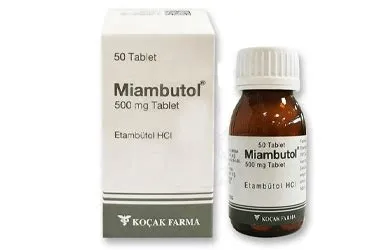
Table of Contents
Package leaflet: Information for the user
MIAMBUTOL
400 mg tablets
Ethambutol dihydrochloride
Please read all of this leaflet carefully before you start taking this medicine because it contains important information for you.
- Keep this leaflet. You may need to read it again.
- If you have any questions, ask your doctor or pharmacist.
- This medicine has been prescribed for you only. Do not give it to others, even if they have the same symptoms as you, because it could be harmful.
- If you experience any side effects, including those not listed in this leaflet, contact your doctor or pharmacist. See section 4.
Contents of this leaflet:
- What MIAMBUTOL is and what it is used for
- What you need to know before taking MIAMBUTOL
- How to take MIAMBUTOL
- Possible side effects
- How to store MIAMBUTOL
- Contents of the pack and other information
1. What MIAMBUTOL is and what it is used for
MIAMBUTOL belongs to the family of antituberculosis agents, medicines used for the treatment of tuberculosis (an infectious disease caused by certain mycobacteria).
It is indicated for the treatment of tuberculosis infections in combination with other specific medicines.
It is particularly indicated for the treatment of pulmonary tuberculosis due to mycobacteria resistant to other medicines previously used for initial treatment.
2. What you should know before taking MIAMBUTOL
Do not take MIAMBUTOL:
- if you are allergic to ethambutol dihydrochloride or to any of the other ingredients of this medicine (listed in section 6),
- if you have optic neuritis (inflammation of the optic nerve), unless otherwise advised by your doctor,
- if you are a child under 13 years of age, as safe use has not been established,
- if you are a patient unable to notice visual side effects or changes in vision (e.g. young children, unconscious patients).
Warnings and precautions
Talk to your doctor or pharmacist before taking MIAMBUTOL.
Inform your doctor:
- if you have kidney failure. Your doctor may decide to reduce the dose, as this medicine is primarily eliminated by the kidneys.
- if your visual acuity decreases. Changes in visual acuity (vision capacity) may affect one or both eyes. Therefore, eyes should be examined individually and together. Visual acuity measurements must be performed before starting treatment and periodically during treatment (once a month if daily doses exceed 15 mg/kg). Since the medicine may have negative effects on vision, an objective eye examination (i.e. specialist ophthalmological examination) should include a series of assessments (e.g. ophthalmoscopy, visual field testing, and color discrimination). In patients with pre-existing visual disorders such as cataracts, recurrent ocular inflammatory conditions, optic neuritis (inflammation of the optic nerve), or diabetic retinopathy, it may be more difficult to evaluate changes in visual acuity. In such cases, it is important to confirm that changes in vision are not due to pre-existing pathological conditions (diseases). In these patients, the balance between expected benefits and potential visual deterioration should be carefully considered, especially when assessing visual acuity becomes difficult. If a precise evaluation confirms significant visual impairment and no other causes are found, your doctor will discontinue treatment with MIAMBUTOL and will continue to monitor you periodically. A progressive decrease in visual acuity during treatment should be considered a consequence of MIAMBUTOL therapy. Patients receiving MIAMBUTOL who experience visual disturbances may report subjective visual symptoms before or at the same time as decreased visual acuity; patients undergoing MIAMBUTOL therapy should periodically report to their doctor any blurred vision or other subjective ocular symptoms.
- Ethambutol dihydrochloride, MIAMBUTOL, may reduce renal excretion of urates such as uric acid and may cause hyperuricemia, i.e. increased blood concentration of uric acid. Acute gout attacks, a disease caused by elevated uric acid levels in the blood, have been reported.
- During treatment with MIAMBUTOL, liver and kidney function, vision, and blood parameters (such as red blood cells, white blood cells, and platelets) should be monitored periodically, as with any potent medicine.
- MIAMBUTOL may cause a decrease in visual acuity, which appears to be due to optic/retrobulbar neuritis (inflammation of the optic nerve/behind the eyeball). This effect may be related to the dose and duration of treatment. The effect is generally reversible if the medicine is discontinued promptly. However, cases of irreversible blindness have been reported. During visual acuity testing, patients should wear corrective glasses if they used them prior to starting MIAMBUTOL treatment.
It is possible that, during prolonged treatment lasting 1 or 2 years, disturbances in the passage of light through the eye may develop, such as myopia or presbyopia, which the examining doctor should correct to avoid distorting test results. Patients experiencing visual disturbances during MIAMBUTOL therapy may have subjective visual symptoms before or at the same time as decreased visual acuity; you will be asked periodically during MIAMBUTOL treatment whether you experience blurred vision or other subjective ocular symptoms. Visual acuity usually recovers within a period ranging from one week to several months after discontinuation of the medicine. Some patients have been successfully re-treated with ethambutol dihydrochloride after recovery without recurrence of visual acuity loss.
- Cases of hepatic toxicity, including fatal cases, have been reported. Liver function tests should be performed periodically.
Children and adolescents
MIAMBUTOL is not recommended in children under 13 years of age, and use of this product should be limited to cases of clear necessity and under direct medical supervision.
Other medicines and MIAMBUTOL
Inform your doctor or pharmacist if you are taking, have recently taken, or might take any other medicines.
- MIAMBUTOL can be used in combination with other antituberculosis medicines.
- MIAMBUTOL may counteract the effect of uricosuric agents (which promote urinary excretion of uric acid) due to MIAMBUTOL's effects on renal excretion of uric acid.
- No interactions between MIAMBUTOL and other drugs have been reported, but concomitant therapy with isoniazid and pyridoxine—medicines that may be used in antituberculosis therapy—may contribute to increased excretion of uric acid.
- Antacids containing aluminium hydroxide reduce the effectiveness of MIAMBUTOL.
Pregnancy and breastfeeding
If you are pregnant, think you may be pregnant, planning to become pregnant, or breastfeeding, consult your doctor or pharmacist before using this medicine.
- This product should not be administered to pregnant women unless clearly necessary and under direct medical supervision. MIAMBUTOL crosses the placental barrier. Ocular abnormalities have been reported in newborns of women receiving antituberculosis therapy including ethambutol dihydrochloride.
- MIAMBUTOL is excreted in breast milk; therefore, use of this medicine during breastfeeding is not recommended unless the expected benefit to the mother outweighs the potential risk to the newborn.
Driving and using machines
Ethambutol dihydrochloride may reduce visual acuity and color vision, which may affect the ability to drive and use machinery.
Patients should undergo periodic checks to monitor for visual side effects.
MIAMBUTOL contains sucrose and sorbitol
If your doctor has diagnosed you with an intolerance to certain sugars, contact him/her before taking this medicine.
It may be harmful to teeth.
3. How to take MIAMBUTOL
Dosage and method of administration
For both initial treatment and retreatment of tuberculosis, MIAMBUTOL may be administered as a single daily dose or in divided doses.
The recommended dose is 25 mg/kg daily for three months (in some cases this dosage has been extended up to 6 months), followed by 15 mg/kg daily thereafter, for as long as deemed appropriate by the treating physician. The following table provides indicative dosages according to patient body weight.
| Weight kg | 25 mg/kg Dose (in mg) | 15 mg/kg Dose (in mg) |
| Less than 35 kg 35-40 40-50 50-60 60-70 70-80 80-90 90-100 and above | 800 875-1000 1000-1250 1250-1500 1500-1750 1750-2000 2000-2250 2250-2500 | 500 525-600 600-750 750-900 900-1050 1050-1200 1200-1350 1350-1500 |
The possibility of splitting the tablets exactly in half to obtain the 200 mg dosage will allow the physician to adopt the most appropriate administration regimen for each patient.
In patients with renal insufficiency: the physician will appropriately reduce the dosage according to blood levels of the drug, since ethambutol dihydrochloride is primarily eliminated via the renal route.
Since this product is intended for long-term treatment, strictly follow the instructions provided by your treating physician.
If you take more MIAMBUTOL than you should
In case of overdose, discontinue therapy immediately and promptly inform your treating physician.
Symptoms of overdose may include: anorexia (loss of appetite), nausea, vomiting, gastrointestinal disturbances, abdominal pain, fever, headache, dizziness, mental confusion, disorientation, and possible hallucinations.
If you forget to take MIAMBUTOL
Resume the original treatment regimen as soon as possible.
4. Possible side effects
Like all medicines, this medicine can cause side effects, although not everybody gets them.
Visual acuity disturbances: ethambutol dihydrochloride may cause a reduction in visual acuity, including irreversible blindness, which appears to be due to optic neuritis (inflammation of the optic nerve). This effect may be related to the dose and duration of treatment. This effect is generally reversible if administration of the drug is promptly discontinued. In rare cases, recovery may be delayed by one year or more.
Optic neuropathy, including optic neuritis or retrobulbar neuritis (inflammation of the optic nerve or inflammation behind the ocular bulb), which occurs during treatment with ethambutol dihydrochloride, may be characterized by one or more of the following events:
- reduction in visual acuity,
- scotomas (areas of partial or complete blindness in a portion of the visual field, with appearance of dark or colored blind spots, fixed or flickering),
- color blindness and/or visual field defects,
- congenital abnormalities of the visual system,
- blindness. These events have also been reported in the absence of a diagnosis of optic or retrobulbar neuritis (inflammation of the optic nerve or inflammation behind the ocular bulb).
Consult your doctor if you experience disturbances in visual acuity (see section Warnings and precautions).
The following have been reported so far as adverse reactions:
- hypersensitivity, anaphylactic/anaphylactoid reaction (rapid-onset allergic reaction, including shock with fatal outcome), hypersensitivity syndrome characterized by skin reactions (such as rash, i.e. skin eruptions of various types, including spots, red patches) and exfoliative dermatitis (redness and skin peeling),
- eosinophilia (increase in a type of white blood cell) and one or more of the following: hepatitis, pneumonia, nephritis, myocarditis and pericarditis (inflammation of the liver, kidneys, myocardium and pericardium, respectively). Other possible manifestations include: fever, lymphadenopathy (enlargement of lymph glands), pulmonary infiltrates (presence of dense areas in the lungs) with or without eosinophilia, thrombocytopenia (decrease in the number of platelets in the blood), leucopenia (decrease in the number of white blood cells), neutropenia (decrease in the number of neutrophil leukocytes), dermatitis, skin rash, Stevens-Johnson syndrome (characterized by skin redness, fever, inflammation), toxic epidermal necrolysis (almost complete destruction of the skin due to death of skin cells, with generalized toxic state), pruritus, joint pain, anorexia (lack of appetite), nausea, vomiting, gastrointestinal disturbances, liver toxicity (even with fatal outcomes), increased blood levels of certain liver-derived proteins indicating liver damage, such as aspartate aminotransferase and alanine aminotransferase, abdominal pain, fever, headache, dizziness, hypoesthesia (reduced sensitivity), paresthesia (sensory disturbances), mental confusion, disorientation, and possible hallucinations.
Even more rarely reported have been cases of:
- numbness and tingling in the extremities,
- hyperuricemia (increased uric acid in the blood) and acute gout attacks.
However, since ethambutol dihydrochloride is normally used in combination with other antituberculosis drugs, the occurrence of these adverse reactions may be attributed to combination therapy.
Following the instructions contained in this leaflet reduces the risk of side effects.
Reporting of side effects
If you experience any side effect, including those not listed in this leaflet, consult your doctor or pharmacist. You can also report side effects directly via the national reporting system at www.aifa.gov.it/content/segnalazioni-reazioni-avverse. Reporting side effects helps provide more information on the safety of this medicine.
5. How to store MIAMBUTOL
Keep this medicine out of the sight and reach of children.
This medicine does not require any special storage conditions.
Do not use this medicine after the expiry date stated on the pack after "Exp".
The expiry date refers to the last day of that month.
for the product in its original packaging, stored correctly.
Do not dispose of any medicine via wastewater or household waste. Ask your pharmacist how to
dispose of medicines you no longer use. This will help protect the environment.
6. Package contents and other information
What MIAMBUTOL contains
The active substance is: Etambutol dihydrochloride.
The other components are: Sucrose, gelatin, sorbitol, magnesium stearate, stearic acid, lacquer,
titanium dioxide, talc.
Description of the appearance of MIAMBUTOL and the contents of the pack
Miambutol 400 mg is presented in a carton containing 20 tablets in a bottle.
Marketing Authorization Holder
TEOFARMA S.r.l.
Via F.lli Cervi, 8
27010 Valle Salimbene (PV)
Manufacturer:
TEOFARMA S.r.l.
Viale Certosa, 8/A
27100 Pavia