Methergin
Italy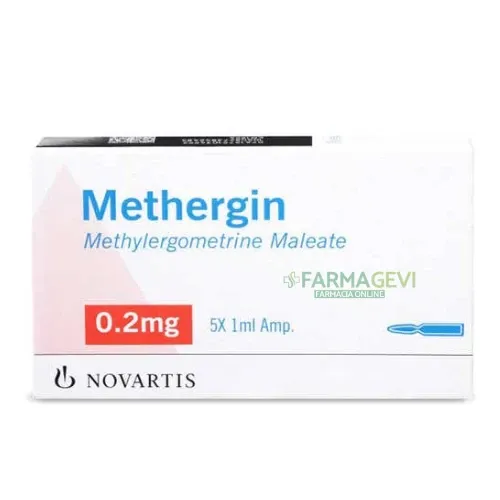
Table of Contents
- Package leaflet: Information for the patient
- Methergin 0.2 mg/ml injection solution, 0.125 mg coated tablets
- 1. What Methergin is and what it is used for
- 2. What you should know before taking Methergin
- 3. How to take Methergin
- 4. Possible side effects
- 5. How to store Methergin
- 6. Package contents and other information
Package leaflet: Information for the patient
Methergin 0.2 mg/ml injection solution, 0.125 mg coated tablets
methylergometrine
Please read this leaflet carefully before taking this medicine because it contains important information for you.
- Keep this leaflet. You may need to read it again.
- If you have any questions, consult your doctor or pharmacist.
- This medicine has been prescribed for you only. Do not give it to other people, even if their symptoms are the same as yours, as it may be harmful.
- If you experience any adverse reaction, including those not listed in this leaflet, consult your doctor or pharmacist. See section 4.
Contents of this leaflet:
- What Methergin is and what it is used for
- What you need to know before taking Methergin
- How to take Methergin
- Possible side effects
- How to store Methergin
- Contents of the pack and other information
1. What Methergin is and what it is used for
Methergin contains the active substance methylergometrine maleate. Methylergometrine is a semi-
synthetic derivative of the natural alkaloid ergometrine.
Methergin works by causing contraction of the uterine muscle.
Methergin is used for:
- active management of the third stage of labour (placental delivery), to promote detachment of the placenta and reduce blood loss;
- improving uterine tone and controlling uterine bleeding during and after placental delivery, in the case of caesarean section or following abortion;
- promoting the return of the uterus to normal after childbirth;
- reducing uterine distension due to mucus, blood, and retained tissue that cannot be expelled (lochiometra);
- reducing delayed bleeding in the period following childbirth.
2. What you should know before taking Methergin
Do not take Methergin
- if you are allergic to methylergometrine, to other medicines similar to Methergin (ergot alkaloids), or to any of the other ingredients of this medicine (listed in section 6);
- if you are pregnant or suspect you may be pregnant (see "Pregnancy and breastfeeding");
- if you are in the dilatation phase of labour;
- if you are in the second stage of labour, before the baby’s shoulder has been delivered (Methergin must not be used to induce or accelerate labour);
- if you have severe high blood pressure;
- if you have a serious condition characterized by high blood pressure, swelling, protein in the urine, and seizures, which may occur in the later stages of pregnancy (pre-eclampsia or eclampsia);
- if you have a disease caused by blockage of blood vessels (including reduced blood flow to the heart);
- if you have a generalized, potentially life-threatening infection (sepsis).
Warnings and precautions
Talk to your doctor or pharmacist before taking Methergin.
Exercise particular caution:
- if you have mild or moderate high blood pressure;
- if you have heart vessel disease (coronary artery disease) or risk factors for such disease (such as smoking, obesity, diabetes, and high cholesterol);
- if you have liver or kidney impairment;
- if you are taking other medicines (see section "Other medicines and Methergin").
Your doctor will pay special attention when administering Methergin:
- if the baby is in breech presentation or other abnormal presentations, because Methergin must not be administered before the baby is fully delivered;
- in multiple births, because Methergin must not be administered before the last baby is delivered.
Children
Methergin must not be used in children. Accidental administrations in newborns have been reported, with potentially serious consequences.
Other medicines and Methergin
Inform your doctor or pharmacist if you are taking, have recently taken, or might take any other medicines.
Do not take Methergin if you are taking:
- antibiotics such as troleandomycin, erythromycin, or clarithromycin;
- medicines for HIV/AIDS such as ritonavir, indinavir, nelfinavir, or delavirdine;
- antifungal medicines such as ketoconazole, itraconazole, or voriconazole;
- bromocriptine, a medicine used to inhibit milk production;
- prostaglandins (such as sulprostone, dinoprostone, and misoprostol), medicines used to promote uterine contractions.
Your doctor will use particular caution when prescribing Methergin if you are taking:
- cimetidine (a medicine for ulcers of the stomach or duodenum);
- quinupristin and dalfopristin (antibiotics);
- medicines that constrict blood vessels, including: medicines used for migraine such as triptans, medicines containing substances similar to the active ingredient in Methergin (ergot alkaloids), or beta-blockers;
- anaesthetic medicines such as halothane and methoxyflurane;
- nevirapine (a medicine for HIV/AIDS);
- rifampicin (an antibiotic);
- nitroglycerin and other medicines used to treat angina (chest pain due to heart problems).
Methergin and beverages
Grapefruit juice may increase the levels of Methergin in your body.
Pregnancy and breastfeeding
If you are pregnant, suspect you may be pregnant, plan to become pregnant, or are breastfeeding, consult your doctor or pharmacist before taking this medicine.
Pregnancy
Methergin must not be used during pregnancy due to its potent uterine-contracting effect.
Breastfeeding
You must not breastfeed during treatment with Methergin and for at least 12 hours after the last dose, because Methergin passes into breast milk. Breast milk produced during this period must be discarded.
Adverse effects in the newborn and reduced milk production may occur during breastfeeding.
Isolated cases of poisoning in breastfed newborns whose mothers had taken the medicine for several days have been reported. One or more of the following symptoms have been observed: increased blood pressure, slowed or rapid heartbeat, vomiting, diarrhoea, restlessness, seizures.
These effects disappeared after discontinuation of the treatment.
Driving and using machines
Exercise particular caution if you need to drive or operate machinery, as Methergin may cause dizziness and seizures.
Methergin 0.125 mg coated tablets contain lactose and sucrose
If your doctor has diagnosed you with an intolerance to certain sugars, contact him/her before taking this medicine.
Methergin 0.2 mg/ml injection solution contains sodium
This medicine contains less than 1 mmol (23 mg) of sodium per vial, i.e. essentially "sodium-free".
3. How to take Methergin
Take this medicine exactly as directed by your doctor or pharmacist. If you have
any doubts, consult your doctor or pharmacist.
Active treatment of the third stage of labour (afterbirth)
Your doctor or nurse will administer Methergin by injection into a muscle or slowly into a vein.
The doctor or nurse may assist the expulsion of the placenta by manually applying pressure to the
fundus of the uterus.
The recommended dose is 1 ml (0.2 mg) injected into a muscle or 0.5–1 ml (0.1–0.2 mg) injected slowly into a
vein.
The recommended dose if you undergo delivery under general anaesthesia is 1 ml (0.2 mg)
injected slowly into a vein.
Treatment to improve uterine tone and control blood loss
Your doctor or nurse will administer Methergin by injection into a muscle or slowly into a vein.
The recommended dose is 1 ml (0.2 mg) injected into a muscle or 0.5–1 ml (0.1–0.2 mg) injected slowly into a
vein.
If necessary, your doctor or nurse may administer Methergin every 2–4 hours, up to a maximum of 5
doses within 24 hours.
Met-Tab-VSFI-PL-IT-1a
Treatment to promote return of the uterus to normal after childbirth, reduce uterine distension
due to mucus, blood and tissue remnants that fail to be expelled (lochiometra), or reduce delayed
bleeding in the postpartum period
Your doctor may have you take Methergin tablets orally or administer Methergin injectable solution into a
muscle.
The recommended dose is 1 or 2 tablets taken by mouth or 0.5–1 ml (0.1–0.2 mg) of injectable
solution administered into a muscle, up to 3 times daily, usually for 5 days.
How to open the ampoules
To open the ampoules correctly, follow the instructions below:
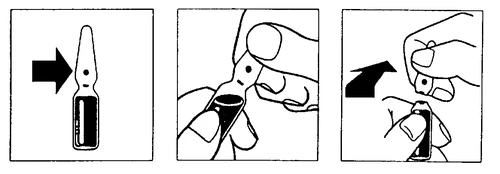
The break line is located Position the ampoule To open the ampoule,
under the coloured dot as shown in the place your thumb on the
figure. coloured dot and
push backwards.
If you take more Methergin than you should
If you accidentally take too much Methergin, contact your doctor immediately or go to the nearest hospital.
After an overdose of Methergin, you may experience:
- nausea
- vomiting
- increased or decreased blood pressure
- numbness, tingling, and pain in the hands and feet
- respiratory depression
- seizures
- coma
Accidental use in newborns
Accidental administration of Methergin to newborns has been reported, sometimes with serious consequences. Symptoms observed have included: respiratory insufficiency, seizures, bluish discolouration of the skin and mucous membranes (cyanosis), reduced urine output (oliguria), and constriction of peripheral blood vessels.
Additionally, a condition called encephalopathy has been reported in newborns, presenting with irritability, agitation, and marked drowsiness (lethargy).
In the absence of adequate treatment, fatal cases have been reported.
Your doctor will treat an overdose of Methergin according to your condition or that of the infant.
If you forget to take Methergin
Do not take a double dose to make up for the missed tablet.
Met-Tab-VSFI-PL-IT-1a
If you stop treatment with Methergin
If you have any doubts about using this medicine, consult your doctor or pharmacist.
4. Possible side effects
Like all medicines, this medicine can cause side effects, although not everyone will experience them.
Common side effects (may affect up to 1 in 10 people)
- headache
- increased blood pressure
- appearance of spots and/or raised areas on the skin
- abdominal pain (caused by contractions of the uterus)
Uncommon side effects (may affect up to 1 in 100 people)
- dizziness
- seizures
- chest pain
- reduced blood pressure
- vomiting
- nausea
- excessive sweating
Rare side effects (may affect up to 1 in 1,000 people)
- slowed or rapid heartbeat
- palpitations
- numbness, tingling, and paleness or coldness in the hands or feet (signs of blood vessel constriction or spasm)
Very rare side effects (may affect up to 1 in 10,000 people)
- severe allergic reactions (anaphylaxis)
- hallucinations
- ringing or buzzing in the ears
- heart attack
- spasm of the heart arteries
- swelling, redness, and pain due to blood clots in a vein (symptoms of thrombophlebitis)
- nasal congestion
- diarrhoea
- muscle spasms
Side effects with unknown frequency (frequency cannot be estimated from the available data)
- stroke or transient ischaemic attack
- tingling
- ventricular fibrillation (a serious, potentially fatal heart rhythm disorder)
- rapid heartbeat (ventricular tachycardia)
- chest pain caused by heart problems (angina pectoris)
- atrioventricular block (a disturbance in the heart's electrical conduction)
Reporting of side effects
Met-Tab-VSFI-PL-IT-1a
If you experience any side effect, including those not listed in this leaflet, consult your doctor or pharmacist. You can also report side effects directly via the national reporting system at https://www.aifa.gov.it/content/segnalazioni-reazioni-avverse.
By reporting side effects, you can help provide more information on the safety of this medicine.
5. How to store Methergin
Keep this medicine out of the sight and reach of children.
Do not use this medicine after the expiry date stated on the packaging after "Exp". The expiry date refers to the last day of that month.
Do not dispose of any medicine via wastewater or household waste. Ask your pharmacist how to dispose of medicines you no longer use. This will help protect the environment.
Methergin 0.2 mg/ml injection solution
Store in the refrigerator (2°C – 8°C). Do not freeze.
Keep the ampoules in the outer packaging to protect the medicine from light.
The ampoules may be stored outside the refrigerator for up to 2 weeks, provided the temperature does not exceed 25°C.
Methergin 0.125 mg coated tablets
This medicine requires no special storage conditions.
6. Package contents and other information
What Methergin contains
Methergin 0.2 mg/ml injection solution
- The active substance is methylergometrine maleate acid. 1 ml of injection solution contains 0.200 mg of methylergometrine maleate acid.
- The other components are maleic acid, sodium chloride, water for injections.
Methergin 0.125 mg coated tablets
- The active substance is methylergometrine maleate acid. Each tablet contains 0.125 mg of methylergometrine maleate acid.
- The other components are maleic acid, gelatin, stearic acid, talc, maize starch, lactose monohydrate, red iron oxide, anhydrous colloidal silica, gum arabic, sucrose.
Description of the appearance of Methergin and contents of the pack
Methergin 0.2 mg/ml injection solution
Each pack contains 6 vials with 1 ml of injection solution.
Methergin 0.125 mg coated tablets
Each pack contains 15 coated tablets in blister packs.
Met-Tab-VSFI-PL-IT-1a
Marketing Authorization Holder
Essential Pharma Limited,
Vision Exchange Building
Triq it-Territorjals, Zone 1,
Central Business District,
Birkirkara, CBD 1070,
Malta
Manufacturer
Novartis Farma S.p.A.
Viale Luigi Sturzo 43
20154 Milano (MI)
Italy
Met-Tab-VSFI-PL-IT-1a