Mepivacaine with adrenaline Ognar
Italy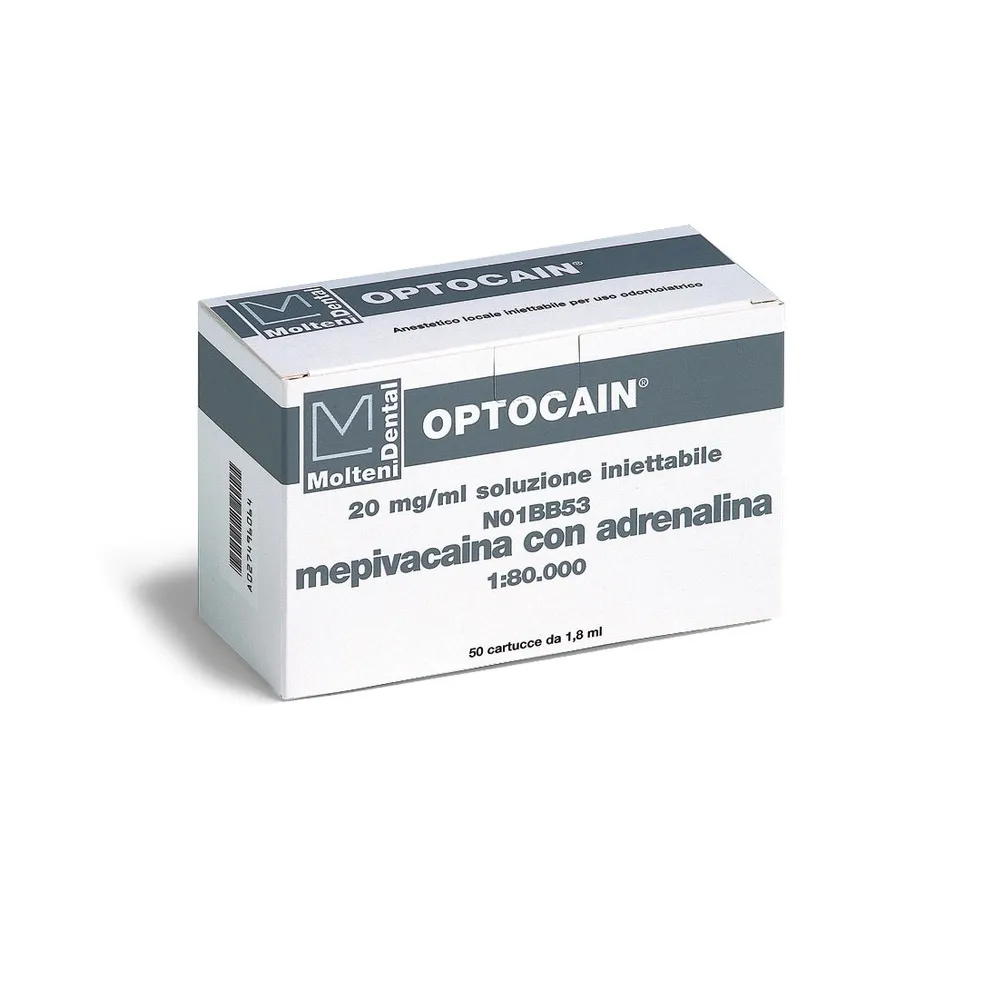
Table of Contents
- Package leaflet: Information for the patient
- MEPIVACAINA CON ADRENALINA OGNA
- 1. What MEPIVACAINA CON ADRENALINA OGNA is and what it is used for
- 2. What you should know before being given MEPIVACAINA CON ADRENALINA
- 3. How MEPIVACAINA CON ADRENALINA OGNA will be administered to you
- 4. Possible side effects
- 5. How to store MEPIVACAINA CON ADRENALINA OGNA
- 6. Package contents and other information
Package leaflet: Information for the patient
MEPIVACAINA CON ADRENALINA OGNA
20 mg/ml injectable solution with adrenaline 1:100,000
Mepivacaine hydrochloride and Adrenaline bitartrate
Please read this leaflet carefully before this medicine is administered to you because it contains important information for you
- Keep this leaflet. You may need to read it again.
- If you have any questions, ask your doctor or nurse.
- If you experience any side effects, including those not listed in this leaflet, please inform your doctor or pharmacist. See section 4.
Contents of this leaflet:
- What MEPIVACAINA CON ADRENALINA OGNA is and what it is used for
- What you need to know before you are given MEPIVACAINA CON ADRENALINA OGNA
- How MEPIVACAINA CON ADRENALINA OGNA will be administered to you
- Possible side effects
- How to store MEPIVACAINA CON ADRENALINA OGNA
- Contents of the pack and other information
1. What MEPIVACAINA CON ADRENALINA OGNA is and what it is used for
MEPIVACAINA CON ADRENALINA OGNA is a combination of two active substances:
- mepivacaine hydrochloride, belonging to a group of medicines called local anesthetics, which reduces sensitivity in a part of the body by blocking the transmission of pain signals;
- adrenaline bitartrate, belonging to a group of medicines called vasoconstrictors, which reduces blood flow at the injection site (reducing bleeding).
Pharmacotherapeutic category: Amide-type local anesthetics, ATC code: N01BB53
MEPIVACAINA CON ADRENALINA OGNA is indicated to induce local anesthesia and regional nerve block anesthesia in oral and dental procedures (for stomatological and dental use). MEPIVACAINA CON ADRENALINA OGNA is particularly indicated when prolonged absolute ischemia in the anesthetized area is required, thus allowing longer and more delicate procedures. After administration into the oral cavity, mepivacaine reaches its peak blood concentration after 30 minutes.
2. What you should know before being given MEPIVACAINA CON ADRENALINA
OGNA
You must not be given MEPIVACAINA CON ADRENALINA OGNA
- if you are allergic (hypersensitive) to mepivacaine or adrenaline, or to any of the other components of this medicine (listed in section 6);
- if you are allergic (hypersensitive) to other medicines similar to this one (amide-type local anaesthetics);
- if you have a neuromuscular disease characterised by muscle weakness (myasthenia gravis);
- if you have low levels of the enzyme cholinesterase (a plasma protein);
- if you have severe liver problems (severe hepatic insufficiency);
- if you have heart disease (cardiopathy) or circulatory problems (arteriopathies);
- if you have high blood pressure (hypertension);
- in case of ischaemic events of any kind (inadequate blood supply to an organ);
- if you suffer from severe headaches (essential migraine);
- if you have kidney problems (nephropathies);
- if your thyroid gland is overactive (hyperthyroidism);
- if you have diabetes;
- if you have a problem affecting the optic nerve (narrow-angle glaucoma);
- if you are pregnant or suspect you may be pregnant.
MEPIVACAINA CON ADRENALINA OGNA 20 mg/ml solution for injection with adrenaline 1:100,000
must not be administered by direct intravenous injection (endovenous administration).
Warnings and precautions
Talk to your doctor or nurse before you are given MEPIVACAINA CON
ADRENALINA OGNA if:
- You have liver disease;
- You have kidney disease;
- You have heart disorders;
- Your general health condition is poor;
- You are taking medicines to treat irregular heartbeat (class III antiarrhythmics);
- You suffer from blocked blood vessels;
- You have hardening of the arteries (arteriosclerosis);
- You have nerve damage caused by diabetes;
- You are taking medicines to treat depression (monoamine oxidase inhibitors or tricyclic antidepressants);
- You have inflammation or infection at the injection site;
- You suffer from general weakness, neurological diseases, spinal deformities, sepsis or hypertension;
- You have had allergic reactions before administration;
- You suffer from acute porphyria.
MEPIVACAINA CON ADRENALINA OGNA contains sodium metabisulphite as a preservative:
this substance may cause allergic-type reactions and severe asthma attacks in sensitive individuals, particularly in asthmatics.
MEPIVACAINA CON ADRENALINA OGNA 20 mg/ml solution for injection with adrenaline 1:100,000
causes loss of sensation in the mouth; therefore, to avoid biting your lips, tongue or mucous membranes, your doctor will advise you not to chew anything until normal sensation returns.
Children
The dose will be determined by the dental doctor according to age and type of procedure (see section “Use in children”).
Other medicines and MEPIVACAINA CON ADRENALINA OGNA
Inform your doctor or nurse if you are taking, have recently taken or might take any other medicines.
In particular, inform your doctor if you are taking:
other local anaesthetics;
medicines used to stabilise heart rhythm (antiarrhythmics);
monoamine oxidase inhibitors (MAOIs) or tricyclic antidepressants (TCAs) for the treatment of depression;
vasoconstrictors;
anticoagulants such as low molecular weight heparin;
centrally-acting analgesics and ether;
muscle relaxants;
non-steroidal anti-rheumatic drugs or plasma substitutes.
Fertility, pregnancy and breastfeeding
This medicine must not be administered to you if you are pregnant or suspect you may be pregnant.
- MEPIVACAINA CON ADRENALINA OGNA is contraindicated during labour and delivery.
Driving and using machines
At the recommended doses, this medicine does not significantly or persistently impair your ability to drive or operate machinery. However, after the procedure, ask your doctor whether you can drive or use machinery.
MEPIVACAINA CON ADRENALINA OGNA contains sodium and sodium metabisulphite
MEPIVACAINA CON ADRENALINA OGNA 20 mg/ml solution for injection with adrenaline 1:100,000
contains 4.8 mg of sodium (0.21 mmol) per dose, i.e. essentially sodium-free.
The medicine contains sodium metabisulphite which may rarely cause severe hypersensitivity reactions and bronchospasm.
3. How MEPIVACAINA CON ADRENALINA OGNA will be administered to you
This medicine will be administered to you by a dentist or a nurse.
The doctor will adjust the required dose according to your needs.
The recommended dose is 1–3 cartridges of 1.8 ml, depending on the type of procedure.
Use in children
The dentist will reduce the dose according to the child's age, weight, and type of procedure.
The maximum recommended dose is 0.025 ml of anesthetic solution per kilogram of body weight. The total dose must not exceed one cartridge per session.
If you are given more MEPIVACAINA CON ADRENALINA OGNA than you should
Since this medicine will be administered by a doctor or a nurse, overdose is unlikely. However, if you think that you have been given an excessive amount of this medicine, inform your doctor immediately or go to the nearest hospital (see section “Undesirable effects”).
Drowsiness is the first sign of elevated plasma levels, which may also occur in cases of rapid absorption or accidental intravenous injection.
The following symptoms may be signs of toxicity due to excessive doses of local anesthetics: ischemia (lack of blood supply to organs) due to adrenaline, bleeding after extraction (reactive hyperemia), respiratory symptoms, seizures, acidosis.
At the first sign of overdose, the doctor will immediately stop administering the medicine and will initiate the most appropriate therapy depending on the severity of the symptoms.
If you have any doubts about the use of this medicine, consult your doctor, pharmacist, or nurse.
4. Possible side effects
Like all medicines, this medicine can cause side effects, although not everyone experiences them.
As with other medicines used for anaesthesia, the side effects caused by MEPIVACAINA CON ADRENALINA OGNA depend on the administered dose.
The following symptoms may occur, especially after administration of high doses, as well as hypersensitivity reactions attributable to either the anaesthetic or the vasoconstrictor.
Effects due to the anaesthetic (mepivacaine):
Skin rashes, itching, urticaria, breathing difficulties (bronchospasm), throat swelling (laryngeal oedema) up to cardiorespiratory collapse, severe allergic reaction (anaphylactic shock).
Euphoric mood (excitement), disorientation, tremors, dizziness (vertigo), dilated pupils (mydriasis), increased metabolism and body temperature, painful jaw muscle contraction (trismus), and convulsions. Other possible symptoms include sweating, changes in heart rhythm (arrhythmias), increased blood pressure (hypertension), rapid breathing (tachypnea), bronchodilation, nausea, and vomiting.
Effects due to the vasoconstrictor (adrenaline):
The following effects are due to adrenaline and are more frequent especially if you have heart or circulatory problems (cardiocirculatory abnormalities):
- anxiety;
- sweating;
- breathing difficulties;
- changes in heart rhythm (cardiac arrhythmias);
- increased blood pressure (hypertension), particularly serious if you suffer from high blood pressure or from thyroid function disorders (See section “When you must not be given MEPIVACAINA CON ADRENALINA OGNA”);
- headache (acute cephalalgia);
- excessive sensitivity of the eyes to light (photophobia);
- chest pain (retrosternal pain) and throat pain (pharyngeal pain);
- vomiting.
Below are the side effects of the medicine Mepivacaina with adrenaline Ogna, listed by frequency.
Common side effects (may affect up to 1 in 10 people):
- increased/decreased blood pressure (hypertension/hypotension);
- nausea, vomiting;
- burning sensation, skin tingling, tingling or numbness without apparent physical cause around the mouth (paraesthesia);
- dizziness (vertigo);
- slowed heart rate (bradycardia);
Uncommon side effects (may affect up to 1 in 100 people):
- seizures, numbness in the area around the mouth (paraesthesia in the circumoral region), tongue numbness, increased sensitivity to sounds (hyperacusis), visual disturbances, loss of consciousness, tremor, ringing in the ears (tinnitus), speech disorders (dysarthria), central nervous system depression.
Rare side effects (may affect up to 1 in 1,000 people):
- inability of the heart to contract effectively (cardiac arrest);
- disturbances in heart rate (cardiac arrhythmias);
- skin irritations (rash, urticaria, allergic reactions), itching;
- anaphylactic-type reactions, breathing difficulties due to reduced airflow to the lungs (bronchospasm);
- throat swelling due to fluid accumulation (laryngeal oedema);
- cessation of heart and respiratory function (cardiorespiratory collapse);
- severe allergic reaction (anaphylactic shock);
- breathing difficulties such as shortness of breath;
- increased breathing rate (tachypnea);
- respiratory arrest;
- pain due to nerve damage (neuropathy);
- peripheral nerve injury;
- inflammation of one of the membranes covering the brain and spinal cord (arachnoiditis);
- double vision (diplopia), pupil dilation (mydriasis);
- sweating;
- increased metabolism and body temperature.
If any of these symptoms occur, the doctor will stop administration.
If you notice any other side effect, inform your dentist or doctor.
Reporting of side effects
If you experience any side effect, including those not listed in this leaflet, talk to your doctor or pharmacist. You can also report side effects directly via the national reporting system at www.agenziafarmaco.gov.it/content/come-segnalare-una-sospetta-reazione-avversa. By reporting side effects, you can help provide more information on the safety of this medicine.
5. How to store MEPIVACAINA CON ADRENALINA OGNA
Keep this medicine out of the sight and reach of children.
Store this medicine at a temperature not exceeding 25 °C.
Do not use this medicine after the expiry date stated on the packaging after "Exp.".
The expiry date refers to the last day of that month and to the product in intact packaging
properly stored.
Do not use this medicine if you notice any visible signs of deterioration.
Do not dispose of any medicine via wastewater or household waste. Ask your pharmacist how to dispose of
medicines you no longer use. This will help protect the environment.
6. Package contents and other information
What MEPIVACAINA CON ADRENALINA OGNA 20 mg/ml solution for injection with adrenaline 1:100,000 contains
- The active substances are: mepivacaine hydrochloride 20.00 mg and adrenaline bitartrate 18.20 mcg (equivalent to 10 mcg of adrenaline).
- The other components are: sodium chloride, sodium metabisulfite, water for injections.
Description of the appearance of MEPIVACAINA CON ADRENALINA OGNA and contents of the package
Injectable solution.
The cartridge is available in the following packaging:
Carton box containing 50 cartridges of 1.8 ml.
Marketing Authorization Holder
GIOVANNI OGNA & Figli S.r.l.
Via Morozzo della Rocca, 3 - 20123 Milano
Manufacturer
Pierrel S.p.A.
Strada Statale Appia n. 46/48 - 81043 Capua (CE)
Package leaflet: information for the physician
The following information is intended exclusively for physicians or healthcare professionals
Special warnings and precautions for use
Before administration, the physician must assess the patient's general health and circulatory status; he/she must also obtain information regarding ongoing therapies and any previous allergic reactions. Any overdose of anesthetic must be avoided, and two maximum doses must never be administered without an interval of at least 24 hours between them. In any case, the lowest doses and concentrations capable of achieving the desired effect should be used. The anesthetic solution must be injected cautiously in small amounts after performing a preliminary aspiration test approximately 10 seconds earlier. Especially when infiltrating highly vascularized areas, it is advisable to wait approximately 2 minutes before proceeding with the actual loco-regional block. The patient must remain under close monitoring, and administration must be stopped immediately at the first sign of alarm (e.g., changes in consciousness).
Warning: immediate availability of emergency equipment, medications, and trained personnel is essential, as rare but serious reactions, sometimes with fatal outcomes, have been reported following the use of local anesthetics, even in the absence of individual hypersensitivity in the patient's history.
Local anesthesia should be avoided in infected areas and during inflammatory conditions.
Some local anesthetic techniques may be associated with severe adverse reactions, regardless of the specific local anesthetic used, such as:
- Central nervous block: may cause cardiovascular depression, particularly in the presence of hypovolemia. Epidural anesthesia must be used with caution in patients with impaired cardiovascular function;
- Retrobulbar injections: very rarely, may reach the cerebral subarachnoid space, causing temporary blindness, cardiovascular collapse, apnea, seizures, etc. Such reactions must be diagnosed and treated immediately;
- Retro- and peribulbar injections of local anesthetics: carry a low risk of persistent ocular muscle dysfunction. Primary causes include trauma and/or local toxic effects on muscles and/or nerves. The severity of such tissue reactions correlates with the extent of trauma, the concentration of local anesthetic, and the duration of tissue exposure to the local anesthetic. As with all local anesthetics, the lowest effective doses and concentrations should be used. Vasoconstrictors may worsen tissue-related reactions and should only be used when indicated.
- Accidental intra-arterial injections in the cranial and cervical regions may cause severe symptoms even at low doses.
Patients with advanced hepatic impairment or severe renal insufficiency
Data from lidocaine use suggest that in patients with advanced liver disease (Child class C), clearance may be reduced by approximately 50%.
A clinically relevant reduction in mepivacaine clearance is expected only in patients with severe renal insufficiency (CLcr <30 mL/min) not undergoing hemodialysis.
It is not expected that reduced clearance will influence the occurrence of toxicity episodes caused by high plasma concentrations of mepivacaine after single doses in surgical anesthesia.
However, in chronic renal failure, clearance of the metabolite PPX excreted renally is impaired, and accumulation may occur following repeated administrations.
Dosage and method of administration
Adults
Disinfect the cartridge diaphragm before use with 70% ethyl alcohol or 90% pharmaceutical-grade isopropyl alcohol.
Cartridges must not be immersed in any type of solution.
Repeated administration in the same patient should not occur more than once a week. Based on this consideration and the active substance concentration per cartridge, the maximum amount that may be administered in a single session is calculated as follows:
Mepivacaine 20 mg/mL solution for injection with adrenaline 1:100,000 – maximum dosage: 3 cartridges of 1.8 mL.
Mepivacaine HCl: 3 x 36.00 mg = 108.00 mg
Adrenaline (1:100,000): 3 x 0.018 mg = 0.054 mg, equivalent to 1.8 mg/kg of anesthetic and 0.0009 mg/kg of adrenaline, based on a 60 kg patient.
Under no circumstances should the dose exceed 300 mg of mepivacaine per session.
Children
The maximum recommended dose is 0.025 mL of anesthetic solution per kg of body weight. The total dose must not exceed one cartridge per session.
The maximum dose of mepivacaine HCl in mg that can be administered to a child can be calculated as follows: child's weight (kg) x 1.33.
Special populations
- Hepatic impairment: in patients with impaired liver function, dose reduction is not required for surgical anesthesia. In patients with Child class C hepatic impairment, when prolonged blocks are used involving repeated administrations, repeated doses of mepivacaine should be reduced by 50%, and the total dose within 24 hours must not exceed 750 mg of mepivacaine.
- Renal impairment: in patients with renal dysfunction, dose reduction for surgical anesthesia within 24 hours is not necessary.
Overdose
Administration must be stopped at the first sign of alarm.
Central nervous system symptoms (seizures, central nervous system depression) must be promptly treated with adequate airway/respiratory support and administration of anticonvulsant medications.
Optimal oxygenation and ventilation, circulatory support, and correction of acidosis are vital.
If cardiovascular depression (hypotension, bradycardia) occurs, appropriate treatment with intravenous fluids, vasopressors, and/or inotropic agents should be considered. Doses administered to children must be adjusted according to age and weight.
In the event of circulatory arrest, immediate cardiopulmonary resuscitation must be initiated.
For further information, refer to the Summary of Product Characteristics.