Melphalan Sun
Italy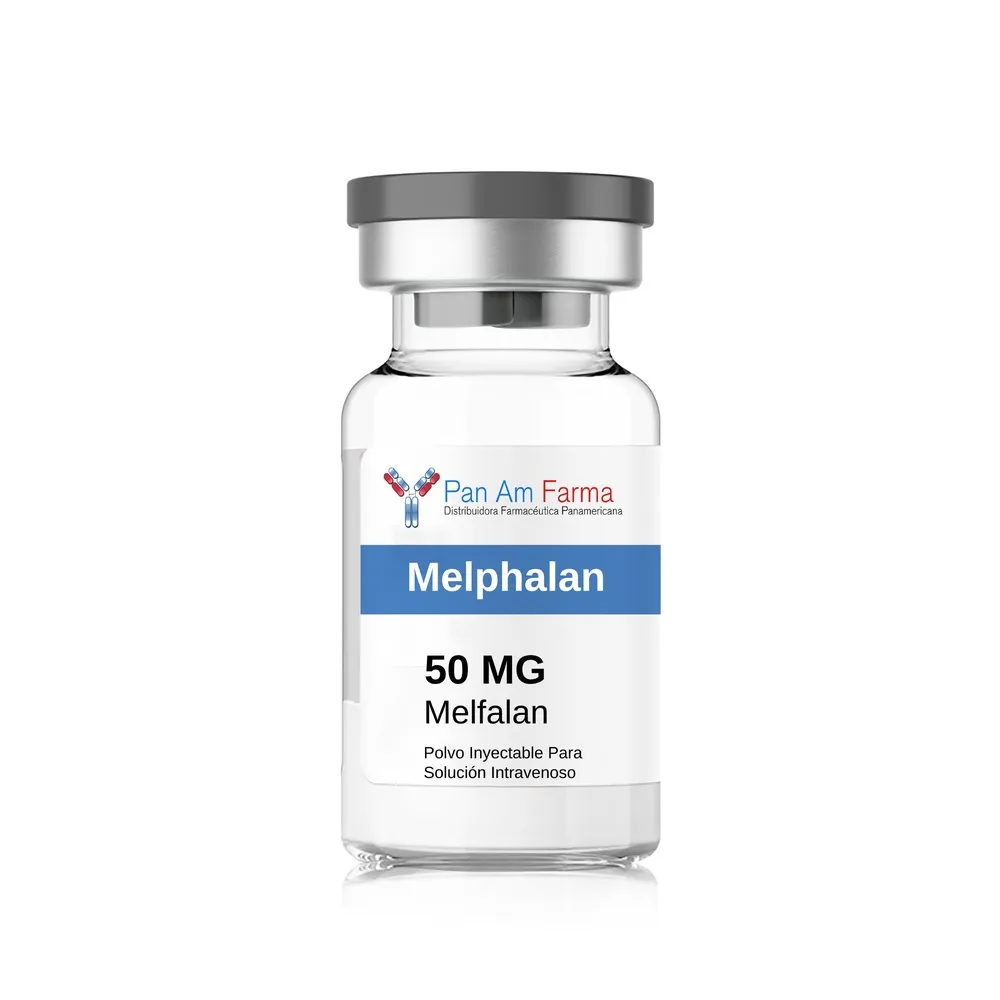
Table of Contents
- Patient Information Leaflet
- Melfalan SUN 50 mg powder and solvent for solution for injection/infusion
- 1. What Melfalan SUN is and what it is used for
- 2. What you should know before being given Melfalan SUN
- 3. How Melfalan SUN is administered
- 4. Possible side effects
- 5. How to store Melfalan SUN
- 6. Package contents and other information
- The following information is intended exclusively for doctors or healthcare professionals
Patient Information Leaflet
Melfalan SUN 50 mg powder and solvent for solution for injection/infusion
melphalan
Equivalent medicine
Please read all of this leaflet carefully before you are given this medicine because it contains important information for you.
- Keep this leaflet. You may need to read it again.
- If you have any questions, ask your doctor or nurse.
- If you get any side effects, including those not listed in this leaflet, tell your doctor or nurse. See section 4.
Contents of this leaflet
- What Melfalan SUN is and what it is used for
- What you need to know before you are given Melfalan SUN
- How Melfalan SUN is administered
- Possible side effects
- How to store Melfalan SUN
- Contents of the pack and other information
1. What Melfalan SUN is and what it is used for
Melfalan SUN contains a medicine called melphalan, which belongs to a group of medicines known as cytotoxic (or chemotherapy) agents. Melfalan SUN is used to treat cancers. It works by reducing the number of abnormal cells produced by the body.
Melfalan SUN is used for:
- multiple myeloma (a type of cancer that develops from cells in the bone marrow called plasma cells. Plasma cells help fight infections and disease by producing antibodies)
- advanced ovarian cancer
- childhood neuroblastoma (a malignant tumour of the nervous system)
- malignant melanoma (a skin cancer)
- soft tissue sarcoma (a malignant tumour of muscles, fatty tissue, fibrous tissue, blood vessels, or other supportive tissues of the body).
Consult your doctor if you do not feel better or if you feel worse.
2. What you should know before being given Melfalan SUN
DO NOT be given Melfalan SUN if any of the following apply to you. Inform your doctor if:
- you are allergic to melphalan or to any of the other ingredients of this medicine (listed in section 6)
- you are breastfeeding.
Warnings and precautions
Before treatment with Melfalan SUN, inform your doctor if any of the following apply to you:
- you have undergone radiotherapy or chemotherapy, currently or recently
- you have a kidney problem
- you need to receive a vaccination or have recently been vaccinated. This precaution is necessary because certain vaccines (e.g. against polio, measles, mumps, and rubella) could cause you to contract an infection if administered while you are being treated with Melfalan SUN.
- you have or have previously had a blood clot in a leg (thrombosis), in a lung (pulmonary embolism), or in any other part of the body
- you have a condition that increases your risk of developing a blood clot in the arteries
- men being treated with Melfalan SUN must not father a child during treatment and for 3 months afterwards.
Other medicines and Melfalan SUN
Inform your doctor or pharmacist if you are taking, have recently taken, or might take any other medicines, including those obtained without a prescription.
In particular, inform your doctor or nurse if you are taking any of the following medicines:
- other cytotoxic medicines (chemotherapy)
- nalidixic acid (an antibiotic used to treat urinary tract infections)
- cyclosporine (used to prevent transplant rejection, to treat certain skin conditions such as psoriasis and eczema, or to treat rheumatoid arthritis)
- vaccines containing live organisms (see Warnings and precautions)
- in children, busulfan (used to treat certain types of cancer).
Pregnancy, breastfeeding, and fertility
Pregnancy and breastfeeding
If you are pregnant, suspect you may be pregnant, are planning a pregnancy, or are breastfeeding, consult your doctor before being given this medicine.
Pregnancy
Treatment with Melfalan SUN is not recommended during pregnancy because it may cause permanent harm to the fetus. If you are already pregnant, it is important that you consult your doctor before receiving Melfalan SUN. Your doctor will evaluate the risks and benefits of treatment with Melfalan SUN for you and your baby.
Reliable contraceptive precautions must be taken to avoid pregnancy while you or your partner are receiving this injection/infusion.
Breastfeeding
It is not known whether Melfalan SUN is excreted in breast milk. Do not breastfeed during treatment with Melfalan SUN.
Fertility
Melfalan SUN may affect the ovaries or sperm, potentially causing infertility (inability to have a child). In women, menstrual periods may stop (amenorrhea), and in men, a complete absence of sperm (azoospermia) may occur following treatment with Melfalan SUN. Therefore, men are advised to seek advice about sperm preservation before treatment.
Male and female contraception
Men treated with Melfalan SUN are advised not to father a child during treatment and for 3 months afterwards. Speak to your doctor if you wish to use effective and reliable contraception.
Driving and using machines
The effects of this medicine on the ability to drive or operate machinery have not been studied in patients receiving this medicine. This medicine is not expected to affect the ability to drive or use machinery.
Melfalan SUN contains sodium
This medicine contains less than 1 mmol (23 mg) per vial, i.e. essentially “sodium-free”.
Melfalan SUN contains ethanol (alcohol)
This medicine contains 5% ethanol (alcohol), equivalent to 10 ml of beer or 2.4 ml of wine per dose.
It may be harmful for alcoholics.
This should be taken into account in pregnant or breastfeeding women, children, and high-risk groups such as patients with liver disease or epilepsy.
Melfalan SUN contains propylene glycol
It may cause symptoms similar to those caused by alcohol.
3. How Melfalan SUN is administered
Melfalan SUN will be administered to you only by doctors or nurses experienced in chemotherapy administration.
Method of administration
Melfalan SUN can be administered
- as an intravenous infusion (drip) into a vein
- into an artery, delivered to a specific part of the body (perfusion).
How much Melfalan SUN is administered
Your doctor will decide how much Melfalan SUN you will receive. The amount of Melfalan SUN depends on
- your body weight or body surface area (a specific measure taking into account weight and height)
- other medicines you are taking
- your medical condition
- your age
- whether or not you have kidney problems.
While you are receiving Melfalan SUN, your doctor will regularly perform blood tests to monitor your blood cell counts. Based on the results of these tests, your doctor may adjust your dose.
Risk of blood clots (thromboembolic events)
Your doctor will decide whether you need preventive treatment for blood clots in the veins. This precaution will be taken during the first 5 months of treatment or if you have an increased risk of developing blood clots in the veins.
Use in children
Melfalan SUN is only rarely used in children. Dosing guidelines for children are not available.
Use in elderly patients
No specific dose adjustments are required for elderly patients.
Use in patients with renal impairment
If you have kidney problems, your doctor will usually administer a lower dose than in other adults.
If you are given more Melfalan SUN than you should receive
Since Melfalan SUN is administered by your doctor, it is unlikely that you will receive too much. If you think you have been given too much medicine or if you have missed a dose, inform your doctor or nurse immediately.
If you miss a dose of Melfalan SUN
Since Melfalan SUN is administered by your doctor, it is unlikely that you will miss a dose. If you think a dose has been missed, skip it and receive the next dose on the next scheduled date. Do not use a double dose to make up for a missed dose.
If you stop using Melfalan SUN
If you think you need to stop using this medicine, discuss it with your doctor first.
If you have further questions about the use of this medicine, please consult your doctor or pharmacist.
4. Possible side effects
Like all medicines, this medicine can cause side effects, although not everyone experiences them.
Serious side effects
Seek immediate medical attention from a specialist or go to hospital straight away if you experience any of the following:
- allergic reaction, signs may include:
- skin rash, hives or urticaria
- swelling of the face, eyelids or lips
- sudden wheezing and tightness in the chest
- collapse (due to cardiac arrest)
- any signs of fever or infection (sore throat, mouth ulcers or urinary problems)
- any unexpected bruising or bleeding, or feeling extremely tired, dizzy or short of breath, as these signs could mean that an insufficient number of certain types of blood cells are being produced
- sudden feeling of being unwell (even with normal temperature)
- muscle pain, stiffness or weakness and your urine is darker than normal or brown or red when Melfalan SUN is administered directly into an arm or leg.
Inform your doctor immediately if you experience symptoms of blood clots in the veins, particularly in the legs. Symptoms may include swelling, pain and redness in the leg. Blood clots can travel through the blood vessels to the lungs, causing chest pain and difficulty breathing.
Other side effects include:
Very common side effects (may affect more than 1 in 10 people)
- fever
- decrease in the number of blood cells and platelets
- feeling unwell (nausea), vomiting and diarrhoea
- mouth ulcers (at high doses of Melfalan SUN)
- hair loss (at high doses of Melfalan SUN)
- tingling or warmth at the injection site where Melfalan SUN was administered
- muscle problems, such as wasting and pain, when Melfalan SUN is administered directly into an arm or leg.
Common side effects (may affect up to 1 in 10 people)
- hair loss at usual doses of Melfalan SUN
- elevated levels in the blood of a chemical substance called urea in people with kidney problems being treated for myeloma
- muscle problems, which may cause pain, cramping, tingling, burning or numbness, known as compartment syndrome. This may occur when Melfalan SUN is administered directly into an arm or leg.
Rare side effects (may affect up to 1 in 1,000 people)
- a condition characterised by a low number of red blood cells due to their premature destruction. It may cause extreme tiredness, shortness of breath, dizziness, headache or yellowing of the skin or whites of the eyes
- lung problems, which may cause cough, wheezing and difficulty breathing
- liver problems, which may be detected by blood tests or cause jaundice (yellowing of the whites of the eyes and skin)
- mouth ulcers at normal doses of Melfalan SUN
- skin rashes or itching.
Not known (frequency cannot be estimated from the available data)
- leukaemia (blood cancer)
- in women: cessation of menstrual periods (amenorrhoea)
- in men: absence of sperm in semen (azoospermia)
- death of muscle tissue (muscle necrosis)
- breakdown of muscle fibres (rhabdomyolysis)
- formation of a blood clot, a so-called thrombus, in a deep vein, particularly in the legs (deep vein thrombosis), and blockage of a pulmonary artery (pulmonary embolism).
Reporting of side effects
If you experience any side effect, including those not listed in this leaflet, talk to your doctor or pharmacist. You can also report side effects directly via the national reporting system at https://www.aifa.gov.it/content/segnalazioni-reazioni-avverse. By reporting side effects, you can help provide more information on the safety of this medicine.
5. How to store Melfalan SUN
Keep this medicine out of the sight and reach of children.
Do not use this medicine after the expiry date stated on the label and outer packaging following "Exp." The expiry date refers to the last day of that month.
Do not store above 30°C. Do not refrigerate. Keep the vial in the outer packaging to protect the medicine from light.
Melfalan SUN will be prepared for use by a healthcare professional. Once prepared, it must be used immediately and must not be stored or refrigerated.
Do not dispose of any medicine via wastewater or household waste. Ask your pharmacist how to dispose of medicines no longer required. This will help protect the environment.
6. Package contents and other information
What Melfalan SUN contains
- The active substance is melphalan hydrochloride. Each vial contains melphalan hydrochloride equivalent to 50 mg of melphalan.
- The other components are povidone and hydrochloric acid. The melphalan is dissolved in 10 ml of solvent before injection. The solvent contains water for injections, sodium citrate, propylene glycol and anhydrous ethanol.
Description of the appearance of Melfalan SUN and contents of the pack
Each pack of Melfalan SUN contains one vial of Melfalan SUN powder and one vial of solvent. The powder vial contains 50 mg of the active substance melphalan as powder, and the solvent vial contains 10 ml of solvent for reconstitution (dissolving) of the powder. The powder is white to off-white, lyophilized or compacted, and the solvent is a clear, colourless liquid/solution. After reconstitution with 10 ml of solvent, the resulting solution contains 5 mg/ml of melphalan.
Marketing Authorisation Holder
Marketing Authorisation Holder:
Sun Pharmaceutical Industries Europe B.V.
Polarisavenue 87
2132 JH Hoofddorp
The Netherlands
Representative in Italy:
Sun Pharma Italia Srl - Viale Giulio Richard, 1 - 20143 Milano
Manufacturer
Sun Pharmaceutical Industries Europe B.V.
Polarisavenue 87
2132 JH Hoofddorp
The Netherlands
S.C. Terapia S.A.
124 Fabricii Street
400632, Cluj-Napoca
Cluj County
Romania
This medicinal product is authorised in the European Economic Area Member States under the following
names:
Austria: Melphalan SUN
Denmark: Melphalan SUN
Germany: Melphalan SUN
France: Melphalan SUN
Italy: Melfalan SUN
The Netherlands: Melfalan hydrochloride SUN
Norway: Melphalan SUN
Sweden: Melfalan SUN
United Kingdom: Melphalan
The following information is intended exclusively for doctors or healthcare professionals
Safe handling of Melfalan SUN:
Melfalan SUN must be prepared for administration by trained personnel familiar with its characteristics and the procedures for safe handling. Before starting, refer to local guidelines for cytotoxic drugs. For administration instructions, see section 4.2 of the Summary of Product Characteristics.
Melfalan SUN must be prepared in an aseptic unit of a pharmacy equipped with a suitable vertical laminar airflow cabinet. Where this is not available, a dedicated adjacent room near the hospital ward or outpatient clinic may be used.
Personnel preparing or handling Melfalan SUN must wear the following protective clothing:
- Disposable latex or polyvinyl chloride surgical gloves of suitable quality (rubber gloves are not suitable);
- Surgical masks of suitable quality;
- Protective goggles, which must be thoroughly washed with water after use;
- Disposable gowns.
Additional appropriate clothing may be required in an aseptic facility.
Any spillage of the solution must be dealt with immediately (by personnel wearing suitable protective clothing), cleaning with disposable paper towels, which after use must be disposed of in high-risk waste containers in accordance with local regulations. Contaminated surfaces must be washed with large amounts of water.
If Melfalan SUN solution comes into contact with the skin, wash immediately with soap and copious amounts of cold water. In such cases, it is advisable to seek medical advice.
In case of eye contact, IMMEDIATELY irrigate the eyes with sodium chloride solution and seek immediate medical advice. If sodium chloride solution is not available, copious amounts of water may be used.
Pregnant personnel or those attempting to conceive must not handle Melfalan SUN.
Preparation of Melfalan SUN solution
Melfalan SUN must be prepared at 25°C by reconstituting the lyophilized/compacted powder with the solvent-diluent provided.
Reconstitution
It is important that both the lyophilized/compacted powder and the solvent are at room temperature before beginning reconstitution. Warming the diluent by hand may facilitate reconstitution. 10 ml of this vehicle must be added rapidly, in a single quantity, into the vial containing the lyophilized powder, and the vial must be immediately shaken vigorously (for approximately 1 minute) until a clear solution without visible particles is obtained. Each vial must be reconstituted individually in this manner. The resulting solution contains the equivalent of 5 mg per ml of anhydrous melfalan and has a pH of approximately 6.5.
| Vial size | Volume of diluent to be added to the vial | Approximate available volume | Declared concentration per ml |
|---|---|---|---|
| 50 mg | 10 ml | 10 ml | 5 mg/ml |
Melphalan SUN solution has limited stability and must be prepared immediately before use.
The reconstituted solution must not be refrigerated, as this would cause precipitation.
Mixing
Immediately withdraw the reconstituted solution at a concentration of 5 mg/ml of anhydrous melphalan from the reconstituted vial and, using a new 10 ml syringe, transfer it into the infusion bag containing 0.9% sodium chloride for intravenous infusion. Mix this diluted solution thoroughly by gentle manual rotation to obtain a nominal concentration of 0.45 mg/ml of anhydrous melphalan.
| Reconstituted volume to be added to the infusion bag | Volume of 0.9% sodium chloride solution | Approximate available volume | nominal concentration per ml |
| 10 ml (50 mg) | 100 ml | 110 ml | 0.45 mg/ml |
When further diluted in an infusion solution, melphalan has reduced stability and the rate of degradation increases rapidly with increasing temperature. If melphalan is infused at a temperature of approximately 25°C, the total time between preparation of the injectable solution and completion of the infusion must not exceed 1.5 hours.
Melphalan is incompatible with infusion solutions containing dextrose, and only sodium chloride 0.9% w/v for intravenous infusion should be used.
If any turbidity or crystallization occurs in reconstituted or diluted solutions, the preparation must be discarded.
Disposal
Any unused solution remaining after one hour must be disposed of in accordance with standard guidelines for handling and disposal of cytotoxic medicinal products.
Disposal of sharp objects, such as needles, syringes, administration kits, and vials, must be carried out in rigid containers labeled with an appropriate hazard warning. Personnel responsible for disposal must be aware of the necessary precautions, and the material should be destroyed by incineration, where appropriate.