Melatonin Noxarem
Italy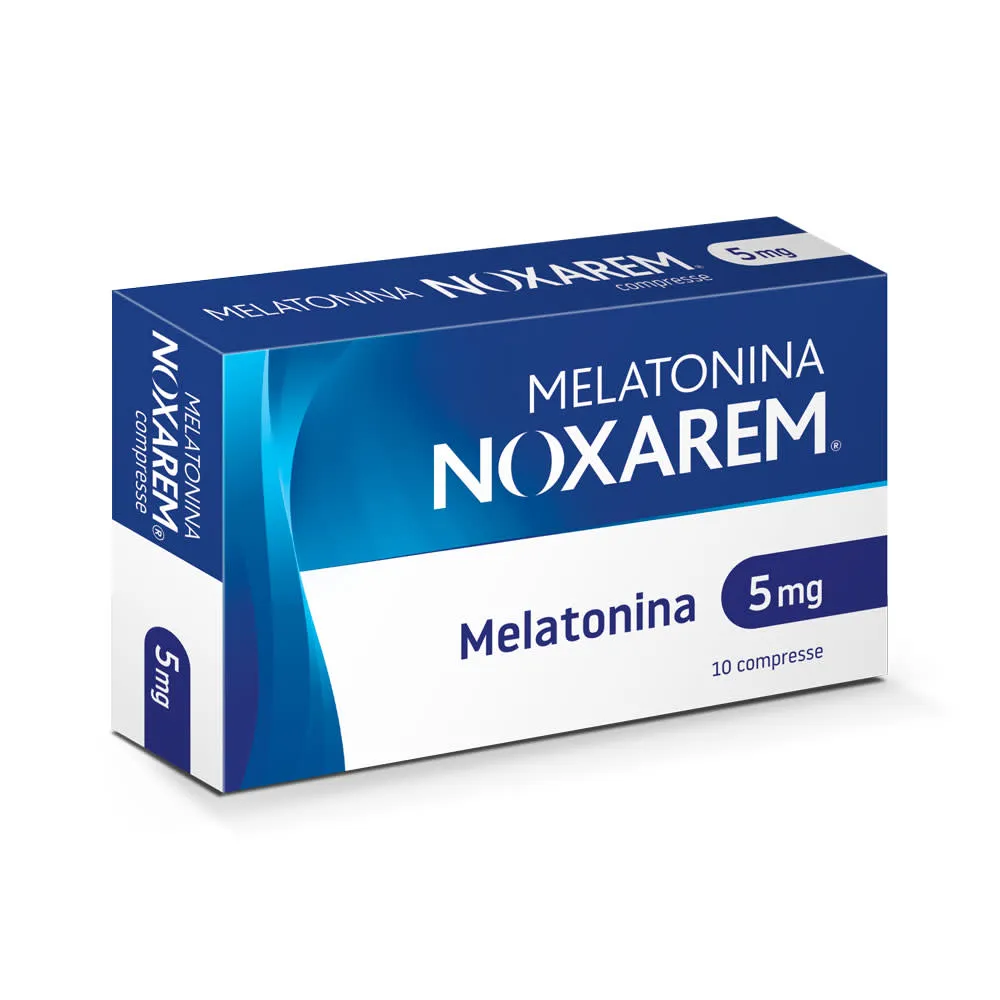
Table of Contents
- Package leaflet: Information for the user
- Melatonin Noxarem 3 mg tablets, 5 mg tablets
- 1. What Melatonina Noxarem is and what it is used for
- 2. What you need to know before taking Melatonin Noxarem
- 3. How to take Melatonin Noxarem
- 4. Possible side effects
- 5. How to store Melatonin Noxarem
- 6. Package contents and other information
- Package leaflet: Information for the user
- Melatonin Noxarem 3 mg tablets, 5 mg tablets
- 2. What Melatonina Noxarem is and what it is used for
- 4. What you need to know before taking Melatonina Noxarem
- 5. How to take Melatonin Noxarem
- 4. Possible side effects
- 5. How to store Melatonin Noxarem
- 6. Package contents and other information
Package leaflet: Information for the user
Melatonin Noxarem 3 mg tablets, 5 mg tablets
Melatonin
Read all of this leaflet carefully before taking this medicine because it contains important information for you.
- Keep this leaflet. You may need to read it again.
- If you have any questions, ask your doctor or pharmacist.
- This medicine has been prescribed for you only. Do not give it to other people, even if they have the same symptoms as yours, because it may be harmful.
- If you experience any side effect, including those not listed in this leaflet, talk to your doctor or pharmacist. See section 4.
Contents of this leaflet:
- What Melatonin Noxarem is and what it is used for
- What you need to know before taking Melatonin Noxarem
- How to take Melatonin Noxarem
- Possible side effects
- How to store Melatonin Noxarem
- Contents of the pack and other information
1. What Melatonina Noxarem is and what it is used for
The active substance of Melatonina Noxarem, melatonin, belongs to a group of natural hormones produced
by the body.
Melatonina Noxarem is used for the short-term treatment of jet lag in adults. The term
jet lag refers to symptoms caused by time zone differences when travelling across several time zones
(travelling east or west).
2. What you need to know before taking Melatonin Noxarem
Do not take Melatonin Noxarem:
- if you are allergic to melatonin or to any of the other ingredients of this medicine (listed in section 6).
Warnings and precautions
Talk to your doctor or pharmacist before taking Melatonin Noxarem if you have:
- impaired kidney function. If you have severe kidney disease, the use of Melatonin Noxarem is not recommended.
- impaired liver function. If you have liver disease, the use of Melatonin Noxarem is not recommended.
- autoimmune diseases (conditions in which the body is “attacked” by its own immune system). In such cases, the use of melatonin is not recommended.
- cardiovascular conditions for which you are taking antihypertensive medicines. In such cases, the use of melatonin is not recommended.
The timing of melatonin administration is important. Melatonin Noxarem must be used according to the instructions.
Melatonin Noxarem may cause drowsiness. Therefore, caution is needed if you experience drowsiness, as this could impair your ability to perform tasks such as driving.
Smoking may reduce the effectiveness of Melatonin Noxarem, as components of tobacco smoke can promote the breakdown of melatonin by the liver.
Children and adolescents
This medicine must not be given to children under 18 years of age, as it has not been studied in this patient group and its effects are unknown.
Other medicines and Melatonin Noxarem
Inform your doctor or pharmacist if you are taking, have recently taken, or might take any other medicines. These include:
- Fluvoxamine (used to treat depression and obsessive-compulsive disorder), quinolones and rifampicin (used to treat bacterial infections), estrogens (used in contraceptives or hormone replacement therapy), carbamazepine (used to treat epilepsy), and 5-methoxypsoralen or 8-methoxypsoralen (5-MOP or 8-MOP, used to treat skin diseases such as psoriasis).
- Adrenergic agonists/antagonists (such as certain medicines used to control blood pressure by constricting blood vessels, nasal decongestants, and blood pressure-lowering medicines), opioid agonists/antagonists (such as medicines used in the treatment of drug dependence), prostaglandin inhibitors (such as non-steroidal anti-inflammatory drugs), antidepressants, tryptophan, and alcohol.
- Cimetidine (used to treat stomach problems such as ulcers), calcium channel blockers (medicines used to treat high blood pressure and sudden chest pain [angina pectoris], such as nifedipine).
- Benzodiazepines and non-benzodiazepine hypnotics (medicines used to promote sleep, such as zaleplon, zolpidem, and zopiclone).
- Thioridazine (for the treatment of schizophrenia) and imipramine (for the treatment of depression).
- Warfarin and other anticoagulants, e.g. dabigatran, rivaroxaban, apixaban, and edoxaban (used to prevent blood clots). In this case, more specific monitoring of INR may be required.
Melatonin Noxarem with food, drinks and alcohol
Food may affect the effectiveness of Melatonin Noxarem. It is recommended not to eat food 2 hours before or 2 hours after the time of melatonin intake. Do not drink alcohol before, during or after taking Melatonin Noxarem, as alcohol reduces the effectiveness of Melatonin Noxarem and may worsen some symptoms of jet lag (e.g. headache, morning fatigue, reduced concentration).
Pregnancy and breastfeeding
Melatonin Noxarem is not recommended during pregnancy. Melatonin Noxarem must not be used during breastfeeding.
Driving and using machines
Melatonin Noxarem has a moderate effect on the ability to drive and use machines. Melatonin may cause, among other effects, drowsiness. The level of alertness may be impaired for several hours after taking melatonin. Do not drive or operate machinery after taking melatonin.
3. How to take Melatonin Noxarem
Take this medicine exactly as directed by your doctor or pharmacist. If you have any doubts, consult your doctor or pharmacist.
The recommended dose is one 3 mg tablet daily for up to 4 days. The first dose should be taken upon arrival at your destination, at your usual bedtime (according to local time). Subsequent doses should also be taken at your usual bedtime. If the standard dose of 3 mg does not provide adequate relief from symptoms, you may take a 5 mg tablet instead of the 3 mg tablet at the local time of going to bed. The 5 mg tablet should not be taken in addition to the 3 mg tablet, but a higher dose may be taken on subsequent days. The maximum daily dose is 5 mg once daily. The dose that provides adequate symptom relief should be taken for the shortest possible duration.
The timing of melatonin administration is important, as taking it at the wrong time may cause drowsiness and delay adaptation to local time. Therefore, the tablets must not be taken before 8:00 p.m. or after 4:00 a.m. Swallow the tablet with a glass of water. It is recommended to avoid eating 2 hours before and 2 hours after taking melatonin.
Consult your doctor if you do not feel better or if you feel worse after 6 days.
The Melatonin Noxarem 5 mg tablet may be divided into equal doses.
If you take more Melatonin Noxarem than you should
If you have taken an excessive dose of the medicine or if a child has accidentally ingested this medicine, always contact your doctor or hospital to assess risks and receive further instructions.
Taking a higher dose than the recommended daily dose may cause drowsiness.
If you forget to take Melatonin Noxarem
Do not take a double dose to make up for the forgotten dose.
If you stop taking Melatonin Noxarem
No negative effects are known to be caused by stopping or interrupting treatment prematurely. The use of Melatonin Noxarem does not cause known withdrawal symptoms once treatment is discontinued.
If you have any questions about the use of this medicine, consult your doctor or pharmacist.
4. Possible side effects
Like all medicines, this medicine can cause side effects, although not everybody gets them.
Possible adverse reactions associated with short-term use of melatonin for jet lag include headache, nausea, loss of appetite, dizziness, daytime drowsiness, and disorientation.
It has been observed that melatonin, when used for other disorders, may cause a wide variety of adverse effects.
If you experience any of the following serious side effects, stop taking the medicine and contact your doctor immediately.
Uncommon (may affect up to 1 in 100 people):
- Chest pain
Rare (may affect up to 1 in 1,000 people):
- Loss of consciousness or fainting
- Severe chest pain caused by angina
- Awareness of your heartbeat
- Depression
- Visual disturbances
- Disorientation
- Vertigo (dizziness or spinning sensation)
- Blood in the urine
- Decrease in the number of white blood cells in the blood
- Decrease in the number of platelets in the blood, increasing the risk of bleeding or bruising
- Psoriasis
Frequency not known (frequency cannot be estimated from the available data):
- Hypersensitivity reaction
- Skin swelling
If you experience any of the following non-serious side effects, contact your doctor and/or seek medical advice:
Uncommon (may affect up to 1 in 100 people):
Irritability, nervousness, restlessness, insomnia, abnormal dreams, nightmares, anxiety, migraine, headache, lethargy (tiredness, lack of energy), restlessness associated with hyperactivity, dizziness, fatigue, elevated blood pressure, abdominal pain, indigestion, mouth ulceration, dry mouth, nausea, changes in blood composition that may cause yellowing of the skin or eyes, skin inflammation, night sweats, itching, rash, dry skin, limb pain, glucose excretion in urine, excess protein in urine, menopausal symptoms, weakness, abnormal liver function, and increased body weight.
Rare (may affect up to 1 in 1,000 people):
Herpes zoster, elevated levels of fat molecules in the blood, mood changes, aggression, agitation, crying spells, stress symptoms, early morning awakening, increased sexual drive, depressed mood, memory deficit, attention disorders, dream-like state, restless legs syndrome, poor quality of sleep, tingling sensation, eye watering, dizziness when standing or sitting, hot flushes, acid reflux, stomach disturbances, blistering in the mouth, tongue ulceration, stomach ache, vomiting, abnormal abdominal noises, intestinal gas, excessive saliva production, bad breath, abdominal discomfort, gastric disturbances, inflammation of the stomach lining, eczema, rash, hand dermatitis, itchy rash, nail disorders, arthritis, muscle spasms, neck pain, night cramps, large volumes of urine, need to urinate during the night, prolonged and potentially painful rash, inflammation of the prostate, tiredness, pain, thirst, increased liver enzymes, blood electrolyte abnormalities, and laboratory test abnormalities.
Frequency not known (frequency cannot be estimated from the available data):
Swelling of the mouth or tongue and abnormal milk secretion.
Reporting of side effects
If you experience any side effect, including those not listed in this leaflet, talk to your doctor or pharmacist. You can also report side effects directly via the national reporting system at https://www.aifa.gov.it/content/segnalazioni-reazioni-avverse. By reporting side effects, you can help provide more information on the safety of this medicine.
5. How to store Melatonin Noxarem
Keep this medicine out of the sight and reach of children.
Do not use this medicine after the expiry date stated on the carton after "Exp.". The expiry date refers to the
last day of that month.
Store in the original packaging to protect the medicine from light.
Do not dispose of any medicine via wastewater or household waste. Ask your pharmacist how to dispose of
medicines you no longer use. This will help protect the environment.
6. Package contents and other information
What Melatonina Noxarem contains
The active substance is melatonin.
Each 3 mg tablet contains 3 mg of melatonin.
Each 5 mg tablet contains 5 mg of melatonin.
The other components are:
Calcium hydrogen phosphate dihydrate, microcrystalline cellulose, magnesium stearate, anhydrous colloidal silica, pregelatinized starch.
Description of the appearance of Melatonina Noxarem and contents of the pack
3 mg: white, round, convex tablet with logo 7, diameter 7 mm.
5 mg: white capsule-shaped tablet with a score line on one side, size 10 mm x 5 mm. The tablet can be divided into equal doses.
30, 50 tablets in blister packs (PVC/Al) or in a tablet container (HD-PE plastic container and LD-PE plastic cap).
Not all pack sizes may be marketed.
Marketing Authorization Holder and Manufacturer
Marketing Authorization Holder:
Vemedia Manufacturing B.V.
Verrijn Stuartweg 60
1112 AX Diemen
The Netherlands
Manufacturer:
Vitabalans Oy
Varastokatu 7-9
13500 Hämeenlinna
Finland
This medicinal product is authorized in the European Economic Area member states under the
following names:
Melatonin Noxarem: Finland
Noxarem Melatonine: Belgium, Luxembourg
Noxarem Mélatonine: France
Melatonina Noxarem: Portugal
Package leaflet: Information for the user
Melatonin Noxarem 3 mg tablets, 5 mg tablets
Melatonin
Please read this leaflet carefully before taking this medicine because it contains important
information for you.
Always take this medicine exactly as described in this leaflet or as your doctor or pharmacist has instructed you.
- Keep this leaflet. You may need to read it again.
- If you need more information or advice, consult your pharmacist.
- If you experience any side effects, including those not listed in this leaflet, contact your doctor or pharmacist. See section 4.
- Contact your doctor if you do not notice any improvement or if your symptoms worsen after 6 days.
Contents of this leaflet:
- What Melatonin Noxarem is and what it is used for
- What you need to know before taking Melatonin Noxarem
- How to take Melatonin Noxarem
- Possible side effects
- How to store Melatonin Noxarem
- Contents of the pack and other information
2. What Melatonina Noxarem is and what it is used for
The active substance of Melatonina Noxarem, melatonin, belongs to a group of natural hormones produced by the body.
Melatonina Noxarem is used for the short-term treatment of jet lag in adults. The term jet lag refers to symptoms caused by time zone differences when travelling across several time zones (travelling east or west).
Consult your doctor if you do not feel better or if you feel worse.
4. What you need to know before taking Melatonina Noxarem
Do not take Melatonina Noxarem:
- if you are allergic to melatonin or to any of the other ingredients of this medicine (listed in section 6).
Warnings and precautions
Talk to your doctor or pharmacist before taking Melatonina Noxarem if you have:
- renal impairment. If you have severe kidney disease, the use of Melatonina Noxarem is not recommended.
- hepatic impairment. If you have liver disease, the use of Melatonina Noxarem is not recommended.
- autoimmune diseases (conditions in which the body is attacked by its own immune system). In such cases, the use of melatonin is not recommended.
- cardiovascular condition for which you are taking antihypertensive medication. In this case, the use of melatonin is not recommended.
The timing of melatonin administration is important. Melatonina Noxarem must be used according to the instructions.
Melatonina Noxarem may cause drowsiness. Therefore, caution is required if you experience drowsiness, as this could impair your ability to perform activities such as driving.
Smoking may reduce the effectiveness of Melatonina Noxarem, since components of tobacco smoke can promote the liver's degradation of melatonin.
Children and adolescents
This medicine must not be given to children under 18 years of age, as it has not been tested in this patient group and its effects are unknown.
Other medicines and Melatonina Noxarem
Inform your doctor or pharmacist if you are taking, have recently taken, or might take any other medicines. These include:
- Fluvoxamine (used to treat depression and obsessive-compulsive disorder), quinolones and rifampicin (used to treat bacterial infections), estrogens (used in contraceptives or hormone replacement therapy), carbamazepine (used to treat epilepsy), and 5-methoxypsoralen or 8-methoxypsoralen (5-MOP or 8-MOP, used to treat skin diseases such as psoriasis).
- Adrenergic agonists/antagonists (such as certain medicines used to control blood pressure by constricting blood vessels, nasal decongestants, or medicines that lower blood pressure), opioid agonists/antagonists (such as medicines used in the treatment of drug dependence), prostaglandin inhibitors (such as non-steroidal anti-inflammatory drugs), antidepressants, tryptophan, and alcohol.
- Cimetidine (used to treat stomach problems such as ulcers), calcium channel blockers (medicines used to treat high blood pressure and sudden chest pain [angina pectoris], such as nifedipine).
- Benzodiazepines and non-benzodiazepine hypnotics (medicines used to promote sleep, such as zaleplon, zolpidem, and zopiclone).
- Thioridazine (for the treatment of schizophrenia) and imipramine (for the treatment of depression).
- Warfarin and other anticoagulants, e.g. dabigatran, rivaroxaban, apixaban, and edoxaban (used to prevent blood clots). In such cases, more specific monitoring of INR may be required.
Melatonina Noxarem with food, drinks, and alcohol
Food may affect the effectiveness of Melatonina Noxarem. It is recommended not to eat food 2 hours before or 2 hours after the time of melatonin intake. Do not drink alcohol before, during, or after taking Melatonina Noxarem, as alcohol reduces the effectiveness of Melatonina Noxarem and may worsen certain symptoms of jet lag (e.g. headache, morning fatigue, reduced concentration).
Pregnancy and breastfeeding
Melatonina Noxarem is not recommended during pregnancy. Melatonina Noxarem must not be used during breastfeeding.
Driving and use of machines
Melatonina Noxarem moderately affects the ability to drive and use machinery. Melatonin may cause, among other effects, drowsiness. Your level of alertness may be impaired for several hours after taking melatonin. Do not drive or operate machinery after taking melatonin.
5. How to take Melatonin Noxarem
Take this medicine exactly as directed by your doctor or pharmacist. If you have any doubts,
consult your doctor or pharmacist.
The recommended dose is one 3 mg tablet daily for up to 4 days. The first dose should
be taken upon arrival at your destination, at the usual time of going to sleep at night (according to local time). The subsequent daily doses should also be taken at the usual bedtime hour. If the standard dose of
3 mg does not provide adequate relief from symptoms, you may take a 5 mg tablet instead of the 3 mg tablet at the local bedtime hour. The 5 mg tablet should not be taken in addition to the 3 mg tablet, but a higher dose may be taken on subsequent days. The maximum daily dose is 5 mg once daily. The dose that provides adequate symptom relief should be taken for the shortest possible duration.
The timing of melatonin administration is important, as taking it at the wrong time may cause drowsiness and delay adaptation to local time. Therefore, the tablets must not be taken before 8:00 p.m. or after 4:00 a.m. The tablets should be swallowed with a glass of water. It is recommended not to eat food 2 hours before or 2 hours after the time of melatonin intake.
Consult your doctor if you do not feel better or if you feel worse after 6 days.
The Melatonin Noxarem 5 mg tablet may be divided into equal doses.
If you take more Melatonin Noxarem than you should
If you have taken an excessive dose of the medicine or if a child has accidentally ingested this
medicine, always contact your doctor or hospital to assess the risks and receive further advice.
Taking a higher dose than the recommended daily dose may cause drowsiness.
If you forget to take Melatonin Noxarem
Do not take a double dose to make up for the forgotten dose.
If you stop taking Melatonin Noxarem
No negative effects are known to be caused by stopping or interrupting treatment prematurely. The use
of Melatonin Noxarem does not cause known withdrawal symptoms once treatment is stopped.
If you have any questions about the use of this medicine, consult your doctor or pharmacist.
4. Possible side effects
Like all medicines, this medicine may cause side effects, although not everybody gets them.
Possible adverse reactions associated with short-term use of melatonin for jet lag include headache, nausea, loss of appetite, dizziness, daytime sleepiness, and disorientation.
It has been observed that melatonin, when used for other disorders, may cause a wide variety of adverse effects.
If you experience any of the following serious side effects, stop taking the medicine and contact your doctor immediately.
Uncommon (may affect up to 1 in 100 people):
- Chest pain
Rare (may affect up to 1 in 1,000 people):
- Loss of consciousness or fainting
- Severe chest pain caused by angina
- Awareness of your heartbeat
- Depression
- Visual impairment
- Disorientation
- Vertigo (dizziness or "spinning sensation")
- Presence of blood in urine
- Decrease in the number of white blood cells in the blood
- Decrease in the number of platelets in the blood, increasing the risk of bleeding or bruising
- Psoriasis
Frequency not known (frequency cannot be estimated from the available data):
- Hypersensitivity reaction
- Skin swelling
If you experience any of the following non-serious side effects, contact your doctor and/or seek medical assistance:
Uncommon (may affect up to 1 in 100 people):
Irritability, nervousness, restlessness, insomnia, abnormal dreams, nightmares, anxiety, migraine, headache, lethargy (tiredness, lack of energy), restlessness associated with hyperactivity, dizziness, fatigue, high blood pressure, abdominal pain, indigestion, mouth ulceration, dry mouth, nausea, changes in blood composition that may cause yellowing of the skin or eyes, skin inflammation, night sweats, itching, rash, dry skin, limb pain, glucose excretion in urine, excess protein in urine, menopausal symptoms, weakness, abnormal liver function, and weight gain.
Rare (may affect up to 1 in 1,000 people):
Herpes zoster, elevated levels of fat molecules in the blood, mood changes, aggression, agitation, crying spells, stress symptoms, early morning awakening, increased sexual drive, depressed mood, memory deficit, attention disorders, dream-like state, restless legs syndrome, poor quality of sleep, tingling sensation, eye tearing, dizziness when standing or sitting, hot flushes, acid reflux, stomach disturbances, blister formation in the mouth, tongue ulceration, stomach ache, vomiting, abnormal abdominal noises, intestinal gas, excessive saliva production, bad breath, abdominal discomfort, gastric disorders, inflammation of the stomach lining, eczema, rash, hand dermatitis, itchy rash, nail disorders, arthritis, muscle spasms, neck pain, nocturnal cramps, large volumes of urine, need to urinate during the night, prolonged and potentially painful rash, inflammation of the prostate, tiredness, pain, thirst, increased liver enzymes, electrolyte abnormalities in the blood, and laboratory test abnormalities.
Frequency not known (frequency cannot be estimated from the available data):
Swelling of the mouth or tongue and abnormal milk secretion.
Reporting of side effects
If you experience any side effect, including those not listed in this leaflet, talk to your doctor or pharmacist. You can also report side effects directly via the national reporting system at https://www.aifa.gov.it/content/segnalazioni-reazioni-avverse. By reporting side effects, you can help provide more information on the safety of this medicine.
5. How to store Melatonin Noxarem
Keep this medicine out of the sight and reach of children.
Do not use this medicine after the expiry date which is stated on the packaging after "Exp.". The expiry date refers to the last day of that month.
Store in the original packaging to protect the medicine from light.
Do not dispose of any medicine via wastewater or household waste. Ask your pharmacist how to dispose of medicines you no longer use. This will help protect the environment.
6. Package contents and other information
What Melatonina Noxarem contains
The active substance is melatonin.
Each 3 mg tablet contains 3 mg of melatonin.
Each 5 mg tablet contains 5 mg of melatonin.
The other components are:
Calcium hydrogen phosphate dihydrate, microcrystalline cellulose, magnesium stearate, anhydrous colloidal silica, pregelatinized starch.
Description of the appearance of Melatonina Noxarem and contents of the pack
3 mg: white, round, convex tablet with logo 7, 7 mm in diameter.
5 mg: white capsule-shaped tablet with a score line on one side, size 10 mm x 5 mm. The tablet can be divided into equal doses.
10 tablets in a blister (PVC/Al) or in a tablet container (HD-PE plastic container with LD-PE plastic closure).
Not all pack sizes may be marketed.
Marketing Authorization Holder and Manufacturer
Marketing Authorization Holder:
Vemedia Manufacturing B.V.
Verrijn Stuartweg 60
1112 AX Diemen
The Netherlands
Manufacturer:
Vitabalans Oy
Varastokatu 7-9
13500 Hämeenlinna
Finland
This medicinal product is authorized in the European Economic Area member states under the following names:
Melatonin Noxarem: Finland
Noxarem Melatonine: Belgium, Luxembourg
Noxarem Mélatonine: France
Melatonina Noxarem: Portugal