Megace
Italy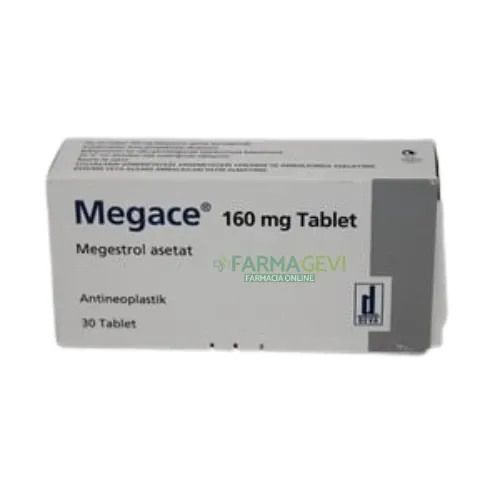
Table of Contents
Package leaflet: Information for the patient
Megace 160 mg tablets
megestrol acetate
Please read this leaflet carefully before taking this medicine because it contains
important information for you.
- Keep this leaflet. You may need to read it again.
- If you have any questions, consult your doctor or pharmacist.
- This medicine has been prescribed for you only. Do not give it to others, even if they have the same symptoms as you, because it could be harmful.
- If you experience any side effect, including those not listed in this leaflet, contact your doctor or pharmacist. See section 4.
Contents of this leaflet:
- What Megace is and what it is used for
- What you need to know before taking Megace
- How to take Megace
- Possible side effects
- How to store Megace
- Contents of the pack and other information
1. What Megace is and what it is used for
Megace contains the active substance megestrol acetate, a substance belonging to a
group of medicines called progestogens.
This medicine is indicated for the following conditions:
Palliative treatment (relieves symptoms but does not remove the cause) of advanced
breast cancer (mammary carcinoma) or uterine cancer (endometrial carcinoma).
Treatment of appetite loss (anorexia) and weight loss associated with tumours (neoplasms)
or AIDS, in patients of both sexes.
2. What you should know before taking Megace
Do not take Megace
- if you are allergic to megestrol acetate or to any of the other ingredients of this medicine (listed in section 6);
- if you are pregnant or breastfeeding (see "Pregnancy and breastfeeding").
Also, do not take Megace:
- for the prevention of recurrent miscarriage or as treatment for threatened miscarriage (see "Warnings and precautions");
- as a diagnostic pregnancy test.
Warnings and precautions
Talk to your doctor or pharmacist before taking Megace.
Exercise particular caution with Megace:
- if you have recurrent breast or endometrial cancer following previous treatment, or cancer that has spread to other parts of the body (metastatic),
because you need to be carefully and regularly monitored by your doctor;
- if you have a history of inflammation of the superficial veins leading to blood clot formation (thrombophlebitis);
- if you are elderly or have reduced kidney function, because the dose of the medicine may need adjustment and your kidney function should be monitored. Megace is mainly eliminated from the body via the kidneys, and the risk of toxic reactions to the medicine may be higher if you have impaired kidney function (see "How to take Megace").
Children
The safety and efficacy of this medicine in children have not been established.
Other medicines and Megace
Inform your doctor or pharmacist if you are taking, have recently taken, or might take any other medicines, including those without a prescription.
No interactions with other medicines are known.
Pregnancy and breastfeeding
If you are pregnant, suspect you may be pregnant, planning a pregnancy, or breastfeeding, consult your doctor or pharmacist before taking this medicine.
Do not take Megace during pregnancy or while breastfeeding.
If you are of childbearing age, you must be informed of the potential risks to the fetus associated with the use of this medicine. An effective method of contraception must be used during treatment with Megace. If you become pregnant, contact your doctor immediately.
Driving and using machines
Megace does not affect the ability to drive or operate machinery.
Megace contains lactose
If your doctor has diagnosed an intolerance to certain sugars, contact him or her before taking this medicine.
3. How to take Megace
Take this medicine exactly as instructed by your doctor or pharmacist. If you have any doubts, consult your doctor or pharmacist.
Recommended doses are:
Breast cancer: 1 tablet (160 mg) per day.
Endometrial cancer: 1-2 tablets (160-320 mg) per day.
Anorexia and cachexia (weight loss): 2 to 5 tablets (400-800 mg) per day, administered as a single daily dose.
Your doctor may prescribe this medicine to be taken together with other anticancer medicines.
Megace should generally be taken for at least two months to evaluate its effectiveness.
Use in children
The safety and efficacy of this medicine in children have not been established.
Use in elderly patients
If you are elderly, your doctor must choose the dosage carefully, usually starting with the lowest recommended dose. In determining the dose, your doctor will consider whether you have liver, kidney or heart problems, other medical conditions, or are taking other medicines concomitantly.
If you take more Megace than you should
In case of accidental ingestion/overdose of Megace, inform your doctor immediately or go to the nearest hospital.
Signs and symptoms of overdose may include diarrhea, nausea, abdominal pain, shortness of breath, cough, unsteady gait, lethargy, and chest pain.
Since no specific antidotes exist, treatment in case of overdose will be directed at managing symptoms.
If you forget to take Megace
If you miss a dose, take it as soon as possible. However, if it is almost time for your next dose, skip the missed dose. Do not take a double dose to make up for a forgotten dose.
If you stop taking Megace
Do not stop taking Megace unless instructed by your doctor.
If you have any questions about the use of this medicine, consult your doctor or pharmacist.
4. Possible side effects
Like all medicines, this medicine can cause side effects, although not everybody gets them.
The following side effects may occur with Megace:
- weight gain in patients treated for cancer, especially when high doses are taken (weight gain has been associated with increased appetite, fat and cellular mass, and is usually not associated with fluid retention)
- thromboembolic events including thrombophlebitis (vein inflammation due to blood clot formation) and pulmonary embolism (blockage of a blood vessel carrying blood from the heart to the lungs), potentially fatal
- nausea, vomiting
- swelling (edema)
- vaginal bleeding from the uterus
- difficulty breathing (dyspnea)
- pain
- heart failure (inability of the heart to pump sufficient blood through the body)
- increased blood pressure (hypertension)
- hot flushes
- mood changes
- "moon face" appearance (Cushingoid appearance)
- tumor growth (with or without increased blood calcium levels)
- increased blood sugar levels (hyperglycemia)
- hair loss (alopecia)
- carpal tunnel syndrome (a nerve disorder characterized by hand and finger pain and numbness)
- diarrhea
- lethargy
- rash (skin eruption)
- impotence
- gas in the intestine (flatulence)
- asthenia (reduced muscle strength)
- constipation
- increased frequency of urination (following high doses)
- abnormalities in a hormonal gland system regulating various body functions (hypothalamic-pituitary-adrenal axis), including glucose intolerance, new-onset diabetes or worsening of pre-existing diabetes with reduced glucose tolerance, Cushing's syndrome (excessive cortisol production)
- adrenal insufficiency, adrenal suppression syndrome (insufficient hormone production by the adrenal glands), during or immediately after treatment discontinuation
Reporting of side effects
If you experience any side effect, including those not listed in this leaflet, talk to your doctor or pharmacist. You can also report side effects directly via the national reporting system at:
https://www.aifa.gov.it/content/segnalazioni-reazioni-avverse . By reporting side effects, you can help provide more information on the safety of this medicine.
5. How to store Megace
Keep this medicine out of the sight and reach of children.
Do not use this medicine after the expiry date stated on the packaging after "Exp.". The expiry date refers to the last day of that month. The expiry date applies to the product stored in its original intact packaging and correctly stored.
Store below 25°C.
Do not dispose of medicines via wastewater or household waste. Ask your pharmacist how to dispose of medicines no longer required. This will help protect the environment.
6. Package contents and other information
What Megace contains
- The active substance is megestrol acetate. Each tablet contains 160 mg of megestrol acetate.
- The other components are: lactose monohydrate, microcrystalline cellulose, sodium carboxymethyl starch, povidone, colloidal silicon dioxide, magnesium stearate.
Description of the appearance of Megace and package contents
Megace is available as tablets.
3 blisters containing 10 tablets of 160 mg each.
Marketing Authorization Holder
Bausch Health Ireland Limited, 3013 Lake Drive, Citywest Business Campus, Dublin 24, D24PPT3,
Ireland
Manufacturer
AndersonBrecon (UK) Ltd
Pharos House, Wye Valley Business Park
Hay-on-Wye, Hereford
United Kingdom