Maxalt
Italy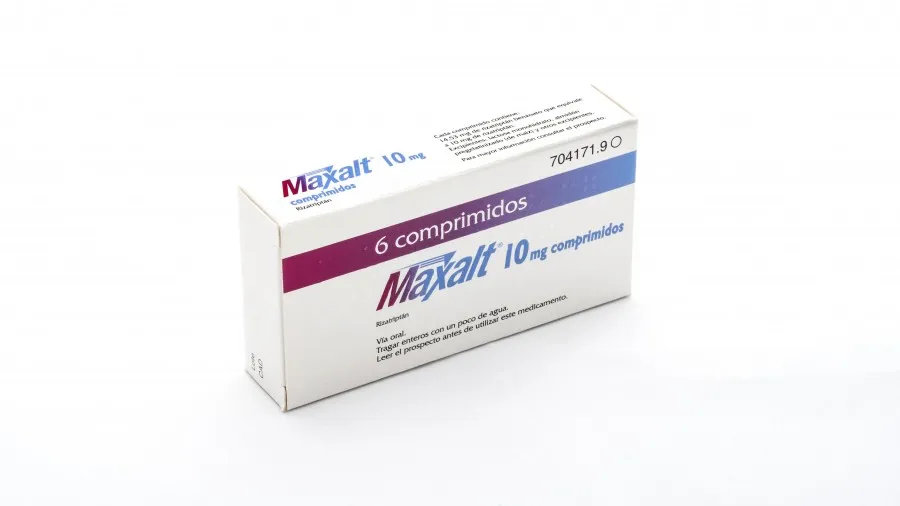
Table of Contents
- Package leaflet: information for the user
- MAXALT 5 mg tablets
- 1. What MAXALT is and what it is used for
- 2. What you should know before taking MAXALT
- 3. How to take MAXALT
- 4. Possible side effects
- 5. How to store MAXALT
- 6. Contents of the pack and other information
- Package leaflet: information for the user
- MAXALT RPD 5 mg oral lyophilisate
- 1. What MAXALT is and what it is used for
- 2. What you need to know before taking MAXALT
- 3. How to take MAXALT
- 4. Possible side effects
- 5. How to store MAXALT
- 6. Package contents and other information
PACKAGE LEAFLET
Package leaflet: information for the user
MAXALT 5 mg tablets
rizatriptan
MAXALT 10 mg tablets
rizatriptan
Read this leaflet carefully before taking this medicine
because it contains important information for you.
- Keep this leaflet. You may need to read it again.
- If you have any questions, ask your doctor or pharmacist.
- This medicine has been prescribed for you only. Do not give it to other people, even if they have the same symptoms as you, because it may be harmful.
- If you experience any side effect, including those not listed in this leaflet, talk to your doctor or pharmacist. See section 4.
Contents of this leaflet:
- What MAXALT is and what it is used for
- What you need to know before taking MAXALT
- How to take MAXALT
- Possible side effects
- How to store MAXALT
- Contents of the pack and other information
1. What MAXALT is and what it is used for
MAXALT belongs to a class of medicines called selective serotonin receptor agonists
5-HT
MAXALT is used to treat the headache phase of migraine attacks in adults.
Treatment with MAXALT:
reduces swelling of the blood vessels around the brain. This swelling causes the headache pain associated with migraine attacks.
2. What you should know before taking MAXALT
Do not take MAXALT if:
- you are allergic to rizatriptan benzoate or to any of the other ingredients of this medicine (listed in section 6)
- you have moderately severe or severe high blood pressure, or mild high blood pressure that is not controlled by treatment
- you have or have had heart problems, including heart attack or chest pain (angina), or you have shown signs of heart disease
- you have severe liver or kidney problems
- you have had a stroke (cerebrovascular accident, CVA) or a mini-stroke (transient ischemic attack, TIA)
- you have arterial blockage problems (peripheral vascular disease)
- you are taking monoamine oxidase inhibitors (MAOIs), such as moclobemide, phenelzine, tranylcypromine, or pargyline (medicines for depression), or linezolid (an antibiotic), or if less than two weeks have passed since you stopped taking MAOIs
- you are currently taking ergotamine-like medicines, such as ergotamine or dihydroergotamine for migraine treatment, or methysergide for prevention of migraine attacks
- you are taking other medicines of the same class, such as sumatriptan, naratriptan, or zolmitriptan, for the treatment of migraine (see below: Other medicines and MAXALT).
If you are unsure whether any of the above information applies to you, contact your doctor or pharmacist.
Warnings and precautions
Talk to your doctor or pharmacist before taking MAXALT if:
- you have any of the following risk factors for heart disease: high blood pressure, diabetes, if you smoke or use nicotine replacement products, if there is a family history of heart disease, if you are a man over 40 years of age, or if you are a postmenopausal woman
- you have kidney or liver problems
- you have a specific heart rhythm problem (bundle branch block)
- you have or have had allergies
- your headache is associated with dizziness, difficulty walking, lack of coordination, or weakness in arms or legs
- you are using herbal preparations containing St. John’s wort
- you have had allergic reactions such as swelling of the face, lips, tongue, and/or throat, which may cause difficulty breathing and/or swallowing (angioedema)
- you are taking selective serotonin reuptake inhibitors (SSRIs) such as sertraline, escitalopram oxalate, and fluoxetine, or serotonin-noradrenaline reuptake inhibitors (SNRIs), such as venlafaxine and duloxetine, for depression
- you have experienced brief symptoms including chest pain or chest tightness.
Taking MAXALT too often may lead to chronic headache. In this case, contact your doctor, as you may need to stop taking MAXALT.
Inform your doctor or pharmacist about your symptoms. Your doctor will determine whether you have migraine. You should take MAXALT only for migraine attacks. MAXALT must not be used to treat headaches that could be caused by more serious underlying conditions.
Inform your doctor or pharmacist if you are currently taking, have recently taken, or might take any other medicines, including those without a prescription, herbal preparations, and medicines you usually take for migraine. This is important because MAXALT may alter the way some medicines work. Other medicines may also affect MAXALT.
Other medicines and MAXALT
Do not take MAXALT:
- if you are already taking a 5-HT agonist (sometimes called "triptans") such as sumatriptan, naratriptan, or zolmitriptan
- if you are taking a monoamine oxidase inhibitor (MAOI) such as moclobemide, phenelzine, tranylcypromine, linezolid, or pargyline, or if you have stopped taking an MAOI less than two weeks ago
- if you are using ergotamine-like medicines such as ergotamine or dihydroergotamine for migraine treatment
- if you are using methysergide to prevent migraine attacks
The medicines listed above may increase the risk of side effects when taken with MAXALT.
You must wait at least 6 hours after taking MAXALT before taking ergotamine-like medicines such as ergotamine, dihydroergotamine, or methysergide.
You must wait at least 24 hours after taking ergotamine-like medicines before taking MAXALT.
Ask your doctor for advice and information about the risks of taking MAXALT:
- if you are taking propranolol (see section 3: How to take MAXALT)
- if you are taking SSRIs such as sertraline, escitalopram oxalate, and fluoxetine, or SNRIs such as venlafaxine and duloxetine for depression
Inform your doctor or pharmacist if you are taking, have recently taken, or might take any other medicines, including those without a prescription.
MAXALT with food and drink
MAXALT may take longer to work if taken after meals. Although it is better to take it on an empty stomach, it may also be taken after eating.
Pregnancy and breastfeeding
If you are pregnant, suspect you may be pregnant, are planning to become pregnant, or are breastfeeding, consult your doctor or pharmacist before taking this medicine.
Available data on the safety of rizatriptan during the first three months of pregnancy do not suggest an increased risk of birth defects. It is not known whether MAXALT could harm the unborn baby when taken during pregnancy after the first three months.
If you are breastfeeding, you may delay breastfeeding for 12 hours after treatment to avoid exposing the infant.
Children and adolescents
The use of MAXALT tablets in children under 18 years of age is not recommended.
Use in patients over 65 years of age
Complete studies to assess the safety and efficacy of MAXALT in patients over 65 years of age have not been conducted.
Driving and using machines
You may experience drowsiness or dizziness when taking MAXALT. If this occurs, do not drive or operate machinery.
MAXALT contains lactose monohydrate
MAXALT 5 mg tablets
Each 5 mg tablet contains 30.25 mg of lactose monohydrate. If your doctor has diagnosed you with an intolerance to certain sugars, contact him or her before taking this medicine.
MAXALT 10 mg tablets
Each 10 mg tablet contains 60.50 mg of lactose monohydrate. If your doctor has diagnosed you with an intolerance to certain sugars, contact him or her before taking this medicine.
3. How to take MAXALT
MAXALT is used to treat migraine attacks. Take MAXALT as soon as possible after the onset of
migraine headache. Do not use it to prevent attacks.
Take this medicine exactly as directed by your doctor. If you have any doubts, consult your doctor or pharmacist.
The usual dose is 10 mg.
If you are taking propranolol or have kidney or liver problems, you should use the 5 mg dose of MAXALT. You must wait at least 2 hours after taking propranolol before taking MAXALT, up to a maximum of 2 doses within 24 hours.
MAXALT (rizatriptan benzoate) tablets should be taken by mouth and swallowed whole with a liquid.
MAXALT is also available as an orally disintegrating tablet of 5 or 10 mg, which dissolves in the mouth. The orally disintegrating tablet may be used in situations where liquids are not available, or to avoid nausea and vomiting that may accompany swallowing tablets with liquid.
If migraine returns within 24 hours
In some patients, migraine symptoms may return within 24 hours. If migraine returns, you may take an additional dose of MAXALT. You must wait at least 2 hours between doses.
If migraine persists after 2 hours
If there is no response to the first dose of MAXALT during an attack, do not take a second dose of MAXALT to treat the same attack. However, you are still likely to respond to MAXALT during a subsequent attack.
Do not take more than 2 doses of MAXALT within 24 hours (for example, do not take more than two
10 mg or 5 mg tablets or orally disintegrating tablets within 24 hours). Always wait at least 2 hours
between doses.
If symptoms worsen, seek medical advice from your doctor.
If you take more MAXALT than you should
If you take more MAXALT than you should, inform your doctor or pharmacist immediately. Bring the medicine pack with you.
Signs of overdose include dizziness, drowsiness, vomiting, fainting, and slowed heartbeat.
If you have any further questions about how to use this medicine, ask your doctor or pharmacist.
4. Possible side effects
Like all medicines, this medicine can cause side effects, although not everybody gets them.
The following side effects may occur with this medicine.
In studies in adult subjects, the most commonly reported side effects were dizziness,
drowsiness and fatigue.
Common (may affect from 1 to 10 people in 100)
- tingling (paraesthesia), headache, reduced skin sensitivity (hypoesthesia), reduced mental sharpness, insomnia
- fast or irregular heartbeat (palpitations)
- hot flushes (short-lived reddening of the face)
- throat irritation
- feeling unwell (nausea), dry mouth, vomiting, diarrhoea, indigestion (dyspepsia)
- sensation of heaviness in certain parts of the body, neck pain, stiffness
- abdominal or chest pain.
Uncommon (may affect from 1 to 10 people in 1,000)
- bad taste in the mouth
- loss of coordination when walking (ataxia), dizziness (vertigo), blurred vision, tremor, fainting (syncope)
- confusion, nervousness
- high blood pressure (hypertension), thirst, hot flushes, sweating
- skin rash; itching and redness with wheals (urticaria), swelling of the face, lips, tongue and/or throat which may cause difficulty in breathing and/or swallowing (angioedema), difficulty in breathing (dyspnoea)
- sensation of tightness in certain parts of the body, muscle weakness
- changes in heart rate or rhythm (arrhythmia); abnormalities in the electrocardiogram (an examination that records the electrical activity of the heart), very fast heartbeat (tachycardia)
- facial pain, muscle pain.
Rare (may affect from 1 to 10 people in 10,000)
- wheezing
- allergic reaction (hypersensitivity); sudden potentially life-threatening allergic reaction (anaphylaxis)
- stroke (this generally occurs in patients with risk factors for heart and blood vessel diseases (high blood pressure, diabetes, smoking habit, use of nicotine substitutes, family history of heart disease or stroke, men over 40 years, postmenopausal women, specific heart rhythm problems (bundle branch block))
- slow heartbeat (bradycardia).
Not known (frequency cannot be estimated from the available data)
- heart attack, spasm of the blood vessels of the heart (this generally occurs in patients with risk factors for heart and blood vessel diseases (high blood pressure, diabetes, smoking habit, use of nicotine substitutes, family history of heart disease or stroke, men over 40 years, postmenopausal women, specific heart rhythm problems (bundle branch block))
- a condition called “serotonin syndrome” which may cause side effects such as coma, unstable blood pressure, extremely high body temperature, lack of muscle coordination, agitation and hallucinations
- severe peeling of the skin with or without fever (toxic epidermal necrolysis)
- seizures/epileptic fits
- spasm of the blood vessels in the extremities including cold sensations and reduced tactile sensitivity in the hands or feet
- spasm of the blood vessels in the colon (large intestine), which may cause abdominal pain.
Immediately inform your doctor if you experience symptoms of allergic reactions,
serotonin syndrome, heart attack or stroke.
Also inform your doctor if you experience symptoms suggesting an allergic reaction (such as
skin reddening or itching) after taking MAXALT.
Reporting of side effects
If you experience any side effects, including those not listed in this leaflet, contact your doctor or pharmacist.
You can also report side effects directly via the national reporting system at: www.agenziafarmaco.gov.it/content/come-segnalare-una-sospetta-reazione-avversa.
By reporting side effects, you can help provide more information on the safety of this medicine.
5. How to store MAXALT
Keep this medicine out of the sight and reach of children.
Do not use this medicine after the expiry date stated on the carton/blister after "EXP".
The expiry date refers to the last day of that month.
Do not store MAXALT above 30°C.
Do not dispose of any medicine via wastewater or household waste. Ask your pharmacist how to
dispose of medicines you no longer use. This will help protect the environment.
6. Contents of the pack and other information
What MAXALT contains
MAXALT 5 mg tablets
The active substance in MAXALT is rizatriptan. One tablet contains 5 mg of rizatriptan as
7.265 mg of rizatriptan benzoate.
MAXALT 10 mg tablets
The active substance in MAXALT is rizatriptan. One tablet contains 10 mg of rizatriptan as
14.53 mg of rizatriptan benzoate.
The other components of MAXALT are monohydrate lactose, microcrystalline cellulose (E460a),
pregelatinized starch, red iron oxide (E172) and magnesium stearate (E572).
Description of the appearance of MAXALT and contents of the pack
MAXALT 5 mg tablets
The 5 mg tablets are pale pink, capsule-shaped, with "MSD" engraved on one side and "266" on the other.
MAXALT 10 mg tablets
The 10 mg tablets are pale pink, capsule-shaped, with "MAXALT" engraved on one side and "MSD 267" on the other.
Pack sizes: packs containing 2, 3, 6, 12 or 18 tablets.
Not all pack sizes may be marketed.
Marketing Authorisation Holder and Manufacturer
Marketing Authorisation Holder
Organon Italia S.r.l.
Piazza Carlo Magno, 21
00162 Roma
Italy
Manufacturer
MERCK SHARP & DOHME B.V.
Waarderweg 39
2031 BN Haarlem
The Netherlands
N.V. Organon
Kloosterstraat 6
5349 AB Oss
The Netherlands
This medicinal product is authorised in the European Economic Area Member States under the
following names:
Maxalt 5 mg tablets
Austria, Finland, Greece,
Iceland, Norway, The Netherlands,
Sweden, United Kingdom MAXALT
Belgium and Luxembourg MAXALT 5 mg
Czech Republic MAXALT 5 mg, tablety
Denmark MAXALT, tabletter
Germany MAXALT 5 mg Tabletten
Ireland Rizatriptan MSD 5 mg Tablets
Italy MAXALT 5 mg tablets
Romania MAXALT 5 mg comprimate
Maxalt 10 mg tablets
Austria, Finland, France, Greece,
Iceland, Norway, The Netherlands,
Portugal, Sweden, United Kingdom MAXALT
Belgium, Luxembourg and Spain MAXALT 10 mg
Czech Republic MAXALT 10 mg, tablety
Denmark MAXALT, tabletter
Germany MAXALT 10 mg Tabletten
Ireland Rizatriptan MSD 10 mg Tablets
Italy MAXALT 10 mg tablets
Romania MAXALT 10 mg comprimate
Package leaflet: information for the user
MAXALT RPD 5 mg oral lyophilisate
rizatriptan
MAXALT RPD 10 mg oral lyophilisate
rizatriptan
Please read this leaflet carefully before taking this medicine
because it contains important information for you.
- Keep this leaflet. You may need to read it again.
- If you have any questions, ask your doctor or pharmacist.
- This medicine has been prescribed for you only. Do not give it to others, even if their symptoms are the same as yours, as it could be harmful.
- If you experience any side effect, including those not listed in this leaflet, talk to your doctor or pharmacist. See section 4.
Contents of this leaflet:
- What MAXALT is and what it is used for
- What you need to know before taking MAXALT
- How to take MAXALT
- Possible side effects
- How to store MAXALT
- Contents of the pack and other information
1. What MAXALT is and what it is used for
MAXALT belongs to a class of medicines called selective serotonin receptor agonists
5-HT
MAXALT is used for the treatment of the headache phase of a migraine attack in adults.
Treatment with MAXALT:
reduces swelling of the blood vessels around the brain. This swelling causes the headache pain associated with a migraine attack.
2. What you need to know before taking MAXALT
Do not take MAXALT if:
- you are allergic to rizatriptan benzoate or to any of the other ingredients of this medicine (listed in section 6)
- you have moderate to severe high blood pressure or mild high blood pressure that is not controlled by treatment
- you have or have had heart problems, including heart attack or chest pain (angina), or you have shown signs of heart disease
- you have severe liver or kidney problems
- you have had a stroke (cerebrovascular accident, CVA) or a mini-stroke (transient ischemic attack, TIA)
- you have arterial blockage problems (peripheral vascular disease)
- you are taking monoamine oxidase inhibitors (MAO inhibitors) such as moclobemide, phenelzine, tranylcypromine, or pargyline (medicines for depression), or linezolid (an antibiotic), or if less than two weeks have passed since you stopped taking MAO inhibitors
- you are currently taking ergotamine-like medicines, such as ergotamine or dihydroergotamine for migraine treatment, or methysergide for prevention of migraine attacks
- you are currently taking other medicines of the same class, such as sumatriptan, naratriptan, or zolmitriptan, for the treatment of migraine (see below: Other medicines and MAXALT).
If you are unsure whether any of the above apply to you, contact your doctor or pharmacist.
Warnings and precautions
Talk to your doctor or pharmacist before taking MAXALT if:
- you have any of the following risk factors for heart disease: high blood pressure, diabetes, if you smoke or use nicotine replacement products, if there is a family history of heart disease, if you are a man over 40 years of age, or if you are a postmenopausal woman
- you have kidney or liver problems
- you have a specific heart rhythm problem (bundle branch block)
- you have or have had allergies
- your headache is associated with dizziness, difficulty walking, lack of coordination, or weakness in the arms or legs
- you use herbal preparations containing St. John's wort
- you have had allergic reactions such as swelling of the face, lips, tongue, and/or throat, which may cause difficulty breathing and/or swallowing (angioedema)
- you are taking selective serotonin reuptake inhibitors (SSRIs) such as sertraline, escitalopram oxalate, and fluoxetine, or serotonin-noradrenaline reuptake inhibitors (SNRIs), such as venlafaxine and duloxetine, for depression
- you have experienced short-lived symptoms including chest pain or chest tightness.
Taking MAXALT too frequently may lead to chronic headache. In this case, contact your doctor, as you may need to stop taking MAXALT.
Tell your doctor or pharmacist about your symptoms. Your doctor will determine whether you have migraine. You should take MAXALT only for migraine attacks. MAXALT must not be used to treat headaches that may be caused by more serious underlying conditions.
Inform your doctor or pharmacist if you are taking, have recently taken, or might take any other medicines, including those without a prescription, herbal preparations, and medicines you usually take for migraine. This is important because MAXALT may alter the way some medicines work. Other medicines may also affect MAXALT.
Other medicines and MAXALT
Do not take MAXALT:
- if you are already taking a 5-HT agonist (sometimes called "triptans") such as sumatriptan, naratriptan, or zolmitriptan
- if you are taking a monoamine oxidase inhibitor (MAOI) such as moclobemide, phenelzine, tranylcypromine, linezolid, or pargyline, or if you have stopped taking an MAOI less than two weeks ago
- if you are using ergotamine-like medicines such as ergotamine or dihydroergotamine for migraine treatment
- if you are using methysergide to prevent migraine attacks
The medicines listed above may increase the risk of adverse effects when taken with MAXALT.
You must wait at least 6 hours after taking MAXALT before taking ergotamine-like medicines such as ergotamine, dihydroergotamine, or methysergide.
You must wait at least 24 hours after taking ergotamine-like medicines before taking MAXALT.
Ask your doctor for advice and information about the risks of taking MAXALT:
- if you are taking propranolol (see section 3: How to take MAXALT)
- if you are taking SSRIs such as sertraline, escitalopram oxalate, and fluoxetine, or SNRIs such as venlafaxine and duloxetine for depression
Inform your doctor or pharmacist if you are taking, have recently taken, or might take any other medicines, including those without a prescription.
MAXALT with food and drink
MAXALT may take longer to work if taken after meals. Although it is better to take it on an empty stomach, you may also take it after eating.
Pregnancy and breastfeeding
If you are pregnant, think you may be pregnant, planning to become pregnant, or breastfeeding, consult your doctor or pharmacist before taking this medicine.
Available data on the safety of rizatriptan during the first three months of pregnancy do not suggest an increased risk of birth defects. It is not known whether MAXALT may harm the unborn baby when taken during pregnancy after the first three months.
If you are breastfeeding, you may delay breastfeeding for 12 hours after treatment to avoid exposing the infant.
Children and adolescents
The use of oral lyophilisate MAXALT in children under 18 years of age is not recommended.
Use in patients over 65 years of age
No complete studies have been conducted to assess the safety and efficacy of MAXALT in patients over 65 years of age.
Driving and using machines
You may feel drowsy or dizzy when taking MAXALT. If this occurs, do not drive or operate machinery.
MAXALT contains aspartame
This medicine contains 1.88 mg of aspartame per 5 mg oral lyophilisate, equivalent to 1.1 mg of phenylalanine.
This medicine contains 3.75 mg of aspartame per 10 mg oral lyophilisate, equivalent to 2.1 mg of phenylalanine.
Aspartame is a source of phenylalanine. It may be harmful to you if you have phenylketonuria, a rare inherited disorder that causes phenylalanine to accumulate because the body cannot properly break it down.
3. How to take MAXALT
MAXALT is used to treat migraine attacks. Take MAXALT as soon as possible after the onset of
migraine headache. Do not use it to prevent attacks.
Take this medicine exactly as prescribed by your doctor. If you have any doubts, consult your
doctor or pharmacist.
The usual dose is 10 mg.
If you are taking propranolol or have kidney or liver problems, you should use the 5 mg dose of
MAXALT. You must wait at least 2 hours after taking propranolol before taking
MAXALT, and no more than 2 doses should be taken within 24 hours.
If migraine returns within 24 hours
In some patients, migraine symptoms may return within 24 hours. If migraine returns, you
may take an additional dose of MAXALT. You must wait at least 2 hours between doses.
If migraine persists after 2 hours
If there is no response to the first dose of MAXALT during an attack, do not take a second dose
of MAXALT to treat the same attack. However, you may still respond to MAXALT
during a subsequent attack.
Do not take more than 2 doses of MAXALT within 24 hours (for example, do not take more than two
tablets or oral lyophilisates of 10 mg or 5 mg within 24 hours). Always wait at least
2 hours between doses.
If symptoms worsen, seek medical advice.
How to administer MAXALT oral lyophilisate
- MAXALT (rizatriptan benzoate) is available as an oral lyophilisate in doses of 5 or 10 mg, which dissolves in the mouth.
- Open the blister containing the MAXALT oral lyophilisate with dry hands.
- The oral lyophilisate should be placed on the tongue, where it dissolves and can be swallowed with saliva.
- The oral lyophilisate can be used in circumstances where liquids are not available, or to avoid nausea and vomiting that may accompany the ingestion of tablets with liquids.
MAXALT is also available as tablets to be taken with liquids.
If you take more MAXALT than you should:
If you take more MAXALT than prescribed, inform your doctor or pharmacist immediately. Bring
the medicine pack with you.
Signs of overdose include dizziness, drowsiness, vomiting, fainting, and slowed heart rate.
If you have any further questions about the use of this medicine, consult your doctor or pharmacist.
4. Possible side effects
Like all medicines, this medicine can cause side effects, although not everybody gets them.
The following side effects may occur with this medicine.
In studies in adult subjects, the most commonly reported side effects were dizziness,
drowsiness and fatigue.
Common (may affect from 1 to 10 people in 100)
- tingling (paraesthesia), headache, reduced skin sensitivity (hypoesthesia), reduced mental sharpness, insomnia
- fast or irregular heartbeat (palpitations)
- hot flushes (short-lived reddening of the face)
- sore throat
- feeling unwell (nausea), dry mouth, vomiting, diarrhoea, indigestion (dyspepsia)
- sensation of heaviness in certain parts of the body, neck pain, stiffness
- abdominal or chest pain.
Uncommon (may affect from 1 to 10 people in 1,000)
- bad taste in the mouth
- loss of coordination when walking (ataxia), dizziness (vertigo), blurred vision, tremor, fainting (syncope)
- confusion, nervousness
- high blood pressure (hypertension), thirst, hot flushes, sweating
- skin rash; itching and redness with wheals (urticaria), swelling of the face, lips, tongue and/or throat which may cause difficulty breathing and/or swallowing (angioedema), difficulty breathing (dyspnoea)
- sensation of tightness in certain parts of the body, muscle weakness
- changes in heart rate or rhythm (arrhythmia); abnormalities in the electrocardiogram (an examination that records the electrical activity of the heart), very fast heartbeat (tachycardia)
- facial pain, muscle pain.
Rare (may affect from 1 to 10 people in 10,000)
- wheezing
- allergic reaction (hypersensitivity); sudden potentially life-threatening allergic reaction (anaphylaxis)
- stroke (this generally occurs in patients with risk factors for heart and blood vessel diseases (high blood pressure, diabetes, smoking, use of nicotine replacement therapy, family history of heart disease or stroke, men over 40 years, postmenopausal women, specific heart rhythm problems (bundle branch block))
- slow heartbeat (bradycardia).
Not known (frequency cannot be estimated from the available data)
- heart attack, spasm of blood vessels in the heart (this generally occurs in patients with risk factors for heart and blood vessel diseases (high blood pressure, diabetes, smoking, use of nicotine replacement therapy, family history of heart disease or stroke, men over 40 years, postmenopausal women, specific heart rhythm problems (bundle branch block))
- a condition called “serotonin syndrome” which may cause side effects such as coma, unstable blood pressure, extremely high body temperature, lack of muscle coordination, agitation and hallucinations
- severe peeling of the skin, with or without fever (toxic epidermal necrolysis)
- seizures/epileptic fits
- spasm of blood vessels in the extremities, including cold sensations and reduced tactile sensitivity in the hands or feet
- spasm of blood vessels in the colon (large intestine), which may cause abdominal pain.
Contact your doctor immediately if you experience symptoms of allergic reactions,
serotonin syndrome, heart attack or stroke.
Also inform your doctor if you experience symptoms suggesting an allergic reaction (such as
skin redness or itching) after taking MAXALT.
Reporting of side effects
If you experience any side effect, including those not listed in this leaflet, talk to your doctor or pharmacist.
You can also report side effects directly via the national reporting system at:
www.agenziafarmaco.gov.it/content/come-segnalare-una-sospetta-reazione-avversa
By reporting side effects, you can help provide more information on the safety of this medicine.
5. How to store MAXALT
Keep this medicine out of the sight and reach of children.
Do not use this medicine after the expiry date stated on the carton/container/pouch/blister pack after "EXP". The expiry date refers to the last day of that month.
Do not store MAXALT oral lyophilisate above 30°C.
Store in the original packaging to protect the medicine from moisture.
Do not remove the oral lyophilisate blister from the outer aluminium pouch until you are ready to take the medicine inside. Do not use the medicine if you notice that the aluminium pouch is damaged.
Always keep the aluminium pouches in the container.
Do not dispose of any medicine via wastewater or household waste. Ask your pharmacist how to dispose of medicines you no longer use. This will help protect the environment.
6. Package contents and other information
What MAXALT contains
MAXALT 5 mg oral lyophilisate
The active substance in MAXALT is rizatriptan. One oral lyophilisate contains rizatriptan 5 mg as
rizatriptan benzoate 7.265 mg.
MAXALT 10 mg oral lyophilisate
The active substance in MAXALT is rizatriptan. One oral lyophilisate contains rizatriptan 10 mg as
rizatriptan benzoate 14.53 mg.
The other components of MAXALT oral lyophilisate are: gelatin, mannitol (E421), glycine,
aspartame (E951), peppermint flavour (a mixture of peppermint oil, maltodextrin and dextrin).
Description of the appearance of MAXALT and pack contents
MAXALT 5 mg oral lyophilisate
The 5 mg oral lyophilisates are white to off-white, round-shaped, with a modified triangle on one side, and have a peppermint taste.
MAXALT 10 mg oral lyophilisate
The 10 mg oral lyophilisates are white to off-white, round-shaped, with a modified square on one side, and have a peppermint taste.
Pack sizes: packs containing 2, 3, 6, 12 or 18 oral lyophilisates.
Not all pack sizes may be marketed.
Marketing Authorisation Holder and Manufacturer
Marketing Authorisation Holder
Organon Italia S.r.l.
Piazza Carlo Magno, 21 – 00162 Rome, Italy
Manufacturer
MERCK SHARP & DOHME B.V.
Waarderweg 39
2031 BN Haarlem
The Netherlands
N.V. Organon
Kloosterstraat 6
5349 AB Oss
The Netherlands
This medicinal product is authorised in the European Economic Area countries under the following names:
Maxalt 5 mg Oral Lyophilisate
Austria, Finland, Sweden: MAXALT RAPITAB
Belgium, Luxembourg: MAXALT LYO 5 mg
Denmark: MAXALT Smelt, smeltetabletter
Germany: MAXALT lingua 5 mg Schmelztabletten
Greece: MAXALT Rapid Sol. Tab.
Ireland: Rizatriptan MSD 5 mg oral lyophilisates
Iceland: MAXALT SMELT 5 mg frostþurrkaðar töflur
Italy: MAXALT RPD 5 mg oral lyophilisate
Norway: Maxalt Rapitab
The Netherlands: MAXALT SMELT
Romania: Maxalt 5 mg oral lyophilisate
Maxalt 10 mg Oral Lyophilisate
Austria, Finland, Sweden: MAXALT RAPITAB
Belgium, Luxembourg: MAXALT LYO 10 mg
Denmark: MAXALT Smelt, smeltetabletter
France: MAXALTLYO
Germany: MAXALT lingua 10 mg Schmelztabletten
Greece: MAXALT Rapid Sol. Tab.
Ireland: Rizatriptan MSD 10 mg oral lyophilisates
Iceland: MAXALT SMELT 10 mg frostþurrkaðar töflur
Italy: MAXALT RPD 10 mg oral lyophilisate
Lithuania: MAXALT 10 mg geriamieji liofilizatai
Norway: Maxalt Rapitab
The Netherlands: MAXALT SMELT
United Kingdom: MAXALT MELT
Romania: Maxalt 10 mg oral lyophilisate
Spain: MAXALT MAX 10 mg