Mavenclad
Italy
Table of Contents
Patient Information Leaflet: Information for the User
MAVENCLAD 10 mg Tablets
cladribine
Please read all of this leaflet carefully before you start taking this medicine because it contains important information for you.
- Keep this leaflet. You may need to read it again.
- If you have any questions, ask your doctor or pharmacist.
- This medicine has been prescribed for you only. Do not pass it on to other people, even if their symptoms are the same as yours, as it may be harmful to them.
- If you experience any side effects, including those not listed in this leaflet, tell your doctor or pharmacist. See section 4.
Contents of this leaflet
- What MAVENCLAD is and what it is used for
- What you need to know before taking MAVENCLAD
- How to take MAVENCLAD
- Possible side effects
- How to store MAVENCLAD
- Contents of the pack and other information
1. What MAVENCLAD is and what it is used for
MAVENCLAD contains the active substance cladribine, a cytotoxic (cell-killing) substance
that acts predominantly on lymphocytes, cells of the immune system involved in the
inflammatory process of multiple sclerosis.
MAVENCLAD is a medicine used for the treatment of multiple sclerosis (MS) in adults.
MS is a disease characterized by inflammation that primarily damages the protective sheath
of nerves.
Treatment with MAVENCLAD has been shown to reduce disease relapses and slow the progression of disability.
2. What you should know before taking MAVENCLAD
Do not take MAVENCLAD
- if you are allergic to cladribine or to any of the other ingredients of this medicine (listed in section 6).
- if you are HIV positive, meaning you have human immunodeficiency virus (HIV) infection.
- if you have active tuberculosis or liver inflammation (hepatitis).
- if your immune system is weakened due to medical conditions or because you are taking other medicines that weaken the immune system or reduce blood cell production in the bone marrow. These medicines include:
- cyclosporine, cyclophosphamide, and azathioprine (used to suppress the immune system, for example after an organ transplant);
- methotrexate (used to treat conditions such as psoriasis or rheumatoid arthritis);
- long-term corticosteroids (used to reduce inflammation, for example in asthma). See also “Other medicines and MAVENCLAD”.
- if you have active cancer.
- if you have moderate or severe kidney problems.
- if you are pregnant or breastfeeding (see also “Pregnancy and breastfeeding”).
Do not take MAVENCLAD and consult your doctor or pharmacist if you are unsure whether any of the conditions
described above apply to you.
Warnings and precautions
Talk to your doctor or pharmacist before taking MAVENCLAD.
Blood tests
Before starting treatment, blood tests will be performed to determine whether you can take
MAVENCLAD. Your doctor will also perform blood tests during and after treatment to
ensure that you can continue taking MAVENCLAD and to monitor for any treatment-related
complications.
Infections
Before starting treatment with MAVENCLAD, tests will be performed to determine whether you have
any infection. It is important that you contact your doctor if you suspect you have an infection. It could
be severe and even life-threatening. Symptoms of infection may include fever, muscle aches and pain, headache, general feeling of being unwell, or yellowing of the eyes.
Your doctor may delay or stop treatment until the infection resolves.
Herpes zoster
If necessary, you will be vaccinated against herpes zoster before starting treatment. You must wait
4 to 6 weeks for the vaccine to take effect. Contact your doctor immediately if symptoms of herpes zoster appear,
a common complication of MAVENCLAD (see section 4), which may require specific treatment.
Progressive multifocal leukoencephalopathy (PML)
If you feel that your MS is worsening or you notice new symptoms, such as changes in mood or behavior, memory lapses, or difficulty speaking and communicating, contact your doctor as soon as possible.
These may be symptoms of a rare brain disease caused by an infection, called progressive multifocal leukoencephalopathy (PML). PML is a serious condition that may lead to severe disability or death.
Although PML has not been observed with MAVENCLAD, as a precaution, you may undergo a brain MRI ( magnetic resonance imaging ) before starting treatment.
Cancer
Isolated cases of cancer have been observed in patients receiving cladribine in clinical studies. Contact your doctor if you have had cancer. Your doctor will determine which treatment options are most suitable for you. As a precautionary measure, follow standard cancer screening recommendations as advised by your doctor.
Liver problems
MAVENCLAD may cause liver problems. Contact your doctor before taking MAVENCLAD if you have or have ever had liver problems. Contact your doctor immediately if you develop one or more of the following symptoms: feeling unwell (nausea), vomiting, stomach pain, tiredness (fatigue), loss of appetite, yellowing of the skin or eyes (jaundice), or dark urine. These could be signs of serious liver problems.
Contraception
Men and women must use effective contraception during treatment and for at least
6 months after the last dose. This is important because MAVENCLAD can severely harm the unborn child.
See also “Pregnancy and breastfeeding”.
Blood transfusions
If you need blood transfusions, inform your doctor that you are taking MAVENCLAD. To prevent complications, the blood may need to be irradiated.
Treatment modifications
When switching from other MS treatments to MAVENCLAD, your doctor will check that the count of certain blood cells (lymphocytes) is normal before starting treatment.
If switching from MAVENCLAD to other MS treatments, consult your doctor. The effects on the immune system may overlap.
Children and adolescents
The use of MAVENCLAD is not recommended in patients under 18 years of age, as it has not been studied in this age group.
Other medicines and MAVENCLAD
Inform your doctor or pharmacist if you are taking, have recently taken, or might take any other medicines.
Do not start treatment with MAVENCLAD together with medicines that weaken the immune system or reduce blood cell production in the bone marrow. These medicines include:
- cyclosporine, cyclophosphamide, and azathioprine (used to suppress the immune system, for example after an organ transplant);
- methotrexate (used to treat conditions such as psoriasis or rheumatoid arthritis);
- long-term corticosteroids (used to reduce inflammation, for example in asthma). Short-term corticosteroids may be used if prescribed by your doctor.
Do not use MAVENCLAD together with other MS medicines unless specifically instructed by your doctor.
Do not take MAVENCLAD at the same time as any other medicine. Allow at least 3 hours between taking MAVENCLAD and taking any other oral medicines.
MAVENCLAD contains hydroxypropylbetadex, which may interact in the stomach with other medicines.
Contact your doctor if you are or have been treated with:
- medicines that may affect blood cells (e.g., carbamazepine, used to treat epilepsy). Your doctor may need to monitor you more closely.
- certain types of vaccines (live and live attenuated vaccines). If you were vaccinated within the last 4–6 weeks, treatment with MAVENCLAD should be postponed. You must not receive these types of vaccines during treatment with MAVENCLAD. The immune system must have recovered before vaccination, and blood tests will be performed to confirm this.
- diltiazem, nifedipine, nimodipine, reserpine, cilostazol, or sulindac (used to treat heart conditions, high blood pressure, vascular diseases, or inflammation) or eltrombopag (used to treat conditions associated with bleeding). Your doctor will advise you on how to proceed if you need to take these medicines.
- rifampicin (used to treat certain types of infection), St. John’s wort (used to treat depression), or corticosteroids (used to suppress inflammation). Your doctor will advise you on how to proceed if you need to take these medicines.
Pregnancy and breastfeeding
Do not take MAVENCLAD if you are pregnant or planning a pregnancy. This is
important because MAVENCLAD can severely harm the unborn child.
You must use effective contraceptive methods to avoid pregnancy during treatment with
MAVENCLAD and for 6 months after the last dose of MAVENCLAD. If you become pregnant more than 6 months after the last dose in year 1, no safety risk is expected, but you will not be able to receive MAVENCLAD treatment during pregnancy.
Men must use effective contraceptive methods to avoid pregnancy in their partner during treatment with
MAVENCLAD and for 6 months after the last dose.
Your doctor will advise you on suitable contraceptive methods.
Do not take MAVENCLAD if you are breastfeeding. If your doctor considers MAVENCLAD essential for you, they will advise you to stop breastfeeding during treatment and for at least one week after the last dose.
Driving and using machines
MAVENCLAD is not expected to affect the ability to drive or use machines.
MAVENCLAD contains sorbitol
This medicine contains 64 mg of sorbitol per tablet.
3. How to take MAVENCLAD
Take this medicine exactly as directed by your doctor. If you have any doubts, consult your
doctor or pharmacist.
Treatment cycles
MAVENCLAD will be administered to you in two treatment cycles over a total period of 2 years.
Each treatment cycle consists of 2 weeks, one month apart, at the beginning of
each treatment year.
A treatment week consists of 4 or 5 days during which you will receive 1 or 2 tablets per day
(see Table 1).
Example: if you start treatment in mid-April, you will take the tablets as indicated here.
Table 1
| Year 1 | Year 2 | ||
| 1st week of treatment | 1 or 2 tablets daily for 4 or 5 days in mid-April | 1st week of treatment | 1 or 2 tablets daily for 4 or 5 days in mid-April |
| 2nd week of treatment | 1 or 2 tablets daily for 4 or 5 days in mid-May | 2nd week of treatment | 1 or 2 tablets daily for 4 or 5 days in mid-May |
Before starting a treatment cycle, your doctor will perform a blood test to check whether your lymphocyte levels (a type of white blood cells) are within acceptable limits. If the levels are not acceptable, treatment will be postponed.
After completing the two treatment cycles within a total period of 2 years, your doctor will continue to monitor your health for another 2 years, during which you must not take the medicine.
Dosage
- For each week of treatment, you will be prescribed the correct number of tablets based on your body weight, as shown in Table 2.
- To obtain the correct number of tablets, you may need one or more packages.
- When you are given the medicine, check that the number of tablets corresponds to the correct amount.
- In the left-hand column of the table below, find the row corresponding to your body weight (in kg) and check the number of tablets that should be in the package or packages for the treatment week you are about to start.
- If the number of tablets in the package or packages differs from the number indicated for your weight in the table below, consult your doctor.
- Remember that, for certain weight ranges, the number of tablets may vary from one treatment week to another.
Example: if you weigh 85 kg and are about to start treatment week 1, you will receive 8 tablets.
Table 2
Body weight Number of tablets to be taken
Treatment cycle in year 1 Treatment cycle in year 2
Treatment week 1 Treatment week 2 Treatment week 1 Treatment week 2
Less than 40 kg Your doctor will tell you how many tablets to take
40 to less than 50 kg 4 4 4 4
50 to less than 60 kg 5 5 5 5
60 to less than 70 kg 6 6 6 6
70 to less than 80 kg 7 7 7 7
80 to less than 90 kg 8 7 8 7
90 to less than 100 kg 9 8 9 8
100 to less than 110 kg 10 9 10 9
110 kg and over 10 10 10 10
How to take the medicine
Take the tablet or tablets at approximately the same time each day. Swallow them with water without chewing. It is not necessary to take the tablets with meals; you may take them with food or between meals.
Please read the “Step-by-step guide” on how to use the child-resistant packaging and how to take the tablets from the package, located at the end of this leaflet.
Important
- Make sure your hands are dry before handling the tablet or tablets.
- Push the tablet or tablets through the blister pack and swallow them immediately.
- Do not leave the tablet or tablets exposed on any surface (e.g., a table) and avoid handling them longer than necessary.
- If a tablet has been left exposed on a surface or if it breaks and fragments fall out of the blister, the affected area must be washed thoroughly.
- Wash your hands thoroughly after handling the tablets.
- If you drop a tablet, consult your doctor for advice.
Duration of a treatment week
Depending on the total number of tablets prescribed for you, you will need to take them for 4 or 5 days per treatment week.
Table 3 indicates how many tablets (1 or 2 tablets) you should take each day. If your daily dose is 2 tablets, take them together.
Example: if you are to take 8 tablets, you will take 2 tablets on day 1, day 2, and day 3, then 1 tablet on day 4 and day 5.
Table 3
| Total number of tablets per week of treatment | Day 1 | Day 2 | Day 3 | Day 4 | Day 5 |
| 4 | 1 | 1 | 1 | 1 | 0 |
| 5 | 1 | 1 | 1 | 1 | 1 |
| 6 | 2 | 1 | 1 | 1 | 1 |
| 7 | 2 | 2 | 1 | 1 | 1 |
| 8 | 2 | 2 | 2 | 1 | 1 |
| 9 | 2 | 2 | 2 | 2 | 1 |
| 10 | 2 | 2 | 2 | 2 | 2 |
If you take more MAVENCLAD than you should
If you have taken more tablets than you should, contact your doctor immediately. The doctor will decide whether or not to stop treatment.
Experience with MAVENCLAD overdose is limited. It is known that the higher the amount of medicine taken, the lower the number of lymphocytes in the body may become, resulting in lymphopenia (see section 4).
If you forget to take MAVENCLAD
| If you forget a dose and remember on the same day you should have taken it | If you forget a dose and only remember the next day |
| Take the missed dose on the same day. | Do not take the missed dose together with the dose scheduled for that day. You should take the missed dose the next day and extend the number of days of that week's treatment. |
Example: If you forget the dose on day 3 and remember only on day 4, you should take the missed day 3 dose on day 4 and extend the treatment week by 1 day. If you miss two consecutive doses (e.g., day 3 and day 4), you should take the missed doses on the following 2 days and extend the treatment week by 2 days.
If you have any doubts about the use of this medicine, consult your doctor or pharmacist.
4. Possible side effects
Like all medicines, this medicine can cause side effects, although not everyone gets them.
Some side effects could be or become serious
Lymphopenia and Herpes zoster (may affect more than 1 in 10 people)
The most important side effect is a reduction in the number of white blood cells called lymphocytes (lymphopenia), which is very common and can be severe. Lymphopenia may increase the risk of developing an infection. A commonly observed infection with MAVENCLAD is Herpes zoster.
Inform your doctor immediately if you experience symptoms of Herpes zoster, such as severe pain and blisters with a characteristic "band-like" distribution, typically on one side of the upper body or face. Other symptoms include headache, burning, tingling, numbness or itching of the skin in the affected area, general feeling of illness or fever in the early phase of the infection.
Herpes zoster may require treatment and it may be necessary to interrupt MAVENCLAD therapy until the infection resolves.
Liver problems (uncommon - may affect up to 1 in 100 people)
Inform your doctor immediately if you experience symptoms such as feeling unwell (nausea), vomiting, stomach pain, tiredness (fatigue), loss of appetite, yellowing of the skin or eyes (jaundice), or dark urine. It may be necessary to suspend or stop treatment with MAVENCLAD.
Other possible side effects
Common (may affect up to 1 in 10 people)
- Cold sores (Herpes labialis)
- Rash
- Hair loss
- Reduction in the number of certain white blood cells (neutrophils)
- Allergic reactions, including itching, hives, rash, and swelling of the lips, tongue or face
Very rare (may affect up to 1 in 10,000 people)
- Tuberculosis
Reporting of side effects
If you experience any side effect, including those not listed in this leaflet, talk to your doctor or pharmacist. You can also report side effects directly through the national reporting system listed in Annex V. By reporting side effects, you can help provide more information on the safety of this medicine.
5. How to store MAVENCLAD
Keep this medicine out of the sight and reach of children.
Do not use this medicine after the expiry date stated on the cardboard carton and the bottle following Exp. The expiry date refers to the last day of that month.
Store in the original packaging to protect the medicine from moisture.
Do not dispose of medicines via wastewater or household waste. Ask your pharmacist how to dispose of medicines no longer required. These measures will help protect the environment.
6. Package contents and other information
What MAVENCLAD contains
- The active substance is cladribine. Each tablet contains 10 mg of cladribine.
- The other components are hydroxypropylbetadex, sorbitol, and magnesium stearate.
Description of the appearance of MAVENCLAD and contents of the pack
MAVENCLAD tablets are white, round, biconvex, with "C" engraved on one side and "10" on the other. Each pack contains 1, 4, 5, 6, 7, or 8 tablets in a sealed blister pack inside a cardboard carton and secured in a child-resistant box. Not all pack sizes may be marketed.
Marketing Authorization Holder
Merck Europe B.V.
Gustav Mahlerplein 102
1082 MA Amsterdam
The Netherlands
Manufacturer
NerPharMa S.R.L.
Viale Pasteur 10
20014 Nerviano (MI)
Italy
R-Pharm Germany GmbH
Heinrich-Mack-Strasse 35
89257 Illertissen
Germany
Merck S.L.
Polígono Merck
08100 Mollet del Vallés (Barcelona)
Spain
Other sources of information
More detailed information on this medicinal product is available on the European Medicines Agency website: https://www.ema.europa.eu/
"Step-by-step guide" for taking MAVENCLAD 10 mg tablets
MAVENCLAD is supplied in a resealable child-resistant box and must be kept out of sight and reach of children. See below the "step-by-step guide" for handling the packaging and taking MAVENCLAD tablets. Check how many tablets are contained in the pack. For instructions, refer to the package leaflet.

- Prepare a glass of water and ensure your hands are clean and dry before handling the tablet(s).
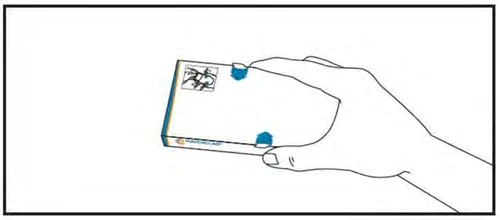
- Take the box, holding it with the opening instructions facing upwards.
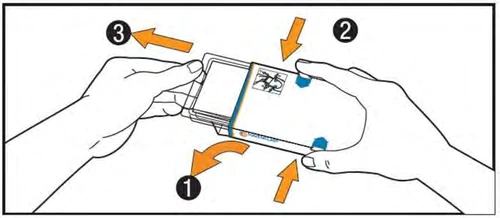
- (1) Open the left tab. (2) Using your index finger and thumb, press simultaneously on the buttons located on both sides of the box and keep them pressed. (3) Pull out the tray until it stops. Caution: Do not remove the tray completely from the box.
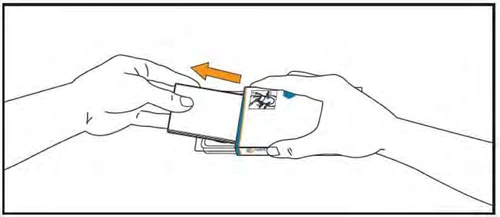
- Remove the package leaflet from the tray. Remember to read the entire leaflet, including this "step-by-step guide," and keep it in a safe place.
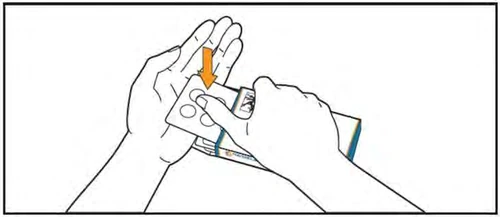
- Lift the blister by inserting a finger into the hole in the tray. Place your hand under the blister and press to release 1 or 2 tablets into your hand, depending on the prescribed dose.

- Swallow the tablet(s) with some water. The tablets must be swallowed whole, without chewing or allowing them to dissolve in the mouth. Minimize skin contact. Avoid touching your nose, eyes, and other body parts.

- Wash your hands thoroughly with soap and water.
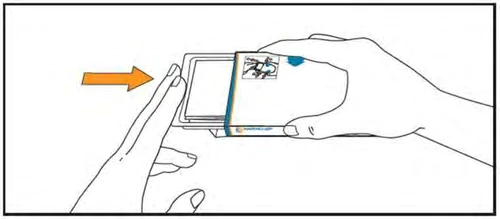
- Push the tray back into the box. Store in the original packaging to protect the medicine from moisture.
Keep the tablets in the blister until the next dose. Do not remove the tablets from the blister.
Do not store the tablets in any other container.
ANNEX IV
SCIENTIFIC CONCLUSIONS AND GROUNDS FOR THE VARIATION OF THE TERMS
OF THE MARKETING AUTHORISATION(S)
Scientific conclusions
Taking into account the assessment by the Pharmacovigilance Risk Assessment Committee (PRAC) of the Periodic Safety Update Report(s) (PSUR) for cladribine (multiple sclerosis), the PRAC's scientific conclusions are as follows:
In light of available literature data on the excretion of cladribine into human breast milk, the PRAC considers that excretion of cladribine into breast milk constitutes at least a reasonable possibility. The PRAC concluded that the product information for medicinal products containing cladribine (multiple sclerosis) should be amended accordingly.
Having reviewed the PRAC recommendation, the Committee for Human Medicinal Products (CHMP) agrees with the general conclusions and the rationale of the recommendation.
Grounds for the variation of the terms of the marketing authorisation(s)
Based on the scientific conclusions for cladribine (multiple sclerosis), the CHMP considers that the benefit-risk balance of the medicinal product(s) containing cladribine (multiple sclerosis) remains unchanged, subject to the proposed amendments to the product information.
The CHMP recommends the variation of the terms of the marketing authorisation(s).