Matrifen
Italy
Table of Contents
- Package leaflet: Information for the user
- MATRIFEN 12 micrograms/hour transdermal patch, 25 micrograms/hour transdermal patch, 50 micrograms/hour transdermal patch, 75 micrograms/hour transdermal patch, 100 micrograms/hour transdermal patch
- 1. What MATRIFEN is and what it is used for
- 2. What you need to know before using MATRIFEN
- 3. How to use MATRIFEN
- 4. Possible side effects
- 5. How to store MATRIFEN
- 6. Contents of the pack and other information
Package leaflet: Information for the user
MATRIFEN 12 micrograms/hour transdermal patch, 25 micrograms/hour transdermal patch, 50 micrograms/hour transdermal patch, 75 micrograms/hour transdermal patch, 100 micrograms/hour transdermal patch
Equivalent medicinal product only for dosages from 25 mcg/h to 100 mcg/h
Fentanyl
Please read this leaflet carefully before using this medicine because it contains important information for you.
- Keep this leaflet. You may need to read it again.
- If you have any questions, ask your doctor, pharmacist, or nurse.
- This medicine has been prescribed for you only. Do not give it to other people, even if their symptoms are the same as yours, as it may be harmful.
- If you experience any side effects, including those not listed in this leaflet, consult your doctor, pharmacist, or nurse. See section 4.
Contents of this leaflet
- What MATRIFEN is and what it is used for
- What you need to know before using MATRIFEN
- How to use MATRIFEN
- Possible side effects
- How to store MATRIFEN
- Contents of the pack and other information
1. What MATRIFEN is and what it is used for
The name of this medicine is MATRIFEN.
The patches help relieve severe and long-lasting pain:
- in adults who require continuous treatment for pain
- in children over 2 years of age who are already using opioid medicines and require continuous treatment for pain.
MATRIFEN contains a medicine called fentanyl, which belongs to a group of strong painkillers called opioids.
2. What you need to know before using MATRIFEN
Do not use MATRIFEN
If you are allergic to fentanyl or to any of the other ingredients of this medicine (listed in section 6).
If your pain is short-term, such as sudden pain or postoperative pain.
If you have difficulty breathing, with slow or shallow breathing.
Do not use this medicine if any of the points listed above apply to you or your child. If you have any doubts,
consult your doctor, pharmacist, or nurse before using MATRIFEN.
Warnings and precautions
- MATRIFEN may cause life-threatening side effects in people who are not already regularly using prescribed opioid medicines.
- MATRIFEN is a medicine that could be life-threatening to children, even if the patches have already been used. Be aware that a sticky patch (new or used) may be attractive to a child, and if it adheres to a child’s skin or if the child puts it in their mouth, the result can be fatal.
- Store this medicine in a safe and secure place, out of reach of others – see section 5 for more information.
Transfer of the patch to another person
The patch must be used only on the skin of the person for whom it was prescribed. Cases have been reported of
accidental adhesion of the patch to a family member while in close physical contact or sharing the same bed
with the person using the patch. A patch that accidentally adheres to another person (especially a child) may
result in the medicine passing through the other person’s skin and causing serious side effects, such as difficulty breathing, with slow and shallow breathing, which can be fatal. If the patch adheres to another person’s skin, remove the patch immediately and contact a doctor.
Special precautions with MATRIFEN
Consult your doctor or pharmacist before using this medicine if any of the conditions listed below apply to you, as your doctor may need to monitor you more closely.
- If you have ever had lung or breathing problems.
- If you have ever had heart, liver, or kidney problems, or have/have had low blood pressure.
- If you have ever had a brain tumour.
- If you have ever had persistent headaches or a head injury.
- If you are elderly, as you may be more sensitive to the effects of this medicine.
- If you have a condition called ‘myasthenia gravis’, in which muscles become weak and tire easily.
If any of the conditions listed above apply to you (or if you have any doubts), consult your doctor, pharmacist, or nurse before using MATRIFEN.
While using the patch, inform your doctor if you have breathing problems during sleep.
Opioids such as MATRIFEN can cause sleep-related breathing disorders such as sleep apnoea (pauses in breathing during sleep) and sleep-related hypoxemia (low oxygen levels in the blood). Inform your doctor if you, your partner, or your caregiver notice any of the following:
- Pauses in breathing during sleep
- Waking up at night due to shortness of breath
- Difficulty staying asleep
- Excessive daytime sleepiness
Your doctor may decide to adjust your dose.
While using the patch, inform your doctor if you notice a change in the pain you feel: if you experience
- Pain that is no longer relieved by the patch
- An increase in pain
- A change in how you feel pain (e.g., pain in another part of your body)
- Pain when touched in a way that should not cause pain
Do not change the dose on your own. Your doctor may decide whether to adjust the dose or treatment.
Side effects and MATRIFEN
- MATRIFEN may make you feel unusually drowsy and may slow and shallow your breathing. Very rarely, these breathing problems can be life-threatening or even fatal, especially in people who have never used strong opioid painkillers before (such as MATRIFEN or morphine). If you or someone else notices that the person using the patch shows unusual drowsiness with slow or shallow breathing:
- Remove the patch
- Ensure the person moves and speaks as much as possible
- If you develop a fever while using MATRIFEN, inform your doctor, as fever can increase the amount of medicine absorbed through the skin.
- MATRIFEN may cause constipation; consult your doctor or pharmacist for advice on how to prevent or relieve constipation.
See section 4 for a complete list of possible side effects.
While wearing the patch, do not expose yourself to direct heat sources such as heating pads, electric blankets, hot water bottles, heated water beds, heat lamps, or sunbeds. Avoid prolonged sun exposure, long hot baths, saunas, or hot whirlpool baths. Doing so may increase the amount of medicine absorbed from the patch.
For athletes: using the medicine without therapeutic need constitutes doping and may result in a positive anti-doping test.
Long-term use and tolerance
This medicine contains fentanyl, an opioid medicine. Repeated use of opioid painkillers may make the medicine less effective (you become accustomed to it, a phenomenon known as drug tolerance). You may also become more sensitive to pain during MATRIFEN use. This is known as hyperalgesia. Increasing the patch dose may help reduce pain for a while, but it may also be harmful. If you notice the medicine becoming less effective, consult your doctor. Your doctor will decide whether it is better to increase the dose or gradually reduce the use of MATRIFEN.
Dependence and substance abuse
Repeated use of MATRIFEN may also lead to dependence, abuse, and substance abuse, which may cause potentially fatal overdose. The risk of these side effects may increase with higher doses and prolonged duration of use. Dependence or substance abuse may make you feel you no longer have control over the amount of medicine needed or how often you must use it. You may feel the need to continue using the medicine, even if it does not help relieve pain.
The risk of developing dependence or substance abuse varies from person to person. You may have a higher risk of becoming dependent or abusing MATRIFEN if:
- You or a family member has previously suffered from alcohol, prescription medicine, or illegal substance abuse or dependence ("substance abuse");
- You are a smoker;
- You have previously had mood disorders (depression, anxiety, or a personality disorder) or have been treated by a psychiatrist for other mental illnesses.
The appearance of any of the following signs during MATRIFEN use may indicate dependence or substance abuse.
- You feel the need to use the medicine for longer than prescribed by your doctor
- You feel the need to use a higher dose than recommended
- You use the medicine for reasons other than prescribed, e.g., "to stay calm" or "to help sleep"
- You have repeatedly tried to stop or control the use of this medicine without success
- You feel unwell when stopping treatment with the medicine, and feel better when restarting it ("withdrawal effects").
If you notice any of these signs, consult your doctor to discuss the best treatment path for you, including cases where it may be appropriate to stop treatment and how to do so safely.
Withdrawal symptoms when stopping MATRIFEN
Do not stop taking this medicine abruptly. Withdrawal symptoms such as restlessness, difficulty sleeping, irritability, agitation, anxiety, awareness of your heartbeat (palpitations), increased blood pressure, feeling unwell, diarrhoea, loss of appetite, may occur. Contact your doctor. Your doctor will advise you on how to proceed, usually by gradually reducing the dose to minimize unpleasant withdrawal effects.
Other medicines and MATRIFEN
Inform your doctor or pharmacist if you are taking, have recently taken, or might take any other medicine.
This includes medicines purchased without a prescription and herbal preparations.
You must also inform the pharmacist that you are using MATRIFEN when purchasing any medicine at the pharmacy.
Your doctor will know which medicines are safe to take with MATRIFEN. If you are starting or stopping any of the medicines listed below, careful monitoring may be needed, as this may affect the dose of MATRIFEN required for you.
In particular, inform your doctor or pharmacist if you are taking:
- Other pain medicines, such as other opioid painkillers (e.g., buprenorphine, nalbuphine, or pentazocine) and some nerve pain medicines (gabapentin and pregabalin).
- Medicines that help you sleep (e.g., temazepam, zaleplon, or zolpidem)
- Medicines for anxiety (tranquillisers such as alprazolam, clonazepam, diazepam, hydroxyzine, or lorazepam) and medicines for mental conditions (antipsychotics such as aripiprazole, haloperidol, olanzapine, risperidone, or phenothiazines)
- Medicines to relax muscles (e.g., cyclobenzaprine or diazepam)
- Some medicines used to treat depression called SSRIs or SNRIs (e.g., citalopram, duloxetine, escitalopram, fluoxetine, fluvoxamine, paroxetine, sertraline, or venlafaxine) – for more information see below
- Some medicines used to treat depression or Parkinson’s disease called MAOIs (e.g., isocarboxazid, phenelzine, selegiline, or tranylcypromine). You must not use MATRIFEN within 14 days of stopping these medicines – for more information see below
- Some antihistamines, especially those causing drowsiness (e.g., chlorpheniramine, clemastine, cyproheptadine, diphenhydramine, or hydroxyzine)
- Some antibiotics used to treat infections (e.g., erythromycin or clarithromycin)
- Medicines used to treat fungal infections (e.g., itraconazole, ketoconazole, fluconazole, or voriconazole)
- Medicines used to treat HIV infection (e.g., ritonavir)
- Medicines used to treat arrhythmia (irregular heartbeat) (e.g., amiodarone, diltiazem, or verapamil)
- Medicines used to treat tuberculosis (e.g., rifampicin)
- Some medicines used to treat epilepsy (e.g., carbamazepine, phenobarbital, or phenytoin)
- Some medicines used to treat nausea or motion sickness (e.g., phenothiazines)
- Some medicines used to treat heartburn or ulcers (e.g., cimetidine)
- Some medicines used to treat angina (chest pain) or high blood pressure (e.g., nicardipine)
- Some medicines used to treat blood cancer (e.g., idelalisib).
MATRIFEN with antidepressants
The risk of side effects increases if you are taking medicines such as certain antidepressants. MATRIFEN may interact with these medicines, and changes in mental state may occur, such as feeling agitated, seeing things or hearing sounds or smelling odours that do not exist (hallucinations), and other effects such as changes in blood pressure, rapid heartbeat, high body temperature, excessive reflexes, lack of coordination, muscle stiffness, nausea, vomiting, and diarrhoea (these may be signs of serotonin syndrome). If used together, your doctor may monitor you closely for these side effects, especially when starting treatment or adjusting the dose.
Use with central nervous system depressants, including alcohol and certain narcotic medicines
Concomitant use of MATRIFEN and sedative medicines such as benzodiazepines or related drugs increases the risk of sedation, respiratory depression, coma, and potentially fatal outcomes. For this reason, concomitant use should only be considered when no other treatment options are available.
However, if your doctor prescribes MATRIFEN together with sedative medicines, the dose and duration of concomitant therapy must be limited by your doctor.
Please inform your doctor of all sedative medicines you are taking and follow your doctor’s dosage recommendations carefully. It may be helpful to inform friends or relatives to watch for the signs and symptoms listed above. Contact your doctor if these symptoms occur.
Surgery
If you think you will need anaesthesia, inform your doctor or dentist that you are using MATRIFEN.
MATRIFEN and alcohol
Do not drink alcohol while using MATRIFEN unless you have discussed it with your doctor first. MATRIFEN may cause drowsiness or slowed breathing. Drinking alcohol may worsen these effects.
Pregnancy and breastfeeding
If you are pregnant, suspect you may be pregnant, planning a pregnancy, or breastfeeding, consult your doctor or pharmacist before using this medicine.
MATRIFEN should not be used during pregnancy unless you have discussed it with your doctor.
MATRIFEN should not be used during childbirth, as the medicine may affect the newborn’s breathing.
Prolonged use of MATRIFEN during pregnancy may cause withdrawal symptoms in the newborn (such as high-pitched crying, restlessness, seizures, feeding difficulties, and diarrhoea), which may be potentially fatal if not recognised and treated. Inform your doctor immediately if you think your baby may have withdrawal symptoms.
Do not use MATRIFEN if you are breastfeeding. You must not breastfeed for 3 days after removal of the MATRIFEN patch, as the medicine may pass into breast milk.
Driving and using machines
MATRIFEN may impair your ability to drive or use machines or tools because it may cause drowsiness or dizziness. If this occurs, do not drive or operate any tools or machinery.
Do not drive while using this medicine until you know how it affects you.
Consult your doctor or pharmacist if you have any doubts about the safety of driving while using this medicine.
You are responsible for assessing your fitness to drive a motor vehicle or perform tasks requiring heightened attention. One of the factors that may affect your ability in these situations is the use of medicines due to their effects and/or side effects. Descriptions of these effects and side effects can be found in other sections.
Read all the information in this leaflet as guidance.
If you have any doubts, consult your doctor or pharmacist.
3. How to use MATRIFEN
Use this medicine exactly as directed by your doctor. If you have any doubts, consult your doctor or
pharmacist.
Your doctor will decide which dose of MATRIFEN is most suitable for you, taking into account the intensity of your pain,
your general health condition, and the type of pain treatment you have previously received.
Before starting treatment and regularly during treatment, your doctor will also discuss with you your
expectations regarding the use of MATRIFEN, when and for how long it is necessary to use it, when to contact the
doctor, and when treatment should be stopped (see also section 2, Withdrawal symptoms when stopping MATRIFEN).
Application and replacement of the patch
- Each patch contains enough medicine for 3 days (72 hours).
- You must change the patch every third day, unless otherwise instructed by your doctor.
- Always remove the old patch before applying a new one.
- Always change the patch at the same time of day every 3 days (72 hours).
- If you are using more than one patch, change all of them at the same time.
- Make a note of the day, date, and time when you apply a patch, so you can remember when to replace it.
- The following table shows when to change the patch:
| When you apply the patch | When you change the patch |
| Monday | Thursday |
| Tuesday | Friday |
| Wednesday | Saturday |
| Thursday | Sunday |
| Friday | Monday |
| Saturday | Tuesday |
| Sunday | Wednesday |
Where to apply the patch
Adults
- Apply the patch to a flat area of the trunk or arm (not over a joint).
Children
- Always apply the patch to the upper back to make it difficult for the child to touch or remove it.
- Nevertheless, check frequently that the patch remains firmly attached to the skin.
- It is important that the child does not remove the patch or put it in their mouth, as this could be life-threatening or even fatal.
- Observe the child carefully for 48 hours after:
- the first patch has been applied
- a patch with a higher dose has been applied
- The patch may take some time to reach its full effect. Therefore, the child may need to use other painkillers until the patch becomes effective. Your doctor will discuss this with you.
Adults and children:
Do not apply the patch
- To the same spot two times in a row.
- On areas that move a lot (joints), irritated skin, or skin with wounds.
- On areas with excessive hair. Do not shave the hair (shaving irritates the skin), but trim it with scissors as close to the skin as possible.
How to apply the patch
Step 1: Prepare the skin
- Make sure the skin is completely dry, clean, and cool before applying the patch.
- If you need to clean the skin, use only cold water.
- Do not use soap or any other detergent, nor creams, moisturizing lotions, oils, or talcum powder before applying the patch.
- Do not apply a patch immediately after a hot bath or shower.
Step 2: Open the pouch
- Each patch is sealed in its individual pouch.
- Cut with scissors along the dotted line to open the pouch.
- Carefully cut completely along the edge of the pouch to avoid damaging the patch inside.
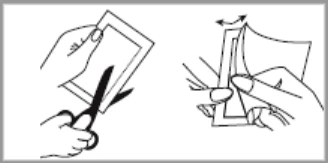
- Grasp both sides of the opened pouch and pull them apart.
- Remove the patch and use it immediately.
- Keep the empty pouch to dispose of the used patch later.
- Use each patch only once.
- Do not remove the patch from the pouch until you are ready to use it.
- Inspect the patch to see if it is damaged.
- Do not use the patch if it has been split, cut, or appears damaged.
- Never divide or cut the patch.
Step 3: Peel and press
- Make sure the patch will be covered by loose-fitting clothing and not constricted under tight or elastic bandages.
- Carefully peel off half of the shiny plastic liner starting from the center of the patch. Try not to touch the adhesive side of the patch.
- Press this adhesive part of the patch onto the skin.
- Remove the other half of the plastic liner and press the entire patch onto the skin with the palm of your hand.
- Maintain pressure for at least 30 seconds, ensuring the patch adheres well, especially along the edges.
Step 4: Disposing of the patch
- Immediately after removing a patch, fold it firmly in half so that the adhesive side sticks to itself.
- Place it back into the original pouch and dispose of the pouch according to the pharmacist's instructions.
- Keep used patches out of sight and reach of children, as even used patches contain some medicine which could be dangerous or even fatal to children.
Step 5: Washing
- After touching the patch, always wash your hands using only running water.
Additional information for using MATRIFEN
Daily activities while using the patch
- The patch is waterproof.
- You may take a shower or bath while wearing the patch, but do not rub it.
- If your doctor allows, you may exercise or engage in sports while wearing the patch.
- You may also swim while wearing the patch, but:
- do not use hot tubs or heated whirlpools
- do not place tight or elastic bandages over the patch
- While wearing the patch, do not expose it to direct sources of heat such as heating pads, electric blankets, hot water bottles, heated water beds, heat lamps, or sunbeds. Avoid prolonged sun exposure, hot baths, or saunas, as this may increase the amount of medicine released from the patch.
How long does it take for the patch to work?
- The first patch may take some time to reach its full effect.
- Your doctor will provide you with additional painkillers for the first day or as long as needed.
- After this period, the patch should help relieve pain continuously, allowing you to stop using other analgesics. However, your doctor may still prescribe additional painkillers from time to time.
How long should you use the patches?
- MATRIFEN patches are indicated for long-term pain. Your doctor will be able to tell you how long they expect you to use the patches.
- If your pain suddenly worsens after applying your last patch, check the patch. If it is not sticking properly or has come off, replace the patch (see also the section If a patch comes off).
- If your pain worsens over time while using these patches, your doctor may try a stronger dose patch or prescribe additional painkillers (or both).
- If increasing the patch dosage does not help, your doctor may decide to stop using the patches.
If you use too many patches or a patch with the wrong dosage
If you have applied too many patches or a patch with the wrong dosage, remove the patch immediately and contact your doctor without delay.
Signs of overdose include: difficulty breathing or shallow breathing, fatigue, extreme drowsiness, inability to think clearly, walk, or speak normally, and feelings of fainting, dizziness, or confusion. An overdose may also cause a brain disorder known as toxic leukoencephalopathy.
If you forget to change the patch
- If you forget, change the patch as soon as you remember, and note the day and time. Then change the next patch after 3 days (72 hours) as usual.
- If you are very late in changing the patch, contact your doctor, as you may need additional painkillers, but do not apply an extra patch.
If the patch comes off
- If a patch comes off before it needs to be changed, apply a new one immediately and note the day and time. Apply it to a new area of skin on:
- trunk or arm
- upper back (in a child).
- Inform your doctor about what happened and leave the new patch in place for 3 days (72 hours) or as directed by your doctor before changing it as usual.
- If patches continue to fall off, speak with your doctor, pharmacist, or nurse.
If you want to stop using the patches
- Do not stop using this medicine abruptly. If you wish to discontinue using this medicine, speak with your doctor first. Your doctor will advise you on how to do this, usually by gradually reducing the dose to minimize any withdrawal effects. See also section 2 "Withdrawal symptoms when stopping MATRIFEN".
- If you stop using the patches, do not restart without first consulting your doctor, as you may need a patch with a different dosage. If you have any further questions about using this medicine, ask your doctor or pharmacist.
4. Possible side effects
Like all medicines, this medicine can cause side effects, although not everyone experiences them.
If you, or someone else, notice that the person using the patch shows any of the following symptoms,
remove the patch immediately and contact a doctor or go to the nearest hospital straight away, as they may
require urgent medical treatment.
- Unusual drowsiness, with breathing slower or shallower than normal. Follow the recommendations given above and keep the person who was using the patch as active as possible, and encourage them to talk. Very rarely, these breathing difficulties can be life-threatening or even fatal, particularly in people who have never previously used strong opioid analgesics (such as MATRIFEN or morphine). (Uncommon, may affect up to 1 in 100 people)
- Sudden redness of the face or throat, severe irritation, redness or blistering of the skin.
These may be signs of a severe allergic reaction. (Frequency cannot be estimated from available clinical data)
- Seizures (fits). (Uncommon, may affect up to 1 in 100 people.)
- Reduced level of consciousness or loss of consciousness (Uncommon, may affect up to 1 in 100 people.)
The following side effects have also been reported.
Very common (may affect more than 1 in 10 people)
- Nausea, vomiting, constipation
- Feeling sleepy (drowsiness)
- Feeling dizzy
- Headache
Common (may affect up to 1 in 10 people)
- Allergic reaction
- Loss of appetite
- Difficulty sleeping
- Depression
- Anxiety or confusion
- Seeing things, hearing sounds or smelling odours that do not exist (hallucinations)
- Tremors or muscle spasms
- Unusual skin sensations, such as tingling or touch-like feelings (paraesthesiae)
- Sensation of spinning (dizziness)
- Rapid or irregular heartbeat (palpitations, tachycardia)
- High blood pressure
- Shortness of breath (dyspnoea)
- Diarrhoea
- Dry mouth
- Stomach ache or indigestion
- Excessive sweating
- Itching, rash or redness of the skin
- Inability to urinate or to empty the bladder completely
- Feeling of tiredness, weakness or general malaise
- Feeling cold
- Swelling of the hands, ankles or feet (peripheral oedema)
Uncommon (may affect up to 1 in 100 people)
- Feeling restless or disoriented
- Feeling extremely happy (euphoria)
- Decreased sensitivity, especially of the skin (hypoesthesia)
- Memory loss
- Blurred vision
- Slow heartbeat (bradycardia) or low blood pressure
- Bluish skin colouration due to low oxygen levels in the blood (cyanosis)
- Loss of intestinal contractions (ileus)
- Itchy skin rash (eczema), allergic reaction or other skin disorders at the site of the patch
- Flu-like illness
- Sensation of body temperature changes
- Fever
- Muscle spasm
- Difficulty swallowing
Rare side effects (may affect up to 1 in 1,000 people)
- Constriction of the pupils (miosis)
- Periodic interruption of breathing (apnoea)
The following adverse effects have also been reported, but their exact frequency is unknown: - Lack of male sex hormones (androgen deficiency)
- Delirium (symptoms may include a combination of agitation, restlessness, disorientation, confusion, fear, seeing or hearing things that are not there, sleep disturbances, nightmares)
- You may become dependent on MATRIFEN (see section 2)
You may notice a rash, redness or mild itching of the skin at the site of the patch. These problems are usually mild in intensity and disappear after you remove the patch. If they do not, or if the patch causes significant skin irritation, inform your doctor.
Repeated use of the patches may make the medicine less effective (you may become accustomed to it or may become more sensitive to pain), or you may become dependent on it.
If you switch to MATRIFEN from a different analgesic or if you suddenly stop using MATRIFEN, you may experience withdrawal symptoms such as vomiting, nausea, diarrhoea, anxiety or chills. Inform your doctor if any of these symptoms occur.
Withdrawal symptoms have also been reported in newborn babies whose mothers used MATRIFEN for a prolonged period during pregnancy.
Reporting of side effects
If you experience any side effects, including those not listed in this leaflet, talk to your doctor, pharmacist or nurse. You can also report side effects directly via the national reporting system at www.aifa.gov.it/content/segnalazioni-reazioni-avverse.
By reporting side effects, you can help provide more information on the safety of this medicine.
5. How to store MATRIFEN
Where to store the patches
Keep all patches (used and unused) out of the sight and reach of children.
Store in the original carton to protect from light. This medicinal product does not require any special
storage temperature conditions.
Store this medicine in a safe and secure place, inaccessible to other people. Accidental or intentional
ingestion of this medicine by other individuals to whom it has not been prescribed may cause serious harm and can be fatal.
How long to keep MATRIFEN
Do not use MATRIFEN after the expiry date stated on the box and on the sachet. The expiry date refers to the last day of that month (after Exp.). Expired patches must be returned to a pharmacy.
How to dispose of used patches or patches no longer needed
A used or unused patch that accidentally adheres to another person, especially a child, can be fatal.
Used patches should be folded firmly in half so that the adhesive side sticks to itself. They should then be safely stored in their original sachet and kept out of sight and reach of others, especially children, until safely disposed of. Ask your pharmacist how to dispose of medicines you no longer use.
Do not dispose of any medicine via wastewater or household waste. These measures will help protect the environment.
6. Contents of the pack and other information
What MATRIFEN contains
The active substance is: fentanyl.
There are 5 different dosage strengths of the patches (see table below)
| Name of the patch | Each patch contains | Each patch delivers a dose of | Size of the area of each patch containing active ingredient |
| Matrifen 12 micrograms/hour transdermal patch | 1.38 mg | 12 micrograms/hour | 4.2 cm2 |
| Matrifen 25 micrograms/hour transdermal patch | 2.75 mg | 25 micrograms/hour | 8.4 cm2 |
| Matrifen 50 micrograms/hour transdermal patch | 5.5 mg | 50 micrograms/hour | 16.8 cm2 |
| Matrifen 75 micrograms/hour transdermal patch | 8.25 mg | 75 micrograms/hour | 25.2 cm2 |
| Matrifen 100 micrograms/hour transdermal patch | 11 mg | 100 micrograms/hour | 33.6 cm2 |
Other components are: dipropylene glycol, hydroxypropylcellulose, dimethicone, silicone adhesive (amino-
resistant), ethylene vinyl acetate (EVA, release membrane), polyethylene terephthalate (PET, covering film),
fluoropolymer-coated polyester (protective film), and printing ink.
Description of the appearance of MATRIFEN and contents of the pack
Matrifen is a transparent, rectangular patch. Each patch is individually packed in a child-resistant, heat-sealed pouch made of paper, aluminium, and polyethylene terephthalate (PET). The transdermal patches feature a coloured print indicating the product name, active substance name, and dosage:
12 micrograms/hour patch: brown print
25 micrograms/hour patch: red print
50 micrograms/hour patch: green print
75 micrograms/hour patch: blue print
100 micrograms/hour patch: grey print
The patches are supplied in packages containing 1, 2, 3, 4, 5, 8, 10, 16, and 20 patches.
Not all pack sizes may be marketed.
Marketing Authorization Holder and Manufacturer
Istituto Gentili S.r.l. - Via San Giuseppe Cottolengo 15, 20143 Milan (MI), Italy
Manufacturer:
LTS Lohmann Therapie-Systeme AG
Lohmannstrasse 2
D-56626 Andernach, Germany