Mannitol S.A.L.F.
Italy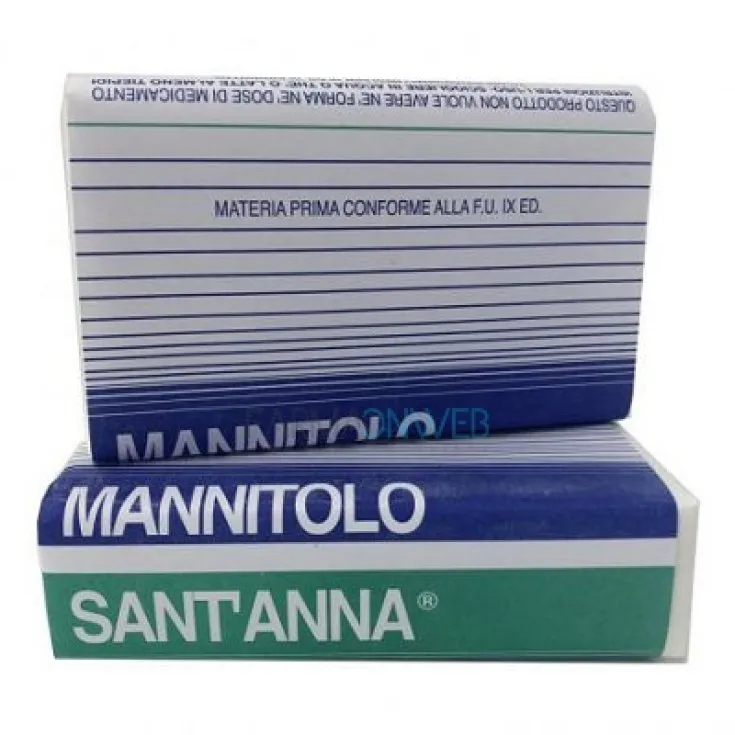
Table of Contents
- Patient Information Leaflet: Information for the User
- MANNITOL S.A.L.F. 5% infusion solution, 10% infusion solution, 18% infusion solution
- 1. What MANNITOLO S.A.L.F. is and what it is used for
- 2. What you should know before using **MANNITOLO S.A.L.F.**
- 3. How to use MANNITOLO S.A.L.F.
- 4. Possible side effects
- 5. How to store MANNITOL S.A.L.F.
- 6. Package contents and other information
- The following information is intended exclusively for doctors or healthcare professionals
Patient Information Leaflet: Information for the User
MANNITOL S.A.L.F. 5% infusion solution, 10% infusion solution, 18% infusion solution
Mannitol
Generic medicine
Please read this leaflet carefully before using this medicine because it contains important information for you.
- Keep this leaflet. You may need to read it again.
- If you have any questions, ask your doctor, pharmacist, or nurse.
- This medicine has been prescribed for you only. Do not give it to others, even if their symptoms are the same as yours, as it could be harmful.
- If you experience any adverse reactions, including those not listed in this leaflet, contact your doctor, pharmacist, or nurse. See section 4.
Contents of this leaflet:
- What MANNITOL S.A.L.F. is and what it is used for
- What you need to know before using MANNITOL S.A.L.F.
- How to use MANNITOL S.A.L.F.
- Possible side effects
- How to store MANNITOL S.A.L.F.
- Contents of the pack and other information
1. What MANNITOLO S.A.L.F. is and what it is used for
MANNITOLO S.A.L.F. contains the active substance mannitol, which belongs to a group of medicines called osmotic diuretics, facilitating the elimination of excess water from the body.
This medicine is indicated for:
- the prevention and treatment of low urine output (oliguric phase) in cases of severe kidney problems (acute renal failure), before it becomes irreversible and established;
- the treatment of elevated pressure (hypertension) in the brain (intracranial, cerebral mass), spinal cord (spinal);
- the reduction of pressure inside the eyes (intraocular);
- increasing the elimination of toxic substances through the kidneys.
2. What you should know before using MANNITOLO S.A.L.F.
Do not use MANNITOLO S.A.L.F.
- if you are allergic to mannitol or to any of the other ingredients of this medicine (listed in section 6);
- if you do not produce urine (anuria) due to severe kidney problems (severe renal impairment);
- if you have increased blood in the lungs (pulmonary congestion) or fluid accumulation around the lungs (pulmonary edema);
- if you have bleeding in the brain (cerebral, intracranial hemorrhage);
- if you suffer from severe fluid loss (dehydration).
Do not use MANNITOLO S.A.L.F. mixed with other medicines.
If you are to receive blood transfusions, medical staff must not administer the medicine through the same catheter used for blood, as this may cause serious problems to red blood cells (pseudoagglutination).
Warnings and precautions
Talk to your doctor, pharmacist, or nurse before using MANNITOLO S.A.L.F.
This medicine should be administered with caution in the following cases:
- if you suffer from severe heart problems (congestive heart failure) or severe kidney problems (severe renal failure). In the latter case, your doctor must assess whether you can use this medicine;
- if you experience swelling due to fluid accumulation (edema), poor elimination of fluids and salts (water and salt retention), increased levels of acidic substances in the blood (acidosis), or severe fluid loss (marked dehydration);
- if you are taking medicines used to treat inflammation and allergies (corticosteroids) or medicines that stimulate the production of steroid hormones (corticotropins);
- if you are scheduled to receive blood transfusions.
During treatment with MANNITOLO S.A.L.F., your doctor should monitor:
- the amount of fluids, salts, and substances in the blood (plasma osmolarity);
- your kidney function to prevent serious kidney damage (irreversible osmotic nephrosis);
- urine output (diuresis) to avoid mannitol accumulation, which could cause serious heart problems (heart failure);
- blood pressure in the brain (cerebral perfusion pressure, above 70 mm Hg).
For athletes: using this medicine without therapeutic need constitutes doping and may result in a positive anti-doping test.
Children
There are no available data on the use of this medicine in children. However, if necessary, the medicine may be administered to children (see section “Use in children”).
Other medicines and MANNITOLO S.A.L.F.
Tell your doctor, pharmacist, or nurse if you are taking, have recently taken, or might take any other medicines.
Use caution and inform your doctor if you are taking the following medicines, as mannitol may increase their toxicity:
- aminoglycoside antibiotics, used to treat infections;
- curare agents, used to relax muscles during surgical procedures;
- digoxin, used for heart problems, especially if you have low potassium levels in the blood (hypokalemia).
Pregnancy and breastfeeding
If you are pregnant, suspect you may be pregnant, planning to become pregnant, or breastfeeding, consult your doctor, pharmacist, or nurse before using this medicine.
This medicine may be administered during pregnancy and breastfeeding only when strictly necessary and under close medical supervision.
Driving and operating machinery
This medicine does not impair the ability to drive vehicles or operate machinery.
3. How to use MANNITOLO S.A.L.F.
This medicine must be administered to you exactly as directed by your doctor,
pharmacist, or nurse. If you have any doubts, consult your doctor, pharmacist, or nurse.
The dose will be determined by your doctor according to your age, body weight, and health condition.
For intravenous use only.
Adults
Treatment of low urine production (oliguric failure) due to severe kidney problems
The usual dose ranges from 50 to 100 g of mannitol, administered at a rate sufficient to achieve a significant urine output (30–50 ml/hour).
Treatment of increased blood pressure in the brain (intracranial pressure) and within the eyes (intraocular pressure)
The recommended dose is 0.5–2 g of mannitol per kg of body weight, given by infusion over 30–60 minutes.
Increased elimination of toxic substances through the kidneys
In this case, the use of 5% mannitol solution is recommended, administered at a rate sufficient to achieve a higher urine output (150–500 ml/hour).
Use in children
Treatment of low urine production due to severe kidney problems
The recommended dose is 0.25–2 g of mannitol per kg of body weight (or 60 g/m² of body surface area), administered by infusion over 2–6 hours.
Treatment of increased blood pressure in the brain and within the eye
The recommended dose is 1–2 g of mannitol per kg of body weight (or 30–60 g/m² of body surface area).
Use in debilitated patients
In debilitated patients, a reduced dose may be required (500 mg/kg).
If you use more MANNITOLO S.A.L.F. than you should
If you accidentally receive an excessive amount of this medicine, stop treatment immediately and contact your doctor or go to the nearest hospital. You will be closely observed for any possible symptoms.
If you forget to use MANNITOLO S.A.L.F.
Do not use a double dose to make up for the forgotten dose.
If you have any questions about the use of this medicine, consult your doctor, pharmacist, or nurse.
4. Possible side effects
Like all medicines, this medicine can cause side effects, although not everyone experiences them.
The side effects that may occur are listed below:
Frequency not known (frequency cannot be estimated from the available data)
- allergic reactions (hypersensitivity), skin irritation (urticaria);
- headache (cephalalgia), seizures, feeling faint;
- blurred vision;
- serious heart problems (congestive heart failure), increased heart rate (tachycardia), chest pain (anginal);
- nausea, vomiting, diarrhoea;
- inability of the bladder to empty (urinary retention);
- low blood pressure (hypotension);
- swelling due to fluid accumulation around the lungs (pulmonary edema);
- changes in levels of water, salts and other substances in the blood (electrolyte and acid-base imbalances), reduced levels of sodium in the blood (hyponatremia), dehydration;
- fever, chills, pain and infection at the infusion site, formation of blood clots in the veins (venous thrombosis), inflammation of the veins (venous phlebitis), also in areas near the infusion site, tissue damage and death (tissue necrosis).
Reporting of side effects
If you experience any side effect, including those not listed in this leaflet, please contact your doctor or pharmacist. You may also report side effects directly via the national reporting system at www.agenziafarmaco.gov.it/it/responsabili. By reporting side effects, you can help provide more information on the safety of this medicine.
5. How to store MANNITOL S.A.L.F.
Keep this medicine out of the sight and reach of children.
Do not use this medicine after the expiry date stated on the packaging after "Exp.". The expiry date refers to the last day of that month.
Store this medicine in the original packaging and in a tightly closed container.
Store at a temperature above 15°C; do not refrigerate or freeze.
Do not dispose of any medicine via wastewater or household waste. Ask your pharmacist how to dispose of medicines no longer in use. This will help protect the environment.
6. Package contents and other information
What MANNITOLO S.A.L.F. 5% infusion solution contains
- The active substance is mannitol. Each liter of solution (1000 ml) contains 50 g of mannitol.
- The other component is water for injections.
What MANNITOLO S.A.L.F. 10% infusion solution contains
- The active substance is mannitol. Each liter of solution (1000 ml) contains 100 g of mannitol.
- The other component is water for injections.
What MANNITOLO S.A.L.F. 18% infusion solution contains
- The active substance is mannitol. Each liter of solution (1000 ml) contains 180 g of mannitol.
- The other component is water for injections.
Description of the appearance of MANNITOLO S.A.L.F. and contents of the pack
MANNITOLO S.A.L.F. 5% sterile, pyrogen-free infusion solution: 500 ml vial.
MANNITOLO S.A.L.F. 10% sterile, pyrogen-free infusion solution: 500 ml vial.
MANNITOLO S.A.L.F. 18% sterile, pyrogen-free infusion solution: 100 ml, 200 ml and 500 ml vials.
Marketing Authorization Holder and Manufacturer
S.A.L.F. S.p.A. Laboratorio Farmacologico – Via Marconi, 2 - Cenate Sotto (BG) - Italy
The following information is intended exclusively for doctors or healthcare professionals
Posology and method of administration
The 5% mannitol solution is isotonic with blood. The 10% and 18% mannitol solutions are hypertonic with blood and must be administered by intravenous infusion with caution and at a controlled infusion rate; these solutions should not be used unless specifically prescribed. The dose depends on the patient's age, weight, and clinical condition.
When concomitant blood transfusions are required, mannitol solutions must not be administered through the same infusion catheter as whole blood due to the possible risk of pseudoagglutination.
Adults
Treatment of oliguric renal failure: after possible correction of plasma volume, administer a test dose of approximately 200 mg/kg body weight by infusion over 3–5 minutes to achieve a diuresis of 30–50 mL/hour for the following 2–3 hours. A second test dose may be administered if the response is inadequate. Usual doses of mannitol range from 50 to 100 g, administered at an infusion rate sufficient to maintain a urinary flow of 30–50 mL/hour.
Reduction of intracranial pressure or intraocular pressure: administer 0.5–2 g of mannitol/kg body weight over 30–60 minutes.
Increased renal excretion of toxic substances: administer Mannitol 5% at an infusion rate sufficient to maintain a urinary flow of 150–500 mL/hour.
Children
In children, the safety and efficacy of mannitol have not been established.
Treatment of oliguric renal failure: administer 0.25–2 g of mannitol/kg body weight or 60 g/m² of body surface area over 2–6 hours.
Reduction of intracranial pressure or intraocular pressure: administer 1–2 g of mannitol/kg body weight or 30–60 g/m² of body surface area. In debilitated patients, 500 mg of mannitol/kg body weight may be sufficient.
Special warnings and precautions for use
The medicinal product must be used with caution in patients with congestive heart failure, severe renal failure, conditions associated with edema and water-salt retention, acidosis, and marked dehydration, as well as in patients receiving corticosteroid and corticotropin therapy.
If administration of the medicinal product is required simultaneously with blood transfusion, add 20 mEq of sodium chloride to each liter of mannitol solution.
In patients with severe renal failure, a first and second test dose should be used to assess patient tolerance.
Use immediately after opening the container. The container is intended for single, uninterrupted administration and any remaining solution must not be used. Shake well before administration.
The solution must be clear, colorless, and free from visible particles. Do not infuse if crystals are present; any precipitate may be dissolved by brief exposure to a temperature of 40–70°C (using water bath heating), then allow to cool before use.
Adopt all usual precautions to maintain sterility before and during intravenous infusion.
Overdose
In case of accidental excessive infusion, treatment should be discontinued and the patient kept under observation for the onset of any signs and symptoms related to the administered drug, providing appropriate symptomatic and supportive measures as necessary.
Incompatibilities
Avoid adding corticotropin hormones, barbiturates, noradrenaline, metaraminol, suxamethonium, etoposide, aztreonam, or filgrastim to the mannitol solution.
Storage
Store in the original packaging and in a tightly closed container. Do not refrigerate or freeze. Store at a temperature not below +15°C.
For further information, consult the Summary of Product Characteristics.