Lutenyl
Italy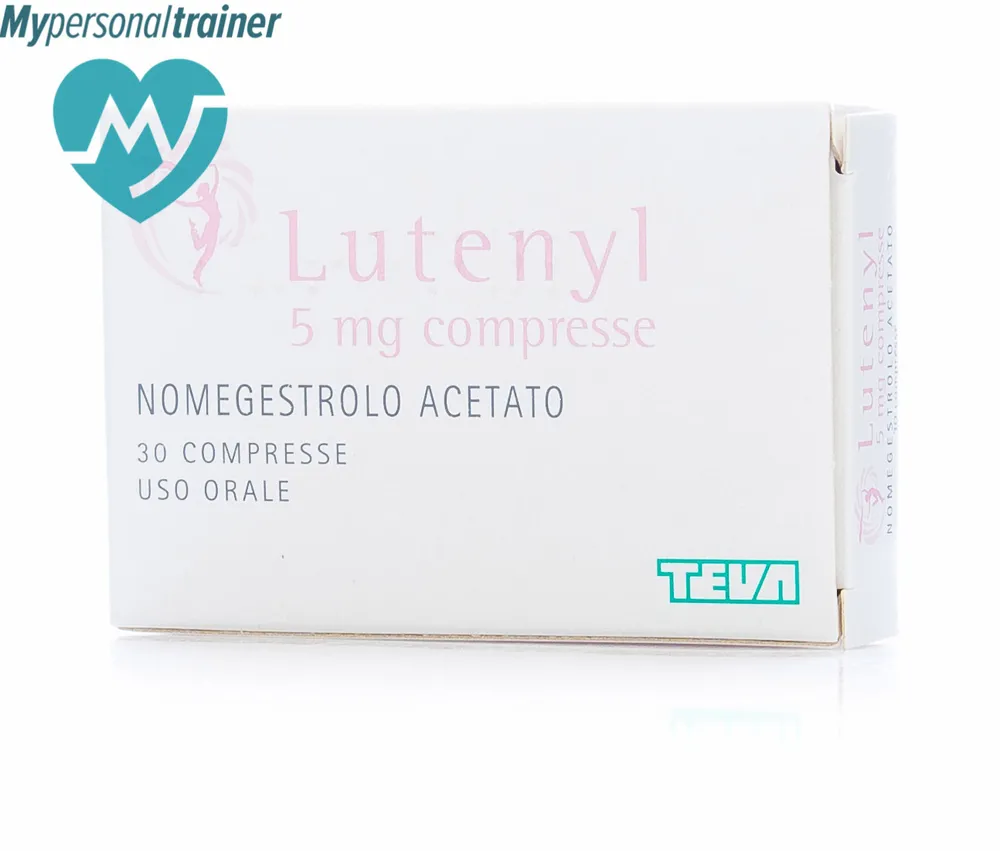
Table of Contents
Package leaflet: Information for the patient
Lutenyl 5 mg tablets
Nomegestrol acetate
Read this entire leaflet carefully before taking this medicine because it contains important information for you.
- Keep this leaflet. You may need to read it again.
- If you have any questions, ask your doctor or pharmacist.
- This medicine has been prescribed for you only. Do not give it to others, even if their symptoms are the same as yours, as it could be harmful.
- If you experience any side effect, including those not listed in this leaflet, contact your doctor or pharmacist. See section 4.
Contents of this leaflet:
- What Lutenyl is and what it is used for
- What you need to know before taking Lutenyl
- How to take Lutenyl
- Possible side effects
- How to store Lutenyl
- Contents of the pack and other information
1. What Lutenyl is and what it is used for
Lutenyl contains nomegestrol acetate, a hormone with progestogenic activity, useful in the treatment of
gynaecological disorders due to an ovarian dysfunction called luteal insufficiency, in which the corpus luteum
(a structure formed in the ovary after ovulation) does not produce enough progesterone (a hormone).
Lutenyl is used as hormone replacement therapy in the following conditions:
- menstrual cycle disorders, especially during the premenopausal period:
- heavy abnormal bleeding between menstrual periods (menometrorrhagia);
- absence of menstruation (secondary amenorrhoea);
- atypical uterine bleeding (functional uterine haemorrhage);
- painful menstruation (dysmenorrhoea);
- premenstrual syndrome.
Lutenyl is also used in the treatment of menopausal disorders (in combination with other hormones
called oestrogens, to achieve a more balanced effect on the uterine lining, known as the endometrium).
2. What you need to know before taking Lutenyl
Do not take Lutenyl
- if you are allergic to the active substance or to any of the other ingredients of this medicine (listed in section 6);
- if you have or suspect you have breast cancer;
- if you currently suffer or have previously suffered from circulatory problems (thrombophlebitis and thromboembolic disorders);
- if you suffer from severe liver function impairment (severe hepatic insufficiency);
- if you are pregnant;
- if you wish to prevent miscarriage;
- if you have meningioma or have been diagnosed with meningioma (a generally benign tumor of the tissue layer between the brain and the skull).
Warnings and precautions
Talk to your doctor or pharmacist before taking Lutenyl.
Before starting or resuming treatment with Lutenyl as hormone replacement therapy, you must undergo a general and gynecological examination (including breast examination and Pap test) to determine with your doctor whether this treatment is suitable for you, to assess your personal predisposition to developing potential complications (especially breast cancer and thrombus formation) during treatment, based on your medical history and family history, and to rule out possible pregnancy. During treatment, you must also undergo periodic specialist check-ups, including breast examinations and/or mammograms, the frequency of which will be determined by your doctor according to your health status.
If you are a postmenopausal woman, hormone replacement therapy may increase the risk of being diagnosed with breast cancer. It is not yet clear whether the increased number of diagnoses of this disease in women undergoing hormone replacement therapy is due to these patients undergoing more frequent medical check-ups (thus increasing the likelihood of early cancer detection), to a real effect of the therapy, or to a combination of both factors.
Available data suggest that the risk of cancer increases with longer duration of treatment and returns to normal levels within 5 years after stopping therapy. Furthermore, breast cancer diagnosed in women undergoing hormone replacement therapy appears to be less invasive than in untreated women. It has been estimated that among women aged 50 to 70 years who use hormone replacement therapy for at least five years, the number of additional diagnosed breast cancer cases, compared to women not using this therapy, ranges between two and twelve per 1,000 women (depending also on the age at which treatment begins and its duration).
Your doctor must evaluate and discuss with you the risks of developing breast cancer versus the benefits of the therapy.
It is important to consider your possible family history of this type of cancer and whether you have or have had the following conditions:
- recurrent bile stasis (recurrent cholestasis) or persistent itching during pregnancy;
- impaired liver, kidney, or heart function;
- breast nodules or breast pain due to benign changes in breast tissue (fibrocystic mastopathy);
- epilepsy;
- asthma;
- a rare inner ear disorder (otospongiosis);
- diabetes mellitus;
- multiple sclerosis;
- rare autoimmune diseases (systemic lupus erythematosus and porphyria).
Your doctor will carefully evaluate the use of Lutenyl also if you have previously suffered from:
- myocardial infarction;
- occlusion of an artery supplying the brain (cerebral infarction);
- high blood pressure (hypertension);
- diabetes;
- vein inflammation (phlebitis);
- impaired liver function (hepatic insufficiency).
This medicine must not be used in cases of uterine bleeding when diagnosis has not yet confirmed and organic causes have not been excluded.
Stop treatment immediately and contact your doctor if you experience visual disturbances with partial or complete loss of vision, double vision (diplopia), or unusually severe headaches.
Your doctor will discontinue therapy if you develop retinal blood vessel lesions, venous thromboembolic or thrombotic events (blood clot formation) affecting peripheral, pulmonary, or cerebral blood vessels.
Meningiomas
The use of nomegestrol acetate has been associated with the development of a generally benign tumor of the tissue layer between the brain and the skull (meningioma). The risk increases especially with prolonged use (several months or years). If you are diagnosed with meningioma, your doctor will discontinue treatment with Lutenyl (see section "Do not take Lutenyl"). If you notice symptoms such as vision changes (e.g., double or blurred vision), hearing loss or ringing in the ears, loss of smell, worsening headaches, memory loss, seizures, or weakness in the arms or legs, inform your doctor immediately.
Other medicines and Lutenyl
Inform your doctor or pharmacist if you are taking, have recently taken, or might take any other medicines.
Pregnancy and breastfeeding
If you are pregnant, suspect you may be pregnant, plan to become pregnant, or are breastfeeding, consult your doctor or pharmacist before taking this medicine.
The use of Lutenyl is contraindicated during pregnancy and is not recommended during breastfeeding due to passage of the substance into breast milk.
Administration of Lutenyl during breastfeeding should only be considered if the expected benefit to the mother outweighs the potential risk to the fetus or infant.
Your doctor will prescribe Lutenyl only if clearly needed.
Driving and using machines
Lutenyl does not affect the ability to drive vehicles or operate machinery.
Lutenyl contains lactose
If your doctor has diagnosed you with an intolerance to certain sugars, contact them before taking this medicine.
3. How to take Lutenyl
Take this medicine exactly as directed by your doctor or pharmacist. If you have
any doubts, consult your doctor or pharmacist.
The recommended dose is 1 tablet daily, from day 16 to day 25 inclusive of the menstrual cycle, unless
otherwise prescribed by your doctor.
Treatment of functional uterine bleeding
1 tablet daily for 10 days.
If you take more Lutenyl than you should
The potential harmful effects of excessive doses of this medicine are unknown.
If you forget to take Lutenyl
Do not take a double dose to make up for the missed tablet.
If you stop taking Lutenyl
If you have any doubts about using this medicine, consult your doctor or pharmacist.
Ask your doctor for advice if you intend to discontinue treatment early.
4. Possible side effects
Like all medicines, this medicine can cause side effects, although not everybody gets them.
Stop taking Lutenyl immediately and see your doctor if you notice any of the following conditions:
- visual disturbances with partial or complete loss of vision, double vision (diplopia)
- unusually severe headache
- signs of a blood clot such as painful swelling and redness in the legs
- breathing difficulties
Other side effects include:
- changes in menstruation, absence of menstrual periods (amenorrhoea), bleeding between periods (intermenstrual haemorrhage);
- worsening of circulatory problems (venous insufficiency) in the lower limbs;
- yellowing of the skin and whites of the eyes caused by bile retention (cholestatic jaundice) and itching;
- in rare cases: weight gain, difficulty sleeping (insomnia), increased hair growth, stomach or intestinal problems (gastrointestinal disturbances).
The use of nomegestrol acetate has been associated with the development of a generally benign tumour of the tissue layer between the brain and the skull (meningioma), particularly at high doses and with prolonged use (from several months to years), with rare frequency (see section 2 "Warnings and precautions").
Reporting of side effects
If you experience any side effect, including those not listed in this leaflet, please inform your doctor or pharmacist. You can also report side effects directly via the national reporting system at https://www.aifa.gov.it/content/segnalazioni-reazioni-avverse.
By reporting side effects, you can help provide more information on the safety of this medicine.
5. How to store Lutenyl
Keep this medicine out of the sight and reach of children.
This medicine has no special storage requirements.
Do not use this medicine after the expiry date stated on the packaging after "Exp.".
The expiry date refers to the last day of that month.
Do not dispose of any medicine via wastewater or household waste. Ask your pharmacist how to dispose of
medicines no longer in use. This will help protect the environment.
6. Package contents and other information
What Lutenyl contains
- The active substance is nomegestrol acetate. Each tablet contains 5 mg of nomegestrol acetate.
- The other components are: monohydrate lactose (see section 2), microcrystalline cellulose, glycerol distearate, anhydrous colloidal silicon dioxide.
Description of the appearance of Lutenyl and pack contents
White, elongated, uncoated tablets with a score line.
Lutenyl is available in packs of 30 tablets in blisters.
Marketing Authorisation Holder and Manufacturer
Marketing Authorisation Holder
Theramex Ireland Limited
Kilmore House, Park Lane, Spencer Dock
Dublin 1, D01 YE64
Ireland
Manufacturers
Laboratoires Macors, Rue des Caillottes, ZI Plaine des Isles, 89000 Auxerre - France
Teva Pharmaceuticals Europe B.V., Swensweg 5, 2031 GA Haarlem - The Netherlands
Delpharm Lille S.a.S., Parc d’Activités Roubaix-Est, 22 rue de Toufflers - CS 50070, 59452 Lys-Lez-Lannoy - France