Lunsumio
Italy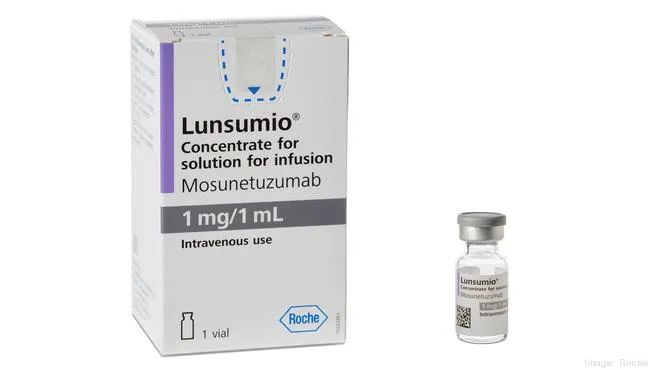
Table of Contents
- Patient Information Leaflet
- Lunsumio 1 mg concentrate for solution for infusion, 30 mg concentrate for solution for infusion
- 1. What Lunsumio is and what it is used for
- 2. What you should know before using Lunsumio
- 3. How Lunsumio is administered
- 4. Possible side effects
- 5. How to store Lunsumio
- 6. Package contents and other information
- The following information is intended exclusively for healthcare professionals:
- Patient Information Leaflet
- Lunsumio 5 mg solution for injection, 45 mg solution for injection
- 1. What Lunsumio is and what it is used for
- 2. What you should know before using Lunsumio
- 3. How Lunsumio is administered
- 4. Possible side effects
- 5. How to store Lunsumio
- 6. Package contents and other information
- The following information is intended exclusively for healthcare professionals:
Patient Information Leaflet
Lunsumio 1 mg concentrate for solution for infusion, 30 mg concentrate for solution for infusion
mosunetuzumab
This medicinal product is subject to additional monitoring. This will allow for the rapid identification of new safety information. You can help by reporting any side effects you experience while receiving this medicine. See the end of section 4 for information on how to report side effects.
Please read this leaflet carefully before using this medicine, as it contains important information for you.
- Keep this leaflet. You may need to read it again.
- If you have any questions, ask your doctor, pharmacist, or nurse.
- If you experience any side effects, including those not listed in this leaflet, contact your doctor, pharmacist, or nurse. See section 4.
Contents of this leaflet
- What Lunsumio is and what it is used for
- What you need to know before receiving Lunsumio
- How Lunsumio is administered
- Possible side effects
- How to store Lunsumio
- Contents of the pack and other information
1. What Lunsumio is and what it is used for
Lunsumio contains the active substance mosunetuzumab, which is a type of antibody. Lunsumio is an anticancer medicine used to treat adults with a blood cancer called follicular lymphoma (FL).
In FL, a type of white blood cells called “B cells” becomes cancerous. The abnormal B cells do not function properly and grow too quickly, replacing the normal B cells in the bone marrow and lymph nodes, which help protect the body from infections.
Lunsumio is given to patients who have already received at least two prior treatments for FL, when the cancer has not responded to treatment or has returned.
How Lunsumio works
The active substance in Lunsumio, mosunetuzumab, is a monoclonal antibody, a type of protein that binds to specific targets in the body. In this case, mosunetuzumab binds to a target substance present on B cells, including cancerous B cells, and to another target found on “T cells”, another type of white blood cells. T cells are another component of the body’s defenses that can destroy cancer cells. By linking the two types of cells together to form a kind of bridge, Lunsumio encourages the T cells to destroy the cancerous B cells, helping to control FL and prevent its spread.
2. What you should know before using Lunsumio
Lunsumio must not be administered to you if:
- you are allergic to mosunetuzumab or to any of the other ingredients of this medicine (listed in section 6).
If you have any doubts, speak with your doctor or nurse before receiving Lunsumio.
Warnings and precautions
If any of the following situations apply to you (or if you have any doubts), please consult your doctor or
nurse before receiving Lunsumio:
- if you have previously had heart, lung, or kidney problems;
- if you currently have an infection or have had a past infection that has been long-lasting or has recurred multiple times;
- if you are due to receive a vaccination or know you might need one soon.
If any of the above situations apply to you (or if you have any doubts), speak to your doctor or
nurse before receiving this medicine.
Immediately inform your doctor if you experience any symptoms during or after treatment with Lunsumio
that are associated with any of the adverse reactions listed below. Additional medical treatment may be
required. The symptoms of each adverse reaction are listed in section 4.
- Cytokine Release Syndrome (CRS) – a condition associated with medicines that stimulate T-cells.
- Before each infusion, you may be given medicines to help reduce the potential adverse reactions related to cytokine release syndrome.
- Immune effector cell-associated neurotoxicity syndrome (ICANS) – a condition associated with effects on the nervous system. Symptoms include confusion, memory, speech or judgment problems, disorientation, and confusion often accompanied by hallucinations (seeing, hearing, or feeling things that are not real), and difficulty concentrating.
- Hemophagocytic lymphohistiocytosis (HLH) – a condition in which the immune system produces too many infection-fighting cells called histiocytes and lymphocytes. Signs and symptoms may overlap with CRS; your doctor will check for this condition if CRS does not respond to treatment or lasts longer than expected.
- Tumour lysis syndrome – some people may develop abnormalities in blood levels of certain minerals due to rapid destruction of tumour cells during treatment.
- Your doctor or nurse will perform blood tests to rule out this condition. You must be well hydrated before each infusion, and you may be given medicines to help reduce elevated uric acid levels. This may help reduce the potential adverse reactions associated with tumour lysis syndrome.
- Tumour flare reaction – when the tumour is destroyed, it may react and show apparent worsening. This condition is known as a “tumour flare” reaction.
- Infections – you may develop signs of infection, which can vary depending on where in the body the infection occurs.
Children and adolescents
This medicine must not be used in children or adolescents under 18 years of age, as there is no information
available on its use in this age group.
Other medicines and Lunsumio
Inform your doctor if you are taking, have recently taken, or might take any other medicines, including those
not requiring a prescription and herbal medicines.
Pregnancy and breastfeeding
Before and during treatment, it is important that you inform your doctor if you are pregnant, suspect you
might be pregnant, or are planning a pregnancy. Lunsumio may affect the health of the unborn child.
- Do not use Lunsumio during pregnancy unless, after discussion with your doctor, it has been determined that the benefits of treatment outweigh any risk to the unborn child.
Contraception
Women of childbearing potential must use effective contraceptive methods during treatment and for
3 months after receiving the last dose of Lunsumio.
- Discuss with your doctor or nurse which contraceptive methods are most suitable for you.
Breastfeeding
Do not breastfeed during treatment with Lunsumio and for at least 3 months after receiving the last dose,
as it is unknown whether Lunsumio passes into breast milk and could therefore affect the infant.
Driving and using machines
Lunsumio may impair your ability to drive vehicles, ride a bicycle, or operate tools or machinery. Due to
the potential symptoms of ICANS, you should be cautious when driving, riding a bicycle, or using heavy or
potentially dangerous machinery. If you currently experience such symptoms, avoid these activities and
contact your doctor, nurse, or pharmacist. See section 4 for more information about adverse reactions.
Lunsumio contains polysorbate
This medicine contains the following amount of polysorbate 20 equivalent to 0.6 mg/mL:
- Lunsumio 1 mg: each vial contains 0.6 mg of polysorbate 20
- Lunsumio 30 mg: each vial contains 18 mg of polysorbate 20
Polysorbate 20 may cause allergic reactions. Inform your doctor if you have known allergies.
3. How Lunsumio is administered
Lunsumio is administered under the supervision of a physician experienced in the administration of this type of treatment. Follow the treatment schedule provided by your doctor. If you have any doubts, consult your doctor.
How Lunsumio is administered
The medicine is administered intravenously by infusion (intravenous infusion):
- over 4 hours during the first cycle. Each cycle lasts 21 days, and during the first cycle, the 4-hour infusion will be administered on day 1, day 8, and day 15;
- if side effects are not too severe, the dose may be administered over 2 hours during subsequent cycles.
Medicines administered before treatment with Lunsumio
Within 30–60 minutes before receiving Lunsumio, you may be given medicines to help prevent infusion reactions and fever. These may include:
- corticosteroids, such as dexamethasone or methylprednisolone
- paracetamol
- an antihistamine, such as diphenhydramine.
Dosage of Lunsumio
Lunsumio is usually administered in 21-day cycles. The recommended duration of treatment is at least 8 cycles. However, depending on side effects and how the disease responds to treatment, you may receive up to a maximum of 17 treatment cycles.
In cycle 1, you will receive three doses of Lunsumio over the 21 days:
- Day 1: 1 mg
- Day 8: 2 mg
- Day 15: 60 mg
In cycle 2, you will receive only one dose:
- Day 1: 60 mg
From cycle 3 to cycle 17, you will receive only one dose:
- Day 1: 30 mg
If you miss a dose of Lunsumio
If you miss an appointment for administration of the medicine, schedule another one as soon as possible. To ensure this treatment is fully effective, it is extremely important not to miss any dose.
If you stop treatment with Lunsumio
Do not stop treatment with Lunsumio without first discussing it with your doctor. Stopping treatment may worsen your condition.
If you have any questions about the use of this medicine, consult your doctor or nurse.
4. Possible side effects
Like all medicines, this medicine can cause side effects, although not everybody gets them.
Serious side effects
Tell your doctor straight away if you notice any of the symptoms listed below.
You may experience only one or some of these symptoms.
Cytokine release syndrome
Symptoms may include:
- fever (38 °C or higher)
- chills or shaking
- cold, pale and clammy skin
- difficulty breathing
- dizziness or lightheadedness
- fast or irregular heartbeat
- confusion
- extreme tiredness or weakness
- fainting
- blurred vision
- headache
Haemophagocytic lymphohistiocytosis
Symptoms may include:
- fever
- enlarged liver and/or spleen
- rash
- swollen lymph nodes
- easy bruising
- kidney abnormalities
- breathing problems
- heart problems
Tumour lysis syndrome
Symptoms may include:
- fever
- chills
- nausea and vomiting
- confusion
- shortness of breath
- seizures (convulsions)
- irregular heartbeat
- cloudy or dark-coloured urine
- unusual tiredness
- muscle or joint pain
Detected in blood laboratory test results:
- increased levels of potassium, phosphate or uric acid, which could cause kidney problems (part of tumour lysis syndrome)
Exacerbation of tumour-related symptoms
Symptoms may include:
- painful swollen lymph nodes
- chest pain
- cough or shortness of breath
- pain at the tumour site
Infections
Symptoms may include:
- fever
- cough
- chest pain
- tiredness
- shortness of breath
- painful rash
- sore throat
- burning sensation when urinating
- feeling weak or generally unwell
Immune effector cell-associated neurotoxicity syndrome (ICANS)
Symptoms may appear days or weeks after receiving the infusion and may initially be subtle. Symptoms may include:
- confusion/disorientation
- fatigue
- altered mental status
- reduced level of consciousness
- memory impairment
If you experience any of these symptoms after treatment with Lunsumio, inform your doctor immediately. Medical treatment may be required.
Other side effects
Very common: may affect more than 1 in 10 people
- rash
- itching
- dry skin
- diarrhoea
- headache
- fever
- chills
- cytokine release syndrome
Detected in blood laboratory test results:
- low levels of a type of white blood cells (neutropenia)
- low red blood cell count, which may cause tiredness and shortness of breath
- low platelet count, which may make you more prone to bleeding or bruising (thrombocytopenia)
- low levels of phosphate, potassium or magnesium
- high levels of alanine aminotransferase in the blood
Common: may affect up to 1 in 10 people
- lung infection
- upper airway infection (affecting nose, throat and sinuses)
- urinary tract infection
- fever due to low levels of neutrophils (a type of white blood cell)
- exacerbation of tumour-related symptoms
- a serious immune reaction affecting the nervous system (immune effector cell-associated neurotoxicity syndrome)
Detected in blood laboratory test results:
- increased liver enzyme levels, which may indicate liver problems
Uncommon: may affect up to 1 in 100 people
- rapid destruction of tumour cells leading to chemical changes in the blood and organ damage, including to kidneys, heart and liver (tumour lysis syndrome)
- a condition in which the immune system produces too many infection-fighting cells called histiocytes and lymphocytes (haemophagocytic lymphohistiocytosis)
Reporting of side effects
If you get any side effects, including those not listed in this leaflet, talk to your doctor, pharmacist or nurse. You can also report side effects directly through the national reporting system listed in Annex V. By reporting side effects, you can help provide more information on the safety of this medicine.
5. How to store Lunsumio
Lunsumio will be stored by healthcare professionals at the hospital or clinic. The following are the storage instructions they must follow:
- Keep this medicine out of the sight and reach of children.
- Do not use this medicine after the expiry date stated on the packaging and vial after "Exp." The expiry date refers to the last day of that month.
- Store in a refrigerator (2 °C - 8 °C).
- Do not freeze.
- The diluted solution can be stored for up to 24 hours at a temperature of 2 °C - 8 °C and for up to 24 hours at a temperature of 9 °C - 30 °C.
- Keep the vial in the outer packaging to protect the medicine from light.
Healthcare professionals will dispose of unused medicine appropriately. This will help protect the environment.
6. Package contents and other information
What Lunsumio contains
- The active substance is mosunetuzumab.
- Lunsumio 1 mg: each vial contains 1 milligram (mg) of mosunetuzumab in 1 mL at a concentration of 1 mg/mL.
- Lunsumio 30 mg: each vial contains 30 milligrams (mg) of mosunetuzumab in 30 mL at a concentration of 1 mg/mL.
- The other components are L-histidine, L-methionine, acetic acid, sucrose, polysorbate 20 (E432) and water for injections (see section 2 “Lunsumio contains polysorbate”).
Description of the appearance of Lunsumio and contents of the pack
Lunsumio is a concentrate for infusion solution (sterile concentrate). It is a clear, colourless liquid supplied in a glass vial.
Each pack of Lunsumio contains one vial.
Marketing Authorisation Holder
Roche Registration GmbH
Emil-Barell-Strasse 1
79639 Grenzach-Wyhlen
Germany
Manufacturer
Roche Pharma AG
Emil-Barell-Strasse 1
79639 Grenzach-Wyhlen
Germany
For further information about this medicinal product, please contact the local representative of the Marketing Authorisation Holder:
België/Belgique/Belgien Latvija
Luxembourg/Luxemburg Roche Latvija SIA
N.V. Roche S.A. Tel: +371 - 6 7039831
België/Belgique/Belgien
Tél/Tel: +32 (0) 2 525 82 11
България
Рош България ЕООД Lietuva
Тел: +359 2 474 5444 UAB “Roche Lietuva”
Tel: +370 5 2546799
Česká republika Magyarország
Roche s. r. o. Roche (Magyarország) Kft.
Tel: +420 - 2 20382111 Tel: +36 1 279 4500
Danmark Nederland
Roche Pharmaceuticals A/S Roche Nederland B.V.
Tlf.: +45 - 36 39 99 99 Tel: +31 (0) 348 438050
Deutschland Norge
Roche Pharma AG Roche Norge AS
Tel: +49 (0) 7624 140 Tlf: +47 - 22 78 90 00
Eesti Österreich
Roche Eesti OÜ Roche Austria GmbH
Tel: + 372 - 6 177 380 Tel: +43 (0) 1 27739
Ελλάδα, Κύπρος Polska
Roche (Hellas) A.E. Roche Polska Sp.z o.o.
Ελλάδα Tel: +48 - 22 345 18 88
Τηλ: +30 210 61 66 100
España Portugal
Roche Farma S.A. Roche Farmacêutica Química, Lda
Tel: +34 - 91 324 81 00 Tel: +351 - 21 425 70 00
France România
Roche Roche România S.R.L.
Tél: +33 (0) 1 47 61 40 00 Tel: +40 21 206 47 01
Hrvatska Slovenija
Roche d.o.o. Roche farmacevtska družba d.o.o.
Tel: +385 1 4722 333 Tel: +386 - 1 360 26 00
Ireland, Malta Slovenská republika
Roche Products (Ireland) Ltd. Roche Slovensko, s.r.o.
Ireland, L-Irlanda Tel: +421 - 2 52638201
Tel: +353 (0) 1 469 0700
Ísland Suomi/Finland
Roche Pharmaceuticals A/S Roche Oy
c/o Icepharma hf Puh/Tel: +358 (0) 10 554 500
Sími: +354 540 8000
Italia Sverige
Roche S.p.A. Roche AB
Tel: +39 - 039 2471 Tel: +46 (0) 8 726 1200
This medicinal product has been granted a marketing authorisation “under exceptional circumstances”. This means that further data on this medicinal product are required.
The European Medicines Agency will review new information on this medicinal product at least annually, and this package leaflet will be updated as necessary.
Further sources of information
More detailed information on this medicinal product is available on the website of the European Medicines Agency: https://www.ema.europa.eu/ .
The following information is intended exclusively for healthcare professionals:
Proper procedures for handling and disposal of
antineoplastic medicinal products should be considered.
Instructions for dilution
- Based on the table below, withdraw and discard from the infusion bag a volume of sodium chloride 9 mg/mL (0.9%) solution for injection or sodium chloride 4.5 mg/mL (0.45%) solution for injection equal to the volume of Lunsumio required for the patient's dose.
- Withdraw the required volume of Lunsumio from the vial using a sterile syringe and dilute it into the infusion bag. Any residue remaining in the vial must be discarded.
Table 1 Dilution of Lunsumio
| Treatment Day | Lunsumio Dose | Volume of Lunsumio in sodium chloride 9 mg/mL (0.9%) or 4.5 mg/mL (0.45%) injectable solution | Infusion Bag Size | |
| Cycle 1 | Day 1 | 1 mg | 1 mL | 50 mL or 100 mL |
| Day 8 | 2 mg | 2 mL | 50 mL or 100 mL | |
| Day 15 | 60 mg | 60 mL | 100 mL or 250 mL | |
| Cycle 2 | Day 1 | 60 mg | 60 mL | 100 mL or 250 mL |
| Cycles 3 and onwards | Day 1 | 30 mg | 30 mL | 100 mL or 250 mL |
- Gently mix the contents of the infusion bag by slowly inverting it. Do not shake.
- Inspect the infusion bag for the presence of particles. If visible particles are present, discard the bag.
- Apply the removable adhesive label contained in the package leaflet to the infusion bag.
Diluted solution
The product must be used immediately. Otherwise, the storage times and conditions during use are the responsibility of the user and normally should not exceed 24 hours at a temperature between 2 °C and 8 °C, unless the dilution was carried out under controlled and validated aseptic conditions.
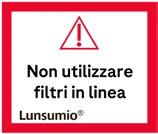
Removable adhesive label
Peel off and apply this label to the infusion bag
Patient Information Leaflet
Lunsumio 5 mg solution for injection, 45 mg solution for injection
mosunetuzumab
This medicinal product is subject to additional monitoring. This will allow for rapid identification of new safety information. You can help by reporting any side effects you experience while taking this medicinal product. See the end of section 4 for information on how to report side effects.
Please read this leaflet carefully before using this medicine because it contains important information for you.
- Keep this leaflet. You may need to read it again.
- If you have any questions, ask your doctor, pharmacist, or nurse.
- If you experience any side effects, including those not listed in this leaflet, contact your doctor, pharmacist, or nurse. See section 4.
Contents of this leaflet
- What Lunsumio is and what it is used for
- What you need to know before using Lunsumio
- How Lunsumio is administered
- Possible side effects
- How to store Lunsumio
- Contents of the pack and other information
1. What Lunsumio is and what it is used for
Lunsumio contains the active substance mosunetuzumab, which is a type of antibody. Lunsumio is an anticancer medicine used to treat adults with a blood cancer called follicular lymphoma (FL).
In FL, a type of white blood cells called “B-cells” becomes cancerous. The abnormal B-cells do not function properly and grow too quickly, replacing normal B-cells in the bone marrow and lymph nodes, which help protect the body from infections.
Lunsumio is given to patients who have already received at least two prior treatments for FL, when the cancer has not responded to treatment or has returned.
How Lunsumio works
The active substance in Lunsumio, mosunetuzumab, is a monoclonal antibody, a type of protein that binds to specific targets in the body. In this case, mosunetuzumab binds to a target substance found on B-cells, including cancerous B-cells, and to another target present on “T-cells”, another type of white blood cells. T-cells are another component of the body's defenses that can destroy cancer cells. By linking the two cell types together to form a bridge, Lunsumio encourages T-cells to destroy the cancerous B-cells, helping to control FL and prevent its spread.
2. What you should know before using Lunsumio
Do not receive Lunsumio
- if you are allergic to mosunetuzumab or to any of the other ingredients of this medicine (listed in section 6).
If you have any doubts, speak with your doctor or nurse before receiving Lunsumio.
Warnings and precautions
If any of the following situations apply to you (or if you have any doubts), please consult your doctor or
nurse before receiving Lunsumio:
- if you have previously had heart, lung, or kidney problems;
- if you currently have an infection or have had a past infection that was long-term or recurred multiple times;
- if you are due to receive a vaccination or know you may need one soon.
If any of the above situations apply to you (or if you have any doubts), consult your doctor or
nurse before receiving this medicine.
Inform your doctor immediately if you experience any symptoms during or after treatment with Lunsumio
that are associated with any of the adverse reactions listed below. Additional medical treatment may be
required. Symptoms for each adverse reaction are listed in section 4.
- Cytokine Release Syndrome (CRS) – a condition associated with medicines that stimulate T-cells.
- Before each infusion, you may be given medicines to help reduce the potential adverse reactions associated with Cytokine Release Syndrome.
- Immune effector cell-associated neurotoxicity syndrome (ICANS) – a condition affecting the nervous system. Symptoms include confusion, memory, language or judgment problems, disorientation and confusion often accompanied by hallucinations (seeing, hearing or feeling things that do not exist), and difficulty concentrating.
- Hemophagocytic lymphohistiocytosis – a condition in which the immune system produces excessive numbers of infection-fighting cells called histiocytes and lymphocytes. Signs and symptoms may overlap with CRS; your doctor will check for this condition if CRS does not respond to treatment or lasts longer than expected.
- Tumour lysis syndrome – some people may develop abnormalities in levels of certain minerals in the blood, caused by the rapid destruction of tumour cells during treatment.
- Your doctor or nurse will perform blood tests to rule out this condition. You must be well hydrated before each infusion, and you may be given medicines to help reduce elevated uric acid levels. This may help reduce potential adverse reactions associated with tumour lysis syndrome.
- Tumour flare reaction – when the tumour is destroyed, it may react and show apparent worsening. This condition is known as a "tumour flare" reaction.
- Infections – you may develop signs of infection, which can vary depending on where in the body the infection occurs.
Children and adolescents
This medicine must not be used in children or adolescents under 18 years of age, as there is no information available on its use in this age group.
Other medicines and Lunsumio
Inform your doctor if you are taking, have recently taken, or might take any other medicines, including those not requiring a prescription and herbal medicines.
Pregnancy and breastfeeding
Before and during treatment, it is important that you inform your doctor if you are pregnant, suspect you may be pregnant, or are planning a pregnancy. Lunsumio may affect the unborn child's health.
- Do not use Lunsumio during pregnancy unless, after discussion with your doctor, it has been determined that the benefits of treatment outweigh any risk to the unborn child.
Contraception
Women of childbearing potential must use effective contraceptive methods during treatment and for
3 months after the last dose of Lunsumio.
- Discuss with your doctor or nurse which contraceptive methods are most suitable.
Breastfeeding
Do not breastfeed during treatment with Lunsumio and for at least 3 months after the last dose, as it is unknown whether Lunsumio passes into breast milk and could therefore affect the infant.
Driving and using machines
Lunsumio may impair your ability to drive vehicles, ride a bicycle, or operate tools or machinery. Due to the potential symptoms of ICANS, you must be cautious when driving, riding a bicycle, or operating heavy or potentially dangerous machinery. If you currently experience such symptoms, avoid these activities and contact your doctor, nurse, or pharmacist. See section 4 for more information on adverse reactions.
Lunsumio contains polysorbate
This medicine contains the following amount of polysorbate 20 equivalent to 0.6 mg/mL:
- Lunsumio 5 mg: each vial contains 0.3 mg of polysorbate 20
- Lunsumio 45 mg: each vial contains 0.6 mg of polysorbate 20
Polysorbate 20 may cause allergic reactions. Inform your doctor if you have known allergies.
3. How Lunsumio is administered
Lunsumio is administered under the supervision of a physician experienced in the administration of this type of treatment. Follow the treatment schedule outlined by your doctor. If you have any doubts, consult your doctor.
How Lunsumio is administered
Lunsumio injectable solution (5 mg and 45 mg)
It is administered by subcutaneous injection.
Medicines administered before treatment with Lunsumio
Within 30–60 minutes before receiving Lunsumio, you may be given medicines to help prevent infusion reactions and fever. These may include:
- corticosteroids, such as dexamethasone or methylprednisolone
- paracetamol
- an antihistamine, such as diphenhydramine.
Dose of Lunsumio administered
In cycle 1, you will receive three doses of Lunsumio over 21 days:
- Day 1: 5 mg
- Day 8: 45 mg
- Day 15: 45 mg
From cycle 2 to cycle 17, you will receive only one dose:
- Day 1: 45 mg
If you miss a dose of Lunsumio
If you miss an appointment for administration of the medicine, schedule another one as soon as possible. To ensure this treatment is fully effective, it is extremely important not to miss any dose.
If you stop treatment with Lunsumio
Do not stop treatment with Lunsumio without first discussing it with your doctor. Stopping treatment may worsen your condition.
If you have any questions about the use of this medicine, consult your doctor or nurse.
4. Possible side effects
Like all medicines, this medicine can cause side effects, although not everybody gets them.
Serious side effects
Tell your doctor immediately if you notice any of the symptoms listed below. You may experience only one or some of these symptoms.
Cytokine release syndrome
Symptoms may include:
- fever (38 °C or higher)
- chills or tremors
- cold, pale and clammy skin
- difficulty breathing
- dizziness or feeling faint
- fast or irregular heartbeat
- confusion
- extreme tiredness or weakness
- fainting
- blurred vision
- headache
Hemophagocytic lymphohistiocytosis
Symptoms may include:
- fever
- enlarged liver and/or spleen
- rash
- swollen lymph nodes
- easy bruising
- kidney abnormalities
- breathing problems
- heart problems
Tumour lysis syndrome
Symptoms may include:
- fever
- chills
- nausea and vomiting
- confusion
- shortness of breath
- seizures (convulsions)
- irregular heartbeat
- cloudy or dark-coloured urine
- unusual tiredness
- muscle or joint pain
Detected in blood laboratory tests:
- increased levels of potassium, phosphate, or uric acid, which could cause kidney problems (part of tumour lysis syndrome)
Exacerbation of tumour-related symptoms
Symptoms may include:
- painful swollen lymph nodes
- chest pain
- cough or shortness of breath
- pain at the tumour site
Infections
Symptoms may include:
- fever
- cough
- chest pain
- tiredness
- shortness of breath
- painful rash
- sore throat
- burning sensation when urinating
- feeling weak or generally unwell
Immune effector cell-associated neurotoxicity syndrome (ICANS)
Symptoms may appear days or weeks after receiving your dose and may initially be subtle. Symptoms may include:
- confusion/disorientation
- tiredness
- altered mental state
- reduced level of consciousness
- memory impairment
If you experience any of these symptoms after treatment with Lunsumio, inform your doctor immediately. Medical treatment may be required.
Other side effects
Very common: may affect more than 1 in 10 people
- rash
- itching
- dry skin
- diarrhoea
- headache
- fever
- chills
- cytokine release syndrome
- injection site reaction (only if administered under the skin)
Detected in blood laboratory tests:
- low levels of a type of white blood cells (neutropenia)
- low red blood cell count, which may cause tiredness and shortness of breath
- low platelet count, which may make you more prone to bleeding or bruising (thrombocytopenia)
- low levels of phosphate, potassium or magnesium
- high levels of alanine aminotransferase in the blood
Common: may affect up to 1 in 10 people
- lung infection
- upper respiratory tract infection (affecting nose, throat and sinuses)
- urinary tract infection
- fever due to low neutrophil levels (a type of white blood cell)
- exacerbation of tumour-related symptoms
- a serious immune reaction affecting the nervous system (immune effector cell-associated neurotoxicity syndrome)
Detected in blood laboratory tests:
- increased liver enzyme levels, which may indicate liver problems
Uncommon: may affect up to 1 in 100 people
- rapid destruction of tumour cells leading to chemical changes in the blood and organ damage, including to kidneys, heart and liver (tumour lysis syndrome)
- a condition in which the immune system produces too many infection-fighting cells called histiocytes and lymphocytes (hemophagocytic lymphohistiocytosis)
Reporting of side effects
If you get any side effects, including ones not listed in this leaflet, talk to your doctor, pharmacist, or nurse. You can also report side effects directly through the national reporting system listed in Annex V. By reporting side effects, you can help provide more information on the safety of this medicine.
5. How to store Lunsumio
Lunsumio will be stored by healthcare professionals at the hospital or clinic. The information they must consider for storage is as follows.
- Keep this medicine out of the sight and reach of children.
- Do not use this medicine after the expiry date stated on the packaging and vial after Exp./EXP. The expiry date refers to the last day of that month.
- Store in a refrigerator (2 °C - 8 °C).
- Do not freeze.
- The syringe prepared for subcutaneous injection should be administered immediately. If not used immediately, the syringe with cap must be stored for a maximum of 28 days at a temperature of 2 °C - 8 °C and for 24 hours at a temperature of 9 °C - 30 °C.
- Keep the vial in the outer packaging to protect the medicine from light.
Healthcare professionals will dispose of unused medicine appropriately. This will help protect the environment.
6. Package contents and other information
What Lunsumio contains
- The active substance is mosunetuzumab.
- Lunsumio 5 mg: each vial contains 5 milligrams (mg) of mosunetuzumab in 0.5 mL at a concentration of 10 mg/mL.
- Lunsumio 45 mg: each vial contains 45 milligrams (mg) of mosunetuzumab in 1 mL at a concentration of 45 mg/mL.
- The other components are L-histidine, L-methionine, acetic acid, sucrose, polysorbate 20 (E432), water for injections (see section 2 “Lunsumio contains polysorbate”).
Description of the appearance of Lunsumio and contents of the pack
Lunsumio is an injectable solution (sterile solution). It is a clear liquid, colourless to slightly yellowish-brown, supplied in a glass vial.
Each Lunsumio pack contains one vial.
Marketing Authorisation Holder
Roche Registration GmbH
Emil-Barell-Strasse 1
79639 Grenzach-Wyhlen
Germany
Manufacturer
Roche Pharma AG
Emil-Barell-Strasse 1
79639 Grenzach-Wyhlen
Germany
For further information about this medicinal product, please contact the local representative of the Marketing Authorisation Holder:
België/Belgique/Belgien
The following information is intended exclusively for healthcare professionals:
Proper procedures for handling and disposal of antineoplastic medicinal products must be considered.
Instructions for Preparation
- Remove one vial of Lunsumio 5 mg or 45 mg from the refrigerator. DO NOT shake the vial.
- Using a syringe, withdraw the required volume of Lunsumio solution from the vial.
- Label the syringe with the product name, dose (5 mg or 45 mg), date, and time.
- Apply the removable adhesive label provided in the package leaflet to the syringe.
- Dispose of the vial and any unused portions of Lunsumio according to local requirements.
Prepared Syringe
Once transferred from the vial to the syringe, the injectable solution of Lunsumio must be administered immediately, as the medicinal product does not contain antimicrobial preservatives. If not used immediately, storage times and conditions during use are the responsibility of the user and should normally not exceed 24 hours at a temperature of 2 °C to 8 °C, unless the preparation was carried out under controlled and validated aseptic conditions.
If the injectable solution of Lunsumio is transferred from the vial to the syringe under controlled and validated aseptic conditions, the medicinal product in the syringe with cap can be stored for up to 28 days in the refrigerator at 2 °C - 8 °C protected from light, or for up to 24 hours at 9 °C - 30 °C under ambient light.
If using the 5 mg/0.5 mL presentation
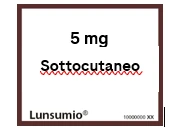
Removable label
Detach and apply this label to the syringe
If using the 45 mg/mL presentation
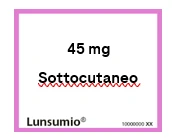
Removable label
Detach and apply this label to the syringe