Lorviqua
Italy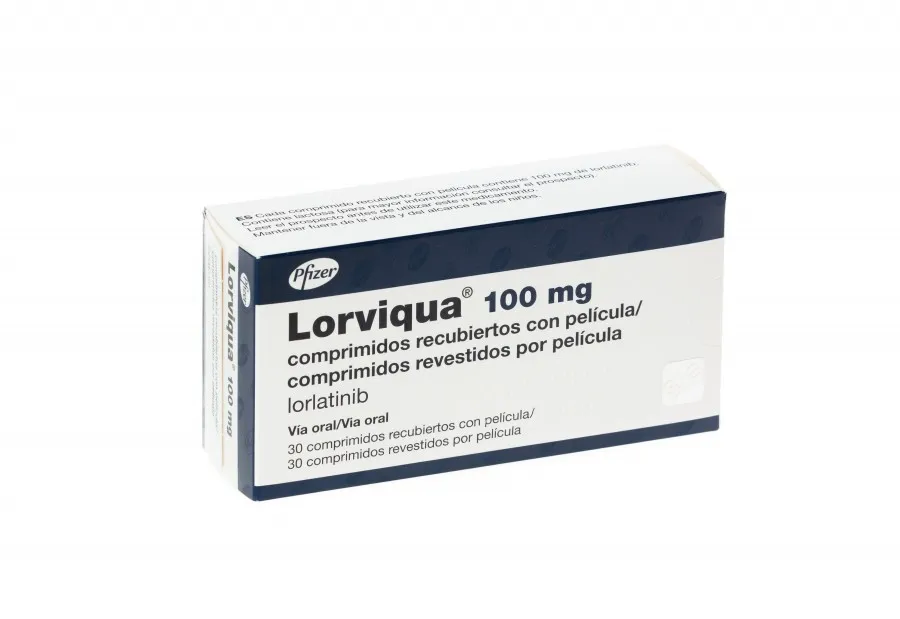
Table of Contents
- Package leaflet: Information for the user
- Lorviqua 25 mg film-coated tablets, 100 mg film-coated tablets
- 1. What Lorviqua is and what it is used for
- 2. What you should know before taking Lorviqua
- 3. How to take Lorviqua
- 4. Possible side effects
- 5. How to store Lorviqua
- 6. Package contents and other information
Package leaflet: Information for the user
Lorviqua 25 mg film-coated tablets, 100 mg film-coated tablets
lorlatinib
Please read all of this leaflet carefully before you start taking this medicine, as it contains
important information for you.
- Keep this leaflet. You may need to read it again.
- If you have any questions, ask your doctor, pharmacist, or nurse.
- This medicine has been prescribed for you only. Do not give it to others, even if they have the same symptoms as you, because it may be harmful.
- If you experience any side effects, including those not listed in this leaflet, inform your doctor, pharmacist, or nurse. See section 4.
Contents of this leaflet
- What Lorviqua is and what it is used for
- What you need to know before taking Lorviqua
- How to take Lorviqua
- Possible side effects
- How to store Lorviqua
- Contents of the pack and other information
1. What Lorviqua is and what it is used for
What Lorviqua is
Lorviqua contains the active substance lorlatinib, a medicine used to treat adults with advanced
stages of a type of lung cancer called non-small cell lung cancer (NSCLC). Lorviqua belongs to a
group of medicines that inhibit an enzyme called anaplastic lymphoma kinase (ALK). Lorviqua is
administered only to patients who have an alteration in the ALK gene; see How Lorviqua works below.
What Lorviqua is used for
Lorviqua is used to treat adults with a type of lung tumour called non-small cell lung cancer (NSCLC).
It is used if the lung tumour:
- is ALK-positive, meaning the tumour cells have a defect in a gene that produces an enzyme called ALK (anaplastic lymphoma kinase); see How Lorviqua works below, and
- is in an advanced stage. Lorviqua may be prescribed to you if:
- you have not previously been treated with an ALK inhibitor; or
- you have previously been treated with a medicine called alectinib or ceritinib, which are ALK inhibitors; or
- you have previously been treated with crizotinib followed by another ALK inhibitor.
How Lorviqua works
Lorviqua inhibits a type of enzyme called tyrosine kinase and activates the death of tumour cells in
patients with alterations in the ALK genes. Lorviqua is administered only to patients whose disease is
due to an alteration in the ALK tyrosine kinase gene.
If you have any questions about how Lorviqua works or why this medicine has been prescribed for you,
please consult your doctor.
2. What you should know before taking Lorviqua
Do not take Lorviqua
- If you are allergic to lorlatinib or to any of the other ingredients of this medicine (listed in section 6).
- If you are taking any of the following medicines: rifampicin, used to treat tuberculosis; carbamazepine, phenytoin (used to treat epilepsy); enzalutamide (used to treat prostate cancer); mitotane (used to treat adrenal gland cancer); medicines containing St. John’s wort (Hypericum perforatum, a herbal preparation).
Warnings and precautions
Talk to your doctor before taking Lorviqua:
- If you have high levels of cholesterol or triglycerides in your blood.
- If you have high levels of enzymes known as amylase or lipase in your blood, or if you have a condition such as “pancreatitis”, which can increase levels of these enzymes.
- If you have heart problems, including heart failure, a slow heart rate, or if your electrocardiogram (ECG) results show an abnormality in the heart’s electrical activity known as “prolonged PR interval” or “AV block”.
- If you have cough, chest pain, shortness of breath, or worsening respiratory symptoms, or if you have previously had a lung condition called pneumonia.
- If you have high blood pressure.
- If you have high blood sugar levels.
If you are unsure, talk to your doctor, pharmacist, or nurse before taking Lorviqua.
Inform your doctor immediately if you develop:
- Heart problems. Inform your doctor immediately if you experience changes in heartbeat (fast or slow), dizziness, fainting, vertigo, or shortness of breath. These symptoms could be signs of heart problems. During treatment with Lorviqua, your doctor may check for any heart-related issues. If test results are abnormal, your doctor may decide to reduce the dose of Lorviqua or stop treatment.
- Speech problems, difficulty speaking, including slurred or slow speech. Your doctor may carry out further investigations and decide to reduce the dose of Lorviqua or stop treatment.
- Changes in mental state, mood or memory problems, such as mood changes (including depression, euphoria, and mood swings), irritability, aggression, agitation, anxiety, or personality changes, and episodes of confusion or loss of touch with reality, such as believing, seeing, or hearing things that are not real. Your doctor may carry out further investigations and decide to reduce the dose of Lorviqua or stop treatment.
- Back or abdominal (stomach) pain, yellowing of the skin and eyes (jaundice), nausea or vomiting. These symptoms could be signs of pancreatitis. Your doctor may carry out further investigations and decide to reduce the dose of Lorviqua.
- Cough, chest pain, or worsening of existing respiratory symptoms. Your doctor may carry out further investigations and prescribe other medicines such as antibiotics and steroids. Your doctor may decide to reduce the dose of Lorviqua or stop treatment.
- Headache, dizziness, blurred vision, chest pain, or shortness of breath. These symptoms could be signs of high blood pressure. Your doctor may carry out further investigations and treat you with medicines to control blood pressure. Your doctor may decide to reduce the dose of Lorviqua or stop treatment.
- Excessive thirst, need to urinate more than usual, excessive hunger, stomach pain, weakness or fatigue, or confusion. These symptoms could be signs of high blood sugar. Your doctor may carry out further investigations and treat you with medicines to control blood sugar (glucose) levels. Your doctor may decide to reduce the dose of Lorviqua or stop treatment.
Your doctor may carry out further investigations and decide to reduce the dose of Lorviqua or stop treatment if:
- You develop liver problems. Inform your doctor immediately if you feel more tired than usual, if your skin or the whites of your eyes turn yellow, if your urine becomes dark or brown (tea-colored), if you have nausea, vomiting or loss of appetite, if you have pain on the right side of your stomach, itching, or if you bruise more easily than usual. Your doctor may perform blood tests to check liver function.
- You have kidney problems.
See Possible side effects in section 4 for more information.
Children and adolescents
This medicine is intended only for adults and must not be given to children and adolescents.
Tests and monitoring
You will have blood tests before starting treatment and during treatment. These tests are used to monitor cholesterol, triglyceride, amylase, and lipase levels in your blood before starting treatment with Lorviqua and regularly during treatment.
Other medicines and Lorviqua
Tell your doctor, pharmacist, or nurse if you are taking, have recently taken, or might take any other medicines, including herbal medicines and over-the-counter medicines.
This is because Lorviqua may affect how some other medicines work. Some medicines may also affect how Lorviqua works.
You must not take Lorviqua with certain medicines. These are listed in Do not take Lorviqua, at the beginning of section 2.
In particular, inform your doctor, pharmacist, or nurse if you are taking any of the following medicines:
- boceprevir, a medicine used to treat hepatitis C;
- bupropion, a medicine used to treat depression or to help people stop smoking;
- dihydroergotamine, ergotamine, medicines used to treat migraine;
- efavirenz, cobicistat, ritonavir, paritaprevir in combination with ritonavir and ombitasvir and/or dasabuvir and ritonavir in combination with elvitegravir, indinavir, lopinavir, or tipranavir, medicines used to treat AIDS/HIV;
- ketoconazole, itraconazole, voriconazole, posaconazole, medicines used to treat fungal infections. Also, troleandomycin, a medicine used to treat certain types of bacterial infections;
- quinidine, a medicine used to treat irregular heartbeat and other heart problems;
- pimozide, a medicine used to treat mental health problems;
- alfentanil and fentanyl, medicines used to treat severe pain;
- cyclosporine, sirolimus, and tacrolimus, medicines used in organ transplantation to prevent rejection.
Lorviqua with food and drink
Do not drink grapefruit juice or eat grapefruit during treatment with Lorviqua, as it may alter the amount of Lorviqua in your body.
Pregnancy, breastfeeding and fertility
- Contraception: information for women You must not become pregnant while taking this medicine. If you are of childbearing age, you must use a highly effective method of contraception (for example, double-barrier contraception such as a condom and diaphragm) during treatment and for at least 5 weeks after stopping treatment. Lorlatinib may reduce the effectiveness of hormonal contraceptive methods (e.g., contraceptive pill); therefore, hormonal contraceptives should not be considered highly effective. If hormonal contraception is unavoidable, it must be used in combination with a condom. Talk to your doctor about the most appropriate contraceptive methods for you and your partner.
- Contraception: information for men You must not father a child during treatment with Lorviqua, as this medicine could harm the unborn child. If there is a possibility that you could father a child during treatment with this medicine, you must use a condom during treatment and for at least 14 weeks after completing therapy. Talk to your doctor about the most appropriate contraceptive methods for you and your partner.
- Pregnancy
- Do not take Lorviqua if you are pregnant. This is because it could harm your unborn child.
- If your male partner is being treated with Lorviqua, you must use a condom during his treatment and for at least 14 weeks after he completes therapy.
- If you become pregnant while taking the medicine or within 5 weeks after the last dose, inform your doctor immediately.
- Breastfeeding Do not breastfeed while taking this medicine and for 7 days after the last dose. This is because it is not known whether Lorviqua passes into breast milk and could therefore harm your baby.
- Fertility Lorviqua may affect male fertility. Talk to your doctor about fertility preservation before taking Lorviqua.
Driving and using machines
Exercise particular caution when driving or operating machinery while taking Lorviqua, due to its effects on mental state.
Lorviqua contains lactose
If your doctor has diagnosed you with an intolerance to certain sugars, contact him or her before taking this medicine.
Lorviqua contains sodium
This medicine contains less than 1 mmol (23 mg) of sodium per 25 mg or 100 mg tablet, i.e., it is essentially “sodium-free”.
3. How to take Lorviqua
Take this medicine exactly as instructed by your doctor, pharmacist, or nurse. If you have any doubts, consult your doctor, pharmacist, or nurse.
- The recommended dose is one 100 mg tablet taken orally once daily.
- Take your dose at approximately the same time each day.
- You may take the tablets with food or between meals, but always avoid grapefruit and grapefruit juice.
- Swallow the tablets whole without crushing, chewing, or dissolving them.
- Sometimes your doctor may reduce the dose, temporarily suspend treatment, or completely stop treatment if you experience adverse effects.
If you vomit after taking Lorviqua
If you vomit after taking a dose of Lorviqua, do not take an extra dose. Take the next dose at your usual time.
If you take more Lorviqua than you should
If you accidentally take too many tablets, inform your doctor, pharmacist, or nurse immediately. Medical treatment may be required.
If you forget to take Lorviqua
What you should do if you forget to take a tablet depends on how long it is until your next dose.
- If your next dose is 4 hours or more away, take the missed tablet as soon as you remember. Then take the next tablet at your usual time.
- If less than 4 hours remain until your next dose, skip the missed tablet. Then take the next tablet at your usual time.
Do not take a double dose to make up for a forgotten dose.
If you stop taking Lorviqua
It is important to take Lorviqua every day, for the entire duration prescribed by your doctor. If you are unable to take the medicine as prescribed, or if you think you no longer need it, contact your doctor immediately.
If you have any questions about how to use this medicine, consult your doctor, pharmacist, or nurse.
4. Possible side effects
Like all medicines, this medicine can cause side effects, although not everybody gets them.
Some side effects can be serious.
Tell your doctor immediately if you notice any of the following side effects (see also section 2 What you should know before taking Lorviqua). Your doctor may reduce the dose, suspend treatment for a short time, or stop treatment completely.
- Cough, shortness of breath, chest pain, or worsening of breathing problems
- Slow heartbeat (50 beats per minute or less), tiredness, fainting, dizziness, or loss of consciousness
- Abdominal pain (stomach ache), back pain, nausea, vomiting, itching, or yellowing of the skin and eyes
- Changes in mental state; changes in cognitive function including confusion, memory loss, reduced ability to concentrate; mood changes including irritability and mood swings; changes in speech, including difficulty speaking, such as slurred or slow speech; or loss of contact with reality, such as believing, seeing, or hearing things that are not real.
Other side effects with Lorviqua may include:
Very common (may affect more than 1 in 10 people):
- Increased cholesterol and triglycerides (fats in the blood detected during blood tests)
- Swelling of limbs or skin
- Eye problems, such as difficulty seeing in one or both eyes, double vision, or seeing flashes of light
- Nerve problems in arms and legs, such as pain, numbness, unusual sensations like burning or tingling, difficulty walking, or difficulty with normal daily activities such as writing
- Increased levels of enzymes called lipase and/or amylase in the blood, detected during blood tests
- Low red blood cell count known as anaemia, detected during blood tests
- Diarrhoea
- Constipation
- Joint pain
- Weight gain
- Headache
- Rash
- Muscle pain
- Increased blood pressure
Common (may affect up to 1 in 10 people):
- Increased blood sugar levels (hyperglycaemia)
- Excess protein in the urine
Reporting of side effects
If you get any side effects, including ones not listed in this leaflet, talk to your doctor, pharmacist, or nurse. You can also report side effects directly through the national reporting system listed in Annex V. By reporting side effects, you can help provide more information on the safety of this medicine.
5. How to store Lorviqua
Keep this medicine out of the sight and reach of children.
Do not use this medicine after the expiry date stated on the blister and carton after "Exp.". The expiry date refers to the last day of that month.
This medicine does not require any special storage conditions.
Do not use this medicine if you notice that the packaging is damaged or shows signs of tampering.
Do not dispose of medicines via wastewater or household waste. Ask your pharmacist how to dispose of medicines no longer required. This will help protect the environment.
6. Package contents and other information
What Lorviqua contains
- The active substance is lorlatinib. Lorviqua 25 mg: each film-coated tablet (tablet) contains 25 mg of lorlatinib. Lorviqua 100 mg: each film-coated tablet (tablet) contains 100 mg of lorlatinib.
- The other components are: Tablet core: microcrystalline cellulose, calcium hydrogen phosphate, sodium starch glycolate, magnesium stearate. Film coating: hypromellose, lactose monohydrate, macrogol, triacetin, titanium dioxide (E171), black iron oxide (E172) and red iron oxide (E172).
See Lorviqua contains lactose and Lorviqua contains sodium in paragraph 2.
Description of the appearance of Lorviqua and contents of the pack
Lorviqua 25 mg is supplied as light pink, round, film-coated tablets, printed with "Pfizer" on one side and "25" and "LLN" on the other side.
Lorviqua 25 mg is available in blisters containing 10 tablets, with packs containing 90 tablets (9 blisters).
Lorviqua 100 mg is supplied as dark pink, oval, film-coated tablets, printed with "Pfizer" on one side and "LLN 100" on the other side.
Lorviqua 100 mg is available in blisters containing 10 tablets, with packs containing 30 tablets (3 blisters).
Not all pack sizes may be marketed.
Marketing Authorisation Holder
Pfizer Europe MA EEIG
Boulevard de la Plaine 17
1050 Brussels
Belgium
Manufacturer
Pfizer Manufacturing Deutschland GmbH
Mooswaldallee 1
79108 Freiburg im Breisgau
Germany
For further information about this medicinal product, please contact the local representative of the Marketing Authorisation Holder:
België/Belgique/Belgien Latvija
Luxembourg/Luxemburg Pfizer Luxembourg SARL filiāle Latvijā
Pfizer NV/SA Tel: +371 670 35 775
Tél/Tel: +32 (0)2 554 62 11
България Lietuva
Пфайзер Люксембург САРЛ, Клон България Pfizer Luxembourg SARL filialas Lietuvoje
Тел: +359 2 970 4333 Tel: +370 5 251 4000
Česká republika Magyarország
Pfizer, spol. s r.o. Pfizer Kft.
Tel: +420 283 004 111 Tel.: +36-1-488-37-00
Danmark Malta
Pfizer ApS Vivian Corporation Ltd.
Tlf.: +45 44 20 11 00 Tel: +356 21344610
Deutschland Nederland
PFIZER PHARMA GmbH Pfizer bv
Tel: +49 (0)30 550055-51000 Tel: +31 (0)800 63 34 636
Eesti Norge
Pfizer Luxembourg SARL Eesti filiaal Pfizer AS
Tel: +372 666 7500 Tlf: +47 67 52 61 00
Ελλάδα Österreich
Pfizer Ελλάς A.E. Pfizer Corporation Austria Ges.m.b.H.
Τηλ: +30 210 6785800 Tel: +43 (0)1 521 15-0
España Polska
Pfizer, S.L. Pfizer Polska Sp. z o.o.
Tel: +34 91 490 99 00 Tel.: +48 22 335 61 00
France Portugal
Pfizer Laboratoires Pfizer, Lda.
Tél: +33 (0)1 58 07 34 40 Tel: +351 21 423 5500
Hrvatska România
Pfizer Croatia d.o.o. Pfizer Romania S.R.L.
Tel: +385 1 3908 777 Tel: +40 (0) 21 207 28 00
Ireland Slovenija
Pfizer Healthcare Ireland Unlimited Company Pfizer Luxembourg SARL
Tel: +1800 633 363 (toll free) Pfizer, podružnica za svetovanje s področja
Tel: +44 (0)1304 616161 farmacevtske dejavnosti, Ljubljana
Tel: +386 (0)1 52 11 400
Ísland Slovenská republika
Icepharma hf. Pfizer Luxembourg SARL, organizačná zložka
Sími: +354 540 8000 Tel: +421 2 3355 5500
Italia Suomi/Finland
Pfizer S.r.l. Pfizer Oy
Tel: +39 06 33 18 21 Puh/Tel: +358 (0)9 430 040
Kύπρος Sverige
Pfizer Ελλάς Α.Ε. (Cyprus Branch) Pfizer AB
Τηλ: +357 22817690 Tel: +46 (0)8 550 520 00
Other sources of information
More detailed information on this medicinal product is available on the European Medicines Agency website: https://www.ema.europa.eu