Lorazepam Macure
Italy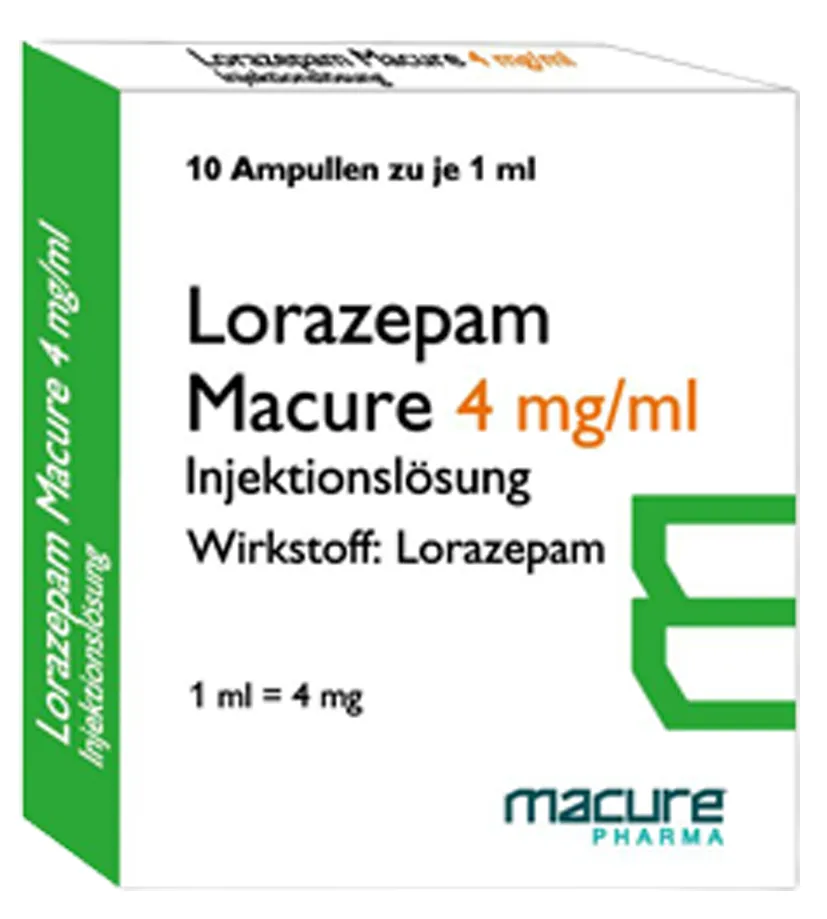
Table of Contents
- Package leaflet: Information for the user
- Lorazepam Macure 4 mg/ml injectable solution
- 1. What Lorazepam Macure is and what it is used for
- 2. What you need to know before using Lorazepam Macure
- 3. How to use Lorazepam Macure
- 4. Possible side effects
- 5. How to store Lorazepam Macure
- 6. Contents of the pack and other information
- Lorazepam Macure is supplied in packs of 5 and 10 vials containing 1 ml of solution.
- The following information is intended for healthcare professionals only:
- Lorazepam Macure is slightly viscous when cold.
Package leaflet: Information for the user
Lorazepam Macure 4 mg/ml injectable solution
lorazepam
Generic medicine
Please read all of this leaflet carefully before you start using this medicine because it contains important information for you.
- Keep this leaflet. You may need to read it again.
- If you have any questions, ask your doctor or nurse.
- This medicine has been prescribed for you only. Do not give it to other people, even if their symptoms are the same as yours, as it may be harmful.
- If you experience any side effects, including those not listed in this leaflet, tell your doctor or nurse. See section 4.
Contents of this leaflet
- What Lorazepam Macure is and what it is used for
- What you need to know before using Lorazepam Macure
- How to use Lorazepam Macure
- Possible side effects
- How to store Lorazepam Macure
- Contents of the pack and other information
1. What Lorazepam Macure is and what it is used for
Lorazepam Macure belongs to a group of sedative-hypnotic medicines called benzodiazepines.
Lorazepam Macure can be used in adults and adolescents over 12 years of age:
- as a sedative prior to certain procedures (premedication), such as minor or major surgical interventions or some extensive diagnostic examinations;
- in individuals suffering from severe phobias or anxiety who, for any reason, cannot take tablets.
Lorazepam Macure may also be used in adults, adolescents, children, and infants from 1 month of age:
- for the management of status epilepticus.
2. What you need to know before using Lorazepam Macure
Do not administer Lorazepam Macure:
- if you are allergic to the active substance or to any other benzodiazepine, a benzodiazepine-like substance, or to any of the other ingredients of this medicine (listed in section 6);
- if you suffer from myasthenia gravis (a disease causing muscle weakness and excessive fatigue);
- if you suffer from severe respiratory disorders;
- if you suffer from sleep apnoea syndrome (breathing problems during sleep);
- if you have severe liver problems.
Lorazepam Macure must not be injected into an artery.
Children
Lorazepam Macure must not be used in children under 12 years of age, except for the control of status epilepticus. For status epilepticus, Lorazepam Macure must not be used in newborns.
Warnings and precautions
Talk to your doctor or nurse before using Lorazepam Macure:
- if you suffer from chronic respiratory disorders.
- if your liver or kidney function is reduced.
- if you are elderly or debilitated.
- if you suffer from epilepsy.
- if you have "acute narrow-angle glaucoma" (green star).
- if you are planning a pregnancy or are pregnant.
- if you are breastfeeding, as the medicine may pass into breast milk.
For 24 hours after administration of Lorazepam Macure, you must remain under observation. Walking early (within 8 hours after use of Lorazepam Macure) may cause you to fall and sustain injuries.
Reduced alertness may last for more than 24 hours, for example if you are elderly or are using other medicines.
If you are an outpatient and Lorazepam Macure is used for a short-duration procedure, you must be accompanied by a responsible adult at the time of discharge from hospital.
You must not drive vehicles or perform activities requiring attention for 24–48 hours after administration.
You may not remember what you did for a certain period of time after administration of Lorazepam Macure.
After treatment, you may not remember what you did for a certain period of time after administration of Lorazepam Macure.
Patients with mental disorders
Lorazepam Macure is not the first-line treatment for mental disorders. Lorazepam Macure must not be used without adequate antidepressant therapy in patients with depression.
Benzodiazepines may have a disinhibiting effect in depressed patients and may lead to suicidal tendencies.
You must gradually reduce treatment with Lorazepam Macure.
Use of Lorazepam Macure may lead to dependence.
Use of benzodiazepines may lead to physical or psychological dependence. To reduce the risk of dependence, the lowest effective dose of Lorazepam Macure should be used and the duration of treatment should be as short as possible.
If you stop treatment abruptly, you may experience withdrawal symptoms: headache, muscle pain, phobia, tension, restlessness, confusion, irritability, mood swings, depression, and insomnia.
You may also temporarily experience a return of the symptoms for which you received Lorazepam Macure (see also "If you stop taking Lorazepam Macure" in section 3).
Tolerance
This medicine may lose its effectiveness with repeated use over several weeks.
Elderly or debilitated patients and children
Elderly patients and children may experience reactions that are completely opposite to the intended effects of treatment with Lorazepam Macure, such as: restlessness, excitement, aggression, delusional thoughts, rage attacks, nightmares, certain mental disorders (psychosis), and other inappropriate or oppositional behaviours.
If these reactions occur, your doctor will discontinue treatment.
Children may be allergic to some of the excipients contained in Lorazepam Macure (see section “Lorazepam Macure contains benzyl alcohol, polyethylene glycol and propylene glycol”).
Other medicines and Lorazepam Macure
Inform your doctor if you are taking, have recently taken, or might take any other medicines.
Concomitant use of the following medicines may increase the calming/relaxing effect of Lorazepam Macure:
- scopolamine (a medicine for motion sickness and intestinal problems),
- antipsychotic medicines,
- sleeping pills,
- sedatives and/or tranquillisers,
- antidepressants,
- muscle relaxants,
- certain highly active prescription painkillers (narcotic analgesics),
- antiepileptic medicines,
- medicines used for breathing problems (theophylline/aminophylline),
- medicines used for general or local anaesthesia (anaesthetics),
- medicines used for allergies or motion sickness (antihistamines),
- medicines used to treat gout and high blood uric acid levels (e.g. probenecid),
- disulfiram (a medicine used to treat chronic alcoholism),
- metronidazole (an antibiotic).
Concomitant use of lorazepam and opioids (strong painkillers, medicines for substitution therapy, and some cough medicines) increases the risk of drowsiness, breathing difficulties (respiratory depression), coma, and may be potentially fatal. Therefore, concomitant use should only be considered when no other treatment options are possible.
However, if your doctor prescribes Lorazepam Macure together with opioids, your doctor must limit the dose and duration of concomitant treatment.
Inform your doctor about all opioids you are taking and carefully follow your doctor’s dosage recommendations. It may be helpful to inform friends and family to watch for the signs and symptoms listed above.
If you experience such symptoms, contact your doctor.
Lorazepam Macure with food, drinks and alcohol
The calming/relieving effect of Lorazepam Macure may be increased by simultaneous consumption of alcoholic beverages. This effect may last up to 48 hours after administration of Lorazepam Macure.
You must not consume alcohol for 48 hours after administration of Lorazepam Macure.
Pregnancy, breastfeeding and fertility
If you are pregnant, breastfeeding, suspect you may be pregnant, or are planning a pregnancy, consult your doctor before taking this medicine.
You should use Lorazepam Macure during pregnancy only if strictly necessary, for the shortest possible duration and at the lowest possible dose.
Lorazepam passes into breast milk in small amounts. Breastfeeding is not recommended during treatment with Lorazepam Macure.
There are no data on possible effects of lorazepam on female fertility when administered by injection or infusion.
In addition, Lorazepam Macure contains benzyl alcohol, a preservative that may cross the placenta and pass into breast milk. Lorazepam Macure also contains propylene glycol (see “Lorazepam Macure contains benzyl alcohol, propylene glycol and polyethylene glycol”).
Driving and using machines
To drive a vehicle or operate machinery, you must be able to react and make decisions correctly and quickly. You must also be able to move quickly and accurately.
If you receive Lorazepam Macure, your ability to perform these functions may be reduced, as Lorazepam Macure may impair alertness, reactivity, memory, and accuracy of muscle movements.
Therefore, you must not drive a vehicle or perform activities requiring attention for 24–48 hours after administration.
Lorazepam Macure contains benzyl alcohol, propylene glycol and polyethylene glycol
Lorazepam Macure contains 21 mg of benzyl alcohol, 840 mg of propylene glycol and 189 mg of polyethylene glycol per ml.
Ask your doctor or pharmacist for advice if the child is under 5 years of age, if you have liver or kidney disease, or if you are pregnant or breastfeeding. This is because the excipients may cause adverse effects. Your doctor may need to adjust the dose if you or the child are taking other medicines containing benzyl alcohol, propylene glycol or polyethylene glycol.
Benzyl alcohol may cause allergic reactions.
Benzyl alcohol has been associated with a risk of serious adverse effects, including breathing problems (gasping syndrome), in young children. Medicines containing benzyl alcohol must not be administered to newborns (up to 4 weeks of age) and must not be used for more than one week in young children (under 3 years of age) unless otherwise recommended by a doctor or pharmacist.
If you are pregnant or breastfeeding, do not take this medicine unless otherwise recommended by your doctor. Your doctor may perform additional monitoring while you are taking this medicine.
If you suffer from liver or kidney disease, do not take this medicine unless otherwise recommended by your doctor. Your doctor may perform additional monitoring while you are taking this medicine.
Polyethylene glycol toxicity (e.g. acute tubular necrosis) has been reported during administration of Lorazepam Macure. This includes cases where lorazepam was administered at doses higher than recommended.
3. How to use Lorazepam Macure
Use this medicine exactly as prescribed by your doctor. If you have any doubts, consult your
doctor.
- Premedication
The recommended dose, usually administered intravenously (into a vein), is based on body
weight (0.044 mg per kg of body weight), up to a total of 2 mg, given 15–20 minutes before the
scheduled procedure. Sometimes higher doses up to 4 mg may be administered.
The recommended dose administered intramuscularly (into a muscle) is 0.05 mg per kg of body
weight, with a maximum of 4 mg, given at least 2 hours before the scheduled procedure.
- Treatment of symptoms of severe anxiety and tension in patients unable to take tablets
The recommended dose is 2–4 mg, i.e. 0.05 mg per kg of body weight. If necessary, the dose may
be repeated after 2 hours. The injection will be administered intravenously (into a vein) or intramuscularly
(into a muscle).
- Status epilepticus
Adult dose: 4 mg administered intravenously.
Elderly (over 65 years of age): elderly patients may respond to lower doses; therefore, half the normal adult dose may be sufficient.
Dosage in adolescents, children and infants from 1 month of age: 0.1 mg per kg of body weight administered intravenously, with a maximum of 4 mg/dose.
If the epileptic seizure lasts longer than 10–15 minutes, the doctor may decide to administer a second dose.
A maximum of 2 doses may be administered.
If the child is under 5 years of age, no more than two repeated doses should be given in a single day.
Use in children
Lorazepam Macure must not be used in children under 12 years of age, except for the control of
status epilepticus. For status epilepticus, it must not be used in neonates (see section 2).
Use in elderly and debilitated patients
Your doctor will prescribe a lower dose. In addition, your doctor will monitor you regularly and adjust the
dose according to your response.
Patients with renal or hepatic impairment
Lorazepam Macure must not be used in patients with severe liver disease. When Lorazepam
Macure is used in patients with mild to moderate liver or kidney disorders, the doctor may
prescribe a lower dose.
If you use more Lorazepam Macure than you should
If you are given more medicine than prescribed, you may experience symptoms such as drowsiness,
mental confusion and lethargy in mild cases of overdose, and low blood pressure, difficulty controlling
movements, breathing problems and coma in severe cases.
Treatment of overdose generally consists of supportive measures, including maintenance of
respiration and monitoring of fluid balance (the amount of fluids taken in and eliminated).
If you stop treatment with Lorazepam Macure
You must discontinue or stop treatment only as directed by your doctor.
If you are being treated for severe anxiety symptoms and treatment is stopped abruptly, you should
consider the possibility of experiencing one or more of the following withdrawal symptoms: headache,
muscle pain, phobia, anxiety, tension, excitement, restlessness, confusion, irritability, mood swings,
sweating, depression and insomnia.
In more severe cases, withdrawal symptoms may include: loss of sensation, loss of reality, in
which the familiar environment seems unreal, detachment from self and self-esteem (depersonalization),
numbness and tingling in arms and legs, markedly increased sensitivity to light, noise and touch,
increased hearing acuity, ear pain, involuntary movements, vomiting, delusional ideas (hallucinations)
or manifestations of worsening of the disease (epileptic seizures).
In addition, the symptoms for which you were prescribed Lorazepam Macure may temporarily return
with increased intensity.
To minimize the risk of these symptoms occurring, gradual dose reduction is recommended when
stopping treatment.
If you have any doubts about the use of this medicine, consult your doctor or nurse.
4. Possible side effects
Like all medicines, this medicine can cause side effects, although not everybody gets them.
Usually, side effects occur at the beginning of treatment and gradually disappear with continued treatment or by reducing the dose.
The following side effects have been reported with the use of lorazepam:
Very common: may affect more than 1 in 10 people
- tiredness
Common: may affect up to 1 in 10 people
- daytime drowsiness,
- drowsiness,
- dizziness,
- coordination problems,
- vomiting,
- muscle weakness.
Uncommon: may affect up to 1 in 100 people
- confusion,
- depression,
- emotional blunting,
- sleep disturbances,
- headache,
- decreased alertness,
- visual disturbances,
- double vision (diplopia),
- nausea,
- gastrointestinal problems,
- skin reactions, hair loss,
- changes in sexual desire.
Rare: may affect up to 1 in 1,000 people
- blood abnormalities (discrasia),
- temporary memory loss,
- paradoxical reactions,
- decreased blood pressure (hypotension),
- increased blood pressure (hypertension),
- abnormalities related to liver disease,
- psychiatric disorders: excitement (agitation), nervousness, irritability, aggression, suspicion, anger attacks, nightmares, perception of things that are not present (hallucinations), severe mental illness in which control over behaviour and behaviour itself are altered (psychosis), inappropriate behaviour. These side effects occur mainly in children and elderly patients.
Other side effects:
- sudden hypersensitivity reactions (within minutes or hours), including breathing difficulties, skin rashes and fainting (anaphylactic/anaphylactoid reactions). These can be fatal.
- blood abnormalities (thrombocytopenia, agranulocytosis, pancytopenia).
- pain, burning sensation, redness and inflammation at the injection site have been reported.
- dependence may occur after repeated use for several weeks (see section 2).
- breathing difficulties may occur in severe anaesthesia.
- withdrawal symptoms may occur after stopping treatment (see section "If you stop taking Lorazepam Macure").
- swelling.
- suicidal thoughts or suicide attempts.
- difficulty speaking.
- epileptic seizures.
- coma.
- decreased body temperature.
Reporting of side effects
If you experience any side effect, talk to your doctor or nurse. This includes any possible side effect not listed in this leaflet. You can also report side effects directly via the national reporting system at the following website:
https://www.aifa.gov.it/content/segnalazioni-reazioni-avverse .
By reporting side effects, you can help provide more information on the safety of this medicine.
5. How to store Lorazepam Macure
Keep this medicine out of the sight and reach of children.
Store and transport in a refrigerator (2–8°C).
Keep in the outer packaging to protect the medicine from light.
Chemical and physical stability has been demonstrated for 1 hour at 2–8 °C during use. From a microbiological standpoint, unless the method of opening/dilution excludes the risk of bacterial contamination, the product should be used immediately. If not used immediately, the times and conditions of storage during use are the responsibility of the user.
Do not use this medicine after the expiry date stated on the label and the carton after Exp.
The expiry date refers to the last day of that month.
Do not use this medicine if you notice visible particles in the solution.
Do not dispose of any medicine via wastewater or household waste. Ask your pharmacist how to dispose of medicines no longer required. This will help protect the environment.
6. Contents of the pack and other information
What Lorazepam Macure contains
- The active substance is lorazepam; each ml of solution contains 4 mg of lorazepam.
- The other components are propylene glycol (E1520), polyethylene glycol 400 (macrogol 400), benzyl alcohol.
Description of the appearance of Lorazepam Macure and contents of the pack
Clear, colourless or almost colourless, hypertonic solution, free from visible particles.
Lorazepam Macure is packaged in transparent glass vials of Type I (Ph. Eur.) with a capacity of 2 ml.
Each vial contains 1 ml of solution.
The vials are placed in thermoformed polyvinyl chloride trays, sealed with a transparent protective sheet in PE. The polyvinyl chloride trays are placed in a cardboard box with a leaflet.
Lorazepam Macure is supplied in packs of 5 and 10 vials containing 1 ml of solution.
It is possible that not all pack sizes are marketed.
Marketing Authorization Holder
Macure Pharma ApS
Hejrevej 39
2400 Copenhagen NV
Denmark
Manufacturer
Medochemie Ltd.
Agios Athanassios Industrial Area, Iapetou 48, Factory B
4101 Agios Athanassios, Limassol
Cyprus
This medicinal product is authorized in the European Economic Area Member States under the following
names:
| Netherlands | Lorazepam Macure 4 mg/ml solution for injection |
| Denmark | Lorazepam Macure |
| Sweden | Lorazepam Macure 4 mg/ml injection solution, solution |
| Finland | Lorazepam Macure 4 mg/ml injection solution, solution |
| Austria | Lorazepam Macure 4 mg/ml injection solution |
| Germany | Lorazepam Macure 4 mg/ml injection solution |
| Norway | Lorazepam Macure |
| Belgium | Lorazepam Macure 4 mg/ml solution for injection/ solution for injection/ injection solution |
| Ireland | Lorazepam Macure 4 mg/ml solution for injection |
| Italy | Lorazepam Macure |
| Slovenia | Lorazepam Macure 4 mg/ml solution for injection |
The following information is intended for healthcare professionals only:
Instructions for use
Lorazepam Macure is slightly viscous when cold.
Intramuscular administration:
To facilitate intramuscular administration, dilution with an equal volume of a compatible solution is recommended, such as sodium chloride 9 mg/ml (0.9%) solution for injection, glucose 50 mg/ml (5%) solution for injection, or water for injections.
Lorazepam Macure may also be administered undiluted by deep injection into a large muscle mass.
Intravenous administration:
When administered intravenously, Lorazepam Macure must always be diluted with an equal volume of one of the following diluents: sodium chloride 9 mg/ml (0.9%) solution for injection, glucose 50 mg/ml (5%) solution for injection, or water for injections.
The injection rate should not exceed 2 mg/min. Parenteral medicinal products should be inspected visually for the presence of particles or discoloration prior to administration. Do not use if the solution has developed a colour or precipitate.
Instructions for dilution for intravenous use
Withdraw the desired amount of Lorazepam Macure into the syringe, then slowly withdraw the desired volume of diluent. Gently pull back the plunger slightly to provide additional mixing space. Immediately mix the contents by repeatedly inverting the syringe until a homogeneous solution is formed. Do not shake vigorously, as this may cause the formation of air bubbles.
Lorazepam Macure must not be mixed with other medicinal products in the same syringe. Do not use if the solution has developed a colour or precipitate (see section 4.2).
No special instructions for disposal. Unused medicine and waste material derived from this medicine must be disposed of in accordance with local applicable regulations.