Lopresor
Italy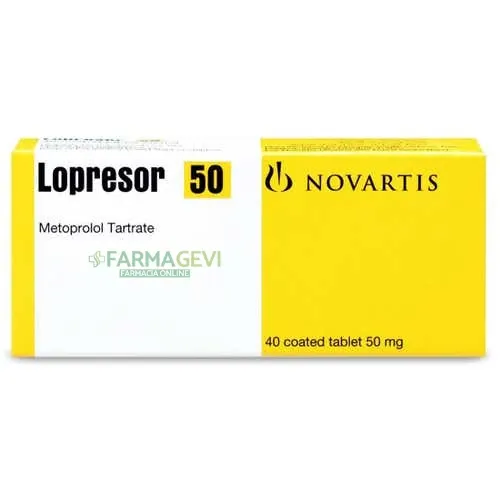
Table of Contents
- Package leaflet: Information for the patient
- LOPRESOR 100 mg film-coated tablets, 200 mg prolonged-release tablets
- 1. What Lopresor is and what it is used for
- 2. What you should know before taking Lopresor
- 3. How to take Lopresor
- 4. Possible side effects
- 5. How to store Lopresor
- 6. Package contents and other information
Package leaflet: Information for the patient
LOPRESOR 100 mg film-coated tablets, 200 mg prolonged-release tablets
Metoprolol tartrate
Please read this leaflet carefully before taking this medicine.
- Keep this leaflet. You may need to read it again.
- If you have any questions, ask your doctor or pharmacist.
- This medicine has been prescribed for you only. Never give it to other people, even if their symptoms are the same as yours, as it may be harmful.
- If you experience any side effects, including those not listed in this leaflet, consult your doctor or pharmacist (See section 4).
Contents of this leaflet:
- What Lopresor is and what it is used for
- What you need to know before taking Lopresor
- How to take Lopresor
- Possible side effects
- How to store Lopresor
- Contents of the pack and other information
1. What Lopresor is and what it is used for
Lopresor contains metoprolol tartrate, which belongs to a group of medicines called beta-blockers that work by slowing down the heartbeat and lowering blood pressure.
Lopresor is indicated in adults:
- for the treatment of high blood pressure (either alone or in combination with other antihypertensive medicines, for example diuretics, peripheral vasodilators or ACE inhibitors)
- to prevent chest pain caused by reduced oxygen supply to the heart (angina pectoris). To relieve acute attacks, your doctor may prescribe nitroglycerin if necessary
- in confirmed or suspected heart attack
- for prevention after heart attack
- in heart rhythm disorders presenting with palpitations (sensation of awareness of heartbeat)
- to prevent headache (migraine).
Consult your doctor if you do not feel better or feel worse.
2. What you should know before taking Lopresor
Do not take Lopresor:
- if you are allergic to metoprolol tartrate or to any of the other ingredients of this medicine (listed in section 6) or to other medicines related to it
- if you are allergic to other medicines belonging to the class of beta-blockers such as metoprolol
- if you suffer from a conduction disorder of the heart's electrical system (second- or third-degree atrioventricular block)
- if you have decompensated heart failure, a serious heart disease
- if you have a reduced heart rate, i.e. number of heartbeats per minute (less than 45–50 beats)
- if you have a heart condition called "sinoatrial node syndrome" (characterized by disturbances in heart rhythm)
- if you have severe circulatory disorders (peripheral arterial disease)
- if you have low blood pressure with severe reduction in heart function (cardiogenic shock)
- if you have an untreated adrenal gland tumor, a gland located above the kidney that can cause high blood pressure (pheochromocytoma)
- if you have low blood pressure
- if you have severe bronchial asthma or a history of severe bronchial constriction causing breathing difficulties
- if you have recently had a heart attack or suffer from severe heart failure.
Warnings and precautions
Talk to your doctor or pharmacist before taking Lopresor.
Inform your doctor if you have or have had any of the following conditions:
- mild to moderate respiratory diseases (bronchospastic disorders). Lopresor should be administered at the lowest effective dose and always in combination with a β-agonist (see "Do not take Lopresor").
- high blood sugar levels (diabetes), especially if you are being treated with insulin or oral antidiabetic medicines (see section "Other medicines and Lopresor"), because this medicine may prevent you from recognizing symptoms of hypoglycemia (low blood sugar), such as rapid heartbeat, dizziness, and sweating
- congestive heart failure, a heart disease
- electrical conduction disorders of the heart (first-degree atrioventricular block)
- heart attack
- circulatory disorders in arms and legs (e.g., Raynaud's disease or phenomenon, intermittent claudication)
- if you have a known or suspected adrenal gland tumor that can cause high blood pressure (pheochromocytoma), Lopresor should always be administered together with an alpha-blocker and only after alpha-blocker treatment has been initiated (see "Do not take Lopresor").
- a type of chest pain called Prinzmetal's angina
- increased activity of a gland called the thyroid (thyrotoxicosis)
- allergies. If you have allergies and take beta-blockers, allergic reactions may be more severe than usual
- liver problems (hepatic dysfunction), as your doctor may decide to adjust the dose. If, during treatment with Lopresor, you experience eye-related side effects (dry eyes and/or, occasionally, skin eruptions below the eye), consult your doctor immediately, who may decide to discontinue treatment (see section "Possible side effects").
If you are undergoing surgery requiring general anesthesia, inform the anesthetist (the doctor administering anesthesia) that you are taking Lopresor. The anesthetist will choose the most suitable anesthetic for you to minimize potential heart-related side effects during anesthesia. Your doctor may decide to stop treatment with Lopresor before surgery; in this case, discontinuation should be gradual and completed approximately 48 hours before general anesthesia.
Elderly
If you are elderly, use this medicine with caution. Indeed, excessive reduction in blood pressure or heart rate may result in inadequate blood supply to vital organs (see section 3 "How to take Lopresor").
Children and adolescents
The efficacy and safety of Lopresor in children and adolescents under 18 years of age are limited; therefore, Lopresor is not recommended in this population (0–18 years).
Other medicines and Lopresor
Inform your doctor or pharmacist if you are taking, have recently taken, or might take any other medicines.
Interactions with medicines whose concomitant use is not recommended:
- medicines used to treat certain heart conditions belonging to the class of Calcium Antagonists (administered intravenously), such as verapamil and diltiazem. This combination may enhance the depressant effects of Lopresor on the heart and blood pressure.
Interactions to be considered:
- medicines that lower blood pressure: or medicines that reduce catecholamine levels in the blood (substances produced by the body that regulate heart rate), or other beta-blockers (including eye drops), or monoamine oxidase inhibitors (MAOIs), medicines used to treat depression, even within 14 days after stopping treatment.
- calcium antagonists (e.g., verapamil) taken orally for treating certain heart conditions
- medicines for treating heart rhythm disorders (antiarrhythmics such as quinidine, tocainide, procainamide, ajmaline, amiodarone, flecainide, disopyramide, and propafenone)
- nitroglycerin, a medicine used to treat angina
- medicines used to induce anesthesia during surgery (general and local anesthetics such as lidocaine); see also section "Warnings and precautions"
- medicines for treating depression (fluvoxamine, fluoxetine, paroxetine, sertraline, bupropion, clomipramine, desipramine)
- medicines for treating certain mental disorders (antipsychotics such as chlorpromazine, fluphenazine, haloperidol, thioridazine)
- medicines used to treat HIV virus, antiretrovirals such as ritonavir
- medicines for treating allergies (antihistamines such as diphenhydramine)
- medicines for treating malaria (hydroxychloroquine or quinidine)
- medicines for treating fungal infections (antifungals such as terbinafine)
- hydralazine and prazosin (medicines used to treat high blood pressure)
- medicines for treating certain heart conditions belonging to the class of digitalis glycosides
- medicines used for treating certain respiratory conditions (such as asthma and cough) or to clear nasal congestion (nasal drops) or for treating certain eye disorders (ophthalmic drops), for example: adrenaline, noradrenaline, isoprenaline, ephedrine, phenylephrine, phenylpropanolamine, xanthine derivatives
- medicines for treating inflammation and pain (non-steroidal anti-inflammatory drugs)
- rifampicin, an antibiotic
- medicines belonging to the class of alpha-adrenergic blockers (guanethidine, betanidine, reserpine, alpha-methyldopa, or clonidine), used to treat conditions such as benign prostatic hyperplasia (enlarged prostate), urinary retention (inability of the bladder to empty completely), and high blood pressure
- medicines to reduce blood sugar levels (antidiabetics and insulin). Lopresor may increase the risk of severe hypoglycemia when used concomitantly with certain types of antidiabetic medicines called sulfonylureas (e.g., tolbutamide, gliclazide, glyburide, glipizide, glimepiride, or chlorpropamide).
- medicines used to treat migraine (ergot alkaloids)
- Dipyridamole. In general, administration of a beta-blocker should be suspended before a dipyridamole test, with careful monitoring of heart rate after dipyridamole injection.
Lopresor with food, drinks, and alcohol
The use of alcohol during treatment is not recommended.
Pregnancy and breastfeeding
If you are pregnant, suspect you may be pregnant, planning to become pregnant, or breastfeeding, consult your doctor or pharmacist before starting treatment with this medicine.
Pregnancy
If you are pregnant, your doctor will prescribe this medicine only if absolutely necessary.
If you are treated with Lopresor during pregnancy, your doctor will prescribe the lowest possible dose and will ask you to stop treatment at least 2 or 3 days before delivery to avoid effects in the newborn (e.g., bradycardia, hypoglycemia).
Breastfeeding
Lopresor passes into breast milk; therefore, use of this medicine is not recommended if you are breastfeeding.
Driving and using machines
While taking Lopresor, you may experience dizziness, fatigue, or visual disturbances. If this occurs, do not drive and do not operate any tools or machinery.
Lopresor 100 mg film-coated tablets contain castor oil
May cause gastrointestinal discomfort and diarrhea.
Important information on certain excipients:
This medicine contains less than 1 mmol (23 mg) of sodium per single dose, i.e., essentially 'sodium-free'.
For those engaged in sports activities:
For individuals engaged in sports, using this medicine without therapeutic need constitutes doping and may lead to a positive anti-doping test.
3. How to take Lopresor
Take this medicine exactly as directed by your doctor. If you have any doubts, consult your doctor or pharmacist.
HOW
Always take the tablets with a glass of water and do not chew them.
Take Lopresor regularly in relation to meals. If your doctor has advised you to take Lopresor either before or during breakfast, continue taking Lopresor according to the same schedule throughout the treatment period.
Lopresor 100 mg film-coated tablets:
- take this medicine on an empty stomach. Lopresor 200 mg prolonged-release tablets:
- take this medicine with or without food, according to your preference.
HOW MUCH
For treating high blood pressure
Lopresor 100 mg film-coated tablets:
- 100–200 mg daily, either as a single dose (1 or 2 tablets in the morning, depending on the prescribed dose) or in two divided doses (one tablet in the morning and one in the evening). If necessary, your doctor may prescribe an additional medicine to lower your blood pressure. Lopresor 200 mg prolonged-release tablets:
- 1 tablet in the morning.
To prevent chest pain caused by reduced oxygen supply to the heart (angina pectoris)
Lopresor 100 mg film-coated tablets:
- 100–200 mg daily, in two divided doses. If necessary, the daily dose may be increased up to 400 mg. Lopresor 200 mg prolonged-release tablets:
- 1 tablet in the morning. During the discontinuation phase of treatment, your doctor will closely monitor you. Your doctor will gradually reduce your dose over a period of 1–3 weeks and, if necessary, prescribe a substitute therapy.
Heart attack
In the acute phase, your doctor will adjust the dose according to your physical condition.
Maintenance therapy: the oral dose is 200 mg daily, given in two divided doses. Treatment should be continued for at least 3 months.
In heart function disorders presenting with palpitations (sensation of feeling the heartbeat) and
Prevention of headache (migraine)
Lopresor 100 mg film-coated tablets:
- 100 mg daily, as a single morning dose (1 tablet in the morning); if necessary, the daily dose may be increased to 200 mg, administered in two divided doses (1 tablet in the morning and one in the evening). Lopresor 200 mg prolonged-release tablets:
- 1 tablet daily, in the morning.
Use in patients with impaired liver function
If you have impaired liver function, your doctor will prescribe Lopresor starting with low doses and will increase the dose cautiously based on your response to the medicine.
Elderly patients (> 65 years)
If you are over 65 years of age, this medicine will be prescribed with caution due to the higher likelihood of adverse effects. In particular, your doctor will regularly monitor your blood pressure and your heart rate (see "Warnings and precautions").
Use in children and adolescents
The use of this medicine is not recommended in children and adolescents under 18 years of age.
If you take more Lopresor than you should
If you take an excessive dose of this medicine, inform your doctor or go to hospital immediately.
While awaiting medical advice, within 4 hours after ingestion, it may be helpful to induce vomiting and/or take activated charcoal to remove the medicine from the stomach and intestines.
In any case, after an overdose of beta-blockers, hospital monitoring is always required.
An overdose of this medicine may cause the following symptoms:
- excessive lowering of blood pressure
- reduced heart rate (sinus bradycardia)
- heart's inability to pump blood effectively due to disturbances in the heart's electrical conduction system (atrioventricular block)
- severe heart disease (heart failure)
- low blood pressure with severely impaired heart function (cardiogenic shock)
- cardiac arrest
- narrowing of the airways and breathing difficulties (bronchospasm)
- worsening of consciousness (or even coma)
- seizures
- nausea
- vomiting
- bluish discoloration of the skin (cyanosis)
- death.
Concurrent intake of alcohol, medicines to lower blood pressure, quinidine (a medicine used to treat heart rhythm disorders), or barbiturates (medicines used to treat epilepsy) worsens the signs and symptoms. The first signs of overdose appear between 20 minutes and 2 hours after administration. Effects may persist for several days.
If you forget to take Lopresor
If you forget to take a tablet, do not take a double dose to make up for the missed dose.
If you stop taking Lopresor
If you have any questions about using this product, consult your doctor or pharmacist.
Abrupt discontinuation of treatment
Do not stop treatment with Lopresor abruptly, especially if you suffer from heart diseases caused by reduced oxygen supply to the heart (ischaemic conditions), such as angina pectoris (chest pain). To prevent worsening of angina pectoris, your doctor will gradually reduce your dose over a period of 1–3 weeks and, if necessary, prescribe a substitute therapy.
During discontinuation of treatment, your doctor will closely monitor you.
4. Possible side effects
Like all medicines, this medicine can cause side effects, although not everyone will experience them.
If you experience the following eye-related side effects while being treated with Lopresor (dry eyes and/or, occasionally, skin eruptions below the eye), contact your doctor, who may DISCONTINUE treatment with this medicine.
Additionally, you may experience the following side effects:
Common (may affect up to 1 in 10 people)
- Drop in blood pressure when moving from sitting to standing position (orthostatic hypotension, occasionally with fainting)
- Nausea
- Vomiting
- Abdominal pain
- Fatigue
- Difficulty breathing following physical exertion (exertional dyspnea)
- Slowing of the heartbeat (bradycardia)
- Dizziness
- Headache
Uncommon (may affect up to 1 in 1,000 people)
- Diarrhea
- Constipation
- Skin rashes (such as urticaria, skin lesions)
- Muscle cramps
- Bronchospasm (even if you have not previously suffered from obstructive lung diseases)
- Swelling (edema)
- Pain in the fingers and toes, which first turn pale, then blue, and finally red (Raynaud's phenomenon)
- Heart disease (heart failure)
- Changes in heart rhythm
- Awareness of heartbeat (palpitations)
- Reduced level of consciousness
- Drowsiness or insomnia
- Tingling sensations in arms and legs (paresthesia)
- Depression
- Nightmares
Rare (may affect up to 1 in 10,000 people)
- Weight gain
- Abnormal liver function tests
- Erectile dysfunction
- Sexual desire disorders
- Peyronie's disease (penile disorder)
- Inflammation of the joints (arthritis)
- Light sensitivity reactions (photosensitivity)
- Excessive sweating
- Hair and hair loss (alopecia)
- Worsening of psoriasis (skin disease)
- Severe liver disease (hepatitis)
- Dryness of the oral mucosa
- Retroperitoneal fibrosis (inflammation of the abdominal cavity)
- Irritation and inflammation of the nasal mucosa (rhinitis)
- Gangrene (bluish or greenish skin of hands or feet) if you suffer from severe peripheral blood circulation disorders
- Decreased platelet count in blood (thrombocytopenia)
- Personality disorders
- Hallucinations
- Vision impairment (e.g. blurred vision)
- Irritation
- Ringing in the ears (tinnitus)
- Hearing disorders in case of exceeding recommended doses (e.g. hearing loss or deafness)
- Disturbances in the heart's electrical conduction
- Chest pain
Additionally, the following side effects have been reported, for which the frequency cannot be estimated from the available data:
Nervous system disorders
- Confusional state
Metabolism and nutrition disorders
- Increased triglycerides (fats) in blood
- Decreased HDL cholesterol in blood
Reporting of side effects
If you experience any side effect, including those not listed in this leaflet, contact your doctor or pharmacist. You may also report side effects directly via the national reporting system at https://www.aifa.gov.it/content/segnalazioni-reazioni-avverse.
By reporting side effects, you can help provide more information on the safety of this medicine.
5. How to store Lopresor
Keep this medicine out of the sight and reach of children.
Lopresor 100 mg film-coated tablets
Do not store Lopresor 100 mg film-coated tablets above 30°C.
Store in the original packaging to protect the medicine from moisture.
Lopresor 200 mg prolonged-release tablets
This medicine does not require any special storage conditions.
Do not use this medicine after the expiry date stated on the blister and on the carton after the word "Exp". The expiry date refers to the last day of that month.
Medicines must not be disposed of via wastewater or household waste. Ask your pharmacist how to dispose of medicines no longer in use. This will help protect the environment.
6. Package contents and other information
What Lopresor contains
Lopresor 100 mg film-coated tablets
Each film-coated tablet contains:
- The active substance: metoprolol tartrate 100 mg.
The other ingredients are: sodium carboxymethyl starch A, anhydrous colloidal silica, magnesium stearate, microcrystalline cellulose, hypromellose, polyoxyl 40 hydrogenated castor oil, talc, titanium dioxide.
Lopresor 200 mg prolonged-release tablets
Each prolonged-release tablet contains:
- The active substance: metoprolol tartrate 200 mg.
The other ingredients are: anhydrous colloidal silica, microcrystalline cellulose, calcium phosphate dibasic dihydrate, polyacrylate dispersion 30%, magnesium stearate, glyceryl palmitate stearate, hypromellose, polysorbate 80, talc, titanium dioxide, yellow iron oxide.
Description of the appearance of Lopresor and package contents
Tablets for oral use.
- Lopresor 100 mg: round, white, film-coated tablets, packaged in blisters containing 30 tablets.
- Lopresor 200 mg: round, yellow, prolonged-release tablets, packaged in blisters containing 28 tablets.
Marketing Authorization Holder
Bruno Farmaceutici S.p.A.
Via delle Ande, 15 – 00144 Rome, Italy
Manufacturer
Lopresor 100 mg film-coated tablets
SPECIAL PRODUCT’S LINE S.P.A. – Via Fratta Rotonda Vado Largo n. 1 - Anagni (FR), Italy
Lopresor 200 mg prolonged-release tablets
SPECIAL PRODUCT’S LINE S.P.A. – Via Fratta Rotonda Vado Largo n. 1 - Anagni (FR), Italy