Loperamide Hexal
Italy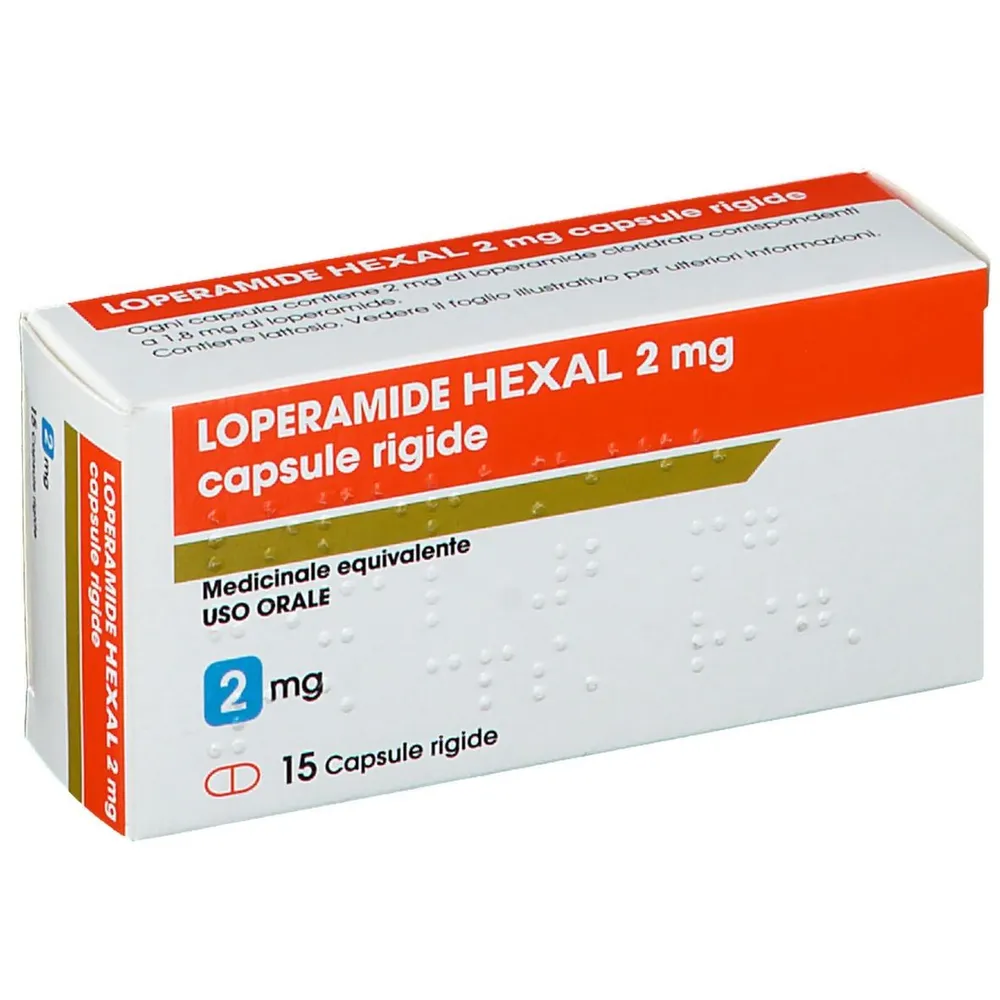
Table of Contents
- Patient Information Leaflet
- Loperamide Hexal 2 mg Hard Capsules
- 1. What Loperamide Hexal is and what it is used for
- 2. What you need to know before taking Loperamide Hexal
- 3. How to take Loperamide Hexal
- 4. Possible side effects
- 5. How to store Loperamide Hexal
- 6. Package contents and other information
Patient Information Leaflet
Loperamide Hexal 2 mg Hard Capsules
Generic Medicine
Please read this leaflet carefully before taking this medicine because it contains important information for you.
- Keep this leaflet. You may need to read it again.
- If you have any questions, ask your doctor or pharmacist.
- This medicine has been prescribed for you only. Do not give it to others, even if their symptoms are the same as yours, as it may be harmful.
- If you experience any side effect, including those not listed in this leaflet, talk to your doctor or pharmacist. See section 4.
Contents of this leaflet:
- What Loperamide Hexal is and what it is used for
- What you need to know before taking Loperamide Hexal
- How to take Loperamide Hexal
- Possible side effects
- How to store Loperamide Hexal
- Contents of the pack and other information
1. What Loperamide Hexal is and what it is used for
Loperamide Hexal contains the active substance loperamide, which belongs to a class of medicines called antidiarrhoeals and antipropulsives. These help reduce diarrhoea by decreasing intestinal motility.
This medicine is indicated:
- for the treatment of both occasional and persistent diarrhoea (acute and chronic diarrhoea);
- to reduce diarrhoea and increase stool consistency following intestinal surgery (ileostomy).
2. What you need to know before taking Loperamide Hexal
Do not take Loperamide Hexal
- if you are allergic to the active substance or to any of the other ingredients of this medicine (listed in section 6);
- if you are pregnant or breastfeeding;
- if you have an intestinal disease, acute dysentery, characterized by blood in the stool and high fever;
- if you have inflammation of the intestine characterized by lesions (acute ulcerative colitis);
- if you have an intestinal infection (bacterial enterocolitis caused by invasive organisms such as Salmonella, Shigella and Campylobacter);
- if you have a severe form of diarrhoea (pseudomembranous colitis) caused by medicines used to treat bacterial infections (antibiotics);
- if taking this medicine may expose you to the risk of complications that could lead to intestinal paralysis (ileus, megacolon and toxic megacolon). If during treatment you develop constipation (stippsis), ileus or abdominal distension (abdominal bloating), stop treatment with this medicine immediately and consult your doctor.
- if you are taking medicines that reduce intestinal motility.
Loperamide Hexal must not be used in children under 6 years of age.
Warnings and precautions
Talk to your doctor or pharmacist before taking Loperamide Hexal.
Exercise particular caution:
- if you have diarrhoea, your body loses fluids and mineral salts: to restore normal levels, it may be helpful to take aqueous solutions containing sugar and salts;
- treatment with Loperamide Hexal is only symptomatic and does not treat the underlying cause of your condition;
- if you have reduced liver function, consult your doctor or pharmacist before taking Loperamide Hexal.
The use of this medicine improves the symptoms of diarrhoea (symptomatic treatment), but does not cure its
cause. Therefore, when the cause of diarrhoea can be identified, it should be treated with a specific therapy
which will be prescribed by your doctor.
Do not take this medicine for more than 2 days.
Stop treatment with this medicine immediately and consult your doctor if:
- you do not see an improvement in your condition within 48 hours of taking Loperamide Hexal;
- you have AIDS and develop abdominal distension during treatment with this medicine;
- you develop constipation (stippsis), ileus or abdominal distension (abdominal bloating) during treatment.
If you are taking Loperamide Hexal to treat diarrhoea caused by bacteria or viruses (infectious colitis), you
have an increased risk of developing other disorders associated with intestinal paralysis (toxic megacolon).
Do not take this medicine for uses other than those indicated (see section 1) and never take a dose higher
than recommended (see section 3). In patients who have taken an excessive dose of loperamide, the active
substance in Loperamide Hexal, serious heart problems (with symptoms including rapid or irregular heartbeat)
have been reported.
Take this medicine with caution and under medical supervision if you have liver disorders (impaired liver
function, hepatic dysfunction), as toxic effects affecting the central nervous system may occur.
Consult your doctor if you do not feel better or if you feel worse after 2 days of treatment, or if the condition
recurs repeatedly.
Children aged 6 to 12 years
Loperamide Hexal should be used under medical supervision.
Other medicines and Loperamide Hexal
Inform your doctor or pharmacist if you are taking, have recently taken or might take any other medicine.
Take this medicine with caution and inform your doctor if you are taking:
- desmopressin, a medicine used to treat diabetes;
- other medicines that slow down intestinal activity (e.g. anticholinergics);
- medicines that stimulate intestinal activity;
- quinidine, a medicine used to treat certain heart disorders;
- ritonavir, a medicine used to treat AIDS;
- itraconazole and ketoconazole, medicines used to treat fungal infections;
- gemfibrozil, a medicine used to reduce blood lipid levels;
- other medicines (cytochrome CYP450 inhibitors and P-glycoprotein inhibitors).
Pregnancy and breastfeeding
Do not take Loperamide Hexal if you are pregnant or breastfeeding.
Driving and using machines
During treatment with Loperamide Hexal, you may experience fatigue, dizziness or drowsiness. If this occurs, avoid driving vehicles or operating machinery.
Loperamide Hexal contains lactose, a type of sugar. If your doctor has diagnosed you with an intolerance to certain sugars, contact him before taking this medicine.
Loperamide Hexal contains less than 1 mmol (23 mg) of sodium per capsule, i.e. essentially "sodium-free".
3. How to take Loperamide Hexal
Take this medicine exactly as directed by your doctor or pharmacist. If you have
any doubts, consult your doctor or pharmacist.
Take this medicine with a glass of water.
During treatment with this medicine, you must reduce the dose as soon as you notice an
improvement in your condition (normalization of stools).
Stop treatment with this medicine if constipation occurs (see section Warnings and precautions).
Do not take this medicine for more than 2 days.
Adults
Treatment of occasional diarrhoea:
The recommended initial dose is 2 capsules (4 mg). Afterwards, the maintenance dose is 1 capsule (2 mg) to be taken after each episode of diarrhoea.
Do not exceed the maximum recommended dose of 8 capsules per day (16 mg).
Treatment of persistent (chronic) diarrhoea:
The recommended initial dose is 2 capsules. Your doctor will adjust the dose according to your condition; generally, the maintenance dose ranges between 1 and 6 capsules per day.
Do not exceed the maximum recommended dose of 8 capsules per day.
Children and adolescents (aged 6 to 17 years)
Treatment of occasional diarrhoea and persistent (chronic) diarrhoea:
The recommended initial dose is 1 capsule. In the treatment of persistent diarrhoea, your doctor will adjust the dose according to the child's condition. Generally, the maintenance dose ranges between 1 and 6 capsules per day.
The maximum dose is calculated based on body weight. For every 20 kg of body weight, 3 capsules should be administered; however, it is recommended not to exceed 8 capsules per day.
In children aged 6 to 12 years, Loperamide Hexal should be used under medical supervision.
Children under 6 years of age
This medicine must not be given to children under 6 years of age.
Patients with liver problems
Take this medicine with caution if you have liver problems (see section Warnings and precautions).
If you take more Loperamide Hexal than you should
If you take too much of this medicine, contact your doctor or the nearest hospital immediately.
In case of overdose, the following effects may occur:
- increased heart rate, irregular heartbeat, changes in heart rhythm (these symptoms may have potentially serious and life-threatening consequences),
- central nervous system depression, possibly associated with disorientation (stupor) and coordination difficulties. Children may experience these effects more severely than adults;
- drowsiness;
- reduction in pupil size, the black part of the eye (miosis);
- muscle disorders (hypertonia);
- breathing difficulties (respiratory depression);
- reduced need to urinate (urinary retention);
- intestinal disorders (ileus);
- difficulty or inability to defecate (constipation or intestinal obstruction).
These effects are more likely to occur in children, especially those under 4 years of age.
Compared to adults, children's reactions to high doses of Loperamide Hexal are stronger. If a child takes an excessive amount or shows any of the above symptoms, contact a doctor immediately.
In case of accidental ingestion in children under 4 years of age, constipation and central nervous system depression associated with drowsiness and breathing difficulties (bradypnea) may occur. In such cases, the patient should be closely monitored for 48 hours.
Treatment of overdose may include gastric lavage, induction of vomiting, or administration of medicines that promote bowel emptying (laxatives). Additionally, if symptoms of overdose occur, naloxone—a medicine used as an antidote—may be administered. In such cases, the patient must be monitored for at least 48 hours.
If you forget to take Loperamide Hexal
Do not take a double dose to make up for a forgotten dose.
If you have any doubts about how to use this medicine, consult your doctor or pharmacist.
4. Possible side effects
Like all medicines, this medicine can cause side effects, although not everybody will experience them.
If you are taking this medicine to treat occasional diarrhoea (acute diarrhoea), the following side effects may occur:
Common (may affect up to 1 in 100 people)
- headache (cephalalgia);
- constipation, nausea, flatulence.
Uncommon (may affect up to 1 in 1,000 people)
- dizziness;
- abdominal pain, especially in the upper part of the abdomen, abdominal discomfort;
- dry mouth;
- vomiting;
- skin irritation (rash).
Rare (may affect up to 1 in 10,000 people)
- abdominal swelling.
If you are taking this medicine to treat persistent diarrhoea (chronic diarrhoea), the following side effects may occur:
Common (may affect up to 1 in 100 people)
- dizziness;
- constipation, nausea, flatulence.
Uncommon (may affect up to 1 in 1,000 people)
- headache (cephalalgia);
- abdominal pain, abdominal discomfort;
- dry mouth;
- digestive disturbances (dyspepsia).
In addition, the following side effects have been reported (post-marketing reports):
Seek immediate medical advice:
Not known (frequency cannot be estimated from the available data)
- allergic-type reactions (hypersensitivity), including severe reactions (anaphylactic reaction, including shock and anaphylactoid reaction);
- drowsiness, loss of consciousness, mental disturbances, sometimes associated with detachment from reality (stupor), decreased level of consciousness, muscle disorders (hypertonia), and loss of muscular coordination making it difficult to perform certain movements;
- reduction in the size of the pupil, the black part of the eye (miosis);
- intestinal disorders, sometimes associated with reduced intestinal function (ileus, paralytic ileus, megacolon, toxic megacolon);
- pain and burning sensation in the mouth (glossodynia);
- severe skin disorders which may present with blister formation (Stevens-Johnson syndrome, toxic epidermal necrolysis, and erythema multiforme), skin irritation (urticaria), itching;
- facial swelling due to fluid accumulation, especially around the mouth and eyes (angioedema);
- reduced need to urinate (urinary retention);
- fatigue;
- Upper abdominal pain, abdominal pain radiating to the back, abdominal tenderness, fever, rapid pulse, nausea, vomiting, which may be symptoms of inflammation of the pancreas (acute pancreatitis).
If you experience any of these symptoms, stop taking the medicine and seek immediate medical advice.
Additional side effects in children and adolescents
Children and adolescents may experience the same side effects as reported in adults.
Reporting of side effects
If you experience any side effect, including those not listed in this leaflet, talk to your doctor or pharmacist. You can also report side effects directly via the national reporting system at www.aifa.gov.it/content/segnalazioni-reazioni-avverse.
By reporting side effects, you can help provide more information on the safety of this medicine.
5. How to store Loperamide Hexal
Keep this medicine out of the sight and reach of children.
Do not use this medicine after the expiry date stated on the packaging after "Exp.". The expiry date refers to the last day of that month.
Do not dispose of medicines via wastewater or household waste. Ask your pharmacist how to dispose of medicines you no longer use. This will help protect the environment.
6. Package contents and other information
What Loperamide Hexal contains
- The active substance is: loperamide hydrochloride. Each capsule contains 2 mg of loperamide hydrochloride, equivalent to 1.8 mg of loperamide.
- The other components are: lactose, maize starch, magnesium stearate, talc. Capsule shell: gelatin, black iron oxide (E172), titanium dioxide (E171), yellow iron oxide (E172), patent blue (E131).
Description of the appearance of Loperamide Hexal and contents of the pack
Pack sizes of 8, 15 or 30 hard capsules.
Marketing Authorization Holder
Sandoz S.p.A. - Largo U. Boccioni, 1 - 21040 Origgio (VA) - Italy
Manufacturer
Salutas Pharma GmbH - Otto-Von-Guericke-Allee, 1 - 39179 Barleben (Germany)