Lodoz
Italy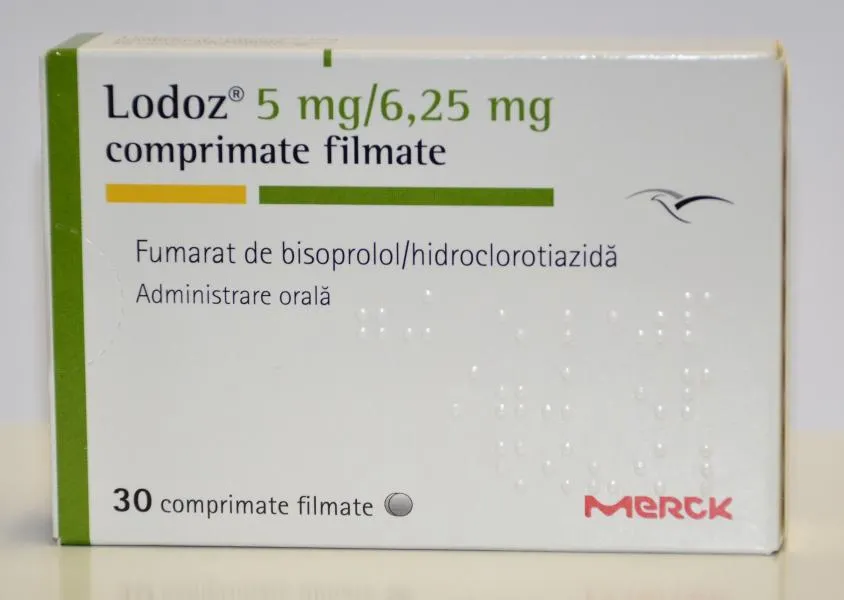
Table of Contents
- Package insert: information for the patient
- Lodoz 2.5 mg/6.25 mg film-coated tablet, 5 mg/6.25 mg film-coated tablet, 10 mg/6.25 mg film-coated tablet
- 1. What Lodoz is and what it is used for
- 2. What you should know before taking Lodoz
- 3. How to take Lodoz
- 4. Possible side effects
- 5. How to store Lodoz
- 6. Package contents and other information
PACKAGE INSERT
Package insert: information for the patient
Lodoz 2.5 mg/6.25 mg film-coated tablet, 5 mg/6.25 mg film-coated tablet, 10 mg/6.25 mg film-coated tablet
bisoprolol fumarate and hydrochlorothiazide
Please read this leaflet carefully before taking this medicine because it contains
important information for you.
- Keep this leaflet. You may need to read it again.
- If you have any questions, ask your doctor or pharmacist.
- This medicine has been prescribed for you only. Do not give it to others, even if their symptoms are the same as yours, as it may be harmful.
- If you experience any side effects, including those not listed in this leaflet, contact your doctor or pharmacist. See section 4.
Contents of this leaflet:
- What Lodoz is and what it is used for
- What you need to know before taking Lodoz
- How to take Lodoz
- Possible side effects
- How to store Lodoz
- Contents of the pack and other information
1. What Lodoz is and what it is used for
Lodoz contains the active substances bisoprolol and hydrochlorothiazide:
- Bisoprolol belongs to a group of medicines called beta-blockers and is used to reduce blood pressure.
- Hydrochlorothiazide belongs to a group of medicines called thiazide diuretics. It helps lower blood pressure by increasing urine production.
Lodoz is indicated for the treatment of mild to moderate high blood pressure.
2. What you should know before taking Lodoz
Do not take Lodoz if you have any of the following conditions:
- allergy (hypersensitivity) to bisoprolol, hydrochlorothiazide, other thiazides, sulfonamides, or any of the excipients (see section 6, "What Lodoz contains")
- severe asthma
- uncontrolled heart failure or cardiogenic shock (a severe acute heart condition causing low blood pressure and circulatory failure)
- certain heart arrhythmias, particularly a slow heartbeat causing symptoms, conduction disorders, or a condition called sick sinus syndrome
- untreated pheochromocytoma (a tumor of the adrenal gland that secretes substances causing severe high blood pressure)
- severe circulation problems in the limbs (such as Raynaud's syndrome, which may cause tingling or pale or bluish discoloration of fingers or toes)
- increased blood acidity (metabolic acidosis) due to a severe illness
- severe liver or kidney problems
- low blood potassium levels unresponsive to treatment
Warnings and precautions
Never stop treatment abruptly, especially if you suffer from certain heart conditions (ischemic heart disease, for example angina pectoris).
Before taking Lodoz, inform your doctor if you have any of the following conditions:
- any heart disease such as heart failure, arrhythmias, or Prinzmetal's angina
- less severe circulation problems in the limbs (particularly due to Raynaud's syndrome)
- liver or kidney problems
- pheochromocytoma (a tumor of the adrenal gland)
- chronic lung disease or less severe asthma
- diabetes
- thyroid disorders
- psoriasis
- strict fasting
- history of allergy to penicillins
Also, inform your doctor:
- if you have suffered from gout, as Lodoz may increase the risk of gout attacks
- if you are going to undergo anesthesia (e.g., for surgery), as Lodoz may affect your body's response in such situations
- if you plan to undergo desensitization therapy, as Lodoz may increase the likelihood of allergic reactions, or such reactions may be more severe
- if you are breastfeeding or intend to breastfeed
- if you plan to be exposed to sunlight or artificial UV light, as some patients have developed skin rashes after exposure. In such cases, you must protect your skin during treatment with Lodoz, especially if you have previously had skin cancer or develop unexpected skin lesions during treatment. Treatment with hydrochlorothiazide, particularly long-term use at high doses, may increase the risk of certain types of non-melanoma skin and lip cancer. Protect your skin from sun and UV exposure while taking Lodoz
- if you experience vision changes or eye pain. These may be symptoms of fluid accumulation in the vascular layer of the eye (choroidal effusion) or increased eye pressure and may occur from a few hours up to several weeks after taking Lodoz. If untreated, these symptoms may lead to permanent vision loss. If you previously had an allergy to penicillin or sulfonamide, you may be at higher risk of developing these symptoms
- if you have had respiratory or lung problems (including inflammation or fluid in the lungs) after taking hydrochlorothiazide in the past. If you develop severe shortness of breath or difficulty breathing after taking Lodoz, consult a doctor immediately.
While using Lodoz, if you have chronic lung disease or less severe asthma, inform your doctor immediately if you develop new breathing difficulties, cough, or shortness of breath after physical exertion, etc.
Additional tests
Hydrochlorothiazide affects the balance of salt and water levels in the body. Your doctor may consider it necessary to perform occasional checks of these values. This becomes particularly important if you have additional conditions that could worsen if electrolyte balance is disturbed. Your doctor will also perform occasional blood tests to monitor levels of fats, uric acid, or glucose.
Concomitant use of this medicine is not recommended with lithium, used to treat certain psychiatric disorders, or with medicines used to treat high blood pressure, angina pectoris, or irregular heartbeat (such as verapamil, diltiazem, or bepridil) (see section "Taking other medicines").
For athletes: using this medicine without therapeutic need constitutes doping and may result in a positive anti-doping test.
Other medicines and Lodoz
Inform your doctor or pharmacist if you are taking, have recently taken, or might take any other medicines.
Take Lodoz together with any of the following medicines only on medical advice, as combination with these drugs is generally not recommended (see the section above "Take special care with Lodoz"):
- Certain medicines used to treat high blood pressure, angina pectoris, or irregular heartbeat (such as verapamil, diltiazem, or bepridil), which may increase the risk of heart arrhythmias.
- Lithium, used to treat certain psychiatric disorders.
In particular, inform your doctor if you are taking any of the following medicines:
- medicines for diabetes, such as insulin and sulfonylureas (e.g. glibenclamide, gliquidone, gliclazide, glipizide, glimepiride or tolbutamide). Bisoprolol may increase the risk of a significant drop in blood glucose levels when used with these medicines.
Pregnancy, breastfeeding and fertility
The use of this medicine is not recommended during pregnancy.
The use of this medicine is not recommended during breastfeeding.
Driving and using machines
Generally, Lodoz does not affect the ability to drive or operate machinery. However, individual response may affect concentration and reaction ability. In such cases, do not drive or operate machinery.
3. How to take Lodoz
Take this medicine exactly as your doctor has instructed you. If you have any doubts, consult your doctor or pharmacist.
The usual starting dose is generally 1 tablet of Lodoz 2.5 mg/6.25 mg once daily.
If the blood pressure-lowering effect achieved with this dose is inadequate, the dose should be increased to 1 tablet of Lodoz 5 mg/6.25 mg once daily, and, if the response is still inadequate, to 1 tablet of Lodoz 10 mg/6.25 mg once daily.
Take Lodoz in the morning, with or without food. Swallow the tablet with liquid and do not chew it.
Never stop treatment suddenly (see section ‘If you stop taking Lodoz’).
Use in children
Experience with Lodoz in pediatric patients is limited; therefore, its use is not recommended in this population.
Lodoz with food and drink
Lodoz may be taken with or without food, but it must be taken in the morning.
If you take more Lodoz than you should
If you have taken more Lodoz tablets than prescribed, contact your doctor immediately. Your doctor will determine the necessary countermeasures depending on the degree of overdose.
Symptoms of overdose may include low blood pressure, slowed heart rate, sudden heart problems, dizziness, nausea, drowsiness, sudden breathing difficulties, and low blood glucose levels.
If you forget to take Lodoz
If you forget to take this medicine, take it as soon as you remember. Then take your next dose at the usual time. However, if it is almost time for your next dose, skip the missed dose. Do not take a double dose to make up for the forgotten tablet.
If you stop taking Lodoz
Never stop taking this medicine unless instructed by your doctor. Otherwise, your condition may worsen seriously. If you need to discontinue treatment, your doctor will advise you to gradually reduce the dose. If you have any questions about the use of this medicine, consult your doctor or pharmacist.
4. Possible side effects
Like all medicines, this medicine can cause side effects, although not everybody gets them. The side effects listed below are grouped according to their frequency of occurrence:
Common side effects (affecting less than 1 in 10 people):
- sensation of cold or numbness in hands and feet
- fatigue, dizziness, headache. These symptoms occur mainly at the beginning of treatment. The effects are generally mild and usually disappear within 1 or 2 weeks after starting treatment
- stomach or intestinal disturbances, such as nausea, vomiting, diarrhoea or constipation.
Uncommon side effects (affecting less than 1 in 100 people):
- muscle weakness, muscle cramps, feeling of weakness
- slowing of the heartbeat, changes in heart rate, worsening of heart failure, drop in blood pressure when standing up or remaining upright
- sleep disorders, depression, loss of appetite
- breathing problems in patients with asthma or chronic bronchial disease
- increased blood levels of creatinine or urea
- abdominal discomfort
- increased levels of amylase (digestive enzymes)
- disturbances in fluid and electrolyte balance
- increased blood levels of fats, cholesterol, uric acid or glucose; increased glucose levels in urine
Rare side effects (affecting less than 1 in 1,000 people):
- nightmares, hallucinations
- allergic-type reactions, such as itching, sudden redness of the face, or skin rash, even after exposure to sunlight, urticaria, small red-purple skin spots due to subcutaneous bleeding (purpura). You should contact your doctor immediately if you experience more severe allergic reactions, which may involve swelling of the face, neck, tongue, mouth or throat, or breathing difficulties.
- increased levels of certain liver enzymes, liver inflammation, yellowing of the skin and eyes (jaundice)
- erectile dysfunction
- hearing problems
- allergic rhinitis, reduced tear secretion, vision disturbances
- reduction in the number of white blood cells (leucopenia) or platelets (thrombocytopenia)
- syncope
Very rare side effects (affecting less than 1 in 10,000 people):
- eye irritation and redness (conjunctivitis), hair loss
- onset or worsening of pre-existing scaly skin eruptions (psoriasis); appearance of thick scaly patches (cutaneous lupus erythematosus)
- chest pain
- severe reduction in white blood cells (agranulocytosis)
- inflammation of the pancreas
- low levels of acid in the blood (metabolic alkalosis)
- allergic (anaphylactic) reactions, severe blistering reactions (Lyell syndrome)
- acute respiratory distress (signs include severe shortness of breath, fever, weakness and confusion).
Side effects with unknown frequency (frequency cannot be estimated from the available data):
skin and lip cancer (non-melanoma skin cancer)
- interstitial lung disease
- transient myopia
- decreased vision or eye pain due to high pressure (possible signs of fluid accumulation in the vascular layer of the eye (choroidal effusion) or acute angle-closure glaucoma)
Reporting of side effects
If you experience any side effect, including those not listed in this leaflet, talk to your doctor or pharmacist. You can also report side effects directly via the national reporting system at the website https://www.aifa.gov.it/content/segnalazioni-reazioni-avverse. By reporting side effects, you can help provide more information on the safety of this medicine.
5. How to store Lodoz
- Keep this medicine out of the sight and reach of children.
- Do not use this medicine after the expiry date stated on the carton after Exp. Storage conditions for PVC/Alu blisters
- Do not store above 30°C.
Storage conditions for Alu/Alu blisters
- This medicine does not require any special storage conditions.
Do not dispose of any medicines via waste water or household waste. Ask your pharmacist how to
dispose of medicines no longer required. This will help protect the environment.
6. Package contents and other information
What Lodoz contains
Lodoz 2.5 mg/6.25 mg
- The active substances are bisoprolol fumarate and hydrochlorothiazide. Each film-coated tablet contains 2.5 mg of bisoprolol fumarate and 6.25 mg of hydrochlorothiazide.
- The other components are Tablet core: magnesium stearate, crospovidone, maize starch, pregelatinized maize starch, microcrystalline cellulose, anhydrous dibasic calcium phosphate. Tablet coating: polysorbate 80, yellow iron oxide (E 172), macrogol 400, titanium dioxide (E171), hypromellose.
Lodoz 5 mg/6.25 mg
- The active substances are bisoprolol fumarate and hydrochlorothiazide. Each film-coated tablet contains 5 mg of bisoprolol fumarate and 6.25 mg of hydrochlorothiazide.
- The other components are Tablet core: colloidal anhydrous silica, magnesium stearate, microcrystalline cellulose, maize starch, anhydrous dibasic calcium phosphate. Tablet coating: yellow iron oxide (E 172), red iron oxide (E 172), polysorbate 80, macrogol 400, titanium dioxide (E171), hypromellose.
Lodoz 10 mg/6.25 mg:
- The active substances are bisoprolol fumarate and hydrochlorothiazide. Each film-coated tablet contains 10 mg of bisoprolol fumarate and 6.25 mg of hydrochlorothiazide.
- The other components are Tablet core: colloidal anhydrous silica, magnesium stearate, microcrystalline cellulose, maize starch, anhydrous dibasic calcium phosphate. Tablet coating: polysorbate 80, macrogol 400, hypromellose, titanium dioxide (E171).
Description of the appearance of Lodoz and contents of the pack
Lodoz 2.5 mg/6.25 mg: Yellow, round, biconvex film-coated tablet; heart-shaped emblem in relief on the upper side, number “2.5” in relief on the lower side.
Lodoz 5 mg/6.25 mg: Pale pink, round, biconvex film-coated tablet; heart-shaped emblem in relief on the upper side, number “5” in relief on the lower side.
Lodoz 10 mg/6.25 mg: White, round, biconvex film-coated tablet; heart-shaped emblem in relief on the upper side, number “10” in relief on the lower side.
Each pack contains: 30, 50, 60, 90 or 100 tablets.
Not all pack sizes may be marketed.
Marketing Authorization Holder
Merck Serono S.p.A.
Via Flaminia 970 - 972
00189 Rome, Italy
Manufacturers:
Merck Healthcare KGaA, Frankfurter Strasse 250, 64293 Darmstadt, Germany
Merck Santé s.a.s., Centre de production de Semoy, 2 rue du Pressoir Vert, 45400 Semoy, France
P&G Health Austria GmbH & Co. OG, Hösslgasse 20 - 9800 Spittal/Drau, Austria
Merck S.L., Poligono Merck, 08100 Mollet del Vallès (Barcelona), Spain