Lodotra
Italy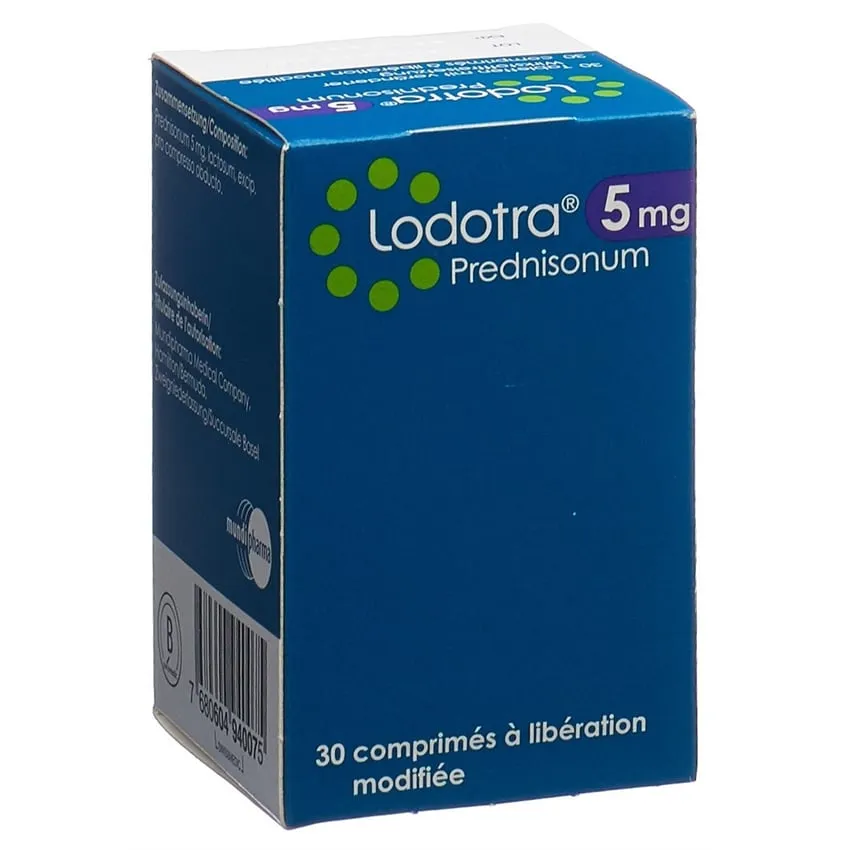
Table of Contents
- Package leaflet: Information for the user
- Lodotra 1 mg modified-release tablets, 2 mg modified-release tablets, 5 mg modified-release tablets
- 1. What Lodotra is and what it is used for
- 2. What you need to know before taking Lodotra
- 3. How to take Lodotra
- 4. Possible side effects
- 5. How to store Lodotra
- 6. Package contents and other information
Package leaflet: Information for the user
Lodotra 1 mg modified-release tablets, 2 mg modified-release tablets, 5 mg modified-release tablets
Prednisone
Please read this leaflet carefully before taking this medicine because it contains
important information for you.
- Keep this leaflet. You may need to read it again.
- If you have any questions, ask your doctor or pharmacist.
- This medicine has been prescribed for you only. Do not give it to other people, even if their symptoms are the same as yours, as it may be harmful.
- If you experience any side effects, including those not listed in this leaflet, inform your doctor or pharmacist. See section 4.
Contents of this leaflet:
- What Lodotra is and what it is used for
- What you need to know before taking Lodotra
- How to take Lodotra
- Possible side effects
- How to store Lodotra
- Contents of the pack and other information
1. What Lodotra is and what it is used for
Lodotra is a delayed-release tablet containing the active substance prednisone, a corticosteroid. Corticosteroids have anti-inflammatory activity. Anti-inflammatory medicines reduce pain, swelling, stiffness, redness, and heat in affected joints.
Lodotra is used for the treatment of:
- active, moderate to severe rheumatoid arthritis, particularly when associated with morning stiffness, in adults. Lodotra tablets have modified release. This means they are designed to release prednisone approximately 4 hours after intake. This allows Lodotra to be taken at bedtime, providing improvement of morning symptoms such as stiffness.
2. What you need to know before taking Lodotra
DO NOT take Lodotra
- If you are allergic to prednisone or to any of the other ingredients of this medicine (listed in section 6).
Warnings and precautions
Talk to your doctor or pharmacist before taking Lodotra.
You must inform your doctor if you currently have or have previously had any of the following conditions, or if you have undergone any of the following treatments:
- Abnormally high blood sugar (glucose) levels (diabetes). Your doctor may need to increase your dose of diabetes medication and closely monitor your blood glucose levels.
- Weakened bones (osteoporosis)
- Softening of the bones (osteomalacia)
- Stomach or intestinal ulcers
- Severe ulcerative colitis (inflammation of the colon), with a high risk of perforation (a hole) in the colon
- Inflammation of the intestine (diverticulitis)
- Condition immediately following surgery to connect two parts of the intestine (entero-anastomosis)
- Hepatitis B (a liver disease caused by a virus)
- Tuberculosis (TB), a bacterial infection that usually affects the lungs
- Swelling and inflammation of the lymph nodes after BCG vaccination (a vaccination against tuberculosis)
- Poliomyelitis (an infectious disease caused by a virus affecting the nervous system)
- Vaccination within the previous 8 weeks or the next 2 weeks (if live vaccines are used)
- Acute viral infection (e.g. chickenpox, cold sores or eye herpes, measles, or shingles)
- Acute bacterial infection (e.g. bacterial tonsillitis) or chronic bacterial infections (e.g. tuberculosis)
- Acute fungal infection (e.g. oral thrush)
- Parasitic infection (e.g. ascariasis). In patients with suspected or known parasitic infection (Strongyloides), Lodotra may cause widespread infection and extensive larval migration.
- High blood pressure. More frequent blood pressure checks may be necessary.
- Eye diseases (glaucoma). Closer monitoring of your condition may be required.
- Recent heart attack
- Kidney failure
- Corneal lesions or ulcers (the transparent front part of the eye covering the iris and pupil)
- Heart problems. Closer monitoring of your condition may be required.
- Mental illness
- Sleep disturbances may occur during treatment without apparent improvement. In such cases, switching to a conventional (immediate-release) prednisone formulation may be advisable.
- Scleroderma (also known as systemic sclerosis, an autoimmune disease), as daily doses equal to or greater than 15 mg may increase the risk of a serious complication called scleroderma renal crisis. Signs of scleroderma renal crisis include elevated blood pressure and reduced urine output. Your doctor may recommend regular monitoring of blood pressure and urine.
Contact your doctor if you experience blurred vision or other visual disturbances.
Lodotra may fail to achieve the desired blood levels of prednisone if taken on an empty stomach. Therefore, the medicine must always be taken during or immediately after the evening meal to ensure its effectiveness. Additionally, it should be noted that in 6–7% of patients who take Lodotra correctly, blood levels may still be insufficient. This should be considered if Lodotra appears less effective than expected. In such cases, switching to a conventional (immediate-release) prednisone formulation may be advisable.
Lodotra should not be used for acute treatment in place of immediate-release prednisone tablets, due to its pharmacological properties.
For any of the above-mentioned conditions or treatments, another type of medicine may be more suitable.
See also “Other important information about Lodotra”.
For athletes: using this medicine without therapeutic need constitutes doping and may lead to a positive anti-doping test.
YOUR DOCTOR WILL ADVISE YOU ON WHAT TO DO.
Other important information about Lodotra
Lodotra may affect the immune system.
This may impair your ability to fight infections. If your immune system is compromised:
- Vaccination with an inactivated vaccine (e.g. influenza or cholera vaccines) may not be effective if you are currently taking or start taking Lodotra.
- Certain viral diseases (such as chickenpox and measles) may be more severe. If you have not been vaccinated against these diseases, you may be at particular risk.
- There may be an increased risk of other serious infections. Treatment with Lodotra may increase the likelihood of developing an infection. If an infection develops, it may be more difficult to detect during treatment with Lodotra. A dose reduction of Lodotra may be necessary in case of:
- Hypothyroidism (underactive thyroid gland)
- Hepatic cirrhosis (liver disease caused by alcoholism or hepatitis). The dose of Lodotra may need to be increased during stressful events, such as:
- Surgery
- An ongoing infection. If you take Lodotra for several months or longer, your doctor will perform periodic checks, such as:
- Eye examination
- Blood tests
- Blood pressure monitoring. Treatment with Lodotra may negatively affect calcium metabolism in your bones. For this reason, you should discuss with your doctor the risk of osteoporosis (bone mass loss and fractures), especially if there is a family history of bone fractures, if you do not exercise regularly, if you are a woman in or post-menopause, or if you are elderly. When stopping treatment with Lodotra, there is a risk of:
- Recurrence of symptoms of rheumatoid arthritis
- Adrenal insufficiency. This occurs when the adrenal glands do not produce enough cortisol (a hormone), particularly likely during periods of stress, such as:
- Ongoing infections
- After an accident
- If subjected to increased physical exertion
- Corticosteroid withdrawal syndrome (a serious condition caused by the body’s failure to produce cortisol).
YOUR DOCTOR WILL ADVISE YOU ON WHAT TO DO.
Other medicines and Lodotra
Inform your doctor or pharmacist if you are currently taking, have recently taken, or might take any other medicines.
Treatment with Lodotra may enhance the effects of the following medicines:
- Heart medications, such as cardiac glycosides (e.g. digoxin)
- Laxatives or medicines that reduce salt levels, e.g. certain diuretics (medicines that increase urine production)
- Cyclosporine, a medicine used after organ transplantation or occasionally in severe rheumatoid arthritis
- Muscle relaxants, such as suxamethonium, used in hospitals
- Cyclophosphamide, a treatment for various types of cancer. Treatment with Lodotra may reduce the effects of the following medicines:
- Somatropin, a growth hormone
- Praziquantel, a treatment for parasitic infections
- Medicines for diabetes, e.g. insulin, metformin, glibenclamide. The following medicines may reduce the effect of Lodotra on rheumatoid arthritis symptoms:
- Treatments for epilepsy, such as barbiturates, phenytoin, and primidone
- Rifampicin, a treatment for infections
- Bupropion, a treatment for depression
- Antacids containing aluminium and magnesium. The following medicines may increase the effect of Lodotra on rheumatoid arthritis symptoms:
- Medicines containing estrogens, e.g. oral contraceptives, hormone replacement therapy (HRT)
- Liquorice (used as an expectorant in cough medicines and also present in sweets). Other effects of medicines:
- Inform your doctor if you are taking or have recently taken any other medicines, including those obtained without a prescription
- Some medicines may increase the effects of Lodotra, and your doctor may wish to monitor you closely if you are taking these medicines (including certain HIV treatments: ritonavir, cobicistat)
- Non-steroidal anti-inflammatory drugs (NSAIDs), such as acetylsalicylic acid, diclofenac, and ibuprofen, increase the risk of gastrointestinal bleeding
- Warfarin may cause either a reduction or an increase in blood-thinning effects, depending on the individual
- Treatment with ACE inhibitors (e.g. captopril or enalapril) for high blood pressure or heart failure may increase the risk of changes in blood cell counts
- Anticholinergic medicines (e.g. atropine) may increase the risk of elevated eye pressure (glaucoma)
- Medicines used to treat or prevent malaria (e.g. chloroquine, hydroxychloroquine, mefloquine) may increase the risk of muscle weakness, including weakness of the heart muscle
- Amphotericin B, an antifungal medicine, may increase the risk of hypokalemia
- Some diagnostic tests may be affected, for example:
- Skin tests for allergies
- Blood tests to measure levels of a hormone produced by the thyroid gland.
YOUR DOCTOR WILL ADVISE YOU ON WHAT TO DO.
Lodotra with food and drink
Take Lodotra in the evening, usually around 10 p.m. Ideally, take the modified-release tablets of Lodotra during or after the evening meal. The modified-release tablets of Lodotra must be swallowed whole with sufficient liquid, e.g. a glass of water.
DO NOT break, divide, or chew the tablets.
Additionally, if more than 2–3 hours have passed since your last meal, take the tablets with a light meal or snack.
Pregnancy and breastfeeding
If you are pregnant, think you may be pregnant, are planning to become pregnant, or are breastfeeding, consult your doctor or pharmacist before using this medicine.
Driving and using machines
It is unlikely that Lodotra will affect your ability to drive or operate machinery. However, if you experience eye pain or blurred vision during treatment, you should avoid these activities.
Lodotra contains lactose
This medicine contains a sugar called lactose. If you have been diagnosed with an intolerance to certain sugars, consult your doctor before taking Lodotra.
This medicine contains less than 1 mmol of sodium (23 mg) per tablet, i.e. essentially "sodium-free".
3. How to take Lodotra
Take this medicine exactly as directed by your doctor or pharmacist.
If you have any doubts, consult your doctor or pharmacist.
The dose of Lodotra prescribed by your doctor depends on the severity of the disease. Usually, it
should not exceed 10 mg of prednisone per day.
Under medical advice, the initial dose may be gradually reduced to a lower maintenance dose based on:
- symptoms of rheumatoid arthritis
- response to Lodotra. For dosage requirements not achievable with this formulation, other dosage strengths of this medicine are also available. When switching from standard glucocorticoid tablets taken in the morning to evening administration of Lodotra, the dose should contain the same amount of active ingredient (prednisone).
Method of administration:
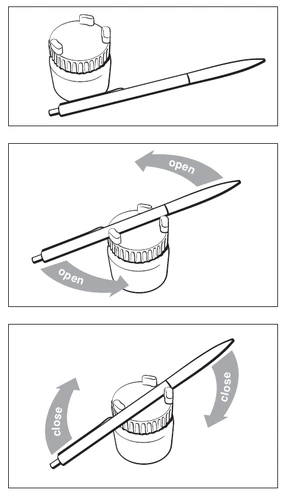
- How to open and close the specially designed Lodotra bottle for patients with rheumatoid arthritis: see “Instructions for opening and closing the container”
- Take the number of tablets prescribed by your doctor
- Do not break the tablet, as the integrity of the coating is important for the effectiveness of Lodotra
- Swallow the tablets whole: do not break, divide, or chew the tablets
- Take Lodotra in the evening (usually around 10 p.m.) with a glass of water
- You must take Lodotra during or after your evening meal. If more than 2–3 hours have passed since eating, take the tablet with a light meal or snack
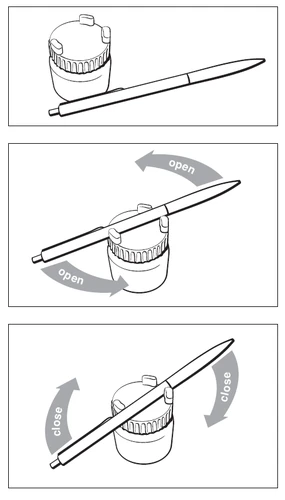
- Always take the tablets after dinner or after a light snack. Modified-release Lodotra tablets are usually taken for several months or longer. Your doctor will discuss with you the necessary duration of treatment. Instructions for opening and closing the container: Follow the instructions below:
| To open, insert a pen or similar object between the raised sections of the cap and rotate in the indicated direction (counterclockwise). | To close, insert a pen or similar object between the raised sections of the cap and rotate in the indicated direction (clockwise). |
If you take more Lodotra than you should
Acute intoxication cases with Lodotra are not known. In case of overdose, an increase in undesirable effects is likely, such as:
- disturbances in hormonal function
- effects on metabolism
- effects on electrolyte balance (salts), leading to an increased risk of heart rhythm abnormalities.
CONTACT YOUR DOCTOR IF YOU ARE CONCERNED OR IF YOU NOTICE AN INCREASE IN ADVERSE EFFECTS
If you forget to take Lodotra
CONTACT YOUR DOCTOR FOR ADVICE ON WHAT TO DO
If you stop taking Lodotra
Do not suddenly stop taking the modified-release Lodotra tablets.
If you discontinue treatment with Lodotra, symptoms of rheumatoid arthritis may reappear.
It is important to gradually reduce the dose of Lodotra. Your doctor will advise you on how to taper the dose gradually.
Lodotra must not be replaced with immediate-release prednisone tablets without first consulting your doctor.
IF YOU HAVE ANY DOUBTS ABOUT USING THIS MEDICINE, ASK YOUR DOCTOR OR PHARMACIST.
4. Possible side effects
Like all medicines, this medicine can cause side effects, although not everybody gets them.
The frequency and severity of the side effects listed below depend on the dosage and duration of treatment.
Common side effects of Lodotra (may affect up to 1 in 10 people):
Hormonal imbalance causing Cushing's syndrome (typical symptoms: round face, often called "moon face", weight gain in the upper part of the body, and skin rash on the face), as well as reduced production of glucocorticoids in the body.
Disturbances in the balance of sugars, fats, and salts in the body, which may cause:
- increased appetite and body weight
- diabetes
- high cholesterol
- heart rhythm disorders (due to increased potassium excretion)
- fluid retention (edema, due to reduced sodium excretion).
Reduced ability to fight infections. Infections may be more severe or their symptoms may be masked. Increased susceptibility and severity of infections.
Clouding of the lens (cataract) and increased eye pressure (glaucoma), with or without eye pain.
Stretch marks, bruising, or red spots on the skin or inside the mouth, skin deterioration.
Increase or decrease in the number of blood cells.
Muscle deterioration and weakness, bone deterioration leading to an increased risk of bone fractures (osteoporosis).
Headache.
Sleep difficulties.
Uncommon side effects of Lodotra (may affect up to 1 in 100 people):
- High blood pressure
- Thickening or inflammation of blood vessel linings and blood clots
- Stomach ulcers and intestinal bleeding
- Increased hair growth, spots, or other skin imperfections, delayed wound healing, acne
Rare side effects of Lodotra (may affect up to 1 in 1,000 people):
- Allergic reactions, including blistering of the skin
- Inflammation of the pancreas, causing severe abdominal pain
- Disturbances in sex hormone secretion, which may cause: absence of menstrual periods in women or impotence in men
- Thyroid function disorder
- Depression (feeling sad), irritability, feelings of unjustified happiness, increased impulsiveness, loss of contact with reality (psychosis)
- Increased pressure in the head, causing headache, vomiting, and double vision
- Development or worsening of epileptic seizures
- Worsening of existing eye ulcers or infections
- Bone loss (osteonecrosis)
Lodotra side effects with unknown frequency (frequency cannot be estimated from the available data):
- Reversible accumulation of fat at the back, neck, and chest (lipomatosis)
- Rapid heartbeat
- Slow heartbeat
- Acid-base blood imbalance due to low potassium levels (hypokalemic alkalosis)
- Visual distortion due to fluid loss from the retina (central serous chorioretinopathy)
- Blurred vision
- Nausea, diarrhea, vomiting
- Excessive hair growth in women (hirsutism)
- Muscle atrophy in the upper arms and legs, tendon rupture, vertebral and long bone fractures
- Scleroderma renal crisis in patients already affected by scleroderma (an autoimmune disease)
Signs of scleroderma renal crisis include increased arterial blood pressure and reduced urine production.
Reporting of adverse events:
If you experience any side effect, including those not listed in this leaflet, talk to your doctor or pharmacist. You can also report the adverse event directly via the national reporting system at the website: www.agenziafarmaco.gov.it/content/come-segnalare-una-sospetta-reazione-avversa. By reporting adverse events, you help provide more information on the safety of this medicine.
IF YOU EXPERIENCE ANY SIDE EFFECT, INCLUDING THOSE NOT LISTED IN THIS LEAFLET, TALK TO YOUR DOCTOR OR PHARMACIST
5. How to store Lodotra
- Keep this medicine out of the sight and reach of children.
- Do not use this medicine after the expiry date stated on the bottle and carton. The expiry date refers to the last day of the month.
- After opening the container, the tablets can be stored in the bottle for up to 14 weeks. After this period, discard any remaining tablets.
- Do not store above 25°C.
- Do not dispose of any medicine via wastewater or household waste. Ask your pharmacist how to dispose of medicines no longer in use. This will help protect the environment.
6. Package contents and other information
What Lodotra contains
The active substance is prednisone.
One 1 mg modified-release tablet of Lodotra contains 1 mg of prednisone.
One 2 mg modified-release tablet of Lodotra contains 2 mg of prednisone.
One 5 mg modified-release tablet of Lodotra contains 5 mg of prednisone.
The other ingredients are:
Tablet core: Tablet coating:
- Anhydrous colloidal silica - Anhydrous colloidal silica
- Sodium croscarmellose - Dicalcium hydrogen phosphate dihydrate
- Lactose monohydrate - Glyceryl dibehenate
- Magnesium stearate - Magnesium stearate
- Povidone K 29/32 - Povidone K 29/32
- Iron oxide red E172 - Iron oxide yellow E172
Description of the appearance of Lodotra and contents of the pack
Lodotra 1 mg modified-release tablets are light white-yellowish, cylindrical tablets with "NP1" embossed on one side.
Lodotra 2 mg modified-release tablets are white-yellowish, cylindrical tablets with "NP2" embossed on one side.
Lodotra 5 mg modified-release tablets are light yellow, cylindrical tablets with "NP5" embossed on one side.
Pack sizes: bottles containing 30 and 100 modified-release tablets.
Hospital packs: bottles containing 30, 100 and 500 modified-release tablets.
It is possible that not all pack sizes are marketed.
Marketing Authorization Holder
Mundipharma Pharmaceuticals Srl, Via F. Turati 40, 20121 Milano, Italy.
Manufacturer
SKYEPHARMA PRODUCTION SAS
ZI des Chesnes Ouest 55 rue du Montmurier
38070 Saint Quentin Fallavier
France
This medicinal product is authorized in the European Economic Area Member States under the following names:
Germany Lodotra 1 mg/2 mg/5 mg Tabletten mit verzögerter Wirkstofffreisetzung
Italy Lodotra 1 mg/2 mg/5 mg compresse a rilascio modificato
July 2021