Loargys
Italy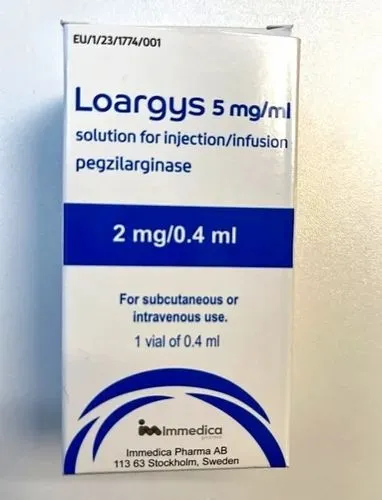
Instructions for Use
Table of Contents
- Loargys 5 mg/mL solution for injection/infusion
- 1. What Loargys is and what it is used for
- 2. What you should know before taking Loargys
- 3. How Loargys is administered
- 4. Possible side effects
- 5. How to store Loargys
- 6. Package contents and other information
- 7. Instructions for Use
- The following information is intended exclusively for healthcare professionals:
Package leaflet: Information for the patient
Loargys 5 mg/mL solution for injection/infusion
Pegzilarginase
This medicinal product is subject to additional monitoring. This will allow rapid identification of new safety information. You can help by reporting any adverse reactions you experience while taking this medicine. See the end of section 4 for information on how to report adverse reactions.
Please read this leaflet carefully before you are given this medicine because it contains important information for you.
- Keep this leaflet. You may need to read it again.
- If you have any questions, ask your doctor or nurse.
- If you get any side effects, including those not listed in this leaflet, tell your doctor or nurse. See section 4.
Contents of this leaflet
- What Loargys is and what it is used for
- What you need to know before you are given Loargys
- How Loargys is administered
- Possible side effects
- How to store Loargys
- Contents of the pack and other information
- Instructions for use
1. What Loargys is and what it is used for
Loargys contains the active substance pegzilarginase, which is a modified human enzyme produced using recombinant DNA technology. The medicine is used to treat arginase 1 deficiency (ARG1-D), also known as hyperargininemia, in adults, adolescents, and children from the age of 2 years.
Patients with ARG1-D have low levels of an enzyme called arginase. This enzyme helps the body regulate levels of arginine, an amino acid the body needs to produce proteins. If arginine is not properly regulated, it can build up in the body and cause symptoms such as problems with muscle control.
Loargys is used in combination with other disease management approaches. These may include:
- a low-protein diet;
- dietary supplements with essential amino acids;
- medicines to manage other disease symptoms, such as medicines that reduce ammonia levels in the body.
How Loargys works
Pegzilarginase, the active substance in Loargys, works similarly to the natural enzyme arginase, which is missing or not working properly in patients with ARG1-D. This reduces the levels of arginine in the blood, thereby reducing disease symptoms.
2. What you should know before taking Loargys
Do not take Loargys
- if you have had a severe allergic reaction to pegzilarginase or to any of the other ingredients of this medicine (listed in section 6).
Warnings and precautions
Loargys may cause allergic reactions. This is more likely to occur after the first few doses, but
may also occur later during treatment.
If possible, stop administration immediately and follow your doctor's instructions,
seeking immediate medical attention if you experience any of the following symptoms of a severe
allergic reaction: hives, generalized itching, feeling of tightness in the chest,
difficulty breathing, or low blood pressure. Your doctor may decide that you need additional
therapeutic treatment to prevent or treat an allergic reaction.
During treatment, your doctor will perform blood tests to determine the correct dose of Loargys for you.
Children and adolescents
This medicine must not be used in children under 2 years of age, as it is not known whether
Loargys is safe and effective in this age group.
Other medicines and Loargys
Tell your doctor if you are taking, have recently taken, or might take any other
medicines.
Pregnancy, breastfeeding and fertility
If you are pregnant, think you might be pregnant, planning a pregnancy, or are breastfeeding,
please consult your doctor before using this medicine. The use of Loargys is not
recommended during pregnancy.
It is not known whether the medicine passes into breast milk. If you are breastfeeding,
please consult your doctor before taking this medicine. Your doctor will help you decide whether to discontinue breastfeeding or treatment.
Driving and using machines
Loargys does not affect or affects negligibly the ability to drive and use machines.
Loargys contains sodium and potassium
This medicine contains less than 1 mmol of sodium (23 mg) per dose, meaning it is essentially “sodium-free”. This medicine contains potassium, less than 1 mmol (39 mg) per dose, meaning it is essentially “potassium-free”.
3. How Loargys is administered
Loargys will be administered to you by a healthcare professional. Your doctor will decide the amount of Loargys to be administered.
The recommended starting dose of Loargys is 0.1 mg per kilogram of body weight, to be given once a week. Your doctor may increase or decrease the dose to keep your blood arginine levels under control. Your doctor will regularly perform blood tests to monitor your arginine levels and, if necessary, adjust the dose accordingly.
Loargys is administered either as an intravenous infusion (given drop by drop) directly into a vein or as a subcutaneous injection, as deemed appropriate by your doctor.
Your doctor may decide that Loargys can be administered at home as a subcutaneous injection. After receiving instructions from your doctor or nurse, you may self-administer the Loargys injection (see the instructions in section 7 below).
Always use this medicine exactly as described in this leaflet or as instructed by your doctor, pharmacist, or nurse. If you have any doubts, consult your doctor, pharmacist, or nurse.
If you take more Loargys than you should
Your doctor will ensure that you receive the correct amount of Loargys. If you have been given an excessive amount of Loargys, your blood arginine levels may become too low. Symptoms may include nausea, vomiting, diarrhoea, and fatigue. If you or your doctor suspect that you have been given more Loargys than intended, you must be closely monitored and receive any necessary treatment.
If you forget to take Loargys
If you have missed a dose of Loargys, contact your doctor to schedule the next dose as soon as possible. You must not be given a double dose to make up for the missed dose, and at least 4 days must pass between one dose and the next.
If you stop treatment with Loargys
Your doctor will decide whether you should stop taking Loargys. If you discontinue treatment with Loargys, your blood arginine levels are likely to rise again.
If you have any doubts about how to use this medicine, consult your doctor or nurse.
4. Possible side effects
Like all medicines, this medicine can cause side effects, although not everybody gets them.
Very common (may affect more than 1 in 10 people):
- reaction at injection site. Symptoms may include pain, swelling, irritation, redness, and rash around the injection site.
- allergic reaction (hypersensitivity). Symptoms may include swelling of the face, rash, sudden reddening of the skin (flushing), and shortness of breath (dyspnea).
Reporting of side effects
If you experience any side effect, including those not listed in this leaflet, talk to your doctor or nurse.
You can also report side effects directly via the national reporting system detailed in Annex V.
By reporting side effects, you can help provide more information on the safety of this medicine.
5. How to store Loargys
Keep this medicine out of the sight and reach of children.
Do not use this medicine after the expiry date stated on the label. The expiry date refers to the last day of that month.
Store in a refrigerator (2 °C - 8 °C). Do not freeze. Keep in the original packaging to protect from light.
After removal from the refrigerator, Loargys may be stored for up to 2 hours at room temperature up to 25ºC.
Do not dispose of any medicine via wastewater or household waste. This will help protect the environment.
6. Package contents and other information
What Loargys contains
- The active substance is pegzilarginase.
- Each 0.4 mL vial contains 2 mg of pegzilarginase.
- Each 1 mL vial contains 5 mg of pegzilarginase.
- The other ingredients are sodium chloride, potassium dihydrogen phosphate, dipotassium phosphate, glycerol, hydrochloric acid, sodium hydroxide and water for injections. Loargys contains sodium and potassium (see section 2).
Description of the appearance of Loargys and contents of the pack
Loargys is a liquid, colourless to slightly yellow or slightly pink, from clear to slightly opalescent (pearly), in a transparent glass vial.
Each pack contains 1 vial with 0.4 mL or 1 mL of injectable/infusion solution.
Not all pack sizes may be marketed.
Marketing Authorisation Holder and Manufacturer
Immedica Pharma AB
113 63 Stockholm
Sweden
Manufacturer
Unimedic AB
Storjordenvägen 2
864 31 Matfors
Sweden
This medicinal product has been authorised under “exceptional circumstances”. This means that, because the disease is rare, it has not been possible to obtain complete information about this medicinal product.
The European Medicines Agency will review annually any new information on this medicinal product and this package leaflet will be updated, if necessary.
Other sources of information
More detailed information on this medicinal product is available on the website of the European Medicines Agency: https://www.ema.europa.eu. Links to other websites on rare diseases and related therapeutic treatments are also provided.
This leaflet is available in all languages of the European Union/European Economic Area on the European Medicines Agency website.
You can find this package leaflet and the approved educational materials for this medicinal product by scanning the QR code below with a smartphone or by visiting the website http://www.loargyspatient.eu

7. Instructions for Use
The steps below describe how to prepare and administer Loargys at home by subcutaneous injection. If you are injecting this medicine yourself, your doctor or nurse will provide instructions on how to prepare and inject Loargys.
Do not inject this medicine yourself unless you have received training and fully understand the steps involved.
Your doctor will prescribe the correct dose and tell you the volume (in mL) to inject. You may need more than one vial to obtain the correct dose, and it may be necessary to divide the total dose into more than one injection. Your doctor or nurse will tell you exactly what is appropriate for you.
Each vial is for single use only. Always use one or more new vials for each dose.
Loargys must not be mixed with other injectable solutions or infusion solutions.
Do not shake.
Preparation
Make sure you have all the necessary items ready for the injection(s):
- Loargys vials;
- a graduated syringe;
- 1 large needle (e.g. 18 gauge) per vial, for drawing up the dose;
- 1 small needle (e.g. 26–27 gauge) for injection;
- alcohol swabs;
- gauze pad;
- adhesive bandage, if needed;
- sharps container.
- Check the name and strength of the vial(s) to ensure they contain the correct medicine, and make sure you have the correct number of vials ready. Check the expiry date on the carton. Do not use if the product has expired.
- Remove the unopened Loargys vial(s) from the refrigerator 15 to 30 minutes before injection to allow the solution to reach room temperature. Do not use external heat sources.
- Wash your hands.
- The solution in the vial should be colourless to slightly yellow or slightly pink, and clear to slightly opalescent (pearly). Do not use if the solution is cloudy or contains visible particles.
- Place the vial on a clean, flat surface. Remove the plastic flip-off cap from the vial.
- Clean the top of the vial with an alcohol swab and allow it to air dry. Do not touch the top of the vial or let it come into contact with anything else after cleaning.
Drawing up the solution from the vial:
- Attach a large needle to the graduated syringe. Remove the needle cap.
- Pull back the plunger to draw air into the syringe equal to the volume to be drawn from the vial (in mL).
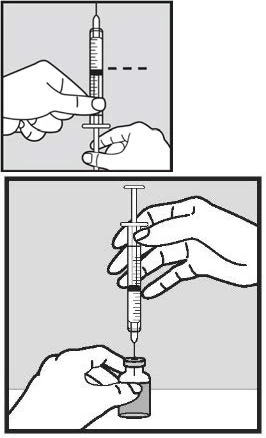
- Holding the vial on a flat surface, slowly insert the needle through the rubber stopper into the vial.
a) For a single vial or the first vial: the tip of the needle must not touch the solution to avoid foaming. Proceed to step 4.
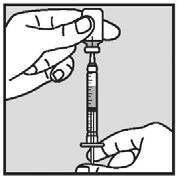
b) For subsequent vials: invert the vial and ensure the tip of the needle is in the air space above the solution to avoid foaming.
- Slowly push the plunger to inject air into the vial.
- Keep the needle in the vial and turn the vial upside down. With the needle tip in the solution, slowly pull back the plunger to the mark corresponding to the required volume.
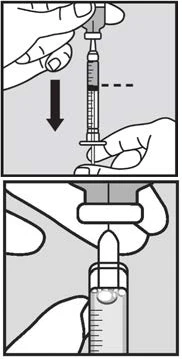
- Before removing the needle from the vial, check the solution in the syringe for air bubbles. If bubbles are present, keep the vial inverted with the needle pointing upward. Gently tap the syringe barrel with your finger. Once all air bubbles have risen to the top, gently push the plunger to expel the bubbles through the needle.
- Check the dose (in mL) against the graduated markings on the syringe to confirm the correct amount of solution has been drawn up.
- Remove the needle from the vial, replace the needle cap, and dispose of it in the sharps container.
- You may need to use more than one vial to draw up the full prescribed volume (in mL). If so, repeat steps 1 to 8 above for each additional vial required to achieve the total dose (in mL), as directed by your doctor or nurse. Always follow the instructions provided by your doctor or nurse. Note that a new needle must be used for each new vial.
- Attach a small needle to the filled syringe, without removing the needle cap. Make sure the needle is securely attached.
Note: If the solution is not used immediately, protect the syringe from light.
After preparation, Loargys may be stored at room temperature (up to 25°C) for a maximum of 2 hours before administration. After this time, Loargys must not be used and must be discarded.
Administration of the Dose
-
Remove the needle cap. Hold the syringe with the needle pointing upward and gently tap the barrel to remove any air bubbles.
Visually check that the volume in the syringe is correct. The injection volume must not exceed 1 mL. If it does, multiple injections at different sites are required. -
Choose an injection site (abdomen, thigh, or the side or back of the upper arm). Rotate injection sites with each dose.
Do not inject into scar tissue or into red, inflamed, or swollen areas. When injecting into the abdomen, avoid the area immediately surrounding the navel.
If more than one injection is required for a single dose of Loargys, injection sites must be at least 3 cm apart.
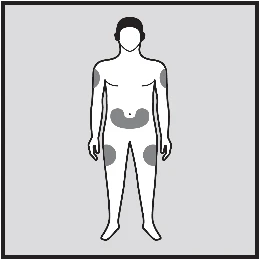
- Clean the injection site with an alcohol swab and allow the skin to dry.
- Gently pinch the skin at the chosen injection site between your thumb and index finger.
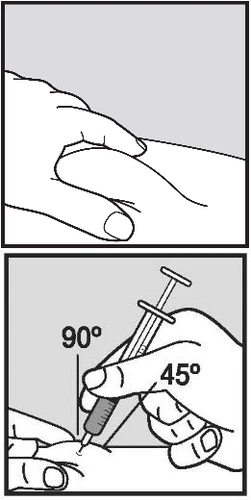
-
Hold the syringe like a pencil or dart. Insert the needle into the lifted skin at an angle between 45º and 90º.
-
While continuing to pinch the skin, slowly push the plunger to inject the required volume.
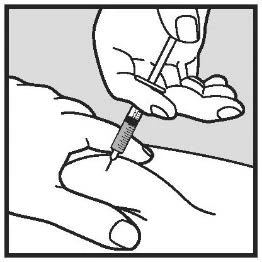
Reminder: If a volume of Loargys greater than 1 mL needs to be injected, change the injection site, ensuring the new site is more than 3 cm away from the previous one. Slowly push the plunger to inject the required volume. Repeat the procedure until the total dose (in mL) has been administered.
Always use a new small needle for each injection.
- Remove the syringe by pulling it straight out. Release the pinched skin and gently press a gauze pad over the injection site for a few seconds. Apply an adhesive bandage if needed.
- Place the used syringe, needles, and caps into the sharps container. Used vials, even if not empty, must be disposed of in accordance with local guidelines.
Record the date of the injection and all injection sites used. This helps you use a different injection site for your next dose.
The following information is intended exclusively for healthcare professionals:
Loargys is indicated for intravenous or subcutaneous infusion.
Use aseptic technique for the preparation and administration of Loargys.
Do not shake.
Instructions for preparation
- Determine the total volume of Loargys to be administered (and the number of vials required) based on the patient's weight and dose level.
- Remove the vial(s) from the refrigerator to allow them to reach room temperature.
- Visually inspect the vial(s) before administration for the presence of particles and discoloration.
o Loargys is a liquid ranging from colorless to slightly yellow or slightly pink, from clear to slightly opalescent, essentially free from visible extraneous particles.
o Discard any vial(s) that do not meet this description. - Withdraw the required dose into a syringe.
- Chemical and physical stability of the prepared dose has been demonstrated for 2 hours when stored at room temperature up to 25°C, or up to 4 hours if refrigerated at 2°C to 8°C. If the product is not used within these timeframes, it must be discarded. From a microbiological standpoint, the product should be used immediately after preparation.
For intravenous administration
- Dilute with 9 mg/mL (0.9%) sodium chloride injection solution to achieve the desired infusion volume (maximum pegzilarginase concentration of 0.5 mg/mL).
- Administer the intravenous infusion over at least 30 minutes.
- Do not mix other medicinal products with Loargys or administer other medicinal products simultaneously through the same intravenous access site.
For subcutaneous administration
- Administer the undiluted solution as a subcutaneous injection into the abdomen, the lateral thigh, or the lateral or posterior upper arm. Rotate injection sites between doses.
- Do not inject into scar tissue or into areas that are red, inflamed, or swollen.
- When injecting into the abdomen, avoid the area immediately surrounding the umbilicus.
- If more than one injection is required for a single dose of Loargys, injection sites should be at least 3 cm apart.
Discard any unused portion of the medicinal product.
No special requirements for disposal.
ANNEX IV
SCIENTIFIC CONCLUSIONS AND REASONS FOR THE VARIATION OF THE TERMS
OF THE MARKETING AUTHORISATIONS
Scientific conclusions
Taking into account the assessment by the Pharmacovigilance Risk Assessment Committee (PRAC) of the Periodic Safety Update Reports (PSURs) for pegzilarginase, the scientific conclusions of the PRAC are as follows:
In light of available data on hypersensitivity from the active surveillance programme, including two cases (one of them severe) of hypersensitivity occurring in close temporal association with subcutaneous administration, and considering a plausible mechanism of action, the PRAC considers it necessary to amend the relevant sections of the product information for medicinal products containing pegzilarginase.
Having reviewed the PRAC recommendation, the Committee for Human Medicinal Products (CHMP) agrees with the overall conclusions and the rationale of the recommendation.
Reasons for the variation of the terms of the marketing authorisations
Based on the scientific conclusions regarding pegzilarginase, the CHMP considers that the benefit-risk balance of medicinal products containing pegzilarginase remains unchanged, subject to the proposed amendments to the product information.
The CHMP recommends the variation of the terms of the marketing authorisations.
This page has been machine-translated and may contain inaccuracies. The original data is available in the manufacturing country's language.
Last data check: May 11, 2026 · Data source: Agenzia Italiana del Farmaco (AIFA)