Litak
Italy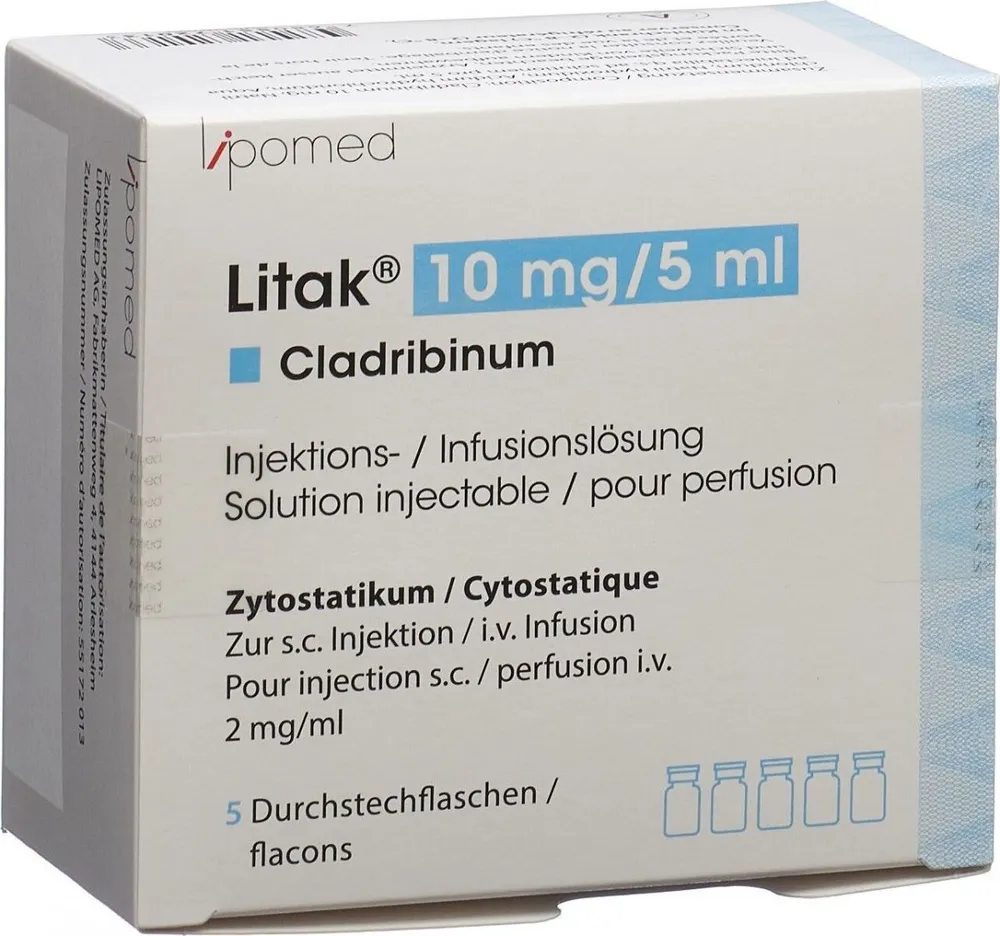
Table of Contents
Package leaflet: Information for the user
LITAK 2 mg/ml solution for injection
cladribine
Please read all of this leaflet carefully before you use this medicine because it contains important information for you.
- Keep this leaflet. You may need to read it again.
- If you have any questions, ask your doctor or pharmacist.
- If you experience any side effects, including those not listed in this leaflet, tell your doctor or pharmacist. See section 4.
Contents of this leaflet
- What LITAK is and what it is used for
- What you need to know before using LITAK
- How to use LITAK
- Possible side effects
- How to store LITAK
- Contents of the pack and other information
1. What LITAK is and what it is used for
LITAK contains the active substance cladribine. Cladribine is a cytostatic agent that acts on the growth of malignant white blood cells (cancerous cells), which play a role in hairy cell leukemia. LITAK is used to treat this disease.
2. What you need to know before using LITAK
Do not use LITAK
- if you are allergic to cladribine or to any of the other ingredients of LITAK (listed in section 6)
- if you are pregnant or breastfeeding
- if you are under 18 years of age
- if you have moderate to severe kidney or liver impairment
- if you are taking other medicines that affect blood cell production in the bone marrow (myelosuppression).
Warnings and precautions
Talk to your doctor or pharmacist before using LITAK.
At any time during or after treatment, contact your doctor or nurse immediately if you experience:
blurred vision, loss of vision or double vision, difficulty speaking, weakness in one arm or leg, changes in the way you walk or problems with balance, persistent numbness, reduced sensation or loss of sensation, memory loss or confusion. These may be symptoms of a serious and potentially life-threatening brain disease known as progressive multifocal leukoencephalopathy (PML).
If you had these symptoms before starting treatment with cladribine, inform your doctor about any changes in these symptoms.
Inform your doctor if you have or have had:
- liver or kidney problems
- infections
- if you have an infection, it will be treated before you start using LITAK.
- if you notice symptoms of infection (such as flu-like symptoms or fever) during or after treatment with LITAK, inform your doctor immediately.
- fever
Before and during treatment with LITAK, you must have regular blood tests to determine whether it is safe to continue treatment. Your doctor may decide to give you blood transfusions to improve your blood cell levels. Kidney and liver function must also be monitored.
If you plan to have children, inform your doctor before starting treatment with LITAK. Use effective contraception during treatment and for at least 6 months after treatment with LITAK. Your doctor may advise you about the possibility of freezing (cryopreserving) sperm.
Other medicines and LITAK
Inform your doctor if you are taking, or have recently taken, any other medicines, including those not requiring a prescription. In particular, inform your doctor if you are taking any medicine containing:
- corticosteroids, commonly used to treat inflammation
- antiviral agents, used to treat viral infections
You must not use LITAK with other medicines that affect blood cell production in the bone marrow (myelosuppression).
Pregnancy and breastfeeding
You must not use LITAK if you are pregnant. Use adequate contraceptive methods during treatment with LITAK and for at least 6 months after the last dose of LITAK. If you become pregnant during treatment, inform your doctor immediately.
Do not breastfeed during treatment with LITAK and for at least six months after the last dose of LITAK.
Driving and using machines
LITAK may impair your ability to drive or operate machinery. If you feel drowsy, which may be due to a low red blood cell count caused by treatment with LITAK, or if you experience dizziness, you must not drive or operate machinery.
3. How to use LITAK
Use LITAK exactly as directed by your doctor. If you have any doubts, consult your doctor or pharmacist.
Your doctor will calculate the dose based on your body weight and will explain the treatment schedule in detail. The recommended daily dose is 0.14 mg/kg body weight for 5 consecutive days (one treatment cycle).
LITAK must be injected under the skin (subcutaneous injection), approximately at the same time each day.
If you are self-injecting LITAK, you must first be properly trained by your doctor or nurse. Detailed instructions for injection are provided at the end of this leaflet.
You may also receive another medicine containing the active substance allopurinol to reduce excess uric acid.
If you use more LITAK than you should
If you inject an incorrect dose, inform your doctor immediately.
If you forget to use LITAK
Do not inject a double dose to make up for the missed dose. If you forget to inject a dose, inform your doctor immediately.
If you have any questions about the use of LITAK, consult your doctor or pharmacist.
4. Possible side effects
Like all medicines, LITAK can cause side effects, although not everybody experiences them.
Immediately inform your doctor if you notice any of the following symptoms during or after treatment with LITAK:
- any signs of infection (e.g. flu-like symptoms)
- fever
The repeated occurrence of malignant diseases (cancer) cannot be excluded. This means that your risk of developing a malignant disease in the future is slightly higher than in healthy individuals. This slightly increased risk may be due to hairy cell leukemia or to the treatments used to manage the disease, including LITAK.
The following side effects may occur:
Very common side effects (may affect more than 1 in 10 people)
- Infections.
- Fever.
- Low levels of certain white blood cells (neutrophils and lymphocytes) and of platelets in blood tests.
- Low red blood cell count, which may cause anaemia, with symptoms such as fatigue and drowsiness.
- Reduced immune system function.
- Headache, dizziness.
- Abnormal respiratory and chest sounds, cough.
- Nausea, vomiting, constipation, and diarrhoea.
- Skin rash, swelling, redness, and tenderness at the injection site, sweating. Skin reactions are generally mild to moderate in severity and usually resolve within a few days.
- Tiredness, chills, loss of appetite.
- Weakness.
Common side effects (may affect up to 1 in 10 people)
- Recurrent malignant diseases (cancer).
- Low platelet count, which may cause unusual bleeding (e.g. bleeding from the nose or skin).
- Insomnia, anxiety.
- Increased heart rate, abnormal heart sounds, low blood pressure, reduced blood supply to the heart muscle.
- Shortness of breath, lung tissue swelling due to infection, inflammation of the mouth and tongue.
- Abdominal pain and excessive gas in the stomach or intestines, generally mild increases in liver laboratory values (bilirubin, transaminases), which return to normal after treatment ends.
- Itching, itchy skin rash (urticaria), skin redness and pain.
- Tissue swelling (oedema), malaise, pain (in muscles, joints, and bones).
Uncommon side effects (may affect up to 1 in 100 people)
- Anaemia caused by destruction of red blood cells.
- Drowsiness, numbness and tingling sensations on the skin, weakness, lack of energy, peripheral nerve disorders, confusion, inability to coordinate movements.
- Inflammation of the eye.
- Sore throat.
- Inflammation of a vein.
- Severe weight loss.
Rare side effects (may affect up to 1 in 1,000 people)
- Reduced liver function.
- Reduced kidney function.
- Complications due to cancer treatment, resulting from the destruction of tumour cells.
- Transfusion reaction (rejection of blood transfusions).
- Increased number of certain white blood cells (eosinophils).
- Stroke.
- Speech and swallowing disorders.
- Heart failure.
- Irregular heart rhythm.
- Inability of the heart to maintain adequate blood circulation.
- Intestinal obstruction.
- Severe skin allergic reaction (Stevens-Johnson syndrome or Lyell syndrome).
Very rare side effects (may affect up to 1 in 10,000 people)
- Depression, epileptic seizure.
- Swelling of the eyelid.
- Blood clot in the lung.
- Inflammation of the gallbladder.
- Organ dysfunction due to high levels of a specific substance produced by the body (a glycoprotein).
Reporting of side effects
If you experience any side effect, including those not listed in this leaflet, talk to your doctor or pharmacist. You can also report side effects directly via the national reporting system listed in Annex V. By reporting side effects, you can help provide more information on the safety of this medicine.
5. How to store LITAK
Keep out of the sight and reach of children.
Store in a refrigerator (2°C - 8°C). Do not freeze.
Do not use LITAK after the expiry date stated on the vial label and on the carton after "Exp". The expiry date refers to the last day of that month.
From a microbiological standpoint, unless the method of opening excludes the risk of microbiological contamination, the medicinal product should be used immediately. If the product is not used immediately, the duration and conditions of storage prior to use are the responsibility of the user.
Do not use LITAK if you notice that the vial is damaged or if the solution is not clear or contains particles.
Unused medicine and waste material must be disposed of in accordance with local regulations.
6. Package contents and other information
What LITAK contains
- The active substance is cladribine. Each ml of solution contains 2 mg of cladribine. Each vial contains 10 mg of cladribine in 5 ml of solution.
- The other components are sodium chloride, sodium hydroxide (to adjust pH), hydrochloric acid (to adjust pH) and water for injections.
Description of the appearance of LITAK and contents of the pack
LITAK is available in glass vials containing 5 ml of clear, colourless injectable solution.
Packs containing 1 or 5 vials. Not all pack sizes may be marketed.
Marketing Authorisation Holder and Manufacturer
Lipomed GmbH
Hegenheimer Strasse 2
D-79576 Weil/Rhein
Germany
For further information about this medicinal product, please contact the Marketing Authorisation Holder.
More detailed information on this medicinal product is available on the website of the European Medicines Agency: http://www.ema.europa.eu .
INJECTION INSTRUCTIONS
This section contains information on how to inject LITAK. It is important that you do not attempt to self-inject the medicine until you have been specifically trained by your doctor or nurse. Your doctor will tell you the dose, frequency and timing of your LITAK injections.
LITAK must be injected into the tissue directly beneath the skin (subcutaneous injection). If you have any questions about self-injection, consult your doctor or nurse.
LITAK is a cytotoxic medicine and must therefore be handled with care. If LITAK is not self-injected by the patient, the use of disposable gloves and protective clothing is recommended during handling and administration of LITAK. In case of contact with skin or eyes, immediately rinse the affected area thoroughly with plenty of water. Pregnant women should avoid contact with LITAK.
What do you need for the injection?
For subcutaneous self-injection, you will need:
- one vial of LITAK (or two vials if you need to inject more than 5 ml). Do not use the medicine if vials are damaged, the solution is not clear or contains particles.
- a sterile syringe (e.g. 10 ml LUER syringe),
- a sterile injection needle (e.g. 0.5 x 19 mm, 25 G x ¾’’),
- alcohol-impregnated cotton swabs,
- a puncture-proof container for safe disposal of the used syringe.
What to do before self-injecting LITAK subcutaneously?
- Before administration, bring LITAK to room temperature.
- Wash your hands thoroughly.
- Find a comfortable, well-lit place and lay out all necessary items within easy reach.
How to prepare the injection?
Before injecting LITAK, perform the following steps:
- Remove the red protective cap from the LITAK vial. Do not remove the rubber stopper. Clean the rubber stopper with an alcohol-impregnated cotton swab. Remove the syringe from its packaging without touching the tip. Remove the injection needle from its packaging and firmly attach it to the end of the syringe. Remove the needle cover without touching the needle.
- Insert the needle through the rubber stopper of the vial and turn the vial and syringe upside down. Ensure the needle tip is immersed in the solution.
- Draw the correct amount of LITAK into the syringe by pulling back the plunger (your doctor will tell you how many ml of LITAK to inject).
- Remove the needle from the vial.
- Ensure no residual air remains in the syringe: point the needle upward and expel any air.
- Check that you have drawn up the exact amount.
- Inject immediately.
Where should you administer the injection?
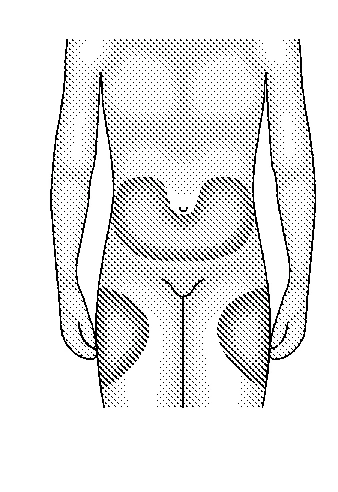
The most suitable sites for self-injection are:
the upper thighs and the abdomen, excluding the area around the navel.
If another person administers the injection, the outer upper arms or buttocks may also be used.
How to administer the injection?
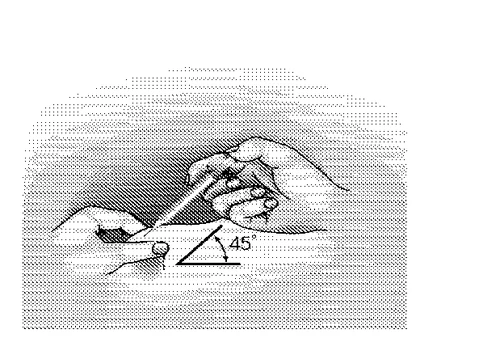
- Disinfect the skin using an alcohol-impregnated cotton swab. Wait until the area is dry, then lift the skin gently between your thumb and index finger without compressing it.
- Insert the needle completely into the skin at an angle of approximately 45°, as shown in the figure.
- Gently pull back the plunger to ensure you have not entered a blood vessel. If blood appears in the syringe, remove the needle and insert it at another site.
- Inject the liquid slowly and evenly over about one minute, keeping the skin lifted between thumb and index finger.
- After injecting the liquid, withdraw the needle.
- Place the used syringe in a puncture-proof container. Use a new syringe and needle for each injection. Vials are for single use only. Return any unused portion of the contents to your doctor or pharmacist for proper disposal.
Disposal of used syringes
Place used syringes in a puncture-proof container and keep them out of the reach and sight of children.
Dispose of the puncture-proof container according to instructions provided by your doctor, nurse or pharmacist.
Never discard used syringes in household waste bins.
ANNEX IV
SCIENTIFIC CONCLUSIONS AND REASONS FOR THE VARIATION OF THE TERMS
OF THE MARKETING AUTHORISATIONS
Scientific conclusions
Taking into account the evaluation by the Pharmacovigilance and Risk Assessment Committee (PRAC) of the Periodic Safety Update Reports (PSURs) for cladribine (except products indicated for multiple sclerosis), the PRAC's scientific conclusions are as follows:
Based on available data from the literature regarding the excretion of cladribine in human breast milk, the PRAC considers that excretion of cladribine into breast milk is at least a reasonable possibility. The PRAC concluded that the product information for medicinal products containing cladribine (except those indicated for multiple sclerosis) should be amended accordingly.
Having reviewed the PRAC's recommendation, the Committee for Human Medicinal Products (CHMP) agrees with the general conclusions and the rationale of the recommendation.
Reasons for the variation of the terms of the marketing authorisations
Based on the scientific conclusions on cladribine (except products indicated for multiple sclerosis), the CHMP considers that the benefit-risk balance of medicinal products containing cladribine (except those indicated for multiple sclerosis) remains unchanged, subject to the proposed amendments to the product information.
The CHMP recommends a variation to the terms of the marketing authorisations.