Lisinopril Zentiva
Italy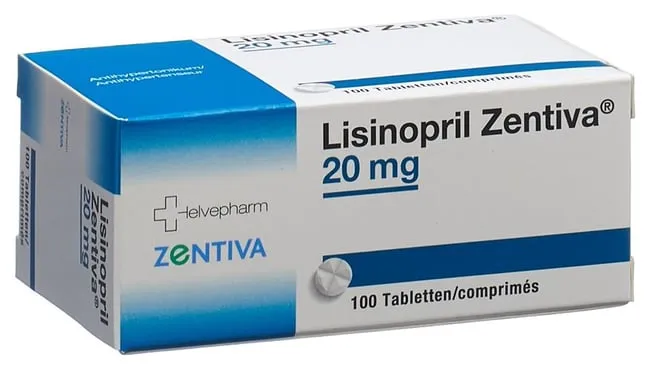
Table of Contents
- Package leaflet: Information for the patient
- LISINOPRIL ZENTIVA 5 mg tablets, 20 mg tablets
- 1. What Lisinopril Zentiva is and what it is used for
- 2. What you need to know before taking Lisinopril Zentiva
- 3. How to take Lisinopril Zentiva
- 4. Possible side effects
- 5. How to store LISINOPRIL ZENTIVA
- 6. Package contents and other information
Package leaflet: Information for the patient
LISINOPRIL ZENTIVA 5 mg tablets, 20 mg tablets
Equivalent medicine
Please read this leaflet carefully before taking this medicine because it contains
important information for you.
- Keep this leaflet. You may need to read it again.
- If you have any questions, ask your doctor or pharmacist.
- This medicine has been prescribed for you only. Do not give it to other people, even if their symptoms are the same as yours, as it may be harmful.
- If you experience any side effects, including those not listed in this leaflet, tell your doctor or pharmacist. See section 4.
Contents of this leaflet:
- What Lisinopril Zentiva is and what it is used for
- What you need to know before taking Lisinopril Zentiva
- How to take Lisinopril Zentiva
- Possible side effects
- How to store Lisinopril Zentiva
- Contents of the pack and other information
1. What Lisinopril Zentiva is and what it is used for
Lisinopril Zentiva contains an active substance called lisinopril, which belongs to a group of
medicines known as ACE inhibitors. Lisinopril Zentiva works by causing the blood vessels to widen,
improving circulation and lowering blood pressure.
Lisinopril Zentiva is indicated for the following conditions:
- to treat high blood pressure (hypertension);
- to treat a heart condition called heart failure, in which the heart does not pump blood effectively to the various parts of the body;
- to treat a recent heart attack (myocardial infarction);
- to treat kidney problems caused by type II diabetes in patients with high blood pressure.
2. What you need to know before taking Lisinopril Zentiva
Do not take Lisinopril Zentiva
- if you are allergic to lisinopril or to any of the other ingredients of this medicine (listed in section 6);
- if you have had an allergic reaction to another ACE inhibitor with swelling of the lips, tongue, or throat, and with difficulty swallowing or breathing (angioedema);
- if a member of your family has had a serious allergic reaction (angioedema) to an ACE inhibitor, or if you have had a similar reaction without a known cause (idiopathic angioedema);
- if you are in the second or third trimester of pregnancy (see section Pregnancy, breastfeeding, and fertility);
- if you have diabetes or impaired kidney function and are being treated with a blood pressure-lowering medicine containing aliskiren;
- if you have taken or are currently taking sacubitril/valsartan, a medicine used to treat a type of chronic heart failure in adults, as this increases the risk of angioedema (rapid swelling under the skin, for example in the throat). Inform your doctor or pharmacist if you are taking, have recently taken, or might take sacubitril/valsartan.
If you are taking any of the following medicines, the risk of angioedema may be increased:
- racecadotril, a medicine used to treat diarrhoea;
- medicines used to prevent rejection of transplanted organs and to treat cancer (such as temsirolimus, sirolimus, everolimus) and other drugs belonging to the class of mTOR inhibitors;
- vildagliptin, a medicine used to treat diabetes.
Warnings and precautions
Talk to your doctor or pharmacist before taking Lisinopril Zentiva.
Use this medicine with caution and inform your doctor if you have any of the following conditions:
- if you have heart problems (heart failure, heart attack);
- if you have narrowing of the aortic artery (aortic stenosis), narrowing of certain heart valves (aortic and mitral valves), or thickening of the heart muscle (hypertrophic cardiomyopathy);
- if you have narrowing (stenosis) of the renal artery (the artery supplying the kidneys);
- if you have kidney problems or are on dialysis;
- if you have high cholesterol levels and are undergoing a treatment called "LDL apheresis";
- if you have liver problems;
- if you have blood vessel disorders (vascular collagen disease);
- if you are of Black African or Caribbean origin, as you have a higher risk of developing angioedema, a serious allergic reaction;
- if you have or are at risk of having high levels of potassium in the blood;
- if you have diabetes;
- if you are taking any of the following medicines used to treat high blood pressure:
- an "angiotensin II receptor antagonist" (AIIRA), also known as sartans (e.g. valsartan, telmisartan, irbesartan), especially if you have kidney problems related to diabetes;
- aliskiren.
- if you are taking any of the following medicines used to prevent organ transplant rejection (sirolimus, everolimus, temsirolimus);
- if you are taking a neprilysin inhibitor (NEP) (such as racecadotril – a medicine for the treatment of diarrhoea);
- if you are taking a medicine that may cause angioedema.
Your doctor may monitor your kidney function, blood pressure, and levels of electrolytes (e.g. potassium) in your blood at regular intervals.
Pay special attention if you are undergoing or are about to start treatment to reduce the effects of an allergy, such as an insect sting allergy (desensitisation treatment).
Talk to your doctor if you develop a persistent dry cough after starting treatment with this medicine.
If you are scheduled for surgery (including dental procedures), inform your doctor or dentist that you are taking Lisinopril Zentiva.
Children and adolescents
Lisinopril has been studied in children. For further information, consult your doctor. Lisinopril Zentiva is not recommended for children under 6 years of age or in children with severe kidney problems.
Other medicines and Lisinopril Zentiva
Tell your doctor or pharmacist if you are taking, have recently taken, or might take any other medicines.
Lisinopril Zentiva may affect the way other medicines work, and some medicines may affect Lisinopril Zentiva.
In particular, inform your doctor or pharmacist if you are taking, have recently taken, or might take any of the following medicines:
- potassium supplements (including salt substitutes), potassium-sparing diuretics, and other medicines that may increase potassium levels in the blood (such as trimethoprim and cotrimoxazole used to treat bacterial infections; cyclosporine, an immunosuppressant used to prevent transplant rejection; and heparin, a medicine used to thin the blood and prevent clotting);
- sacubitril/valsartan – a medicine used to treat a type of chronic heart failure in adults (see also information under the heading "Do not take Lisinopril Zentiva");
- other medicines that lower blood pressure (antihypertensives);
- medicines that increase urine elimination (diuretics, particularly potassium-sparing diuretics);
- antidepressants (tricyclic antidepressants);
- medicines used for mental disorders (antipsychotics), including lithium;
- medicines used to relieve pain and inflammation (NSAIDs);
- gold salts, such as sodium aurothiomalate, used to treat arthritis;
- medicines used to treat diabetes (insulins and oral antidiabetic medicines);
- medicines used to treat asthma and colds (sympathomimetic medicines);
- medicines used to reduce platelet aggregation (acetylsalicylic acid);
- medicines used to dissolve blood clots (thrombolytics);
- medicines used for certain heart rhythm disorders (beta-blockers);
- medicines for heart problems (nitrates);
- allopurinol (a medicine for gout);
- if you are taking any of the following medicines, the risk of angioedema (rapid swelling under the skin, for example in the throat) may be increased:
- racecadotril, a medicine used to treat diarrhoea (see also "Warnings and precautions");
- medicines used to prevent rejection of transplanted organs and to treat cancer (such as temsirolimus, sirolimus, everolimus) and other drugs belonging to the class of mTOR inhibitors (used to prevent transplant rejection);
- sacubitril/valsartan – a medicine used to treat a type of chronic heart failure in adults (see also "Do not take Lisinopril Zentiva");
- vildagliptin, a medicine used to treat diabetes.
Pregnancy, breastfeeding, and fertility
If you are pregnant, think you may be pregnant, are planning to become pregnant, or are breastfeeding, consult your doctor or pharmacist before taking this medicine.
Pregnancy
Inform your doctor if you think you may be (or could become) pregnant. Your doctor will usually advise you to stop taking Lisinopril Zentiva before you become pregnant or as soon as you know you are pregnant, and will advise you to take another medicine instead. This medicine is not recommended during the first months of pregnancy and must not be taken after the first trimester of pregnancy, as it may cause serious harm to the unborn baby if used after the third month of pregnancy.
Breastfeeding
The use of this medicine is not recommended if you are breastfeeding, especially if the baby is a newborn or premature.
Driving and using machines
When driving or operating machinery, bear in mind that dizziness or fatigue may occasionally occur.
Lisinopril Zentiva contains sodium
This medicine contains less than 1 mmol (23 mg) of sodium per tablet, i.e. essentially "sodium-free".
3. How to take Lisinopril Zentiva
Take this medicine exactly as instructed by your doctor or pharmacist.
If you have any doubts, consult your doctor or pharmacist.
Take the dose once daily, at approximately the same time each day. It does not matter whether Lisinopril Zentiva is taken before or after meals.
Your doctor will adjust the dosage and duration of treatment according to your individual needs and your response to therapy.
Treatment of high blood pressure: The usual starting dose is 10 mg once daily. The maintenance dose is usually 20 mg once daily. Your doctor may gradually increase the dose to achieve the best possible control of your blood pressure, up to a maximum of 80 mg daily.
Treatment of heart failure: Lisinopril may be used in addition to other medicines (e.g. diuretics, digitalis, or beta-blockers) prescribed for this heart condition. The recommended starting dose is 2.5 mg once daily, which may be gradually increased, usually up to 35 mg daily, to achieve optimal blood pressure control.
Treatment in patients who have had a heart attack: Lisinopril may be used in addition to other prescribed medicines for this heart condition. Treatment is initiated with a starting dose of 5 mg within 24 hours of the heart attack, followed by 5 mg after 24 hours, 10 mg after 48 hours, and then 10 mg once daily thereafter. A lower daily dose of 2.5 mg may be given to patients with low blood pressure or kidney problems.
The usual maintenance dose is 10 mg once daily for at least 6 weeks.
Treatment of kidney problems caused by diabetes: The recommended dose is 10 mg once daily, which may be increased if necessary up to 20 mg daily.
Use in patients with kidney problems and in elderly patients
If you are elderly, have kidney problems, or are taking diuretic medicines, your doctor may prescribe a lower dose based on your kidney function.
Use in children and adolescents (aged 6 to 16 years) with high blood pressure
Your doctor will determine the correct dose for the child based on body weight and kidney function. For children weighing between 20 kg and 50 kg, the recommended starting dose is 2.5 mg once daily. For children weighing more than 50 kg, the recommended starting dose is 5 mg once daily.
If you take more Lisinopril Zentiva than you should
In case of overdose, you may experience the following symptoms: low blood pressure (hypotension), even severe, which may lead to shock; serious kidney problems (renal failure); rapid breathing (hyperventilation); awareness of your heartbeat (palpitations); increased or decreased heart rate (bradycardia or tachycardia); dizziness; anxiety; cough; changes in certain blood tests (electrolyte imbalances).
If you have taken more than the prescribed amount of this medicine, contact your doctor immediately or go to the nearest hospital.
If you forget to take Lisinopril Zentiva
If you forget to take a dose, take it as soon as you remember. However, if it is almost time for your next dose, skip the missed dose.
Do not take a double dose to make up for the forgotten dose.
If you stop taking Lisinopril Zentiva
Do not stop taking the tablets, even if you feel well, unless your doctor tells you to.
If you have any questions about how to use this medicine, ask your doctor or pharmacist.
4. Possible side effects
Like all medicines, this medicine can cause side effects, although not everybody gets them.
Stop taking Lisinopril Zentiva and contact your doctor immediately if you experience any of the following side effects:
- severe allergic reactions causing swelling of the face, lips, tongue or throat, with difficulty swallowing or breathing, sudden or severe swelling of hands, feet and ankles, intense itching sensation, possibly with the appearance of blisters on the skin (hypersensitivity/angioedema). These conditions are rare.
- severe skin disorders, such as sudden and unexpected redness or burning, or skin peeling (toxic epidermal necrolysis, Stevens-Johnson syndrome, erythema multiforme, cutaneous pseudolymphoma). These conditions are very rare;
- infection with fever and worsening of general health, accompanied by local symptoms such as sore throat or mouth pain, or reduced daily urine output (oliguria/anuria). These conditions are very rare.
Other possible side effects include:
Common (may affect up to 1 in 10 people)
- headache;
- dizziness or lightheadedness, especially when standing up quickly, caused by a sudden drop in blood pressure (orthostatic hypotension);
- vomiting and diarrhoea;
- cough;
- kidney problems.
Uncommon (may affect up to 1 in 100 people)
- mood changes;
- vertigo;
- finger pain; change in colour of fingers or toes (bluish colour followed by redness) or numbness or tingling in fingers or toes, caused by a blood circulation problem (Raynaud's phenomenon);
- altered taste;
- sleep disorders;
- stroke;
- rapid heartbeat (tachycardia);
- awareness of heartbeat (palpitations);
- runny nose (rhinitis);
- feeling unwell (nausea), stomach pain or indigestion;
- difficulty achieving an erection (impotence);
- feeling tired or weak (asthenia and fatigue);
- skin rash and itching;
- changes in kidney and liver function, detectable through blood tests;
- heart attack (myocardial infarction);
- hallucinations.
Rare (may affect up to 1 in 1,000 people)
- mental confusion;
- altered sense of smell (olfactory disturbances);
- itchy skin rash (urticaria);
- dry mouth;
- hair loss (alopecia);
- psoriasis (a skin disease);
- breast development in men (gynaecomastia);
- changes in certain blood tests (decreased haemoglobin, decreased haematocrit, increased bilirubin);
- disturbance in the production of a hormone called antidiuretic hormone (SIADH);
- low sodium levels in the blood (hyponatraemia).
Very rare (may affect up to 1 in 10,000 people)
- reduction in white blood cells (agranulocytosis, leucopenia, neutropenia), red blood cells (anaemia, haemolytic anaemia), and platelets (thrombocytopenia);
- reduced bone marrow activity (bone marrow depression);
- immune system disorders (lymphadenopathy, autoimmune diseases);
- low blood sugar levels (hypoglycaemia);
- inflammation of the sinuses (sinusitis);
- shortness of breath due to bronchial obstruction (bronchospasm);
- lung inflammation (allergic alveolitis, eosinophilic pneumonia);
- yellowing of the skin and whites of the eyes, with dark-coloured urine (jaundice);
- skin problems with peeling and blister formation (pemphigus);
- decreased urine production (oliguria);
- liver problems (liver failure, hepatocellular or cholestatic hepatitis);
- inflammation of the pancreas (pancreatitis).
Not known (frequency cannot be estimated from the available data)
- symptoms of depression;
- fainting (syncope).
Reporting of side effects
If you experience any side effect, including those not listed in this leaflet, please inform your doctor or pharmacist. You can also report side effects directly via the national reporting system at: www.agenziafarmaco.gov.it/content/come-segnalare-una-sospetta-reazione-avversa. By reporting side effects, you can help provide more information on the safety of this medicine.
5. How to store LISINOPRIL ZENTIVA
Keep this medicine out of the sight and reach of children.
Do not use this medicine after the expiry date stated on the carton after "EXP.".
The expiry date refers to the last day of that month.
Do not store above 25°C.
Do not dispose of any medicine via wastewater or household waste. Ask your pharmacist how to
dispose of medicines you no longer use. This will help protect the environment.
6. Package contents and other information
What LISINOPRIL ZENTIVA contains
LISINOPRIL ZENTIVA 5 mg tablets
- The active substance is lisinopril (as lisinopril dihydrate). Each tablet contains 5 mg of lisinopril.
- The other ingredients are: mannitol, dibasic calcium phosphate dihydrate, pregelatinized corn starch, sodium croscarmellose, magnesium stearate.
LISINOPRIL ZENTIVA 20 mg tablets
- The active substance is lisinopril (as lisinopril dihydrate). Each tablet contains 20 mg of lisinopril.
- The other ingredients are: mannitol, dibasic calcium phosphate dihydrate, pregelatinized corn starch, sodium croscarmellose, magnesium stearate, red iron oxide, black iron oxide and yellow iron oxide.
Description of the appearance of LISINOPRIL ZENTIVA and contents of the pack
The score line on the tablet is intended to facilitate breaking the tablet for easier swallowing and is not intended for dividing the tablet into equal doses.
Pack size: 14 tablets in blister packs.
Marketing Authorization Holder
Zentiva Italia S.r.l. – Via P. Paleocapa 7, 20121 Milan – Italy
Manufacturer
S.C. Zentiva S.A.
50 Theodor Pallady Blvd
3rd district - 032266 Bucharest – Romania