Liraglutide Dr. Reddy's
Italy
Table of Contents
- Package leaflet: Information for the user
- Liraglutide Dr. Reddy’s 6 mg/ml solution for injection in a pre-filled pen
- 1. What Liraglutide Dr. Reddy’s is and what it is used for
- 2. What you need to know before using Liraglutide Dr. Reddy’s
- 3. How to use Liraglutide Dr. Reddy’s
- 4. Possible side effects
- 5. How to store Liraglutide Dr. Reddy’s
- 6. Package contents and other information
Package leaflet: Information for the user
Liraglutide Dr. Reddy’s 6 mg/ml solution for injection in a pre-filled pen
Liraglutide
Generic medicine
Read this entire leaflet carefully before using this medicine because it contains important information for you.
- Keep this leaflet. You may need to read it again.
- If you have any questions, ask your doctor, pharmacist, or nurse.
- This medicine has been prescribed for you only. Do not give it to other people, even if they have the same symptoms as yours, as it may be harmful.
- If you experience any side effects, including those not listed in this leaflet, tell your doctor, pharmacist, or nurse. See section 4.
Contents of this leaflet:
- What Liraglutide Dr. Reddy’s is and what it is used for
- What you need to know before using Liraglutide Dr. Reddy’s
- How to use Liraglutide Dr. Reddy’s
- Possible side effects
- How to store Liraglutide Dr. Reddy’s
- Contents of the pack and other information
1. What Liraglutide Dr. Reddy’s is and what it is used for
This medicine contains the active substance liraglutide which helps your body lower your blood sugar level only when it is too high. In addition, it slows down the passage of food through the stomach and may help prevent heart disease.
This medicine is used when diet and exercise alone do not provide adequate blood glucose control and when metformin (another diabetes medicine) cannot be used.
This medicine is used in combination with other diabetes medicines when these are not sufficient to control your blood sugar level. These include:
- Oral antidiabetic medicines (such as metformin, pioglitazone, sulfonylureas, sodium-glucose cotransporter-2 inhibitors (SGLT2i)) and/or insulin.
2. What you need to know before using Liraglutide Dr. Reddy’s
Do not use Liraglutide Dr. Reddy’s
- if you are allergic to liraglutide or to any of the other ingredients of this medicine (listed in section 6).
Warnings and precautions
Talk to your doctor, pharmacist, or nurse:
- before using this medicine
- if you have or have had a disease of the pancreas.
This medicine must not be used if you have type 1 diabetes (your body does not produce insulin) or diabetic ketoacidosis (a complication of diabetes causing high blood sugar levels and increased breathing difficulties). It is not insulin and therefore must not be used as a substitute for insulin.
The use of this medicine is not recommended if you are undergoing dialysis.
The use of this medicine is not recommended if you have severe liver disease.
The use of this medicine is not recommended if you have severe heart failure.
The use of this medicine is not recommended if you have severe gastrointestinal diseases, which manifest with delayed gastric emptying (called gastroparesis) or inflammatory bowel disease.
If you experience symptoms of acute pancreatitis, such as severe and persistent stomach pain, you must consult your doctor immediately (see section 4).
If you have thyroid diseases, including nodules or enlargement of the thyroid gland, consult your doctor.
When starting treatment, you may in some cases experience fluid loss/dehydration, for example due to vomiting, nausea, and diarrhoea. It is important to avoid dehydration by drinking fluids. Contact your doctor if you have any doubts or questions.
If you are scheduled for surgery under anaesthesia, inform your doctor that you are taking Liraglutide Dr. Reddy’s.
Children and adolescents
This medicine can be used in adolescents and children aged 10 years and older. There are no data available in children under 10 years of age.
Other medicines and Liraglutide Dr. Reddy’s
Inform your doctor, pharmacist, or nurse if you are taking, have recently taken, or might take any other medicines.
In particular, inform your doctor, pharmacist, or nurse if you are taking medicines containing any of the following active substances:
- Sulfonylureas (e.g., glimepiride or glyburide) or insulin. You may experience hypoglycaemia (low blood sugar) if you use this medicine together with a sulfonylurea or insulin, because sulfonylureas and insulin increase the risk of hypoglycaemia. When you start using these medicines together, your doctor may ask you to reduce the dose of the sulfonylurea or insulin. See section 4 for warning signs of low blood sugar. If you are also taking a sulfonylurea (such as glimepiride or glyburide) or insulin, your doctor must monitor your blood sugar levels. This will help your doctor decide whether the dose of sulfonylurea or insulin you need should be changed.
- If you are using insulin, your doctor will advise you on how to reduce the insulin dose and will recommend more frequent blood glucose monitoring to prevent hyperglycaemia (high blood sugar levels) and diabetic ketoacidosis (a complication of diabetes that occurs when the body cannot break down glucose due to insufficient insulin).
- Warfarin or other oral anticoagulant medicines. Frequent blood tests are needed to determine your blood's ability to clot.
Pregnancy and breastfeeding
Inform your doctor if you are pregnant, suspect you may be pregnant, or are planning a pregnancy. Liraglutide Dr. Reddy’s must not be used during pregnancy because it is not known whether it could harm the unborn child.
It is not known whether liraglutide passes into breast milk; therefore, do not use this medicine if you are breastfeeding.
Driving and using machines
Low blood sugar (hypoglycaemia) can reduce your ability to concentrate. Avoid driving or operating machinery if you experience symptoms of hypoglycaemia. See section 4 for warning signs of low blood sugar. Consult your doctor for further information on this topic.
Liraglutide Dr. Reddy’s contains sodium
This medicine contains less than 1 mmol of sodium (23 mg) per dose, i.e., essentially “sodium-free”.
3. How to use Liraglutide Dr. Reddy’s
Use this medicine exactly as instructed by your doctor. If you have any doubts, consult your
doctor, pharmacist, or nurse.
- The starting dose is 0.6 mg once daily for at least one week.
- Your doctor will tell you when to increase the dose to 1.2 mg once daily.
- Your doctor may instruct you to further increase the dose to 1.8 mg once daily if your blood sugar level is not adequately controlled with the 1.2 mg dose. Do not change the dose unless your doctor tells you to do so.
This medicine is administered by subcutaneous injection (under the skin). Do not inject into a vein or muscle. The best sites for injection are the front of the thighs, the abdomen (stomach), or the upper arm. Change the injection site each day to reduce the risk of lumps developing.
You may administer the injection at any time of day, regardless of meals. Once you have chosen the most convenient time, it is preferable to inject at approximately the same time each day.
Before using the pen for the first time, your doctor or nurse will show you how to do it. Detailed instructions for use are provided on the reverse of this leaflet.
If you use more Liraglutide Dr. Reddy’s than you should
If you use more of this medicine than prescribed, inform your doctor immediately, as you may require medical treatment. You may experience nausea, vomiting, diarrhoea, or low blood sugar (hypoglycaemia). See section 4 for warning signs of low blood sugar.
If you forget to use Liraglutide Dr. Reddy’s
If you miss a dose, take this medicine as soon as you remember.
However, if more than 12 hours have passed since you were supposed to take it, skip the missed dose and take the next dose at the usual time the following day.
Do not use a double dose or increase the dose the next day to make up for the missed dose.
If you stop using Liraglutide Dr. Reddy’s
Do not stop treatment with this medicine without first discussing it with your doctor. If you stop treatment, your blood sugar levels may rise.
If you have any doubts about how to use this medicine, consult your doctor, pharmacist, or nurse.
4. Possible side effects
Like all medicines, this medicine can cause side effects, although not everybody gets them.
Serious side effects
Common: affects up to 1 in 10 people
- Hypoglycaemia (low blood sugar level). Warning signs of low blood sugar may occur suddenly and can include: cold sweat, cold and pale skin, headache, rapid heartbeat, feeling unwell (nausea), intense hunger, vision changes, drowsiness, feeling weak, nervousness, anxiety, confusion, difficulty concentrating, tremor. Your doctor will tell you how to treat low blood sugar levels and what to do if you notice these warning signs. This may happen if you are taking a sulfonylurea or insulin. Before you start using this medicine, your doctor may reduce the dose of these medicines.
Rare: affects up to 1 in 1,000 people
- A severe allergic reaction (anaphylactic reaction) with additional symptoms such as breathing difficulties, swelling of the throat and face, rapid heartbeat, etc. If you experience these symptoms, seek immediate medical help and inform your doctor as soon as possible.
- Bowel obstruction. A severe form of constipation with additional symptoms such as stomach pain, bloating, vomiting, etc.
Very rare: affects up to 1 in 10,000 people
- Cases of inflammation of the pancreas (pancreatitis). Pancreatitis can be a serious medical condition that may be life-threatening. If you experience any of the following serious side effects, stop using this medicine and contact your doctor immediately: severe and persistent pain in the abdomen (stomach area) which may radiate to the back, as well as nausea and vomiting, which may be signs of inflammation of the pancreas (pancreatitis).
Other side effects
Very common: affects more than 1 in 10 people
- Nausea (feeling unwell). This usually goes away with time.
- Diarrhoea. This usually goes away with time.
Common
- Vomiting.
When starting treatment, in some cases you may experience fluid loss/dehydration, for example due to vomiting, nausea and diarrhoea. It is important to avoid dehydration by drinking plenty of fluids.
- Headache
- Indigestion
- Inflammation of the stomach (gastritis). Signs include stomach pain, nausea and vomiting.
- Gastroesophageal reflux disease (GORD). Signs include heartburn.
- Pain or swelling in the abdomen (belly)
- Abdominal discomfort
- Constipation
- Intestinal gas (flatulence)
- Decreased appetite
- Bronchitis
- Common cold
- Dizziness
- Increased heart rate
- Tiredness
- Toothache
- Reactions at the injection site (such as bruising, pain, irritation, itching and rash)
- Increased levels of pancreatic enzymes (such as lipase and amylase)
Uncommon: affects up to 1 in 100 people
- Allergic reactions such as itching and urticaria (a type of skin rash)
- Dehydration, sometimes with reduced kidney function
- Malaise (feeling unwell)
- Gallstones
- Inflammation of the gallbladder
- Change in the way things taste
- Delayed emptying of the stomach
Not known: frequency cannot be estimated from the available data
- Subcutaneous nodules may be caused by the accumulation of a protein called amyloid (cutaneous amyloidosis; the frequency of this occurrence is not known).
Reporting of side effects
If you get any side effects, talk to your doctor, pharmacist or nurse. This includes any side effect not listed in this leaflet. You can also report side effects directly via the national reporting system at https://www.aifa.gov.it/content/segnalazionireazioni-avverse. By reporting side effects, you can help provide more information on the safety of this medicine.
5. How to store Liraglutide Dr. Reddy’s
Keep this medicine out of the sight and reach of children.
Do not use this medicine after the expiry date stated on the pen label and on the carton after “EXP”. The expiry date refers to the last day of that month.
Before first use:
Store in a refrigerator (2°C – 8°C). Do not freeze.
During use:
The pen may be stored for 1 month at a temperature below 30°C or in the refrigerator (2°C – 8°C).
Do not freeze.
When not in use, keep the pen with the cap on to protect the medicine from light.
Do not use this medicine if the solution is not clear and colourless.
Do not use this medicine if it has been frozen.
Do not dispose of any medicine via wastewater or household waste. Ask your pharmacist how to dispose of medicines you no longer use. This will help protect the environment.
6. Package contents and other information
What Liraglutide Dr. Reddy’s contains
- The active substance is liraglutide. 1 ml of injectable solution contains 6 mg of liraglutide. A pre-filled pen contains 18 mg of liraglutide.
- The excipients are disodium phosphate dihydrate, propylene glycol (E1520), phenol, hydrochloric acid (for pH adjustment), sodium hydroxide (for pH adjustment) and water for injections.
Description of the appearance of Liraglutide Dr. Reddy’s and contents of the pack
Clear, colourless injectable solution in a pre-filled pen. Each pen contains 3 ml of solution, corresponding to
30 doses of 0.6 mg, 15 doses of 1.2 mg or 10 doses of 1.8 mg.
Available in packs containing 1, 2, 3, 5 or 10 pens.
Not all pack sizes may be marketed.
Needles are not included.
Marketing Authorisation Holder and Manufacturer
Dr. Reddy’s S.r.l.
Piazza Santa Maria Beltrade 1
20123, Milan (MI)
Italy
Manufacturer
betapharm Arzneimittel GmbH,
Kobelweg 95,
86156 Augsburg,
Germany
Pharmadox Healthcare Ltd.,
KW20A Kordin Industrial Park,
Paola PLA 3000,
Malta
Rual Laboratories S.R.L.,
313, Splaiul Unirii,
Building H, 1st floor, sector 3,
030138, Bucharest,
Romania
DR. REDDY’S LABORATORIES ROMÂNIA S.R.L.,
30-32 Daniel Danielopolu,
5th floor, Space 2, sector 1,
014134, Bucharest,
Romania
This medicinal product is authorised in the Member States of the European Economic Area under the
following names:
| Austria | Liraglutid Reddy 6 mg/ml Solution for Injection in Pre-filled Pen |
| France | Liraglutide Reddy Pharma 6 mg/ml, solution injectable en stylo prérempli |
| Germany | Liraglutid beta 6 mg/ml Injection Solution in a Pre-filled Pen |
| Italy | Liraglutide Dr. Reddy’s |
| Romania | Liraglutid Dr. Reddy’s 6 mg/ml injectable solution in pre-filled pen |
| Spain | Liraglutida Dr. Reddys 6 mg/ml solución inyectable en pluma precargada |
| Sweden | Liraglutide Reddy |
| INSTRUCTIONS FOR USE OF THE DR. REDDY’S LIRAGLUTIDE PEN. Read these instructions carefully before using your pen. The pen contains 18 mg of liraglutide. You can select doses of 0.6 mg, 1.2 mg, and 1.8 mg. The pen is designed to be used with disposable needles up to 8 mm in length and as thin as 32 G (0.25/0.23 mm). | |
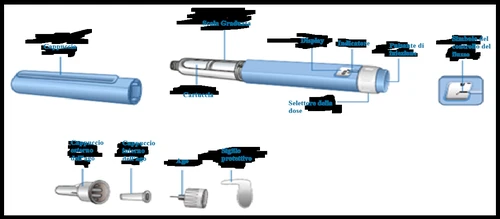 | |
| Preparing the Pen Check the name and the colored label on the pen to ensure it contains liraglutide. Using the wrong medicine may seriously harm you. Remove the cap from the pen. | 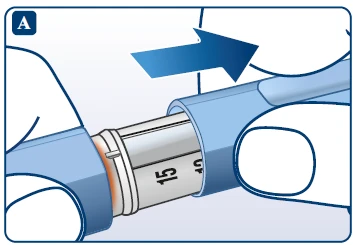 |
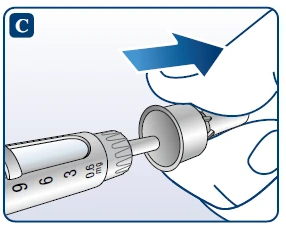
| Attaching the Needle •Remove the protective seal from a new disposable needle. Screw the needle straight and firmly onto your pen. | 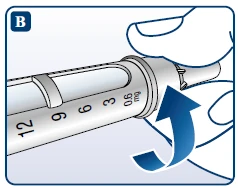 |
|  |
| 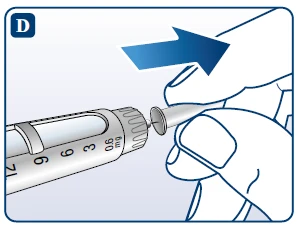 |
| Always use a new needle for each injection. This reduces the risk of contamination, infection, leakage of liraglutide, blocked needles, and inaccurate dosing. Be careful not to bend or damage the needle. Never attempt to re-sheathe the inner needle cap after removal. You may injure yourself with the needle. | |
| Pen Maintenance •Do not attempt to repair or disassemble the pen. •Keep the pen away from dust, dirt, and any kind of liquid. •Clean the pen with a cloth dampened with a mild detergent. •Do not try to wash, immerse in liquid, or lubricate the pen—this may damage it. | |
Important Information •Do not share the pen or needles with anyone else. •Keep the pen out of reach of others, especially children. •Change the injection site daily to reduce the risk of lumps forming.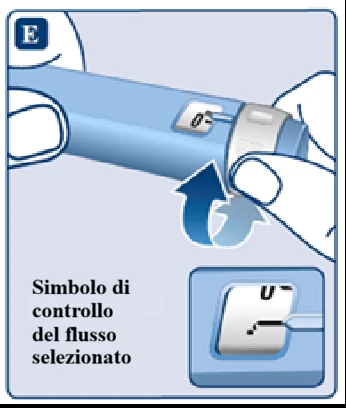 | |
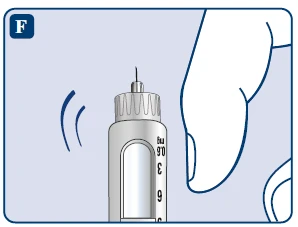
| Check Flow with a New Pen Check flow before an injection with a new pen. If the pen has already been used, go directly to “Dose Selection” step H. •Rotate the dose selector until the flow check symbol aligns with the indicator. | |
|  |
| 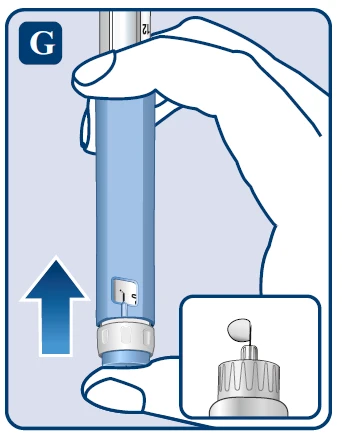 |
| If the pen has been dropped or if you suspect it is damaged, always attach a new disposable needle and check flow before injecting. | |
| Dose Selection Always verify that the indicator is aligned with 0 mg. •Rotate the dose selector until the required dose aligns with the indicator (0.6 mg, 1.2 mg, or 1.8 mg). •If you accidentally select the wrong dose, correct it by rotating the dose selector forward or backward until the indicator aligns with the correct dose. Be careful not to press the injection button while rotating the dose selector backward, as this may cause liraglutide to leak. If the dose selector stops before the required dose aligns with the indicator, this means there is not enough liraglutide left in the cartridge for a full dose. In this case, you may: Divide your dose into two injections: Rotate the dose selector forward or backward to align the indicator with 0.6 mg or 1.2 mg. Inject the dose. Then prepare a new pen for injection and inject the remaining mg to complete the dose. You may only split the dose between the current pen and a new pen if instructed by healthcare personnel. Use a calculator to schedule doses. If you split the dose incorrectly, you may inject too much or too little liraglutide. Inject the full dose with a new pen: If the dose selector stops before aligning with 0.6 mg, prepare a new pen and inject the full dose using the new pen. | Selection of 0.6 mg Selection of 1.2 mg Selection of 1.8 mg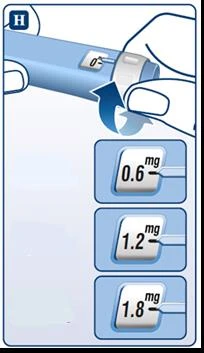 |
Do not attempt to select doses other than 0.6 mg, 1.2 mg, or 1.8 mg. The numbers on the display must align precisely with the indicator to ensure the correct dose is delivered. When rotating the dose selector, you will hear clicks. Do not use these clicks as dose indicators. Do not use the cartridge’s graduated scale to measure the amount of liraglutide to inject—it is not accurate enough.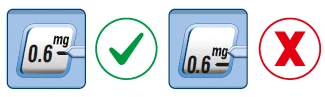 | |
| Injecting the Dose Insert the needle into the skin using the injection technique shown by your doctor or nurse. Then follow the instructions below: •Press the injection button until the indicator aligns with 0 mg. •Be careful not to touch the display with other fingers or press sideways on the dose selector during injection. This could block the injection. •Keep the injection button pressed and leave the needle under the skin for at least 6 seconds. This ensures the full dose is delivered. | 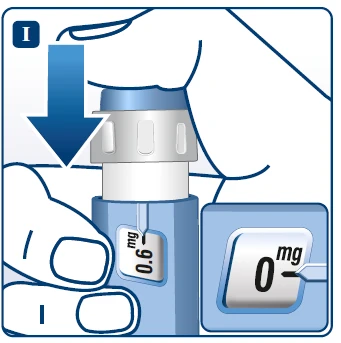 |
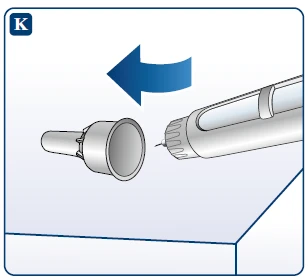
| Removing the Needle •Remove the needle from the skin. You may see a drop of liraglutide at the tip of the needle. This is normal and does not affect the administered dose. | 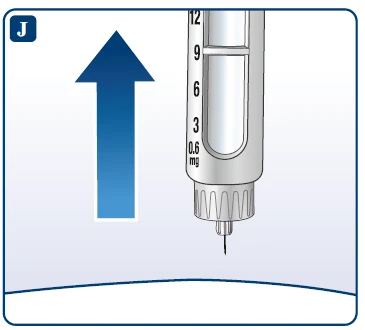 |
|  |
| 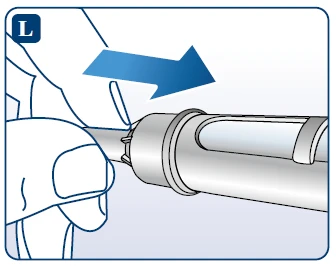 |
| Always remove the needle after each injection and store the pen without a needle attached. This reduces the risk of contamination, infection, leakage of liraglutide, blocked needles, and inaccurate dosing. Anyone assisting the patient must be extremely careful when handling used needles to prevent cross-infection and needle-stick injuries. | |