Lioresal
Italy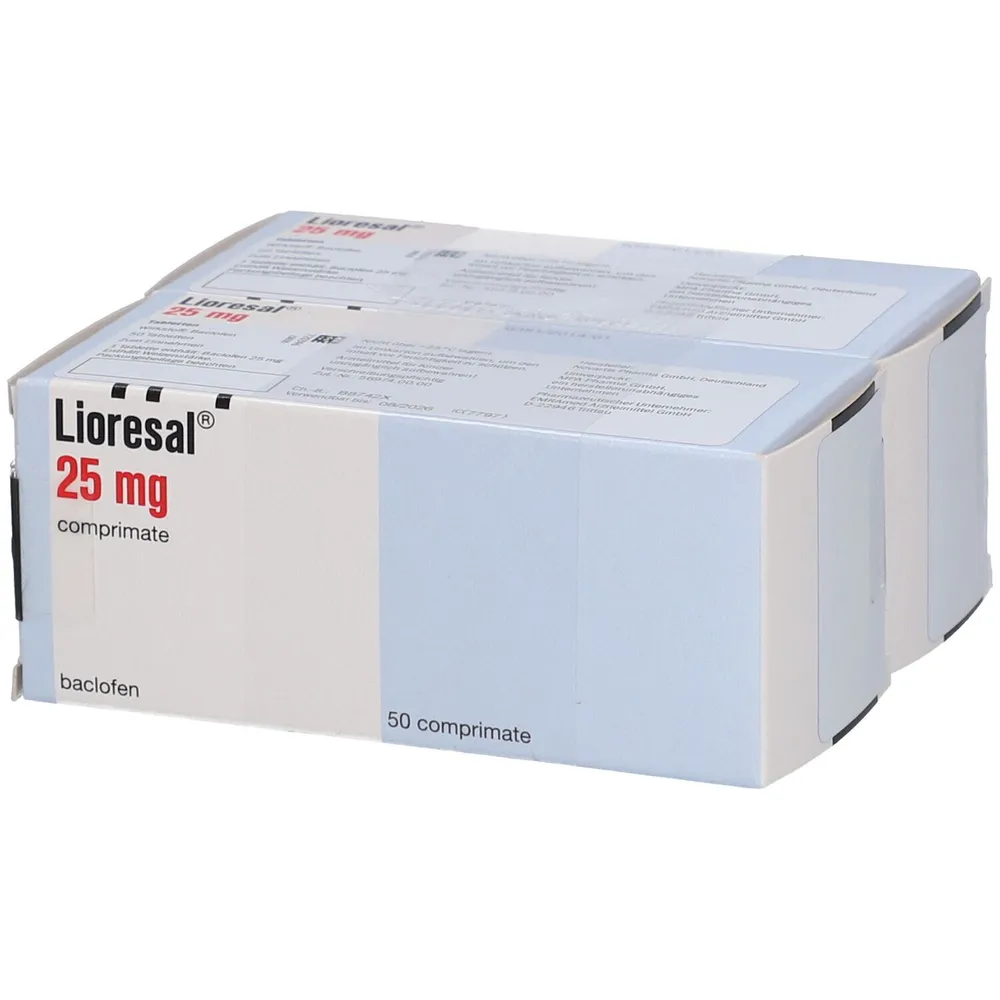
Table of Contents
- Package leaflet: Information for the patient
- Lioresal 10 mg tablets, 25 mg tablets
- 1. What Lioresal is and what it is used for
- 2. What you need to know before taking Lioresal
- 3. How to take Lioresal
- 4. Possible side effects
- 5. How to store Lioresal
- 6. Package contents and other information
- Package leaflet: Information for the user
- Lioresal 10 mg/20 ml injectable solution for intrathecal use, 10 mg/5 ml injectable solution for intrathecal use, 0.05 mg/1 ml injectable solution for intrathecal use
- 1. What Lioresal is and what it is used for
- 2. What you should know before you are given Lioresal
- 3. How Lioresal will be administered to you
- 4. Possible side effects
- 5. How to store Lioresal
- 6. Package contents and other information
Package leaflet: Information for the patient
Lioresal 10 mg tablets, 25 mg tablets
baclofen
Please read this leaflet carefully before taking this medicine because it contains
important information for you.
- Keep this leaflet. You may need to read it again.
- If you have any questions, ask your doctor or pharmacist.
- This medicine has been prescribed for you only. Do not give it to others, even if they have the same symptoms as yours, because it could be harmful.
- If you experience any side effects, including those not listed in this leaflet, talk to your doctor or pharmacist. See section 4.
Contents of this leaflet:
- What Lioresal is and what it is used for
- What you need to know before taking Lioresal
- How to take Lioresal
- Possible side effects
- How to store Lioresal
- Contents of the pack and other information
1. What Lioresal is and what it is used for
Lioresal contains the active substance baclofen, which belongs to a class of medicines known as
"centrally acting muscle relaxants". Baclofen works by relaxing muscles.
Adults
Lioresal is indicated for the treatment of conditions characterised by increased muscle tone and
muscle contractions (spastic hypertonia):
-
in multiple sclerosis
-
in spinal cord disorders of infectious, degenerative, traumatic, tumorous or unknown origin, for example:
spastic spinal paralysis
amyotrophic lateral sclerosis
syringomyelia
transverse myelitis
traumatic paraplegia or paraparesis
spinal cord compression states -
following brain damage, particularly in cases of:
paediatric-onset disease (infantile encephalopathy)
cerebrovascular disease (cerebral vasculopathy)
brain disorders due to tumours or degeneration.
Children and adolescents (from 0 to 18 years of age)
Lioresal is indicated for the treatment of symptoms of increased muscle tone and muscle contractions
(spastic hypertonia):
-
following brain damage, particularly in cases of:
cerebral palsy in children
stroke or transient ischaemic attack
brain disorders due to tumours or degeneration -
in spinal cord disorders of infectious, degenerative, traumatic, tumorous or unknown origin, for example:
multiple sclerosis
spastic spinal paralysis
amyotrophic lateral sclerosis
syringomyelia
transverse myelitis
traumatic paraplegia or paraparesis
spinal cord compression states.
2. What you need to know before taking Lioresal
Do not use Lioresal
- if you/your child are allergic to baclofen or to any of the other ingredients of this medicine (listed in section 6)
- if you/your child have or have had a stomach or duodenal ulcer (peptic ulcer).
Warnings and precautions
Talk to your doctor or pharmacist before taking Lioresal.
Inform your doctor, who will pay special attention when prescribing Lioresal and will keep you/your child under close monitoring, if you/your child:
- suffer from mood disorders (e.g. psychosis, schizophrenia, depressive or manic disorders)
- suffer from confusion
- have Parkinson's disease
- have epilepsy
- have cerebrovascular disorders
- have breathing problems
- have liver problems
- have kidney problems
- have difficulty urinating due to increased tone of the muscles controlling urine release (vesical sphincter hypertonia)
- are pregnant: shortly after delivery, your baby may experience seizures and other symptoms related to sudden discontinuation of treatment (see "If you/your child stops taking Lioresal")
- consume excessive amounts of alcohol or have a history of drug or alcohol abuse.
Some patients treated with baclofen have experienced suicidal or self-harming thoughts or have attempted suicide. Almost all of these patients were also suffering from depression, were consuming excessive amounts of alcohol, or were prone to suicidal thoughts. If at any time you experience thoughts of self-harm or suicide, speak to your doctor immediately or go to hospital. Also, ask a family member or close friend to alert you if they notice any changes in your behaviour and encourage them to read this leaflet.
If you undergo certain laboratory tests during Lioresal treatment to assess liver function (levels of aspartate aminotransferase and alkaline phosphatase) or blood glucose levels, be aware that these values may be altered. Your doctor will perform periodic check-ups, especially if you have liver problems or suffer from diabetes.
Cases of reduced brain function (encephalopathy) have been reported in some patients treated with Lioresal at prescribed doses, which resolved after discontinuation of the medicine. Symptoms include increased or new onset drowsiness, confusion, muscle contractions, or coma.
If any of these symptoms occur, contact your doctor immediately. The doctor will decide whether to discontinue baclofen treatment.
Children
Clinical data on the use of Lioresal in children under one year of age are limited; therefore, your doctor will carefully evaluate the use of this medicine in these patients.
Other medicines and Lioresal
Inform your doctor or pharmacist if you/your child are taking, have recently taken, or might take any other medicines.
Inform your doctor if you/your child are taking:
- medicines for Parkinson's disease (e.g. levodopa, carbidopa)
- medicines that reduce the activity of the Central Nervous System, for example: other muscle relaxants such as tizanidine, synthetic opioids
- morphine
- antidepressants of the tricyclic class
- lithium (a medicine for mood disorders)
- medicines that lower blood pressure, including antihypertensives (medicines for high blood pressure)
- medicines that reduce kidney function.
Your doctor will monitor you/your child closely and will assess whether the dose of Lioresal or the other medicine needs to be adjusted.
Lioresal and alcohol
Taking Lioresal with alcohol may increase its sedative effect and the risk of breathing difficulties.
Pregnancy, breastfeeding and fertility
If you are pregnant, think you may be pregnant, are planning to become pregnant, or are breastfeeding, consult your doctor or pharmacist before taking this medicine.
Pregnancy
There are no adequate studies in pregnant women. Baclofen crosses the placenta; therefore, if you are pregnant, this medicine will only be prescribed when clearly needed and under direct medical supervision.
If you need to take Lioresal during pregnancy, your baby may experience seizures and other symptoms related to sudden discontinuation of treatment shortly after delivery (see "If you/your child stops taking Lioresal" and "Warnings and precautions").
Breastfeeding
Baclofen passes into breast milk in small amounts; therefore, adverse effects in the breastfed infant are unlikely.
Fertility
There are no available data on the effect of baclofen on male fertility, nor data supporting specific recommendations for women of childbearing potential.
Driving and using machines
Lioresal may cause dizziness, sedation, drowsiness and visual disturbances. Therefore, patients experiencing these symptoms should not drive vehicles (including bicycles) or operate machinery.
Lioresal contains wheat starch
This medicine contains only a very small amount of gluten (from wheat starch), and it is highly unlikely to cause problems if you have coeliac disease.
One 10 mg Lioresal tablet contains no more than 6.1 micrograms of gluten and one 25 mg Lioresal tablet contains no more than 8.3 micrograms of gluten.
If you are allergic to wheat (a condition different from coeliac disease), do not take this medicine.
3. How to take Lioresal
Use this medicine exactly as directed by your doctor. If you have any doubts, consult your doctor or pharmacist.
Your doctor will initially prescribe the lowest possible effective dose of Lioresal suitable for treating your condition, which may then be gradually increased.
If no therapeutic benefit is evident 6–8 weeks after reaching the maximum dose, your doctor will decide whether to continue or discontinue treatment with Lioresal.
Lioresal tablets should be taken during meals with some liquid.
The 10 mg Lioresal tablet may be divided into equal parts.
The score line on the 25 mg Lioresal tablet is intended to facilitate breaking the tablet if you have difficulty swallowing it whole, and is not intended for dividing the tablet into equal doses.
Use in adults
The daily dose should preferably be divided into three administrations.
Please note that your doctor will:
- start treatment with an initial dose of 5 mg taken three times daily;
- increase the daily dose by 15 mg (divided into three doses) every three days until reaching the effective dose. The optimal dose is generally between 30 and 80 mg daily, up to 100–120 mg in hospitalized patients under close supervision.
If you are particularly sensitive to medicines, your doctor may prescribe a lower initial daily dose (5 or 10 mg) and increase the dose more gradually to reach the optimal dose.
Use in children and adolescents (from 0 to 18 years of age)
The maximum total daily dose in children under 8 years of age is 40 mg daily; in children over 8 years of age, it is 60 mg daily.
Do not use Lioresal tablets in children with body weight below 33 kg.
Please note that your doctor will:
- start treatment with a very low dose (approximately 0.3 mg/kg body weight per day), divided into 2–4 doses (preferably 4 doses);
- cautiously increase the dose at intervals of about one week until reaching the effective dose.
The usual daily dose for maintenance therapy ranges between 0.75 and 2 mg/kg body weight.
Use in patients with kidney problems
If you/your child have kidney problems, your doctor will prescribe a lower dose of Lioresal.
If you/your child are undergoing chronic hemodialysis, your doctor will determine the optimal dose, generally around 5 mg daily.
If you/your child have end-stage renal failure, your doctor will prescribe Lioresal only if strictly necessary and will closely monitor you/your child for early signs and symptoms of toxicity (e.g. drowsiness, lethargy).
Use in patients with liver problems
Your doctor will exercise particular caution when prescribing Lioresal.
Use in elderly patients (age ≥ 65 years)
Your doctor will exercise particular caution when prescribing Lioresal and will monitor you closely for any adverse effects.
Use in patients with spastic states due to brain damage
Your doctor will exercise particular caution when prescribing Lioresal and will monitor you/your child closely for any adverse effects.
If you take more Lioresal than you should
In case of accidental overdose, contact your doctor immediately or go to the nearest hospital.
If you/your child take more Lioresal than prescribed, the following may occur:
- drowsiness
- decreased level of consciousness
- reduced respiratory activity
- coma
- confusion
- hallucinations
- agitation
- seizures
- abnormalities in electroencephalogram (EEG)
- visual disturbances
- generalized reduction in muscle tone
- brief, sudden contractions of one or more muscles (myoclonus)
- reduced or absent reflexes
- dilation of veins and arteries in the limbs
- increased or decreased blood pressure
- slowed or accelerated heart rate
- heart rhythm disturbances
- decreased body temperature
- nausea, vomiting, diarrhea
- increased salivation
- increased blood levels of certain liver enzymes
- ringing in the ears (tinnitus)
If you/your child have kidney problems, the effects listed above may occur even at low doses.
Concomitant use of substances or medicines acting on the Central Nervous System (e.g. alcohol, diazepam, tricyclic antidepressants) may worsen the syndrome associated with Lioresal overdose.
If you/your child forget to take Lioresal
Do not take a double dose to make up for the missed dose.
If you/your child stop taking Lioresal
You/your child must not stop treatment with Lioresal abruptly, except if you/your child have experienced severe adverse effects or have taken an overdose of Lioresal.
Treatment with Lioresal should always be discontinued gradually, by progressively reducing the dose over a period of approximately 1–2 weeks.
If you stop treatment with Lioresal abruptly, you may experience anxiety, confusion, delirium, hallucinations, psychotic, manic, or paranoid states, seizures, involuntary movements of the tongue, mouth, trunk, and extremities, rapid heartbeat, increased body temperature, excessive muscle tone, and a temporary worsening of spasticity known as the "rebound phenomenon."
If you have any doubts about how to use this medicine, consult your doctor or pharmacist.
4. Possible side effects
Like all medicines, this medicine can cause side effects, although not everyone experiences them.
Side effects occur mainly at the beginning of treatment (e.g. sedation, drowsiness), when the dose is increased too rapidly, when high doses are used, or in elderly patients.
These effects are often temporary and may be eliminated or reduced by lowering the dose.
Rarely, they have been so severe as to require discontinuation of treatment.
Side effects may be more severe in patients with a history of psychiatric disorders or cerebrovascular disease (e.g. stroke), and in elderly patients.
Patients with epilepsy may experience seizures more easily.
Some patients have shown increased muscle spasticity as a reaction to treatment.
Many of the reported side effects may be related to the underlying disease being treated.
Very common side effects (may affect more than 1 in 10 people)
- drowsiness
- sedation
- nausea
Common side effects (may affect up to 1 in 10 people)
- reduced respiratory activity
- fatigue
- confusion
- dizziness
- headache
- insomnia
- euphoria
- depression
- muscle weakness
- loss of coordination of movements (ataxia)
- tremor
- hallucinations
- nightmares
- muscle pain (myalgia)
- nystagmus (involuntary rhythmic oscillations of the eyes)
- dry mouth
- visual disturbances
- decreased blood volume
- low blood pressure
- stomach and intestinal discomfort
- retching, vomiting
- constipation
- diarrhoea
- excessive sweating
- skin rash
- frequent passage of small amounts of urine (pollakiuria)
- involuntary and complete loss of urine (enuresis)
- difficulty in urinating (dysuria)
Rare side effects (may affect up to 1 in 1,000 people)
- tingling sensations (paraesthesia)
- speech disorders in which words are spoken slowly and incorrectly (dysarthria)
- altered taste (dysgeusia)
- abdominal pain
- altered liver function
- urinary retention
- erection disorders
Very rare side effects (may affect up to 1 in 10,000 people)
- decreased body temperature
Side effects with unknown frequency (frequency cannot be determined from available data)
- slowing of the heartbeat
- urticaria
- withdrawal syndrome due to discontinuation of treatment
- increased blood sugar levels
- breathing difficulties during sleep (sleep apnoea syndrome)
- swelling of the ankles, feet or lower legs
- facial swelling
- allergic reaction (hypersensitivity)
- hair loss
- sexual difficulties
- reduced brain function (encephalopathy)
Reporting of side effects
If you experience any side effect, including those not listed in this leaflet, talk to your doctor or pharmacist. You can also report side effects directly via the national reporting system at the following address:
https://www.aifa.gov.it/content/segnalazioni-reazioni-avverse
By reporting side effects, you can help provide more information on the safety of this medicine.
5. How to store Lioresal
Protect the medicine from moisture and heat.
Keep this medicine out of the sight and reach of children.
Do not use this medicine after the expiry date stated on the packaging after "Exp. /Expires".
The expiry date refers to the last day of that month.
Do not dispose of any medicine via wastewater or household waste. Ask your pharmacist how to
dispose of medicines no longer required. This will help protect the environment.
6. Package contents and other information
What Lioresal contains
Lioresal 10 mg tablets
- The active substance is baclofen. Each tablet contains 10 mg of baclofen.
- The other components are wheat starch, magnesium stearate, povidone, microcrystalline cellulose, anhydrous colloidal silica.
Lioresal 25 mg tablets
- The active substance is baclofen. Each tablet contains 25 mg of baclofen.
- The other components are wheat starch, magnesium stearate, povidone, microcrystalline cellulose, anhydrous colloidal silica.
Description of the appearance of Lioresal and contents of the pack
Each pack of Lioresal 10 mg tablets contains 50 tablets.
Each pack of Lioresal 25 mg tablets contains 50 tablets.
Marketing Authorization Holder
Novartis Farma S.p.A.
Viale Luigi Sturzo 43
20154 Milan MI
Italy
Manufacturer
Lioresal 10 mg tablets
Novartis Farma S.p.A.
Via Provinciale Schito 131
80058 Torre Annunziata NA
Italy
Novartis Farma S.p.A.
Viale Luigi Sturzo 43
20154 Milan MI
Italy
Lioresal 25 mg tablets
Novartis Farma S.p.A.
Via Provinciale Schito 131
80058 Torre Annunziata NA
Italy
Novartis Farma S.p.A.
Viale Luigi Sturzo 43
20154 Milan MI
Italy
Novartis Farmacéutica SA
Gran Via de les Corts Catalanes, 764
08013 Barcelona
Spain
Package leaflet: Information for the user
Lioresal 10 mg/20 ml injectable solution for intrathecal use, 10 mg/5 ml injectable solution for intrathecal use, 0.05 mg/1 ml injectable solution for intrathecal use
baclofen
Please read this leaflet carefully before this medicine is administered to you, as it contains important information for you.
- Keep this leaflet. You may need to read it again.
- If you have any questions, consult your doctor or nurse.
- This medicine has been prescribed for you only. Do not give it to others, even if their symptoms are the same as yours, as it could be harmful.
- If you experience any side effects, including those not listed in this leaflet, inform your doctor or nurse. See section 4.
Contents of this leaflet:
- What Lioresal is and what it is used for
- What you need to know before Lioresal is administered to you
- How Lioresal will be administered to you
- Possible side effects
- How to store Lioresal
- Contents of the pack and other information
1. What Lioresal is and what it is used for
Lioresal contains the active substance baclofen, which belongs to a class of medicines known as
"centrally-acting muscle relaxants". Baclofen works by relaxing muscles.
Adults
Lioresal is indicated for the treatment of severe and chronic conditions characterised by
increased muscle tone and muscle contractions (severe chronic spasticity) in the following cases:
- multiple sclerosis
- spinal cord injuries and diseases in patients who do not respond to oral therapies and who experience unacceptable side effects at therapeutic doses of orally administered medicines.
Lioresal is also indicated for the treatment of:
- conditions characterised by increased muscle tone and contractions due to brain damage (cerebral spasticity), for example in cases of:
cerebral palsy
cranial injuries
stroke - patients affected by tetanus, to reduce increased response to stimuli (hyperreflexia), involuntary muscle spasms and jerks (clonus), and jaw muscle spasms causing lockjaw (trismus).
Children and adolescents (aged 4 to 18 years)
Lioresal is indicated for the treatment of severe and chronic conditions characterised by
increased muscle tone and muscle contractions (severe chronic spasticity) in the following cases:
- brain injuries or diseases
- spinal cord trauma or diseases
- multiple sclerosis in patients who do not respond to oral therapies and who experience unacceptable side effects at therapeutic doses of orally administered medicines.
2. What you should know before you are given Lioresal
Lioresal will not be administered to you/your child
- if you/your child are allergic to baclofen or to any of the other ingredients of this medicine (listed in section 6)
- by intravenous, intramuscular, subcutaneous or epidural route
- if you/your child suffer from drug-resistant epilepsy
- during pregnancy, unless under strict medical supervision (see section 'Pregnancy, breastfeeding and fertility').
Warnings and precautions
Talk to your doctor or nurse before you/your child are given Lioresal if:
- you/your child currently have an infection
- you/your child have heart problems
- you/your child have lung problems (respiratory failure)
- you/your child have weak muscles in the lungs
- you/your child have abnormalities in the distribution of fluid in the central nervous system (cerebrospinal fluid)
- you/your child suffer from mood disorders (e.g. psychosis, schizophrenia)
- you/your child suffer from confusional states
- you/your child have Parkinson’s disease
- you/your child have epilepsy
- you/your child suffer from a condition of the autonomic nervous system called autonomic dysreflexia, which may manifest, for example, as increased blood pressure accompanied by slow heart rate, sweating, headache
- you/your child have serious problems with blood vessels in the brain associated with reduced oxygen supply to the brain (cerebrovascular insufficiency), or have or have had a stomach or first part of the intestine ulcer (peptic ulcer)
- you/your child suffer from a chronic condition characterized by excessive increase in muscle tone of the sphincters, called sphincter hypertonia
- you/your child have kidney failure.
Your doctor will keep you/your child under close monitoring during treatment with Lioresal, particularly assessing lung, blood vessel and heart function.
You/your child must contact your doctor or nurse immediately if, during treatment with Lioresal, you/your child experience any of the following symptoms, as they may indicate problems at the injection site or with drug delivery:
- increased muscle tone and contraction (spasticity)
- poor response to increasing doses of Lioresal
- pain at the intrathecal injection site
- itching
- tingling
- low blood pressure
- state of hyperactivity with rapid uncontrolled spasms
- increased body temperature
- altered mental state and muscle rigidity, increased body temperature, increased heart rate, increased blood pressure (neuroleptic malignant syndrome)
- destruction of muscle tissue (rhabdomyolysis)
- epileptic seizures
- convulsions
- altered blood coagulation
- multi-organ failure
- increased blood pressure accompanied by slow heart rate, sweating, headache (symptoms of autonomic dysreflexia)
- severe infection (sepsis).
Contact your doctor immediately if, during treatment with Lioresal, you/your child experience any of the following symptoms:
- back, shoulder, neck and buttock pain (symptoms of a specific type of spinal deformity known as scoliosis).
- if at any time you/your child develop thoughts of self-harm or suicide, talk to your doctor immediately or go to hospital. Additionally, ask a family member or close friend to inform you if they notice any changes in your behaviour, and encourage them to read this leaflet.
Children and adolescents
In children with increased muscle tone and contraction (spasticity) due to head trauma, the doctor will not administer long-term intrathecal Lioresal therapy until spasticity symptoms have stabilised (at least one year after the trauma).
Lioresal must not be used in children under 4 years of age.
Other medicines and Lioresal
Tell your doctor or nurse if you/your child are taking, have recently taken or might take any other medicines.
Inform your doctor if you/your child are taking or will need to take:
- levodopa or other medicines for Parkinson’s disease
- anaesthetics (e.g. fentanyl, propofol)
- morphine (used in pain therapy)
- medicines acting on the Central Nervous System, for example: pain medicines (analgesics), neuroleptics (psychotropic drugs), medicines for epilepsy, insomnia and mood disorders (barbiturates, benzodiazepines, anxiolytics), opioid medicines (which may increase the risk of breathing problems)
- antidepressants of the tricyclic class (tricyclic antidepressants)
- medicines that lower blood pressure, including medicines for high blood pressure (antihypertensives).
Lioresal and alcohol
Do not drink alcohol during treatment with Lioresal, as alcohol may enhance its effect.
Pregnancy, breastfeeding and fertility
If you are pregnant, think you might be pregnant, are planning to become pregnant, or are breastfeeding, ask your doctor or nurse for advice before you/your child are given this medicine.
Pregnancy
There are no adequate studies in pregnant women. Small amounts of baclofen may reach maternal blood. Animal studies have shown that baclofen crosses the placenta; therefore, if you are pregnant, the medicine will be prescribed only when clearly needed and under direct medical supervision.
Breastfeeding
Small amounts of baclofen have been detected in blood after intrathecal administration; baclofen is not expected to reach breast milk, and therefore no adverse effects are anticipated in the breastfed infant.
Fertility
There are no special recommendations for women of childbearing age.
Driving and using machines
Exercise particular caution if you/your child need to drive vehicles (including bicycles) or operate machinery.
During treatment with Lioresal, you/your child may experience symptoms that reduce alertness and may therefore affect the ability to drive vehicles and operate machinery, such as:
- drowsiness
- sedation
- loss of coordination (ataxia)
- hallucinations
- double vision (diplopia)
- withdrawal symptoms (see section “If you/your child stop treatment with Lioresal”).
Important information on some excipients
Lioresal 0.05 mg/1 ml solution for intrathecal injection
Lioresal 10 mg/5 ml solution for intrathecal injection
This medicine contains less than 1 mmol (23 mg) of sodium per dose, i.e. essentially “sodium-free”.
If your doctor needs to dilute Lioresal intrathecal 0.05 mg/1 ml or Lioresal intrathecal 10 mg/5 ml with a common sodium solution, the amount of sodium administered will be higher.
Lioresal 10 mg/20 ml solution for intrathecal injection
This medicine contains 70.81 mg of sodium (main component of table salt) per dose.
This corresponds to 3.5% of the maximum daily recommended dietary intake for an adult.
3. How Lioresal will be administered to you
The administration of Lioresal will only be performed by appropriately trained medical personnel in a properly equipped environment, including resuscitation devices.
Lioresal is used with a dedicated, programmable infusion device. This device will be implanted under the skin, usually in the abdomen, and is equipped with reservoirs for drug release that can be refilled.
- To determine the most appropriate dose of Lioresal, you/your child will undergo: initially a single test dose to confirm response to treatment (selection phase)
- followed by a careful dose escalation (individualized titration phase)
- leading finally to maintenance therapy.
During the selection phase, the doctor will inject a single dose of Lioresal to assess your/your child's response.
To determine the initial total daily dose of Lioresal, the doctor will double the dose used during the selection phase and administer it over a 24-hour period.
If the effect of the dose used during the selection phase lasts longer than 12 hours, the doctor will administer to you/your child a dose equal to that used in the selection phase, but slowly over 24 hours.
After the first 24 hours, the doctor will gradually increase the dose with small daily adjustments until reaching the most appropriate maintenance dose for you/your child.
To maintain an optimal response during maintenance therapy, the doctor may further increase the dose over time.
If you/your child use Lioresal for prolonged periods, it is possible that Lioresal may become less effective.
The doctor will evaluate how to manage this situation.
If you/your child experience adverse effects, the doctor may reduce the dose of Lioresal.
Use in adults
The dose used in the selection phase is generally 25 or 50 micrograms, which may be increased by 25 micrograms at 24-hour intervals until a clinical response lasting between 4 and 8 hours is observed.
The maximum selection dose should not exceed 100 micrograms per day.
The maintenance dose of Lioresal may range from 10 to 1,200 micrograms per day; most patients respond well to doses between 300 and 800 micrograms per day.
Use in children and adolescents (aged 4 to 18 years)
The dose used in the selection phase is generally 25 or 50 micrograms per day, depending on age and body weight.
The dose may be increased by 25 micrograms per day every 24 hours.
The maximum selection dose should not exceed 100 micrograms per day.
The maintenance dose ranges between 25 and 200 micrograms per day.
Use in children under 4 years of age
Lioresal will not be administered to children under 4 years of age.
Use in patients with kidney or liver problems
The doctor will exercise particular caution before prescribing Lioresal and will monitor you/your child closely.
If you/your child receive more Lioresal than you should
In case of accidental administration of an excessive dose of Lioresal, contact your doctor immediately or go to the nearest hospital.
It is important that you/your child and caregivers are able to recognize symptoms related to an overdose of Lioresal. Medical staff will inform you how to identify the signs and symptoms.
Symptoms of an excessive dose of Lioresal may include:
- excessive reduction in muscle tone
- drowsiness
- sensation of emptiness in the head
- dizziness
- seizures
- loss of consciousness
- reduced body temperature
- excessive salivation
- nausea
- vomiting
- decreased respiratory activity
- apnea
- coma
- rapid heartbeat (tachycardia)
- ringing/buzzing/hissing in the ears (tinnitus)
If you/your child interrupt treatment with Lioresal
Except in emergency situations due to overdose or particularly severe adverse effects, intrathecal Lioresal treatment must always be discontinued gradually, with progressive dose reduction.
Intrathecal Lioresal must not be stopped abruptly.
Sudden interruption of intrathecal Lioresal treatment may cause:
- increased muscle tone and contraction (spasticity)
- itching
- tingling
- reduced blood pressure
- hyperactive state with rapid, uncontrolled spasms
- increased body temperature, potentially fatal
- altered mental status and muscle rigidity, increased body temperature, increased blood pressure (neuroleptic malignant syndrome)
- rapid heartbeat (tachycardia)
- destruction of muscle tissue (rhabdomyolysis)
- epileptic seizures
- convulsions
- elevated blood pressure accompanied by slowed heartbeat, sweating, headache (autonomic dysreflexia symptoms)
- severe infection (sepsis)
- altered blood coagulation
- prolonged and painful penile erection (priapism)
- multi-organ failure
- death. In most cases, symptoms due to discontinuation appeared from a few hours to a few days after stopping Lioresal therapy.
Treatment interruption with Lioresal may be caused by catheter malfunction, low reservoir volume in the pump, battery depletion, or malfunction of the delivery device.
It is very important to schedule regular visits with your doctor for battery refilling and to check the proper functioning of the pump. It is equally important that you/your child and caregivers are able to recognize symptoms related to interruption of Lioresal therapy.
If you have any doubts about the use of this medicine, consult your doctor or nurse.
4. Possible side effects
Like all medicines, this medicine can cause side effects, although not everybody will experience them.
Very common side effects (may affect more than 1 in 10 people)
- drowsiness
- feeling unsteady
- reduced muscle tone (hypotonia)
Common side effects (may affect up to 1 in 10 people)
- depression
- anxiety
- agitation
- seizures
- confusion
- sedation
- dizziness/sensation of emptiness in the head
- headache
- tingling sensation (paraesthesia)
- speech disorders in which words are spoken slowly and imperfectly (dysarthria)
- tendency towards prolonged drowsiness (lethargy)
- decreased coordination
- insomnia
- disorientation
- visual disturbances
- low blood pressure (hypotension)
- reduced respiratory activity
- pneumonia
- difficulty breathing (dyspnoea)
- nausea
- vomiting
- constipation
- dry mouth
- diarrhoea
- decreased appetite
- increased saliva production
- hives
- itching
- swelling of the face, arms or legs (facial and/or peripheral oedema)
- increased muscle tone (hypertonia)
- urinary incontinence
- urinary retention
- bladder disorders
- sexual dysfunction
- weakness (asthenia)
- fever
- pain
- chills
Uncommon side effects (may affect up to 1 in 100 people)
- dehydration
- suicidal thoughts
- suicide attempt
- hallucinations
- paranoia
- euphoric state
- loss of coordination of movements (ataxia)
- memory impairment
- nystagmus (rhythmic, wavelike, involuntary eye movements)
- slowed heart rate
- high blood pressure
- formation of blood clots in blood vessels (deep vein thrombosis)
- skin redness
- pale skin colouration
- intestinal obstruction
- difficulty swallowing (dysphagia)
- reduced sense of taste (hypogeusia)
- hair loss
- excessive sweating
- reduced body temperature
Rare side effects (may affect up to 1 in 1,000 people)
- life-threatening withdrawal symptoms due to failure of drug release (see section “If you stop treatment with Lioresal”)
Side effects with unknown frequency (frequency cannot be estimated from the available data)
- mood changes (dysphoria)
- decreased rate of breathing (bradypnoea)
- increased lateral curvature of the spine (scoliosis)
- inability to achieve or maintain an erection (erectile dysfunction)
- allergic reaction (hypersensitivity)
Certain side effects related to the drug delivery system have been reported:
- formation of an inflammatory mass at the catheter tip
- catheter displacement with possible complications
- infection of the subcutaneous pocket
- meningitis
- overdose due to incorrect handling of the device
- death
Reporting of side effects
If you experience any side effect, including those not listed in this leaflet, talk to your doctor, pharmacist, or nurse. You can also report side effects directly via the national reporting system at the following website:
https://www.aifa.gov.it/content/segnalazioni-reazioni-avverse
By reporting side effects, you can help provide more information on the safety of this medicine.
5. How to store Lioresal
Store below 30°C.
Keep this medicine out of the sight and reach of children.
Do not use this medicine after the expiry date stated on the packaging after "Exp.".
The expiry date refers to the last day of that month.
Do not dispose of any medicine via wastewater or household waste. Ask your pharmacist how to dispose of medicines you no longer use. This will help protect the environment.
6. Package contents and other information
What Lioresal contains
Lioresal 0.05 mg/1 ml injectable solution for intrathecal use
- The active substance is baclofen. Each vial contains 0.05 mg of baclofen.
- The other components are sodium chloride, water for injectable preparations, nitrogen gas.
Lioresal 10 mg/5 ml injectable solution for intrathecal use
- The active substance is baclofen. Each vial contains 10 mg of baclofen.
- The other components are sodium chloride, water for injectable preparations, nitrogen gas.
Lioresal 10 mg/20 ml injectable solution for intrathecal use
- The active substance is baclofen. Each vial contains 10 mg of baclofen.
- The other components are sodium chloride, water for injectable preparations, nitrogen gas.
Description of the appearance of Lioresal and contents of the pack
Each pack of Lioresal 0.05 mg/1 ml injectable solution for intrathecal use contains 1 vial of 0.05 mg/1 ml.
Each pack of Lioresal 10 mg/5 ml injectable solution for intrathecal use contains 1 vial of 10 mg/5 ml.
Each pack of Lioresal 10 mg/20 ml injectable solution for intrathecal use contains 1 vial of 10 mg/20 ml.
Marketing Authorization Holder
Novartis Farma S.p.A.
Viale Luigi Sturzo 43
20154 Milano MI
Italy
Manufacturer
Novartis Farma S.p.A.
Via Provinciale Schito 131
80058 Torre Annunziata NA
Italy
Novartis Farma S.p.A.
Viale Luigi Sturzo 43
20154 Milano MI
Italy
Novartis Farmacéutica SA
Gran Via de les Corts Catalanes, 764
08013 Barcelona
Spain
Information for healthcare professionals
Lioresal intrathecal is administered using a dedicated programmable infusion system.
This device is an implantable system equipped with refillable reservoirs for drug delivery; it is implanted into a subcutaneous pocket, usually in the abdominal wall. The device is connected to an intrathecal catheter that runs subcutaneously to the subarachnoid space.
Intrathecal administration of Lioresal via an implantable system must be performed only by physicians with appropriate knowledge and experience. Specific instructions for the implantation, programming, and/or refilling of the implanted pump are provided by the pump manufacturer and must be strictly followed.
Before administering intrathecal Lioresal, it is recommended to carefully read section 4.2 'Posology and method of administration' of the Summary of Product Characteristics, which provides detailed information on dosage and administration.
Special attention must also be paid to the early recognition of symptoms of potential overdose, particularly during the initial "Screening" and "Dose Titration" phases; the same caution should be exercised when restarting a previously interrupted intrathecal Lioresal therapy. For further details on overdose symptoms and treatment, refer to section “4.9 Overdose” of the Summary of Product Characteristics.
As with other medicinal products, vials of Lioresal for intrathecal administration must not be mixed with other infusion or injection solutions. Dextrose has been shown to be chemically incompatible with baclofen.