Linezolid Krka d.d.
Italy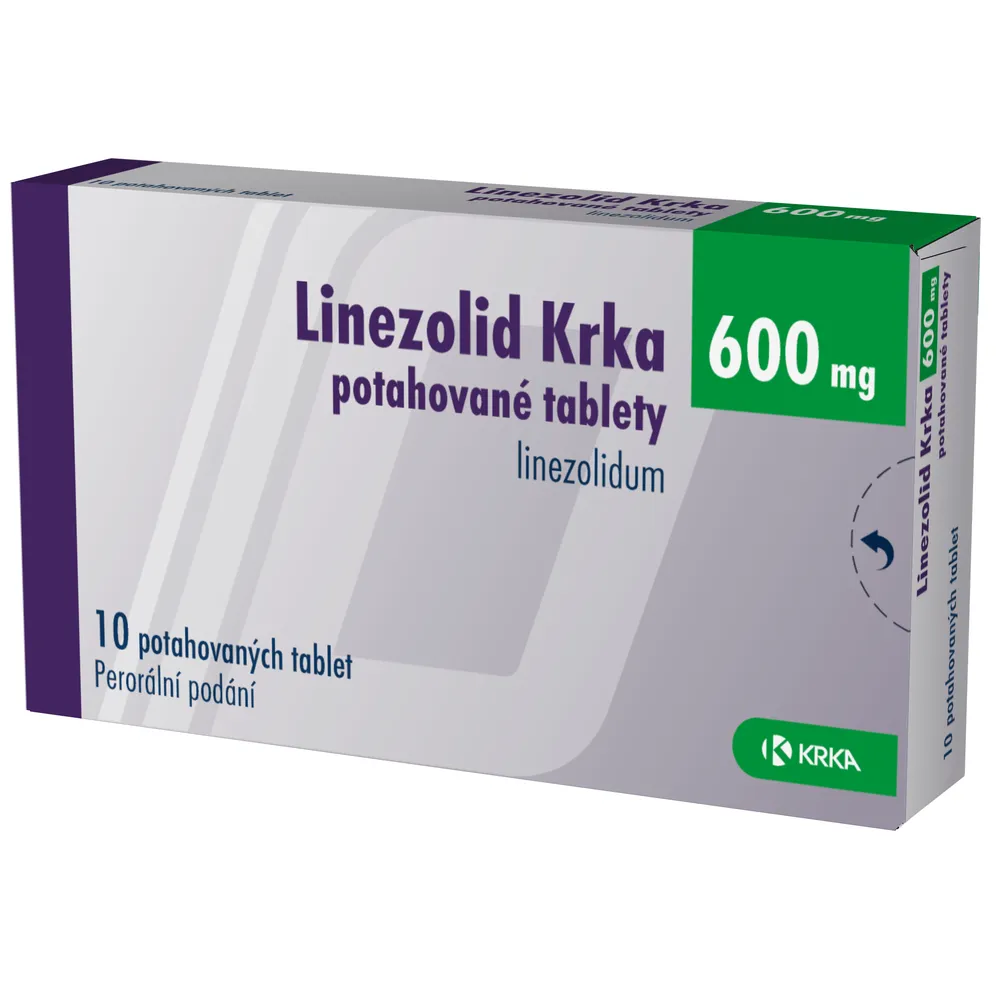
Table of Contents
- Package leaflet: Information for the patient
- Linezolid Krka d.d. 600 mg film-coated tablets
- 1. What Linezolid Krka d.d. is and what it is used for
- 2. What you should know before taking Linezolid Krka d.d.
- 3. How to take Linezolid Krka d.d.
- 4. Possible side effects
- 5. How to store Linezolid Krka d.d.
- 6. Package contents and other information
Package leaflet: Information for the patient
Linezolid Krka d.d. 600 mg film-coated tablets
linezolid
Generic medicine
Please read all of this leaflet carefully before taking this medicine, because it contains
important information for you.
- Keep this leaflet. You may need to read it again.
- If you have any questions, ask your doctor, pharmacist, or nurse.
- This medicine has been prescribed for you only. Do not give it to other people, even if their symptoms are the same as yours, as it may be harmful.
- If you experience any adverse reaction, including those not listed in this leaflet, talk to your doctor, pharmacist, or nurse. See section 4.
Contents of this leaflet:
- What Linezolid Krka d.d. is and what it is used for
- What you need to know before taking Linezolid Krka d.d.
- How to take Linezolid Krka d.d.
- Possible side effects
- How to store Linezolid Krka d.d.
- Contents of the pack and other information
1. What Linezolid Krka d.d. is and what it is used for
Linezolid Krka d.d. is an antibiotic belonging to the oxazolidinone group, which works by inhibiting the growth of certain bacteria causing infections. It is used to treat pneumonia and certain skin or soft tissue infections. Your doctor will decide whether Linezolid Krka d.d. is appropriate for treating your infection.
2. What you should know before taking Linezolid Krka d.d.
Do not take Linezolid Krka d.d.
- if you are allergic to linezolid or to any of the other ingredients of this medicine (listed in section 6).
- if you are taking or have taken within the last 2 weeks any medicines known as monoamine oxidase inhibitors (MAOIs, for example phenelzine, isocarboxazid, selegiline, moclobemide). These medicines may be used to treat depression or Parkinson's disease.
- if you are breastfeeding, as Linezolid Krka d.d. passes into breast milk and could affect your baby.
Warnings and precautions
Talk to your doctor, pharmacist, or nurse before taking Linezolid Krka d.d.
Linezolid Krka d.d. may not be suitable for you if you answer "yes" to any of the following questions. In such cases, discuss this with your doctor, who may need to monitor your general health and blood pressure before and during treatment, or may decide that another treatment is more appropriate for you.
Ask your doctor if you are unsure whether any of these categories apply to you.
- Do you have high blood pressure, regardless of whether you are taking medicines for it?
- Have you been diagnosed with an overactive thyroid?
- Do you have a tumour of the adrenal glands (pheochromocytoma) or carcinoid syndrome (caused by tumours of the hormonal system, with symptoms such as diarrhoea, skin flushing, and shortness of breath)?
- Do you suffer from manic depression, schizoaffective disorder, mental confusion, or other mental health problems?
- Do you have a history of hyponatraemia (low sodium levels in the blood), or are you taking medicines that lower sodium levels in the blood, e.g. certain diuretics (also known as "water tablets") such as hydrochlorothiazide?
- Are you taking opioids? Taking certain medicines, including antidepressants and opioids, together with Linezolid Krka d.d. may lead to serotonin syndrome, a potentially life-threatening condition (see section 2 "Other medicines and Linezolid Krka d.d." and section 4).
Take special care with Linezolid Krka d.d.
Talk to your doctor or pharmacist before taking this medicine if:
- you are elderly
- you bleed or bruise easily
- you are anaemic (have a low number of red blood cells)
- you tend to develop infections
- you have a history of seizures
- you have liver or kidney problems, especially if you are on dialysis
- you have diarrhoea
Inform your doctor immediately if, during treatment, you experience:
- vision problems such as blurred vision, changes in colour vision, difficulty seeing details, or narrowing of your field of vision
- loss of sensation in arms or legs, or a tingling or prickling sensation in arms or legs
- you may develop diarrhoea during or after taking antibiotics, including Linezolid Krka d.d. If this becomes severe or persistent, or if you notice blood or mucus in your stools, stop taking Linezolid Krka d.d. immediately and consult your doctor. In this case, do not take medicines that block or slow intestinal movement.
- nausea or recurrent vomiting, abdominal pain, or excessive breathing
- feeling unwell with muscle weakness, headache, confusion, and memory impairment, which may indicate hyponatraemia (low sodium levels in the blood).
Children and adolescents
Linezolid Krka d.d. is generally not used to treat children and adolescents (under 18 years of age).
Other medicines and Linezolid Krka d.d.
There is a risk that Linezolid Krka d.d. may interact with certain medicines, causing undesirable effects such as changes in blood pressure, body temperature, or heart rate.
Tell your doctor or pharmacist if you are taking or have recently taken any other medicines.
Inform your doctor if you are taking or have taken any of the following medicines within the last 2 weeks, as Linezolid Krka d.d. must not be taken if you are currently taking or have recently taken these medicines. (See also section 2 above "Do not take Linezolid Krka d.d.").
- Monoamine oxidase inhibitors (MAOIs, for example phenelzine, isocarboxazid, selegiline, moclobemide). These medicines may be used to treat depression or Parkinson's disease.
Also inform your doctor if you are taking any of the following medicines. Your doctor may still decide to prescribe Linezolid Krka d.d., but may need to monitor your general health and blood pressure before and during treatment. In other cases, your doctor may decide that another treatment is more suitable for you.
- Decongestants for cold or flu containing pseudoephedrine or phenylpropanolamine.
- Certain medicines used to treat asthma such as salbutamol, terbutaline, fenoterol.
- Certain antidepressants known as tricyclics or SSRIs (selective serotonin reuptake inhibitors). There are many of these, including amitriptyline, citalopram, clomipramine, dosulepin, doxepin, fluoxetine, fluvoxamine, imipramine, lofepramine, paroxetine, sertraline.
- Medicines used to treat migraine such as sumatriptan and zolmitriptan.
- Medicines used to treat severe and sudden allergic reactions such as adrenaline (epinephrine).
- Medicines that increase blood pressure, such as noradrenaline (norepinephrine), dopamine, and dobutamine.
- Opioids, e.g. meperidine (pethidine), used to treat moderate to severe pain. Medicines used to treat anxiety disorders, such as buspirone.
- Medicines that prevent blood clotting, such as warfarin.
- An antibiotic called rifampicin.
Linezolid Krka d.d. with food, drinks and alcohol
- You may take Linezolid Krka d.d. before, during, or after a meal.
- Avoid eating large amounts of aged cheese, yeast extracts, or soybean seed extracts (such as soy sauce), and avoid drinking alcohol, especially draught beer and wine. Linezolid Krka d.d. may react with a substance called tyramine, naturally present in some foods, causing an increase in blood pressure.
- If you develop a sudden, severe headache after eating or drinking, inform your doctor, pharmacist, or nurse immediately.
Pregnancy, breastfeeding and fertility
The effect of Linezolid Krka d.d. in pregnant women is unknown. Therefore, it should not be taken during pregnancy unless advised by your doctor. If you are pregnant, breastfeeding, suspect you may be pregnant, or are planning to become pregnant, consult your doctor or pharmacist before taking this medicine.
You must not breastfeed while taking Linezolid Krka d.d., as the medicine may pass into breast milk and could affect your baby.
Driving and using machines
Linezolid Krka d.d. may cause dizziness or vision problems. If this occurs, do not drive or operate machinery. Remember that your ability to drive or operate machinery may be impaired if you do not feel well.
Linezolid Krka d.d. contains sodium
This medicine contains less than 1 mmol (23 mg) of sodium per tablet, i.e. essentially "sodium-free".
3. How to take Linezolid Krka d.d.
Take this medicine exactly as stated in this leaflet or as instructed by your doctor, pharmacist, or nurse. If you have any doubts, consult your doctor, pharmacist, or nurse. The recommended dose is one film-coated tablet (600 mg of linezolid) twice daily (every 12 hours). Swallow the film-coated tablet whole with a little water.
If you are undergoing renal dialysis, you must take Linezolid Krka d.d. after your dialysis treatment.
A treatment course usually lasts from 10 to 14 days but may last up to 28 days. The safety and efficacy of this medicine have not been established for treatment periods longer than 28 days. Your doctor will decide how long your treatment should last.
During treatment with Linezolid Krka d.d., your doctor will perform regular blood tests to monitor your blood count.
If you take Linezolid Krka d.d. for more than 28 days, your doctor will monitor your vision.
Use in children and adolescents
Linezolid Krka d.d. is normally not used to treat children and adolescents (under 18 years of age).
If you take more Linezolid Krka d.d. than you should
Inform your doctor or pharmacist immediately.
If you forget to take Linezolid Krka d.d.
Take the missed tablet as soon as you remember. Take the next film-coated tablet 12 hours after the missed dose, and continue taking tablets every 12 hours. Do not take a double dose to make up for the forgotten film-coated tablet.
If you stop taking Linezolid Krka d.d.
Unless your doctor specifically instructs you to stop treatment, it is important to continue taking Linezolid Krka d.d.
If you stop and your original symptoms return, inform your doctor or pharmacist immediately.
If you have any doubts about how to use this medicine, ask your doctor, pharmacist, or nurse.
4. Possible side effects
Like all medicines, this medicine can cause side effects, although not everybody will experience them.
Serious side effects (with frequency in brackets) of Linezolid Krka d.d. are:
Immediately inform your doctor, nurse, or pharmacist if you notice any of the following side effects during treatment with Linezolid Krka d.d.:
-
Severe skin reactions (uncommon), swelling, especially of the face and neck (uncommon), shortness of breath and/or difficulty breathing (rare). These may be signs of an allergic reaction, and it may be necessary to stop treatment with Linezolid Krka d.d.
Skin reactions such as raised purple rash due to inflammation of blood vessels (rare), skin redness and peeling (dermatitis) (uncommon), rash (common), itching (common). -
Vision disturbances (uncommon), such as blurred vision (uncommon), changes in color vision (frequency not known), difficulty seeing details (frequency not known), or narrowing of the visual field (rare).
-
Severe diarrhoea containing blood and/or mucus (antibiotic-associated colitis, including pseudomembranous colitis), which in rare cases may lead to life-threatening complications (uncommon).
-
Recurrent nausea or vomiting, abdominal pain, or rapid breathing (rare).
-
Seizures or convulsions (uncommon) have been reported with Linezolid Krka d.d.
-
Serotonin syndrome (frequency not known): if you experience agitation, confusion, delirium, stiffness, tremor, lack of coordination, convulsions, rapid heartbeat, severe breathing problems, or diarrhoea (suggestive of serotonin syndrome) while taking antidepressants known as SSRIs or opioids (see section 2), inform your doctor immediately.
-
Inflammation of the pancreas (uncommon).
-
Unexplained bleeding or bruising, possibly due to changes in the number of certain blood cells that may affect blood clotting or lead to anaemia (common).
-
Changes in the number of certain blood cells that may affect the ability to fight infections (uncommon); some signs of infection include: fever (common), sore throat (uncommon), mouth ulcers (uncommon), and fatigue (uncommon).
-
Convulsions (uncommon).
-
Transient ischaemic attacks (temporary disturbance in blood flow to the brain causing short-term symptoms such as loss of vision, weakness in arms and legs, confused speech, and loss of consciousness) (uncommon).
-
"Ringing" in the ears (tinnitus) (uncommon).
In patients treated with Linezolid Krka d.d. for more than 28 days, numbness, tingling, and blurred vision have been reported. If you experience vision problems, consult your doctor as soon as possible.
Other side effects include:
Common side effects (may affect up to 1 in 10 people):
- Fungal infections, especially oral or vaginal candidiasis
- Headache
- Metallic taste in the mouth
- Diarrhoea, nausea, and vomiting
- Changes in certain blood test results, including values used to monitor proteins, salts, or enzymes measuring kidney or liver function, or blood sugar levels
- Difficulty sleeping
- Increased blood pressure
- Anaemia (low red blood cell count)
- Dizziness
- General or localized abdominal pain
- Constipation
- Indigestion
- Localized pain
- Reduced platelet count
Uncommon side effects (may affect up to 1 in 100 people):
- Inflammation of the vagina or genital area in women
- Sensation of tingling or numbness
- Swelling, pain, or discoloration of the tongue
- Dry mouth
- Need to urinate more often
- Chills
- Feeling thirsty
- Increased sweating
- Hyponatraemia (low sodium levels in the blood)
- Kidney failure
- Abdominal swelling
- Increased creatinine
- Stomach discomfort
- Changes in heart rate frequency (e.g. increased rhythm)
- Reduced number of blood cells
- Weakness and/or sensory disturbances
Rare side effects (may affect up to 1 in 1,000 people):
- Superficial tooth discoloration, removable with dental cleaning (manual descaling)
The following side effects have also been reported (frequency not known: cannot be estimated from available data):
- Alopecia (hair loss)
If any of the side effects worsen, or if you notice any side effect not listed in this leaflet, inform your doctor or pharmacist.
Reporting of side effects
If you experience any side effect, including those not listed in this leaflet, talk to your doctor or pharmacist. You may also report side effects directly via the national reporting system at the website
https://www.aifa.gov.it/en/content/segnalazioni-reazioni-avverse. By reporting side effects, you can help provide more information on the safety of this medicine.
5. How to store Linezolid Krka d.d.
Keep this medicine out of the sight and reach of children.
Do not use this medicine after the expiry date which is stated on the packaging and on the
blister after EXP. The expiry date refers to the last day of that month.
This medicine does not require any special storage conditions.
Do not dispose of medicines via wastewater or household waste. Ask your pharmacist
how to dispose of medicines you no longer use. This will help protect the environment.
6. Package contents and other information
What Linezolid Krka d.d. contains
- The active substance is linezolid. Each film-coated tablet contains 600 mg of linezolid.
- The other ingredients are microcrystalline cellulose, maize starch, sodium starch glycolate (type A), hydroxypropylcellulose (type EF), magnesium stearate in the tablet core, and hypromellose 3 mPas, titanium dioxide (E171), macrogol 6000 and talc in the coating film. See section 2 "Linezolid Krka d.d. contains sodium".
Description of the appearance of Linezolid Krka d.d. and package contents
White to off-white, oval, slightly biconvex tablets.
Tablet size: 18 x 9 mm
Linezolid Krka d.d. is available in blister packs containing 10, 20 or 30 film-coated tablets.
Not all pack sizes may be marketed.
Marketing Authorisation Holder
KRKA, d.d., Novo mesto, Šmarješka cesta 6, 8501 Novo mesto, Slovenia
Manufacturer
TAD Pharma GmbH, Heinz-Lohmann-Str. 5, 27472 Cuxhaven, Germany
KRKA, d.d., Novo mesto, Šmarješka cesta 6, 8501 Novo mesto, Slovenia
This medicinal product is authorised in the European Economic Area (EEA) Member States under the following names:
| Member State | Name of medicinal product |
| Austria | Ilenozyd |
| Bulgaria | Линезолид Крка |
| Croatia, Estonia, Latvia, Lithuania, Poland, Czech Republic, Romania, Slovakia, Slovenia, Spain, Hungary | Linezolid Krka |
| Italy | Linezolid Krka d.d. |
| Portugal | Linezolida Krka |