Linezolid Demo
Italy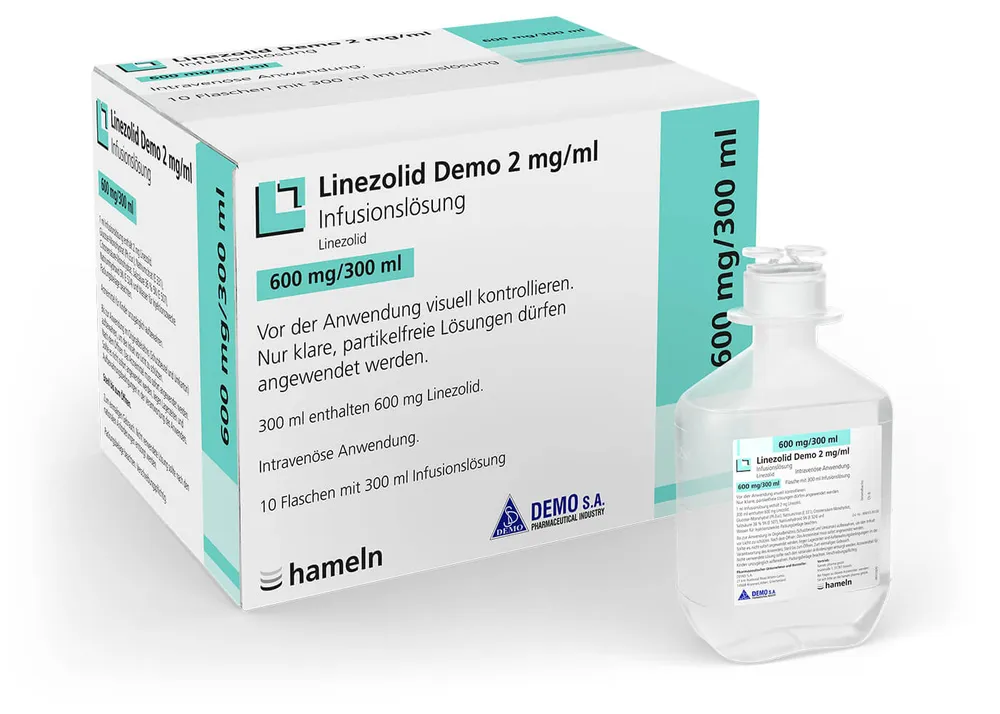
Table of Contents
- Package leaflet: Information for the user
- Linezolid Demo 2 mg/mL infusion solution
- 1. What Linezolid Demo is and what it is used for
- 2. What you need to know before you are given Linezolid Demo
- 3. How Linezolid Demo is administered
- 4. Possible side effects
- 5. How to store Linezolid Demo
- 6. Package contents and other information
Package leaflet: Information for the user
Linezolid Demo 2 mg/mL infusion solution
linezolid
Generic medicine
Please read this leaflet carefully before you are given this medicine because it contains
important information for you.
Keep this leaflet. You may need to read it again.
If you have any questions, ask your doctor, pharmacist or nurse.
This medicine has been prescribed for you only. Do not give it to other people, even if their symptoms are the same as yours, because it could be harmful.
If you experience any side effect, including those not listed in this leaflet, tell your doctor, pharmacist or nurse. See section 4.
Contents of this leaflet
-
What Linezolid Demo is and what it is used for
-
What you need to know before you are given Linezolid Demo
-
How Linezolid Demo is given
-
Possible side effects
-
How to store Linezolid Demo
-
Contents of the pack and other information
1. What Linezolid Demo is and what it is used for
Linezolid Demo is an antibiotic belonging to the oxazolidinones class, which works by inhibiting the growth of certain bacteria causing infections. It is used to treat pneumonia and certain skin or soft tissue infections. Your doctor will decide whether Linezolid Demo is suitable for treating your type of infection.
2. What you need to know before you are given Linezolid Demo
Linezolid Demo must not be administered:
- if you are allergic to linezolid or to any of the other ingredients of this medicine (listed in section 6).
- if you are taking or have taken within the last 2 weeks any medicines known as monoamine oxidase inhibitors (MAOIs), such as phenelzine, isocarboxazid, selegiline, moclobemide. These are medicines generally used to treat depression or Parkinson's disease.
- if you are breastfeeding, because Linezolid Demo passes into breast milk and may affect the baby.
Warnings and precautions
Talk to your doctor, pharmacist, or nurse before you are given Linezolid Demo.
Linezolid Demo may not be suitable for you if you answer yes to any of the following questions. In this case, inform your doctor, who will need to monitor your general health condition and blood pressure before and during treatment, or consider whether an alternative therapy would be more appropriate.
Ask your doctor if you are unsure whether any of these conditions apply to you.
- Do you have high blood pressure, whether or not you are taking medication for it?
- Have you been diagnosed with an overactive thyroid?
- Do you have a tumour of the adrenal glands (pheochromocytoma) or carcinoid syndrome (caused by hormone-producing tumours, with symptoms such as diarrhoea, skin flushing, and wheezing)?
- Do you suffer from manic depression, schizoaffective disorder, mental confusion, or another mental disorder?
- Do you have a history of hyponatraemia (low sodium levels in the blood), or are you taking medicines that lower sodium levels in the blood, e.g. certain diuretics (also known as “medicines that increase urine production”) such as hydrochlorothiazide?
- Are you taking opioids?
The use of certain medicines, including antidepressants and opioids, together with Linezolid Demo may lead to the development of serotonin syndrome, a potentially life-threatening condition (see section 2 “Other medicines and Linezolid Demo” and section 4).
Exercise particular caution with Linezolid Demo
Inform your doctor before taking this medicine if:
- you are elderly
- you bruise easily or have episodes of bleeding
- you are anaemic (have low red blood cell count)
- you are prone to infections
- you have a history of seizures
- you have liver or kidney problems, especially if you are on dialysis
- you have diarrhoea
Inform your doctor immediately if, during treatment, you experience: - vision problems such as blurred vision, changes in colour vision, difficulty seeing details, or narrowing of the visual field.
- loss of sensation in arms or legs, or tingling or prickling sensations in arms or legs.
- during or after antibiotic treatment, including Linezolid Demo, you may develop diarrhoea. If diarrhoea becomes severe or persistent, or if you notice blood or mucus in your stools, stop taking Linezolid Demo immediately and consult your doctor. In such cases, do not take medicines that stop or slow down intestinal movements.
- recurrent nausea or vomiting, abdominal pain, or rapid breathing
- feeling unwell with muscle weakness, headache, confusion, and memory problems, which may indicate hyponatraemia (low sodium levels in the blood).
Other medicines and Linezolid Demo
There is a risk that Linezolid Demo may interact with other medicines, sometimes causing unwanted effects such as changes in blood pressure, body temperature, or heart rate.
Tell your doctor or pharmacist if you are taking, have recently taken, or might take any other medicine.
Inform your doctor if you are taking or have taken any of the following medicines within the last 2 weeks, because Linezolid Demo must not be taken if you are already taking these medicines or have recently taken them (see section 2 ‘Linezolid Demo must not be administered’).
- monoamine oxidase inhibitors (MAOIs), such as phenelzine, isocarboxazid, selegiline, moclobemide. These medicines may be used to treat depression or Parkinson’s disease.
Also inform your doctor if you are taking any of the following medicines. Your doctor may still decide to administer Linezolid Demo, but will need to monitor your general health and blood pressure before and during treatment. In some cases, your doctor may decide that another treatment would be more suitable for you.
- Decongestants, cold or flu remedies containing pseudoephedrine or phenylpropanolamine.
- Certain medicines used to treat asthma, such as salbutamol, terbutaline, fenoterol.
- Certain antidepressants known as tricyclics or SSRIs (selective serotonin reuptake inhibitors). There are many of these, including amitriptyline, citalopram, clomipramine, dosulepin, doxepin, fluoxetine, fluvoxamine, imipramine, lofepramine, paroxetine, sertraline.
- Medicines used to treat migraine, such as sumatriptan and zolmitriptan.
- Medicines used to treat severe and sudden allergic reactions, such as adrenaline (epinephrine).
- Medicines that raise blood pressure, such as noradrenaline (norepinephrine), dopamine, and dobutamine.
- Opioids, for example meperidine (pethidine), used to treat moderate to severe pain.
- Medicines used to treat anxiety disorders, such as buspirone.
- Medicines that prevent blood clotting, such as warfarin.
- An antibiotic called rifampicin.
Linezolid Demo with food, drinks, and alcohol
- You may take Linezolid Demo before, during, or after a meal.
- Avoid eating large amounts of aged cheese, yeast extracts, or soybean products (e.g. soy sauce), and avoid drinking alcoholic beverages, especially draught beer and wine. This is because Linezolid Demo may react with a substance called tyramine, naturally present in certain foods. This interaction may cause a rise in blood pressure.
- If you develop a throbbing headache after eating or drinking, inform your doctor, pharmacist, or nurse immediately.
Pregnancy, breastfeeding, and fertility
The effect of Linezolid Demo in pregnant women is unknown. Therefore, this medicine should not be used during pregnancy unless clearly prescribed by your doctor. If you are pregnant, think you may be pregnant, plan to become pregnant, or are breastfeeding, consult your doctor or pharmacist before taking this medicine.
You must not breastfeed while taking Linezolid Demo because the medicine passes into breast milk and may affect the baby.
Driving and using machines
Linezolid Demo may cause dizziness or vision problems. If this occurs, do not drive or operate machinery. Remember that your ability to drive or use machines may be impaired if you do not feel well.
Linezolid Demo contains glucose and sodium
Linezolid Demo contains 13.7 g of glucose per 300 mL dose. This should be taken into account in patients with diabetes mellitus.
This medicine contains 114 mg of sodium (a key component of table salt) per 300 mL dose. This corresponds to 5.7% of the maximum daily recommended dietary intake for an adult.
3. How Linezolid Demo is administered
Adults
Take this medicine exactly as stated in this leaflet or as instructed by your doctor, pharmacist, or nurse. If you have any doubts, consult your doctor, pharmacist, or nurse.
This medicine will be administered to you by intravenous infusion (drip) into a vein by a doctor or healthcare professional. The recommended dose for adults (over 18 years of age) is 300 mL (600 mg of linezolid) twice daily, administered directly into the bloodstream via intravenous infusion over a period of 30 to 120 minutes.
If you are undergoing renal dialysis, Linezolid Demo should be administered after dialysis.
A treatment course usually lasts from 10 to 14 days, but may last up to 28 days. The safety and efficacy of this medicine for periods longer than 28 days have not been established. Your doctor will decide how long your treatment should continue.
While taking Linezolid Demo, your doctor should perform regular blood tests to monitor your blood cell counts.
If you are taking Linezolid Demo for longer than 28 days, your doctor should monitor your vision.
Use in children and adolescents
Linezolid Demo is not normally used to treat children and adolescents (under 18 years of age).
If you are given more Linezolid Demo than you should have
If you are concerned that you have been given too much Linezolid Demo, inform your doctor or nurse immediately.
If you miss a dose of Linezolid Demo
Since this medicine will be administered under strict medical supervision, it is very unlikely that you will miss a dose. However, if you think a dose has been missed, inform your doctor or nurse immediately. Do not take a double dose to make up for a forgotten dose.
4. Possible side effects
Like all medicines, this medicine can cause side effects, although not everybody gets them.
Immediately inform your doctor, pharmacist, or nurse if you notice any of the following side effects during treatment with Linezolid Demo:
The serious side effects (frequency in parentheses) of Linezolid Demo are:
- Severe skin reactions (uncommon), swelling, especially of the face and neck (uncommon), wheezing and/or difficulty breathing (rare). These may be signs of an allergic reaction, and treatment with Linezolid Demo may need to be stopped. Skin reactions such as raised purple rash due to inflammation of blood vessels (rare), skin ulceration and peeling (dermatitis) (uncommon), rash (common), itching (common).
- Vision disorders (uncommon), such as blurred vision (uncommon), changes in colour vision (not known), difficulty seeing details (not known), or narrowing of the visual field (rare).
- Severe diarrhoea containing blood and/or mucus (antibiotic-associated colitis, including pseudomembranous colitis), which in rare cases may lead to complications that could potentially be fatal (uncommon).
- Recurrent nausea or vomiting, abdominal pain, or rapid breathing (rare).
- Seizures or convulsions have been reported with Linezolid Demo (uncommon).
- Serotonin syndrome (not known): inform your doctor if you experience agitation, confusion, delirium, stiffness, tremor, lack of coordination, convulsions, rapid heartbeat, severe breathing problems, or diarrhoea (indicative of serotonin syndrome) while taking antidepressant medicines called SSRIs or opioids (see section 2).
- Unexplained bleeding or bruising, possibly due to changes in the number of certain blood cells that may affect blood clotting or lead to anaemia (common).
- Changes in the number of certain blood cells that may affect the ability to fight infections (uncommon); some signs of infection include: fever (common), sore throat (uncommon), mouth ulcers (uncommon), and fatigue (uncommon).
- Inflammation of the pancreas (uncommon).
- Convulsions (uncommon).
- Transient ischaemic attacks (temporary disturbance in blood supply to the brain causing short-lived symptoms such as loss of vision, weakness in arms and legs, difficulty speaking, and loss of consciousness) (uncommon).
- Ringing in the ears (tinnitus) (uncommon).
In patients who have received linezolid for more than 28 days, numbness, tingling sensations, or blurred vision have been reported. If you have any vision problems, consult your doctor as soon as possible.
Other side effects include:
Common (may affect up to 1 in 10 people):
- Fungal infections, especially vaginal or oral candidiasis
- Headache
- Metallic taste in the mouth
- Diarrhoea, nausea, or vomiting
- Changes in certain blood test results, including values used to monitor proteins, salts, or enzymes measuring kidney or liver function, or blood sugar levels
- Difficulty sleeping
- Increased blood pressure
- Anaemia (low red blood cell count)
- Dizziness
- Localised or general abdominal pain
- Constipation
- Indigestion
- Localised pain
- Reduction in platelets
Uncommon (may affect up to 1 in 100 people):
- Inflammation of the vagina or genital area in women
- Sensations such as tingling or numbness
- Swelling, pain, or discolouration of the tongue
- Dry mouth
- Pain at the site of infusion
- Inflammation of veins (including at the infusion site)
- Need to urinate more frequently
- Chills
- Feeling thirsty
- Increased sweating
- Hyponatraemia (low sodium levels in the blood)
- Kidney failure
- Abdominal swelling
- Pain at the injection site
- Increased creatinine
- Stomach pain
- Changes in heart rate (e.g. increased heart rate)
- Reduction in blood cell count
- Weakness and/or sensory disturbances
Rare (may affect up to 1 in 1,000 people):
- Superficial tooth discolouration, removable with professional dental cleaning (manual removal)
The following side effects have also been reported.
Frequency not known (frequency cannot be estimated from the available data):
- Alopecia (hair loss)
Reporting of side effects
If you experience any side effect, including those not listed in this leaflet, talk to your doctor, pharmacist, or nurse. You can also report side effects directly via the national reporting system at https://www.aifa.gov.it/content/segnalazioni-reazioni-avverse. By reporting side effects, you can help provide more information on the safety of this medicine.
5. How to store Linezolid Demo
Keep this medicine out of the sight and reach of children.
Do not use this medicine after the expiry date stated on the label and the outer carton after "Exp".
The expiry date refers to the last day of that month.
This medicine does not require any special storage temperature.
Keep the vial in the outer pouch or carton to protect the medicine from light.
After opening: from a microbiological point of view, unless the method of opening excludes the risk of bacterial contamination, the product should be used immediately. If not used immediately, the duration and conditions of storage during use are the responsibility of the user.
Do not use this medicine if you notice visible particles or if the solution is cloudy.
Do not dispose of any medicine via wastewater or household waste. Ask your pharmacist how to dispose of medicines no longer in use. This will help protect the environment.
6. Package contents and other information
What Linezolid Demo contains
- The active substance is linezolid. 1 mL of solution contains 2 mg of linezolid. Each 300 mL vial contains 600 mg of linezolid.
- The other ingredients are monohydrate glucose (a type of sugar, see section 2), sodium citrate (E331, see section 2), citric acid monohydrate, hydrochloric acid 5 N (E507) or sodium hydroxide 5 N (E524), and water for injections.
Description of the appearance of Linezolid Demo and contents of the pack
Linezolid Demo is a clear infusion solution, colourless to yellow.
Linezolid Demo is packaged in cardboard boxes containing 300 mL polypropylene vials.
Pack sizes: 1, 2, 5, 10, 20 and 25 vials.
Not all pack sizes may be marketed.
Marketing Authorisation Holder and Manufacturer
DEMO S.A. PHARMACEUTICAL INDUSTRY
National Road Athens–Lamia 21 Km,
14568 Kryoneri, Attikis, Greece
T: +30 210 8161802
This medicinal product is authorised in the European Economic Area countries under the following names:
Portugal: Linezolida Demo
Greece: ZETALID 2 mg/mL Διάλυμα για έγχυση
Spain: Linezolid Demo 2 mg/mL solución para perfusión EFG
Germany: Linezolid Demo 2 mg/mL Infusionslösung
Austria: Linezolid Demo 2 mg/mL Infusionslösung
Czech Republic: Linezolid Demo
Cyprus: ZETALID 2 mg/mL Διάλυμα για έγχυση
Hungary: Linezolid Demo 2 mg/mL oldatos infúzió
France: LINEZOLIDE DEMO 2 mg/mL, solution pour perfusion
Italy: Linezolid Demo
Poland: Linezolid Demo
Romania: Linezolid Demo 2 mg/mL soluţie perfuzabilă
Slovakia: Linezolid Demo
The following information is intended exclusively for physicians and healthcare professionals:
Linezolid Demo 2 mg/mL infusion solution
IMPORTANT: Refer to the Summary of Product Characteristics before prescribing.
Linezolid is not active against infections caused by Gram-negative pathogens. If co-infection with Gram-negative pathogens is confirmed or suspected, appropriate specific therapy directed against these organisms should be initiated concomitantly.
Description
Single-use plastic vials, ready for use, made of polypropylene, with a moulded plastic closure, rubber seal (type II), tear-off ring, or with closure incorporating embedded elastomeric components (twin ports). The vial contains 300 mL of solution and is packaged in a box. Each box contains 1 vial.
Single-use plastic vials, ready for use, made of polypropylene, with a moulded plastic closure, rubber seal (type II), tear-off ring, or with closure incorporating embedded elastomeric components (twin ports). Each vial is contained in a metallized plastic pouch. The vial contains 300 mL of solution and is packaged in a box. Each box contains 2, 5, 10, 20 or 25 vials.
The 300 mL vial is available in pack sizes of 1, 2, 5, 10, 20 and 25 vials.
Not all pack sizes may be marketed.
Linezolid Demo is a clear infusion solution, colourless to yellow. The other ingredients are: monohydrate glucose, sodium citrate (E331), citric acid monohydrate, hydrochloric acid 5 N (E507) or sodium hydroxide 5 N (E524), and water for injections.
Dosage and method of administration
Treatment with linezolid should only be initiated in a hospital setting and after consultation with a qualified specialist, such as a microbiologist or an infectious disease specialist.
Patients starting treatment with the parenteral formulation may subsequently be switched to oral formulations when clinically appropriate. In such cases, no dose adjustment is required, as the oral bioavailability of linezolid is approximately 100%.
The infusion solution must be administered over a period of 30 to 120 minutes.
The recommended dose of linezolid should be administered intravenously twice daily.
Recommended dosage and duration of treatment in adults:
The duration of treatment depends on the causative pathogen, the site and severity of the infection, and the patient's clinical response.
The following recommendations on treatment duration reflect those used in clinical trials. Shorter treatment regimens may be suitable for certain types of infection but have not been evaluated in clinical trials.
The maximum duration of treatment is 28 days. The safety and efficacy of linezolid for periods longer than 28 days have not yet been established.
No increase in dose or duration of treatment is required for infections associated with concurrent bacteremia. The recommended doses for the infusion solution are as follows:
| Infections | Dosage and route of administration for administration twice daily | Duration of treatment |
| Hospital-acquired pneumonia | 600 mg twice daily | 10-14 consecutive days |
| Community-acquired pneumonia | ||
| Complicated skin and soft tissue infections | 600 mg twice daily |
Paediatric population: The safety and efficacy of linezolid in children and adolescents under 18 years of age have not been established. The available data are described in sections 4.8, 5.1 and 5.2 of the SmPC, but no dosage recommendations can be made.
Elderly: No dose adjustment is required.
Renal impairment: No dose adjustment is required.
Severe renal impairment (i.e. CrCl < 30 mL/min): No dose adjustment is required. Since the clinical significance of higher exposure (up to 10-fold) to the two main metabolites of linezolid in patients with severe renal impairment is unknown, linezolid should be used with particular caution in these patients and only when the expected benefit is considered to outweigh the theoretical risk.
As approximately 30% of a dose of linezolid is removed during 3 hours of haemodialysis, linezolid should be administered after dialysis in patients undergoing this treatment. The main metabolites of linezolid are partially removed by haemodialysis, but concentrations of these metabolites remain substantially higher after dialysis than those observed in patients with normal renal function or mild to moderate renal impairment. Therefore, linezolid should be used with particular caution in patients with severe renal impairment undergoing dialysis, and only when the expected benefit outweighs the theoretical risk.
There are currently no data on the administration of linezolid in patients undergoing continuous ambulatory peritoneal dialysis (CAPD) or other treatments for renal failure (other than haemodialysis).
Hepatic impairment: Patients with mild to moderate hepatic impairment (Child-Pugh class A or B): No dose adjustment is required.
Severe hepatic impairment (Child-Pugh class C): Since linezolid is metabolised via a non-enzymatic process, altered hepatic function is not expected to significantly affect its metabolism, and therefore no dosage adjustment is recommended. However, clinical data are limited; thus, linezolid should be used in such patients only when the expected benefit is considered to outweigh the theoretical risk (see sections 4.4 and 5.2 of the SmPC).
Contraindications
Hypersensitivity to linezolid or to any of the excipients.
Linezolid must not be used in patients receiving monoamine oxidase inhibitors (MAOIs) A or B (e.g., phenelzine, isocarboxazid, selegiline, moclobemide) or within two weeks of discontinuing such medications.
Linezolid must not be administered to patients with any of the following underlying clinical conditions or who are taking the following types of concomitant medications unless facilities are available for close patient observation and monitoring of blood pressure:
-
Patients with uncontrolled hypertension, phaeochromocytoma, carcinoid, thyrotoxicosis, bipolar depression, schizoaffective disorders, acute confusional states.
-
Patients taking the following medications: serotonin reuptake inhibitors, tricyclic antidepressants, 5HT serotonin receptor agonists (triptans), direct or indirect sympathomimetics (including adrenergic bronchodilators, pseudoephedrine and phenylpropanolamine), vasopressor substances (e.g., adrenaline/epinephrine, noradrenaline/norepinephrine), dopaminergic substances (e.g., dopamine, dobutamine), meperidine or buspirone.
Breastfeeding must be discontinued before and during administration (see section 4.6 of the SmPC).
Special warnings and precautions for use
Myelosuppression
Cases of myelosuppression (including anaemia, leucopenia, pancytopenia and thrombocytopenia) have been reported in patients treated with linezolid. In cases with known outcome, haematological parameters returned towards pre-treatment values after discontinuation of linezolid. The risk of these effects appears to be related to the duration of treatment. Elderly patients receiving linezolid may be at greater risk of haematological disorders than younger patients. Thrombocytopenia may occur more commonly in patients with severe renal impairment, whether or not on dialysis, and in patients with moderate to severe hepatic impairment. Therefore, careful monitoring of the full blood count is recommended in patients with pre-existing anaemia, granulocytopenia or thrombocytopenia; those receiving concomitant medications that may reduce haemoglobin levels, suppress the full blood count or adversely affect platelet count or function; those with severe renal impairment or moderate to severe hepatic impairment; and those receiving linezolid for more than 10–14 days. In such patients, linezolid should be administered only when close monitoring of haemoglobin levels, full blood count and platelets is possible.
If significant myelosuppression occurs during treatment with linezolid, therapy should be discontinued unless continuation is considered absolutely necessary; in such cases, intensive monitoring of the full blood count and appropriate treatment measures should be initiated.
Weekly monitoring of the full blood count (including haemoglobin levels, platelets, and total and differential white blood cell count) is also recommended in patients receiving linezolid, regardless of baseline values.
In compassionate use studies, a higher incidence of severe anaemia has been reported in patients treated with linezolid for periods exceeding the recommended maximum duration of 28 days. These patients more frequently require blood transfusion. Cases of anaemia requiring transfusion have also been reported in post-marketing experience, with a higher incidence in patients treated with linezolid for periods exceeding 28 days.
Post-marketing experience has reported cases of sideroblastic anaemia. In cases where onset time was known, most patients had received linezolid treatment for more than 28 days. Most patients showed complete or partial recovery after discontinuation of linezolid therapy, with or without treatment for anaemia.
Imbalance in mortality rate in a clinical study in patients with catheter-related Gram-positive bacteraemia
In an open-label clinical study in critically ill patients with intravascular catheter-related infections, a higher mortality rate was observed in patients treated with linezolid compared to vancomycin, dicloxacillin or oxacillin [78/363 (21.5%) vs. 58/363 (16.0%)]. The main factor influencing mortality rate was the baseline status of Gram-positive infection. Mortality was similar in patients with infections caused exclusively by Gram-positive bacteria (odds ratio 0.96; 95% confidence interval: 0.58–1.59), but was significantly higher (p=0.0162) in the linezolid treatment group among patients who had any other pathogen or no pathogen at baseline (odds ratio 2.48; 95% confidence interval: 1.38–4.46). The greatest difference occurred during treatment and within 7 days of stopping therapy. A greater number of patients in the linezolid treatment group developed infections with Gram-negative pathogens during the study and died from Gram-negative and polymicrobial infections. Therefore, in complicated skin and soft tissue infections, linezolid should be used in patients with confirmed or suspected concomitant Gram-negative pathogen infections only when alternative treatments are not available. In such cases, concomitant treatment against Gram-negative pathogens should be initiated.
Antibiotic-associated diarrhoea and colitis
Antibiotic-associated diarrhoea and colitis, including pseudomembranous colitis and Clostridium difficile-associated diarrhoea, have been reported with the use of nearly all antibiotics, including linezolid, with severity ranging from mild diarrhoea to fatal colitis. It is therefore important to consider this diagnosis in patients who develop severe diarrhoea during or after treatment with linezolid. If antibiotic-associated diarrhoea or colitis is suspected or confirmed, ongoing antibacterial therapy, including linezolid, should be discontinued and appropriate therapeutic measures initiated immediately. In this situation, antiperistaltic agents are contraindicated.
Lactic acidosis
Cases of lactic acidosis have been reported with the use of linezolid. Patients who develop signs and symptoms of metabolic acidosis during treatment with linezolid – including recurrent nausea or vomiting, abdominal pain, low bicarbonate levels or hyperventilation – should receive immediate medical care. If lactic acidosis occurs, the benefits of continuing linezolid therapy should be weighed against the potential risks.
Mitochondrial dysfunction
Linezolid inhibits mitochondrial protein synthesis. As a consequence of this inhibition, adverse events such as lactic acidosis, anaemia and neuropathy (optic and peripheral) may occur; these events are more common when the drug is used for more than 28 days.
Serotonin syndrome
Spontaneous reports of serotonin syndrome associated with the concomitant administration of linezolid and serotonergic drugs, including antidepressants such as selective serotonin reuptake inhibitors (SSRIs) and opioids, have been reported (see section 4.5 of the SmPC). Therefore, concomitant administration of linezolid and serotonergic drugs is contraindicated (see section 4.3 of the SmPC), except when concomitant administration of linezolid and serotonergic drugs is essential. In such cases, patients must be closely monitored for signs and symptoms of serotonin syndrome, such as changes in cognitive function, hyperthermia, hyperreflexia and lack of coordination. If these signs and symptoms occur, the physician must consider discontinuing one or both treatments; if the concomitant serotonergic drug is discontinued, withdrawal symptoms may occur.
Hyponatraemia and SIADH
Hyponatraemia and/or syndrome of inappropriate antidiuretic hormone secretion (SIADH) have been observed in some patients treated with linezolid. Regular monitoring of serum sodium levels is recommended in patients at risk of hyponatraemia, such as elderly patients or patients taking medications that may lower blood sodium levels (e.g., thiazide diuretics such as hydrochlorothiazide).
Peripheral and optic neuropathy
Peripheral neuropathy, as well as optic neuropathy and optic neuritis, have been reported in patients receiving linezolid, sometimes progressing to vision loss. These cases have occurred primarily in patients treated for periods exceeding the recommended maximum duration of 28 days.
All patients should be advised to report symptoms of visual impairment, such as changes in visual acuity, colour vision disturbances, blurred vision or visual field defects. In such cases, prompt ophthalmological evaluation is recommended, and, if necessary, consultation with an ophthalmologist. If patients receive linezolid for periods exceeding the recommended maximum duration of 28 days, regular monitoring of visual function should be performed.
In the event of onset of peripheral or optic neuropathy, continuation of linezolid therapy in these patients should be evaluated considering the potential risks.
The risk of neuropathies may increase when linezolid is used in patients who are concomitantly taking or have recently taken antimycobacterial drugs for the treatment of tuberculosis.
Seizures
Cases of seizures have been reported in patients receiving linezolid. In most cases, a history of seizures or risk factors for seizures was reported. Patients with a history of seizures should be advised to inform their physician.
Monoamine oxidase inhibitors
Linezolid is a reversible, non-selective monoamine oxidase (MAO) inhibitor; however, at doses used for antibacterial therapy, it does not exert an antidepressant effect. Very limited data are available from drug interaction studies and on the safety of linezolid administered to patients with pre-existing clinical conditions and/or receiving concomitant pharmacological therapies that may pose a risk due to MAO inhibition. Therefore, the use of linezolid is not recommended in these circumstances unless close patient monitoring and surveillance are possible.
Use with tyramine-rich foods
Patients should be advised not to consume large quantities of tyramine-rich foods.
Superinfection
The effects of linezolid therapy on normal flora have not been evaluated in clinical studies. Antibiotic use may occasionally lead to superinfections caused by non-susceptible organisms. For example, approximately 3% of patients treated with the recommended dose of linezolid developed drug-related candidiasis during clinical studies. Appropriate measures should be taken if superinfections occur during therapy.
Special populations
Linezolid should be used with particular caution in patients with severe renal impairment and only when the expected benefit outweighs the theoretical risk (see sections 4.2 and 5.2 of the SmPC).
Linezolid should be administered to patients with severe hepatic impairment only when the expected benefit outweighs the theoretical risk.
Fertility
Linezolid has been shown to reversibly reduce fertility and induce morphological abnormalities in sperm of adult male rats at exposure levels equivalent to those expected in humans; the potential effects of linezolid on the male reproductive system in humans are unknown.
Clinical studies
The safety and efficacy of linezolid administered for periods exceeding 28 days have not been established. Controlled clinical studies did not include patients with diabetic foot lesions, pressure ulcers, ischaemic wounds, severe burns or gangrene. Therefore, experience with the use of linezolid in the treatment of such lesions is limited.
Excipients
Glucose
Linezolid Demo contains 13.7 g of glucose per 300 mL dose. This should be taken into consideration in patients with diabetes mellitus or other conditions associated with glucose intolerance.
Sodium
This medicinal product contains 160 mg of sodium per 300 mL dose. This corresponds to 5.7% of the maximum daily intake recommended by the WHO in a 2 g sodium diet for an adult.
Linezolid Demo may be further prepared for administration with sodium-containing solutions (see section 6.6), and this should be considered when evaluating the total amount of sodium from all sources to be administered to the patient.
Interactions
Monoamine oxidase inhibitors
Linezolid is a reversible, non-selective monoamine oxidase (MAO) inhibitor. Very limited data are available from drug interaction studies and on the safety of linezolid administered to patients receiving concomitant pharmacological therapies that may pose a risk due to MAO inhibition. Therefore, the use of linezolid is not recommended in these circumstances unless close patient monitoring and surveillance are possible.
Potential interactions causing increases in blood pressure
In healthy normotensive volunteers, linezolid potentiated the increase in blood pressure induced by pseudoephedrine and phenylpropanolamine hydrochloride. Concomitant administration of linezolid with pseudoephedrine and phenylpropanolamine resulted in mean increases in systolic blood pressure of 30–40 mmHg, compared to increases of 11–15 mmHg with linezolid alone, 14–18 mmHg with pseudoephedrine or phenylpropanolamine alone, and 8–11 mmHg with placebo. Similar studies have not been conducted in hypertensive subjects. Careful titration of vasopressor medications, including dopaminergic agents, is recommended to achieve the desired response when administered concomitantly with linezolid.
Potential serotonergic interactions
The potential drug-drug interaction with dextromethorphan was studied in healthy volunteers. Subjects were treated with dextromethorphan (two 20 mg doses 4 hours apart), with or without linezolid. No serotonin syndrome effects (confusion, delirium, restlessness, tremors, flushing, diaphoresis, hyperthermia) were observed in normal subjects treated with linezolid and dextromethorphan. Post-marketing experience: there has been one report of a patient who developed symptoms suggestive of serotonin syndrome during concomitant use of linezolid and dextromethorphan, which resolved upon discontinuation of both treatments.
In clinical experience with concomitant use of linezolid and serotonergic drugs, including antidepressants of the serotonin reuptake inhibitor class (SSRIs) and opioids, cases of serotonin syndrome have been reported. Concomitant administration is therefore contraindicated (see section 4.3 of the SmPC), but management of patients for whom treatment with linezolid and serotonergic drugs is essential is described in the special warnings and precautions for use.
Use with tyramine-rich foods
Subjects treated with linezolid and less than 100 mg of tyramine did not show any significant pressor response. This indicates that only excessive consumption of foods and beverages high in tyramine (e.g., aged cheese, yeast extracts, non-distilled alcoholic beverages and fermented soy products such as soy sauce) needs to be avoided.
Drugs metabolised by cytochrome P450 enzymes
Linezolid is not significantly metabolised by the cytochrome P450 (CYP) enzyme system and does not inhibit any of the clinically significant human CYP isoforms (1A2, 2C9, 2C19, 2D6, 2E1 and 3A4). Similarly, linezolid does not induce P450 isoenzymes in rats. Therefore, no CYP450-mediated drug interactions are expected with linezolid.
Rifampicin
The effect of rifampicin on the pharmacokinetics of linezolid was studied in sixteen healthy adult male volunteers who received linezolid 600 mg twice daily for 2.5 days with and without rifampicin 600 mg once daily for 8 days. Rifampicin reduced the Cmax and AUC of linezolid by a mean of 21% [90% CI, 15, 27] and 32% [90% CI, 27, 37], respectively. The mechanism of this interaction and its clinical significance are unknown.
Warfarin
When warfarin was co-administered with linezolid under steady-state conditions, a 10% reduction in mean maximum INR was observed during concomitant administration, with a 5% reduction in INR AUC. Data from patients treated with warfarin and linezolid are insufficient to determine the potential clinical significance, if any, of these findings.
Fertility, pregnancy and lactation
Pregnancy
There are limited data on the use of linezolid in pregnant women. Animal studies have shown reproductive toxicity. There is a potential risk for humans.
Linezolid should not be used during pregnancy unless strictly necessary, i.e., only when the expected benefits outweigh the theoretical risk.
Lactation
Animal data indicate that linezolid and its metabolites may pass into breast milk; therefore, breastfeeding must be discontinued before or during administration.
Fertility
In animal studies, linezolid caused a reduction in fertility.
Effects on ability to drive and use machines
Patients should be informed of the potential occurrence of dizziness or visual impairment symptoms during treatment with linezolid and should therefore be advised not to drive or operate machinery if any of these symptoms occur.
Undesirable effects
The table below lists adverse drug reactions by frequency based on all causality data from clinical studies involving over 6,000 adult patients treated for up to 28 days with the recommended doses of linezolid.
The most commonly reported were diarrhoea (8.9%), nausea (6.9%), vomiting (4.3%) and headache (4.2%).
The most commonly reported drug-related adverse events leading to discontinuation of treatment were headache, diarrhoea, nausea and vomiting. Approximately 3% of patients discontinued treatment due to a drug-related adverse event.
Additional adverse reactions reported during post-marketing experience are included in the table under the category "not known", as frequency cannot be determined from the available data.
The following undesirable effects have been observed and reported during treatment with linezolid with the following frequency: very common (≥ 1/10); common (≥ 1/100, < 1/10); uncommon (≥ 1/1,000, < 1/100); rare (≥ 1/10,000, < 1/1,000); very rare (< 1/10,000); not known (frequency cannot be estimated from the available data).
Classification by system and organ | Common (≥1/100, <1/10) | Uncommon (≥ 1/1,000, <1/100) | Rare (≥ 1/10,000, <1/1,000) | Very rare (<1/10,000) | Frequency not known (frequency cannot be estimated from the available data): --- | --- | --- | --- | --- | --- Infections and infestations | Candidiasis, oral candidiasis, vaginal candidiasis, fungal infections | Antibiotic-associated colitis, including pseudomembranous colitis, vaginitis | | | Blood and lymphatic system disorders | Thrombocytopenia*, leucopenia*, anaemia*† | Pancytopenia*, neutropenia*, eosinophilia | | | Myelosuppression, sideroblastic anaemia* Immune system disorders | | | | | Anaphylaxis Metabolism and nutrition disorders | Hyponatraemia | | | | Lactic acidosis* Psychiatric disorders | | | | | Insomnia Nervous system disorders | Headache, dizziness, taste disturbance (metallic taste), paraesthesia | Peripheral neuropathy*, hypoaesthesia | | | Seizures*, serotonin syndrome** Eye disorders | Blurred vision* | Optic neuropathy*, visual field defect*, changes in visual acuity*, changes in colour vision* | | | Optic neuritis*, loss of vision* Ear and labyrinth disorders | | | | | Tinnitus Cardiac disorders | | | | | Arrhythmia (tachycardia) Vascular disorders | Hypertension | Transient ischaemic attacks, phlebitis, thrombophlebitis | | | Gastrointestinal disorders | Diarrhoea, nausea, vomiting, abdominal pain, constipation, dry mouth, glossitis, liquid stools, dyspepsia, alteration in tongue colour or disturbances affecting the tongue | | Pancreatitis | | Superficial discolouration of teeth Hepatobiliary disorders | Abnormal liver function tests; increased AST, ALT or alkaline phosphatase | | | | Increased total bilirubin Skin and subcutaneous tissue disorders | Pruritus, rash, dermatitis, sweating | Urticaria, bullous eruption, dermatitis bullosa | | | Angioedema, necrolytic epidermal, Stevens-Johnson syndrome, hypersensitivity vasculitis Renal and urinary disorders | Increased BUN, increased creatinine, polyuria | | | | Renal failure Reproductive system and breast disorders | | | | | Vulvovaginal disorders General disorders and administration site conditions | Localised pain, injection site pain, thirst | | | | Fever, chills, fatigue Investigations | Increased LDH, creatinine, lipase, amylase or non-fasting glucose; increased chloride; decreased sodium or calcium | Increased glucose, protein, albumin, reticulocytes; increased or decreased potassium or bicarbonate | | | Increased or decreased neutrophils, eosinophils; decreased haemoglobin, haematocrit or red blood cells; increased or decreased platelets or white blood cells
* See Special warnings and precautions for use
** See Contraindications and Interactions sections
Frequency of ADR estimated using the "Rule of 3"
† See information below
The following adverse reactions to linezolid have been considered severe in rare cases: localised abdominal pain, transient ischaemic attacks and hypertension.
In controlled clinical studies in which linezolid was administered for up to 28 days of treatment, 2.0% of patients reported anaemia. During a compassionate use programme in patients with potentially life-threatening infections and concomitant underlying conditions, the percentage of patients who developed anaemia during treatment with linezolid for ≤ 28 days was 2.5% (33/1,326), compared to 12.3% (53/430) in cases where therapy lasted >28 days. The percentage of cases in which severe drug-related anaemia requiring blood transfusion was reported was 9% (3/33) in patients treated for ≤ 28 days and 15% (8/53) in those treated for >28 days.
Paediatric population
Safety data from clinical studies involving over 500 paediatric patients (from birth to 17 years) do not indicate that the safety profile of linezolid in paediatric patients differs from that in adults.
Overdose
No specific antidote is known.
No cases of overdose have been reported. The following information may nevertheless be useful:
Supportive treatment with maintenance of glomerular filtration is recommended. Approximately 30% of a dose of linezolid is eliminated during 3 hours of haemodialysis, but no data are available on the elimination of linezolid by peritoneal dialysis or haemoperfusion.
Instructions for use and handling
Linezolid Demo infusion solution should be used immediately after puncturing the rubber stopper to prevent any bacterial contamination. No light protection is required during infusion.
Do not use if particles are visible or if the solution is cloudy.
Unused medicine and waste derived from this medicine must be disposed of in accordance with local regulations.
For single use only.
Linezolid Demo infusion solution is compatible with the following solutions: 5% glucose for intravenous infusion, 0.9% sodium chloride for intravenous infusion, Ringer-lactate for injectable solutions (Hartmann for injectable solutions).
Incompatibilities
No additives should be added to this solution. If linezolid is to be administered in combination with another drug, each drug must be administered separately according to their respective instructions for use. Similarly, if the same intravenous line is used for sequential infusion of different drugs, the line should be flushed with a compatible infusion solution before and after administration of linezolid.
Linezolid Demo is physically incompatible with the following substances: amphotericin B, chlorpromazine hydrochloride, diazepam, pentamidine isethionate, erythromycin lactobionate, sodium phenytoin and sulfamethoxazole/trimethoprim. It is also chemically incompatible with sodium ceftriaxone.
Shelf life
Before opening: 3 years.
After opening: From a microbiological standpoint, unless the method of opening excludes the risk of bacterial contamination, the product should be used immediately. If not used immediately, the times and conditions of storage during use are the responsibility of the user.
Special precautions for storage
This medicinal product does not require any special storage temperature.
Keep the vial in the outer pouch or carton to protect from light.