Lidocaine Noridem
Italy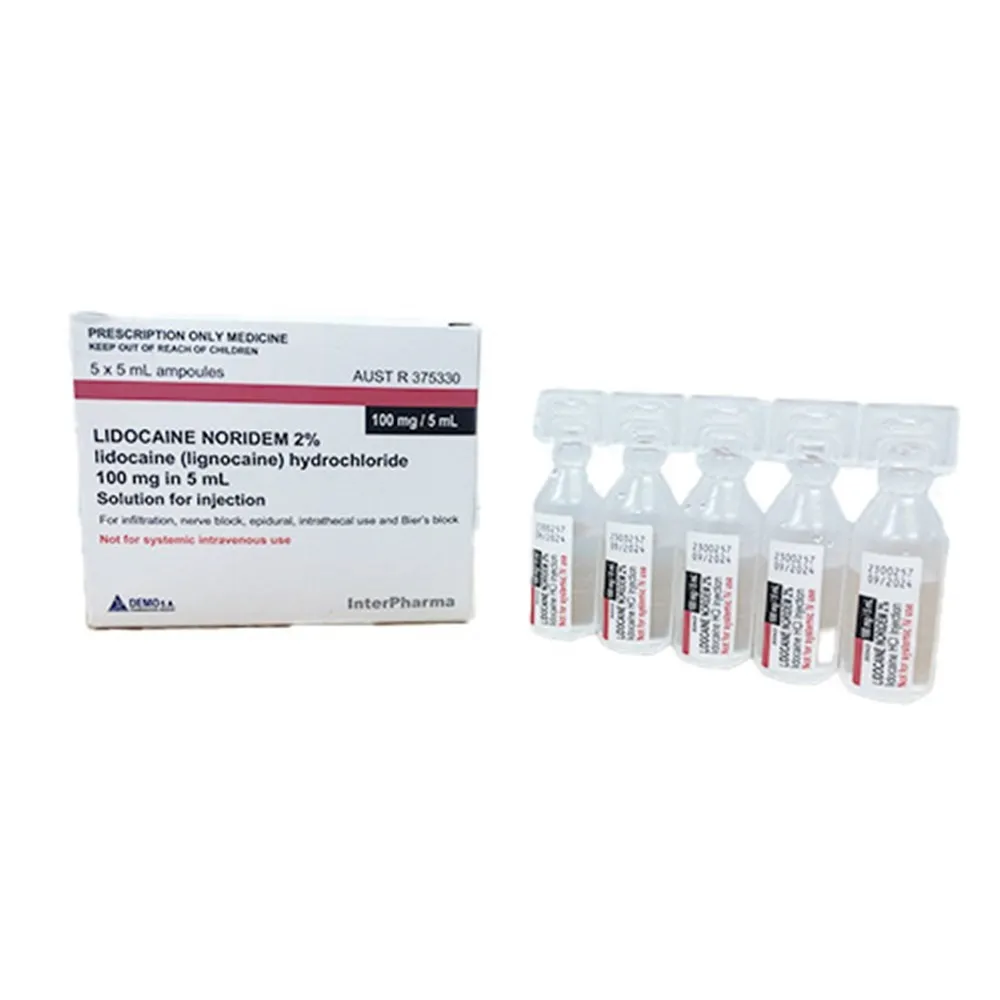
Table of Contents
- Patient Information Leaflet: Information for the patient
- Lidocaine Noridem 10 mg/mL (1% w/v) injectable solution
- 1. What Lidocaine Noridem 10 mg/mL (1% w/v) is and what it is used for
- 2. What you need to know before being given Lidocaine Noridem 10 mg/mL (1% w/v)
- 3. How Lidocaine Noridem 10 mg/mL (1% p/v) is administered
- 4. Possible side effects
- 5. How to store Lidocaine Noridem 10 mg/mL (1% w/v)
- 6. Package contents and other information
- The following information is intended exclusively for healthcare professionals:
- Patient information leaflet
- Lidocaine Noridem 20 mg/mL (2% w/v) Injectable Solution
- 2. What you need to know before you are given Lidocaine Noridem 20 mg/mL (2% w/v)
- 3. How Lidocaine Noridem 20 mg/mL (2% w/v) is administered
- 4. Possible side effects
- 5. How to store Lidocaine Noridem 20 mg/mL (2% w/v)
- 6. Package contents and other information
- The following information is intended exclusively for healthcare professionals:
Patient Information Leaflet: Information for the patient
Lidocaine Noridem 10 mg/mL (1% w/v) injectable solution
lidocaine hydrochloride
Equivalent medicine
Please read this leaflet carefully before using this medicine as it contains important information for you.
- Keep this leaflet. You may need to read it again.
- If you have any questions, ask your doctor, pharmacist, or nurse.
- This medicine has been prescribed for you only. Do not give it to other people, even if they have the same symptoms as yours, because it could be harmful.
- If any adverse reaction occurs, including those not listed in this leaflet, contact your doctor, pharmacist, or nurse. See section 4.
Contents of this leaflet
- What Lidocaine Noridem 10 mg/mL (1% w/v) is and what it is used for
- What you need to know before Lidocaine Noridem 10 mg/mL (1% w/v) is administered to you
- How Lidocaine Noridem 10 mg/mL (1% w/v) is administered
- Possible side effects
- How to store Lidocaine Noridem 10 mg/mL (1% w/v)
- Contents of the pack and other information
1. What Lidocaine Noridem 10 mg/mL (1% w/v) is and what it is used for
Lidocaine Noridem 10 mg/mL contains the active substance lidocaine hydrochloride.
Lidocaine is a local and regional anaesthetic.
It is used to numb a specific part of the body before a surgical procedure in adults and children. However, if the doctor intends to administer this medicine to a child, particular precautions must be followed (see also "How Lidocaine Noridem 10 mg/mL (1% w/v) is administered"). It should be noted that there is only limited data available on the use of this medicine in children under 2 years of age.
2. What you need to know before being given Lidocaine Noridem 10 mg/mL (1% w/v)
Do not be given Lidocaine Noridem 10 mg/mL (1% w/v)
- if you are allergic to lidocaine hydrochloride or to similar medicines used as local anaesthetics, or to any of the other ingredients of this medicine (listed in section 6).
It must not be used for epidural or spinal anaesthesia (administration of the anaesthetic into the spinal canal) if you have:
- uncorrected hypovolemia (low blood volume)
- impaired blood coagulation (coagulopathy)
- increased intracranial pressure
- bleeding in the brain or spinal cord
Warnings and precautions
Before you are given this medicine, your doctor will ensure that all necessary equipment for emergency treatment and resuscitation is available.
You will receive this medicine only under strict medical supervision. Your doctor will pay special attention if you suffer from any of the following conditions:
- previous allergy to local anaesthetics
- heart or lung problems
- liver or kidney disease
- an autoimmune disease causing muscle weakness (Myasthenia gravis)
- severe shock
- any condition that may increase the risk of seizures or convulsions (epilepsy)
Your doctor will take into account, especially if you are elderly, that low blood pressure may occur as a complication of spinal and epidural anaesthesia (administration of the anaesthetic into the spinal canal).
Furthermore, your doctor knows that injecting this medicine into inflamed tissue may increase drug absorption into the bloodstream, and the effect of the medicine in the body may be reduced.
If you are under 30 years of age, there may be a risk of headache after spinal anaesthesia. Your doctor will use a small needle to reduce this risk.
In addition, there is a risk of increased adverse effects when the tourniquet is released after intravenous injection. Therefore, your doctor will administer this medicine in several portions.
Your doctor will consider an increased risk of nervous system-related side effects if this medicine is administered in the head and neck area.
Other medicines and Lidocaine Noridem 10 mg/mL (1% w/v)
Tell your doctor or pharmacist if you are taking, have recently taken, or might take any other medicines.
This is necessary because your doctor must check whether the medicines you are taking are metabolized by specific enzymes in the body or affect their function (Cytochrome P450 1A2 and 3A4). This is done to prevent possible interactions between Lidocaine Noridem 10 mg/mL (1% w/v) and any other medicines you are taking.
In particular, inform your doctor or pharmacist if you are taking any of the following medicines:
- certain heart medications, such as beta-blockers (e.g. metoprolol, propranolol) or calcium channel blockers (e.g. amiodarone)
- antiarrhythmics – medicines used to treat irregular heartbeat
- medicines that constrict blood vessels (vasoconstrictors, e.g. adrenaline, noradrenaline)
- cimetidine, a medicine used to treat stomach acidity
- antivirals (e.g. medicines used to treat HIV)
- hypnotics and medicines that reduce consciousness (sedatives) or cause drowsiness
- phenobarbital, phenytoin, carbamazepine or primidone, which are medicines used to treat epilepsy
- medicines that increase the risk of seizures (e.g. tramadol, bupropion)
- the antibiotic erythromycin
- antipsychotics (fluvoxamine), used in the treatment of mental illness
- medicines used to relax muscles during general anaesthesia
- other anaesthetics.
Pregnancy and breastfeeding
If you are pregnant, think you may be pregnant, planning to become pregnant, or are breastfeeding, consult your doctor or pharmacist before using this medicine.
Your doctor will then decide whether this medicine should be administered to you.
Pregnancy
Your doctor will administer this medicine during pregnancy only if considered necessary.
The dose should be as low as possible.
Breastfeeding
Lidocaine or its metabolites are excreted in small amounts in breast milk. Therefore, your doctor will be particularly cautious if you are breastfeeding. However, in general, this medicine at usual doses is not expected to affect the breastfed newborn/infant. Therefore, interruption of breastfeeding is not mandatory.
Driving and using machines
This medicine may affect your ability to drive or use machinery, depending on where and how it is administered. Consult your doctor, especially if areas of your body involved in driving or operating machinery have been anaesthetized. If your doctor considers it necessary, you must not drive or operate machinery.
Lidocaine Noridem 10 mg/mL (1% w/v) contains sodium
2 mL and 5 mL vials:
This medicine contains less than 1 mmol of sodium (23 mg) per vial, i.e. it is practically sodium-free.
10 mL and 20 mL vials:
This medicine contains 26.8–27.4 mg of sodium (the main component of table salt) in each 10 mL vial and 53.6–54.9 mg of sodium in each 20 mL vial. This corresponds to 1.34–1.37% and 2.68–2.74%, respectively, of the maximum daily recommended sodium intake for an adult.
3. How Lidocaine Noridem 10 mg/mL (1% p/v) is administered
This medicine will be administered to you by a doctor.
You will receive this medicine as an injection into a vein, into the skin, into the muscle, into the bone, into the spinal canal, or near nerves.
Dosage
Your doctor will decide how much medicine you will receive. This depends on your individual condition.
Adults
The usual maximum dose is 4.5 mg/kg body weight (or 300 mg). If combined with an appropriate medicine that constricts blood vessels, the maximum dose may be increased up to 7 mg/kg body weight (or 500 mg).
Use in children and adolescents
The dose for children and adolescents will be individually calculated based on age, body weight, and the nature of the procedure. The maximum dose for children is 5 mg/kg body weight. If combined with an appropriate medicine that constricts blood vessels, the maximum dose may be increased up to 7 mg/kg body weight.
For anesthesia in children, only a low concentration of this medicine (0.5%) should be used. To perform a specific technique called complete motor block, the doctor may need to use a higher concentration (1% p/v).
This medicine must be used with caution in children under 2 years of age.
In certain patient groups, the administered dose of lidocaine is reduced. These include:
- pregnant women
- newborns
- young children
- children with high body weight
- elderly patients
- patients in suboptimal health
- patients with reduced protein-binding capacity
- patients with renal impairment
- patients with cardiac and/or hepatic disease
If you receive more Lidocaine Noridem 10 mg/mL (1% p/v) than you should
Whether or not you experience symptoms of overdose depends on the level of this medicine in your blood. The higher the lidocaine blood concentration and the faster it is administered, the more frequent and severe the overdose symptoms may be.
A mild overdose primarily affects the central nervous system. In most cases, the adverse effects that occur resolve after discontinuation of lidocaine administration.
Symptoms occurring mainly at the beginning of lidocaine intoxication include:
- unpleasant sensations around the mouth
- tingling, prickling, or numbness (paresthesia)
- restlessness, drowsiness, dizziness
- difficulty speaking, blurred vision
- visual and auditory disturbances, tinnitus
- muscle twitching, convulsions
- hot flashes
- high blood pressure
- rapid heartbeat
- vomiting, nausea
- hallucinations, euphoria, anxiety
- tremors
More severe symptoms include:
- sudden drop in blood pressure
- pallor
- impaired consciousness or even loss of consciousness (coma)
- respiratory arrest
- absence of pulse
- heart attack, slow or irregular heartbeat
- death
If these severe symptoms occur, the doctor will know how to treat them and will administer the necessary treatment.
If you have any further questions about the use of this medicine, consult your doctor or pharmacist.
4. Possible side effects
Like all medicines, this medicine can cause side effects, although not everyone experiences them.
The frequency and severity of side effects of this medicine depend on the dose, the route of administration, and your individual response to lidocaine.
Local toxicity symptoms may occur after administration of this medicine. Systemic side effects may occur at lidocaine concentrations above 5–10 mg/L. Symptoms may affect the central nervous system, circulation, and heart (see also section "If you receive more Lidocaine Noridem 10 mg/mL (1% w/v) than you should").
The following side effects can be serious. Inform your doctor immediately if you notice any of the following side effects. Immediate treatment may be required:
Rare (may affect up to 1 in 1,000 people):
- allergic reactions ranging from skin rashes and swelling to severe allergic reactions such as low blood pressure, difficulty breathing, airway constriction, and shock
- spinal cord compression due to bruising
- partial or complete paralysis
- numbness or paralysis in limbs that does not resolve
- cauda equina syndrome: compression of a specific type of nerve root, manifesting as weakness in the muscles of the lower limbs, loss of control of defecation and urination, and loss of sensation in the buttock area
- injury to cranial nerves
Other side effects include
Very common (may affect more than 1 in 10 people):
- nausea, vomiting
Common (may affect up to 1 in 10 people):
- leg and lower back pain after epidural or spinal anaesthesia. The pain may last up to 5 days and will resolve without further treatment
Rare (may affect up to 1 in 1,000 people):
- sensation of itching, tingling, burning, stinging, or numbness
- headache accompanied by sensitivity to light (photophobia) and sound (tinnitus)
- drooping eyelids associated with pupil constriction and sometimes decreased sweating (Horner’s syndrome). This occurs after epidural anaesthesia or application in the head/neck region.
- chills, deafness, or trauma
- transient irritation of nerve roots due to spinal anaesthesia
Elderly patients
Elderly patients may be more susceptible to some of the effects listed above.
Children
The frequency, type, and severity of side effects in children are expected to be the same as in adults.
Reporting of side effects
If you experience any side effects, including those not listed in this leaflet, talk to your doctor, pharmacist, or nurse. You can also report side effects directly via the national reporting system at the following address:
https://www.aifa.gov.it/content/segnalazioni-reazioni-avverse.
By reporting side effects, you can help provide more information on the safety of this medicine.
5. How to store Lidocaine Noridem 10 mg/mL (1% w/v)
Keep this medicine out of the sight and reach of children.
Do not store above 25°C.
Do not use this medicine after the expiry date stated on the vial and carton after "Exp". The expiry date refers to the last day of that month.
The injectable solution should be administered immediately after opening the container.
The containers are for single use only. After opening, discard the container and any unused contents.
The injectable solution should only be used if it is clear, colourless, and practically free from particles, and if the container and closure are undamaged.
After dilution, chemical and physical in-use stability has been demonstrated for 24 hours both at 25°C and at 2–8°C when diluted in sodium chloride 9 mg/mL (0.9%) solution or in glucose 50 mg/mL (5%) solution. From a microbiological standpoint, the product should be used immediately. If not used immediately, the storage times and conditions prior to use are the responsibility of the user and should not exceed 24 hours at a temperature of 2–8°C, unless dilution has been carried out under controlled and validated aseptic conditions.
Do not dispose of any medicine via wastewater or household waste. Ask your pharmacist how to dispose of medicines you no longer use. This will help protect the environment.
6. Package contents and other information
What Lidocaine Noridem 10 mg/mL (1% w/v) contains
- The active substance is lidocaine hydrochloride. Each mL of solution contains 10 mg of lidocaine hydrochloride. Each 2 mL vial contains 20 mg of lidocaine hydrochloride. Each 5 mL vial contains 50 mg of lidocaine hydrochloride.
Each 10 mL vial contains 100 mg of lidocaine hydrochloride.
Each 20 mL vial contains 200 mg of lidocaine hydrochloride.
The other components are sodium chloride, sodium hydroxide and water for injectable solutions.
Description of the appearance of Lidocaine Noridem 10 mg/mL (1% w/v) and contents of the pack
Lidocaine Noridem 10 mg/mL (1% w/v) solution for injection is a clear, colourless solution.
Polypropylene vials of 2 mL, 5 mL, 10 mL or 20 mL. Each carton contains 5, 10, 20, 50 or 100 vials.
Not all pack sizes may be marketed.
Marketing Authorisation Holder
Noridem Enterprises Limited
Evagorou and Makariou,
Mitsi Building 3, Office 115,
Nicosia 1065, Cyprus
Manufacturer
DEMO S.A. PHARMACEUTICAL INDUSTRY
21st Km National Road Athens-Lamia
14568 Greece
This medicinal product is authorised in the European Economic Area and in the United Kingdom (Northern Ireland) under the following names:
Ireland Lidocaine hydrochloride Noridem 10 mg / mL (1 % w/v) Solution for injection
Poland Lidocaini hydrochloridum Noridem
Cyprus Lidocaine hydrochloride Noridem 10 mg / mL (1 % w/v) Solution for injection
United Kingdom Lidocaine hydrochloride Noridem 10 mg / mL (1 % w/v) Solution for injection
Austria Lidocain Noridem 10 mg / mL (1 % w/v) Injektionslösung
Czech Republic Lidocaine Noridem
Denmark Lidocaine Noridem
Spain Lidocaína Noridem 10 mg / mL (1 % w/v) solución inyectable EFG
Finland Lidocaine Noridem
Hungary Lidokain Noridem 10 mg / mL (1 % w/v) oldatos injekció
Italy Lidocaina Noridem
Netherlands Lidocaine Noridem 10 mg / mL (1 % w/v) oplossing voor injectie
Norway Lidocaine Noridem
Portugal Lidocaína Noridem
Romania Lidocaină Noridem 10 mg / mL soluție injectabilă
Slovakia Lidocaine Noridem 10 mg / mL
Sweden Lidocaine Noridem
The following information is intended exclusively for healthcare professionals:
Use of lidocaine during pregnancy for local and regional anesthesia
The use of lidocaine for epidural, pudendal, caudal, or paracervical block may cause various degrees of fetal and neonatal toxicity (e.g., bradycardia, hypotonia, or respiratory depression). Accidental subcutaneous injection of lidocaine into the fetus during paracervical or perineal block may result in apnea, hypotension, and convulsive seizures, thereby potentially endangering the newborn's life.
In general, during pregnancy, it is preferable to use lidocaine at a concentration of 10 mg/mL.
For further detailed information, particularly regarding dosage and mode of administration, consult the product's summary of characteristics.
Patient information leaflet
Lidocaine Noridem 20 mg/mL (2% w/v) Injectable Solution
lidocaine hydrochloride
Equivalent medicinal product
Please read this leaflet carefully before using this medicine, as it contains important information for you.
- Keep this leaflet. You may need to read it again.
- If you have any questions, consult your doctor, pharmacist, or nurse.
- This medicine has been prescribed for you only. Do not give it to others, even if their symptoms are the same as yours, as it could be harmful.
- If you experience any adverse reaction, including those not listed in this leaflet, contact your doctor, pharmacist, or nurse. See section 4.
Contents of this leaflet:
-
What Lidocaine Noridem 20 mg/mL (2% w/v) is and what it is used for
-
What you need to know before being administered Lidocaine Noridem 20 mg/mL (2% w/v)
-
How Lidocaine Noridem 20 mg/mL (2% w/v) is administered
-
Possible side effects
-
How to store Lidocaine Noridem 20 mg/mL (2% w/v)
-
Contents of the pack and other information
-
What Lidocaine Noridem 20 mg/mL (2% w/v) is and what it is used for
Lidocaine Noridem 20 mg/mL (2% w/v) contains the active substance lidocaine hydrochloride.
Lidocaine is a local and regional anaesthetic agent. It is used to numb a specific part of the body before a surgical procedure.
For this purpose, this medicine can be administered to adults and children. However, if your doctor intends to administer this medicine to a child, special precautions must be followed (see also "How Lidocaine Noridem 20 mg/mL (2% w/v) is administered"). Please note that there are only limited data on the use of this medicine in children under 2 years of age.
Additionally, it may be used to control severe rapid heartbeat or irregular heart rhythms (ventricular tachycardia or tachyarrhythmia), but only if the doctor has assessed your condition as potentially life-threatening.
For this purpose, this medicine can be administered to adults and children. However, if your doctor intends to administer this medicine to a child, special precautions must be followed (see also "How Lidocaine Noridem 20 mg/mL (2% w/v) is administered"). Please note that there are only limited data on the use of this medicine in children.
2. What you need to know before you are given Lidocaine Noridem 20 mg/mL (2% w/v)
(2% w/v)
You must not be given Lidocaine Noridem 20 mg/mL (2% w/v)
- if you are allergic to lidocaine hydrochloride or to similar medicines used as local anaesthetics, or to any other component of this medicine (listed in section 6).
Local and regional anaesthesia
It must not be used for epidural or spinal anaesthesia (administration of the anaesthetic into the spinal canal) if you have:
- uncorrected blood volume deficit (low blood volume – hypovolemia)
- impaired blood coagulation (coagulopathy)
- increased intracranial pressure
- bleeding in the skull or spinal cord
Control of irregular heartbeat
It must not be used if:
- you have a severe heart disorder, particularly when the heartbeat is irregular or slow
- you have had a heart attack within the last 3 months
- your heart's ability to pump blood around the body is greatly reduced, unless your condition is potentially life-threatening
Warnings and precautions
Before you are given this medicine, your doctor will ensure that all necessary equipment for emergency treatment and resuscitation is available.
You will receive this medicine only under strict medical supervision. Your doctor will pay particular attention if you suffer from any of the following conditions:
- previous allergy to local anaesthetics
- heart or lung problems
- liver or kidney disease
- an autoimmune disease causing muscle weakness (myasthenia gravis)
- severe shock
- any condition that may increase the risk of epileptic or convulsive seizures (epilepsy)
Local and regional anaesthesia
Your doctor will take into account that, especially if you are an elderly patient, low blood pressure may occur as a complication of spinal and epidural anaesthesia (administration of the anaesthetic into the spinal canal).
In addition, your doctor knows that injection of this medicine into inflamed tissue may lead to increased absorption of the drug into the circulation, and the effect of the medicine in the body may be reduced.
If you are under 30 years of age, there may be a risk of headache after spinal anaesthesia. Your doctor will use a small needle to reduce this risk.
Furthermore, there is a risk of increased adverse effects when the tourniquet is released after intravenous injection. Therefore, your doctor will administer this medicine in several portions.
Your doctor will consider an increased risk of adverse effects on the nervous system if this medicine is administered in the head and neck region.
Control of irregular heartbeat
Your doctor will administer this medicine for heart problems only with particular caution if you have high blood acidity (acidosis).
Before administering large amounts of this medicine, your doctor will correct any low potassium levels in the blood, oxygen deficiency, and acid-base imbalances. If you are given this medicine for a prolonged period, your fluid balance, blood electrolyte levels, and acid-base balance will be monitored. While you are receiving this medicine, your heart, blood pressure, level of consciousness, and breathing will be monitored.
Note:
If you are under anaesthesia, your doctor will examine your condition very carefully. This is because adverse effects affecting the nervous system and heart may remain latent and may occur without prior warning symptoms.
Other medicines and Lidocaine Noridem 20 mg/mL (2% w/v)
Tell your doctor or pharmacist if you are taking, have recently taken, or might take any other medicines.
This is necessary because your doctor must check whether the medicines you are taking are metabolized by specific enzymes in the body or affect their function (Cytochrome P450 1A2 and 3A4). This is done to avoid interactions between Lidocaine Noridem 20 mg/mL (2% w/v) and other medicines you are taking.
In particular, inform your doctor or pharmacist if you are taking any of the following medicines:
- certain heart medicines, such as beta-blockers (e.g. metoprolol, propranolol) or calcium channel blockers (e.g. amiodarone)
- antiarrhythmics – medicines used to treat disturbed heart rhythm
- medicines that constrict blood vessels (vasoconstrictors, e.g. adrenaline, noradrenaline)
- cimetidine, a medicine used to treat stomach acidity
- antivirals (e.g. medicines used to treat HIV)
- sleeping pills and medicines that reduce the level of consciousness (sedatives) or cause drowsiness
- phenobarbital, phenytoin, carbamazepine or primidone, which are medicines used to treat epilepsy
- medicines that increase the risk of seizures and epilepsy (e.g. tramadol, bupropion)
- the antibiotic erythromycin
- antipsychotics (fluvoxamine), used in the treatment of mental illness
- medicines used to relax muscles during general anaesthesia
- other anaesthetics.
Pregnancy and breastfeeding
If you are pregnant, think you may be pregnant, planning to become pregnant, or are breastfeeding, ask your doctor or pharmacist for advice before using this medicine. Your doctor will then decide whether this medicine should be administered to you.
Pregnancy
Your doctor will administer this medicine during pregnancy only if necessary. The dose should be as low as possible.
Breastfeeding
Lidocaine or its metabolites are excreted in small amounts in breast milk. Therefore, your doctor will be particularly cautious if you are breastfeeding. However, in general, this medicine at usual doses should not have any effect on the breastfed newborn/child. Therefore, interruption of breastfeeding is not mandatory.
Driving and using machines
This medicine may affect your ability to drive or use machines, depending on where and how it is administered to you. Ask your doctor for advice, especially if areas of your body involved in driving or operating machinery have been anaesthetized. If your doctor considers it necessary, you must not drive or use machinery.
Lidocaine Noridem 20 mg/mL (2% w/v) contains sodium
2 mL, 5 mL and 10 mL vials:
This medicine contains less than 1 mmol of sodium (23 mg) per vial, i.e. it is practically sodium-free.
20 mL vials:
This medicine contains 38.1–41.0 mg of sodium (the main component of table salt) in each 20 mL vial. This corresponds to 1.90–2.05% of the maximum daily recommended sodium intake for an adult.
3. How Lidocaine Noridem 20 mg/mL (2% w/v) is administered
This medicine will be administered to you by a doctor.
You will receive this medicine as an injection into a vein, into the skin, into muscle, into bone, into the
spine, or near nerves.
Dosage
Your doctor will decide how much medicine you will receive. This depends on your individual condition.
Local and regional anaesthesia
Adults
The usual maximum dose is 4.5 mg/kg body weight (or 300 mg). If combined with a suitable medicine that constricts blood vessels, the maximum dose may be increased up to 7 mg/kg body weight (or 500 mg).
Use in children and adolescents
The dose for children and adolescents will be individually calculated based on the patient's age, body weight, and the nature of the procedure. The maximum dose for children is 5 mg/kg body weight. If combined with a suitable medicine that constricts blood vessels, the maximum dose may be increased up to 7 mg/kg body weight.
For anaesthesia in children, only a low concentration of this medicine (0.5%) should be used. To perform a specific technique called complete motor block, the doctor may need to use a higher concentration (1% w/v).
This medicine must be used with caution in children under 2 years of age.
Control of fast or irregular heartbeat
The dose must be adjusted according to individual needs and therapeutic effect. This is particularly important if you have heart, liver, or kidney problems, or during pregnancy.
In certain patient groups, the administered dose of lidocaine is reduced. These include:
- pregnant women
- newborns
- young children
- children with high body weight
- elderly patients
- patients in suboptimal health
- patients with reduced protein binding capacity
- patients with impaired renal function
- patients with cardiac and/or hepatic disease
If you receive more Lidocaine Noridem 20 mg/mL (2% w/v) than you should
Whether or not you experience symptoms of overdose depends on the level of this medicine in your blood. The higher the concentration of lidocaine in the blood and the faster it is administered, the more frequent and severe the symptoms of overdose may be.
A minor overdose primarily affects the central nervous system. In most cases, the adverse effects that occur resolve after discontinuation of lidocaine administration.
Symptoms occurring mainly at the onset of lidocaine intoxication include:
- unpleasant sensations around the mouth
- tingling, pricking or numbness (paraesthesia), restlessness, drowsiness, dizziness
- difficulty speaking, blurred vision
- visual and hearing disturbances, tinnitus
- muscle twitching, convulsions
- hot flushes
- high blood pressure
- rapid heartbeat
- vomiting, nausea
- hallucinations, euphoria, anxiety
- tremors
More severe symptoms include:
- sudden drop in blood pressure
- pallor
- impaired or even loss of consciousness (coma)
- respiratory arrest
- absence of pulse
- heart attack, slow or irregular heartbeat
- death
If such severe symptoms occur, the doctor will know how to treat them and will administer the necessary treatment.
If you have any further questions about the use of this medicine, please consult your doctor or pharmacist.
4. Possible side effects
Like all medicines, this medicine can cause side effects, although not everyone experiences them.
The frequency and severity of side effects with this medicine depend on the dose, the route of administration, and your individual response to lidocaine.
Local toxicity symptoms may occur after administration of this medicine. Systemic side effects may occur when blood concentrations of lidocaine exceed 5–10 mg/L. You may experience symptoms affecting the central nervous system, circulation, and heart (see also section "If you receive more Lidocaina Noridem 20 mg/mL than you should").
Depending on how this medicine is administered, systemic side effects occur more frequently when this medicine is used to control fast or irregular heartbeat.
Local and regional anaesthesia
The following side effects can be serious. Inform your doctor immediately if you experience any of the following. Immediate treatment may be required:
Rare (may affect up to 1 in 1,000 people):
- allergic reactions ranging from skin rash and swelling to severe allergic reactions such as low blood pressure, breathing difficulties, airway constriction, and shock
- spinal cord compression due to bruising
- partial or complete paralysis
- numbness or paralysis in limbs that does not resolve
- cauda equina syndrome: compression of a specific type of nerve root causing weakness in the lower limb muscles, loss of bowel and bladder control, and loss of sensation in the buttock area
- brain nerve injuries
Other side effects include
Very common (may affect more than 1 in 10 people):
- nausea, vomiting
Common (may affect up to 1 in 10 people):
- leg and lower back pain after epidural or spinal anaesthesia. The pain may last up to 5 days and resolves without further treatment
Rare (may affect up to 1 in 1,000 people):
- itching, tingling, burning, stinging, or numbness sensations
- headache associated with light sensitivity (photophobia) and hearing disturbances (tinnitus)
- drooping eyelid associated with pupil constriction and sometimes reduced sweating (Horner’s syndrome). This occurs after epidural anaesthesia or administration in the head/neck region.
- chills, deafness, or trauma
- transient irritation of nerve roots due to spinal anaesthesia.
Control of fast or irregular heartbeat
The following side effects can be serious. Inform your doctor immediately if you experience any of the following. Immediate treatment may be required:
Rare (may affect up to 1 in 1,000 people):
- allergic reactions ranging from skin rash and swelling to severe allergic reactions such as low blood pressure, breathing difficulties, airway constriction, and shock
- muscle twitching progressing to generalized convulsive seizures
- decreased level of consciousness up to coma
- slow heartbeat, cardiac arrest up to myocardial infarction
- low blood pressure
- breathing difficulties up to respiratory arrest
Very rare (may affect up to 1 in 10,000 people):
- fast heartbeat
Other side effects include
Very common (may affect more than 1 in 10 people):
- nausea, vomiting
- anxiety, difficulty swallowing
Common (may affect up to 1 in 10 people):
- confusion, restlessness, irritability, euphoria, hallucinations, depression
- drowsiness, dizziness, vertigo, speech difficulties, tinnitus, blurred vision
- itching, tingling, burning, stinging, or numbness of the skin
Elderly patients
Elderly patients may be more susceptible to some of the side effects listed above.
Children
The frequency, type, and severity of side effects in children are expected to be the same as in adults.
Reporting of side effects
If you experience any side effect, including those not listed in this leaflet, talk to your doctor, pharmacist, or nurse. You can also report side effects directly via the national reporting system at
https://www.aifa.gov.it/content/segnalazioni-reazioni-avverse
By reporting side effects, you can help provide more information on the safety of this medicine.
5. How to store Lidocaine Noridem 20 mg/mL (2% w/v)
Keep this medicine out of the sight and reach of children.
Do not store above 25°C.
Do not use this medicine after the expiry date stated on the vial and carton after "Exp". The expiry date refers to the last day of that month.
The injectable solution must be administered immediately after opening the container.
Containers are for single use only. After opening, discard the container and any unused contents.
The injectable solution should only be used if it is clear, colourless, and practically free from particles, and if the container and closure are undamaged.
After dilution, chemical and physical in-use stability has been demonstrated for 24 hours both at 25°C and at 2–8°C when diluted in sodium chloride 9 mg/mL (0.9%) solution or in glucose 50 mg/mL (5%) solution. From a microbiological standpoint, the product should be used immediately. If not used immediately, the in-use storage times and conditions prior to use are the responsibility of the user and should not exceed 24 hours at a temperature between 2 and 8°C, unless the dilution has been carried out under controlled and validated aseptic conditions.
Do not dispose of any medicine via wastewater or household waste. Ask your pharmacist how to dispose of medicines no longer used. This will help protect the environment.
6. Package contents and other information
What Lidocaine Noridem 20 mg/mL (2% w/v) contains
- The active substance is lidocaine hydrochloride.
Each mL of solution contains 20 mg of lidocaine hydrochloride.
Each 2 mL vial contains 40 mg of lidocaine hydrochloride.
Each 5 mL vial contains 100 mg of lidocaine hydrochloride.
Each 10 mL vial contains 200 mg of lidocaine hydrochloride.
Each 20 mL vial contains 400 mg of lidocaine hydrochloride.
- The other components are sodium chloride, sodium hydroxide and water for injections.
Description of the appearance of Lidocaine Noridem 20 mg/mL (2% w/v) and contents of the pack
Lidocaine Noridem 20 mg/mL (2% w/v) solution for injection is a clear, colourless solution.
Plastic vials made of polypropylene with a volume of 2 mL, 5 mL, 10 mL or 20 mL.
Each carton contains 5, 10, 20, 50 or 100 vials.
Not all pack sizes may be marketed.
Marketing Authorisation Holder
Noridem Enterprises Limited
Evagorou and Makariou,
Mitsi Building 3, Office 115,
Nicosia 1065, Cyprus
Manufacturer
DEMO S.A. PHARMACEUTICAL INDUSTRY
21st Km National Road Athens-Lamia
14568 Greece
This medicinal product is authorised in the European Economic Area and in the United Kingdom (Northern Ireland) under the following names:
Ireland: Lidocaine hydrochloride Noridem 20 mg/mL (2% w/v) Solution for injection
Poland: Lidocaini hydrochloridum Noridem
Cyprus: Lidocaine hydrochloride Noridem 20 mg/mL (2% w/v) Solution for injection
United Kingdom: Lidocaine hydrochloride Noridem 20 mg/mL (2% w/v) Solution for injection
Austria: Lidocain Noridem 20 mg/mL (2% w/v) Injektionslösung
Czech Republic: Lidocaine Noridem
Denmark: Lidocaine Noridem
Spain: Lidocaína Noridem 20 mg/mL (2% w/v) solución inyectable EFG
Finland: Lidocaine Noridem
Hungary: Lidokain Noridem 20 mg/mL (2% w/v) oldatos injekció
Italy: Lidocaina Noridem
Netherlands: Lidocaine Noridem 20 mg/mL (2% w/v) oplossing voor injectie
Norway: Lidocaine Noridem
Portugal: Lidocaína Noridem
Romania: Lidocaină Noridem 20 mg/mL soluție injectabilă
Slovakia: Lidocaine Noridem 20 mg/mL
Sweden: Lidocaine Noridem
The following information is intended exclusively for healthcare professionals:
Use of lidocaine during pregnancy for local and regional anesthesia
The use of lidocaine for epidural, pudendal, caudal, or paracervical block may cause various degrees of fetal and neonatal toxicity (e.g., bradycardia, hypotonia, or respiratory depression). Accidental subcutaneous injection of lidocaine into the fetus during paracervical or perineal block may result in apnea, hypotension, and convulsions, thereby potentially endangering the newborn's life.
In general, during pregnancy, it is preferable to use lidocaine at a concentration of 10 mg/mL.
For further detailed information, particularly regarding dosage and administration, please consult the product's summary of characteristics.