Lidocaine hydrochloride OgnA
Italy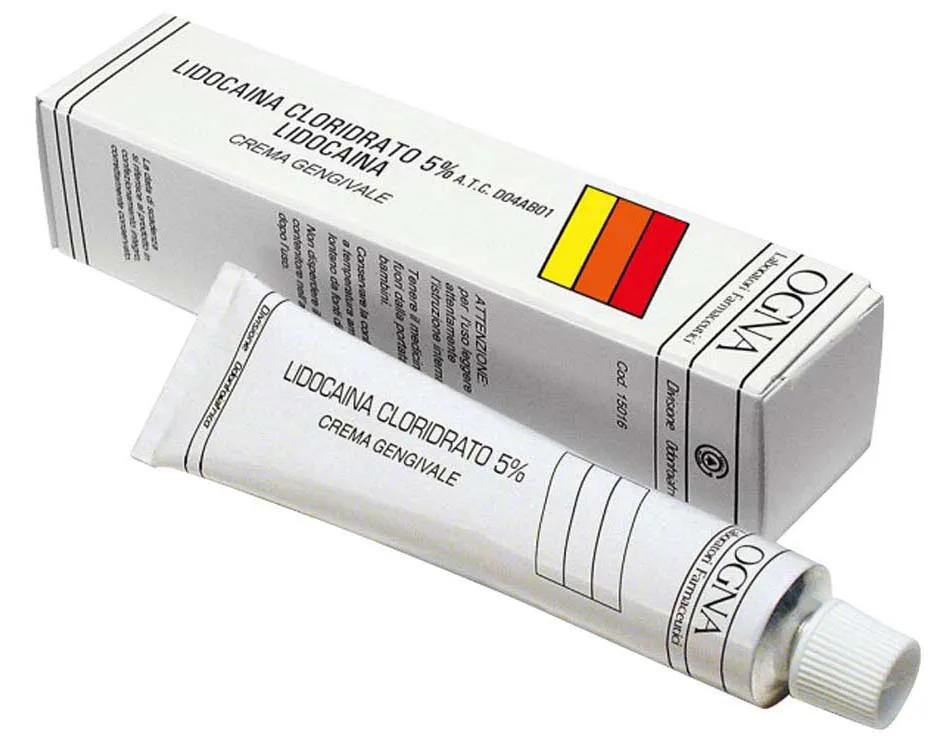
Table of Contents
- Package leaflet: Information for the user
- Lidocaine Hydrochloride Ogna 5% gingival gel
- 1. What Lidocaine Hydrochloride Ogna is and what it is used for
- 2. What you should know before being administered Lidocaine Hydrochloride Ogna
- 3. How Lidocaine Hydrochloride Ogna will be administered to you
- 4. Possible side effects
- 5. How to store Lidocaine hydrochloride Ogna
- 6. Package contents and other information
- The following information is intended exclusively for physicians or healthcare professionals
Package leaflet: Information for the user
Lidocaine Hydrochloride Ogna 5% gingival gel
Lidocaine Hydrochloride
Please read this leaflet carefully before this medicine is administered to you because it contains important information for you.
- Keep this leaflet. You may need to read it again.
- If you have any questions, ask your doctor, pharmacist, or nurse.
- If you experience any side effects, including those not listed in this leaflet, tell your doctor or pharmacist. See section 4. Contents of this leaflet:
- What Lidocaine Hydrochloride Ogna is and what it is used for
- What you need to know before it is administered to you
- How Lidocaine Hydrochloride Ogna will be administered to you
- Possible side effects
- How to store Lidocaine Hydrochloride Ogna
- Contents of the pack and other information
1. What Lidocaine Hydrochloride Ogna is and what it is used for
Lidocaine Hydrochloride Ogna contains the active substance lidocaine hydrochloride, which belongs to a group of medicines called local anaesthetics, which work by blocking pain in the area where they are applied.
Lidocaine Hydrochloride Ogna is indicated as a local anaesthetic to treat pain associated with minor injuries inside the mouth (abrasions, minor burns, etc.) and to provide relief from localized itching.
2. What you should know before being administered Lidocaine Hydrochloride Ogna
Lidocaine Hydrochloride Ogna will not be administered to you if:
- you are allergic to lidocaine, to other similar medicines (amide-type local anesthetics), or to any of the other ingredients of this medicine (listed in section 6);
- you have or suspect a fungal infection;
- the patient is a child under 4 years of age;
- you are pregnant or suspect you may be pregnant, or if you are breastfeeding.
Warnings and precautions
Talk to your doctor or nurse before receiving Lidocaine Hydrochloride Ogna.
The safety of this medicine depends on the dose used, the correct application technique, and preventive measures against possible adverse effects. Excessively high doses may increase the occurrence of adverse reactions. To reduce the risk of adverse effects, your doctor will use the lowest necessary dose and may reduce the dose based on your age, general health condition, whether you are elderly, or if you suffer from certain diseases.
Your doctor will use this medicine with caution if:
- you have severe trauma;
- you have extensive skin lesions;
- you have a severe infection (sepsis).
If this medicine is applied to areas such as the throat, mouth, or tongue, you may experience difficulty swallowing or breathing, and numbness of the tongue, which may increase the risk of biting your tongue. Prolonged use may cause allergic reactions (sensitization phenomena) or bleeding (hemorrhages). If these effects occur, treatment must be discontinued and appropriate therapy initiated. In such cases, a possible allergy to lidocaine should not be ruled out. Avoid contact with the eyes.
Children and adolescents
In children aged 4 years and older, the doctor will adjust the dose according to health status, weight, and age (see section 3 “How Lidocaine Hydrochloride Ogna will be administered to you”).
Other medicines and Lidocaine Hydrochloride Ogna
Tell your doctor or nurse if you are currently using, have recently used, or might use any other medicines.
Lidocaine Hydrochloride Ogna should be administered with caution and you must inform your doctor if you are taking the following medicines:
- cimetidine, a medicine used to treat stomach acidity and stomach or intestinal lesions, as it may cause increased blood levels of lidocaine;
- medicines used to treat high blood pressure or heart problems (beta-blockers) such as propranolol;
- medicines used to treat heart disorders (digitalis glycosides), as this increases the risk of developing a slow heart rate (bradycardia) and other atrioventricular conduction disturbances;
- other anesthetic medicines (e.g., tocainide).
Pregnancy and breastfeeding
If you are pregnant, suspect you may be pregnant, planning a pregnancy, or are breastfeeding, consult your doctor before receiving this medicine.
This medicine must not be administered during pregnancy, if you suspect you are pregnant, or during breastfeeding.
Driving and using machines
This medicine does not impair your ability to drive or operate machinery.
Lidocaine Hydrochloride Ogna contains methylparahydroxybenzoate
This medicine contains methylparahydroxybenzoate, which may cause allergic reactions, including delayed-type reactions.
3. How Lidocaine Hydrochloride Ogna will be administered to you
This medicine will be administered by a doctor.
The doctor will apply the appropriate dose of this medicine directly to the area to be treated, or by using a sterile gauze swab.
The dose will be adjusted by the doctor according to your health condition.
Use only for short-term treatments.
The effect of Lidocaine Hydrochloride Ogna appears within 3-5 minutes.
Use in adults
The recommended dose is 4 g of gel per application (equivalent to 200 mg of lidocaine hydrochloride). Do not exceed 20 g of gel per day (equivalent to 1 g of lidocaine hydrochloride).
Use in adolescents aged 12 to 18 years
The doctor will adjust the dose according to health status, weight, and age.
Use in children aged 4 to 12 years
The recommended dose must not exceed 5 mg/kg of lidocaine hydrochloride. Do not exceed 3 doses per day.
Use in elderly and debilitated patients
The doctor will adjust the dose according to your health status and weight if you are elderly or debilitated, suffer from serious illnesses, or have severe infections.
If you are given more Lidocaine Hydrochloride Ogna than you should
This medicine will be administered by a doctor; therefore, it is unlikely that you will receive an excessive dose. However, if you think you have been given too much, inform the doctor or another healthcare professional immediately.
In case of overdose, you may experience:
- tremors;
- seizures followed by depression, breathing difficulties (respiratory failure), and coma;
- heart problems associated with low blood pressure (hypotension) and slowed heart rate (bradycardia).
If you have any doubts about the use of this medicine, consult your doctor, pharmacist, or nurse.
4. Possible side effects
Like all medicines, this medicine can cause side effects, although not everyone experiences them.
The following side effects may occur:
- rarely, allergic reactions, which may even be severe, such as anaphylactic shock;
- skin irritation;
- excitation or depression associated with dizziness, drowsiness, visual disturbances, anxiety, tremors, followed by changes in consciousness, seizures, severe breathing difficulties (respiratory arrest);
- slowing of the heartbeat (bradycardia), disturbances in heart rhythm (arrhythmias, myocardial depression) up to cardiac arrest;
- decrease in blood pressure (hypotension, hypertension).
Reporting of side effects
If you experience any side effect, including those not listed in this leaflet, please inform your doctor or pharmacist. You may also report side effects directly via the national reporting system at https://www.aifa.gov.it/content/segnalazioni-reazioni-avverse . By reporting side effects, you can help provide further information on the safety of this medicine.
5. How to store Lidocaine hydrochloride Ogna
Keep this medicine out of the sight and reach of children.
Do not use this medicine after the expiry date stated on the container after "Exp.".
The expiry date refers to the last day of that month.
After first opening, use within 36 months.
Store in the original packaging to protect the medicine from light.
Do not dispose of medicines via wastewater or household waste. Ask your pharmacist how to dispose of
medicines no longer in use. This will help protect the environment.
6. Package contents and other information
What Lidocaine Hydrochloride Ogna contains
- The active substance is lidocaine hydrochloride. 100 g of gel contain 5 g of lidocaine hydrochloride.
- The other components are: polyethylene glycol 200, polyethylene glycol 1500, methyl parahydroxybenzoate, purified water.
Description of the appearance of Lidocaine Hydrochloride Ogna
Packaging containing 1 tube of 30 g of gel.
Marketing Authorization Holder and Manufacturer
GIOVANNI OGNA & Figli S.r.l.
Via Figini, 41 - 20835 Muggiò (MB)
Leaflet: information for the physician
The following information is intended exclusively for physicians or healthcare professionals
Special warnings and precautions for use
The safe use of products containing lidocaine depends on dosage, proper application technique, and the adoption of precautionary measures. The medicinal product should be used at the lowest effective dose, with appropriate dose reduction according to the patient's age and physical condition, particularly in elderly patients and those with acute illness. Excessive dosing of lidocaine or a short interval between doses may result in high plasma levels and the occurrence of adverse effects.
Absorption following application on damaged skin and mucous membranes is high, especially in the bronchial tree. Therefore, lidocaine gel should be used with caution in patients with severe trauma, sepsis, or extensive skin lesions.
When used in oral or pharyngeal areas, patients should be warned that application of a local anesthetic may interfere with swallowing and may cause aspiration difficulties.
Overdose
Treatment is symptomatic. Seizures, if they occur, may be controlled by administration of short-acting barbiturates or benzodiazepines.
Incompatibilities
Lidocaine is incompatible with amphotericin, sodium sulfadiazine, sodium cefazolin, sodium phenytoin, mephentermine hydrochloride, alkalis, heavy metals, oxidizing agents, tannin, air, and light.
For further information, please consult the Summary of Product Characteristics.