Lidocaine hydrochloride Monico
Italy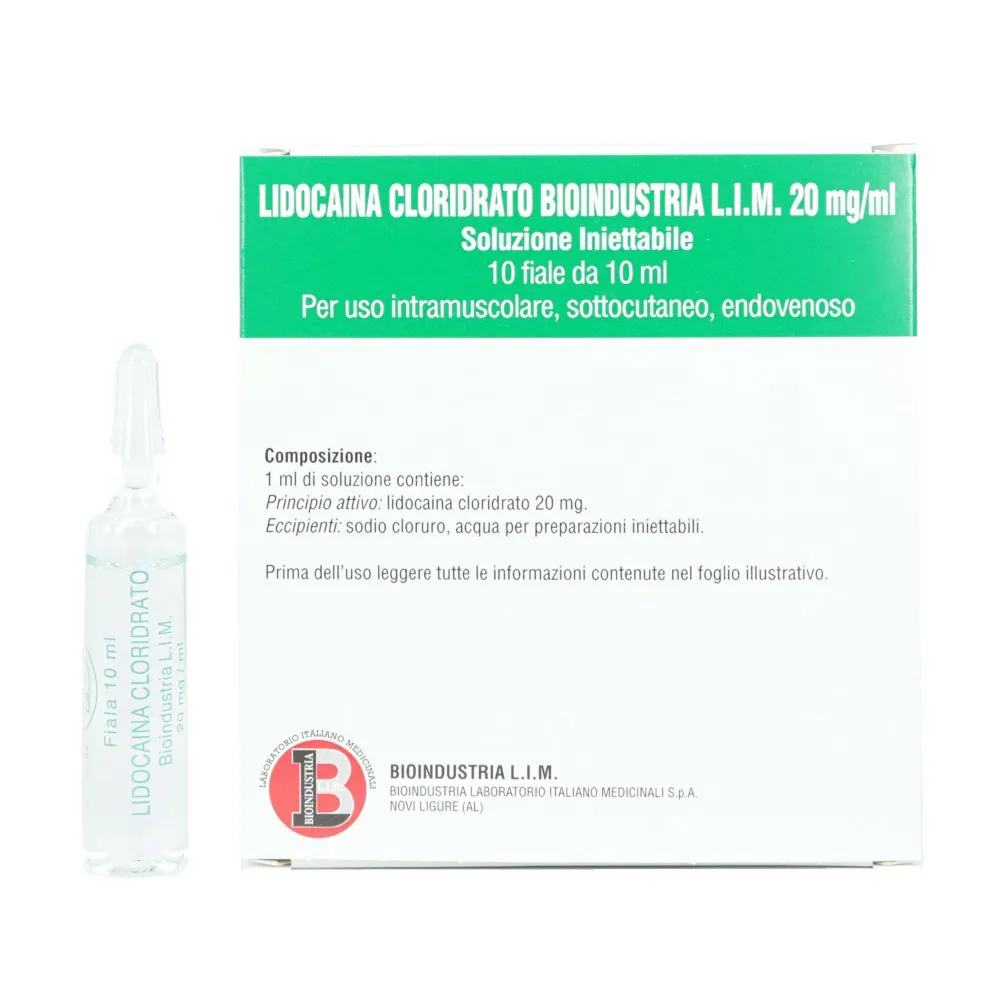
Table of Contents
- PACKAGE LEAFLET: INFORMATION FOR THE USER
- LIDOCAINE HYDROCHLORIDE MONICO
- 1. What LIDOCAINE HYDROCHLORIDE MONICO is and what it is used for
- 2. What you need to know before using LIDOCAINE HYDROCHLORIDE MONICO
- 3. How to use LIDOCAINE HYDROCHLORIDE MONICO
- 4. Possible side effects
- 5. How to store LIDOCAINE HYDROCHLORIDE MONICO
- 6. Package contents and other information
PACKAGE LEAFLET: INFORMATION FOR THE USER
LIDOCAINE HYDROCHLORIDE MONICO
10 mg/ml injection solution
20 mg/ml injection solution
Lidocaine hydrochloride
Equivalent medicine
Please read this leaflet carefully before using this medicine because it contains important information for you.
- Keep this leaflet. You may need to read it again.
- If you have any questions, ask your doctor, pharmacist or nurse.
- This medicine has been prescribed for you only. Do not give it to other people, even if their symptoms are the same as yours, as it may be harmful.
- If you experience any side effect, including those not listed in this leaflet, contact your doctor, pharmacist or nurse. See section 4.
Contents of this leaflet:
- What LIDOCAINE HYDROCHLORIDE MONICO is and what it is used for
- What you need to know before using LIDOCAINE HYDROCHLORIDE MONICO
- How to use LIDOCAINE HYDROCHLORIDE MONICO
- Possible side effects
- How to store LIDOCAINE HYDROCHLORIDE MONICO
- Contents of the pack and other information
1. What LIDOCAINE HYDROCHLORIDE MONICO is and what it is used for
LIDOCAINE HYDROCHLORIDE MONICO contains the active substance lidocaine hydrochloride, which belongs both to the group of medicines known as local anesthetics, which act by blocking pain in the area where they are applied, and to the group of medicines called antiarrhythmics, which work by regulating heartbeats.
LIDOCAINE HYDROCHLORIDE MONICO is indicated:
- as a local anesthetic, to eliminate pain sensation during dental procedures (extractions, tooth smoothing for crowns and bridges, cavity preparation, vital extirpations, abscess incisions, apicectomies), minor skin procedures (e.g., removal of cysts), and procedures on the jaw;
- for the treatment of irregular heartbeats (ventricular arrhythmias) that may occur in cases of cardiac tissue death due to inadequate supply of oxygen and nutrients (myocardial infarction), or during heart procedures (cardiac catheterization or cardiac surgery). In these cases, this medicine is administered by injection directly into a vein (intravenous injection or infusion).
2. What you need to know before using LIDOCAINE HYDROCHLORIDE MONICO
Do not use LIDOCAINE HYDROCHLORIDE MONICO
- if you are allergic to lidocaine, to other similar medicines (amide-type local anesthetics), or to any of the other ingredients of this medicine (listed in section 6);
- if you are pregnant or suspect you may be pregnant;
- if the patient is a child under 4 years of age.
Warnings and precautions
Talk to your doctor, pharmacist, or nurse before using LIDOCAINE HYDROCHLORIDE MONICO.
This medicine will be administered by a doctor or nurse in a medical facility equipped with the necessary equipment and medicines to manage emergencies. Rarely, severe reactions may occur, sometimes fatal, even if you have not previously shown allergies when using this medicine or other similar medicines.
If you are using LIDOCAINE HYDROCHLORIDE MONICO as a local anesthetic:
Before administering this medicine, your doctor will check your circulatory condition. Also, inform your doctor if you are taking other medicines or if you have previously experienced allergic reactions.
Your doctor will administer the lowest possible dose of this medicine that still provides the desired effect, using slow injections and avoiding direct injection into a vein.
During treatment with this medicine, your doctor will closely monitor you.
Use LIDOCAINE HYDROCHLORIDE MONICO with extreme caution and inform your doctor:
- if you have heart or blood circulation problems (shock, atrioventricular conduction disorders, or sinus bradycardia);
- if you have been treated with an anesthetic less than 24 hours ago, as two maximum doses of this medicine must never be administered unless at least 24 hours have passed between administrations.
If this medicine is administered via injection into the back (epidural or caudal anesthesia), inform your doctor if any of the following conditions apply to you, as extreme caution is required:
- if the patient is a child;
- if you have nerve diseases (neurological disorders) or spinal problems (spinal deformities);
- if you have widespread bacterial infections (septic states);
- if you have high blood pressure (hypertension).
Administration of this medicine must be immediately stopped if you experience sensory disturbances (altered sensation) or drowsiness.
If this medicine is administered during dental procedures, be aware that you will temporarily lose mouth sensation; therefore, avoid chewing until sensation returns.
If you are using LIDOCAINE HYDROCHLORIDE MONICO as an antiarrhythmic:
Your doctor will administer this medicine via direct intravenous injection and will monitor your heart (electrocardiogram) during administration.
During treatment, serious heart and blood vessel problems (cardiovascular reactions), breathing difficulties, or central nervous system disturbances may occur; therefore, the doctor must have emergency resuscitation equipment available.
When this medicine is administered via direct intravenous injection for the treatment of irregular heartbeats (ventricular arrhythmias), your doctor will adjust the dose and exercise particular caution if:
- you have liver or kidney problems;
- you have heart problems (congestive heart failure);
- you have reduced blood volume (hypovolemia);
- you have low oxygen levels (hypoxia) or severe breathing problems (respiratory depression);
- you have a predisposition to abnormally high body temperature (malignant hyperthermia).
If you have low potassium levels (hypokalemia) or low oxygen levels (hypoxia) in the blood, or if you have imbalances in body fluids and electrolytes (acid-base imbalance), your doctor will correct these conditions before administering this medicine.
Children and adolescents
LIDOCAINE HYDROCHLORIDE MONICO must not be used in children under 4 years of age.
This medicine should be used with particular caution in children when administered via back injection (epidural or caudal anesthesia).
Other medicines and LIDOCAINE HYDROCHLORIDE MONICO
Inform your doctor or pharmacist if you are currently taking, have recently taken, or might take any other medicines.
Use LIDOCAINE HYDROCHLORIDE MONICO with caution and inform your doctor if you are taking the following medicines:
- cimetidine, a medicine used to treat stomach acidity and stomach or intestinal lesions, as it may increase levels of LIDOCAINE HYDROCHLORIDE MONICO;
- medicines used to treat high blood pressure or heart problems (beta-blockers);
- medicines used to treat heart conditions (digitalis), as they increase the risk of developing slow heart rate (bradycardia) and other conduction disturbances;
- medicines used to treat depression (MAO inhibitors or tricyclic antidepressants).
Pregnancy and breastfeeding
If you are pregnant, suspect you may be pregnant, planning a pregnancy, or breastfeeding, consult your doctor or pharmacist before using this medicine.
Do not use this medicine if you are pregnant or suspect you may be pregnant.
Driving and using machines
This medicine may affect your ability to drive or operate machinery. Ask your doctor whether you can drive or use machinery after the procedure.
LIDOCAINE HYDROCHLORIDE MONICO contains sodium
LIDOCAINE HYDROCHLORIDE MONICO 10 mg/ml injectable solution
This medicine contains less than 1 mmol of sodium per vial, i.e., it is practically 'sodium-free'.
LIDOCAINE HYDROCHLORIDE MONICO 20 mg/ml injectable solution
This medicine contains 1.04 mmol (or 23.60 mg) of sodium per vial. This should be taken into consideration in patients with impaired renal function or those on a low-sodium diet.
3. How to use LIDOCAINE HYDROCHLORIDE MONICO
This medicine will be administered to you under strict medical supervision by a doctor or specialized healthcare professional.
Use as an anaesthetic
Your doctor will administer this medicine via small subcutaneous injections (infiltration) or by injection into the spinal cord (peripheral nerve block).
The recommended dose is 10–40 mg, injected in small increments at a rate of approximately 1 ml per minute, preceded by proper aspiration (your doctor will adjust the administration rate accordingly).
If you have not received other sedative medicines, the maximum dose is 300 mg, administered either as a single dose or divided into repeated doses within a 2-hour period.
Any overdose of anaesthetic must be avoided, and two maximum doses must never be administered without an interval of at least 24 hours between them.
Use in the treatment of heart rhythm disorders (arrhythmias)
This medicine may be administered by direct intravenous injection, with careful control of the infusion rate (bolus administration or continuous intravenous infusion).
- Rapid administration (bolus) This method is used for initial treatment of heart rhythm disturbances (ventricular arrhythmias). The recommended dose is 50–100 mg (0.7–1.4 mg per kilogram of body weight). During administration, your doctor will monitor your heart activity (electrocardiogram) and adjust the injection rate (25–50 mg per minute). If the initial dose does not produce the desired effect, an identical dose may be administered after 5 minutes. The maximum dose is 200–300 mg within one hour.
- Slow administration (continuous intravenous infusion) This method is used for maintenance treatment of heart rhythm disturbances and is usually initiated after the initial bolus dose. If necessary, your doctor may dilute the LIDOCAINE HYDROCHLORIDE MONICO solution with physiological saline. The recommended dose is 0.02–0.05 mg per kilogram of body weight per minute (1–4 mg per minute for a 70 kg adult).
During administration, your doctor will monitor your heart activity (electrocardiogram) and will stop the infusion if signs of toxicity appear or once your heart rhythm has stabilized.
Use in children
When LIDOCAINE HYDROCHLORIDE MONICO is administered as an anaesthetic, the doctor will reduce the dose according to the child's weight and age.
When LIDOCAINE HYDROCHLORIDE MONICO is used to treat heart rhythm disorders (arrhythmias), the recommended dose is 1 mg per kilogram of body weight, administered rapidly (as a bolus) every 5–10 minutes. The maximum dose is 5 mg per kilogram of body weight.
The recommended maintenance dose (infusion administration) is 10–50 micrograms per kilogram of body weight per minute.
Use in elderly patients
The doctor will reduce the dose according to age and your overall health condition.
If you use more LIDOCAINE HYDROCHLORIDE MONICO than you should
This medicine will be administered by a doctor or trained healthcare professional, so it is unlikely that you will receive an excessive dose. However, if you think you have been given too much, inform your doctor or another healthcare provider immediately.
In case of overdose, certain adverse effects may occur (see section 4 “Possible side effects”).
If you have any doubts about how to use this medicine, consult your doctor or pharmacist.
4. Possible side effects
Like all medicines, this medicine can cause side effects, although not everyone experiences them.
Side effects are more likely to occur in the following cases:
- if an excessive dose is administered;
- if the medicine is absorbed very rapidly by your body;
- if administration is inadequate;
- if you suffer from allergic-type conditions (hypersensitivity, idiosyncrasy, reduced tolerance).
The following side effects may occur:
- skin irritation (skin rashes, urticaria), itching, severe allergic reactions (anaphylactic shock, anaphylactoid reaction), breathing difficulties (bronchospasm), swelling of the throat due to fluid accumulation (laryngeal oedema), cessation of heart and respiratory activity (cardiorespiratory collapse);
- excitation or depression associated with dizziness, drowsiness, visual disturbances, tremors followed by changes in consciousness, seizures, difficulty opening the mouth due to muscle contractions (trismus);
- anxiety, disorientation;
- slowing of the heartbeat (bradycardia), irregular heartbeats (arrhythmias, myocardial depression) up to complete cessation of heart activity;
- dilation of the pupil (mydriasis);
- nausea, vomiting;
- increased breathing rate (tachypnea), dilation of the bronchi (bronchodilation), respiratory arrest;
- sweating;
- dilation of blood vessels (vasodilation), decrease or increase in blood pressure (hypotension, hypertension);
- increased metabolism and body temperature.
Reporting of side effects
If you experience any side effect, including those not listed in this leaflet, talk to your doctor or pharmacist. You can also report side effects directly via the national reporting system at the following website:
http://www.agenziafarmaco.gov.it/it/responsabili . By reporting side effects, you can help provide further information on the safety of this medicine.
5. How to store LIDOCAINE HYDROCHLORIDE MONICO
Keep this medicine out of the reach and sight of children.
Do not use this medicine after the expiry date stated on the packaging after "EXP.".
The expiry date refers to the last day of that month for the product in intact packaging and
correctly stored.
Store in the original packaging to protect the medicine from light.
Use the solution immediately after opening the container; after use, dispose of the container and
any remaining medicine, even if partially used.
The solution must be clear, colourless, and free from visible particles.
Do not dispose of medicines via wastewater or household waste. Ask your pharmacist how to
dispose of medicines no longer in use. This will help protect the environment.
6. Package contents and other information
What LIDOCAINA CLORIDRATO MONICO 10 mg/ml injectable solution contains
- The active substance is lidocaine hydrochloride. 1 ml of solution contains 10 mg of lidocaine hydrochloride; each 5 ml vial contains 50 mg of lidocaine hydrochloride.
- The other components are: sodium chloride, water for injections, q.s.
What LIDOCAINA CLORIDRATO MONICO 20 mg/ml injectable solution contains
- The active substance is lidocaine hydrochloride. 1 ml of solution contains 20 mg of lidocaine hydrochloride; each 10 ml vial contains 200 mg of lidocaine hydrochloride.
- The other components are: sodium chloride, water for injections, q.s.
Description of the appearance of LIDOCAINA CLORIDRATO MONICO and contents of the pack
LIDOCAINA CLORIDRATO MONICO 10 mg/ml: carton containing 5 glass vials of 5 ml.
LIDOCAINA CLORIDRATO MONICO 20 mg/ml: carton containing 5 glass vials of 10 ml.
Marketing Authorization Holder and Manufacturer
MONICO SPA – Via Ponte di Pietra 7, 30173 – VENEZIA/MESTRE – Italy