Librium
Italy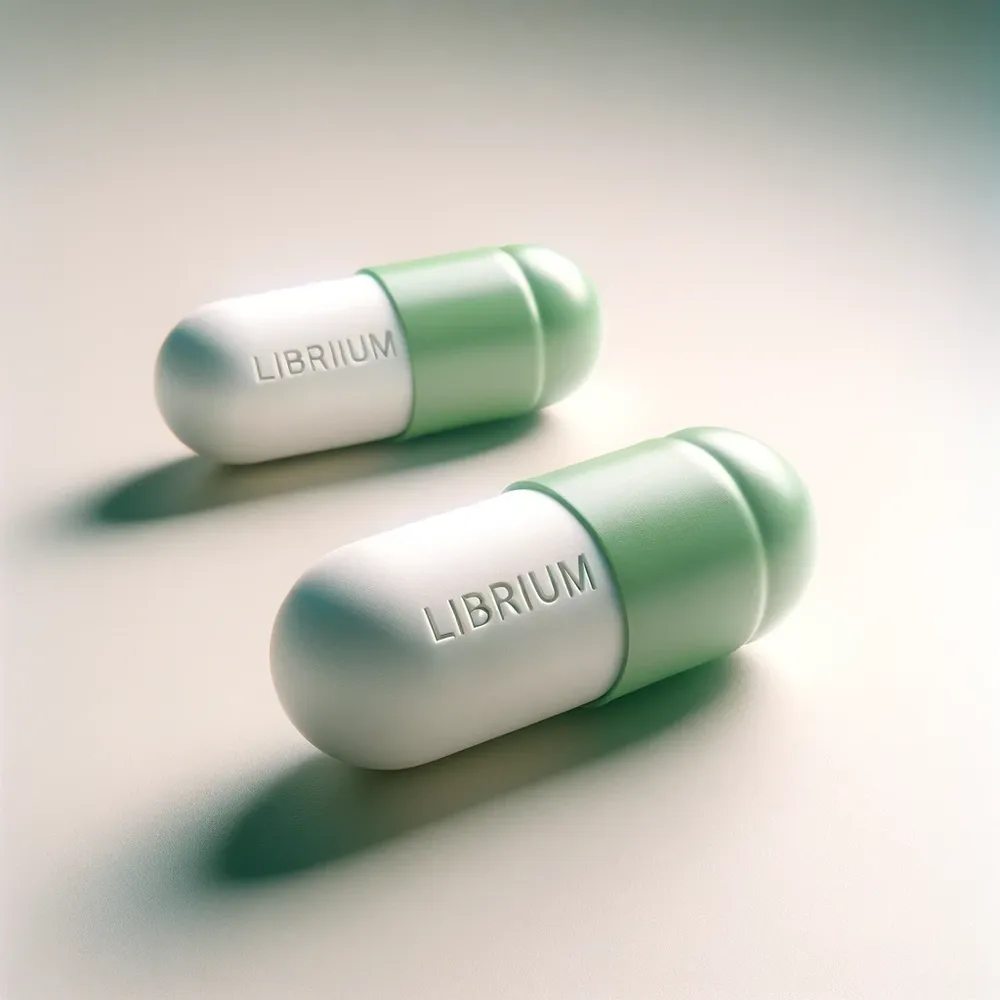
Table of Contents
Patient Information Leaflet
Librium 10 mg Hard Capsules
chlordiazepoxide hydrochloride
Please read this leaflet carefully before taking this medicine because it contains important information for you.
- Keep this leaflet. You may need to read it again.
- If you have any questions, ask your doctor or pharmacist.
- This medicine has been prescribed for you only. Do not give it to other people, even if their symptoms are the same as yours, as it may be harmful.
- If you experience any side effects, including those not listed in this leaflet, tell your doctor or pharmacist. See section 4.
Contents of this leaflet:
- What Librium is and what it is used for
- What you need to know before taking Librium
- How to take Librium
- Possible side effects
- How to store Librium
- Contents of the pack and other information
1. What Librium is and what it is used for
Librium contains the active substance chlordiazepoxide hydrochloride, which belongs to a class of medicines called "benzodiazepines". It has calming properties and reduces anxiety, tension, and agitation.
Librium is used in adults to treat anxiety, tension, and the associated physical and mental symptoms of anxiety. Benzodiazepines are indicated only when the condition is severe, disabling, and causing significant distress.
Talk to your doctor if you do not feel better or if you feel worse.
2. What you should know before taking Librium
Do not take Librium
- if you are allergic to chlordiazepoxide hydrochloride or to any of the other ingredients of this medicine (listed in section 6);
- if you suffer from mental disorders without anxiety;
- if you have severe myasthenia gravis (a serious disease affecting the muscles, causing weakness and fatigue);
- if you have severe pulmonary insufficiency (severe reduction in lung function);
- if you are in a coma;
- if you have severe respiratory insufficiency (severe reduction in respiratory system activity);
- if respiratory depression is present (a serious condition characterized by slow and ineffective breathing);
- if you have severe hepatic insufficiency (severe liver disease);
- if you suffer from sleep apnoea syndrome (temporary cessation of breathing during sleep);
- if you have previously experienced dependence on alcohol, drugs, or medications;
- if you suffer from spinal or cerebellar ataxia (a movement disorder with loss of coordination of muscles and joints);
- if you have had intoxication from substances or medicines that reduce the activity of the central nervous system (alcohol, medicines used to relieve pain, medicines used to treat certain nervous system disorders).
Do not give Librium to children and adolescents (0–18 years of age).
Warnings and precautions
Talk to your doctor or pharmacist before taking Librium.
In particular, consult your doctor or pharmacist before taking Librium if you think any of the following conditions apply to you:
- you suffer from chronic respiratory insufficiency;
- you suffer from mental disorders (psychotic illness, phobia, obsessive-compulsive disorders);
- you suffer from personality disorders;
- you suffer from depression, because Librium may worsen your condition and increase suicidal tendencies (attempting to kill yourself);
- you have low levels of albumin, a substance present in the blood;
- you suffer from hepatic insufficiency (liver disease);
- you suffer from renal insufficiency (kidney disease).
If you are to take Librium for a prolonged period, your doctor will periodically check your blood pressure and order blood tests to monitor possible changes in blood cells and the functioning of your liver and kidneys.
Development of tolerance
After repeated use of this medicine for several weeks, a reduction in its effectiveness (tolerance) may occur.
Development of dependence
Using high doses and/or prolonged use of chlordiazepoxide may lead to physical and psychological dependence, as occurs with other medicines similar to chlordiazepoxide.
This risk is higher if you have previously abused drugs or alcohol, as you are more likely to develop habituation and dependence on this medicine.
When physical dependence has developed, abruptly stopping chlordiazepoxide may cause withdrawal symptoms and/or rebound effects (for further details, see section 3 “How to take Librium”).
Memory disturbances (amnesia)
The use of chlordiazepoxide may cause memory disturbances. This is more likely to occur several hours after taking the medicine. Therefore, to reduce the risk, ensure you can have an uninterrupted sleep period of 7–8 hours after taking this medicine (see section “How to take Librium”).
Behavioural reactions (paradoxical psychiatric reactions)
When using chlordiazepoxide or any benzodiazepine, unexpected behavioural reactions such as anxiety or aggression may occur (see section 4. Possible side effects). In such cases, stop taking the medicine immediately and contact your doctor. These reactions are more common in children and elderly patients.
If you are elderly
If you are elderly, take Librium exactly as prescribed by your doctor.
This medicine may increase the risk of falls and fractures due to its muscle-relaxing effect.
Children and adolescents
Do not give Librium to children and adolescents (0–18 years of age).
Other medicines and Librium
Tell your doctor or pharmacist if you are taking, have recently taken, or might take any other medicines.
Inform your doctor or pharmacist if you are taking any of the following medicines, as they may increase the side effects of Librium:
- medicines that reduce the activity of the central nervous system, because Librium may enhance their effects:
- antipsychotics (medicines used for certain mental illnesses);
- tranquillisers, as they may increase the relaxing effects and increase the risk of falls, especially if you are elderly;
- anxiolytics/sedatives (medicines causing physical and mental dullness);
- hypnotics (calming medicines and sleep inducers);
- antidepressants (medicines used to treat depression);
- narcotic analgesics (medicines for treating severe acute or chronic pain). In addition, these medicines taken together with Librium may increase euphoria and physical and psychological dependence;
- antiepileptics (medicines used to treat epilepsy), particularly with hydantoins and barbiturates. In such cases, your doctor may adjust the dose of Librium during initial treatment;
- anaesthetics;
- antihistamines (medicines used to counteract allergic symptoms) with sedative properties.
Inform your doctor or pharmacist if you are taking:
- medicines that affect how the liver works, such as:
- cimetidine (a medicine used in stomach ulcer);
- omeprazole;
- macrolide antibiotics (such as erythromycin);
- disulfiram;
- contraceptives (medicines used to prevent pregnancy), as they may increase the effects of Librium;
- rifampicin, as it reduces the effects of Librium.
- sodium oxybate (a medicine used to treat narcolepsy, a nervous system disorder), as it increases respiratory depression.
- opioids The concomitant use of Librium and opioids (strong painkillers, medicines for opioid dependence treatment, and some cough medicines) may increase the risk of drowsiness, breathing difficulties (respiratory depression), coma, and may be life-threatening. Therefore, concomitant use should only be considered when no other treatment options are possible. However, if your doctor prescribes Librium together with opioids, the dose and duration of concomitant treatment must be limited by your doctor. Inform your doctor about all opioid medicines you are taking and follow your doctor’s dosage recommendations carefully. It may be helpful to inform family or friends to watch for the signs and symptoms listed above. Contact your doctor if you experience any of these symptoms.
Additionally, inform your doctor if you are to take any of the following medicines for a prolonged period:
- antihypertensive medicines (medicines used to lower blood pressure);
- beta-blockers, cardiac glycosides (medicines that slow heart rate or frequency and treat heart problems);
- anticoagulants (medicines used to thin the blood).
Librium with food, drinks and alcohol
Do not drink alcohol while taking Librium, as the simultaneous intake of alcohol and Librium may increase the sedative effect (physical and mental relaxation) of this medicine. If you have previously abused alcohol, your doctor will monitor you closely during treatment with Librium, as you are more likely to develop dependence on this medicine.
Consuming alcohol with Librium may also severely impair your ability to drive or operate machinery (see “Driving and use of machines”).
Pregnancy, breastfeeding and fertility
If you are pregnant, think you may be pregnant, are planning to become pregnant, or are breastfeeding, consult your doctor or pharmacist before taking this medicine.
Pregnancy
Avoid taking Librium during pregnancy, especially during the first three months and the last three months of pregnancy.
Your doctor may prescribe this medicine only if strictly necessary.
If, for serious health reasons, your doctor decides to prescribe this medicine during the last three months of pregnancy or during labour at high doses, the newborn may experience unwanted effects such as irregular heartbeat, difficulty sucking milk, low body temperature, reduced muscle tone, and breathing difficulties.
If Librium has been taken for a prolonged period and continued into late pregnancy, your baby may develop physical dependence and withdrawal symptoms (see section 2. What you should know before taking Librium).
The risk of birth defects with therapeutic doses of chlordiazepoxide in early pregnancy is low. However, some studies report an increased risk of cleft palate. In cases of excessive dosage or chlordiazepoxide poisoning, malformations and mental retardation have been observed in prenatally exposed children.
Breastfeeding
Avoid taking Librium if you are breastfeeding, as this medicine passes into breast milk.
Fertility
If you plan to become pregnant or suspect you are pregnant, contact your doctor, who will evaluate whether treatment with this medicine should be discontinued.
Driving and use of machines
Do not drive or operate machinery if, during treatment with Librium, you experience side effects such as sedation (physical and mental relaxation), amnesia (memory disturbances), difficulty concentrating, or impaired muscle function. Your alertness may be impaired, especially if you have not slept long enough (7–8 hours) after taking Librium.
Librium contains lactose (milk sugar)
If your doctor has diagnosed you with an intolerance to certain sugars, contact him or her before taking this medicine.
3. How to take Librium
Take this medicine exactly as directed by your doctor or pharmacist. If you have any doubts,
please consult your doctor or pharmacist.
Your doctor will determine the most appropriate dose and frequency for you in order to avoid the possible
intake of an excessive dose of this medicine.
How much you should take
The recommended dose is 1 capsule (10 mg) 2–3 times a day, up to a maximum of 3 capsules (30 mg) per day.
In severe cases, your doctor may prescribe 2 capsules (20 mg) 2–4 times a day.
Your doctor may prescribe a higher dose depending on the severity of your condition.
Do not exceed the maximum dose of 8 capsules per day (80 mg).
On the doctor’s discretion, this dose may be increased up to 300 mg per day.
How to take it
Swallow the capsule with some liquid without chewing.
After taking this medicine, you should allow a period of approximately 7–8 hours for rest or sleep.
If you are elderly and/or debilitated or have brain damage or kidney, liver or respiratory disorders
The recommended dose is 1 capsule 1–2 times a day.
Duration of treatment
Your doctor will prescribe the shortest possible duration of treatment.
Generally, treatment should not exceed 4 weeks, including a gradual withdrawal period.
At the beginning of treatment with Librium, your doctor will explain how to gradually reduce the dose of this
medicine in order to reduce the risk of withdrawal and rebound symptoms (see “If you stop taking Librium” and section 4 “Possible side effects”).
In certain cases, your doctor may decide to extend the duration of treatment indicated above, after re-evaluating your health status.
If you take more Librium than you should
In case of accidental ingestion/overdose of Librium, contact your doctor immediately or go to the nearest hospital.
Symptoms
If you accidentally take a higher dose than prescribed, you may be at risk of life-threatening effects, especially if you also consume alcohol or other medicines at the same time.
In mild cases of accidental overdose, symptoms may include:
- drowsiness;
- mental confusion;
- prolonged drowsiness and reduced response to normal stimuli (lethargy).
In more severe cases, symptoms may include:
- reduced motor coordination and impaired gait (ataxia);
- reduced muscle tone (hypotonia);
- low blood pressure (hypotension);
- reduced breathing (respiratory depression);
- coma;
- death.
Treatment
After evaluating your symptoms, your doctor will provide appropriate supportive therapy (such as gastric lavage, administration of activated charcoal). Induction of vomiting is not recommended. Due to the high protein binding and large volume of distribution of chlordiazepoxide, forced diuresis or hemodialysis appear to have limited value.
Your doctor may consider using flumazenil (a medicine that works by blocking the effects of benzodiazepines).
If you are taking medicines for depression or suffer from epilepsy, inform your doctor, as in these cases flumazenil must be used with extreme caution.
In case of agitation, barbiturates must not be used.
If you forget to take Librium
Do not take a double dose to make up for the missed capsule. Take the next dose as prescribed by your doctor.
If you stop taking Librium
- Do not stop treatment with Librium without first consulting your doctor.
- Your doctor will gradually reduce your dose during the discontinuation phase.
- Abruptly stopping this medicine may cause:
- withdrawal symptoms such as depression, headache, muscle pain, muscle weakness, nervousness, extreme anxiety, tension, restlessness, confusion and irritability, mood changes, sweating, diarrhea. In severe cases, you may experience feelings of detachment or estrangement from yourself or the external world, increased sensitivity to sound, numbness and tingling in the arms or legs, hypersensitivity to light, noise and physical contact, perception of things that are not real, epileptic seizures;
- rebound symptoms (when the symptoms that led to treatment reappear in a more severe form after stopping treatment), such as mood changes, anxiety, restlessness or sleep disturbances.
If you have any doubts about how to use Librium, consult your doctor or pharmacist.
4. Possible side effects
Like all medicines, this medicine can cause side effects, although not everyone experiences them.
Contact your doctor immediately if you experience any of the following serious side effects while taking Librium; your doctor will advise you on how to discontinue the medicine:
- restlessness, agitation, irritability
- aggression
- delirium
- anger
- nightmares, hallucinations
- psychosis
- inappropriate behaviours, behavioural changes, emergence of depression not previously present
- memory disturbances (amnesia). This effect most often occurs several hours after taking the medicine; therefore, to reduce the risk, ensure you can have an uninterrupted sleep period of 7–8 hours before taking this medicine (see "How to take Librium")
- physical and psychological dependence (see "If you stop taking Librium" and section "Warnings and precautions")
- reduced level of consciousness
- emotional disturbances
- depression
- unexpected reactions (paradoxical reactions), for example:
- anxiety
- sleep disturbances, insomnia
- suicidal tendencies
These reactions are more frequent in elderly patients.
The following side effects have been observed and reported during treatment with Librium, with the frequencies listed below:
Common (may affect up to 1 in 10 people)
- sedation
- dizziness
- somnolence
- movement disorder with loss of coordination of muscles and joints (ataxia)
- balance disturbances
- confusion
- fatigue
Rare (may affect up to 1 in 1,000 people)
- reduced bone marrow function leading to decreased blood cell production (e.g. thrombocytopenia, leucopenia, agranulocytosis, pancytopenia)
- headache
- vertigo
- visual disturbances, including double vision
- low blood pressure
- gastrointestinal disturbances
- skin reactions (e.g. skin rash)
- inability of the urinary bladder to empty completely (urinary retention)
- disturbances in sexual desire (libido disorders), erectile dysfunction
- menstrual problems
Not known (frequency cannot be estimated from available data)
- allergy
- increased appetite
- difficulty articulating speech (dysarthria)
- gait disturbances
- extrapyramidal disorders (e.g. tremor, movement difficulties)
- respiratory depression
- yellowish discoloration of the skin and whites of the eyes (jaundice)
- increased bilirubin in the blood, a substance causing yellowish skin and eye colouration
- increased transaminases, liver enzymes whose elevation may indicate liver damage
- increased alkaline phosphatase, a blood substance whose elevation may indicate bone damage
- muscle weakness
Additionally, the following side effects may occur, for which frequency is unknown:
- instability
- changes in salivation
- incontinence
Cases of benzodiazepine abuse have been reported.
Reporting of side effects
If you experience any side effect, including those not listed in this leaflet, talk to your doctor or pharmacist. You may also report side effects directly via the national reporting system at https://www.aifa.gov.it/content/segnalazioni-reazioni-avverse.
Reporting side effects helps provide more information on the safety of this medicine.
5. How to store Librium
Keep this medicine out of the sight and reach of children.
Do not store above 30 °C.
Do not use this medicine after the expiry date stated on the pack after “Exp”. The expiry date refers to the last day of that month.
Do not dispose of medicines via wastewater or household waste. Ask your pharmacist how to dispose of medicines you no longer use. This will help protect the environment.
6. Package contents and other information
What Librium contains
- The active substance is chlordiazepoxide hydrochloride. Each capsule contains 10 mg of chlordiazepoxide hydrochloride.
- Other components are: lactose (see "Librium contains lactose"), talc, starch, gelatin, titanium dioxide, iron oxide (E172).
Description of the appearance of Librium and contents of the pack
It is presented as rigid capsules for oral use, packaged in blisters of 30 capsules.
Marketing Authorization Holder and Manufacturer
Marketing Authorization Holder
Viatris Italia S.r.l., Via Vittor Pisani, 20 - 20124 Milano - Italy
Manufacturer
Labiana Pharmaceuticals, S.L.U. - Corbera de Llobregat site - Barcelona (Spain)