Levovent
Italy
Table of Contents
Package leaflet: Information for the patient
Levovent 12 mcg inhalation powder, hard capsules
formoterol (formoterol fumarate)
Please read all of this leaflet carefully before you start using this medicine because it contains important information for you.
- Keep this leaflet. You may need to read it again.
- If you have any questions, ask your doctor or pharmacist.
- This medicine has been prescribed for you only. Do not give it to other people, even if their symptoms are the same as yours, as it may be harmful.
- If you experience any side effects, including those not listed in this leaflet, talk to your doctor or pharmacist. See section 4.
Contents of this leaflet:
- What Levovent is and what it is used for
- What you need to know before using Levovent
- How to use Levovent
- Possible side effects
- How to store Levovent
- Contents of the pack and other information
1. What Levovent is and what it is used for
Levovent contains the active substance formoterol. Formoterol belongs to a class of substances called bronchodilators, which make breathing easier by relaxing the muscles in the airways. This helps air to flow in and out of the lungs more easily.
Levovent is used to prevent and treat breathing difficulties (bronchospasms):
- in patients with bronchial asthma, with or without emphysema (a disease affecting the lung alveoli, causing gradual worsening of breathing and oxygen supply)
- in patients with chronic bronchitis, with or without emphysema
- caused by substances that trigger allergies, or by physical exertion or cold temperatures.
2. What you need to know before using Levovent
DO NOT use Levovent
- if you are allergic to formoterol fumarate or to any of the other ingredients of this medicine (listed in section 6)
- if the patient is a child up to 6 years of age, as adequate experience in this age group is not available
- if you are pregnant or breastfeeding.
Warnings and precautions
In the treatment of asthma, Levovent must be used in combination with other medicines (corticosteroids) administered by inhalation.
- Your doctor will prescribe you to start treatment with Levovent together with inhaled corticosteroids only if your condition is not adequately controlled by these medicines or if your condition is very severe.
- Continue corticosteroid therapy after starting treatment with Levovent, even if you notice an improvement in symptoms.
Do not use Levovent:
- as initial treatment for asthma.
- if you have an acute asthma attack. In this case, you must use the emergency medicines prescribed by your doctor (short-acting bronchodilators).
Consult your doctor before using Levovent:
- if you have a disease caused by overactivity of the thyroid gland (thyrotoxicosis)
- if you have a tumour of the adrenal glands (pheochromocytoma)
- if you have high blood pressure
- if you have heart problems
- if you have an arterial dilation known as an aneurysm
- if you have diabetes
- if your electrocardiogram (ECG) is abnormal (e.g. QT interval prolongation)
- if you have prostate problems (prostatic hypertrophy)
- if you have increased eye pressure (glaucoma).
During treatment with Levovent,
- strictly follow the dosage prescribed by your doctor and do not exceed the maximum recommended daily dose (see section 3 “How to use Levovent”)
- do not start treatment with Levovent or increase its dose during an asthma exacerbation (acute and significant worsening of asthma)
- the use of Levovent may cause a decrease in blood potassium levels, which can be serious. Low blood potassium levels may lead to heart rhythm disturbances. Your doctor will advise you, based on your condition, to monitor your potassium levels.
- if your symptoms do not improve or worsen, or if the number of doses needed to control symptoms increases, consult your doctor to reassess your therapy.
Stop treatment with Levovent and contact your doctor immediately if, shortly after taking the medicine, you experience:
- chest tightness
- cough
- breathlessness or shortness of breath, as these may be signs of a condition called bronchospasm.
Children and adolescents
Children aged 0 to 6 years must not use Levovent.
Children aged 6 to 12 years should use a fixed combination of an inhaled corticosteroid and a long-acting bronchodilator, except in cases where separate administration is required.
Children aged 6 to 12 years may experience an increase in asthma attacks during treatment with Levovent.
Other medicines and Levovent
Inform your doctor or pharmacist if you are taking, have recently taken, or might take any other medicines.
In particular, inform your doctor if you are taking:
- medicines for breathing problems similar to Levovent (long-acting bronchodilators);
- medicines called beta-blockers, used for high blood pressure, heart problems, or an eye disease called glaucoma, including eye drops;
- medicines for heart rhythm disorders (antiarrhythmics), e.g. quinidine, disopyramide, and procainamide;
- psychotropic medicines (phenothiazines);
- allergy medicines (antihistamines), e.g. terfenadine, astemizole, and mizolastine;
- medicines for depression (monoamine oxidase inhibitors, tricyclic antidepressants);
- antibiotics (macrolides);
- medicines that may cause changes in the electrocardiogram (QT prolongation);
- medicines used to treat asthma (ephedrine, xanthine derivatives);
- steroids (hormone-like medicines);
- medicines that increase urine production and reduce blood pressure (diuretics);
- if you are due to undergo anaesthesia with halogenated hydrocarbons;
- medicines acting on the central and peripheral nervous system (anticholinergics).
Pregnancy, breastfeeding, and fertility
If you are pregnant, think you might be pregnant, planning a pregnancy, or breastfeeding, ask your doctor or pharmacist for advice before using this medicine.
Pregnancy
Do not use Levovent during pregnancy.
The medicine may delay labour due to its relaxing effect on the uterine muscles.
Breastfeeding
Do not use Levovent during breastfeeding.
Fertility
No information is available on the use of Levovent and its effects on fertility.
Driving and using machines
Levovent does not impair the ability to drive or operate machinery.
For those engaged in sports
Using the medicine without therapeutic need constitutes doping and may result in a positive anti-doping test.
3. How to use Levovent
Use this medicine exactly as instructed by your doctor or pharmacist. If you have any doubts,
consult your doctor or pharmacist.
Maintenance and preventive therapy
Use in adults
Your doctor will prescribe Levovent only as an add-on therapy to inhaled corticosteroids.
- The recommended dose is 1 capsule (12 micrograms) by inhalation twice daily (morning and evening).
- The maximum recommended daily maintenance dose is 4 capsules (48 micrograms) per day.
- If needed to relieve symptoms, your doctor may increase your dose, in addition to the dose prescribed for regular maintenance therapy, by up to two extra capsules per day, provided that the maximum recommended dose of 4 capsules per day is not exceeded. However, if additional doses are needed more than occasionally (e.g., more than two days per week), you must seek further medical advice to review your therapy, as this may indicate a worsening of the underlying disease.
- Do not use Levovent to relieve symptoms of an acute asthma attack. In such cases, use the emergency medications prescribed by your doctor (short-acting β2-agonists).
Use in children over 6 years of age
Your doctor will prescribe Levovent only as an add-on therapy to inhaled corticosteroids.
-
The recommended dose is 1 capsule (12 micrograms) by inhalation twice daily (morning and evening).
-
For children aged 6 to 12 years, fixed-dose combination therapy with an inhaled corticosteroid and a long-acting bronchodilator is recommended, except in cases where separate administration of an inhaled corticosteroid and a long-acting bronchodilator is required.
-
The maximum daily dose must not exceed 2 capsules (24 micrograms).
-
Do not use Levovent if the child is experiencing an acute asthma attack. In such cases, use the emergency medications prescribed by your doctor (short-acting β2-agonists).
Prevention of exercise-induced bronchospasm or before exposure to known allergenic substances
In patients with persistent asthma, Levovent may be used to prevent exercise-induced bronchospasm or before unavoidable exposure to known allergenic substances. However, asthma treatment must also include an inhaled corticosteroid.
Use in adults
- The recommended dose is 1 inhaled capsule (12 micrograms), taken at least 15 minutes beforehand.
- You may use a dose of 2 capsules (24 micrograms) for prevention if you suffer from severe bronchospasm.
Use in children over 6 years of age
- The recommended dose is 1 inhaled capsule (12 micrograms), taken at least 15 minutes beforehand.
HOW TO USE LEVOVENT:
- Do not swallow the capsules. The powder inside the capsules must be inhaled.
- Use Levovent inhalation powder in hard capsules only with the inhaler provided in the Levovent package.
Instructions for using the inhaler
1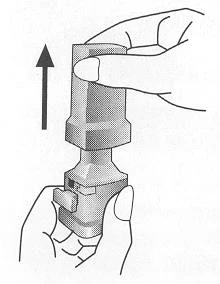 | Remove the cap. | |
2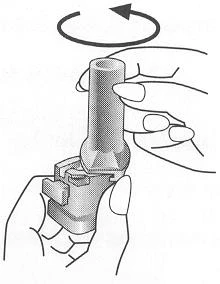 | Hold the base of the inhaler firmly and rotate the mouthpiece in the direction of the arrow to open. | |
3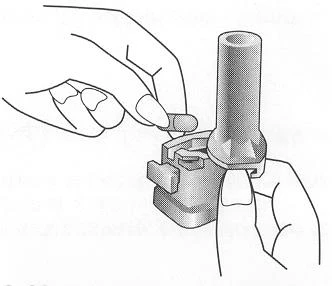 | Insert the capsule into the designated compartment of the inhaler. It is important that the capsule be removed from the bottle only immediately before administration. | |
4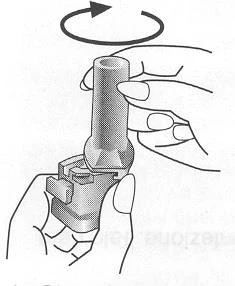 | Turn the mouthpiece to the closed position. | |
5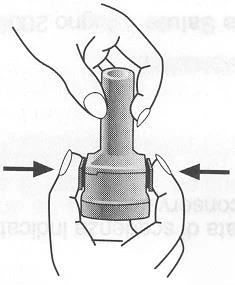 | Firmly press down the red buttons once only, keeping the inhaler in an upright position. Then release the buttons. Note: When the capsule breaks, small fragments of gelatin may enter the mouth or throat. Since this is food-grade gelatin, it is not harmful. The tendency of the capsule to fragment is minimized if the buttons are not pressed more than once, if storage instructions are followed, and if the capsule is placed into the inhaler only immediately before use (see step 3). | |
| 6 | Breathe out fully. | |
7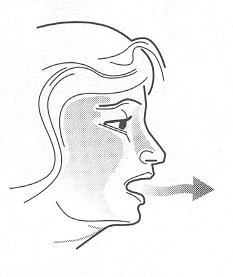 | Place the mouthpiece in your mouth and tilt your head slightly backward. Close your lips around the mouthpiece and inhale quickly, but steadily, as deeply as possible. You should hear a buzzing sound in the chamber caused by the rotation of the capsule as the powder disperses. If you do not hear a buzzing sound, the capsule may be jammed in the compartment. If this occurs, open the inhaler and unblock the capsule from the compartment. Do not attempt to unblock the capsule by repeatedly pressing the buttons. | |
8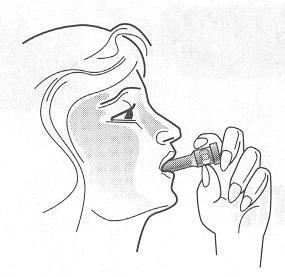 | If you heard the buzzing sound, HOLD YOUR BREATH as long as possible while removing the inhaler and then exhale. Open the inhaler to check whether any powder remains in the capsule. If so, repeat the steps described in points 6–8. | |
| 9 | After use, open the inhaler, remove the empty capsule, close the mouthpiece, and replace the cap. | |
If you use more Levovent than you should
In case of accidental ingestion of an excessive dose of Levovent, contact your doctor immediately or go to the nearest hospital.
After ingesting or using an excessive dose of Levovent, the following may occur:
- tremors
- headache
- palpitations
- rapid heartbeat
- high blood sugar
- low potassium levels in the blood
- disturbance in the heart's electrical conduction detected by electrocardiogram (prolongation of the QTc interval)
- heart rhythm disorder
- high blood pressure
- nausea
- vomiting
If you forget to use Levovent
Do not take a double dose to make up for the missed dose.
Take the medicine as soon as possible, unless it is almost time for the next dose. Then return to your regular dosing schedule.
If you stop treatment with Levovent
Take the medicine exactly as prescribed by your doctor and continue until your doctor tells you to stop.
If you have any doubts about the use of this medicine, consult your doctor or pharmacist.
4. Possible side effects
Like all medicines, this medicine can cause side effects, although not everyone gets them.
Common side effects (may affect up to 1 in 10 people)
- irregular heartbeat (palpitations)
- headache
- tremors
- cough
- worsening of severe asthma in children aged 6–12 years
Uncommon side effects (may affect up to 1 in 100 people)
- muscle cramps
- muscle pain
- rapid heartbeat
- dizziness
- agitation
- anxiety
- restlessness
- sleep disorders
- asthmatic reaction (bronchospasm), including paradoxical bronchospasm (severe and exaggerated narrowing of the airways following inhalation of a substance that normally dilates them)
- throat irritation
- dry mouth
Rare side effects (may affect up to 1 in 1,000 people)
- heart rhythm disorders: either atrial fibrillation, or supraventricular tachycardia, or extrasystoles
- allergic reactions with:
- drop in blood pressure
- swelling of the face, eyelids, lips, or bronchospasm
- hives
- itching
- skin rash with pustules, blisters, and bullae (exanthem) - nausea
- low levels of potassium in the blood
Very rare side effects (may affect up to 1 in 10,000 people)
- fluid accumulation in the limbs
- chest pain (angina pectoris)
- disturbance in the heart's electrical conduction as detected by electrocardiogram (prolongation of QTc interval)
- taste disturbances
- elevated levels of sugar (glucose) in the blood
- changes in blood pressure
Side effects with unknown frequency (frequency cannot be estimated from the available data)
- increase in blood pressure
- skin rash
In addition, the following have been reported:
- worsening of asthma
- difficulty breathing (dyspnea)
- cough
- fatigue
- irritation of the conjunctiva
- swelling of the eyelids
Treatment with medicines similar to Levovent (ß2 agonists) may cause:
- increased levels of insulin in the blood (hormone that regulates blood sugar)
- increased levels of free fatty acids
- increased glycerol levels
- increased ketone bodies
Reporting of side effects
If you experience any side effect, including those not listed in this leaflet, talk to your doctor or pharmacist. You can also report side effects directly via the national reporting system at https://www.aifa.gov.it/content/segnalazioni-reazioni- avverse.
By reporting side effects, you can help provide more information on the safety of this medicine.
5. How to store Levovent
Store Levovent at a temperature not exceeding 25°C.
Do not use this medicine after the expiry date stated on the packaging after "Expiry". The expiry date refers to the last day of that month.
Do not use this medicine if you notice that the packaging is damaged or shows signs of tampering.
Do not dispose of any medicine via wastewater or household waste. Ask your pharmacist how to dispose of medicines you no longer use. This will help protect the environment.
6. Package contents and other information
What Levovent contains
- The active substance is formoterol fumarate. Each Levovent capsule contains 12 micrograms of formoterol fumarate.
- The other component is lactose.
Description of the appearance of Levovent and contents of the pack
Each Levovent pack contains a bottle with 60 or 100 capsules and a dispenser.
Marketing Authorization Holder
Genetic S.p.A.
Via G. Della Monica, 26
84083 Castel San Giorgio (SA)
Italy
Manufacturer
SMB Technology S.A.
39, rue du Parc Industriel
6900 Marche en Famenne
Belgium
Genetic S.p.A.
Contrada Canfora
84084 Fisciano (SA)
Italy