Levotiroxine Abdi
Italy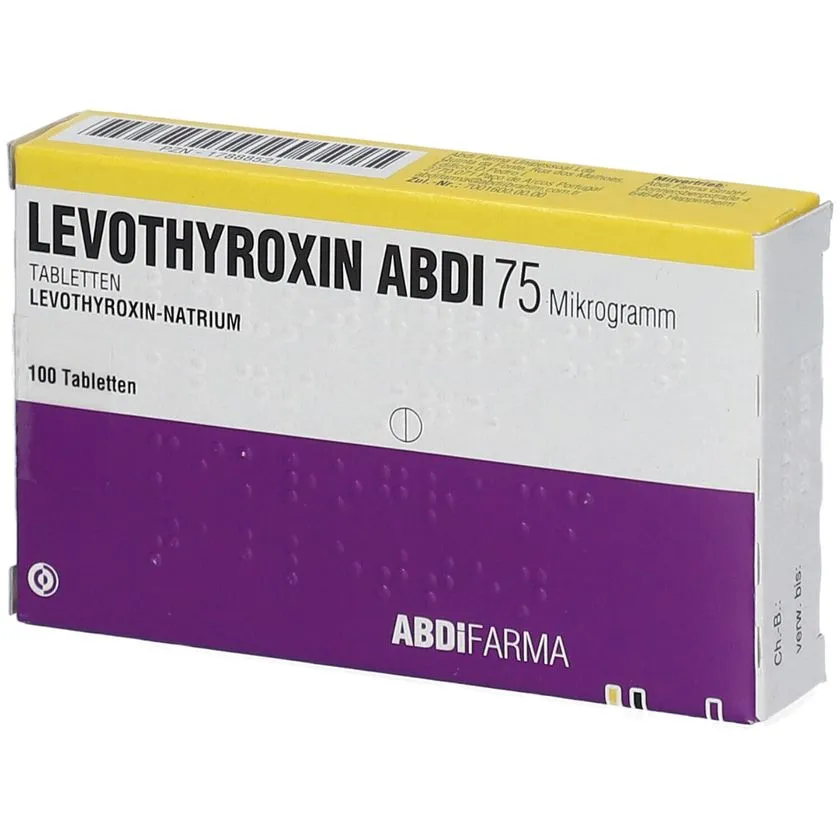
Table of Contents
- Patient Information Leaflet: Information for the User
- Levotiroxina Abdi 25 micrograms tablets, 50 micrograms tablets, 75 micrograms tablets, 100 micrograms tablets, 125 micrograms tablets, 150 micrograms tablets, 175 micrograms tablets, 200 micrograms tablets
- 1. What Levotiroxina Abdi is and what it is used for
- 2. What you need to know before taking Levotiroxina Abdi
- 3. How to take Levotiroxina Abdi
- 4. Possible side effects
- 5. How to store Levotiroxina Abdi
- 6. Package contents and other information
Patient Information Leaflet: Information for the User
Levotiroxina Abdi 25 micrograms tablets, 50 micrograms tablets, 75 micrograms tablets, 100 micrograms tablets, 125 micrograms tablets, 150 micrograms tablets, 175 micrograms tablets, 200 micrograms tablets
levothyroxine sodium
Generic medicine
Please read all of this leaflet carefully before taking this medicine because it contains important information for you.
- Keep this leaflet. You may need to read it again.
- If you have any questions, ask your doctor or pharmacist.
- This medicine has been prescribed for you only. Do not give it to others, even if they have the same symptoms as yours, as it may be harmful.
- If you experience any side effects, including those not listed in this leaflet, contact your doctor or pharmacist. See section 4.
Contents of this leaflet
- What Levotiroxina Abdi is and what it is used for
- What you need to know before taking Levotiroxina Abdi
- How to take Levotiroxina Abdi
- Possible side effects
- How to store Levotiroxina Abdi
- Contents of the pack and other information
1. What Levotiroxina Abdi is and what it is used for
Levothyroxine, the active substance contained in Levotiroxina Abdi, is a synthetic thyroid hormone
used for the treatment of diseases and dysfunctions of the thyroid gland. Its effect is identical to
that of the hormones naturally produced by the thyroid.
Levotiroxina Abdi is used
- for the treatment of benign goitre in patients with normal thyroid function,
- to prevent recurrence of goitre after surgical intervention,
- for replacement of natural thyroid hormones when the thyroid does not produce sufficient amounts,
- to suppress tumour growth in patients with thyroid cancer.
Levotiroxina Abdi 25 micrograms, 50 micrograms, 75 micrograms and 100 micrograms are also used
to balance thyroid hormone levels when excessive hormone production is treated
with antithyroid medicinal products.
Levotiroxina Abdi 100 micrograms, 150 micrograms and 200 micrograms may also be
used in thyroid function tests.
2. What you need to know before taking Levotiroxina Abdi
Do not take Levotiroxina Abdi
if you have any of the following clinical conditions:
- allergy (hypersensitivity) to the active substance or to any of the other components of Levotiroxina Abdi (listed in section 6),
- untreated pituitary dysfunction or a disease associated with excessive production of
thyroid hormones (thyrotoxicosis) that is untreated,
- reduced function of the adrenal glands (adrenal insufficiency) in the absence of adequate replacement therapy,
- acute heart disease (myocardial infarction or inflammation of the heart).
Do not take Levotiroxina Abdi together with other antithyroid medicines if you are pregnant
(see section “Pregnancy and breastfeeding” below).
Warnings and precautions
Talk to your doctor or pharmacist before taking Levotiroxina Abdi
- if you have any of the following heart conditions:
- inadequate blood supply to the blood vessels of the heart (angina pectoris),
- heart failure,
- rapid and irregular heartbeat,
- high blood pressure,
- fat deposits in the arteries (arteriosclerosis),
- if you have reduced activity of the adrenal glands (adrenal insufficiency).
These conditions must be under medical control before starting treatment with
Levotiroxina Abdi or undergoing a thyroid suppression test. During treatment with
Levotiroxina Abdi, you must have frequent checks of your thyroid hormone levels. If you are unsure whether any of these conditions apply to you or if you are not receiving treatment, consult your doctor.
Your doctor will determine whether you have adrenal or pituitary gland dysfunction or uncontrolled overproduction of thyroid hormones (thyroid autonomy), as these conditions must be under medical supervision before starting Levotiroxina Abdi or undergoing a thyroid suppression test.
Blood pressure will be regularly monitored when treatment with levotiroxina is initiated in preterm infants with very low birth weight, as a rapid drop in blood pressure (circulatory collapse) may occur.
Switching to another medicine containing levotiroxina, if necessary, may lead to thyroid imbalances. If you have any questions about switching to another medicine, consult your doctor. Close monitoring (clinical and biological) is required during the transition period. Inform your doctor if you experience any adverse effects, as this may indicate that your dose needs to be increased or decreased.
Talk to your doctor
- if you are in menopause or postmenopausal. Your doctor may need to monitor your thyroid function regularly due to the risk of osteoporosis
- before starting, stopping, or changing treatment with orlistat (a medicine used to treat obesity; closer monitoring and dose adjustment may be needed)
- if you develop signs of psychotic disorders (closer monitoring and dose adjustment may be needed) Thyroid hormones must not be used for weight reduction. Taking thyroid hormones does not cause weight loss if thyroid hormone levels are normal. Serious, even life-threatening, adverse effects may occur if the dose is increased without explicit medical advice. Thyroid hormones must not be taken at high doses together with certain weight-loss medicines such as amfepramone, catina, and phenylpropanolamine, as this may increase the risk of serious or even life-threatening adverse effects.
Other medicines and Levotiroxina Abdi
Inform your doctor or pharmacist if you are taking, have recently taken, or might take any
of the following medicines, as Levotiroxina Abdi may alter their effects:
- Antidiabetic medicines (medicines that lower blood glucose levels): Levotiroxina Abdi may reduce the effect of antidiabetic medicines, so additional monitoring of blood glucose levels may be needed, especially at the beginning of treatment with Levotiroxina Abdi. During treatment with Levotiroxina Abdi, a dose adjustment of your antidiabetic medicine may be necessary.
- Cumarin derivatives (medicines used to prevent blood clotting): Levotiroxina Abdi may enhance the effect of these medicines, increasing the risk of bleeding events, particularly in elderly patients. Regular monitoring of blood coagulation parameters may be needed at the start and during treatment with Levotiroxina Abdi. During treatment with Levotiroxina Abdi, a dose adjustment of the cumarin derivative may be necessary.
Make sure to observe the recommended time intervals if you need to take any
of the following medicines:
- Medicines used to bind bile acids and lower high cholesterol (such as cholestyramine or colestipol): take Levotiroxina Abdi 4–5 hours before these medicines, as they may block the intestinal absorption of Levotiroxina Abdi.
- Antacids (for stomach acidity), sucralfate (for stomach or intestinal ulcers), other medicines containing aluminium, medicines containing iron, medicines containing calcium: take Levotiroxina Abdi at least 2 hours before these medicines, otherwise they may reduce the effect of Levotiroxina Abdi. Inform your doctor or pharmacist if you are taking, have recently taken, or might take any of the following medicines, as they may reduce the effect of Levotiroxina Abdi:
- propylthiouracil (antithyroid medicine),
- glucocorticoids (anti-allergic and anti-inflammatory medicines),
- beta-blockers (medicines used to lower blood pressure and treat heart diseases),
- sertraline (antidepressant medicine),
- chloroquine or proguanil (medicines used for prevention or treatment of malaria),
- medicines that activate certain liver enzymes, such as barbiturates (sedatives, hypnotics) or carbamazepine (antiepileptic medicine, also used to modify certain types of pain and control mood disorders),
- medicines containing estrogens used for hormone replacement therapy during and after menopause or for contraception,
- sevelamer (phosphate binder, used to treat patients with chronic renal failure),
- tyrosine kinase inhibitors (anticancer and anti-inflammatory medicines),
- orlistat (medicine used to treat obesity).
Inform your doctor or pharmacist if you are taking, have recently taken, or might take any
of the following medicines, as they may enhance the effect of Levotiroxina Abdi:
- salicylates (medicines used to relieve pain and reduce fever),
- dicoumarol (medicine used to prevent blood clotting),
- furosemide (diuretic medicine) at high doses (250 mg),
- clofibrate (medicine used to lower blood lipids).
Inform your doctor or pharmacist if you are taking, have recently taken, or might take any
of the following medicines, as they may alter the effect of Levotiroxina Abdi:
- ritonavir, indinavir, lopinavir (protease inhibitors, medicines used to treat HIV infection),
- phenytoin (antiepileptic medicine).
Regular monitoring of thyroid hormone parameters may be needed. A dose adjustment of Levotiroxina Abdi may be necessary.
Inform your doctor if you are taking amiodarone (a medicine used to treat irregular heartbeat), as this medicine may affect thyroid function and activity.
If you are scheduled for diagnostic tests or scans involving iodine-containing contrast agents, inform your doctor that you are taking Levotiroxina Abdi, as you may receive an injection that could affect thyroid function.
Inform your doctor or pharmacist if you are taking, have recently taken, or might take any other medicines, including those obtained without a prescription.
Levotiroxina Abdi with food and drinks
Inform your doctor if you consume soy-containing products, especially if you change the amount consumed. Soy-containing products may reduce the intestinal absorption of Levotiroxina Abdi, and therefore a dose adjustment of Levotiroxina Abdi may be necessary.
Pregnancy and breastfeeding
If you are pregnant, continue taking Levotiroxina Abdi. Consult your doctor, as your dose may need to be adjusted.
If you are taking Levotiroxina Abdi together with other antithyroid medicines to treat excessive thyroid hormone production, your doctor will advise you to stop Levotiroxina Abdi if you become pregnant.
If you are breastfeeding, continue taking Levotiroxina Abdi as directed by your doctor. The amount of active substance excreted in breast milk is so low that it has no effect on the infant.
Driving and using machines
No studies have been conducted on the effects of levotiroxina on the ability to drive vehicles or operate machinery.
Levotiroxina Abdi is not expected to affect the ability to drive or use machines, as levotiroxina is identical to the hormone naturally produced by the thyroid gland.
Levotiroxina Abdi contains lactose
If your doctor has diagnosed you with an intolerance to certain sugars, contact him before taking this medicine.
Levotiroxina Abdi contains sodium
This medicine contains less than 1 mmol (23 mg) of sodium per tablet, i.e. it is essentially ‘sodium-free’.
3. How to take Levotiroxina Abdi
Take Levotiroxina Abdi exactly as instructed by your doctor or pharmacist. If
you have any doubts, consult your doctor or pharmacist.
Your doctor will determine your individual dose based on laboratory tests and examinations.
Generally, treatment is started with a low dose, which is increased every 2–4 weeks until the final individual dose is reached. During the first weeks of treatment, laboratory tests will be performed to adjust the dose appropriately.
If your child was born with hypothyroidism, your doctor may recommend starting treatment with a higher dose, as rapid hormone replacement is important. The recommended initial dose is
10–15 micrograms per kg of body weight during the first 3 months. Afterwards, your doctor will adjust the dose according to individual needs.
The usual dosage range is shown in the table below. A lower individual dose may be sufficient
- if you are an elderly patient,
- if you have heart problems,
- if you have severe or long-standing hypothyroidism,
- if you have low body weight or a large goitre.
| Use of Levotiroxina Abdi | Recommended daily dose of Levotiroxina Abdi | |
| 75–200 micrograms | |
| 75–200 micrograms | |
| adults 25–50 micrograms* 100–200 micrograms | children 12.5–50 micrograms* 100–150 micrograms per m² of body surface area |
| 150–300 micrograms | |
| 50–100 micrograms | |
| 100 micrograms: 200 micrograms (2 tablets) starting 2 weeks before the test 150 micrograms: 75 micrograms (½ tablet) for two weeks, starting 4 weeks before the test, then 150 micrograms (1 tablet) until the test 200 micrograms: 200 micrograms (1 tablet) starting 2 weeks before the test | |
* Levotiroxina Abdi tablets of 125 micrograms, 150 micrograms, 175 micrograms, or
200 micrograms are not suitable for the lower dosage range indicated here; however, your doctor
may prescribe Levotiroxina Abdi tablets with a lower dosage.
Method of administration
Levotiroxina Abdi is for oral use. Take a single daily dose on an empty stomach in the morning
(at least half an hour before breakfast), preferably with some liquid, for example half a glass of water.
Infants may receive their entire daily dose of Levotiroxina Abdi at least half an hour before the
first meal of the day. Immediately before use, crush the tablet, mix it with a small amount of water,
and administer it to the child with additional liquid. Always prepare the mixture just before use.
Duration of treatment
The duration of treatment may vary depending on the condition for which Levotiroxina Abdi is used.
Therefore, your doctor will inform you how long you should continue taking it. Most patients
need to take Levotiroxina Abdi for life.
If you take more Levotiroxina Abdi than you should
If you have taken a higher dose than prescribed, you may experience symptoms such as rapid heartbeat,
anxiety, agitation, or involuntary movements. In patients with neurological disorders such as epilepsy,
seizures may occur in isolated cases. In patients at risk of psychotic disorders, symptoms of acute psychosis
may appear. If any of these conditions occur, consult your doctor immediately.
If you forget to take Levotiroxina Abdi
Do not take a double dose to make up for the missed tablet; instead, take your next dose as usual the following day.
If you have any questions about the use of Levotiroxina Abdi, consult your doctor or pharmacist.
4. Possible side effects
Like all medicines, Levotiroxina Abdi may cause side effects, although not everyone gets them.
If you take more Levotiroxina Abdi than prescribed or if you do not tolerate the prescribed dose (e.g., if the dose is increased too rapidly), you may experience one or more of the following side effects:
irregular or rapid heartbeat, chest pain, headache, weakness or muscle cramps, hot flushes (feeling of warmth and redness in the face), fever, vomiting, menstrual disorders, pseudotumor cerebri (increased intracranial pressure), tremor, restlessness, sleep disturbances, sweating, weight loss, diarrhoea.
If you experience any of these side effects, consult your doctor. Your doctor may decide to interrupt treatment for a few days or to reduce the daily dose until the side effects have resolved.
Allergic reactions to any of the components of Levotiroxina Abdi are possible (see section 6 “What Levotiroxina Abdi contains”). The frequency of such reactions is unknown. Allergic reactions may include skin rash, urticaria, and swelling of the face or throat (angioedema).
In such cases, seek immediate medical advice.
Reporting of side effects
If you get any side effects, including ones not listed in this leaflet, talk to your doctor or pharmacist.
You can also report side effects directly via the national reporting system at https://www.aifa.gov.it/content/segnalazioni-reazioni-avverse.
By reporting side effects, you can help provide more information on the safety of this medicine.
5. How to store Levotiroxina Abdi
Keep this medicine out of the sight and reach of children.
Do not use Levotiroxina Abdi after the expiry date which is stated on the blister and outer carton after "Exp.". The expiry date refers to the last day of that month.
Do not store above 25°C.
Do not dispose of medicines via wastewater or household waste. Ask your pharmacist how to dispose of medicines you no longer use. This will help protect the environment.
6. Package contents and other information
What Levotiroxina Abdi contains
- The active substance is sodium levothyroxine.
- Each tablet of Levotiroxina Abdi 25 micrograms contains 25 micrograms of sodium levothyroxine.
- Each tablet of Levotiroxina Abdi 50 micrograms contains 50 micrograms of sodium levothyroxine.
- Each tablet of Levotiroxina Abdi 75 micrograms contains 75 micrograms of sodium levothyroxine.
- Each tablet of Levotiroxina Abdi 100 micrograms contains 100 micrograms of sodium levothyroxine.
- Each tablet of Levotiroxina Abdi 125 micrograms contains 125 micrograms of sodium levothyroxine.
- Each tablet of Levotiroxina Abdi 150 micrograms contains 150 micrograms of sodium levothyroxine.
- Each tablet of Levotiroxina Abdi 175 micrograms contains 175 micrograms of sodium levothyroxine.
- Each tablet of Levotiroxina Abdi 200 micrograms contains 200 micrograms of sodium levothyroxine.
- The other components are maize starch, croscarmellose sodium, gelatin, lactose monohydrate and magnesium stearate.
Description of the appearance of Levotiroxina Abdi and contents of the pack
Levotiroxina Abdi 25 microgram tablets are white and round, with "25" engraved on one side and a "+" sign on the other side.
Levotiroxina Abdi 50 microgram tablets are white and round, with "50" engraved on one side and a "+" sign on the other side.
Levotiroxina Abdi 75 microgram tablets are white and round, with "75" engraved on one side and a "+" sign on the other side.
Levotiroxina Abdi 100 microgram tablets are white and round, with "100" engraved on one side and a "+" sign on the other side.
Levotiroxina Abdi 125 microgram tablets are white and round, with "125" engraved on one side and a "+" sign on the other side.
Levotiroxina Abdi 150 microgram tablets are white and round, with "150" engraved on one side and a "+" sign on the other side.
Levotiroxina Abdi 175 microgram tablets are white and round, with "175" engraved on one side and a "+" sign on the other side.
Levotiroxina Abdi 200 microgram tablets are white and round, with "200" engraved on one side and a "+" sign on the other side.
The tablets are supplied in PVC/PE/PVDC/aluminum blisters containing 50 or 100 tablets per box.
Not all pack sizes may be marketed.
Marketing Authorization Holder
Abdi Farma GmbH
Donnersbergstraße 4
64646 Heppenheim, Germany
Manufacturer
Interpharma Services Ltd.
43A Cherni Vrach Blvd. 1407 - Sofia
Bulgaria
Flavine Pharma France
3 Voie d’Allemagne
13127 Vitrolles
France
This medicinal product is authorized in the European Economic Area countries under the following names:
Netherlands: Levothyroxine Abdi