Levopraid
Italy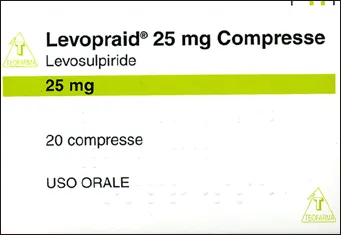
Table of Contents
- Package leaflet: Information for the patient
- Levopraid 25 mg tablets, 25 mg/ml oral drops, solution, 25 mg/2 ml injectable solution
- 1. What Levopraid is and what it is used for
- 2. What you need to know before taking Levopraid
- 3. How to take Levopraid
- 4. Possible side effects
- 5. How to store Levopraid
- 6. Package contents and other information
- Patient information leaflet
- Levopraid 50 mg tablets, 50 mg/2 ml injectable solution, 100 mg tablets
- 1. What Levopraid is and what it is used for
- 2. What you should know before taking Levopraid
- 3. How to take Levopraid
- 4. Possible side effects
- 5. How to store Levopraid
- 6. Package contents and other information
Package leaflet: Information for the patient
Levopraid 25 mg tablets, 25 mg/ml oral drops, solution, 25 mg/2 ml injectable solution
Levosulpiride
Please read this leaflet carefully before taking this medicine because it contains
important information for you.
- Keep this leaflet. You may need to read it again.
- If you have any questions, ask your doctor or pharmacist.
- This medicine has been prescribed for you only. Do not give it to other people, even if they have the same symptoms as yours, because it could be harmful.
- If you experience any adverse reaction, including those not listed in this leaflet, consult your doctor or pharmacist. See section 4.
Contents of this leaflet:
- What Levopraid is and what it is used for
- What you need to know before taking Levopraid
- How to take Levopraid
- Possible side effects
- How to store Levopraid
- Contents of the pack and other information
1. What Levopraid is and what it is used for
Levopraid contains the active substance levosulpiride, which belongs to a group of medicines called "psycholytics, antipsychotics (neuroleptics)".
It works by stimulating gastric and intestinal motility (gastrointestinal prokinetic effect).
This medicine is indicated for short-term treatment of:
- Dyspeptic syndrome: this syndrome, i.e. a set of various symptoms related to poor digestion, may be due to organic causes—such as lesions in digestive organs—or to impaired function of these organs, even in the absence of detectable structural damage, often linked to unhealthy lifestyle habits. It is primarily associated with delayed gastric emptying. Certain medical conditions (such as delayed gastric emptying due to diabetes or certain tumours) or psychological disorders (such as anxiety and depression, which may cause visceral functional disturbances) can impair digestion. The stomach has difficulty emptying, leading to symptoms such as stomach pain and heartburn, loss of appetite (anorexia), flatulence, bloating and stomach fullness, headache after meals, belching, diarrhoea, and constipation. Levopraid has been prescribed by your doctor because you did not respond adequately to previous treatments with other medicines;
- Vomiting and nausea caused by medications used in cancer treatment. Levopraid has been prescribed by your doctor because you did not respond adequately to previous treatments with other medicines;
- Vertigo (dizziness), symptoms of a disease affecting the inner ear (Ménière’s syndrome), causing balance problems and ear disturbances (such as tinnitus, ringing, or crackling sounds), hearing loss, and nausea.
2. What you need to know before taking Levopraid
Do not take Levopraid
- if you are allergic to the active substance or to any of the other ingredients of this medicine (listed in section 6);
- if you are at risk of developing a tumour of the adrenal glands (pheochromocytoma);
- if you suffer from seizures (epilepsy);
- if you suffer from mood disorders that may cause feelings of excitement (manic states with hyperactivity, irritability, irritability, or reduced need for sleep);
- if you have a breast tumour;
- if you have gastrointestinal bleeding, intestinal obstruction (which may be characterized by abdominal cramps, vomiting, constipation) or ulcers (lesions of the stomach/intestinal wall);
- if you are pregnant or suspect you may be pregnant, or if you are breastfeeding (see "Pregnancy and breastfeeding").
Warnings and precautions
Talk to your doctor or pharmacist before taking Levopraid.
It is very important that you inform your doctor beforehand:
- if you suffer from a disease that reduces your ability to remember, speak, and reason (dementia);
- if you are elderly;
- if you have a predisposition to cerebral stroke, or have heart and/or circulatory disorders;
- if you or a family member suffer or have suffered from a heart disease causing irregular heartbeat ("long QT syndrome");
- if you or someone in your family has a history of blood clots (thrombosis), as medicines like Levopraid have been associated with the formation of blood clots in veins. Contact your doctor immediately if:
After taking this medicine you experience a combination of symptoms such as fever, severe muscle stiffness, severe movement difficulties (akinesia), excessive sweating, rapid heartbeat, altered blood pressure, or loss of consciousness. These are symptoms of a very serious and potentially fatal condition called "Neuroleptic Malignant Syndrome". In this case, you must stop taking Levopraid and contact your doctor immediately, who will prescribe appropriate treatment.
If you are taking anticholinergic medicines (drugs that block the action of acetylcholine, a substance involved in nerve impulse transmission), narcotics, and analgesics (painkillers), as they may reduce the effects of Levopraid (see section "Other medicines and Levopraid").
Other medicines and Levopraid
Inform your doctor or pharmacist if you are taking, have recently taken, or might take any other medicine.
In particular, before taking this medicine, tell your doctor if you are already taking:
- medicines acting on the central nervous system used to treat psychiatric disorders, particularly neuroleptics, as combination with Levopraid requires caution;
- medicines that may affect levels of minerals (electrolytes) in the blood, as combination with Levopraid should be avoided;
- medicines that alter heart rhythm (prolong QT interval), as combination with Levopraid increases the risk of developing heart rhythm abnormalities (cardiac arrhythmias);
- medicines called anticholinergics (used to counteract a substance involved in nerve impulse transmission in the body called "acetylcholine"), medicines used to induce sleep (narcotics), and medicines used for pain relief (analgesics), as they may influence the effects of Levopraid on stomach and intestinal motility.
Levopraid with food, drinks and alcohol
DO NOT drink alcohol while taking this medicine.
Fertility, pregnancy and breastfeeding
If you are pregnant, suspect you may be pregnant, plan to become pregnant, or are breastfeeding, consult your doctor or pharmacist before using this medicine.
Pregnancy
Do not use Levopraid if you are pregnant or think you might be pregnant.
If you take antipsychotics ("conventional or atypical"), including Levobren, during the last 3 months of pregnancy, your baby may experience the following symptoms after birth: tremors, muscle stiffness and/or weakness, drowsiness, agitation, breathing problems, and difficulty feeding.
Contact your doctor if your baby shows any of these symptoms.
Breastfeeding
Do not use Levopraid during breastfeeding.
Driving and using machines
DO NOT drive vehicles, DO NOT operate machinery, and DO NOT engage in activities requiring special attention while taking this medicine.
High doses of this medicine may cause drowsiness, numbness sensations, and involuntary movements. These effects may impair your ability to drive or use machinery.
Levopraid 25 mg tablets contain lactose: if your doctor has diagnosed you with an intolerance to certain sugars, contact him before taking this medicine.
Levopraid 25 mg/ml oral drops, solution contains methyl p-hydroxybenzoate and propyl p-hydroxybenzoate: these may cause allergic reactions (including delayed reactions).
Levopraid 25 mg/2 ml injectable solution for intramuscular and intravenous use contains less than 1 mmol (23 mg) of sodium per dose, i.e. it is practically 'sodium-free'.
3. How to take Levopraid
Take this medicine exactly as your doctor has instructed you. If you have any doubts, consult your doctor or pharmacist.
Always follow the exact dose prescribed by your doctor. The recommended doses are:
Adults
Levopraid 25 mg tablets
The recommended dose is 1 tablet three times a day before meals.
Levopraid 25 mg/ml oral drops, solution
The recommended dose is 15 drops three times a day before meals.
Levopraid 25 mg/2 ml injectable solution for intramuscular and intravenous use
The recommended dose is 1 vial two or three times a day, as prescribed by the doctor, until symptoms disappear. The vial may be administered either directly into a vein (intravenous route) or into a muscle (intramuscular route) by authorized healthcare personnel.
If you have nausea and vomiting, you may have difficulty retaining Levopraid tablets or oral solution. In this case, your doctor will prescribe the injectable solution until symptoms become milder. Afterwards, you may continue treatment orally (with Levopraid tablets or oral drops) for approximately 10–15 days.
If your doctor prescribes repeating another treatment cycle for an additional 2 or 3 weeks, they will always require you to observe a break of at least 8–10 days between treatment cycles.
Treatment of vomiting caused by antineoplastic medicines
If vomiting is caused by certain antineoplastic drugs (cisplatin, anthracyclines), 1–2 vials may be administered intravenously (through a vein) slowly or by infusion via intravenous drip, 30 minutes before or during administration of the antineoplastic drug. The same dose may be repeated 30 minutes after administration of the antineoplastic drug.
Use in the elderly
If you are elderly, your doctor will carefully determine the dosage and may consider reducing the doses indicated above.
Use in children and adolescents
This medicine must not be used in children and adolescents because relevant data are not available.
If you take more Levopraid than you should
If you take more Levopraid than prescribed, contact your doctor immediately or go to the nearest hospital. Take this Patient Information Leaflet with you.
Overdose may cause tremors, movement difficulties and slowness (extrapyramidal symptoms), or sleep disturbances.
If you forget to take Levopraid
Do not take a double dose to make up for the forgotten dose.
If you have any doubts about how to use this medicine, consult your doctor or pharmacist.
4. Possible side effects
Like all medicines, this medicine can cause side effects, although not everybody gets them.
The following side effects have also been observed with the use of other medicines in the same class and/or with prolonged administration:
Rare (may affect up to 1 in 1,000 people):
- changes in heart rhythm (QT interval prolongation, ventricular arrhythmias such as torsades de pointes, ventricular tachycardia, ventricular fibrillation), cardiac arrest.
Very rare (may affect up to 1 in 10,000 people):
- drowsiness, "parkinsonism" (symptoms similar to those in Parkinson's disease such as, e.g., tremor, difficulty and slowness of movement, rigidity, and postural instability); involuntary muscle movements (dyskinesias); tremor; repetitive twisting movements or abnormal fixed postures (dystonia); Neuroleptic Malignant Syndrome (see section “Contact your doctor immediately if”).
- cases of sudden death.
Not known (frequency cannot be estimated from the available data):
- absence of menstruation in women of childbearing age (amenorrhea), breast development in men (gynecomastia), breast tenderness, spontaneous milk discharge from the breasts not related to childbirth or breastfeeding (galactorrhea), changes in sexual desire (libido).
- formation of blood clots (venous thrombosis), especially in the legs (symptoms include swelling, pain, redness of the leg), which may travel to the lungs and cause chest pain and breathing difficulties.
- neonatal withdrawal symptoms (see section 2, “Pregnancy and breastfeeding”), movement disorders (extrapyramidal symptoms).
- increased levels of a hormone called prolactin in the blood (hyperprolactinaemia).
Levopraid is not indicated for the treatment of dementia. In elderly patients with dementia, a small increase in the number of deaths has been observed among patients taking antipsychotics compared to those not taking antipsychotics.
Reporting of side effects
If you experience any side effect, including those not listed in this leaflet, talk to your doctor or pharmacist. You can also report side effects directly via the website: http://www.agenziafarmaco.gov.it/content/come-segnalare-una-sospetta-reazione-avversa.
By reporting side effects, you can help provide more information on the safety of this medicine.
5. How to store Levopraid
Levopraid 25 mg tablets and Levopraid 25 mg/2 ml injectable solution for intramuscular
and intravenous use
These medicinal products do not require any special storage conditions.
Levopraid 25 mg/ml oral drops, solution
Do not refrigerate or freeze.
Use the product within 90 days of first opening.
Keep this medicinal product out of the sight and reach of children.
Do not use this medicinal product after the expiry date stated on the packaging after "Exp.".
The expiry date refers to the last day of that month.
Do not dispose of any medicinal product via wastewater or household waste. Ask your pharmacist how to dispose of medicines no longer required. This will help protect the environment.
6. Package contents and other information
What Levopraid contains
Levopraid 25 mg tablets
- The active substance is levosulpiride. Each tablet contains 25 mg of levosulpiride.
- The other components are sodium carboxymethylcellulose, microcrystalline cellulose, lactose, magnesium stearate.
Levopraid 25 mg/ml oral drops, solution
- The active substance is levosulpiride. 100 ml of solution contain 2.5 g of levosulpiride.
- The other components are acesulfame K, anhydrous citric acid, purified water, lemon flavour, methyl p-hydroxybenzoate, propyl p-hydroxybenzoate.
Levopraid 25 mg/2 ml injectable solution for intramuscular and intravenous use
- The active substance is levosulpiride. Each 2 ml vial contains 25 mg of levosulpiride.
- The other components are sulfuric acid 2N, water for injections, sodium chloride.
Description of the appearance of Levopraid and contents of the pack
Levopraid 25 mg tablets are supplied in a pack containing 20 tablets in blisters.
Levopraid 25 mg/ml oral drops, solution are supplied in a pack containing a glass dropper bottle with child-resistant closure, containing 20 ml of solution.
Levopraid 25 mg/2 ml injectable solution for intramuscular and intravenous use is supplied in a pack containing 6 vials of 2 ml each.
Marketing Authorization Holder and Manufacturer
Marketing Authorization Holder
Teofarma S.r.l.
Via F.lli Cervi, 8
27010 Valle Salimbene (PV)
Manufacturer
Tablets and oral drops:
Teofarma S.r.l.
Viale Certosa, 8/A - 27100 Pavia
Injectable solution:
Doppel Farmaceutici S.r.l.
Via Volturno, 48 - 20089 Quinto de' Stampi - Rozzano (MI)
Patient information leaflet
Levopraid 50 mg tablets, 50 mg/2 ml injectable solution, 100 mg tablets
Levosulpiride
Please read this leaflet carefully before taking this medicine because it contains
important information for you.
- Keep this leaflet. You may need to read it again.
- If you have any questions, ask your doctor or pharmacist.
- This medicine has been prescribed for you only. Do not give it to other people, even if they have the same symptoms as you, because it could be harmful.
- If you experience any side effects, including those not listed in this leaflet, consult your doctor or pharmacist. See section 4.
Contents of this leaflet:
- What Levopraid is and what it is used for
- What you need to know before taking Levopraid
- How to take Levopraid
- Possible side effects
- How to store Levopraid
- Contents of the pack and other information
1. What Levopraid is and what it is used for
Levopraid contains levosulpiride, which belongs to a group of medicines called "psycholytics, antipsychotics (neuroleptics)". It works by blocking the effects of dopamine, a substance naturally present in the brain.
Levopraid is indicated for the treatment of mental disorders such as:
- psychic disturbances characterized by physical symptoms in the absence of any underlying physical disease ("somatic symptom disorders");
- long-lasting or permanent illnesses causing severe and persistent disturbances in behaviour, affectivity, thinking, and perception (feeling, perceiving or seeing things that are not actually present) ("chronic schizophrenia with negative symptoms").
2. What you should know before taking Levopraid
Do not take Levopraid
- if you are allergic to the active substance or to any of the other ingredients of this medicine (listed in section 6);
- if you have a tumor of the adrenal glands (pheochromocytoma);
- if you suffer from seizures (epilepsy);
- if you have mood disorders that may cause feelings of excitement (manic states with hyperactivity, irritability, or reduced need for sleep);
- if you have gastrointestinal bleeding, intestinal obstruction (which may be characterized by abdominal cramps, vomiting, constipation), or ulcers (lesions of the stomach/intestinal wall);
- if you have a breast tumor;
Warnings and precautions
Talk to your doctor or pharmacist before taking Levopraid.
It is very important that you inform your doctor before taking this medicine:
- if you suffer from a disease that reduces your ability to remember, speak, and think (dementia);
- if you have a predisposition to stroke or have heart and/or circulatory disorders;
- if you or a family member has or has had a heart condition causing irregular heartbeat (“long QT syndrome”);
- if you are being treated with other psychotropic medicines (neuroleptics);
- if you or someone in your family has a history of blood clots (thrombosis), as medicines such as Levopraid have been associated with the formation of blood clots in veins.
Pregnancy and breastfeeding
Your doctor will prescribe Levopraid only after careful evaluation (see section Pregnancy and
breastfeeding).
Contact your doctor immediately if you experience:
- a combination of symptoms such as fever, severe muscle stiffness, severe difficulty in movement (akinesia), excessive sweating, rapid heartbeat, altered blood pressure, or loss of consciousness. These are symptoms of a very serious and potentially life-threatening condition called "Neuroleptic Malignant Syndrome." In this case, you must stop taking Levopraid and contact your doctor immediately, who will prescribe appropriate treatment. If you need to resume antipsychotic treatment, your doctor will monitor you closely.
Other medicines and Levopraid
Inform your doctor or pharmacist if you are taking, have recently taken, or might take any other medicine.
In particular:
- your doctor will prescribe Levopraid with caution if you are being treated with medicines called "psychotropics" used to treat mental disorders. When taking a type of medicine called "neuroleptics," including Levopraid, together with medicines that affect heart rhythm (prolong QT interval), the risk of developing heart rhythm abnormalities (cardiac arrhythmias) increases;
- do not take Levopraid together with medicines that may affect levels of minerals (electrolytes) in the blood, as combination with Levopraid should be avoided;
Levopraid with food, alcohol
DO NOT drink alcohol while taking this medicine.
Pregnancy and breastfeeding
If you are pregnant, think you may be pregnant, planning a pregnancy, or breastfeeding, consult your doctor or pharmacist before taking this medicine.
Pregnancy
This medicine will be administered during pregnancy only if clearly needed and under direct medical supervision.
The following symptoms have been observed in newborns whose mothers took conventional or atypical antipsychotics, including Levopraid, during the third trimester (last three months of pregnancy):
tremors, muscle stiffness and/or weakness, drowsiness, agitation, breathing difficulties, and feeding problems. Contact your doctor if your baby shows any of these symptoms.
Breastfeeding
If you are breastfeeding, this medicine will be administered only if clearly needed and under direct medical supervision.
Driving and using machines
DO NOT drive vehicles, DO NOT operate machinery, and DO NOT engage in activities requiring special attention while taking this medicine.
This medicine may cause numbness, dizziness, and involuntary movements. These effects may impair your ability to drive or operate machinery.
Levopraid 100 mg tablets contain lactose: if your doctor has diagnosed you with an intolerance to certain sugars, contact them before taking this medicine.
Levopraid 50 mg/2 ml injectable solution for intramuscular and intravenous use contains less than 1 mmol (23 mg) of sodium per dose, i.e., it is practically 'sodium-free'.
3. How to take Levopraid
Take this medicine exactly as directed by your doctor. If you have any doubts, consult your doctor or pharmacist.
Always follow the exact dose prescribed by your doctor.
Adults (as prescribed by the doctor)
Acute forms:
The recommended dose is:
- Vials: half a vial or 1 vial, 1–2 times daily. The vial can be administered either directly into a vein (intravenous route) or into a muscle (intramuscular route) by authorized healthcare personnel; or
- Tablets: 2–3 tablets of 100 mg daily.
Maintenance therapy:
The recommended dose is:
- Tablets: 3 tablets of 50 mg daily, or as prescribed by the doctor. Your doctor may decide to gradually reduce the dose.
Use in the elderly
If you are elderly, your doctor will prescribe the most appropriate dose for you.
If you take more Levopraid than you should
If you take a dose of Levopraid higher than prescribed, contact your doctor immediately or go to the nearest hospital. Bring this Patient Information Leaflet with you.
Taking an excessive dose may cause tremors, difficulty and slowness in movement (extrapyramidal disorders), or sleep disturbances. Your doctor will decide whether to adjust your dose or discontinue treatment.
If you forget to take Levopraid
Do not take a double dose to make up for the missed dose.
If you stop taking Levopraid
If you have any questions about the use of this medicine, consult your doctor or pharmacist.
4. Possible side effects
Like all medicines, this medicine can cause side effects, although not everybody gets them.
The following side effects have also been observed with the use of other medicines in the same class and/or with prolonged administration:
Very common (may affect more than 1 in 10 people):
- drowsiness, temporary loss of sensitivity and reflex responsiveness (stupor)
Common (may affect up to 1 in 10 people):
- dizziness, vertigo (feeling a false sensation of movement)
Rare (may affect up to 1 in 1,000 people):
- heart rhythm disturbances (prolongation of QT interval, ventricular arrhythmias such as torsades de pointes, ventricular tachycardia, ventricular fibrillation), cardiac arrest.
Very rare (may affect up to 1 in 10,000 people):
- weight gain
- "parkinsonism" (symptoms similar to those seen in Parkinson's disease such as, e.g., tremor, difficulty and slowness of movement, rigidity and postural instability); involuntary muscle movements (dyskinesias); tremor; repetitive twisting movements or abnormal fixed postures (dystonia); psychomotor agitation (restlessness and purposeless involuntary movements);
- disorders of the autonomic nervous system (e.g. sweating, pallor, feeling of faintness, especially when standing up from a lying or sitting position, drop in blood pressure, slowing of heart rate).
- cases of sudden death.
Not known (frequency cannot be estimated from the available data):
- "Neuroleptic Malignant Syndrome" (see section “Take special care with LEVOPRAID”);
- absence of menstruation in women of childbearing age (amenorrhoea);
- breast development in men (gynaecomastia); sensation of breast fullness;
- spontaneous milk discharge from breasts not related to childbirth or breastfeeding (galactorrhoea);
- changes in sexual desire (libido);
- formation of blood clots (venous thrombosis), particularly in the legs (symptoms include swelling, pain, redness of the leg), which may travel to the lungs and cause chest pain and breathing difficulties;
- neonatal withdrawal symptoms (see section 2 “Pregnancy and breastfeeding”), movement disorders (extrapyramidal symptoms), increased levels of a hormone called prolactin in the blood (hyperprolactinaemia).
Levopraid is not indicated for the treatment of dementia. In elderly patients with dementia, a small increase in the number of deaths has been observed among patients taking antipsychotics compared to those not taking antipsychotics.
Reporting of side effects
If you experience any side effects, including any not listed in this leaflet, talk to your doctor or pharmacist. You can also report side effects directly via the website: http://www.agenziafarmaco.gov.it/content/come-segnalare-una-sospetta-reazione-avversa.
By reporting side effects, you can help provide more information on the safety of this medicine.
5. How to store Levopraid
This medicinal product does not require any special storage conditions.
Keep this medicine out of the sight and reach of children.
Do not use this medicinal product after the expiry date stated on the carton after "Exp.".
The expiry date refers to the last day of that month.
Do not dispose of medicines via wastewater or household waste. Ask your pharmacist how to
dispose of medicines you no longer use. This will help protect the environment.
6. Package contents and other information
What Levopraid contains
Levopraid 50 mg tablets
- The active substance is levosulpiride. Each tablet contains 50 mg of levosulpiride.
- The other components are carboxymethylcellulose sodium, microcrystalline cellulose, magnesium stearate.
Levopraid 50 mg/2 ml injectable solution for intramuscular and intravenous use
- The active substance is levosulpiride. Each 2 ml vial contains 50 mg of levosulpiride.
- The other components are sulfuric acid 2N, water for injectable preparations, sodium chloride.
Levopraid 100 mg tablets
- The active substance is levosulpiride. Each tablet contains 100 mg of levosulpiride.
- The other components are sodium carboxymethylcellulose, microcrystalline cellulose, lactose, magnesium stearate.
Description of the appearance of Levopraid and package contents
Levopraid 50 mg tablets are supplied in a pack containing 20 tablets in blister packs.
Levopraid 50 mg/2 ml injectable solution for intramuscular and intravenous use is supplied in a pack containing 6 vials of 2 ml each.
Levopraid 100 mg tablets are supplied in a pack containing 20 tablets in blister packs.
Marketing Authorization Holder and Manufacturer
Marketing Authorization Holder
Teofarma S.r.l.
Via F.lli Cervi, 8
27010 Valle Salimbene (PV)
Manufacturer
Tablets
Teofarma S.r.l.
Viale Certosa, 8/A - 27100 Pavia
Injectable solution
Doppel Farmaceutici S.r.l.
Via Volturno, 48 - 20089 Quinto de' Stampi - Rozzano (MI)