Leptoprol
Italy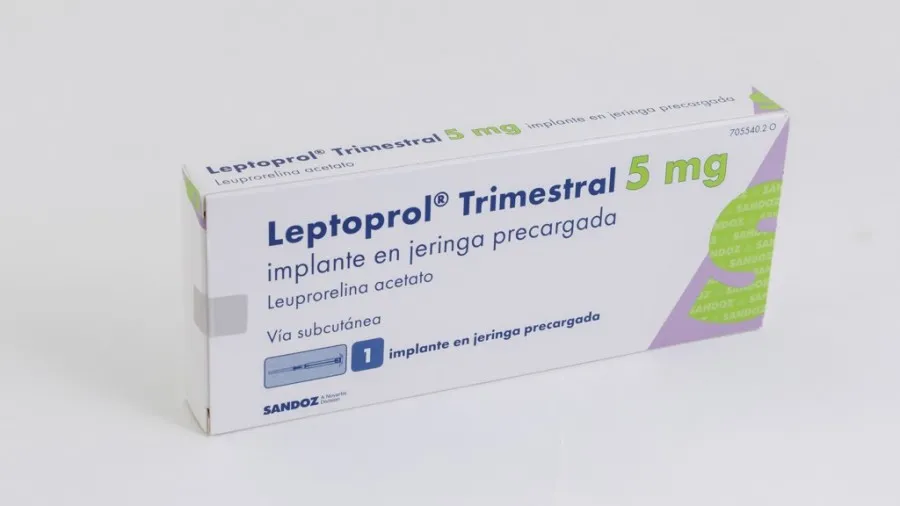
Table of Contents
- Patient Information Leaflet: Instructions for the User
- LEPTOPROL 5 mg/3 months implant
- 1. What Leptoprol 5 mg/3 months implant is and what it is used for
- 2. What you need to know before using Leptoprol 5 mg/3 months implant
- 3. How to use Leptoprol 5 mg/3 months implant
- 4. Possible side effects
- 5. How to store Leptoprol 5 mg/3 months implant
- 6. Package contents and other information
- Package leaflet: Information for the user
- LEPTOPROL 3.6 mg/1 month implant
- 1. What Leptoprol 3.6 mg/1 month implant is and what it is used for
- 2. What you should know before using Leptoprol 3.6 mg/1 month implant
- 3. How to use Leptoprol 3.6 mg/1 month implant
- 4. Possible side effects
- 5. How to store Leptoprol 3.6 mg/1 month implant
- 6. Package contents and other information
- Instructions for use
Patient Information Leaflet: Instructions for the User
LEPTOPROL 5 mg/3 months implant
leuprorelin
Please read this leaflet carefully before using this medicine because it contains important information for you.
- Keep this leaflet. You may need to read it again.
- If you have any questions, consult your doctor, pharmacist, or nurse.
- This medicine has been prescribed for you only. Do not give it to other people, even if they have the same symptoms as you, because it could be harmful.
- If you experience any side effects, including those not listed in this leaflet, contact your doctor, pharmacist, or nurse. See section 4.
Contents of this leaflet:
1 What LEPTOPROL 5 mg/3 months implant is and what it is used for
2 What you need to know before using LEPTOPROL 5 mg/3 months implant
3 How to use LEPTOPROL 5 mg/3 months implant
4 Possible side effects
5 How to store LEPTOPROL 5 mg/3 months implant
6 Contents of the pack and other information
1. What Leptoprol 5 mg/3 months implant is and what it is used for
The active substance of LEPTOPROL 5 mg/3 months implant (leuprorelin acetate) belongs to the group of
inhibitors of certain sex hormones.
LEPTOPROL 5 mg/3 months implant acts on the pituitary gland (hypophysis), initially stimulating it briefly
and subsequently reducing the production of hormones that regulate the release of sex hormones from the testes.
This results in a marked decrease in sex hormone concentrations, which remain at this reduced level during continued administration.
After discontinuation of LEPTOPROL 5 mg/3 months implant, pituitary and sex hormone concentrations return to normal values.
LEPTOPROL 5 mg/3 months implant is used for the palliative treatment of advanced hormone-dependent prostate cancer (prostate carcinoma).
2. What you need to know before using Leptoprol 5 mg/3 months implant
Do not use LEPTOPROL 5 mg/3 months implant
- if you are allergic to leuprorelin or to any of the other ingredients of this medicine (listed in section 6)
- if you are allergic to substances similar to leuprorelin, such as goserelin or buserelin
- if the tumour is not influenced by hormonal factors
- if you are a woman or a child.
Warnings and precautions
Talk to your doctor or nurse before using LEPTOPROL 5 mg/3 months implant:
- if you have known hypertension. In this case, your doctor will monitor you closely;
1/18
- if both testicles have been surgically removed. In this case, LEPTOPROL 5 mg/3 months implant will not cause any further reduction in male sex hormone levels in the blood;
- if, before starting treatment, you already have neurological symptoms (spinal cord compression, spinal metastases) or discomfort when urinating due to obstruction of the urinary tract. In such cases, inform your doctor immediately: you will be monitored particularly closely during the first weeks, possibly requiring hospitalisation;
- if, during prolonged use of LEPTOPROL 5 mg/3 months implant, symptoms of the disease reappear (e.g. pain, difficulty urinating, or leg weakness). In this case, your doctor will regularly monitor treatment effectiveness through clinical examinations (digital rectal examination of the prostate, imaging tests) and by checking blood values (phosphatase and prostate-specific antigen [PSA], and male sex hormone [testosterone]);
- if you are at risk of developing osteoporosis. If possible, your doctor will prescribe an additional medicine to prevent bone loss;
- if you have diabetes. In this case, your doctor will monitor you very closely.
Cases of depression, which may be severe, have been reported in patients receiving Leptoprol 5 mg/3 months implant. If you are being treated with Leptoprol 5 mg/3 months implant and develop depressive mood, inform your doctor.
Talk to your doctor if you have any of the following conditions: any heart or blood vessel disorders, including heart rhythm problems (arrhythmias), or if you are being treated with medicines for these conditions. The risk of heart rhythm problems may increase with the use of Leptoprol 5 mg/3 months implant.
For athletes: The use of this medicine without therapeutic need constitutes doping and may lead to a positive anti-doping test.
Other medicines and Leptoprol 5 mg/3 months implant
If you are taking, have recently taken, or might take any other medicines, inform your doctor, pharmacist, or nurse.
Leptoprol 5 mg/3 months implant may interfere with certain medicines used to treat heart rhythm disorders (e.g. quinidine, procainamide, amiodarone, and sotalol), or may increase the risk of heart rhythm problems when used together with certain other medicines (e.g. methadone (used for pain relief and in drug addiction detoxification programs), moxifloxacin (an antibiotic), antipsychotics (used for severe mental illnesses)).
Children and adolescents
LEPTOPROL 5 mg/3 months implant is intended for adult patients only.
Pregnancy and breastfeeding
LEPTOPROL 5 mg/3 months implant is intended exclusively for male patients.
Driving and using machines
This medicine, as well as the underlying tumour disease, may cause fatigue, an effect that may be further increased by alcohol consumption.
Therefore, if this applies to you, do not drive or operate machinery without your doctor's permission.
2/18
3. How to use Leptoprol 5 mg/3 months implant
Administration of LEPTOPROL 5 mg/3 months implant
- The injection site should be cleaned.
- A local anaesthetic may be used to relieve pain caused by implant injection.
- LEPTOPROL 5 mg/3 months implant is administered by subcutaneous injection in the abdominal area.
- LEPTOPROL 5 mg/1 month implant must be administered by your doctor or a nurse, who will also prepare the medicine.
Dosage
The recommended dose is: one implant containing 5 mg of leuprorelin every 3 months.
- Follow your doctor's instructions regarding the day you should receive LEPTOPROL 5 mg/3 months implant and the time interval between injections.
- The injection of LEPTOPROL 5 mg/3 months implant should be given every 3 months. If, in exceptional cases, the next injection is delayed by up to 4 weeks, the therapeutic effect is generally not compromised.
- The contents of one pre-filled syringe are injected.
- The syringe contains an implant delivering a dose of 5 mg of leuprorelin.
Blood tests
Your doctor will periodically prescribe blood tests to monitor whether the medicine is working.
After 3 months of treatment, your doctor will usually be able to determine whether prostate cancer can be treated with LEPTOPROL 5 mg/3 months implant and will therefore check prostate-specific antigen (PSA) levels and testosterone levels.
Duration of treatment
The duration of therapy will be determined by your doctor. Treatment must be continued even if symptoms related to the cancer have decreased or if the tumour has improved.
Prostate cancer may be treated with LEPTOPROL 5 mg/3 months implant for several years. Therefore, if the medicine proves effective and tolerable, it may be used continuously. Your doctor will prescribe regular check-ups to assess the therapy, especially if symptoms reappear, such as:
- pain
- difficulty urinating
- leg weakness.
If you use more LEPTOPROL 5 mg/3 months implant than you should
It is unlikely that a doctor or nurse will administer an excessive amount of this medicine.
However, if an overdose is accidentally administered, your doctor will monitor you and provide appropriate treatment if necessary.
If you forget to use LEPTOPROL 5 mg/3 months implant
3/18
If you believe the quarterly dose of LEPTOPROL 5 mg/3 months implant has been missed, inform your doctor.
If you stop using LEPTOPROL 5 mg/3 months implant
If you stop treatment without your doctor's approval, symptoms related to your disease may worsen.
Therefore, treatment should not be stopped prematurely without your doctor's permission.
If you have any doubts about how to use this medicine, consult your doctor, pharmacist, or nurse.
4. Possible side effects
Like all medicines, this medicine can cause side effects, although not everybody gets them.
If you experience any of the following serious side effects, contact your doctor immediately or go to the
nearest emergency room:
- Allergic reactions (anaphylactic reactions). Symptoms may include sudden onset of:
o feeling of warmth, skin rash, itching or hives on the skin and/or mucous membranes;
o swelling of the face, lips or tongue or other parts of the body;
o shortness of breath, wheezing or difficulty breathing;
o drop in blood pressure, rapid heartbeat, seizures, and in the most severe cases, potentially fatal cardiovascular failure. - Swelling and pain in any part of the body, due to a blood clot in a vein.
- Difficulty breathing, chest pain, fainting, rapid heartbeat, bluish skin, and discoloration, due to a blood clot in the lungs.
These side effects are rare (may affect up to 1 in 1,000 people).
At the beginning of therapy, there is usually a short-term increase in the level of male sex hormone (testosterone) in the blood. As a result, the following disease-related symptoms may temporarily worsen:
- Onset or increase of bone pain
- Difficulty urinating due to displacement of the urinary tract
- Pressure on the spinal cord
- Muscle weakness in the legs
- Swelling due to inability of fluids to drain from tissues (lymphoedema).
This worsening of symptoms usually resolves without the need to discontinue LEPTOPROL 5 mg/3 months implant.
When starting treatment, administration of an appropriate male sex hormone antagonist (anti-androgen) should be considered to reduce possible consequences of the initial rise in male sex hormone levels.
During treatment, the male sex hormone reaches very low levels. Consequently, the following side effects may occur in some patients:
4/18
Very common: may affect more than 1 in 10 people
- hot flushes
- increased sweating
- bone pain
- reduced or loss of sexual desire and erectile function
- reduction in testicle size
- weight gain
- local skin reactions such as redness or hardening, pain, swelling and itching at the injection site, which normally subside even with continued treatment; in isolated cases, an abscess has occurred.
Common: may affect up to 1 in 10 people
- breast enlargement in men
- decreased appetite
- increased appetite
- depression, mood changes
- sleep disorders
- headache
- abnormal sensations, such as tingling and/or numbness
- nausea/vomiting
- joint pain or backache
- muscle weakness
- increased need to urinate at night
- excessive frequency of urination during the day
- difficulty and pain when urinating
- fatigue
- swelling of ankles, feet or fingers (peripheral oedema)
- weight loss
- increased plasma levels of liver enzymes (ALT, AST, gamma-GT) and other enzymes (LDH, alkaline phosphatase).
Uncommon: may affect up to 1 in 100 people
- general allergic reactions, such as fever, itching, increased eosinophil blood cells, skin rashes
- diarrhoea
- dryness of the skin or mucous membranes
- testicular pain
- inability to completely empty the bladder spontaneously
- increased night sweating.
Rare: may affect up to 1 in 1,000 people
- reduction or increase in blood sugar levels
- dizziness
- transient taste disturbances
- reduction or increase in blood pressure
- hair loss
5/18
Very rare: may affect up to 1 in 10,000 people
- as with other medicines in this class of substances: pituitary apoplexy after the first administration in patients with a pituitary tumour.
Not known: frequency cannot be estimated from the available data
- non-infectious lung disease (pneumonitis, reported predominantly in Japan)
- lung inflammation, lung disease
- in isolated cases, an abscess at the injection site has occurred
- changes in ECG pattern (QT prolongation)
- seizures
Special information
The effect of treatment with LEPTOPROL 5 mg/3 months implant can be monitored by measuring blood concentrations of the male sex hormone (testosterone) and performing other blood tests (acid phosphatase, PSA = prostate-specific antigen). Testosterone levels increase at the beginning of treatment, then decrease within two weeks. After 2–4 weeks, testosterone concentrations reach levels similar to those observed after surgical removal of both testicles and remain constant throughout the treatment period.
In the initial phase of treatment, a temporary increase in blood levels of acid phosphatase may occur. After a few weeks, levels return to normal or near-normal.
The reduction in testosterone levels, as occurs after removal of the testicles or with treatment using sex hormone-inhibiting drugs (such as LEPTOPROL 5 mg/3 months implant), may cause a reduction in bone density, increasing the risk of bone fractures (see section Warnings and precautions). However, the reduction in bone density after removal of the testicles is more pronounced than that caused by LEPTOPROL 5 mg/3 months implant. Your doctor may consider additional administration of a medicine (called a bisphosphonate) to regulate calcium metabolism.
Reporting of side effects
If you experience any side effects, including those not listed in this leaflet, talk to your doctor or pharmacist. You can also report side effects directly via the national reporting system at https://www.aifa.gov.it/content/segnalazioni-reazioni-avverse. By reporting side effects, you can help provide more information on the safety of this medicine.
5. How to store Leptoprol 5 mg/3 months implant
Keep this medicine out of the sight and reach of children.
Do not use this medicine after the expiry date stated on the outer packaging, on the sterile pouch, and on the syringe label, following the word "Exp.". The expiry date refers to the last day of that month.
Do not store above 30°C.
6/18
Do not dispose of any medicine via wastewater or household waste. Ask your pharmacist how to dispose of medicines no longer required. This will help protect the environment.
6. Package contents and other information
What LEPTOPROL 5 mg/3 months implant contains
- The active substance is leuprorelin (as leuprorelin acetate). Each implant contains 5 mg of leuprorelin (as leuprorelin acetate).
- The excipient is polylactic acid.
Description of the appearance of LEPTOPROL 5 mg/3 months implant and contents of the pack
Pre-filled syringe made of polycarbonate with a plunger composed of acrylonitrile-butadiene-styrene copolymer and a needle,
sealed in a composite foil pouch made of polyethylene terephthalate/aluminum/PE.
Pack sizes containing:
- 1 pre-filled syringe with one implant
- 2 pre-filled syringes with one implant each
- 3 pre-filled syringes with one implant each
- 5 pre-filled syringes with one implant each
Not all pack sizes may be marketed.
Marketing Authorization Holder
Sandoz S.p.A.
Largo U. Boccioni 1
21040 Origgio (VA)
Italy
Manufacturer:
EVER Pharma Jena GmbH - Otto-Schott-Straße 15, 07745 Jena – Germany
EBEWE Pharma Ges.m.b.H. Nfg. KG, Mondseestrasse 11, 4866 Unterach – Austria
Sandoz GmbH, Biochemiestraße 10, 6250 Kundl, Austria
This medicinal product has been authorized in EEA member states under the following names:
Austria: Leuprorelin Sandoz 5 mg Implantat für 3 Monate
Denmark: Leuprorelin Sandoz
Germany: Leuprorelin Hexal 5 mg
Greece: PROSTAPLANT 5 mg εμφύτευμα
Hungary: LEUPRORELIN Sandoz 5 mg implantátum
Ireland: Leuprex 3, 5 mg Implant
Italy: LEPTOPROL
Norway: Leuprorelin Sandoz 5 mg implantat
Poland: Leuprostin
Sweden: Leuprorelin Sandoz 5 mg implantat
Slovakia: Leuprorelin Sandoz 5 mg implantát
7/18
The following information is intended exclusively for healthcare professionals
Please read the instructions carefully, as the applicator supplied with this medicinal product may differ
from others you have used previously.
Instructions for use
1 Disinfect the injection site on the anterior abdominal wall, below the umbilical line.
2 Remove the applicator from the sterile pouch and check that the implant is visible in its housing
(see the framed area). To verify, hold the applicator up to the light or gently shake it.
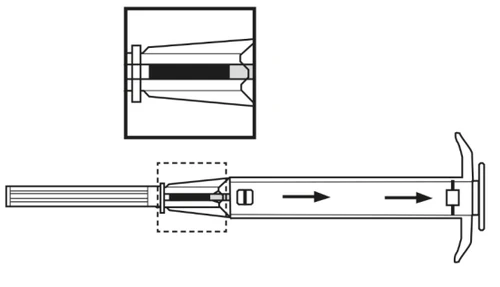
3 Pull the applicator plunger fully backward until the complete line is visible in the second window.
Note: The plunger can only be pushed forward to inject the implant after it has been fully pulled back to the stop position.
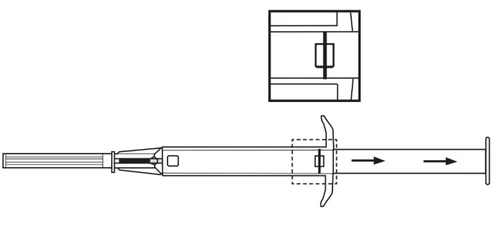
- Remove the protective cap from the needle.
5 Hold the body of the applicator in one hand. With the other hand, pinch the skin of the patient’s anterior abdominal wall below the umbilical line. See illustration. With the needle opening oriented upward, insert the entire needle. Do so at a slight angle, holding it almost parallel to the skin into the subcutaneous tissue.
8/18
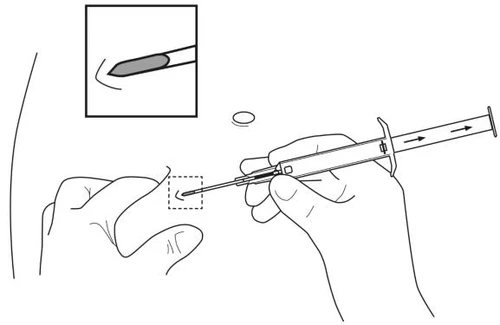
6 Carefully pull the applicator backward by approximately 1 cm. This creates the insertion channel for the implant.
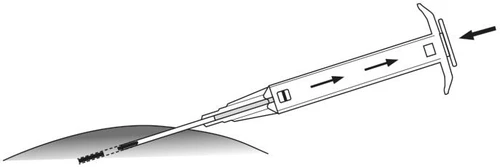
7 Inject the implant into the insertion channel by fully pushing the plunger forward until it clicks into place and a click is heard.
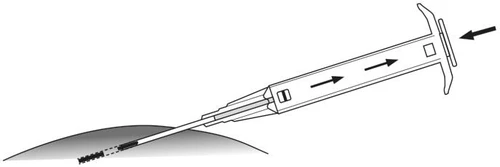
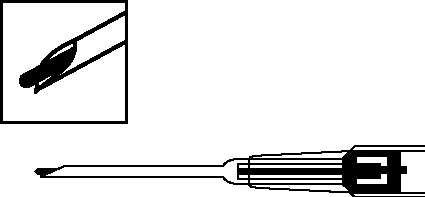
- Withdraw the needle. To ensure the implant has been correctly inserted, check that the plunger tip (blue) is visible at the needle tip.
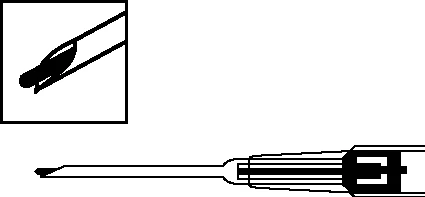
For dosage information, refer to section 3, “How to use Leptoprol 5 mg/3 months implant”
9/18
Package leaflet: Information for the user
LEPTOPROL 3.6 mg/1 month implant
leuprorelin
Please read this leaflet carefully before using this medicine because it contains important information for you
- Keep this leaflet. You may need to read it again.
- If you have any questions, consult your doctor, pharmacist or nurse.
- This medicine has been prescribed for you only. Do not give it to others, even if their symptoms are the same as yours, as it could be harmful.
- If you experience any adverse reaction, including those not listed in this leaflet, contact your doctor, pharmacist or nurse. See section 4.
Contents of this leaflet:
1 What LEPTOPROL 3.6 mg/1 month implant is and what it is used for
2 What you need to know before using LEPTOPROL 3.6 mg/1 month implant
3 How to use LEPTOPROL 3.6 mg/1 month implant
4 Possible side effects
5 How to store LEPTOPROL 3.6 mg/1 month implant
6 Package contents and other information
1. What Leptoprol 3.6 mg/1 month implant is and what it is used for
The active substance of LEPTOPROL 3.6 mg/1 month implant (leuprorelin acetate) belongs to the group of inhibitors of certain sex hormones.
LEPTOPROL 3.6 mg/1 month implant acts on the pituitary gland (hypophysis), initially stimulating it briefly and subsequently reducing the production of hormones that regulate the release of sex hormones from the testes.
This results in a marked decrease in sex hormone concentrations, which remain at this reduced level during continued treatment. After discontinuation of LEPTOPROL 3.6 mg/1 month implant, pituitary and sex hormone concentrations return to normal levels.
LEPTOPROL 3.6 mg/1 month implant is used for the symptomatic treatment of advanced hormone-dependent prostate cancer (prostate carcinoma).
2. What you should know before using Leptoprol 3.6 mg/1 month implant
Do not use LEPTOPROL 3.6 mg/1 month implant
- if you are allergic to leuprorelin or to any of the other ingredients of this medicine (listed in section 6)
- if you are allergic to substances similar to leuprorelin, such as goserelin or buserelin
- if the tumour is not influenced by hormonal factors
- if you are a woman or a child.
10/18
Warnings and precautions
Talk to your doctor or nurse before using Leptoprol 3.6 mg/1 month implant:
- if you have known hypertension. In this case, your doctor will monitor you closely;
- if both testicles have been surgically removed. In this case, LEPTOPROL 3.6 mg/1 month implant will not cause any further reduction in male sex hormone levels in the blood;
- if, before starting treatment, you already have neurological symptoms (spinal cord compression, spinal metastases) or discomfort when urinating due to urinary tract obstruction. In this case, inform your doctor immediately: you will be monitored particularly closely during the first weeks, preferably in hospital;
- if, during prolonged use of LEPTOPROL 3.6 mg/1 month implant, symptoms of the disease reappear (e.g. pain, difficulty urinating, or leg weakness). In this case, your doctor will regularly monitor treatment efficacy through clinical examinations (digital rectal examination of the prostate, imaging tests) and by checking blood values (phosphatase and prostate-specific antigen [PSA], and male sex hormone [testosterone]);
- if you are at risk of developing osteoporosis. If possible, your doctor may prescribe an additional medicine to prevent bone loss;
- if you have diabetes. In this case, your doctor will monitor you very closely.
Cases of depression, which may be severe, have been reported in patients taking Leptoprol 3.6 mg/1 month implant. If you are being treated with Leptoprol 3.6 mg/1 month implant and develop depressive mood, inform your doctor.
Talk to your doctor if you have any heart or blood vessel disorders, including problems with heart rhythm (arrhythmias), or if you are being treated with medicines for these conditions. The risk of heart rhythm problems may increase with the use of Leptoprol 3.6 mg/1 month implant.
For athletes: using this medicine without therapeutic need constitutes doping and may result in a positive anti-doping test.
Other medicines and Leptoprol 3.6 mg/1 month implant
Tell your doctor, pharmacist, or nurse if you are taking, have recently taken, or might take any other medicines.
Leptoprol 3.6 mg/1 month implant may interfere with certain medicines used to treat heart rhythm disorders (e.g. quinidine, procainamide, amiodarone, and sotalol) or may increase the risk of heart rhythm problems when used together with certain other medicines (e.g. methadone (used to relieve pain and in drug detoxification programmes), moxifloxacin (an antibiotic), antipsychotics used for severe mental illnesses).
Children and adolescents
LEPTOPROL 3.6 mg/1 month implant is intended for adult patients only.
Pregnancy and breastfeeding
LEPTOPROL 3.6 mg/1 month implant is intended for male patients only.
Driving and using machines
11/18
This medicine, as well as the underlying tumour disease, may cause fatigue, an effect that may be further increased by consuming alcoholic beverages.
Therefore, if this applies to you, do not drive or operate machinery without your doctor's permission.
3. How to use Leptoprol 3.6 mg/1 month implant
Administration of LEPTOPROL 3.6 mg/1 month implant
- The injection site should be cleaned.
- A local anesthetic may be used to reduce any pain caused by the implant injection.
- LEPTOPROL 3.6 mg/1 month implant is administered by subcutaneous injection (under the skin) in the abdominal area.
- LEPTOPROL 3.6 mg/1 month implant must be administered by your doctor or a nurse, who will also prepare the medication.
Dosage
The recommended dose is one implant containing 3.6 mg of leuprorelin per month.
- Follow your doctor's instructions regarding the day you should receive LEPTOPROL 3.6 mg/1 month implant and the interval between injections.
- The injection of LEPTOPROL 3.6 mg/1 month implant should be given every month. After the second dose, in exceptional cases, the next injection may be delayed by up to 2 weeks. In general, the therapeutic effect in most patients is not compromised.
- The contents of one pre-filled syringe are injected.
- The syringe contains an implant designed to deliver a dose of 3.6 mg of leuprorelin.
Blood tests
Your doctor will periodically prescribe blood tests to monitor whether the medicine is working.
After 3 months of treatment, your doctor will usually be able to determine whether prostate cancer can be treated with LEPTOPROL 3.6 mg/1 month implant and should therefore check prostate-specific antigen (PSA) levels and testosterone levels.
Duration of treatment
The duration of therapy will be determined by your doctor. Treatment must be continued even if symptoms related to the cancer have decreased or if the tumor has improved.
Prostate cancer may be treated with LEPTOPROL 3.6 mg/1 month implant for several years. Therefore, if the medicine proves effective and well tolerated, it may be used continuously. Your doctor will prescribe regular check-ups to monitor the treatment, especially if symptoms such as the following reappear:
- pain
- difficulty urinating
- leg weakness.
If you use more LEPTOPROL 3.6 mg/1 month implant than you should
It is unlikely that a doctor or nurse would administer an excessive amount of this medicine.
However, if an overdose is accidentally administered, your doctor will monitor you and provide appropriate treatment if necessary.
If you forget to use LEPTOPROL 3.6 mg/1 month implant
If you think that your monthly dose of LEPTOPROL 3.6 mg/1 month implant has been missed, inform your doctor.
If you stop using LEPTOPROL 3.6 mg/1 month implant
If you stop treatment without your doctor's approval, symptoms related to your condition may worsen.
Therefore, treatment should not be stopped prematurely without your doctor's permission.
If you have any doubts about how to use this medicine, consult your doctor, pharmacist, or nurse.
4. Possible side effects
Like all medicines, this medicine can cause side effects, although not everybody gets them.
If you experience the following serious side effects, contact your doctor immediately or go to the nearest
emergency room:
- Allergic reactions (anaphylactic reactions). Symptoms may include sudden onset of:
o feeling of warmth, skin rash, itching or hives on the skin and/or mucous membranes;
o swelling of the face, lips, tongue or other parts of the body;
o shortness of breath, wheezing or difficulty breathing;
o drop in blood pressure, rapid heartbeat, seizures, and in the most severe cases, potentially fatal cardiovascular failure. - Swelling and pain in one part of the body, due to a blood clot in a vein.
- Difficulty breathing, chest pain, fainting, tachycardia, bluish skin and discoloration, due to a blood clot in the lungs.
These side effects are rare (may affect up to 1 in 1,000 people).
At the beginning of therapy, there is usually a short-term increase in the level of male sex hormone (testosterone) in the blood. As a result, the following disease-related symptoms may temporarily worsen:
- Onset or increase in bone pain
- Difficulty urinating, due to displacement of the urinary tract
- Pressure on the spinal cord
- Muscle weakness in the legs
- Swelling due to inability of fluids to drain from tissues (lymphoedema).
This increase in symptoms usually resolves without the need to discontinue LEPTOPROL 3.6 mg/1 month implant.
When starting treatment, administration of an appropriate male sex hormone antagonist (antiandrogen) should be considered to reduce possible consequences of the initial rise in male sex hormone levels.
13/18
During treatment, the male sex hormone reaches very low levels. Consequently, the following side effects may occur in some patients:
Very common, may affect more than 1 in 10 people
- bone pain
- hot flushes, with episodes of sweating
- reduced sexual desire and erectile function
- increased sweating
Common, may affect up to 1 in 10 people
- depression, mood changes
- abnormal sensations, such as tingling and/or numbness
- increased need to urinate at night
- excessively frequent need to urinate during the day
- difficulty and pain during urination
- increased appetite
- sleep disturbances
Uncommon, may affect up to 1 in 100 people
- reduced appetite
- decreased or increased blood sugar levels
- headache
- dizziness
- changes in blood pressure (decrease or increase in pressure)
- difficulty breathing
- diarrhoea
- hair loss
- dryness of the skin and mucous membranes
- increased night sweating
- inability to completely empty the bladder spontaneously
- reduction in testicle size
- testicular pain
- breast enlargement in men
- weight gain
- weight loss
- increased plasma levels of liver enzymes (ALT, AST, gamma-GT) and other enzymes (LDH, alkaline phosphatase)
Very rare, may affect up to 1 in 10,000 people
- general allergic reactions (fever, rash, itching, increased count of certain white blood cells [eosinophilia])
- transient taste disturbances
- nausea/vomiting
- joint pain and/or back pain and muscle disorders
- oedema
- fatigue
14/18
- local skin reactions such as redness or hardening, pain, swelling and itching at the injection site, which normally resolve even with continued treatment; in isolated cases, an abscess has occurred
- as with other medicines in this class of substances: pituitary apoplexy after the first administration in patients with a pituitary tumour.
Not known, frequency cannot be estimated from the available data
- non-infectious lung disease (pneumonitis, reported predominantly in Japan), lung inflammation, lung disease
- in isolated cases, abscess at the injection site has occurred
- changes in ECG pattern (QT prolongation)
- seizures
Special information
The effect of treatment with LEPTOPROL 3.6 mg/1 month implant can be monitored by measuring blood concentrations of the male sex hormone (testosterone) and performing other blood tests (acid phosphatase, PSA = prostate-specific antigen). Testosterone levels rise at the beginning of treatment, then decrease within two weeks. After 2–4 weeks, testosterone concentrations reach levels comparable to those observed after surgical removal of both testes and remain constant throughout the treatment period.
In the initial phase of treatment, a temporary increase in blood levels of acid phosphatase may occur. After a few weeks, levels return to normal or near-normal values.
The reduction in the male sex hormone testosterone, as occurs after removal of the testes or with treatment using drugs that inhibit sex hormones (such as LEPTOPROL 3.6 mg/1 month implant), may lead to reduced bone density, increasing the risk of bone fractures (see section Warnings and precautions). The reduction in bone density after removal of the testes is, however, more pronounced than that caused by administration of LEPTOPROL 3.6 mg/1 month implant. Your doctor will consider administering an additional medicine (called a bisphosphonate) to regulate calcium metabolism.
Reporting of side effects
If you experience any side effects, including those not listed in this leaflet, talk to your doctor or pharmacist. You can also report side effects directly via the national reporting system at https://www.aifa.gov.it/content/segnalazioni-reazioni-avverse. Reporting side effects helps provide more information on the safety of this medicine.
5. How to store Leptoprol 3.6 mg/1 month implant
Keep this medicine out of the sight and reach of children.
Do not store above 30°C.
Do not use this medicine after the expiry date stated on the outer carton, on the sterile pouch, and on the syringe label, following the word "Exp.". The expiry date refers to the last day of that month.
15/18
Do not dispose of any medicine via wastewater or household waste. Ask your pharmacist how to dispose of medicines no longer required. This will help protect the environment.
6. Package contents and other information
What LEPTOPROL 3.6 mg/1 month implant contains
- The active substance is leuprorelin (as leuprorelin acetate). Each implant contains 3.6 mg of leuprorelin (as leuprorelin acetate).
- The excipient is poly(lactic-co-glycolic acid) 1:1
Description of the appearance of LEPTOPROL 3.6 mg/1 month implant and contents of the pack
Pre-filled syringe made of polycarbonate with a plunger made of acrylonitrile-butadiene-styrene copolymer and needle,
sealed in a composite foil pouch made of polyethylene terephthalate/aluminum/PE. The pouch also contains a desiccant based on sodium and aluminium silicate.
Packs containing:
- 1 pre-filled syringe with one implant
- 2 pre-filled syringes with one implant each
- 3 pre-filled syringes with one implant each
- 5 pre-filled syringes with one implant each
Not all pack sizes may be marketed.
Marketing Authorization Holder
Sandoz S.p.A.
Largo U. Boccioni 1
21040 Origgio (VA)
Italy
Manufacturer responsible for batch release:
EVER Pharma Jena GmbH - Otto-Schott-Straße 15 - 07745 Jena – Germany
EBEWE Pharma Ges.m.b.H. Nfg. KG, Mondseestrasse 11, 4866 Unterach – Austria
Sandoz GmbH, Biochemiestraße 10, 6250 Kundl, Austria
This medicinal product has been authorised in EEA member states under the following names:
Austria: Leuprorelin Sandoz 3.6 mg Implantat für 1 Monat
Denmark: Leuprorelin Sandoz
Germany: Leuprorelin Hexal 3.6 mg
Italy: LEPTOPROL
Hungary: Leuprorelin Sandoz 3.6 mg/implantátum
Norway: Leuprorelin Sandoz 3.6 mg implantat
Poland: LEUPROSTIN
Sweden: Leuprorelin Sandoz 3.6 mg implantat
Slovakia: Leuprorelin Sandoz 3.6 mg implantát
16/18
The following information is intended exclusively for healthcare professionals
Read the instructions carefully, as the applicator supplied with this medicinal product may differ from others you have used.
Instructions for use
1 Disinfect the injection site on the anterior abdominal wall, below the umbilical line.
2 Remove the applicator from the sterile pouch and check that the implant is visible in its housing
(see framed area). To verify, hold the applicator up to the light or gently shake it.
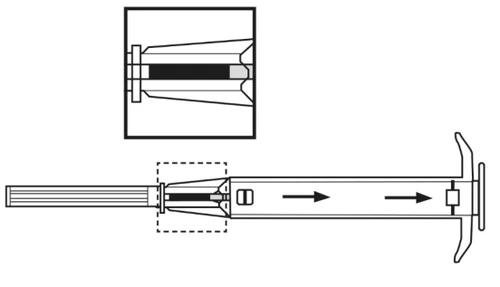
3 Pull the plunger of the applicator fully backward until you see the complete line in the second
window.
Important: the plunger can be pushed forward to inject the implant only if it has previously been
pulled fully back to the stop position!
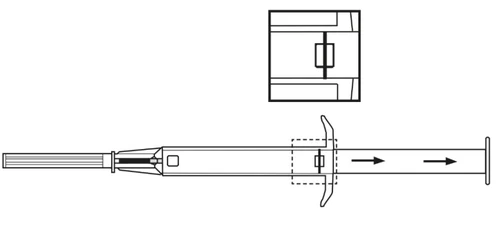
- Remove the protective cap from the needle.
- Hold the body of the applicator in one hand. With the other hand, pinch the skin of the patient’s anterior abdominal wall, below the umbilical line. See illustration. With the needle opening oriented upward, insert the entire needle . Do this at a slight angle, keeping it almost parallel to the skin, into the subcutaneous tissue.
17/18
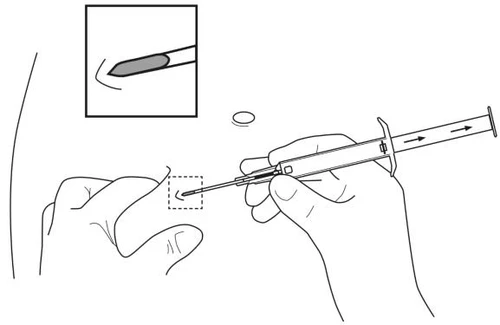
- Carefully pull the applicator backward by about 1 cm . This creates the insertion channel for the implant.
- Inject the implant into the insertion channel by pushing the plunger fully forward until it clicks into place and you hear a click .
- Remove the needle. To ensure that the implant has been correctly inserted, check that the white tip of the plunger is visible at the needle tip.
For dosage information, refer to section 3, “How to use Leptoprol 3.6 mg/1 month implant”
18/18