Leodizcol
ItalyTable of Contents
Package leaflet: Information for the user
Leodizcol 1 mg/mL oral solution
baclofen
Please read this leaflet carefully before taking this medicine because it contains
important information for you.
- Keep this leaflet. You may need to read it again.
- If you have any questions, ask your doctor or pharmacist.
- This medicine has been prescribed for you only. Do not give it to other people, even if their symptoms are the same as yours, as it may be harmful.
- If you experience any side effects, including those not listed in this leaflet, contact your doctor or pharmacist. See section 4.
Contents of this leaflet
- What Leodizcol is and what it is used for
- What you need to know before taking Leodizcol
- How to take Leodizcol
- Possible side effects
- How to store Leodizcol
- Contents of the pack and other information
1. What Leodizcol is and what it is used for
Leodizcol contains the active substance baclofen. Baclofen belongs to a group of medicines called muscle relaxants.
Baclofen is used in adults to reduce and relieve excessive muscle stiffness (spasms) occurring in various diseases, such as multiple sclerosis, spinal cord disorders, stroke, and other nervous system disorders.
Baclofen is used in children and adolescents aged 0 to 18 years to reduce and relieve excessive muscle stiffness (spasms) occurring in various diseases, such as cerebral palsy (brain damage affecting movement), multiple sclerosis, spinal cord disorders, stroke, and other nervous system disorders.
This muscle relaxant effect improves mobility and relieves pain.
2. What you need to know before taking Leodizcol
Do not take Leodizcol
- if you are allergic to baclofen or to any of the other ingredients of this medicine (listed in section 6).
Warnings and precautions
Talk to your doctor or pharmacist before taking Leodizcol
- if you have a severe mental illness, accompanied by confusion or depression
- if you have Parkinson's disease
- if you have epilepsy (epileptic seizures)
- if you currently have or have previously had a stomach or intestinal ulcer
- if you have diseases affecting the blood vessels in the brain
- if you are already taking medicines to lower your blood pressure (see "Other medicines and Leodizcol")
- if your lung function is impaired
- if your liver or kidney function is impaired
- in certain bladder disorders (difficulty urinating)
- if you have diabetes mellitus
- if you have a history of alcoholism, if you drink excessive amounts of alcohol, or if you have a history of substance abuse or dependence
Some people treated with baclofen have developed self-harming or suicidal thoughts or have attempted suicide. Most of these individuals also suffered from depression, consumed excessive amounts of alcohol, or were prone to suicidal thoughts. If at any time you develop self-harming or suicidal thoughts, consult your doctor immediately or go to hospital. Also, ask a relative or close friend to read this leaflet and to inform you of any concerns arising from changes in your behaviour.
Do not stop treatment with this medicine without consulting your doctor. Treatment must be discontinued gradually over a period of one or two weeks. Abrupt discontinuation increases the risk of adverse effects such as hallucinations, anxiety and confusion, palpitations, muscle pain, fever and dark urine.
If any of these conditions apply to you, inform your doctor. Your doctor will take these factors into account during your treatment with Leodizcol.
Other medicines and Leodizcol
Tell your doctor or pharmacist if you are taking, have recently taken or might take any other medicines, including:
- medicines used to treat mental health disorders, such as antidepressants and lithium
- medicines that lower blood pressure
- medicines that may affect the kidneys (such as medicines used to treat joint inflammation or pain)
- medicines for the treatment of Parkinson's disease (levodopa/carbidopa)
- medicines with a central nervous system depressant effect (e.g. opioids for pain relief such as morphine, other muscle relaxants such as tizanidine, sedatives, alcohol)
- medicines used to treat conditions such as depression and anxiety (such as selective serotonin reuptake inhibitors [SSRIs]).
Leodizcol and alcohol
Alcohol may increase the undesirable effects of this medicine, such as drowsiness and dizziness. Avoid concomitant use of Leodizcol and alcohol.
Pregnancy and breastfeeding
If you are pregnant, think you might be pregnant, planning to become pregnant, or breastfeeding, consult your doctor or pharmacist before taking this medicine.
Do not use Leodizcol during pregnancy unless your doctor considers it necessary. If you take Leodizcol during pregnancy, there is a risk that the baby may experience epileptic seizures shortly after birth.
Baclofen passes into breast milk in small amounts, and effects on the infant are not expected.
Driving and using machines
If you experience dizziness, drowsiness, dizziness, reduced attention, or visual disturbances after taking Leodizcol, do not drive or operate machinery.
Leodizcol contains sorbitol (E 420), methyl parahydroxybenzoate (E 218), propyl
parahydroxybenzoate (E 216), propylene glycol (E 1520) and sodium
This medicine contains 362.68 mg of sorbitol (E 420) per mL. Sorbitol is a source of fructose. If your doctor has told you that you (or the child) have an intolerance to certain sugars, or if you have been diagnosed with hereditary fructose intolerance, a rare genetic disorder in which patients cannot metabolize fructose, speak with your doctor before you (or the child) take this medicine. Sorbitol may cause gastrointestinal disturbances and has a mild laxative effect.
This medicine contains methyl parahydroxybenzoate (E 218) and propyl parahydroxybenzoate (E 216), which may cause allergic reactions (including delayed reactions).
This medicine contains 1.05 mg of propylene glycol (E 1520) per mL. If the child is less than 4 weeks old, talk to your doctor or pharmacist before administering this medicine, especially if the child is taking other medicines containing propylene glycol or alcohol.
This medicine contains less than 1 mmol (23 mg) of sodium per mL, i.e. essentially "sodium-free". However, when the dose exceeds 30 mL, it can no longer be considered "sodium-free"; this should be considered by patients on a low-sodium diet. This medicine contains 92.6 mg of sodium (the main component of table salt) at the maximum daily dose (120 mL). This corresponds to 4.6% of the maximum recommended daily dietary intake for an adult.
3. How to take Leodizcol
Take this medicine exactly as directed by your doctor or pharmacist.
If you have any doubts, consult your doctor or pharmacist.
Children under 8 years of age
The dose should be adjusted according to body weight and increased gradually. The recommended initial dose is 0.3 mg/kg body weight per day, divided into 2–4 doses, to be gradually increased every 1–2 weeks until the optimal effect is achieved.
The maintenance dose is 0.75–2 mg/kg body weight per day.
The maximum dose is 40 mg per day.
Children aged 8 years and older
The dose should be adjusted according to body weight and increased gradually. The recommended initial dose is 0.3 mg/kg body weight per day, divided into 2–4 doses, to be gradually increased every 1–2 weeks until the optimal effect is achieved.
The maintenance dose is 0.75–2 mg/kg body weight per day.
The maximum dose is 60 mg per day.
Adults
The dose should be gradually increased. The recommended initial dose is 15 mg per day, divided into 2–4 doses, to be gradually increased at three-day intervals until the optimal effect is achieved.
The usual maintenance dose is 30–80 mg per day.
Hospitalized patients may be given 100–120 mg per day.
Patients with impaired renal function
The recommended initial dose is 5 mg per day. Dose adjustment will be decided by the doctor according to individual needs.
Patients with impaired hepatic function
The doctor may decide to administer a lower dose.
Elderly patients and patients with cerebral disorders
Elderly patients should be closely monitored by the doctor for adverse effects, which may require dose adjustment. The dose prescribed by the doctor may differ from those described above. In such cases, follow your doctor’s instructions.
Method of administration
Take the oral solution during meals with liquid.
The total daily dose may be divided into 2–4 doses.
Your doctor will decide when you should stop treatment with Leodizcol.
The package contains a 1 mL oral syringe, a 10 mL oral syringe, and a syringe adapter.
The 1 mL syringe has graduations every 0.05 mL and should be used for dosing volumes up to 3 mL. The 10 mL syringe has graduations every 0.5 mL and should be used for dosing volumes of 3 mL and above.
Instructions for using the syringes:
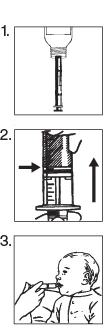
- Open the bottle: press down and turn the cap counterclockwise. At first use, remove the anti-drip ring (the round plastic insert) and insert the syringe adapter into the neck of the bottle. Take the syringe and insert it into the adapter opening. Invert the bottle.
- Draw up the medicine SLOWLY by pulling the plunger down to the mark corresponding to the required dose. If air bubbles are present in the syringe, empty the syringe and draw up the medicine slowly again until air bubbles disappear. To measure the dose accurately, align the upper edge of the black ring with the mark indicating the required dose. Place the bottle upright on the table and remove the syringe. Confirm the accuracy of the dose.
- Ensure the patient is in an upright position before administering the medicine. Insert the syringe into the patient’s mouth. WARNING: press the plunger slowly to allow time for swallowing; rapid administration may cause choking. Close the bottle over the adapter after use.
CLEAN THE SYRINGE IMMEDIATELY with water after each administration. It is ESSENTIAL to press and pull back the plunger several times to remove all traces of medicine from the inside of the syringe tip. Allow the syringe to dry before reusing.
If you take more Leodizcol than you should
If you take more Leodizcol than prescribed, contact your doctor or go to a hospital immediately.
In case of overdose, the most characteristic symptoms are difficulty breathing, decreased level of consciousness, and unconsciousness (coma). Other symptoms may include: numbness, confusion, hallucinations, memory loss, severe anxiety, cramps, blurred vision, abnormal muscle weakness, sudden muscle contractions, weak or absent reflexes, high or low blood pressure, slow, fast, or irregular heartbeat, low body temperature, nausea, vomiting, diarrhea, excessive salivation, ringing in the ears, breathing difficulties during sleep (sleep apnea syndrome), muscle pain, fever, and dark urine (rhabdomyolysis).
If you forget to take Leodizcol
Do not take a double dose to make up for the missed dose.
If you stop taking Leodizcol
Do not stop treatment with this medicine without consulting your doctor (see section 2).
If you have any questions about how to use this medicine, ask your doctor or pharmacist.
4. Possible side effects
Like all medicines, this medicine can cause side effects, although not everybody gets them.
Very common (may affect more than 1 in 10 people):
- drowsiness
- numbness
- nausea
Common (may affect up to 1 in 10 people):
- confusion
- insomnia
- slowed breathing
- dizziness
- hallucination
- fatigue
- muscle weakness
- coordination problems
- tremor
- muscle pain
- headache
- involuntary eye movements
- dry mouth
- impaired vision
- difficulty seeing
- impaired heart function
- decreased blood pressure
- indigestion
- retching
- vomiting
- constipation
- diarrhoea
- excessive sweating
- rash
- frequent urination
- inability to retain urine
- difficulty urinating or pain during urination
Uncommon (may affect up to 1 in 100 people):
- nightmares
Rare (may affect up to 1 in 1,000 people):
- euphoria
- exhaustion
- depression
- tingling, itching, or pins and needles sensation without a cause
- speech problems
- impaired sense of taste
- shortness of breath
- fainting
- abdominal pain
- impaired liver function
- urine retention or residual urine in the bladder
- erectile dysfunction
Very rare (may affect up to 1 in 10,000 people):
- severe lowering of body temperature
Not known (frequency cannot be estimated from the available data):
- difficulty breathing during sleep
- slow heart rate
- rash with intense itching and urticaria
- symptoms caused by sudden discontinuation of treatment
- increased blood sugar levels
Reporting of side effects
If you experience any side effect, including those not listed in this leaflet, talk to your doctor or pharmacist. You can also report side effects directly via the national reporting system at: https://www.aifa.gov.it/content/segnalazioni-reazioni-avverse.
Reporting side effects can help provide more information on the safety of this medicine.
5. How to store Leodizcol
Keep this medicine out of the sight and reach of children.
Do not use this medicine after the expiry date stated on the label of the bottle and on the
carton after “Exp.”. The expiry date refers to the last day of that month.
Do not use this medicine more than 8 weeks after first opening.
Do not store above 30 °C. Keep the bottle in the outer carton, protected from light.
Do not store in the refrigerator and do not freeze.
Do not dispose of medicines via wastewater or household waste. Ask your pharmacist how to
dispose of medicines you no longer use. This will help protect the environment.
6. Package contents and other information
What Leodizcol contains
- The active substance is baclofen. Each mL of oral solution contains 1 mg of baclofen.
- The other components are sorbitol (E 420), methyl parahydroxybenzoate (E 218), propyl parahydroxybenzoate (E 216), sodium carboxymethylcellulose (E 466), raspberry flavour (containing propylene glycol [E 1520]) and water. See section 2 “Leodizcol contains sorbitol (E 420), methyl parahydroxybenzoate (E 218), propyl parahydroxybenzoate (E 216), propylene glycol (E 1520) and sodium”.
Description of the appearance of Leodizcol and contents of the pack
Leodizcol is a clear, slightly yellow solution with a raspberry odour and taste.
It is available in amber glass bottles of 300 mL. The pack contains an oral syringe of 1 mL, an oral syringe of 10 mL, and a syringe adapter.
Marketing Authorization Holder
Essential Pharma Ltd,
Vision Exchange Building,
Triq it-Territorjals, Zone 1, Central Business District,
Birkirkara, CBD 1070, Malta
Manufacturer
Delpharm Bladel B.V., Industrieweg 1, 5531 AD
Bladel, The Netherlands
This medicinal product is authorized in the Member States of the European Economic Area under the following names:
Belgium: Baclofen EssPharm 1 mg/ml solution buvable
Baclofen EssPharm 1 mg/ml drank
Baclofen EssPharm 1 mg/ml Lösung zum Einnehmen
France: BACLOFENE ESSENTIAL PHARMA 1 mg/mL, solution buvable
Germany: Leodizcol 1 mg/ml Lösung zum Einnehmen
Italy: Leodizcol
The Netherlands: Leodizcol 1 mg/ml drank
Spain: Leodizcol 1 mg/ml solución oral
Denmark: Leodizcol 1 mg/ml oral opløsning
Sweden: Leodizcol 1 mg/ml oral lösning
Norway: Leodizcol